Teaching and Learning  in a Web 2.0 World BTW - What does your Facebook status say today?
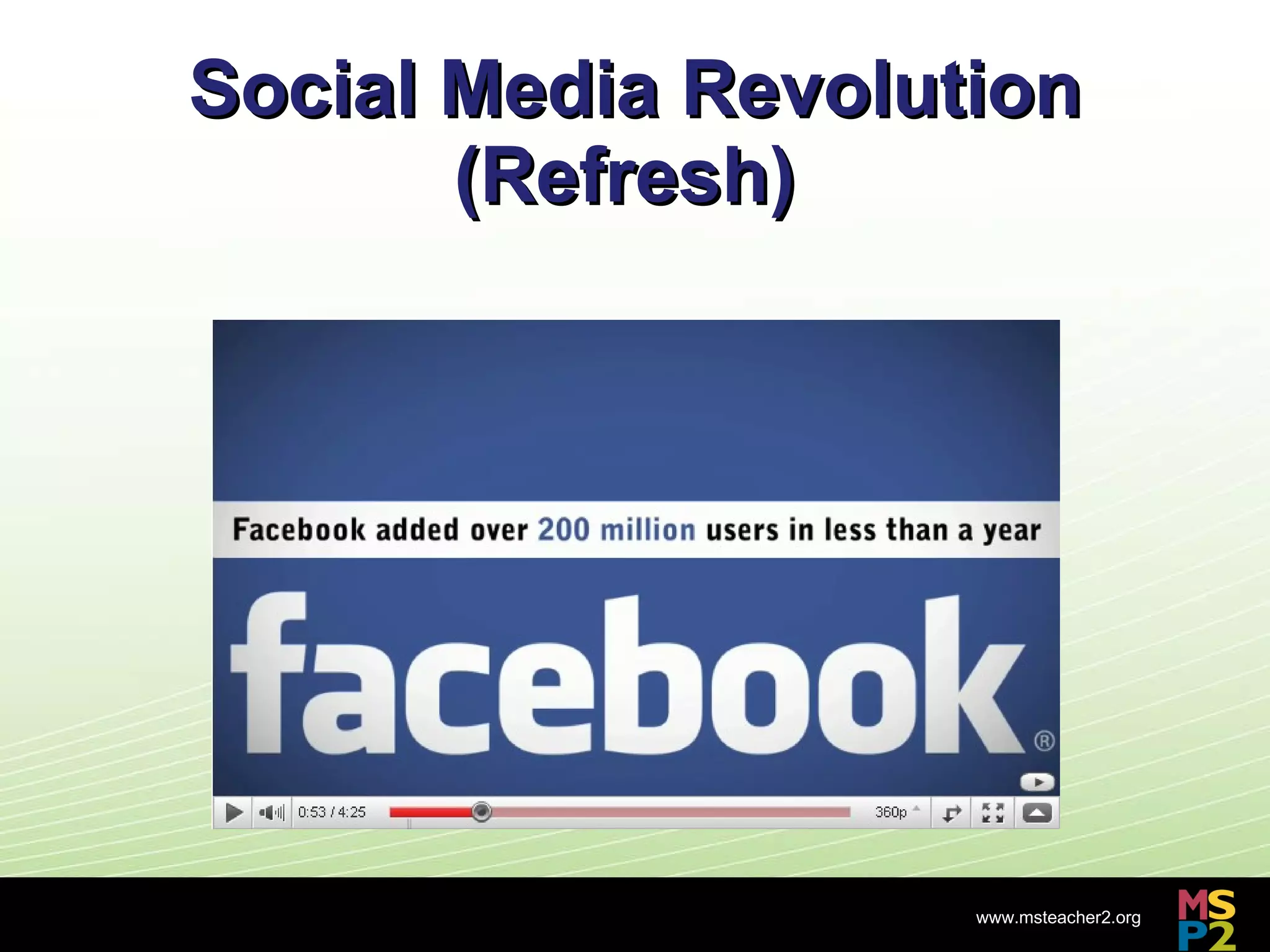
Social Media Revolution (Refresh)
Web 2.0 School
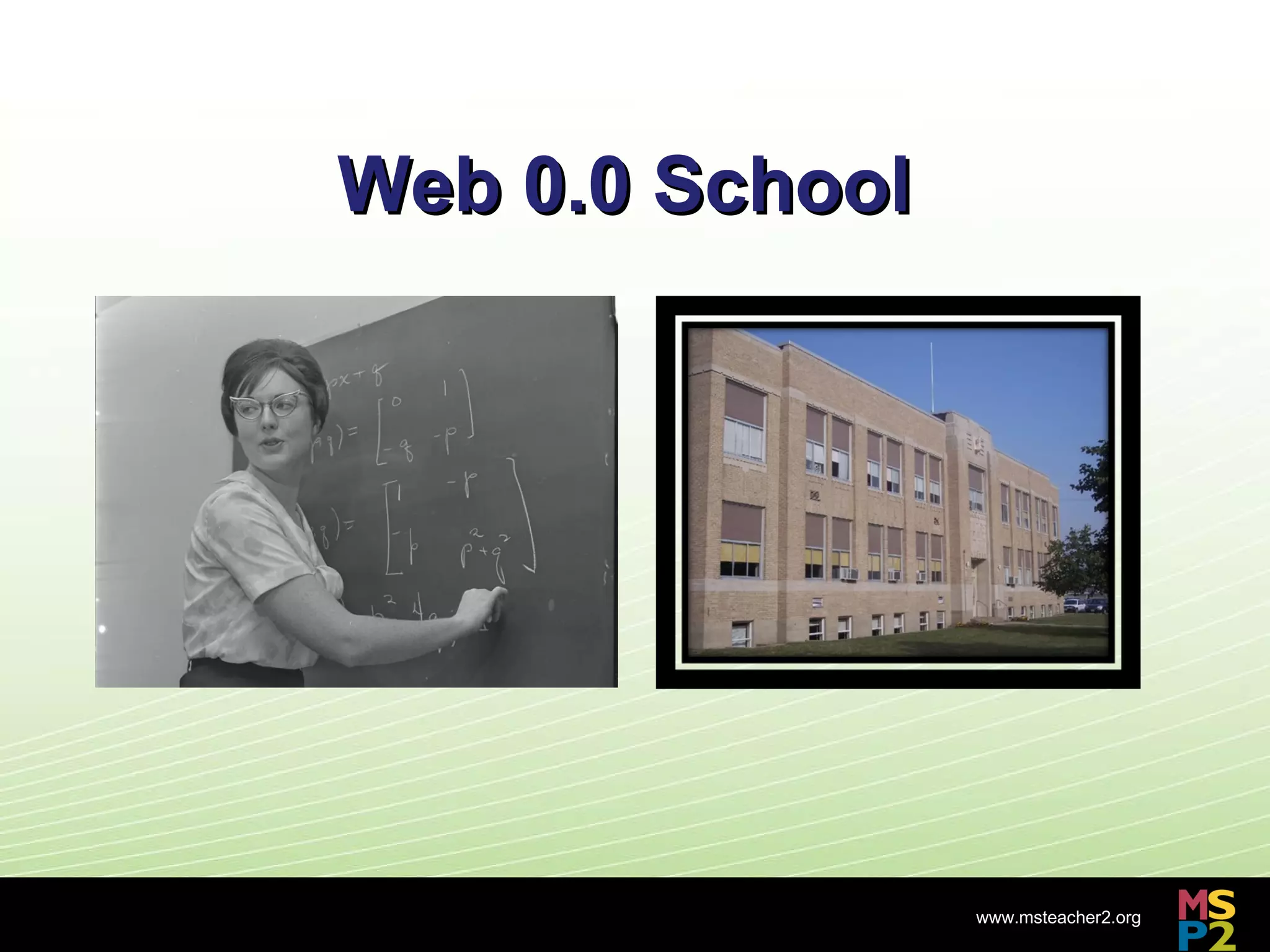
Web 0.0 School
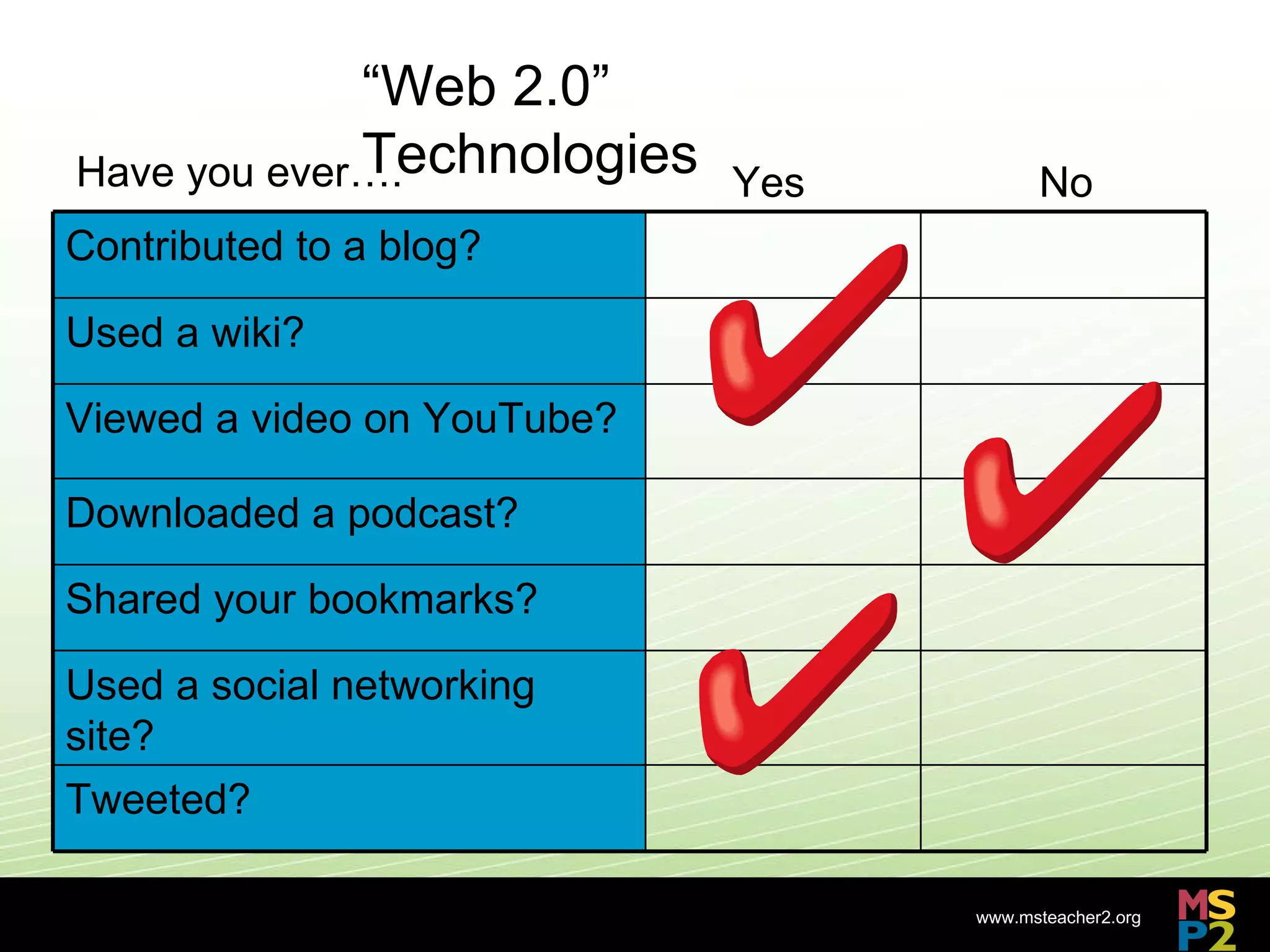
“ Web 2.0” Technologies Have you ever…. Yes No Contributed to a blog? Used a wiki? Viewed a video on YouTube? Downloaded a podcast? Shared your bookmarks? Used a social networking site? Tweeted?
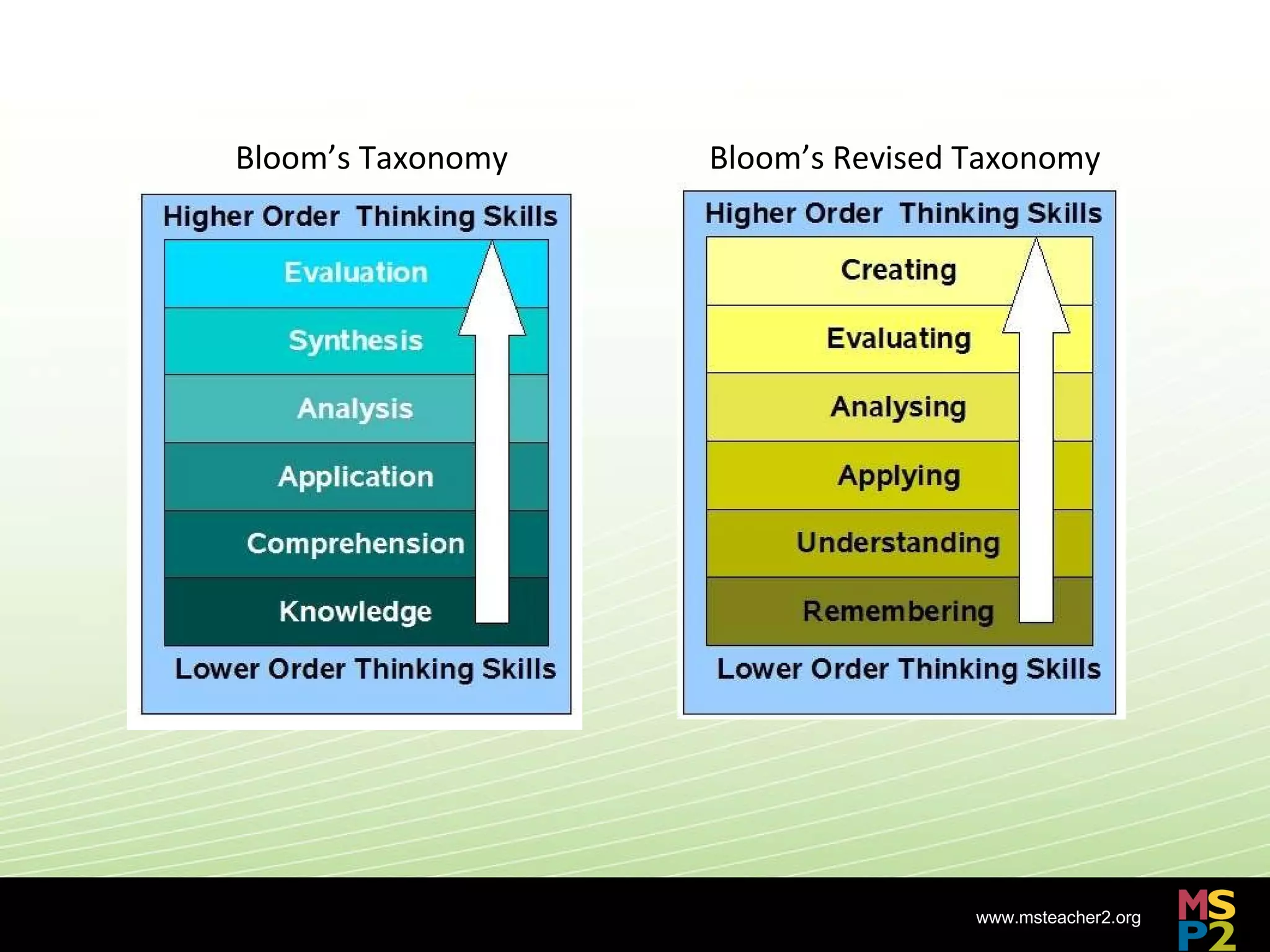
Anderson, L.W., and D. Krathwohl (Eds.) (2001). A Taxonomy for Learning, Teaching and Assessing: a Revision of Bloom's Taxonomy of Educational Objectives. Longman, New York. Bloom’s Taxonomy Bloom’s Revised Taxonomy
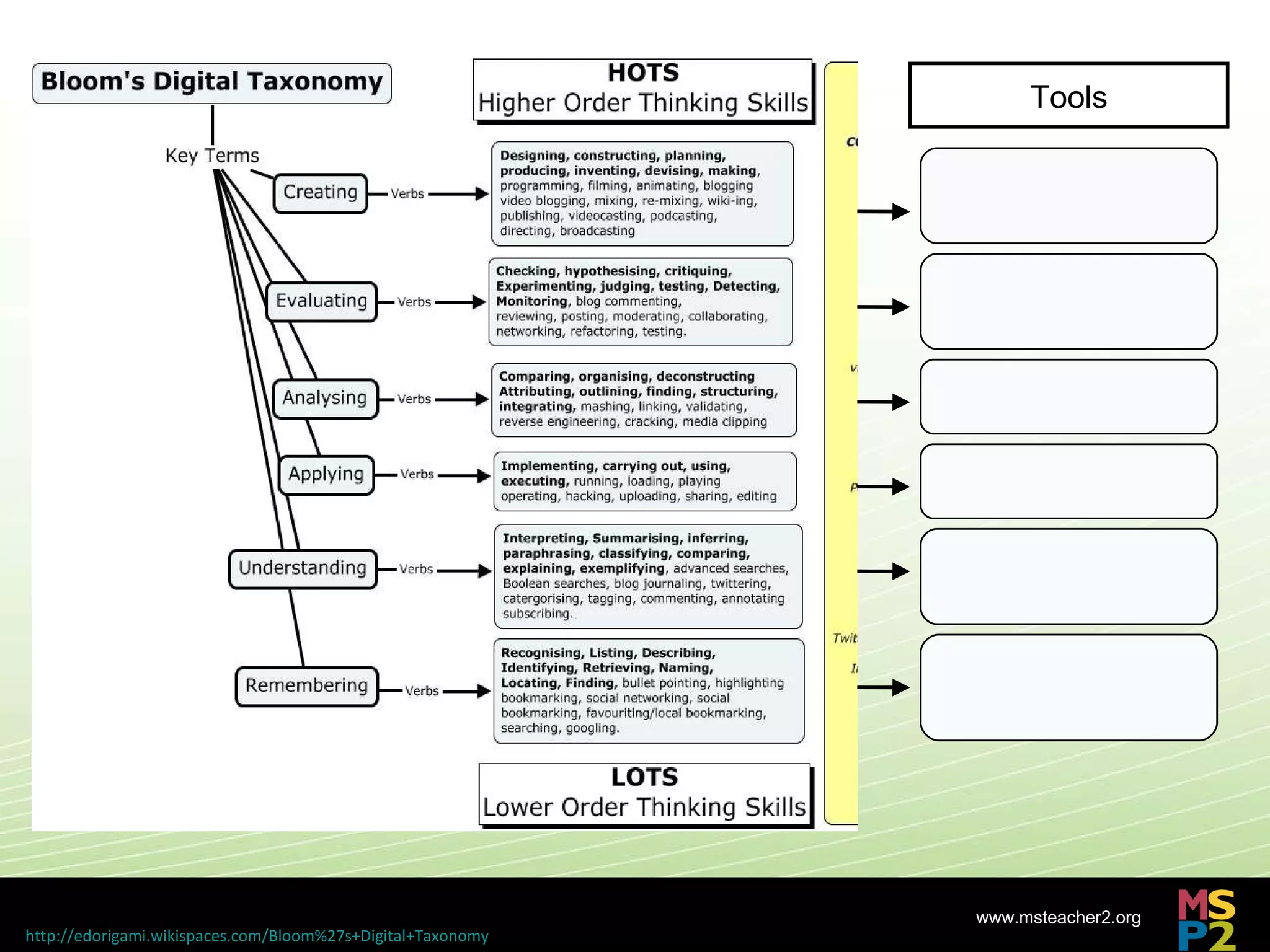
Tools Adapted from Churches, Andrew.  Bloom’s Digital Taxonomy.  Educational Origami. 30 January 2009.  <  http://edorigami.wikispaces.com/Bloom%27s+Digital+Taxonomy  >.
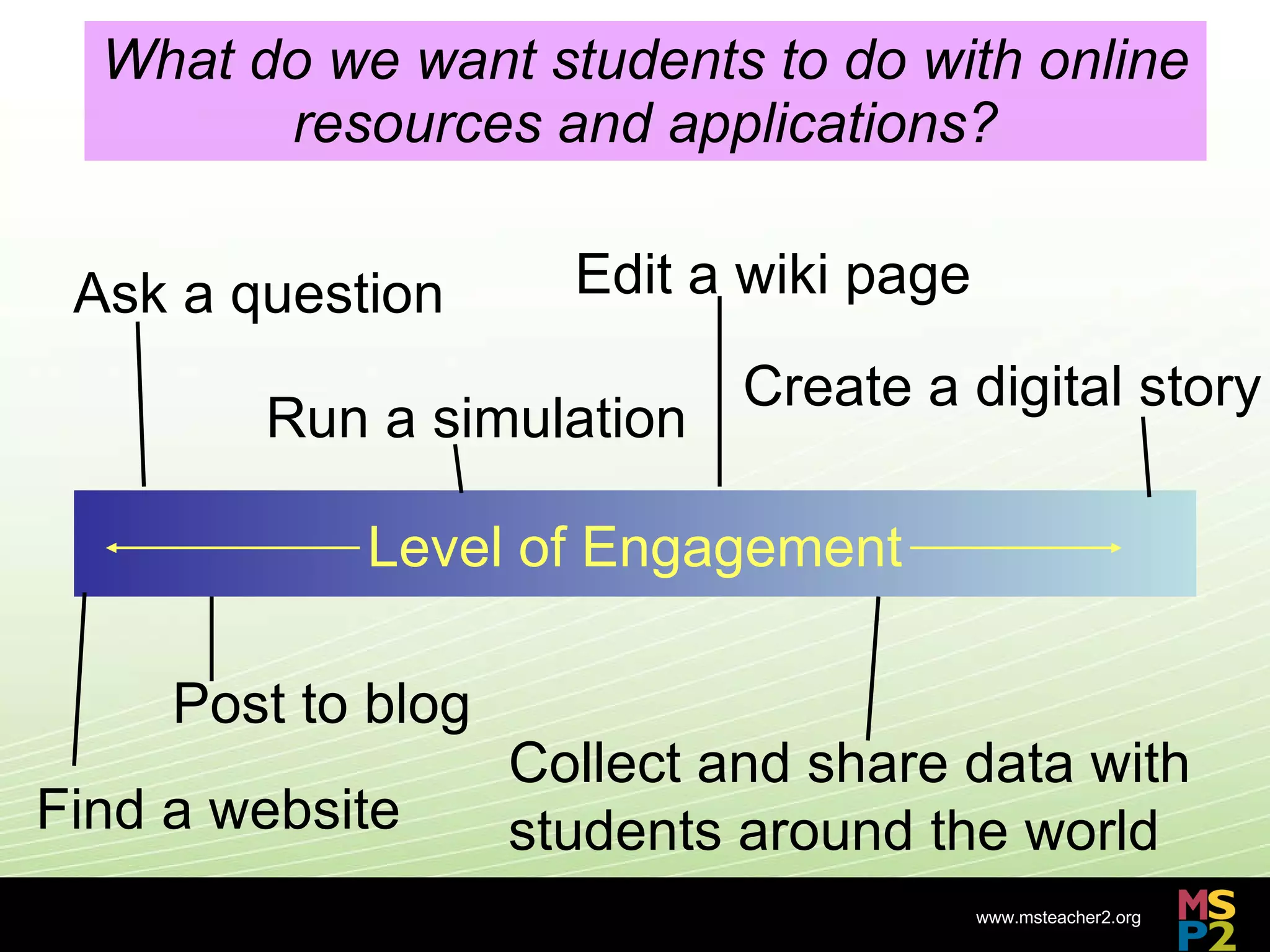
What do we want students to do with online resources and applications? Level of Engagement Find a website Ask a question Create a digital story Run a simulation Post to blog Edit a wiki page Collect and share data with students around the world
Agenda Where are we going to start?  Let’s join a professional learning network (PLN) Have a wiki discussion around an important math topic Look at some exemplary math resources Figure out how to stay connected professionally Where should we end up? Today… thinking deeply about what teaching and learning in a Web 2.0 world looks like – and how you can engage students using technology
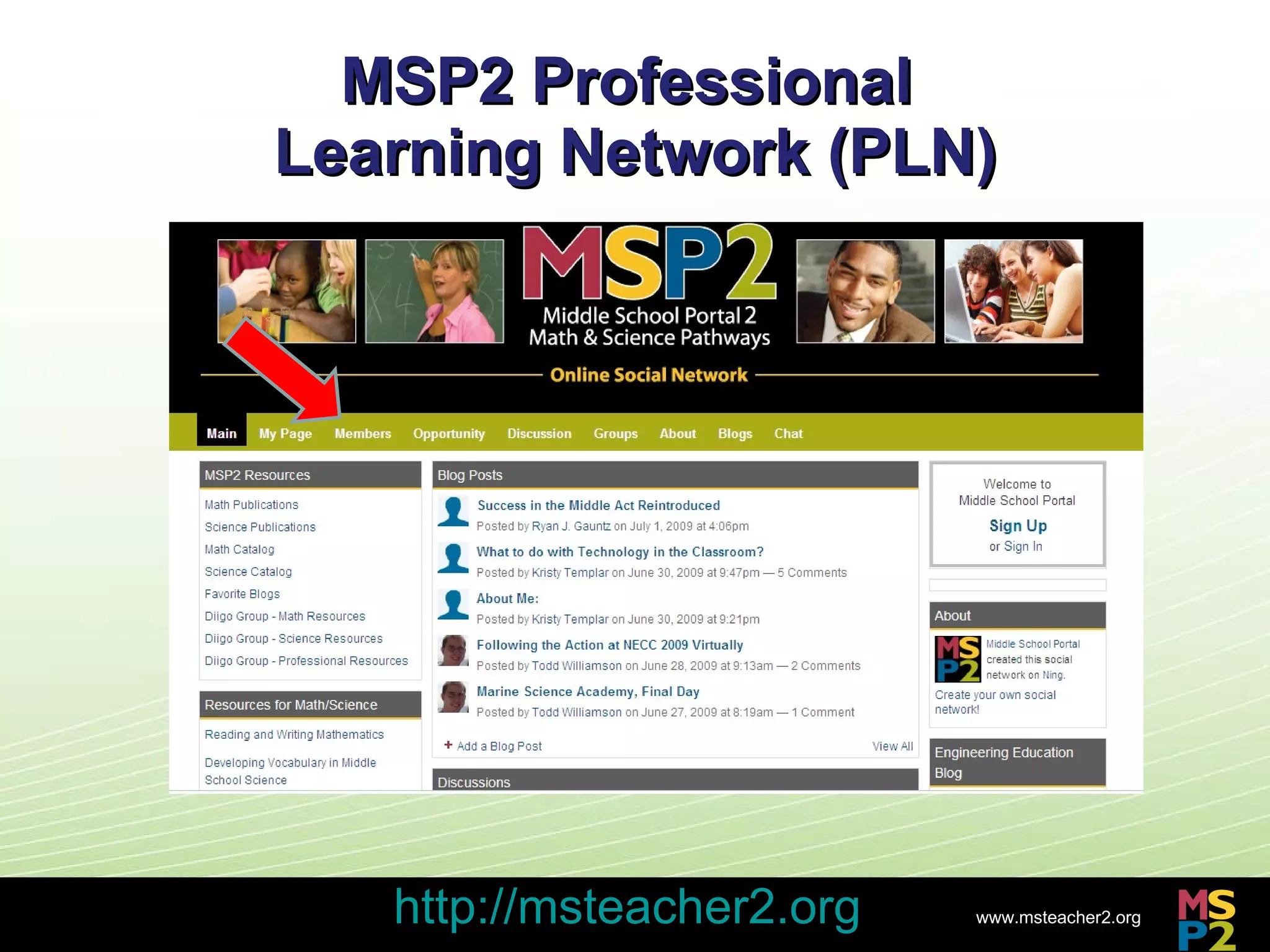
MSP2 Professional  Learning Network (PLN) http://msteacher2.org
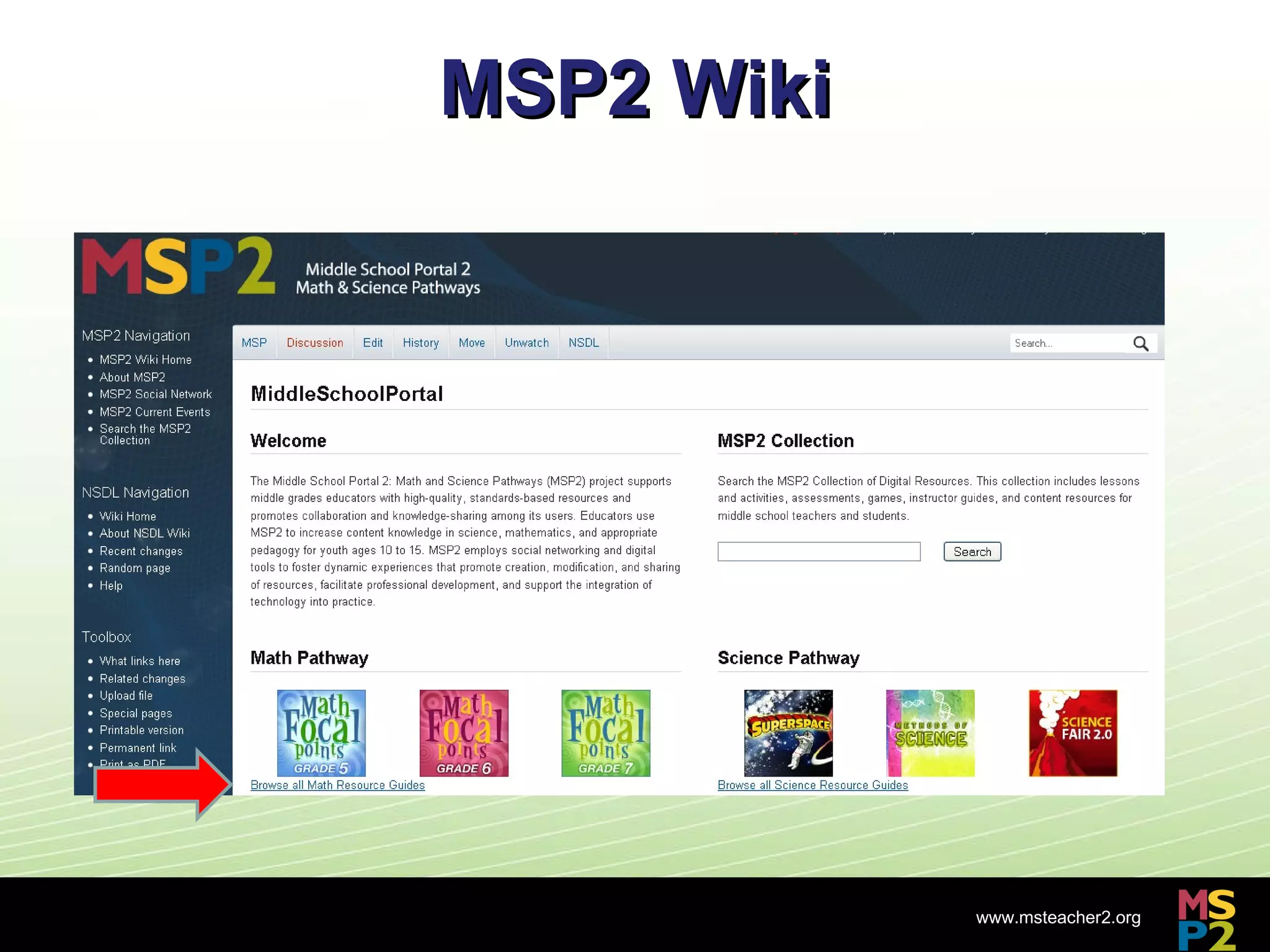
MSP2 Wiki
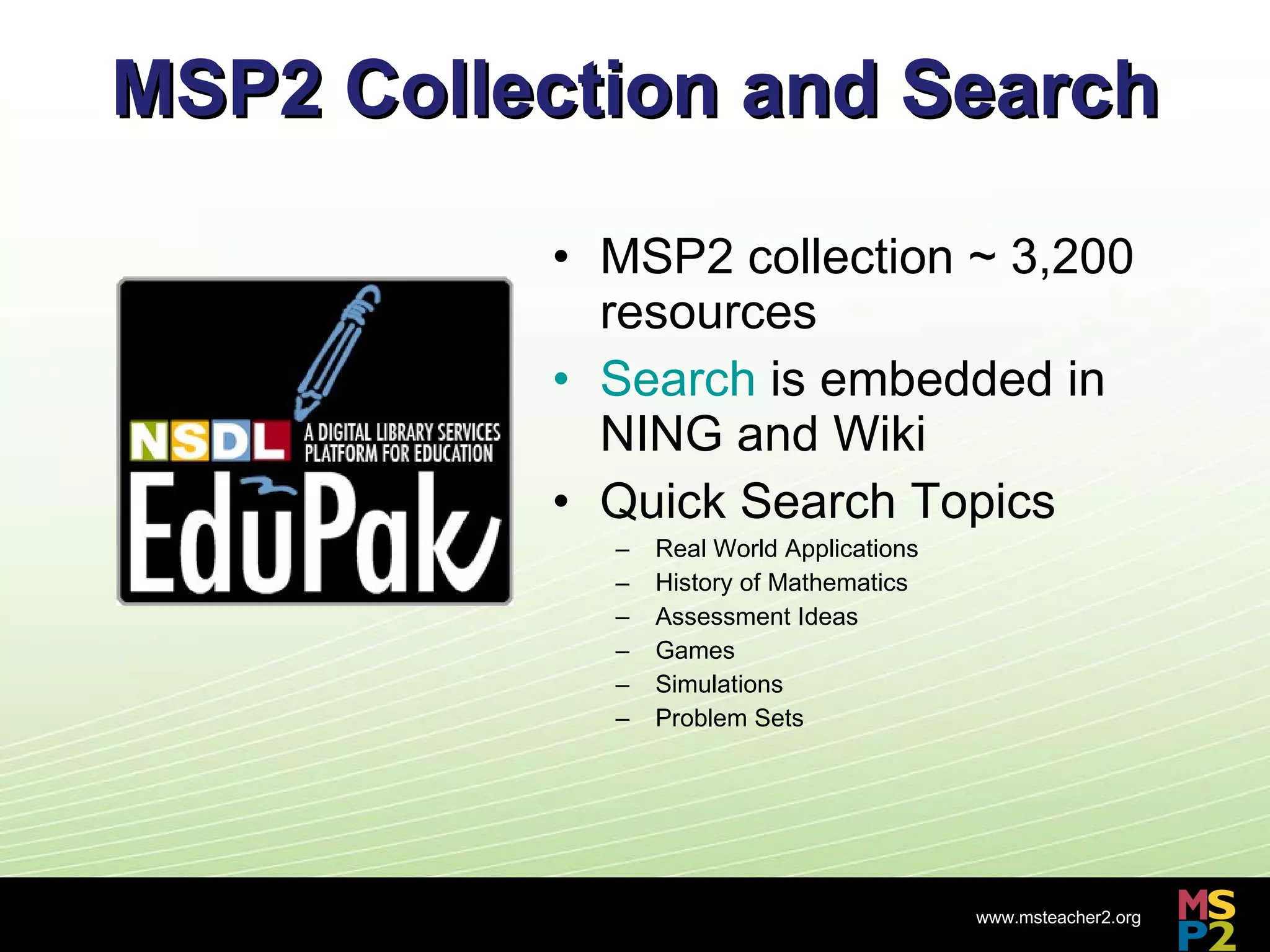
MSP2 Collection and Search MSP2 collection ~ 3,200 resources Search  is embedded in NING and Wiki Quick Search Topics Real World Applications History of Mathematics Assessment Ideas Games Simulations Problem Sets
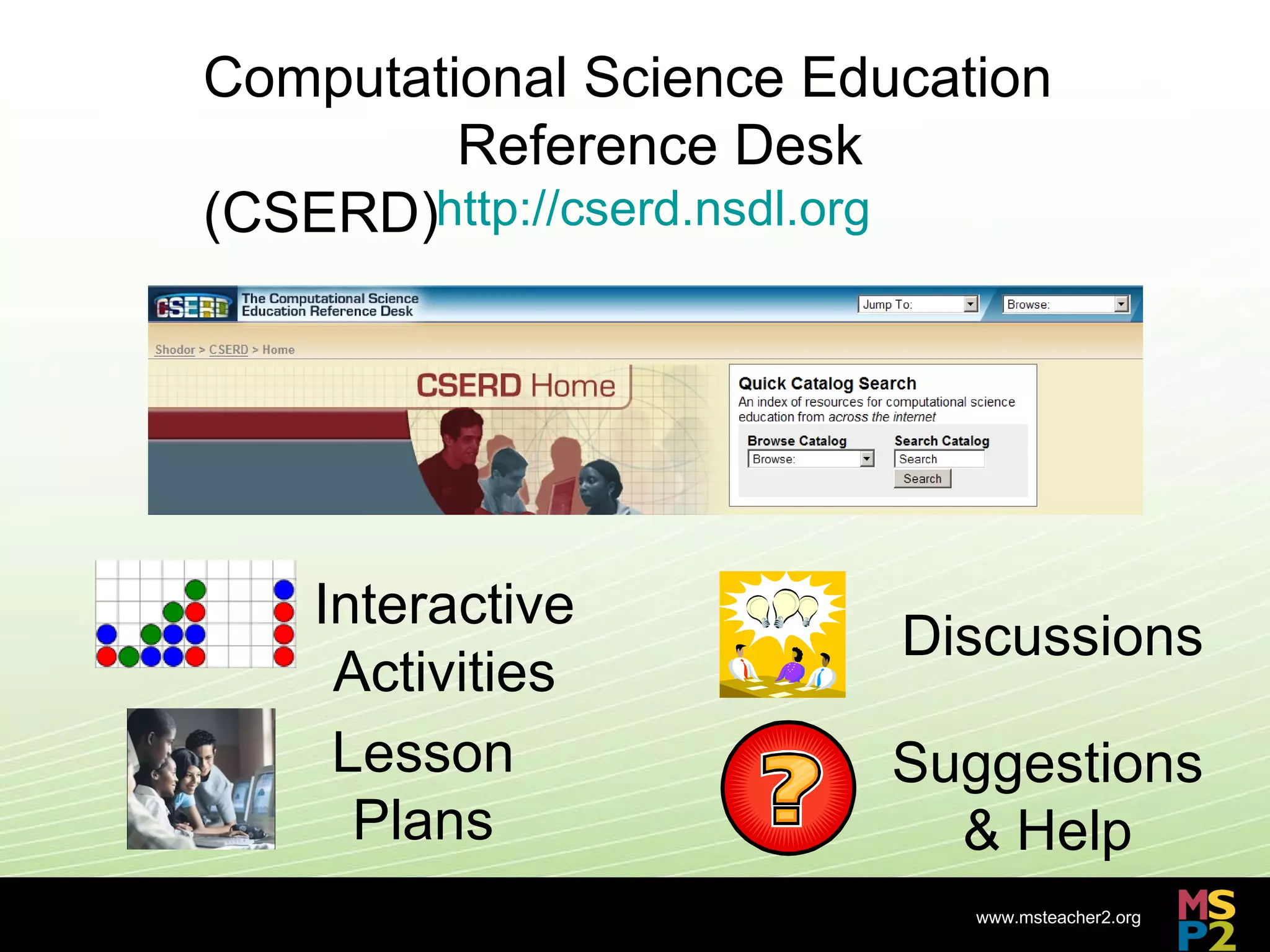
Interactive Activities Lesson Plans Discussions Suggestions & Help http://cserd.nsdl.org Computational Science Education  Reference Desk (CSERD)
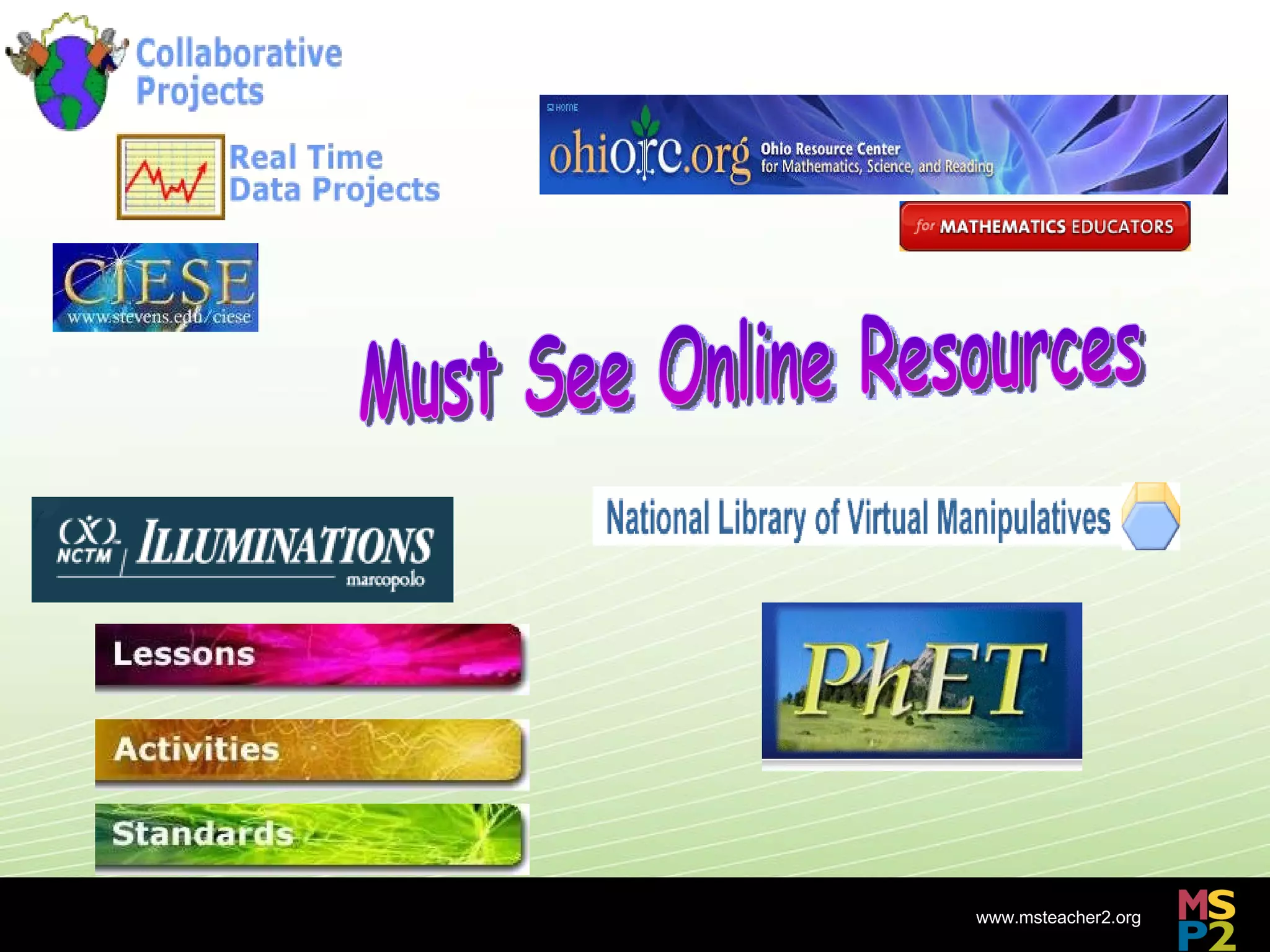
Must See Online Resources
Who do you follow on Twitter? What blogs do you read? I follow… @ rmbyrne @ web20classroom Wired Science NSF Science 360 Moving at the Speed of Creativity And many more…
Kimberly Lightle, PhD The Ohio State University School of Teaching and Learning, EHE [email_address]

Teaching and Learning in a Web 2.0 World

  • 1.
    Teaching and Learning in a Web 2.0 World BTW - What does your Facebook status say today?
  • 2.
  • 3.
  • 4.
  • 5.
    “ Web 2.0”Technologies Have you ever…. Yes No Contributed to a blog? Used a wiki? Viewed a video on YouTube? Downloaded a podcast? Shared your bookmarks? Used a social networking site? Tweeted?
  • 6.
    Anderson, L.W., andD. Krathwohl (Eds.) (2001). A Taxonomy for Learning, Teaching and Assessing: a Revision of Bloom's Taxonomy of Educational Objectives. Longman, New York. Bloom’s Taxonomy Bloom’s Revised Taxonomy
  • 7.
    Tools Adapted fromChurches, Andrew. Bloom’s Digital Taxonomy. Educational Origami. 30 January 2009. < http://edorigami.wikispaces.com/Bloom%27s+Digital+Taxonomy >.
  • 8.
    What do wewant students to do with online resources and applications? Level of Engagement Find a website Ask a question Create a digital story Run a simulation Post to blog Edit a wiki page Collect and share data with students around the world
  • 9.
    Agenda Where arewe going to start? Let’s join a professional learning network (PLN) Have a wiki discussion around an important math topic Look at some exemplary math resources Figure out how to stay connected professionally Where should we end up? Today… thinking deeply about what teaching and learning in a Web 2.0 world looks like – and how you can engage students using technology
  • 10.
    MSP2 Professional Learning Network (PLN) http://msteacher2.org
  • 11.
  • 12.
    MSP2 Collection andSearch MSP2 collection ~ 3,200 resources Search is embedded in NING and Wiki Quick Search Topics Real World Applications History of Mathematics Assessment Ideas Games Simulations Problem Sets
  • 13.
    Interactive Activities LessonPlans Discussions Suggestions & Help http://cserd.nsdl.org Computational Science Education Reference Desk (CSERD)
  • 14.
    Must See OnlineResources
  • 15.
    Who do youfollow on Twitter? What blogs do you read? I follow… @ rmbyrne @ web20classroom Wired Science NSF Science 360 Moving at the Speed of Creativity And many more…
  • 16.
    Kimberly Lightle, PhDThe Ohio State University School of Teaching and Learning, EHE [email_address]

Editor's Notes

  • #6 55% of online teens have created a personal profile online (ages 12-17) 55% have used social networking sites like MySpace or Facebook. 66% of teens who have created a profile say that their profile is not visible to all Internet users - Pew Internet &amp; American Life Project Survey (1.7.07)
  • #7 Why 2.0? Static to Active – build an architecture of participation 55% of online teens have created a personal profile online (ages 12-17) 55% have used social networking sites like MySpace or Facebook. 66% of teens who have created a profile say that their profile is not visible to all Internet users - Pew Internet &amp; American Life Project Survey (1.7.07)
  • #8 From Educational Origami – Andrew Churches wiki
  • #9 Ask yourself this question as you think about using digital resources and the web.