Teaching English to
Young Learners
The Joy and the Challenges
Basic Assumption
It is popularly believed that children are
better language learners than adults
CRITICAL PERIOD HYPOTHESIS
The LAD is on the pinnacle period (between
2 to 10) where it is widely open to
acquisition & learning
Young Learners based on ages
Are between 6 – 12 years old
1. Younger group (6 – 8 years old)
2. Older group (9 – 12 years old)
Scott & Ytreberg (1990) distinguish young
learners into : Level One (5-7 years old)
and Level Two (beginners) (8 – 10 years
old).
Young Learners based on classes
Younger Group (6 – 8 years old) are the
1st, 2nd, & 3rd graders, and
Older Group (9 – 12 years old) are the 4th,
5th, and 6th graders.
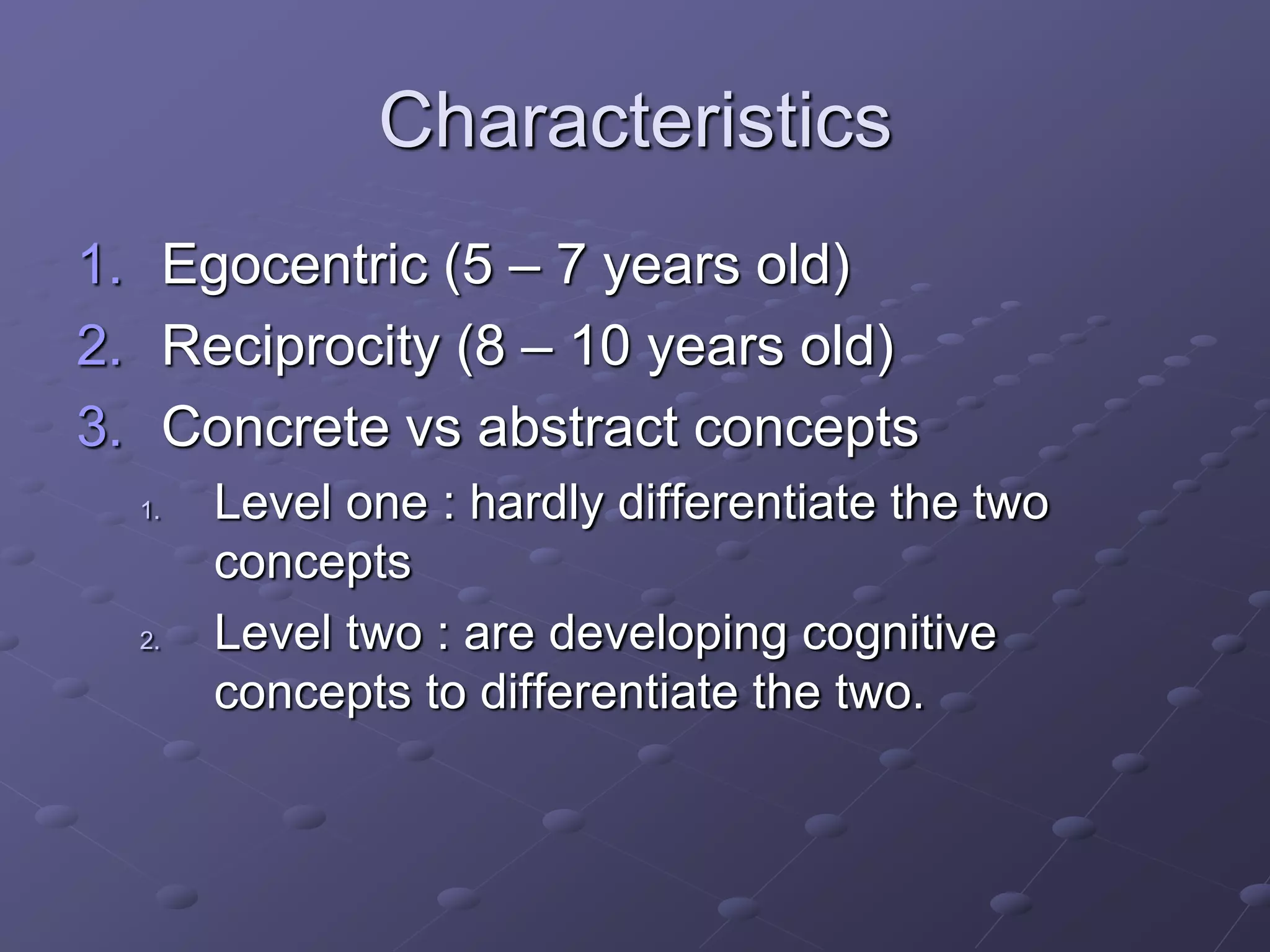
Characteristics
1. Egocentric (5 – 7 years old)
2. Reciprocity (8 – 10 years old)
3. Concrete vs abstract concepts
1. Level one : hardly differentiate the two
concepts
2. Level two : are developing cognitive
concepts to differentiate the two.
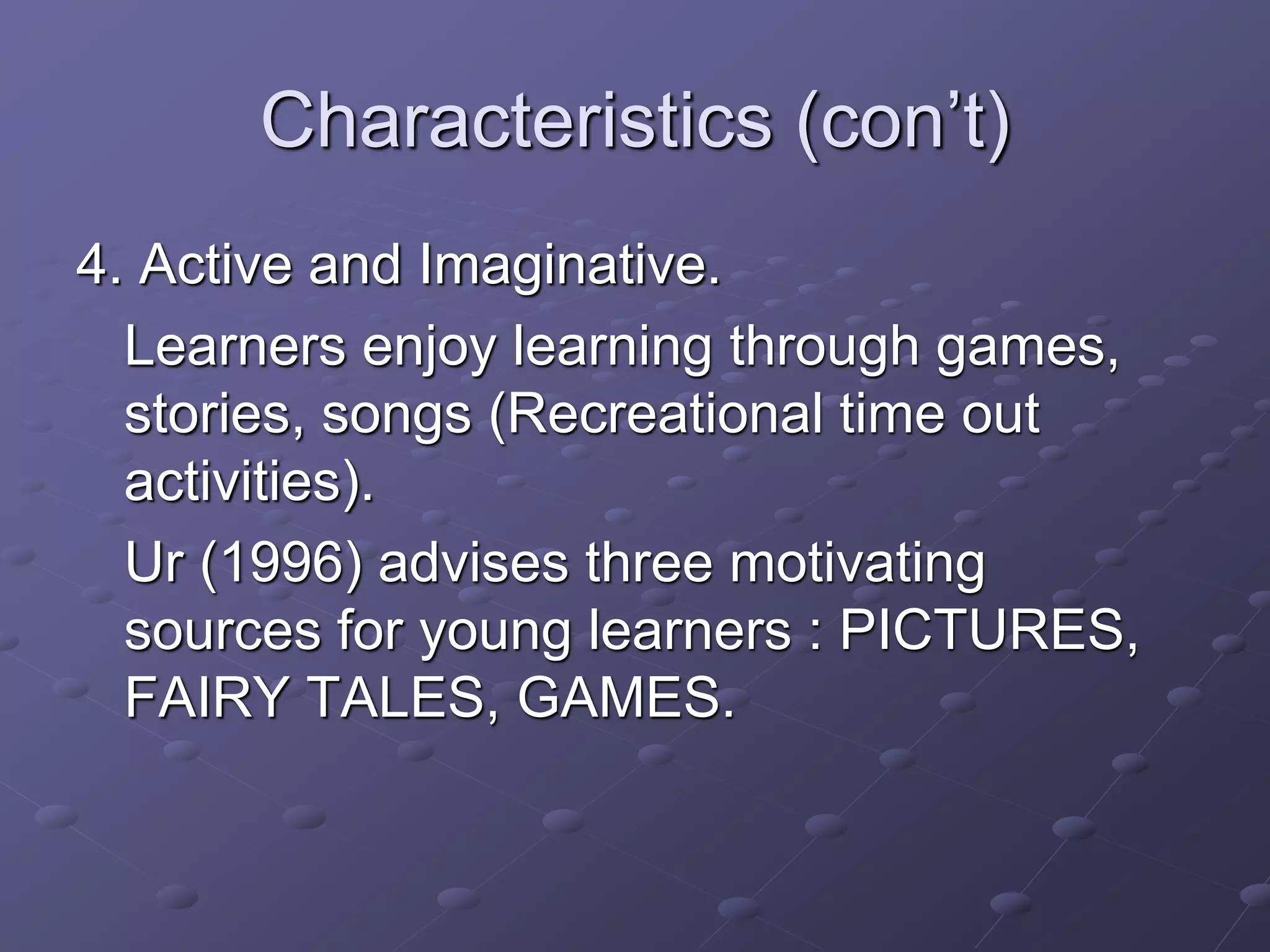
Characteristics (con’t)
4. Active and Imaginative.
Learners enjoy learning through games,
stories, songs (Recreational time out
activities).
Ur (1996) advises three motivating
sources for young learners : PICTURES,
FAIRY TALES, GAMES.
Characteristics (con’t)
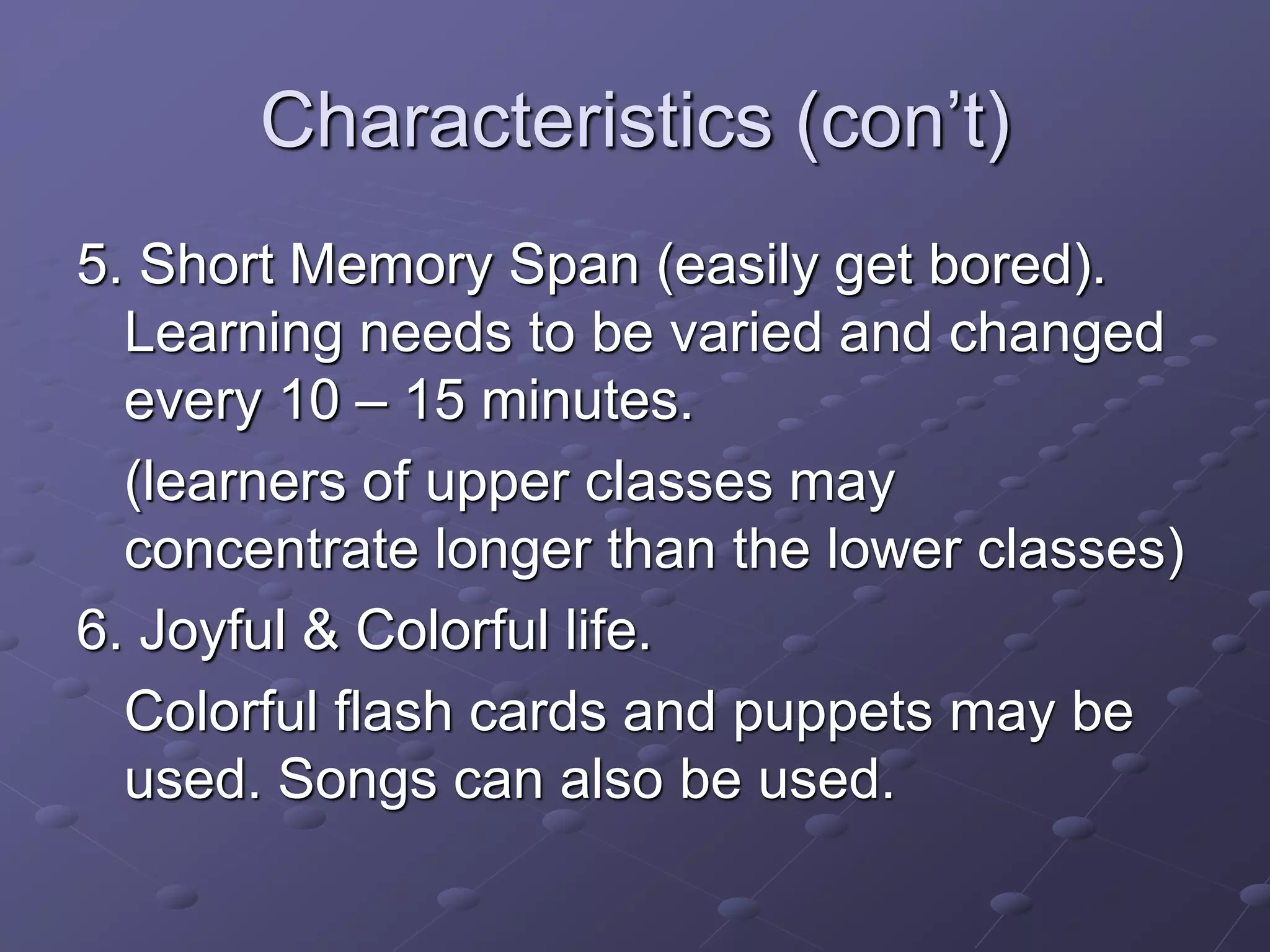
5. Short Memory Span (easily get bored).
Learning needs to be varied and changed
every 10 – 15 minutes.
(learners of upper classes may
concentrate longer than the lower classes)
6. Joyful & Colorful life.
Colorful flash cards and puppets may be
used. Songs can also be used.
Characteristics (con’t)
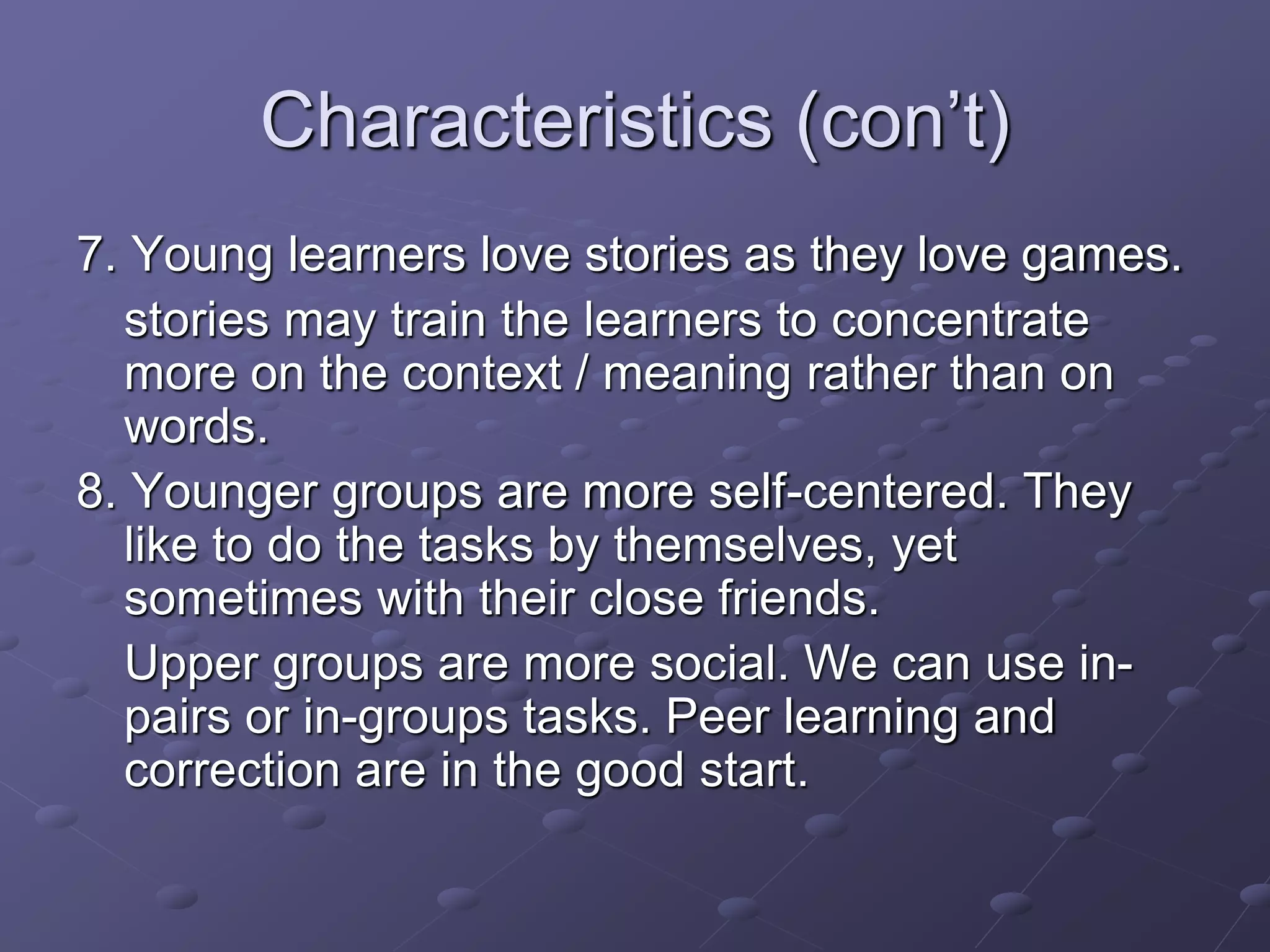
7. Young learners love stories as they love games.
stories may train the learners to concentrate
more on the context / meaning rather than on
words.
8. Younger groups are more self-centered. They
like to do the tasks by themselves, yet
sometimes with their close friends.
Upper groups are more social. We can use in-
pairs or in-groups tasks. Peer learning and
correction are in the good start.
Characteristics (con’t)
9. Upper groups are ready for further step of
learning (providing that their learning history are
sufficient). They are developing the ability to
understand a context of a discourse without
word by word translation.
10. Learning By Doing.
Input – Exposure – Opportunity
(The best way of studying a language is by
functioning it in communication).
Therefore,
The learning should be fun and natural :
avoiding stresses and anxiety. This can be
done by using commands, physical
movements and pictures
The language is presented through
sounds not written symbols, therefore
listening come first before speaking
The learning should facilitate the children’s
senses, such as touching, seeing,
listening, smelling, tasting
Meaning should be made clear by
presenting concrete objects or by
presenting experiences
The teaching should start from what the
students already know in order to activate
association processes. Teachers add one
new segment

Teaching Across Age Level (children)

  • 1.
    Teaching English to YoungLearners The Joy and the Challenges
  • 2.
    Basic Assumption It ispopularly believed that children are better language learners than adults CRITICAL PERIOD HYPOTHESIS The LAD is on the pinnacle period (between 2 to 10) where it is widely open to acquisition & learning
  • 3.
    Young Learners basedon ages Are between 6 – 12 years old 1. Younger group (6 – 8 years old) 2. Older group (9 – 12 years old) Scott & Ytreberg (1990) distinguish young learners into : Level One (5-7 years old) and Level Two (beginners) (8 – 10 years old).
  • 4.
    Young Learners basedon classes Younger Group (6 – 8 years old) are the 1st, 2nd, & 3rd graders, and Older Group (9 – 12 years old) are the 4th, 5th, and 6th graders.
  • 5.
    Characteristics 1. Egocentric (5– 7 years old) 2. Reciprocity (8 – 10 years old) 3. Concrete vs abstract concepts 1. Level one : hardly differentiate the two concepts 2. Level two : are developing cognitive concepts to differentiate the two.
  • 6.
    Characteristics (con’t) 4. Activeand Imaginative. Learners enjoy learning through games, stories, songs (Recreational time out activities). Ur (1996) advises three motivating sources for young learners : PICTURES, FAIRY TALES, GAMES.
  • 7.
    Characteristics (con’t) 5. ShortMemory Span (easily get bored). Learning needs to be varied and changed every 10 – 15 minutes. (learners of upper classes may concentrate longer than the lower classes) 6. Joyful & Colorful life. Colorful flash cards and puppets may be used. Songs can also be used.
  • 8.
    Characteristics (con’t) 7. Younglearners love stories as they love games. stories may train the learners to concentrate more on the context / meaning rather than on words. 8. Younger groups are more self-centered. They like to do the tasks by themselves, yet sometimes with their close friends. Upper groups are more social. We can use in- pairs or in-groups tasks. Peer learning and correction are in the good start.
  • 9.
    Characteristics (con’t) 9. Uppergroups are ready for further step of learning (providing that their learning history are sufficient). They are developing the ability to understand a context of a discourse without word by word translation. 10. Learning By Doing. Input – Exposure – Opportunity (The best way of studying a language is by functioning it in communication).
  • 10.
    Therefore, The learning shouldbe fun and natural : avoiding stresses and anxiety. This can be done by using commands, physical movements and pictures The language is presented through sounds not written symbols, therefore listening come first before speaking The learning should facilitate the children’s senses, such as touching, seeing, listening, smelling, tasting
  • 11.
    Meaning should bemade clear by presenting concrete objects or by presenting experiences The teaching should start from what the students already know in order to activate association processes. Teachers add one new segment