










Teaching Teenagers
        Eduardo Santos

  Basic Teacher Training Course
           Nov. 3, 2011
Warmer
Try and think back to when you were a teenager.


Can you remember a teacher or person who
  made a lasting impression and motivated you?
  What characteristics did he or she have?
Group work
In groups, think of specific characteristics about
  teenagers.

What problems might you encounter with this
 age group?

What characteristics are specific for this age
 group?
Teenagers
• Young teenagers, aged 12-14

• Middle teenagers, aged 14-17

• Late teenagers, ages 17-19
Young Teenagers
• Watch the video.

• What characteristics of young teenagers can
  you see in the video?
Middle Teenagers
• Watch the video.

• What characteristics of middle teenagers can
  you see in the video?
Young teenagers (12-14 years old)

• They can be a bit moody and difficult to handle at times.
• The most important thing in their lives is themselves = natural
  egocentrism
• A bit of melodrama.
• Their position in school society and hence their level of self-
  esteem and self-confidence are closely tied to how they look.
• They want to belong to the pack. Groups are very important
  as a means of establishing identity and gaining confidence.
• They will still tend to have same-sex friends and move in
  same-sex groups.
• They need to be monitored closely since they ‘regress’ into
  more childlike behavior and fool around.
• A strong ability to think abstractly.
• They often believe what they think and what everyone else
  thinks is essentially the same.
Middle teenagers (14-17 years old)
•   Full physical growth has in most cases been nearly
    achieved.
•   They exhibit strong abilities to work independently.
•   They are less reliant on the group for support.
•   Same-sex groups get replaced by girl-boy relationships.
•   While friends are still very important, group identity
    loses some of its importance and is replaces by
    individual relationships.
•   They learn that there is not only ONE answer to every
    question.
•   They are more willing to accept that there is more than
    one solution to a problem.
Teening up
   your
 textbook
Teening up your textbook
Objectives:
1. To present simple activities that make
   the book more “teen-like”.
2. To demonstrate how any activity can be
   adapted to make teenagers more
   engaged and more motivated.
3. To show how the use of the textbook
   can be very enjoyable.
1. Reading Activities
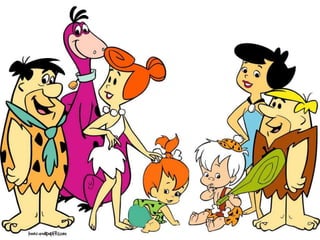
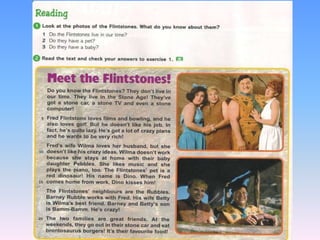
1.1 Matching characters’ descriptions
 1. Who are they? Do you know their names?

 2. What do you know about them? Describe
                them in pairs.

  3. Think about their personalities, what are
                    they like?
1.2 The story behind an image
   • You will see a picture for 10 seconds.

• Pay attention on the details, the expression
          on the girl’s and boy’s faces.

       • What are they talking about?

• What’s the target language of this lesson?
2. Vocabulary Activities
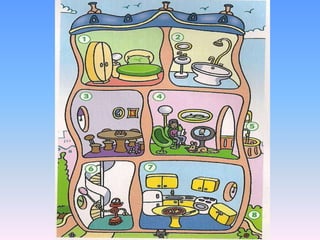
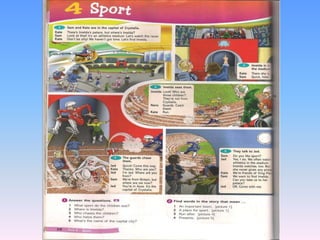
2.1 Photographic Memory
1. You’ll see a picture for 20 seconds.

2. Try to memorize what there is on the picture.

3. Then you’ll have 1 minute to write down
   everything you can see in the picture in pairs.
   Ex: There is a TV...
2.2 Sports Gymkana
Have you ever tried doing a sports gymkana
 with your students?

If so, how did it go?

If not, how could you adapt your classroom or
   part of your school to make a gymkana?
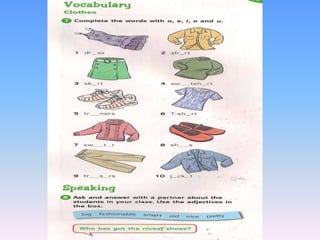
2.3 Fashion show
1. Do the vocabulary exercise and correct with
   your students.


2. Make sure that students know the vocabulary
   of clothes.
2.3 Fashion show
1. In groups of 3, one of the students will go on
   the catwalk and the other 2 students will
   have to describe what he/she is wearing.

2. Example: Sarah’s wearing a blue dress and a
   yellow hat. She’s wearing pink shoes and
   white socks.
3. Listening Activities
3.1 Raise your hand
1. I have 7 different kinds of Tv programmes.

2. Can you guess them?

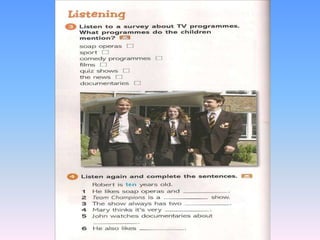
3. You’re going to listen to a survey about TV
   programmes. What programmes do the
   children mention?
4. Raise the TV programme card you have if it’s
   mentioned.
3.2 Radio interview
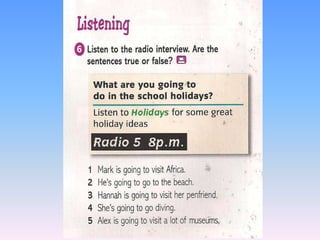
1. You are going to listen to a radio interview
   with 3 students: Mark, Hannah and Alex.

2. In groups of 3, listen and find out what they
   are going to do in the school holidays.

3. After the listening, compare their answers
   with your school holidays. Are you doing the
   same as any of them?
4. Grammar Activities
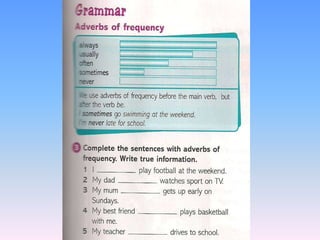
4.1 Adverbs of Frequency
1. Match the slips of papers with the adverbs of
   frequency.

2. Open your books to p.29 and check your
   answers.

3. In groups, think of sentences that are true for
   you. What do you always/usually/never do...
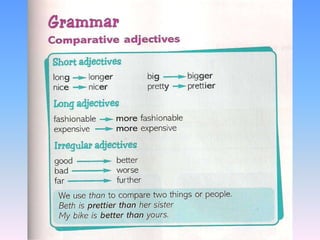
4.2 Comparatives & Superlatives
1. How do you work with Comparatives and
   Superlatives with your students?


2. List 1 or 2 activities you think are motivating
    and enjoyable for your students.
4.2 Comparatives & Superlatives
1. Ask for 5 volunteers to participate in the
   activity.

2. Each student will be an animal.

3. Line up according to what your teacher says.
   The other students have to agree or disagree.
4.3 Chinese Whispers
1. Divide the class into 2 groups.
2. The two groups line up facing the
   whiteboard.
3. T shows the sentences to the last one in line
   and the students have to whisper to the
   other students the sentences.
4. The first student to write the sentence
   correctly on the board gets the point.
5. Open the books and check if the sentences
   are correct.
4.4 Scrambled Grammar
1. Divide the class into groups.
2. Each group will receive slips of paper with
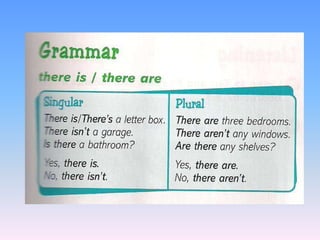
   sentences (There is/There are).
3. The stds have to unscramble the sentence
   and write them correctly on the board.
4. Open your books to p.39 and check if the
   sentences are correct.
          *variation (missing words)
5. Speaking Activities
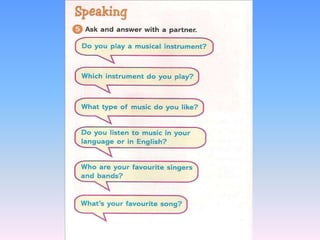
5.1 Match ‘n’ Speak
1. Divide the class into 2 groups.

2. Each group will receive some slips of papers.

3. Match the 2 parts of the questions.

4. The first group to finish wins.

5. Ask and answer with a partner.
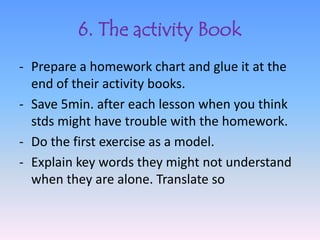
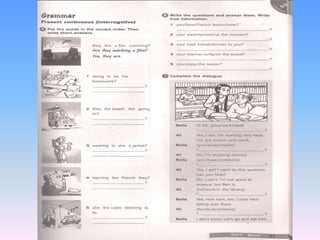
6. The activity Book
- Prepare a homework chart and glue it at the
  end of their activity books.
- Save 5min. after each lesson when you think
  stds might have trouble with the homework.
- Do the first exercise as a model.
- Explain key words they might not understand
  when they are alone. Translate so
7. Song Activities
7.1 Together
1. Watch the video.

2. Show the chorus to the students.

3. Students prepare the together sign.

4. Discuss with your students the meaning of
   ‘together’.
7.2 Happy
1. Listen to the song HAPPY.

2. Count how many times the word HAPPY
   appears in the song.

3. You CAN’T use paper or your fingers.
7.2 Happy
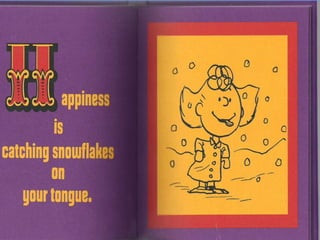
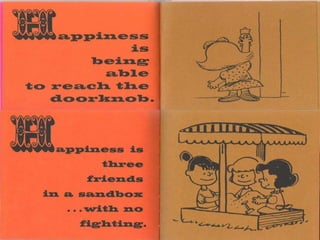
Happiness project

 ‘Happiness is...’
Youtube links:
http://www.youtube.com/watch?v=NGtS2-a4CBI
  (together)

http://www.youtube.com/watch?v=9HTSlLg8eCI
  (Happy)
Further reading
• Understanding how adolescents think:
http://www.edutopia.org/classroom-management-learning-
   states-teenagers-interview


• Understanding the teenage brain
http://teenagebrain.blogspot.com/
Teaching teenagers - BTTC Session

Teaching teenagers - BTTC Session

  • 1.
    Teaching Teenagers Eduardo Santos Basic Teacher Training Course Nov. 3, 2011
  • 2.
    Warmer Try and thinkback to when you were a teenager. Can you remember a teacher or person who made a lasting impression and motivated you? What characteristics did he or she have?
  • 3.
    Group work In groups,think of specific characteristics about teenagers. What problems might you encounter with this age group? What characteristics are specific for this age group?
  • 4.
    Teenagers • Young teenagers,aged 12-14 • Middle teenagers, aged 14-17 • Late teenagers, ages 17-19
  • 5.
    Young Teenagers • Watchthe video. • What characteristics of young teenagers can you see in the video?
  • 7.
    Middle Teenagers • Watchthe video. • What characteristics of middle teenagers can you see in the video?
  • 9.
    Young teenagers (12-14years old) • They can be a bit moody and difficult to handle at times. • The most important thing in their lives is themselves = natural egocentrism • A bit of melodrama. • Their position in school society and hence their level of self- esteem and self-confidence are closely tied to how they look. • They want to belong to the pack. Groups are very important as a means of establishing identity and gaining confidence. • They will still tend to have same-sex friends and move in same-sex groups. • They need to be monitored closely since they ‘regress’ into more childlike behavior and fool around. • A strong ability to think abstractly. • They often believe what they think and what everyone else thinks is essentially the same.
  • 10.
    Middle teenagers (14-17years old) • Full physical growth has in most cases been nearly achieved. • They exhibit strong abilities to work independently. • They are less reliant on the group for support. • Same-sex groups get replaced by girl-boy relationships. • While friends are still very important, group identity loses some of its importance and is replaces by individual relationships. • They learn that there is not only ONE answer to every question. • They are more willing to accept that there is more than one solution to a problem.
  • 12.
    Teening up your textbook
  • 13.
    Teening up yourtextbook Objectives: 1. To present simple activities that make the book more “teen-like”. 2. To demonstrate how any activity can be adapted to make teenagers more engaged and more motivated. 3. To show how the use of the textbook can be very enjoyable.
  • 14.
  • 15.
    1.1 Matching characters’descriptions 1. Who are they? Do you know their names? 2. What do you know about them? Describe them in pairs. 3. Think about their personalities, what are they like?
  • 18.
    1.2 The storybehind an image • You will see a picture for 10 seconds. • Pay attention on the details, the expression on the girl’s and boy’s faces. • What are they talking about? • What’s the target language of this lesson?
  • 22.
  • 23.
    2.1 Photographic Memory 1.You’ll see a picture for 20 seconds. 2. Try to memorize what there is on the picture. 3. Then you’ll have 1 minute to write down everything you can see in the picture in pairs. Ex: There is a TV...
  • 26.
    2.2 Sports Gymkana Haveyou ever tried doing a sports gymkana with your students? If so, how did it go? If not, how could you adapt your classroom or part of your school to make a gymkana?
  • 27.
    2.3 Fashion show 1.Do the vocabulary exercise and correct with your students. 2. Make sure that students know the vocabulary of clothes.
  • 29.
    2.3 Fashion show 1.In groups of 3, one of the students will go on the catwalk and the other 2 students will have to describe what he/she is wearing. 2. Example: Sarah’s wearing a blue dress and a yellow hat. She’s wearing pink shoes and white socks.
  • 30.
  • 31.
    3.1 Raise yourhand 1. I have 7 different kinds of Tv programmes. 2. Can you guess them? 3. You’re going to listen to a survey about TV programmes. What programmes do the children mention? 4. Raise the TV programme card you have if it’s mentioned.
  • 33.
    3.2 Radio interview 1.You are going to listen to a radio interview with 3 students: Mark, Hannah and Alex. 2. In groups of 3, listen and find out what they are going to do in the school holidays. 3. After the listening, compare their answers with your school holidays. Are you doing the same as any of them?
  • 35.
  • 36.
    4.1 Adverbs ofFrequency 1. Match the slips of papers with the adverbs of frequency. 2. Open your books to p.29 and check your answers. 3. In groups, think of sentences that are true for you. What do you always/usually/never do...
  • 38.
    4.2 Comparatives &Superlatives 1. How do you work with Comparatives and Superlatives with your students? 2. List 1 or 2 activities you think are motivating and enjoyable for your students.
  • 40.
    4.2 Comparatives &Superlatives 1. Ask for 5 volunteers to participate in the activity. 2. Each student will be an animal. 3. Line up according to what your teacher says. The other students have to agree or disagree.
  • 41.
    4.3 Chinese Whispers 1.Divide the class into 2 groups. 2. The two groups line up facing the whiteboard. 3. T shows the sentences to the last one in line and the students have to whisper to the other students the sentences. 4. The first student to write the sentence correctly on the board gets the point. 5. Open the books and check if the sentences are correct.
  • 43.
    4.4 Scrambled Grammar 1.Divide the class into groups. 2. Each group will receive slips of paper with sentences (There is/There are). 3. The stds have to unscramble the sentence and write them correctly on the board. 4. Open your books to p.39 and check if the sentences are correct. *variation (missing words)
  • 45.
  • 46.
    5.1 Match ‘n’Speak 1. Divide the class into 2 groups. 2. Each group will receive some slips of papers. 3. Match the 2 parts of the questions. 4. The first group to finish wins. 5. Ask and answer with a partner.
  • 48.
    6. The activityBook - Prepare a homework chart and glue it at the end of their activity books. - Save 5min. after each lesson when you think stds might have trouble with the homework. - Do the first exercise as a model. - Explain key words they might not understand when they are alone. Translate so
  • 50.
  • 51.
    7.1 Together 1. Watchthe video. 2. Show the chorus to the students. 3. Students prepare the together sign. 4. Discuss with your students the meaning of ‘together’.
  • 52.
    7.2 Happy 1. Listento the song HAPPY. 2. Count how many times the word HAPPY appears in the song. 3. You CAN’T use paper or your fingers.
  • 53.
    7.2 Happy Happiness project ‘Happiness is...’
  • 57.
    Youtube links: http://www.youtube.com/watch?v=NGtS2-a4CBI (together) http://www.youtube.com/watch?v=9HTSlLg8eCI (Happy)
  • 58.
    Further reading • Understandinghow adolescents think: http://www.edutopia.org/classroom-management-learning- states-teenagers-interview • Understanding the teenage brain http://teenagebrain.blogspot.com/