Globalization is a process of
economic, political and
cultural integration and
unification.
Globalization involves many
countries and majority of
huge enterprises.
 The movement towards the
expansion of economic and
social ties between countries
through the spread of
corporate institutions and the
capitalist philosophy that
leads to the shrinking
of the world in economic
terms.
 The literature on the
definitions of globalization
revealed that it can be
classified as narrow and
exclusive or broad and
inclusive.
“Globalization means the
onset of borderless
world.”(Ohmae 1992)
“The characteristics of
globalization trend include the
internationalizing of production, the
new international division of labor,
new migratory movements from
South to North, the new competitive
environment that accelerates this
processes, and the
internationalizing of the state,
making the states into agencies of
the globalizing world.”(Robert Cox)
The perspective of a
person who defines
globalization shapes its
definition.
Globalization is the
debate and the debate is
globalization.
Globalization is a reality.
Globalization And Its Effects To
World Politics
Globalization And Its Effects On
Economics
Globalization In Relation To Culture
and Communication
Various Forms Of Connectivity
Brought About By Globalization
Expansion And Stretching Of Social
Relations
Intensification And Acceleration Of
Social Exchanges And Activities
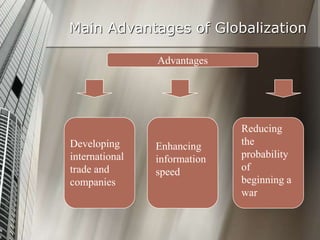
Main Advantages of Globalization
Advantages
Developing
international
trade and
companies
Enhancing
information
speed
Reducing
the
probability
of
beginning a
war
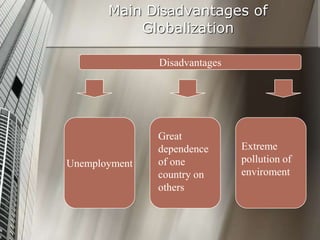
Main Disadvantages of
Globalization
Disadvantages
Unemployment
Great
dependence
of one
country on
others
Extreme
pollution of
enviroment
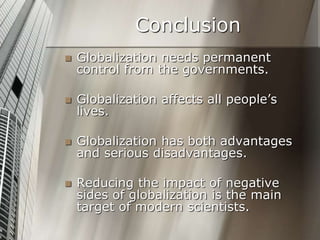
Conclusion
 Globalization needs permanent
control from the governments.
 Globalization affects all people’s
lives.
 Globalization has both advantages
and serious disadvantages.
 Reducing the impact of negative
sides of globalization is the main
target of modern scientists.

TCW L1.1- GLOBALIZATION LECTURE.pptx

  • 4.
    Globalization is aprocess of economic, political and cultural integration and unification. Globalization involves many countries and majority of huge enterprises.
  • 5.
     The movementtowards the expansion of economic and social ties between countries through the spread of corporate institutions and the capitalist philosophy that leads to the shrinking of the world in economic terms.
  • 6.
     The literatureon the definitions of globalization revealed that it can be classified as narrow and exclusive or broad and inclusive. “Globalization means the onset of borderless world.”(Ohmae 1992)
  • 7.
    “The characteristics of globalizationtrend include the internationalizing of production, the new international division of labor, new migratory movements from South to North, the new competitive environment that accelerates this processes, and the internationalizing of the state, making the states into agencies of the globalizing world.”(Robert Cox)
  • 8.
    The perspective ofa person who defines globalization shapes its definition. Globalization is the debate and the debate is globalization. Globalization is a reality.
  • 10.
    Globalization And ItsEffects To World Politics Globalization And Its Effects On Economics Globalization In Relation To Culture and Communication
  • 11.
    Various Forms OfConnectivity Brought About By Globalization Expansion And Stretching Of Social Relations Intensification And Acceleration Of Social Exchanges And Activities
  • 13.
    Main Advantages ofGlobalization Advantages Developing international trade and companies Enhancing information speed Reducing the probability of beginning a war
  • 14.
  • 15.
    Conclusion  Globalization needspermanent control from the governments.  Globalization affects all people’s lives.  Globalization has both advantages and serious disadvantages.  Reducing the impact of negative sides of globalization is the main target of modern scientists.