


 Introduction
 Location
 History
 Purpose
 Construction
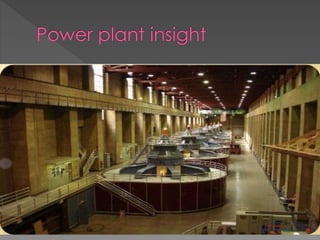
 Power plant Description
 Power Generation
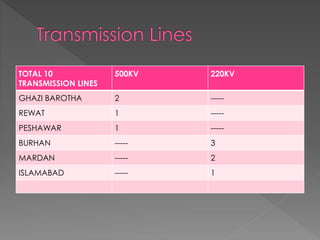
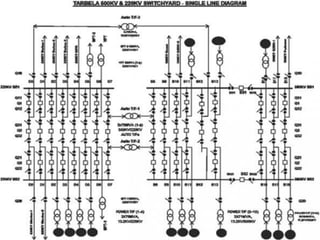
 Transmission Lines
 Projects Benefits
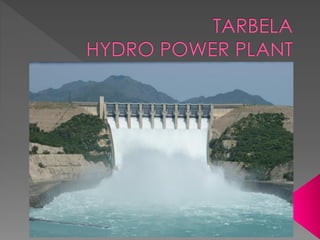
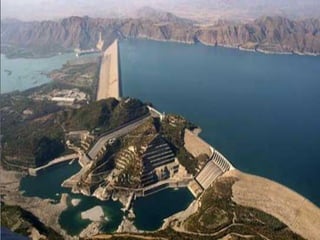
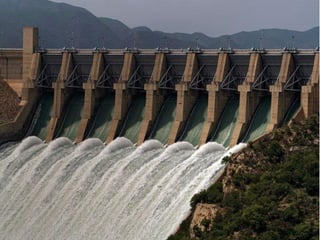
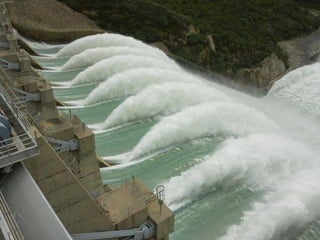
 Tarbela Dam is one of the world’s largest
earth and rock filled Dam and greatest
water resources development project
which was completed in 1976 as a
component of Indus Basin Project.
 It is also the second largest dam in the
world in terms of reservoir capacity,
which is 11.62 million acre-feet (14.3
billion cubic meters).
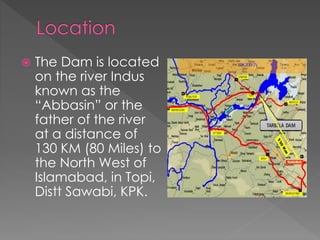
 The Dam is located
on the river Indus
known as the
“Abbasin” or the
father of the river
at a distance of
130 KM (80 Miles) to
the North West of
Islamabad, in Topi,
Distt Sawabi, KPK.
 Pakistan was entirely dependent on
unregulated flows of the Indus River and her
tributaries even after 20 years of
independence.
 The main reason behind this problem was
the seasonal variations in the river flow.
Additionally, there were no storage
reservoirs to conserve surplus flows.
 Tarbela Dam was constructed as part of the
Indus Basin Project after signing of the
1960 Indus Waters Treaty between India
and Pakistan.
 The primary purpose of the Tarbela Dam
Project was to regulate the flows of the
Indus River for irrigation use.
 Other objectives were to achieve
substantial generation of hydroelectric
power and flood control by conserving
snow melt and monsoon flows of the
Indus River.
 Construction on the primary elements of
the project was started in 1968 and
completed in 1976. The initial operations
of the dam started in 1978. The project
was fully completed in 1984, at a cost of
$1.49bn.
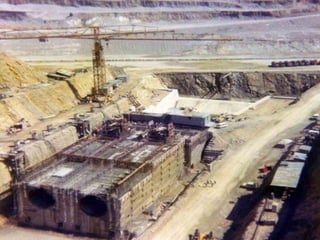
 Construction of Tarbela Dam was carried
out in three stages to meet the diversion
requirements of the river.
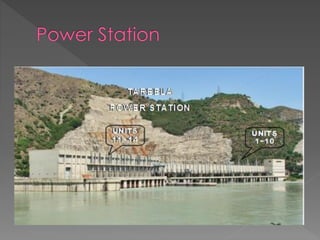
 The Tarbela hydro power plant is constructed on the right side of
the main embankment. Five large tunnels were constructed as
part of Tarbela Dam's outlet works. Hydroelectricity is generated
from turbines in tunnel 1 through 3, while tunnels 4 and 5 were
designed for irrigation use. Both tunnels are to be converted to
hydropower tunnels to increase Tarbela's electricity-generating
capacity. These tunnels were originally used to divert the Indus
River while the dam was being constructed.
 It is installed with 14 power generating units and the water is fed
from outlet tunnels one, two and three. The plant has a total
installed capacity of 3,478MW.
 Four generators of 175MW each on tunnel one were put into
production in 1977. There are six 175MW generators on tunnel
two, four of which were commissioned in 1982 and the
remaining two in 1985. Four generators of 432MW each were
installed in tunnel three in 1992, , for a total generating capacity
of 3,478 MW.
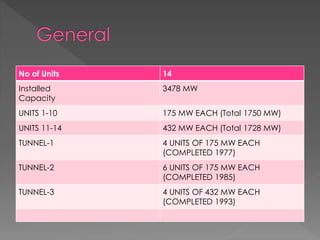
No of Units 14
Installed
Capacity
3478 MW
UNITS 1-10 175 MW EACH (Total 1750 MW)
UNITS 11-14 432 MW EACH (Total 1728 MW)
TUNNEL-1 4 UNITS OF 175 MW EACH
(COMPLETED 1977)
TUNNEL-2 6 UNITS OF 175 MW EACH
(COMPLETED 1985)
TUNNEL-3 4 UNITS OF 432 MW EACH
(COMPLETED 1993)
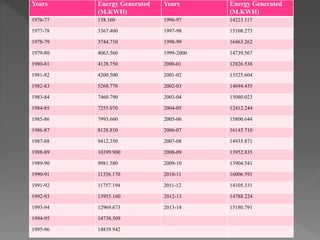
Years Energy Generated
(M.KWH)
Years Energy Generated
(M.KWH)
1976-77 138.160 1996-97 14223.117
1977-78 3367.400 1997-98 15108.273
1978-79 3744.710 1998-99 16463.262
1979-80 4063.560 1999-2000 14739.567
1980-81 4128.750 2000-01 12826.538
1981-82 4200.500 2001-02 13525.604
1982-83 5268.770 2002-03 14694.435
1983-84 7460.790 2003-04 15080.023
1984-85 7255.070 2004-05 12412.244
1985-86 7993.660 2005-06 15800.644
1986-87 8128.810 2006-07 16145.710
1987-88 9412.350 2007-08 14935.871
1988-89 10399.900 2008-09 13952.835
1989-90 9981.580 2009-10 13904.541
1990-91 11356.170 2010-11 16006.591
1991-92 11757.194 2011-12 14105.331
1992-93 13955.160 2012-13 14788.224
1993-94 12969.673 2013-14 15180.791
1994-95 14738.509
1995-96 14839.942
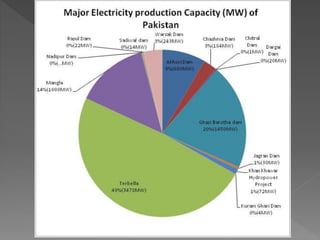
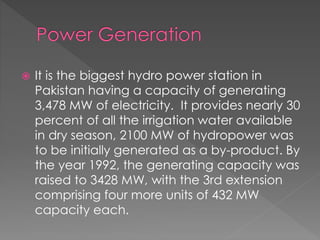
 It is the biggest hydro power station in
Pakistan having a capacity of generating
3,478 MW of electricity. It provides nearly 30
percent of all the irrigation water available
in dry season, 2100 MW of hydropower was
to be initially generated as a by-product. By
the year 1992, the generating capacity was
raised to 3428 MW, with the 3rd extension
comprising four more units of 432 MW
capacity each.
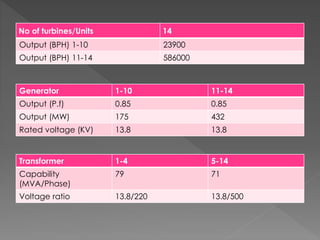
No of turbines/Units 14
Output (BPH) 1-10 23900
Output (BPH) 11-14 586000
Generator 1-10 11-14
Output (P.f) 0.85 0.85
Output (MW) 175 432
Rated voltage (KV) 13.8 13.8
Transformer 1-4 5-14
Capability
(MVA/Phase)
79 71
Voltage ratio 13.8/220 13.8/500
TOTAL 10
TRANSMISSION LINES
500KV 220KV
GHAZI BAROTHA 2 -----
REWAT 1 -----
PESHAWAR 1 -----
BURHAN ----- 3
MARDAN ----- 2
ISLAMABAD ----- 1
 In addition to fulfilling the primary purpose
of the dam, i.e., supplying water for
irrigation, Tarbela Power Station has
generated 341.139 billion kWh of
cheap hydro-electric energy since
commissioning. A record annual generation
of 16.463 billion kWh was recorded during
1998–99. Annual generation during 2007–08
was 14.959 billion kWh while the station
shared peak load of 3702 MW during the
year, which was 23.057% of total WAPDA
system peak.
 In September 2013, Pakistan's Water and Power
Development Authority signed a Rs. 26.053 billion
contract with Chinese firm Sinohydro and
Germany's Voith Hydro for executing civil works on
the 1,410 MW Tarbela-IV Extension Project.
 The project is being constructed at tunnel 4 which
was originally intended for irrigation but was later
taken up for power generation as country’s electricity
demand increased.
 On an annual basis, over 70% of water passing
through Tarbela is discharged over spillways, while
only a portion of the remaining 30% is used for
hydropower generation.
 The fifth phase extension will use the second
irrigation tunnel. The project will require
installation of three turbines with a capacity
of 470 MW each in Tarbela's fifth tunnel
which was previously dedicated to
agricultural use. Upon completion, the total
power generating capacity of Tarbela Dam
will be increased to 6,298 MW.
 The hydro power project of tunnel 5 has two
major components: power generation
facilities and power evacuation facilities.
 https://en.wikipedia.org/wiki/Tarbela_Da
m
 http://www.wapda.gov.pk/index.php/pr
ojects/hydro-power/o-m/tarbela-dam
 http://www.water-
technology.net/projects/tarbela-dam-
project/
 http://pakistanpaedia.com/mega/tarbe
la_dam.html
Tarbela Hydro Power Plant

Tarbela Hydro Power Plant

  • 4.
     Introduction  Location History  Purpose  Construction  Power plant Description  Power Generation  Transmission Lines  Projects Benefits
  • 6.
     Tarbela Damis one of the world’s largest earth and rock filled Dam and greatest water resources development project which was completed in 1976 as a component of Indus Basin Project.  It is also the second largest dam in the world in terms of reservoir capacity, which is 11.62 million acre-feet (14.3 billion cubic meters).
  • 7.
     The Damis located on the river Indus known as the “Abbasin” or the father of the river at a distance of 130 KM (80 Miles) to the North West of Islamabad, in Topi, Distt Sawabi, KPK.
  • 8.
     Pakistan wasentirely dependent on unregulated flows of the Indus River and her tributaries even after 20 years of independence.  The main reason behind this problem was the seasonal variations in the river flow. Additionally, there were no storage reservoirs to conserve surplus flows.  Tarbela Dam was constructed as part of the Indus Basin Project after signing of the 1960 Indus Waters Treaty between India and Pakistan.
  • 10.
     The primarypurpose of the Tarbela Dam Project was to regulate the flows of the Indus River for irrigation use.  Other objectives were to achieve substantial generation of hydroelectric power and flood control by conserving snow melt and monsoon flows of the Indus River.
  • 12.
     Construction onthe primary elements of the project was started in 1968 and completed in 1976. The initial operations of the dam started in 1978. The project was fully completed in 1984, at a cost of $1.49bn.  Construction of Tarbela Dam was carried out in three stages to meet the diversion requirements of the river.
  • 14.
     The Tarbelahydro power plant is constructed on the right side of the main embankment. Five large tunnels were constructed as part of Tarbela Dam's outlet works. Hydroelectricity is generated from turbines in tunnel 1 through 3, while tunnels 4 and 5 were designed for irrigation use. Both tunnels are to be converted to hydropower tunnels to increase Tarbela's electricity-generating capacity. These tunnels were originally used to divert the Indus River while the dam was being constructed.  It is installed with 14 power generating units and the water is fed from outlet tunnels one, two and three. The plant has a total installed capacity of 3,478MW.  Four generators of 175MW each on tunnel one were put into production in 1977. There are six 175MW generators on tunnel two, four of which were commissioned in 1982 and the remaining two in 1985. Four generators of 432MW each were installed in tunnel three in 1992, , for a total generating capacity of 3,478 MW.
  • 16.
    No of Units14 Installed Capacity 3478 MW UNITS 1-10 175 MW EACH (Total 1750 MW) UNITS 11-14 432 MW EACH (Total 1728 MW) TUNNEL-1 4 UNITS OF 175 MW EACH (COMPLETED 1977) TUNNEL-2 6 UNITS OF 175 MW EACH (COMPLETED 1985) TUNNEL-3 4 UNITS OF 432 MW EACH (COMPLETED 1993)
  • 17.
    Years Energy Generated (M.KWH) YearsEnergy Generated (M.KWH) 1976-77 138.160 1996-97 14223.117 1977-78 3367.400 1997-98 15108.273 1978-79 3744.710 1998-99 16463.262 1979-80 4063.560 1999-2000 14739.567 1980-81 4128.750 2000-01 12826.538 1981-82 4200.500 2001-02 13525.604 1982-83 5268.770 2002-03 14694.435 1983-84 7460.790 2003-04 15080.023 1984-85 7255.070 2004-05 12412.244 1985-86 7993.660 2005-06 15800.644 1986-87 8128.810 2006-07 16145.710 1987-88 9412.350 2007-08 14935.871 1988-89 10399.900 2008-09 13952.835 1989-90 9981.580 2009-10 13904.541 1990-91 11356.170 2010-11 16006.591 1991-92 11757.194 2011-12 14105.331 1992-93 13955.160 2012-13 14788.224 1993-94 12969.673 2013-14 15180.791 1994-95 14738.509 1995-96 14839.942
  • 18.
     It isthe biggest hydro power station in Pakistan having a capacity of generating 3,478 MW of electricity. It provides nearly 30 percent of all the irrigation water available in dry season, 2100 MW of hydropower was to be initially generated as a by-product. By the year 1992, the generating capacity was raised to 3428 MW, with the 3rd extension comprising four more units of 432 MW capacity each.
  • 20.
    No of turbines/Units14 Output (BPH) 1-10 23900 Output (BPH) 11-14 586000 Generator 1-10 11-14 Output (P.f) 0.85 0.85 Output (MW) 175 432 Rated voltage (KV) 13.8 13.8 Transformer 1-4 5-14 Capability (MVA/Phase) 79 71 Voltage ratio 13.8/220 13.8/500
  • 21.
    TOTAL 10 TRANSMISSION LINES 500KV220KV GHAZI BAROTHA 2 ----- REWAT 1 ----- PESHAWAR 1 ----- BURHAN ----- 3 MARDAN ----- 2 ISLAMABAD ----- 1
  • 23.
     In additionto fulfilling the primary purpose of the dam, i.e., supplying water for irrigation, Tarbela Power Station has generated 341.139 billion kWh of cheap hydro-electric energy since commissioning. A record annual generation of 16.463 billion kWh was recorded during 1998–99. Annual generation during 2007–08 was 14.959 billion kWh while the station shared peak load of 3702 MW during the year, which was 23.057% of total WAPDA system peak.
  • 25.
     In September2013, Pakistan's Water and Power Development Authority signed a Rs. 26.053 billion contract with Chinese firm Sinohydro and Germany's Voith Hydro for executing civil works on the 1,410 MW Tarbela-IV Extension Project.  The project is being constructed at tunnel 4 which was originally intended for irrigation but was later taken up for power generation as country’s electricity demand increased.  On an annual basis, over 70% of water passing through Tarbela is discharged over spillways, while only a portion of the remaining 30% is used for hydropower generation.
  • 26.
     The fifthphase extension will use the second irrigation tunnel. The project will require installation of three turbines with a capacity of 470 MW each in Tarbela's fifth tunnel which was previously dedicated to agricultural use. Upon completion, the total power generating capacity of Tarbela Dam will be increased to 6,298 MW.  The hydro power project of tunnel 5 has two major components: power generation facilities and power evacuation facilities.
  • 28.
     https://en.wikipedia.org/wiki/Tarbela_Da m  http://www.wapda.gov.pk/index.php/pr ojects/hydro-power/o-m/tarbela-dam http://www.water- technology.net/projects/tarbela-dam- project/  http://pakistanpaedia.com/mega/tarbe la_dam.html