Talking Stem Cells


Dr Marilyn Robertson: Director of Operations SSCN
 Margaret Ann Pearson: Project Manager SSCN
  Henriette Laidlaw: Education Consultant SSCN
Why talk Stem
                      Cells?
• New Biology Curriculum for Higher
  Biology and Human Biology
• A growing industry in Scotland and
  Midlothian
• Opportunity to get the scientist in
  dialogue
• Opportunity for cross curricular
  activities
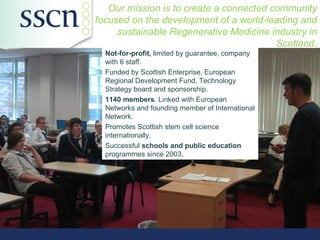
Our mission is to create a connected community
focused on the development of a world-leading and
     sustainable Regenerative Medicine industry in
                                         Scotland.
  Not-for-profit, limited by guarantee, company
  with 6 staff.
  Funded by Scottish Enterprise, European
  Regional Development Fund, Technology
  Strategy board and sponsorship.
  1140 members. Linked with European
  Networks and founding member of International
  Network.
  Promotes Scottish stem cell science
  internationally.
  Successful schools and public education
  programmes since 2003.
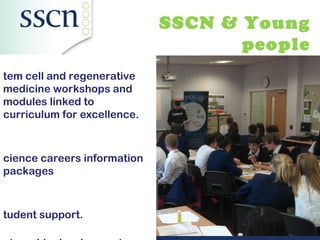
SSCN & Young
                                    people
tem cell and regenerative
medicine workshops and
modules linked to
curriculum for excellence.


cience careers information
packages


tudent support.
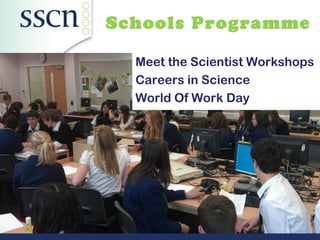
Schools Programme

  Meet the Scientist Workshops
  Careers in Science
  World Of Work Day
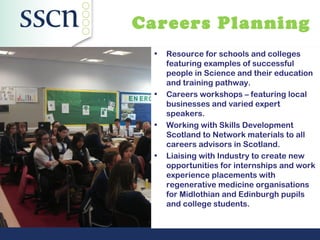
Careers Planning
  •   Resource for schools and colleges
      featuring examples of successful
      people in Science and their education
      and training pathway.
  •   Careers workshops – featuring local
      businesses and varied expert
      speakers.
  •   Working with Skills Development
      Scotland to Network materials to all
      careers advisors in Scotland.
  •   Liaising with Industry to create new
      opportunities for internships and work
      experience placements with
      regenerative medicine organisations
      for Midlothian and Edinburgh pupils
      and college students.
Aim of today

Cross Curricular Activity


           – Biology/RMPS
What do we know?

• RMPS teachers              • Biology teachers
  – What are stem cells?       – What ethical issues
  – How do we use stem           are associated with
    cells                        stem cells relating to
                                  • Obtaining cells
  – What diseases can
                                  • Treatments using stem
    we/do we hope to treat
                                    cells
    using stem cells
Lets talk Stem Cells
recap of cells

Cells are the building blocks of the
           human body.


Our bodies are made up of 75-100
          trillion cells.


 A liver is made up of liver cells,
blood is made of blood cells, etc.


     S o what is a stem cell?
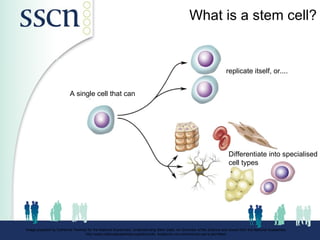
What is a stem cell?


                                                                                                                       replicate itself, or....


                          A single cell that can


                                                                                                                        Differentiate into specialised
                                                                                                                        cell types


Image prepared by Catherine Twomey for the National Academies, Understanding Stem Cells: An Overview of the Science and Issues from the National Academies,
                                 http://www.nationalacademies.org/stemcells. Academic non-commercial use is permitted.
So, where can we find
                      stem cells?
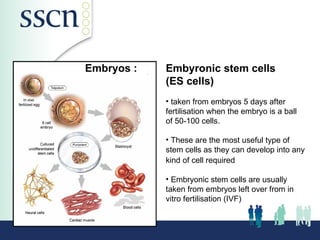
Embryos :     Embyronic stem cells
              (ES cells)
              • taken from embryos 5 days after
              fertilisation when the embryo is a ball
              of 50-100 cells.

              • These are the most useful type of
              stem cells as they can develop into any
              kind of cell required (pluripotent).

              • Embryonic stem cells are usually
              taken from embryos left over from in
              vitro fertilisation (IVF)
Where else?


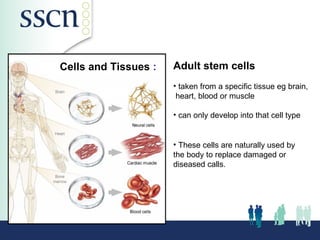
Cells and Tissues :   Adult stem cells
                      • taken from a specific tissue eg brain,
                       heart, blood or muscle

                      • can only develop into that cell type
                      (multipotent).

                      • These cells are naturally used by
                      the body to replace damaged or
                      diseased calls.
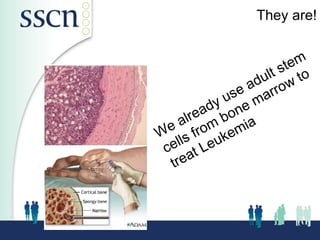
They are!


                       tem
                   lt s to
                 du ow
              e a a rr
            us m
          dy ne
        ea bo
     alr m
  e fro emia
W ls
 ce tl Leuk
   tre a
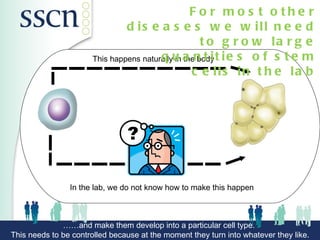
F o r mo s t o the r
                                d is e a s e s w e w ill n e e d
                                                   t o g r o w la r g e
                       This happens naturallyu a n t i t i e s o f s t e m
                                         q in the body
                                                 c e lls in t h e la b


                In the lab, we do not know how to make this happen


              ……and make them develop into a particular cell type.
This needs to be controlled because at the moment they turn into whatever they like.
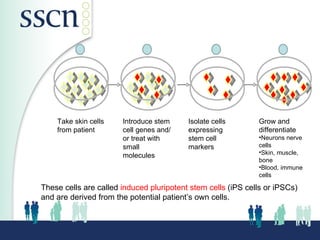
Induced Pluripotent Stem
                                 Cells (iPS) Cells)
           1                  2                    3                  4


    Take skin cells    Introduce stem     Isolate cells       Grow and
    from patient       cell genes and/    expressing          differentiate
                       or treat with      stem cell           •Neurons nerve
                       small              markers             cells
                                                              •Skin, muscle,
                       molecules
                                                              bone
                                                              •Blood, immune
                                                              cells

These cells are called induced pluripotent stem cells (iPS cells or iPSCs)
and are derived from the potential patient’s own cells.
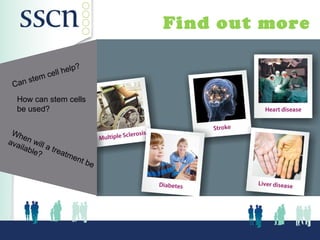
Find out more

                  elp?
         m cell h
     ste
 Can
  How can stem cells
  be used?

 Wh
     e
ava n will
   ilab    a
       le? treatm
                  e   nt b
                          e
Material
•   Student workbooks
•   Teachers Kit
•   Stem cell stories
•   Find out more
•   The dilemma

Talking Stem Cells in Secondary Schools

  • 1.
    Talking Stem Cells DrMarilyn Robertson: Director of Operations SSCN Margaret Ann Pearson: Project Manager SSCN Henriette Laidlaw: Education Consultant SSCN
  • 2.
    Why talk Stem Cells? • New Biology Curriculum for Higher Biology and Human Biology • A growing industry in Scotland and Midlothian • Opportunity to get the scientist in dialogue • Opportunity for cross curricular activities
  • 3.
    Our mission isto create a connected community focused on the development of a world-leading and sustainable Regenerative Medicine industry in Scotland. Not-for-profit, limited by guarantee, company with 6 staff. Funded by Scottish Enterprise, European Regional Development Fund, Technology Strategy board and sponsorship. 1140 members. Linked with European Networks and founding member of International Network. Promotes Scottish stem cell science internationally. Successful schools and public education programmes since 2003.
  • 4.
    SSCN & Young people tem cell and regenerative medicine workshops and modules linked to curriculum for excellence. cience careers information packages tudent support.
  • 5.
    Schools Programme Meet the Scientist Workshops Careers in Science World Of Work Day
  • 6.
    Careers Planning • Resource for schools and colleges featuring examples of successful people in Science and their education and training pathway. • Careers workshops – featuring local businesses and varied expert speakers. • Working with Skills Development Scotland to Network materials to all careers advisors in Scotland. • Liaising with Industry to create new opportunities for internships and work experience placements with regenerative medicine organisations for Midlothian and Edinburgh pupils and college students.
  • 7.
    Aim of today CrossCurricular Activity – Biology/RMPS
  • 8.
    What do weknow? • RMPS teachers • Biology teachers – What are stem cells? – What ethical issues – How do we use stem are associated with cells stem cells relating to • Obtaining cells – What diseases can • Treatments using stem we/do we hope to treat cells using stem cells
  • 9.
  • 10.
    recap of cells Cellsare the building blocks of the human body. Our bodies are made up of 75-100 trillion cells. A liver is made up of liver cells, blood is made of blood cells, etc. S o what is a stem cell?
  • 11.
    What is astem cell? replicate itself, or.... A single cell that can Differentiate into specialised cell types Image prepared by Catherine Twomey for the National Academies, Understanding Stem Cells: An Overview of the Science and Issues from the National Academies, http://www.nationalacademies.org/stemcells. Academic non-commercial use is permitted.
  • 12.
    So, where canwe find stem cells? Embryos : Embyronic stem cells (ES cells) • taken from embryos 5 days after fertilisation when the embryo is a ball of 50-100 cells. • These are the most useful type of stem cells as they can develop into any kind of cell required (pluripotent). • Embryonic stem cells are usually taken from embryos left over from in vitro fertilisation (IVF)
  • 13.
    Where else? Cells andTissues : Adult stem cells • taken from a specific tissue eg brain, heart, blood or muscle • can only develop into that cell type (multipotent). • These cells are naturally used by the body to replace damaged or diseased calls.
  • 14.
    They are! tem lt s to du ow e a a rr us m dy ne ea bo alr m e fro emia W ls ce tl Leuk tre a
  • 15.
    F o rmo s t o the r d is e a s e s w e w ill n e e d t o g r o w la r g e This happens naturallyu a n t i t i e s o f s t e m q in the body c e lls in t h e la b In the lab, we do not know how to make this happen ……and make them develop into a particular cell type. This needs to be controlled because at the moment they turn into whatever they like.
  • 16.
    Induced Pluripotent Stem Cells (iPS) Cells) 1 2 3 4 Take skin cells Introduce stem Isolate cells Grow and from patient cell genes and/ expressing differentiate or treat with stem cell •Neurons nerve small markers cells •Skin, muscle, molecules bone •Blood, immune cells These cells are called induced pluripotent stem cells (iPS cells or iPSCs) and are derived from the potential patient’s own cells.
  • 17.
    Find out more elp? m cell h ste Can How can stem cells be used? Wh e ava n will ilab a le? treatm e nt b e
  • 18.
    Material • Student workbooks • Teachers Kit • Stem cell stories • Find out more • The dilemma

Editor's Notes

  • #6 Meet the Scientist Workshops - new materials developed to encourage a broad view of careers in science and a better understanding of the regenerative medicines Industry. Careers in Science – Bespoke materials and workshops with key Industry speakers ranging from Modern Apprentices to Senior Managers. World Of Work Day – In conjunction with Skills Development Scotland to bring industry and schools together to highlight opportunities and allow personal careers planning and exciting science experiences.
  • #8 Lets get some aims up on the flip chart
  • #15 Stress that here the body is the bio processor, ie. The cells multiply in the body
  • #16 Message here – we need to be able to scale up
  • #17 Message here – not an embryo