What is a Stem
Cell?
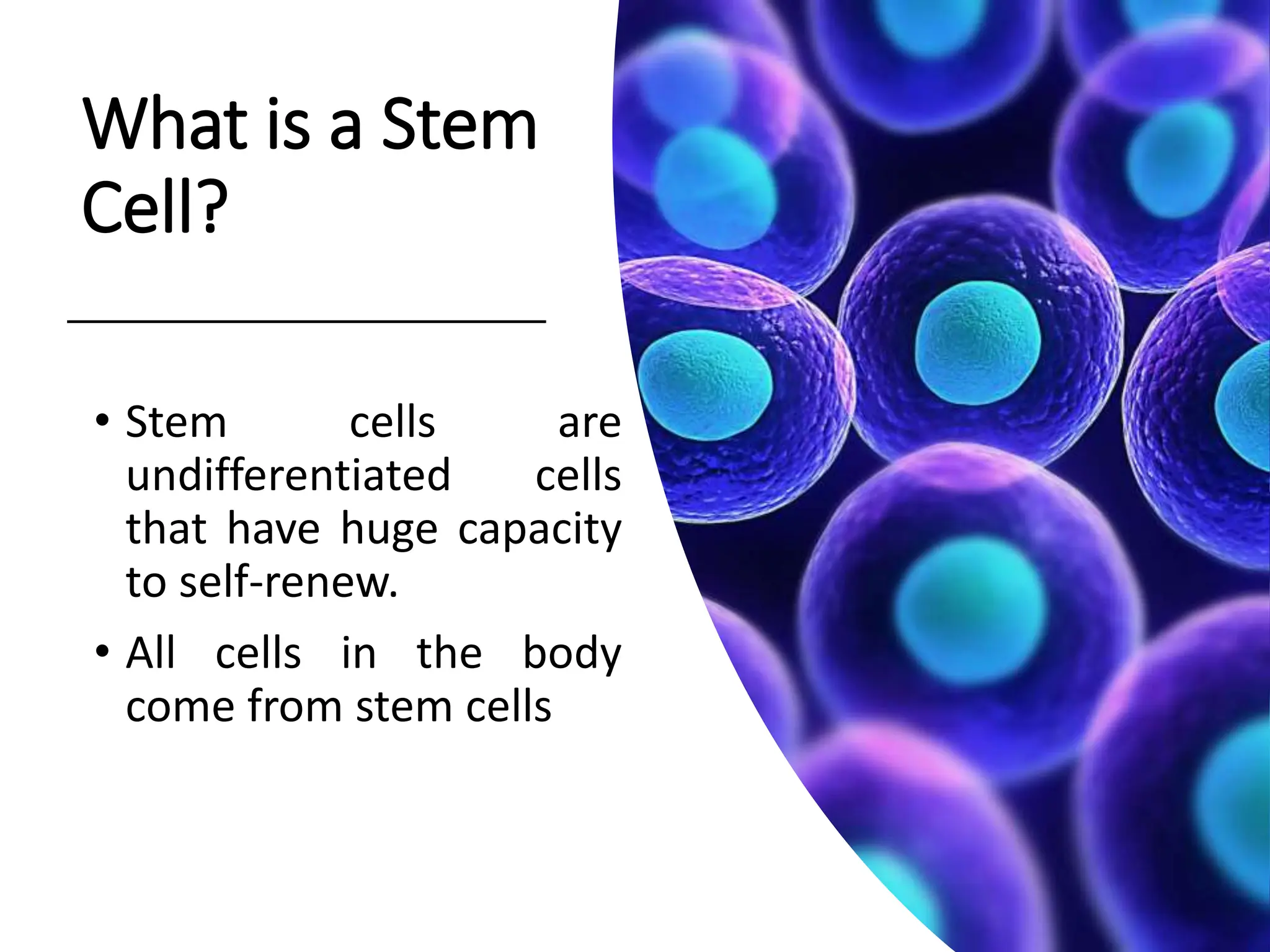
• Stem cells are
undifferentiated cells
that have huge capacity
to self-renew.
• All cells in the body
come from stem cells
What is a
Stem Cell?
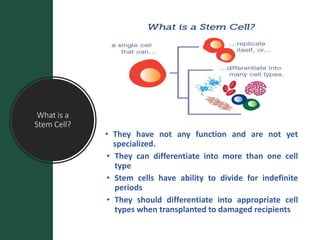
• They have not any function and are not yet
specialized.
• They can differentiate into more than one cell
type
• Stem cells have ability to divide for indefinite
periods
• They should differentiate into appropriate cell
types when transplanted to damaged recipients
Unique
characteristics
of Stem Cells
• Stem cells can regenerate
• Unlimited self renewal through
cell division
• This is unlike muscle, blood or
nerve cells – which do not
normally replicate themselves
• Stem cells can specialize
• Under certain physiologic or
experimental conditions
• Stem cells then become cells
with special functions such as:
• Beating cells of the heart
muscle
• Insulin-producing cells of
the pancreas
Specialization of Stem Cells: Differentiation
• Differentiation: unspecialized stem cells
give rise to specialized (differentiated)
cells in response to external and internal
chemical signals
• Internal signals: turn on specific genes
causing differential gene expression
• External signals include:
• Chemicals secreted by other cells such as growth
factors, cytokines, etc.
• Physical contact with neighboring cells
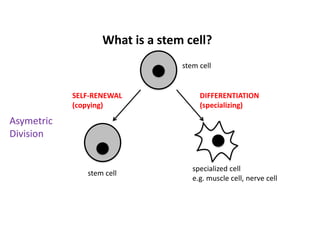
stem cell
What is a stem cell?
stem cell
SELF-RENEWAL
(copying)
specialized cell
e.g. muscle cell, nerve cell
DIFFERENTIATION
(specializing)
Asymetric
Division
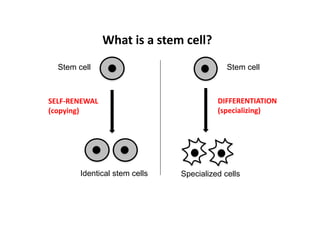
What is a stem cell?
Identical stem cells
Stem cell
SELF-RENEWAL
(copying)
Stem cell
Specialized cells
DIFFERENTIATION
(specializing)
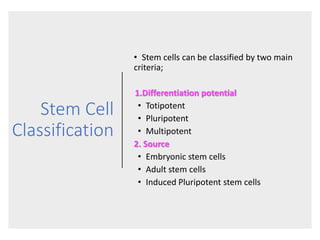
Stem Cell
Classification
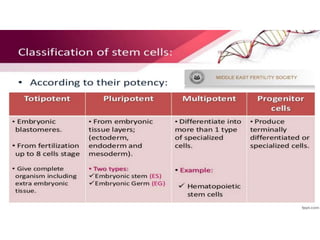
• Stem cells can be classified by two main
criteria;
1.Differentiation potential
• Totipotent
• Pluripotent
• Multipotent
2. Source
• Embryonic stem cells
• Adult stem cells
• Induced Pluripotent stem cells
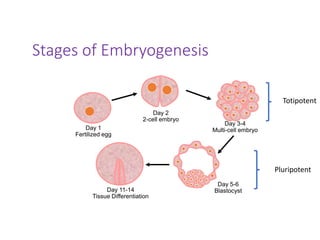
Stages of Embryogenesis
Day 1
Fertilized egg
Day 2
2-cell embryo
Day 3-4
Multi-cell embryo
Day 5-6
Blastocyst
Day 11-14
Tissue Differentiation
Totipotent
Pluripotent
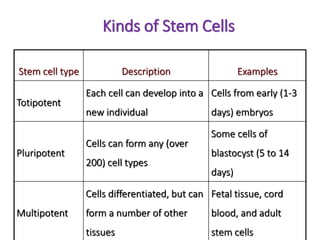
Kinds of Stem Cells
Stem cell type Description Examples
Totipotent
Each cell can develop into a
new individual
Cells from early (1-3
days) embryos
Pluripotent
Cells can form any (over
200) cell types
Some cells of
blastocyst (5 to 14
days)
Multipotent
Cells differentiated, but can
form a number of other
tissues
Fetal tissue, cord
blood, and adult
stem cells
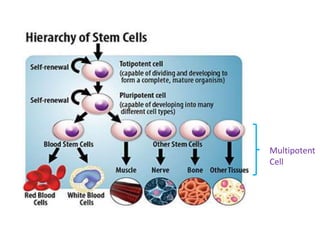
Multipotent
Cell
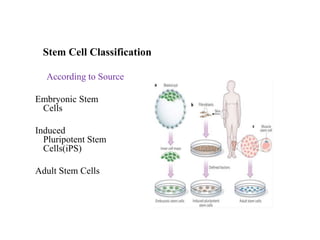
Stem Cell Classification
Embryonic Stem
Cells
Induced
Pluripotent Stem
Cells(iPS)
Adult Stem Cells
According to Source
Embryonic type stem cells
Embryonic stem cells come from a five to six-day-old
embryo. They have the ability to form virtually any type
of cell found in the human body.
Embryonic germ cells are derived from the part of a
human embryo or fetus that will ultimately produce
eggs or sperm (gametes).
Embryonic
Stem Cells
Embryonic Stem Cells are derived from
embryos that develop from eggs that
have been fertilized in vitro.
Embryonic Stem Cells are never
derived from eggs fertilized inside of a
woman's body.
The embryos from which Human
Embryonic Stem Cells are derived are
typically four or five days old and are a
hollow microscopic ball of cells called
the blastocyst
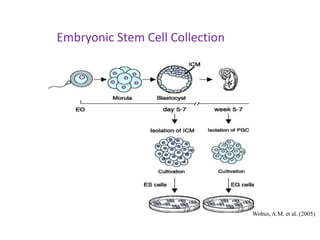
Embryonic Stem Cell Collection
Wobus, A.M. et al. (2005)
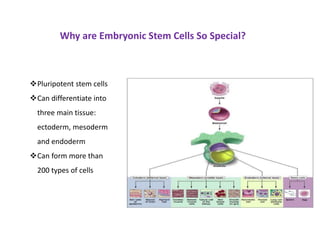
Pluripotent stem cells
Can differentiate into
three main tissue:
ectoderm, mesoderm
and endoderm
Can form more than
200 types of cells
Why are Embryonic Stem Cells So Special?
Adult Stem Cells
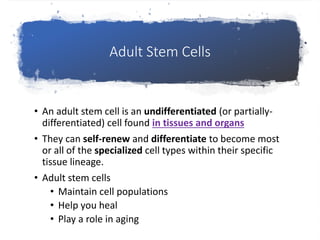
• An adult stem cell is an undifferentiated (or partially-
differentiated) cell found in tissues and organs
• They can self-renew and differentiate to become most
or all of the specialized cell types within their specific
tissue lineage.
• Adult stem cells
• Maintain cell populations
• Help you heal
• Play a role in aging
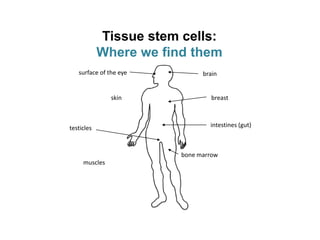
Tissue stem cells:
Where we find them
muscles
skin
surface of the eye brain
breast
intestines (gut)
bone marrow
testicles
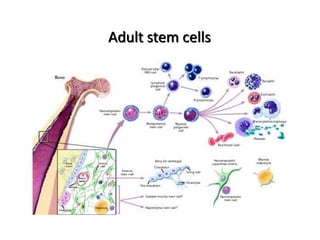
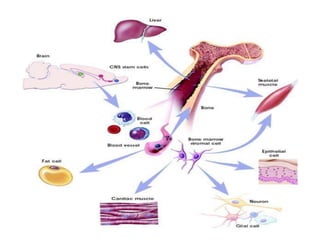
Adult stem cells
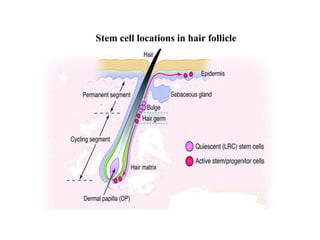
Stem cell locations in hair follicle
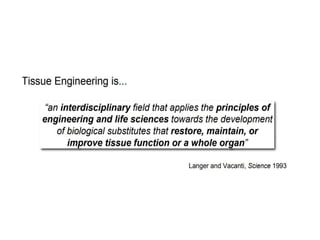
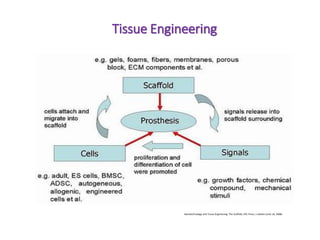
Tissue Engineering
Nanotechnology and Tissue Engineering: The Scaffold, CRC Press; 1 edition (June 16, 2008)
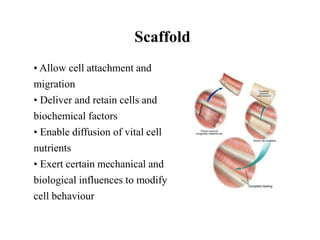
Scaffold
• Allow cell attachment and
migration
• Deliver and retain cells and
biochemical factors
• Enable diffusion of vital cell
nutrients
• Exert certain mechanical and
biological influences to modify
cell behaviour
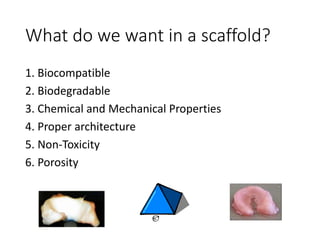
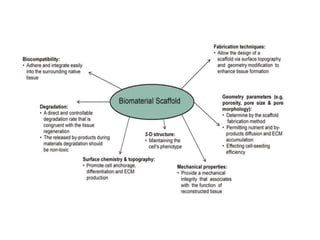
What do we want in a scaffold?
1. Biocompatible
2. Biodegradable
3. Chemical and Mechanical Properties
4. Proper architecture
5. Non-Toxicity
6. Porosity
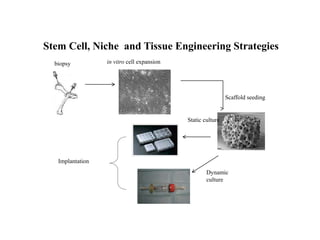
Stem Cell, Niche and Tissue Engineering Strategies
in vitro cell expansion
Scaffold seeding
biopsy
Dynamic
culture
Static culture
Implantation
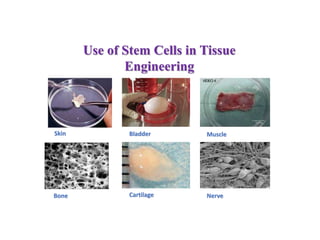
Skin Bladder Muscle
Bone Cartilage Nerve
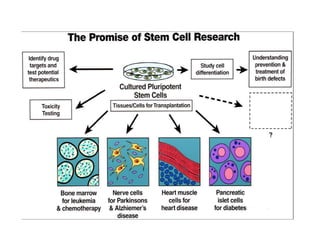
Use of Stem Cells in Tissue
Engineering

stem cells2.pptx

  • 1.
    What is aStem Cell? • Stem cells are undifferentiated cells that have huge capacity to self-renew. • All cells in the body come from stem cells
  • 2.
    What is a StemCell? • They have not any function and are not yet specialized. • They can differentiate into more than one cell type • Stem cells have ability to divide for indefinite periods • They should differentiate into appropriate cell types when transplanted to damaged recipients
  • 3.
    Unique characteristics of Stem Cells •Stem cells can regenerate • Unlimited self renewal through cell division • This is unlike muscle, blood or nerve cells – which do not normally replicate themselves • Stem cells can specialize • Under certain physiologic or experimental conditions • Stem cells then become cells with special functions such as: • Beating cells of the heart muscle • Insulin-producing cells of the pancreas
  • 4.
    Specialization of StemCells: Differentiation • Differentiation: unspecialized stem cells give rise to specialized (differentiated) cells in response to external and internal chemical signals • Internal signals: turn on specific genes causing differential gene expression • External signals include: • Chemicals secreted by other cells such as growth factors, cytokines, etc. • Physical contact with neighboring cells
  • 5.
    stem cell What isa stem cell? stem cell SELF-RENEWAL (copying) specialized cell e.g. muscle cell, nerve cell DIFFERENTIATION (specializing) Asymetric Division
  • 6.
    What is astem cell? Identical stem cells Stem cell SELF-RENEWAL (copying) Stem cell Specialized cells DIFFERENTIATION (specializing)
  • 7.
    Stem Cell Classification • Stemcells can be classified by two main criteria; 1.Differentiation potential • Totipotent • Pluripotent • Multipotent 2. Source • Embryonic stem cells • Adult stem cells • Induced Pluripotent stem cells
  • 8.
    Stages of Embryogenesis Day1 Fertilized egg Day 2 2-cell embryo Day 3-4 Multi-cell embryo Day 5-6 Blastocyst Day 11-14 Tissue Differentiation Totipotent Pluripotent
  • 10.
    Kinds of StemCells Stem cell type Description Examples Totipotent Each cell can develop into a new individual Cells from early (1-3 days) embryos Pluripotent Cells can form any (over 200) cell types Some cells of blastocyst (5 to 14 days) Multipotent Cells differentiated, but can form a number of other tissues Fetal tissue, cord blood, and adult stem cells
  • 11.
  • 12.
    Stem Cell Classification EmbryonicStem Cells Induced Pluripotent Stem Cells(iPS) Adult Stem Cells According to Source
  • 13.
    Embryonic type stemcells Embryonic stem cells come from a five to six-day-old embryo. They have the ability to form virtually any type of cell found in the human body. Embryonic germ cells are derived from the part of a human embryo or fetus that will ultimately produce eggs or sperm (gametes).
  • 14.
    Embryonic Stem Cells Embryonic StemCells are derived from embryos that develop from eggs that have been fertilized in vitro. Embryonic Stem Cells are never derived from eggs fertilized inside of a woman's body. The embryos from which Human Embryonic Stem Cells are derived are typically four or five days old and are a hollow microscopic ball of cells called the blastocyst
  • 15.
    Embryonic Stem CellCollection Wobus, A.M. et al. (2005)
  • 16.
    Pluripotent stem cells Candifferentiate into three main tissue: ectoderm, mesoderm and endoderm Can form more than 200 types of cells Why are Embryonic Stem Cells So Special?
  • 17.
    Adult Stem Cells •An adult stem cell is an undifferentiated (or partially- differentiated) cell found in tissues and organs • They can self-renew and differentiate to become most or all of the specialized cell types within their specific tissue lineage. • Adult stem cells • Maintain cell populations • Help you heal • Play a role in aging
  • 18.
    Tissue stem cells: Wherewe find them muscles skin surface of the eye brain breast intestines (gut) bone marrow testicles
  • 19.
  • 21.
    Stem cell locationsin hair follicle
  • 24.
    Tissue Engineering Nanotechnology andTissue Engineering: The Scaffold, CRC Press; 1 edition (June 16, 2008)
  • 27.
    Scaffold • Allow cellattachment and migration • Deliver and retain cells and biochemical factors • Enable diffusion of vital cell nutrients • Exert certain mechanical and biological influences to modify cell behaviour
  • 28.
    What do wewant in a scaffold? 1. Biocompatible 2. Biodegradable 3. Chemical and Mechanical Properties 4. Proper architecture 5. Non-Toxicity 6. Porosity
  • 30.
    Stem Cell, Nicheand Tissue Engineering Strategies in vitro cell expansion Scaffold seeding biopsy Dynamic culture Static culture Implantation
  • 31.
    Skin Bladder Muscle BoneCartilage Nerve Use of Stem Cells in Tissue Engineering