Taking Communities Seriously: Reflecting on Ethical, Social and Cultural Issues By Paulina Onvomaha Tindana WELLCOME TRUST INTERNATIONAL  PUBLIC ENGAGEMENT WORKSHOP December 3rd  2008 Somkhele ,  South Africa
Introduction There is a growing increase in the number of research activities in the developing countries. Introduction of new health technologies to communities i.e. GCGH.  Increased recognition that communities can also suffer research-related harms and exploitation. With the emphasis placed on individual autonomy, research endeavors fail to recognize the importance of communities Community engagement (CE) an important ethical requirement in health research.
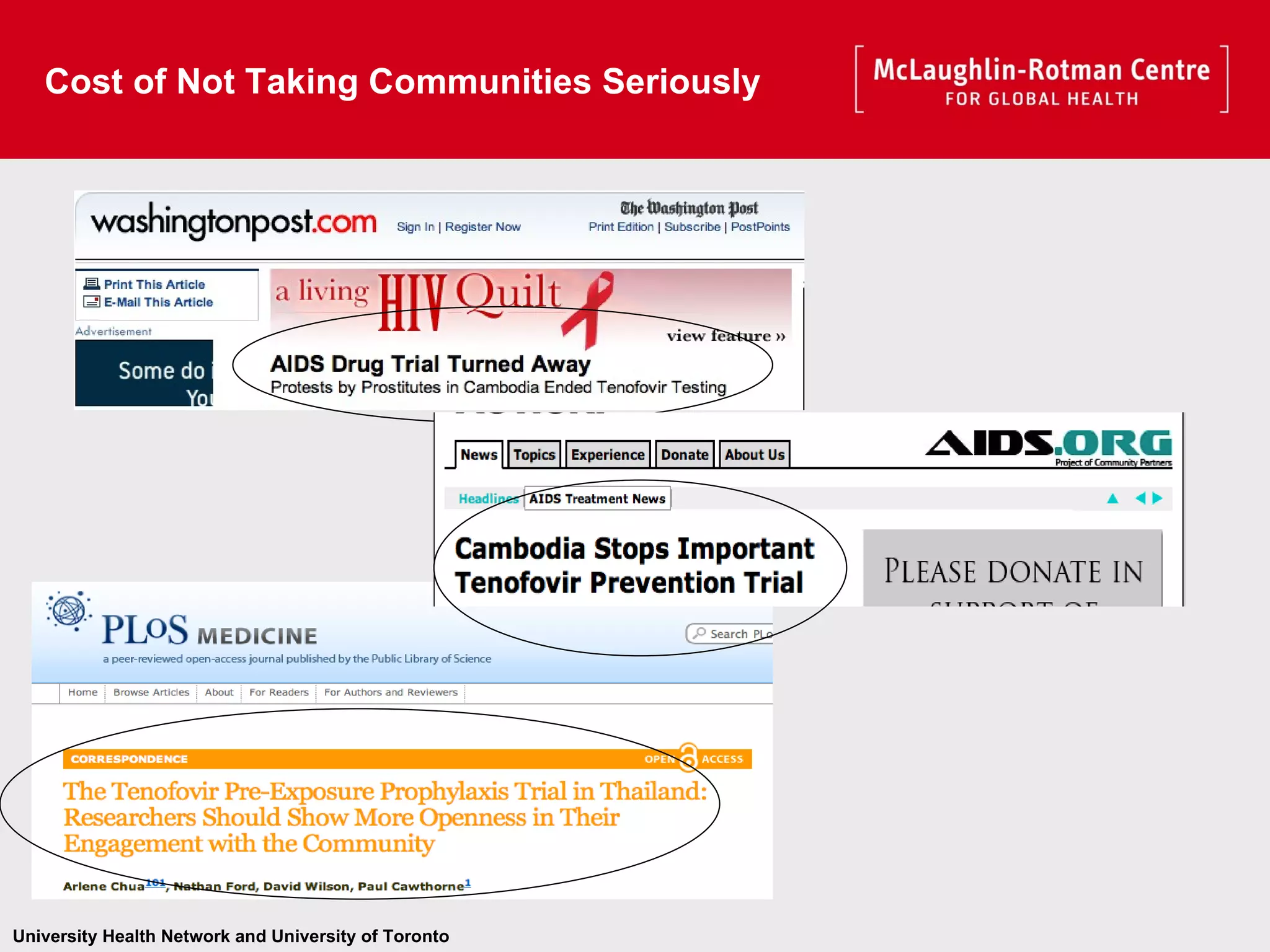
Cost of Not Taking Communities Seriously
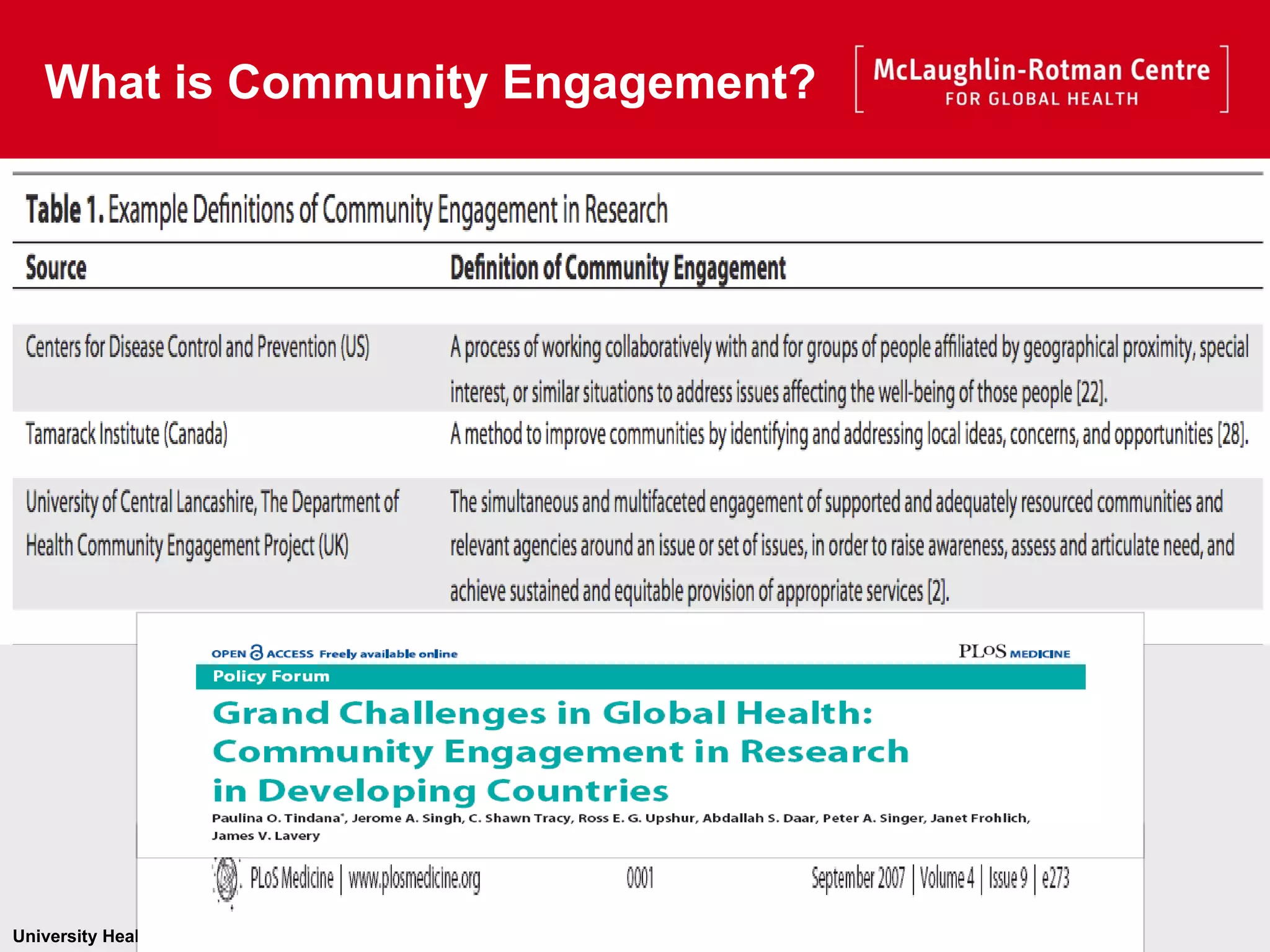
What is Community Engagement?
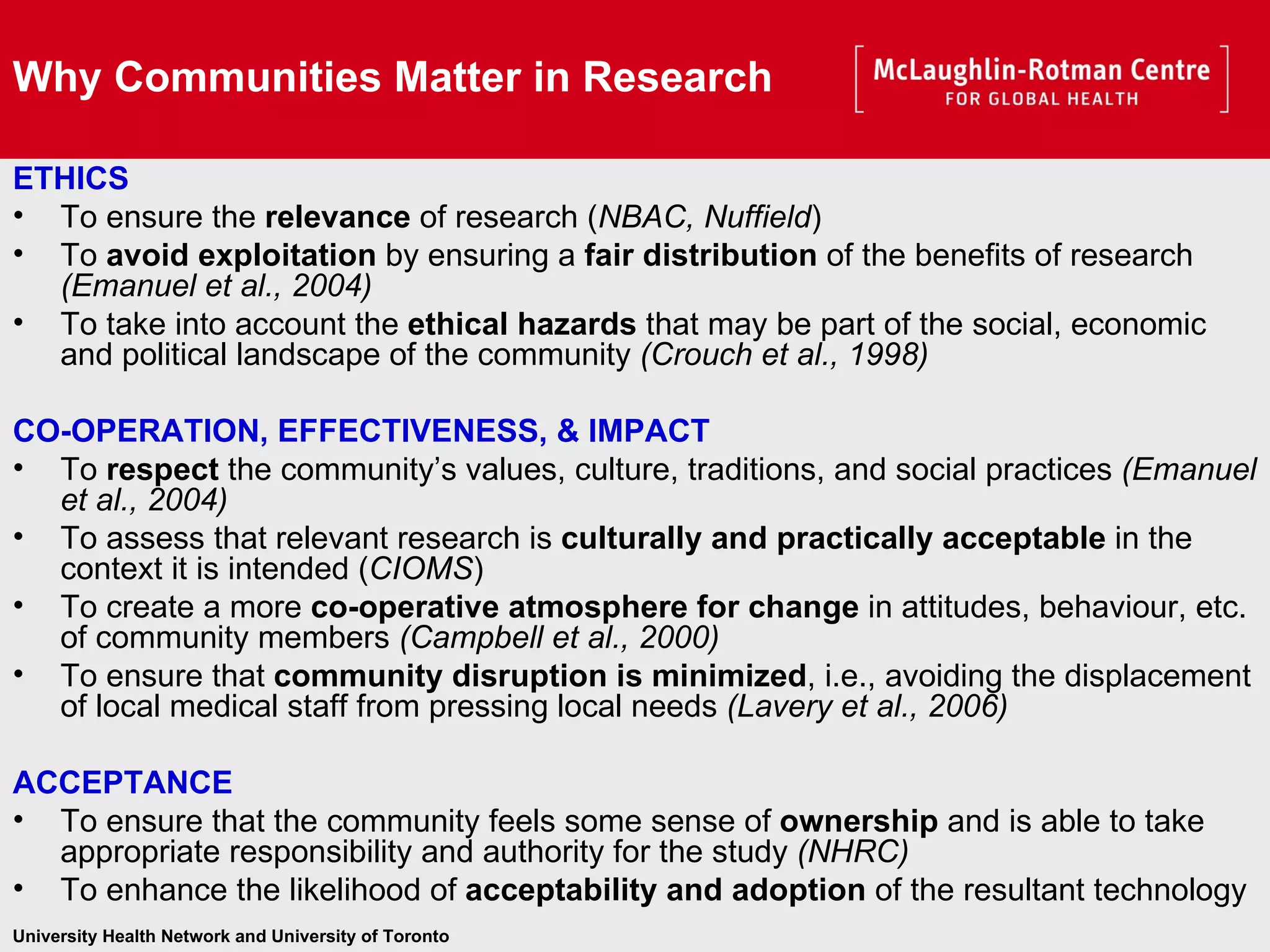
Why Communities Matter in Research ETHICS To ensure the  relevance  of research ( NBAC, Nuffield ) To  avoid exploitation  by ensuring a  fair distribution  of the benefits of research  (Emanuel et al., 2004) To take into account the  ethical hazards  that may be part of the social, economic and political landscape of the community  (Crouch et al., 1998) CO-OPERATION, EFFECTIVENESS, & IMPACT To  respect  the community’s values, culture, traditions, and social practices  (Emanuel et al., 2004) To assess that relevant research is  culturally and practically acceptable  in the context it is intended ( CIOMS ) To create a more  co-operative atmosphere for change  in attitudes, behaviour, etc. of community members  (Campbell et al., 2000) To ensure that  community disruption is minimized , i.e., avoiding the displacement of local medical staff from pressing local needs  (Lavery et al., 2006) ACCEPTANCE To ensure that the community feels some sense of  ownership  and is able to take appropriate responsibility and authority for the study  (NHRC) To enhance the likelihood of  acceptability and adoption  of the resultant technology
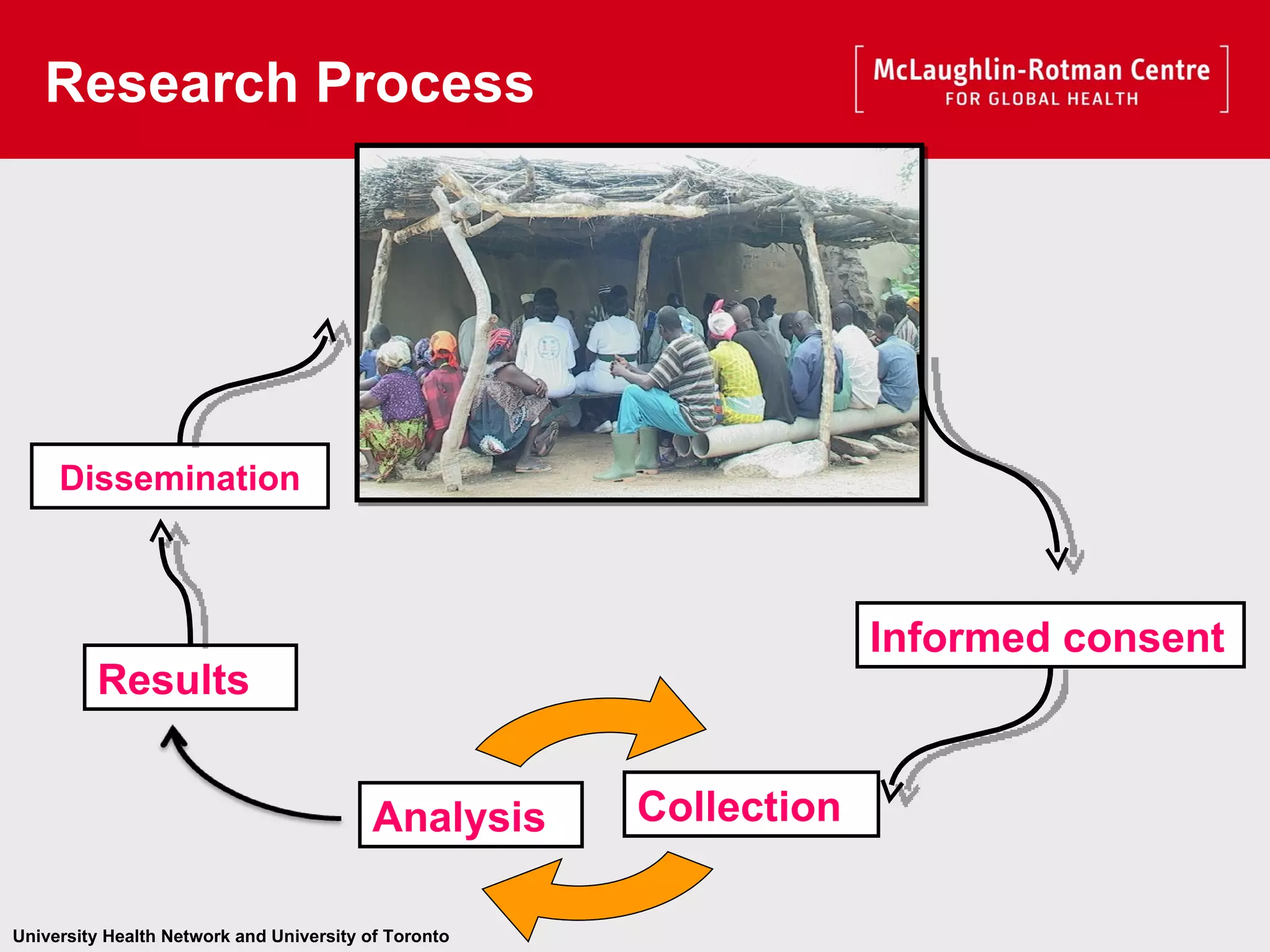
Research Process Informed consent Results Dissemination Collection Analysis
What constitutes EFFECTIVENESS  in community engagement  in research? ESC Global Case Studies
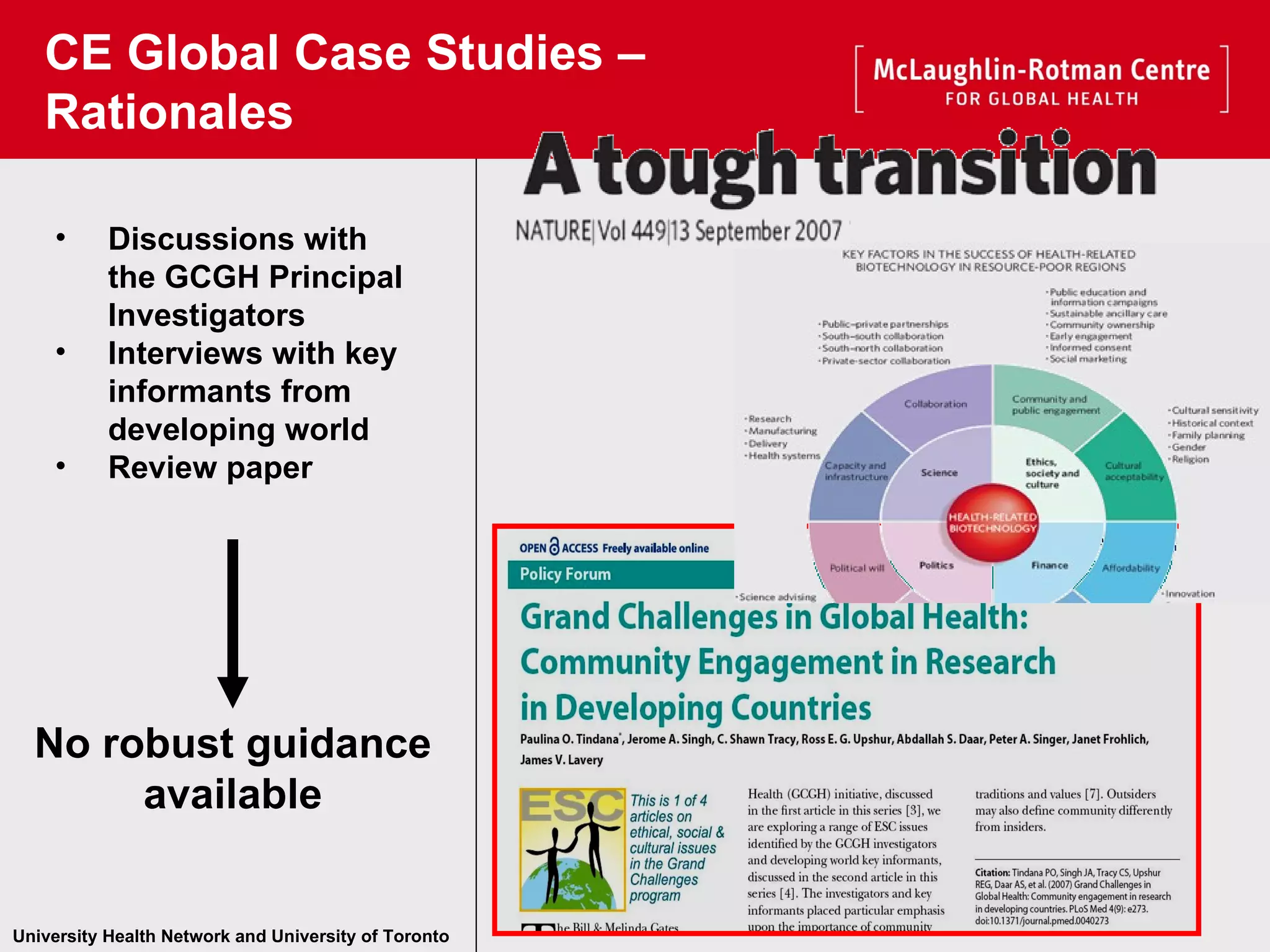
CE Global Case Studies – Rationales Discussions with the GCGH Principal Investigators  Interviews with key informants from developing world Review paper No robust guidance available
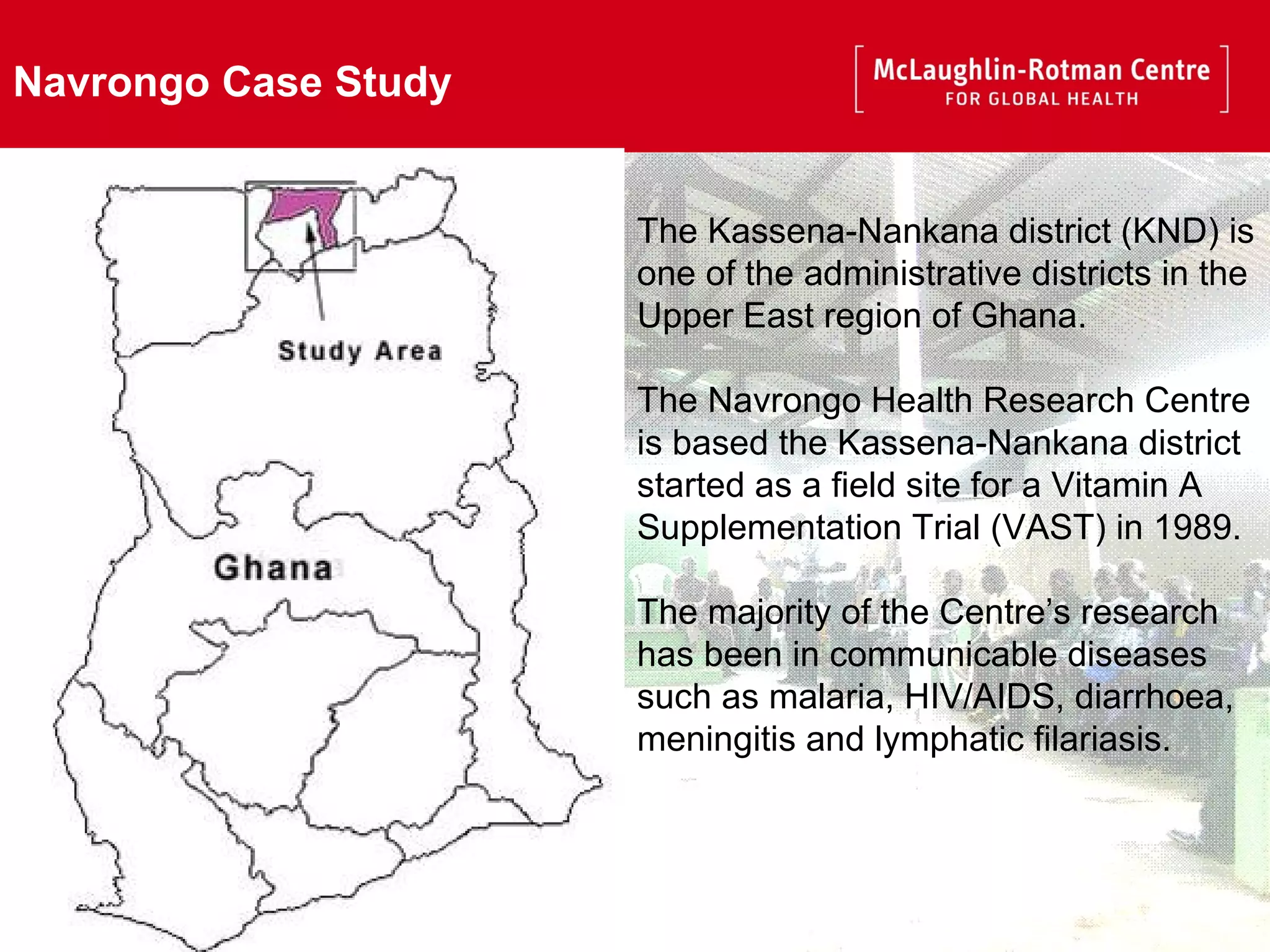
Navrongo Case Study The Kassena-Nankana district (KND) is one of the administrative districts in the Upper East region of Ghana. The Navrongo Health Research Centre is based the Kassena-Nankana district started as a field site for a Vitamin A Supplementation Trial (VAST) in 1989.  The majority of the Centre’s research has been in communicable diseases such as malaria, HIV/AIDS, diarrhoea, meningitis and lymphatic filariasis.
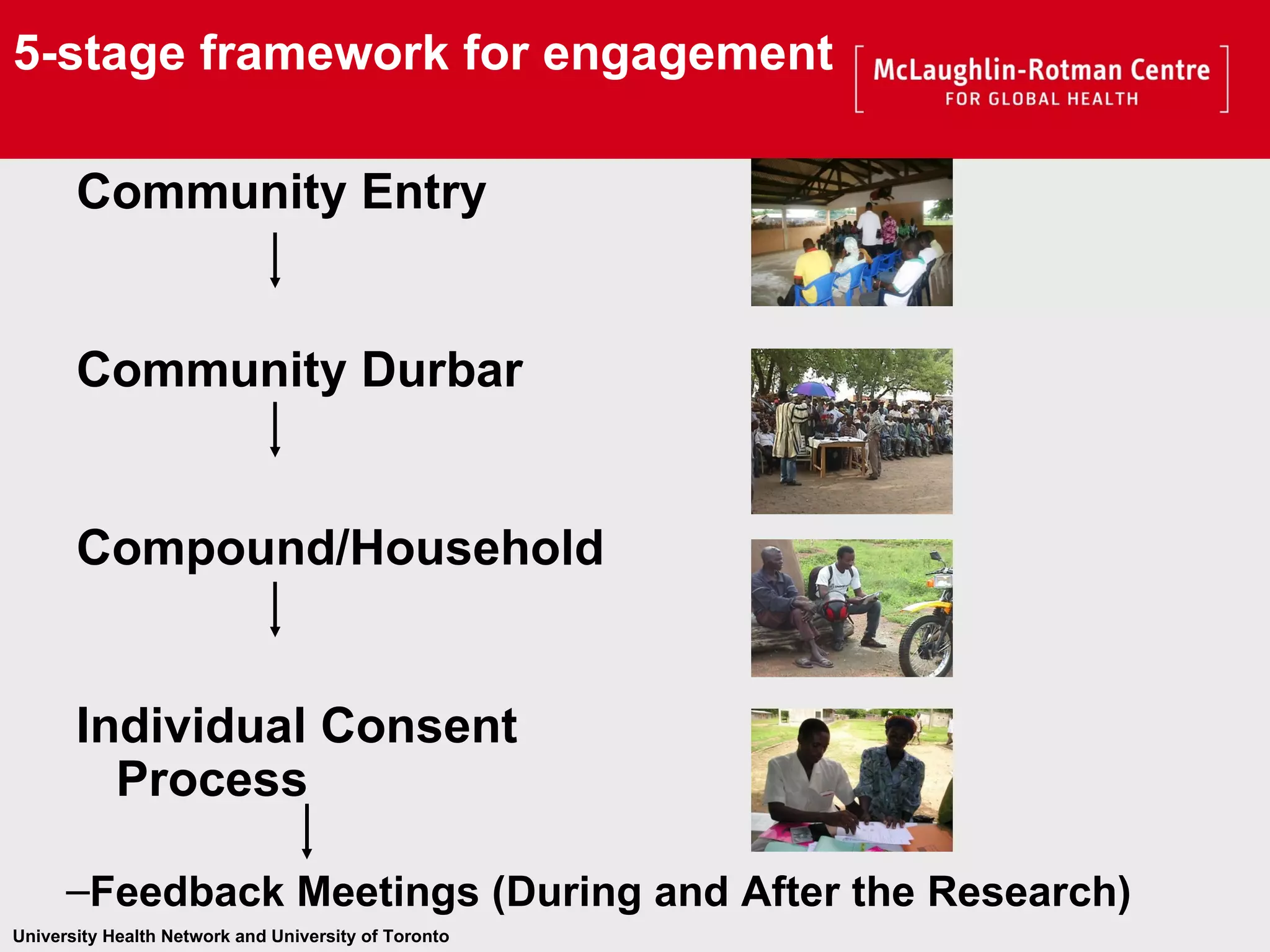
5-stage framework for engagement Community Entry Community Durbar Compound/Household Individual Consent Process Feedback Meetings (During and After the Research)
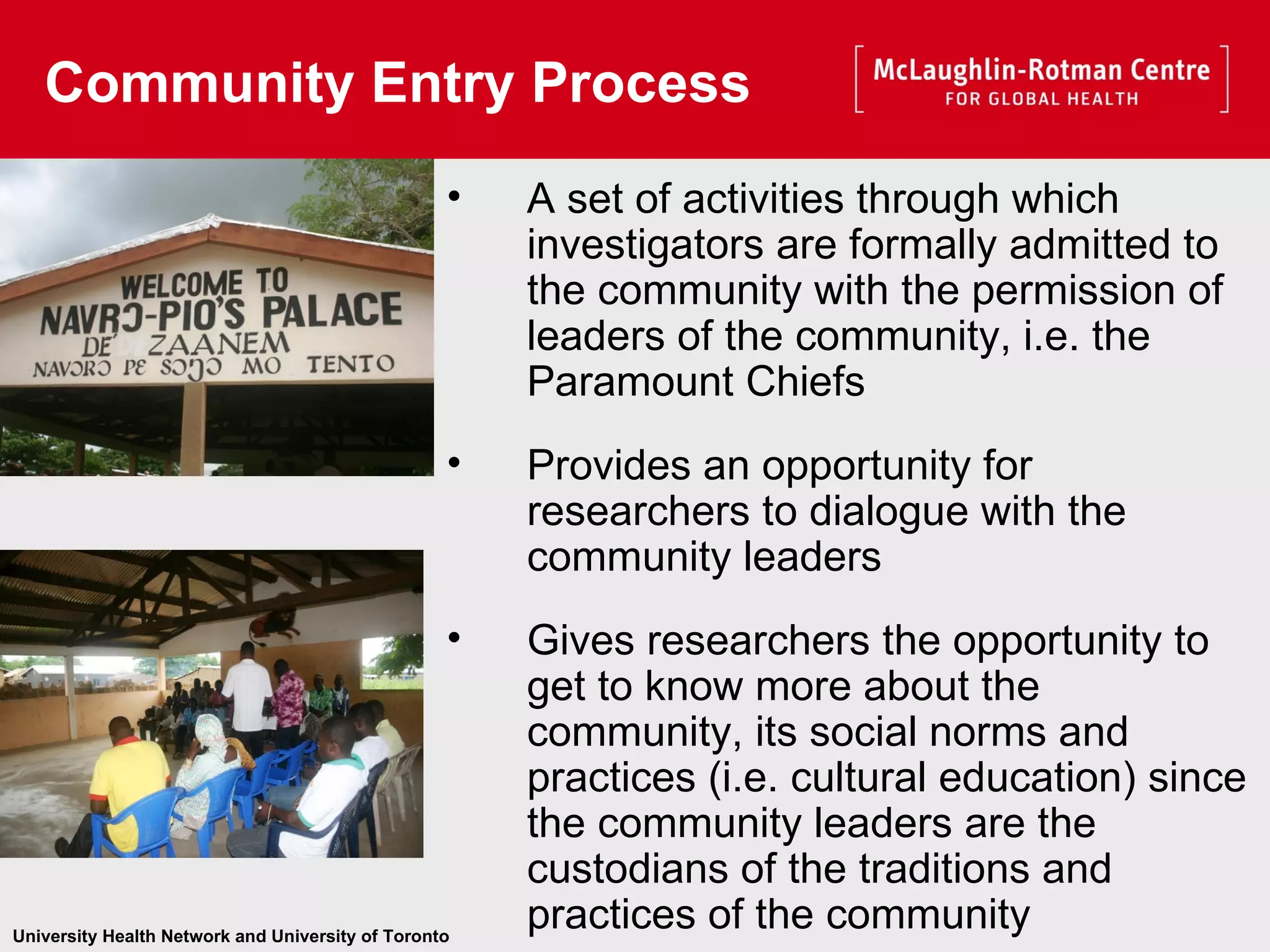
A set of activities through which investigators are formally admitted to the community with the permission of leaders of the community, i.e. the Paramount Chiefs   Provides an opportunity for researchers to dialogue with the community leaders Gives researchers the opportunity to get to know more about the community, its social norms and practices (i.e. cultural education) since the community leaders are the custodians of the traditions and practices of the community Community Entry Process
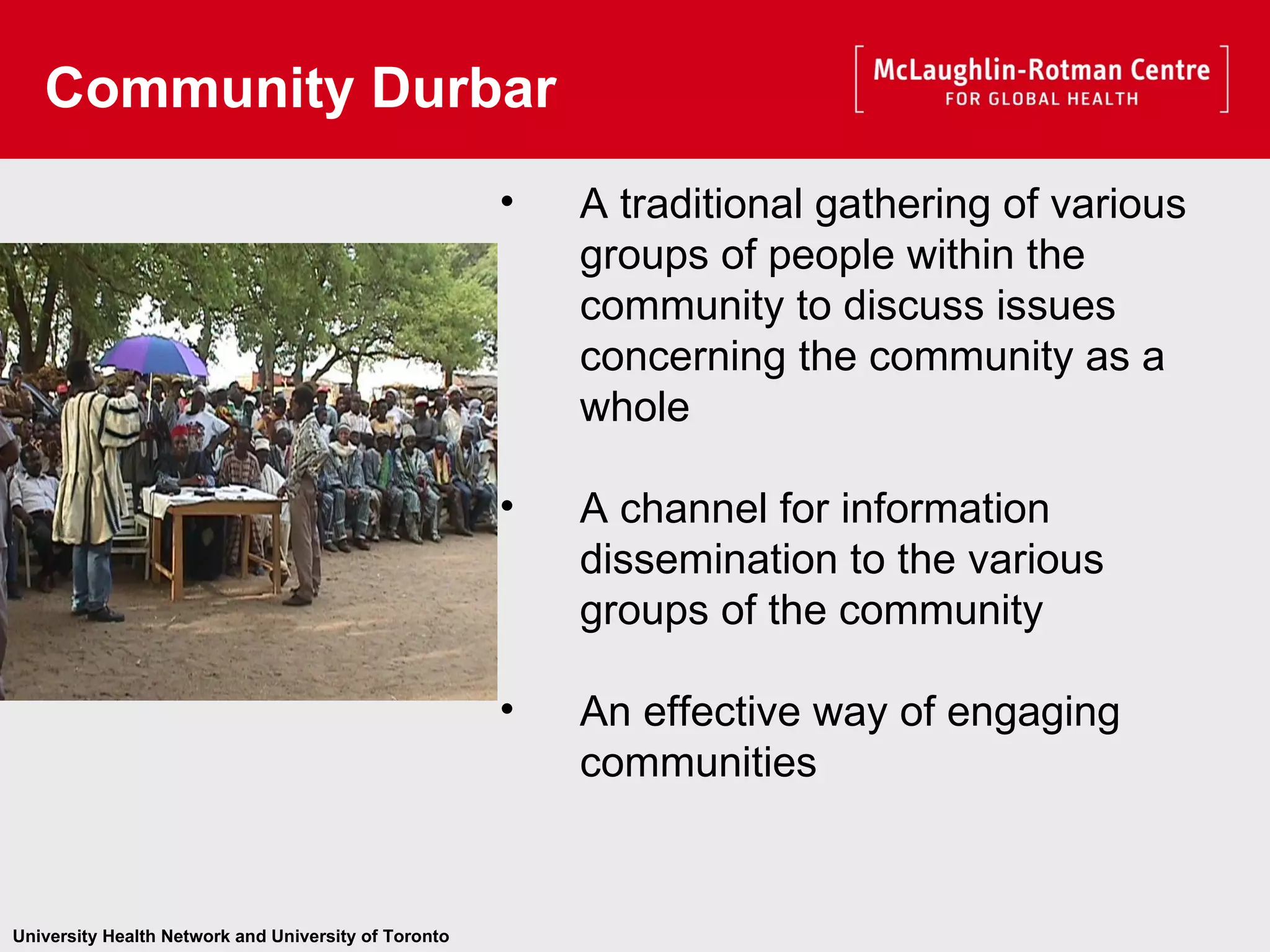
A traditional gathering of various groups of people within the community to discuss issues concerning the community as a whole A channel for information dissemination to the various groups of the community An effective way of engaging communities Community Durbar
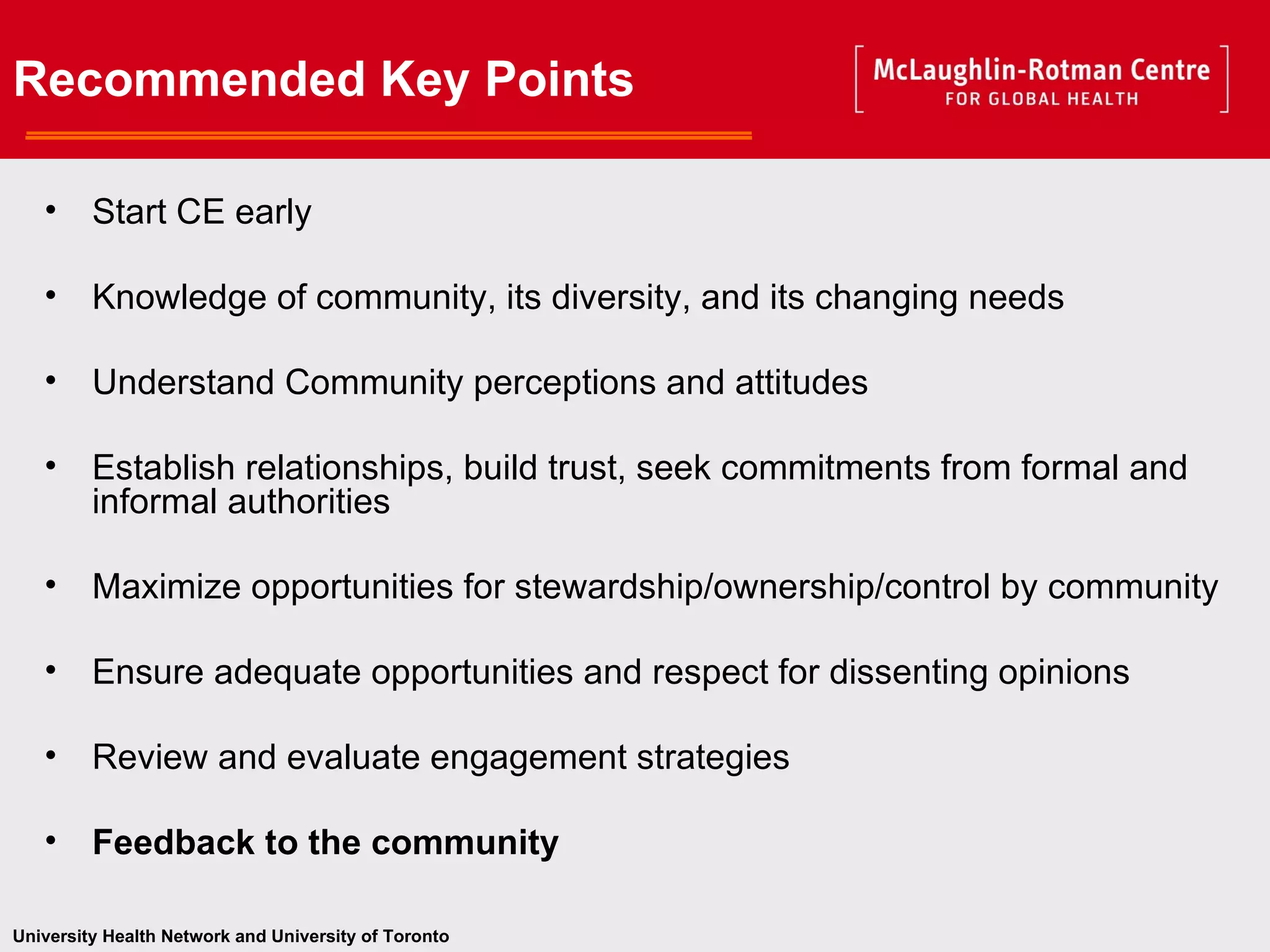
Recommended Key Points   _______________________ Start CE early Knowledge of community, its diversity, and its changing needs Understand Community perceptions and attitudes Establish relationships, build trust, seek commitments from formal and informal authorities Maximize opportunities for stewardship/ownership/control by community Ensure adequate opportunities and respect for dissenting opinions Review and evaluate engagement strategies Feedback to the community
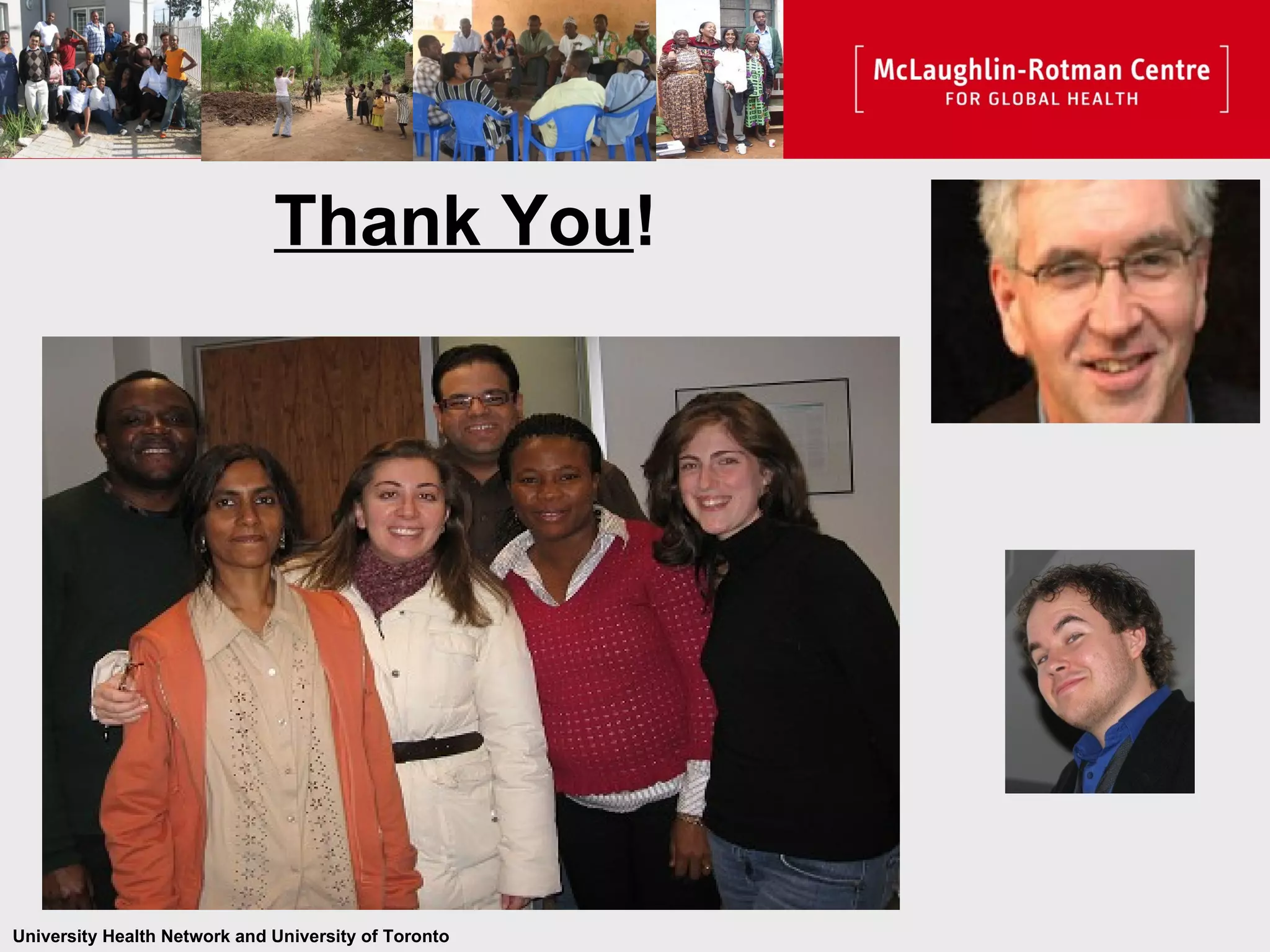
Thank You! Thank You !

Taking Communities Seriously: Reflecting on Ethical, Social and Cultural Issues

  • 1.
    Taking Communities Seriously:Reflecting on Ethical, Social and Cultural Issues By Paulina Onvomaha Tindana WELLCOME TRUST INTERNATIONAL PUBLIC ENGAGEMENT WORKSHOP December 3rd 2008 Somkhele , South Africa
  • 2.
    Introduction There isa growing increase in the number of research activities in the developing countries. Introduction of new health technologies to communities i.e. GCGH. Increased recognition that communities can also suffer research-related harms and exploitation. With the emphasis placed on individual autonomy, research endeavors fail to recognize the importance of communities Community engagement (CE) an important ethical requirement in health research.
  • 3.
    Cost of NotTaking Communities Seriously
  • 4.
    What is CommunityEngagement?
  • 5.
    Why Communities Matterin Research ETHICS To ensure the relevance of research ( NBAC, Nuffield ) To avoid exploitation by ensuring a fair distribution of the benefits of research (Emanuel et al., 2004) To take into account the ethical hazards that may be part of the social, economic and political landscape of the community (Crouch et al., 1998) CO-OPERATION, EFFECTIVENESS, & IMPACT To respect the community’s values, culture, traditions, and social practices (Emanuel et al., 2004) To assess that relevant research is culturally and practically acceptable in the context it is intended ( CIOMS ) To create a more co-operative atmosphere for change in attitudes, behaviour, etc. of community members (Campbell et al., 2000) To ensure that community disruption is minimized , i.e., avoiding the displacement of local medical staff from pressing local needs (Lavery et al., 2006) ACCEPTANCE To ensure that the community feels some sense of ownership and is able to take appropriate responsibility and authority for the study (NHRC) To enhance the likelihood of acceptability and adoption of the resultant technology
  • 6.
    Research Process Informedconsent Results Dissemination Collection Analysis
  • 7.
    What constitutes EFFECTIVENESS in community engagement in research? ESC Global Case Studies
  • 8.
    CE Global CaseStudies – Rationales Discussions with the GCGH Principal Investigators Interviews with key informants from developing world Review paper No robust guidance available
  • 9.
    Navrongo Case StudyThe Kassena-Nankana district (KND) is one of the administrative districts in the Upper East region of Ghana. The Navrongo Health Research Centre is based the Kassena-Nankana district started as a field site for a Vitamin A Supplementation Trial (VAST) in 1989. The majority of the Centre’s research has been in communicable diseases such as malaria, HIV/AIDS, diarrhoea, meningitis and lymphatic filariasis.
  • 10.
    5-stage framework forengagement Community Entry Community Durbar Compound/Household Individual Consent Process Feedback Meetings (During and After the Research)
  • 11.
    A set ofactivities through which investigators are formally admitted to the community with the permission of leaders of the community, i.e. the Paramount Chiefs Provides an opportunity for researchers to dialogue with the community leaders Gives researchers the opportunity to get to know more about the community, its social norms and practices (i.e. cultural education) since the community leaders are the custodians of the traditions and practices of the community Community Entry Process
  • 12.
    A traditional gatheringof various groups of people within the community to discuss issues concerning the community as a whole A channel for information dissemination to the various groups of the community An effective way of engaging communities Community Durbar
  • 13.
    Recommended Key Points _______________________ Start CE early Knowledge of community, its diversity, and its changing needs Understand Community perceptions and attitudes Establish relationships, build trust, seek commitments from formal and informal authorities Maximize opportunities for stewardship/ownership/control by community Ensure adequate opportunities and respect for dissenting opinions Review and evaluate engagement strategies Feedback to the community
  • 14.