DIFFERENT MEDIA FOR COMMUNICATING SCIENCE TO DIFFERENT GROUPS Derek Fish Unizul Science Centre South Africa
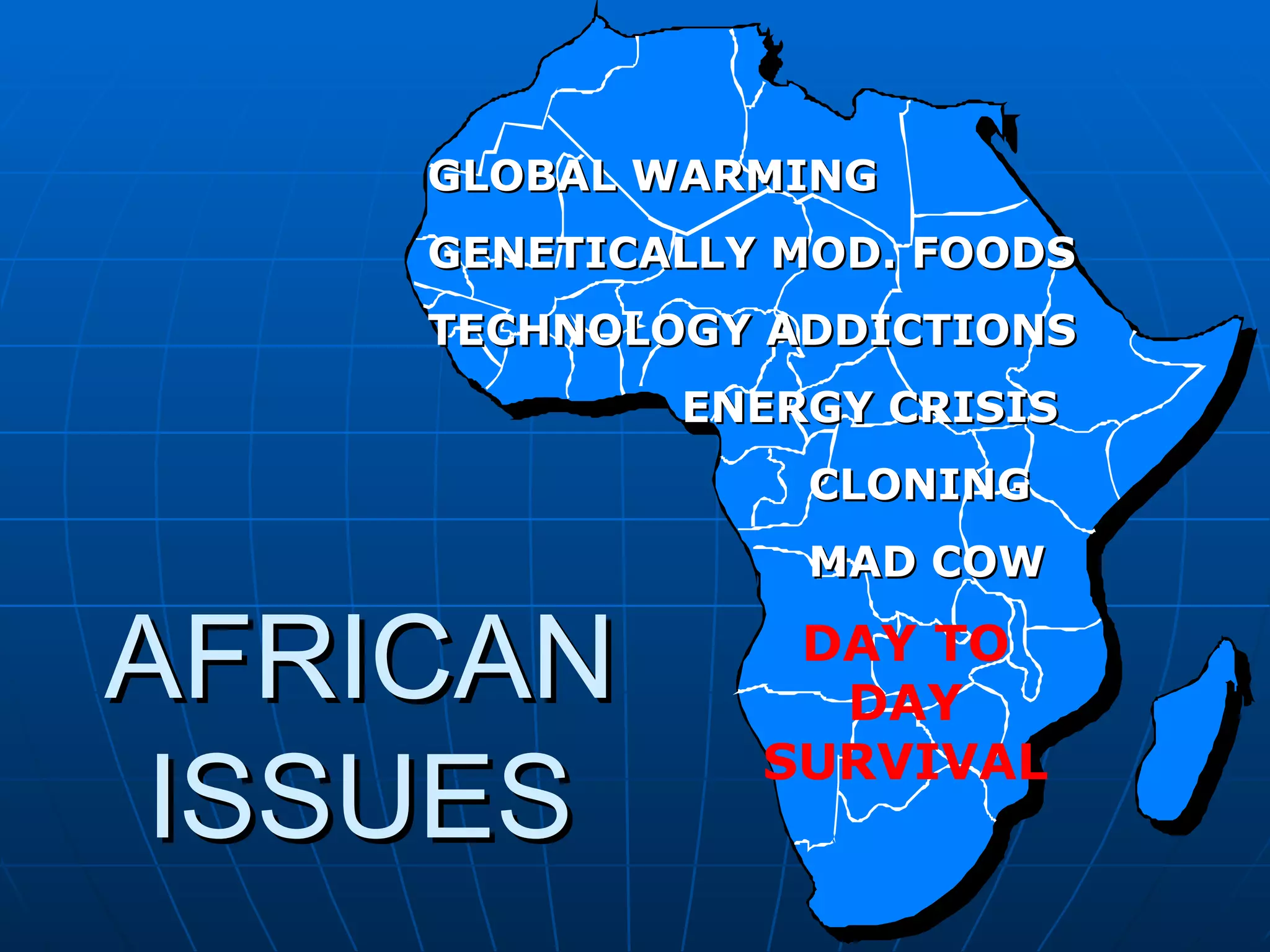
AFRICAN ISSUES GLOBAL WARMING GENETICALLY MOD. FOODS TECHNOLOGY ADDICTIONS ENERGY CRISIS CLONING MAD COW DAY TO DAY SURVIVAL
South Africa has  RACE  problems ROADS AIDS CRIME EDUCATION R A C E
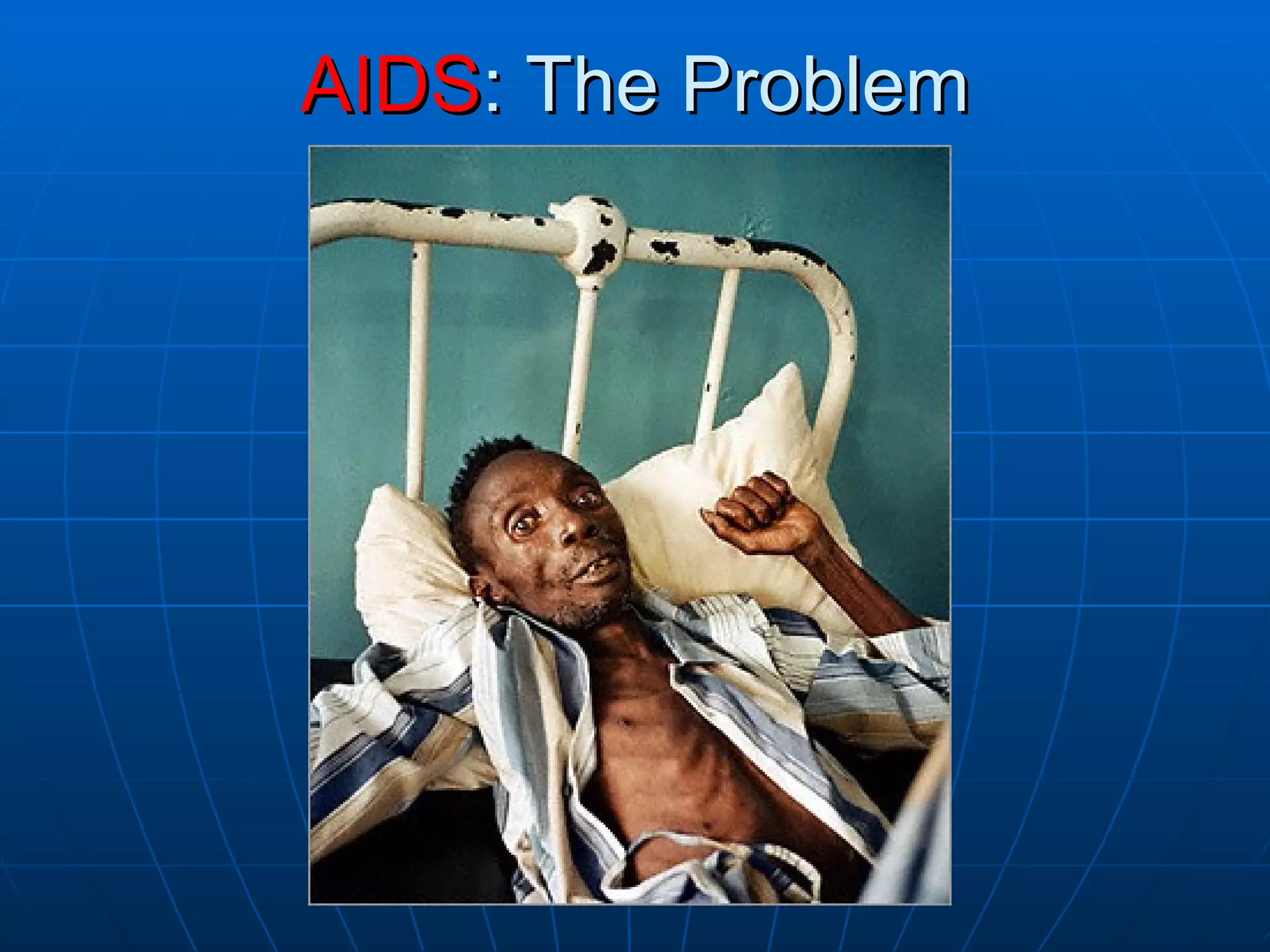
AIDS : The Problem
 
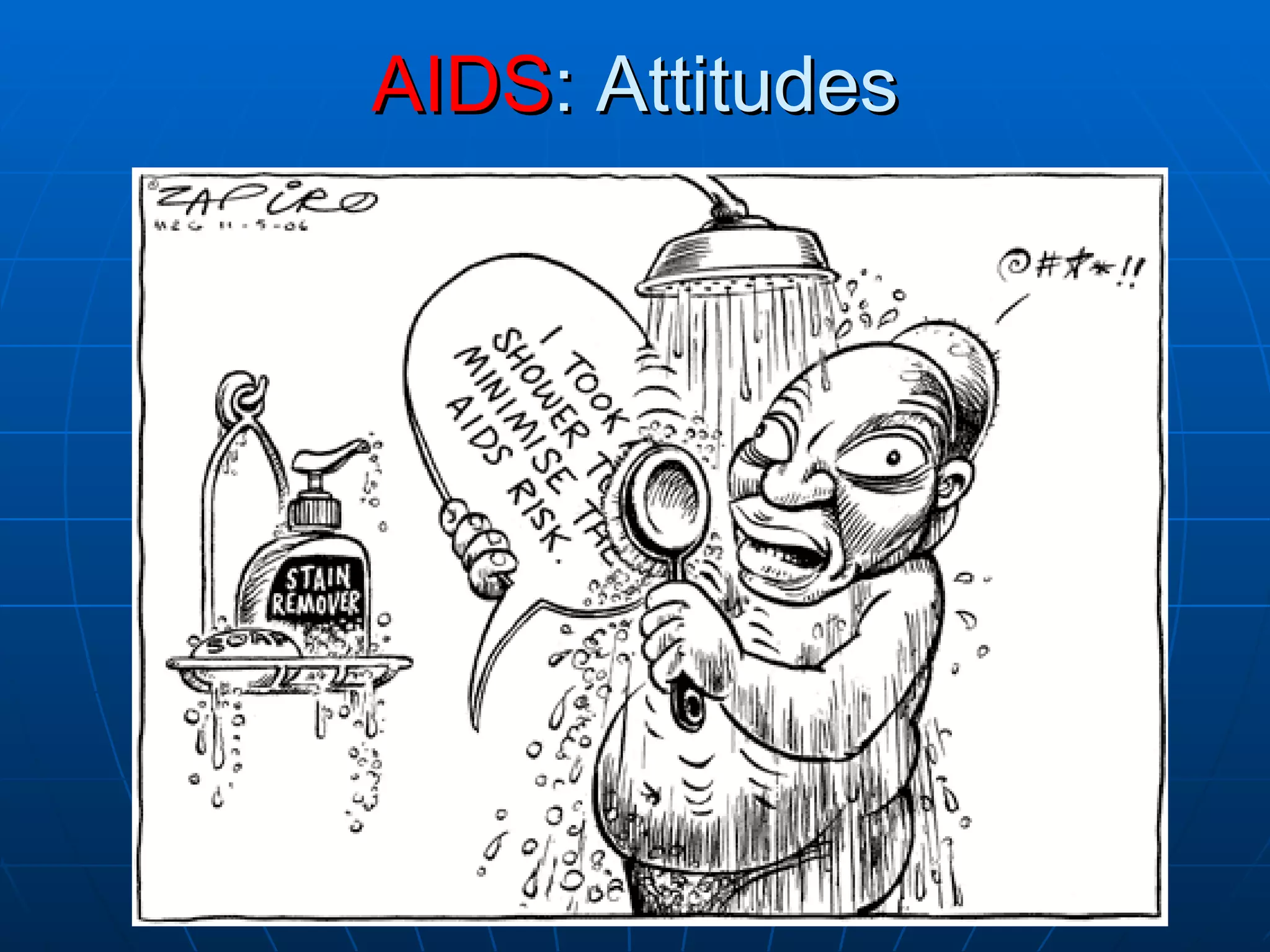
AIDS : Attitudes
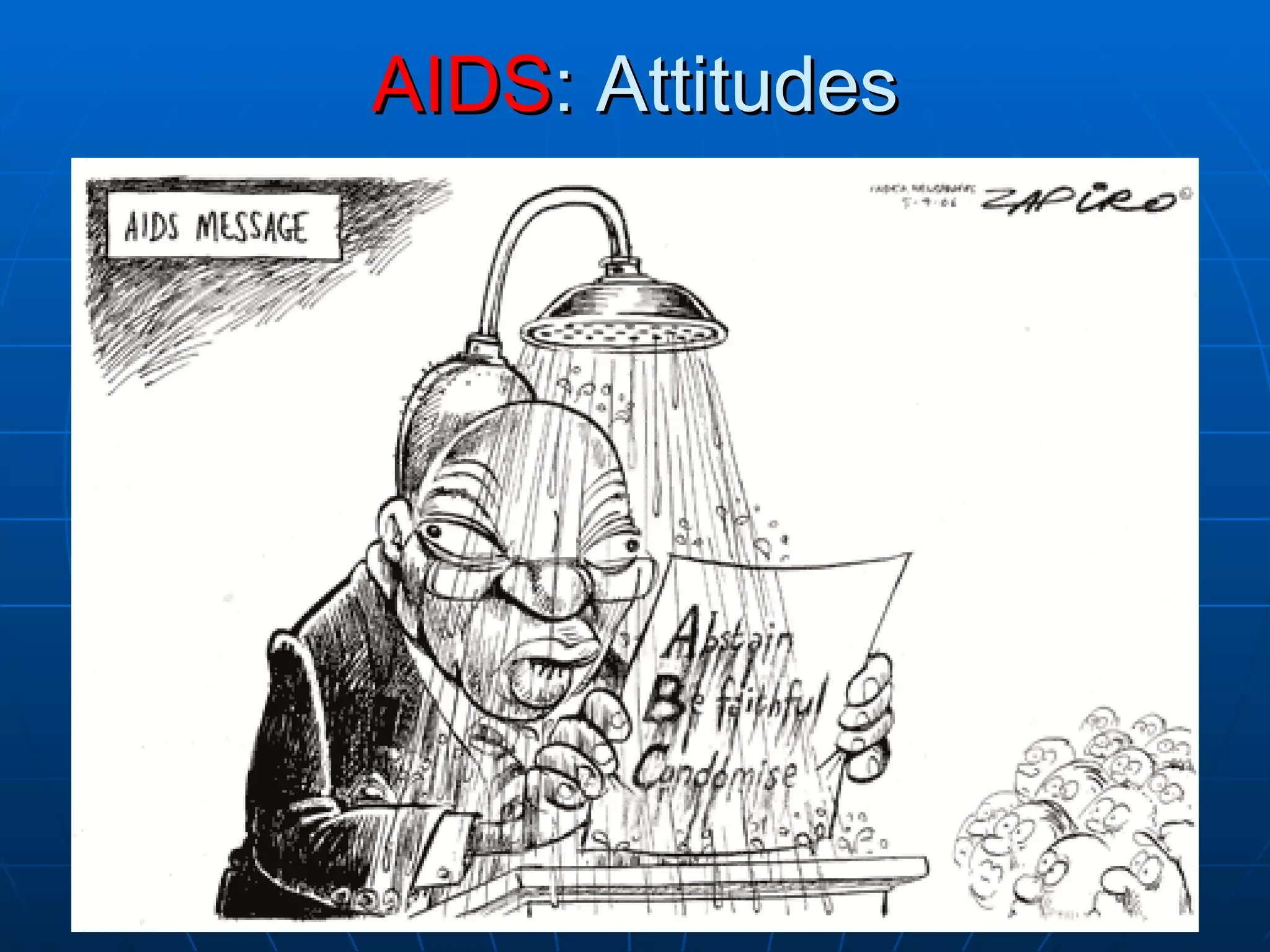
AIDS : Attitudes
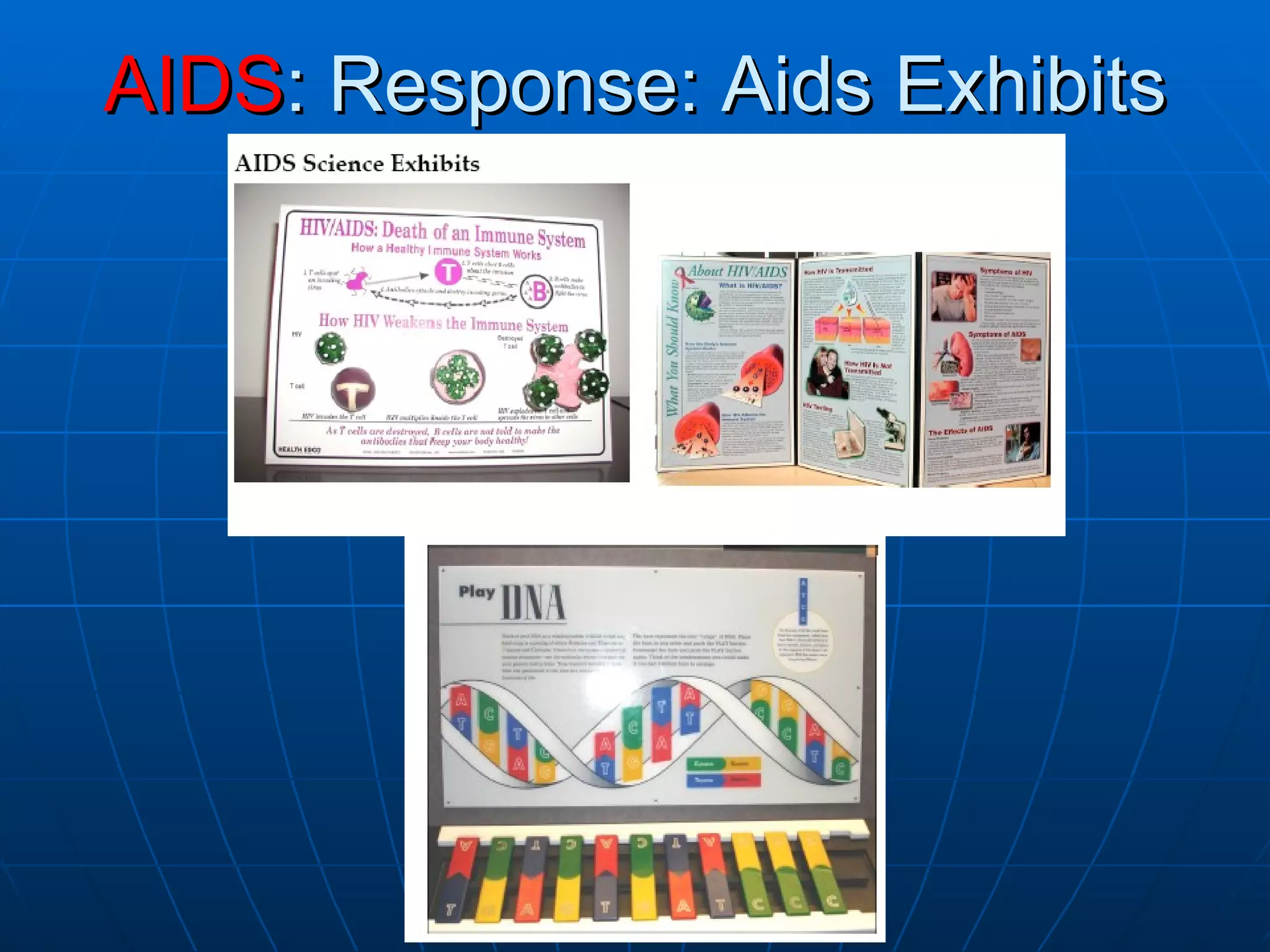
AIDS : Response: Aids Exhibits
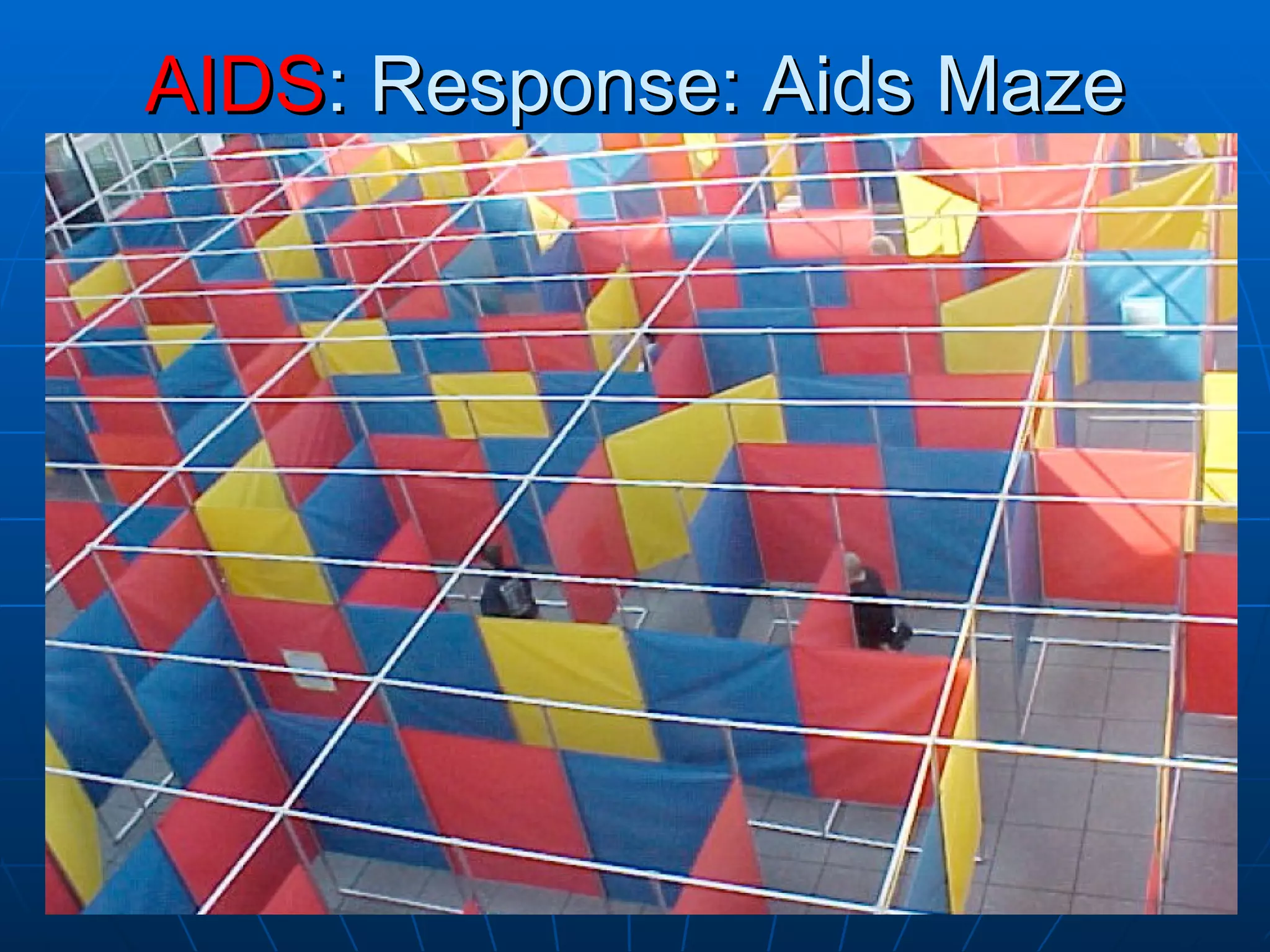
AIDS : Response: Aids Maze
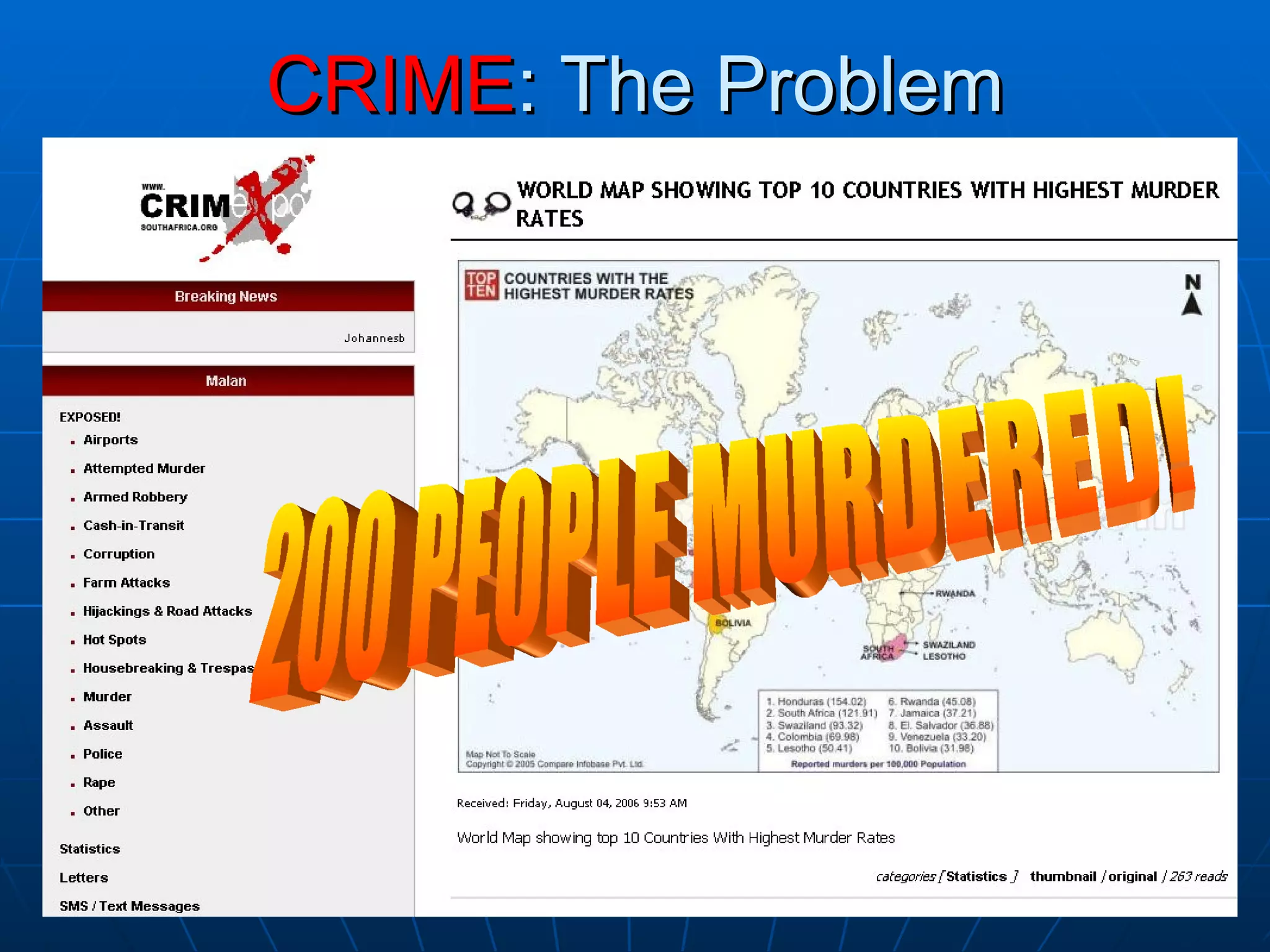
CRIME : The Problem 200 PEOPLE MURDERED!
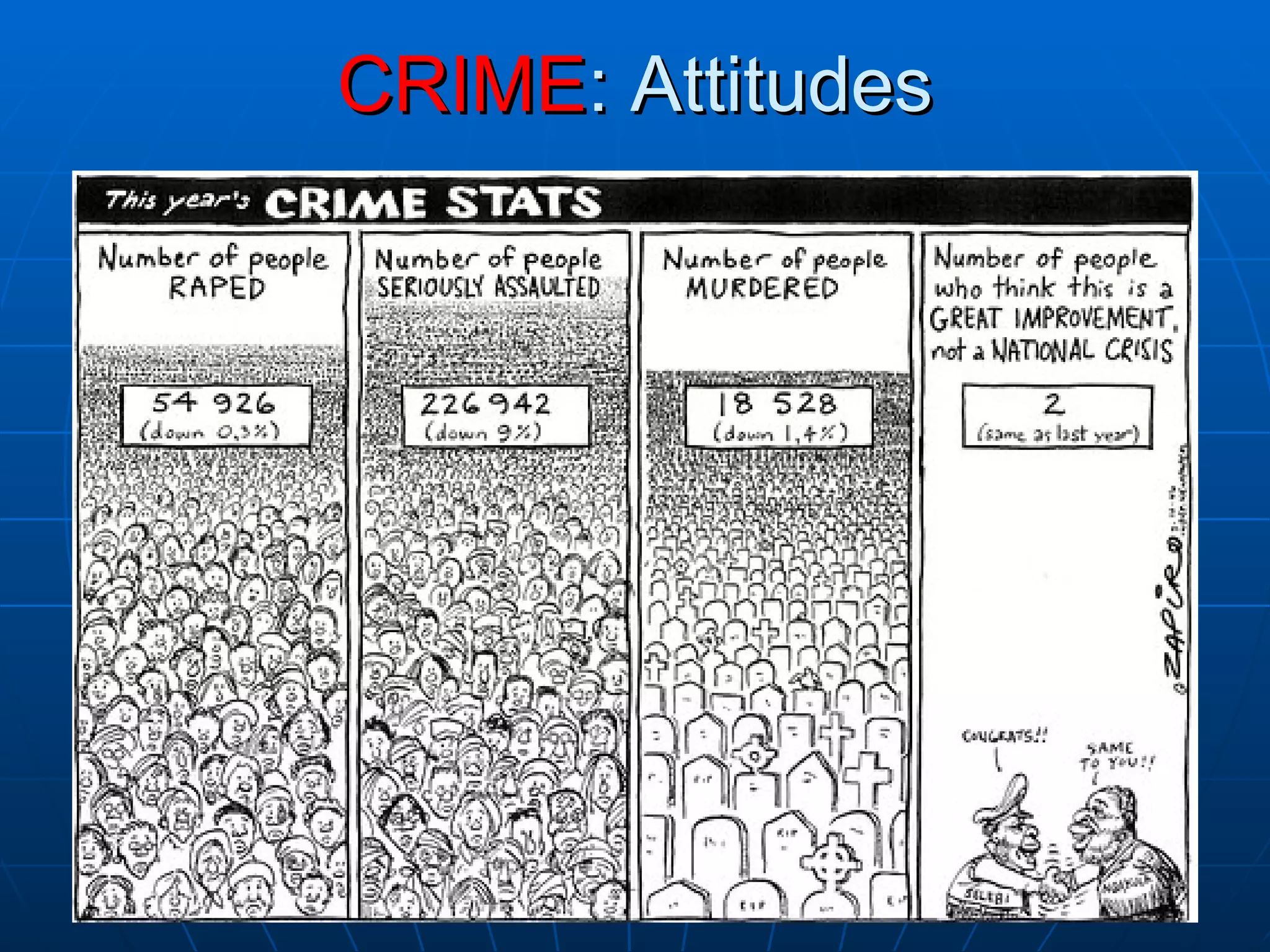
CRIME : Attitudes
CRIME : Attitudes
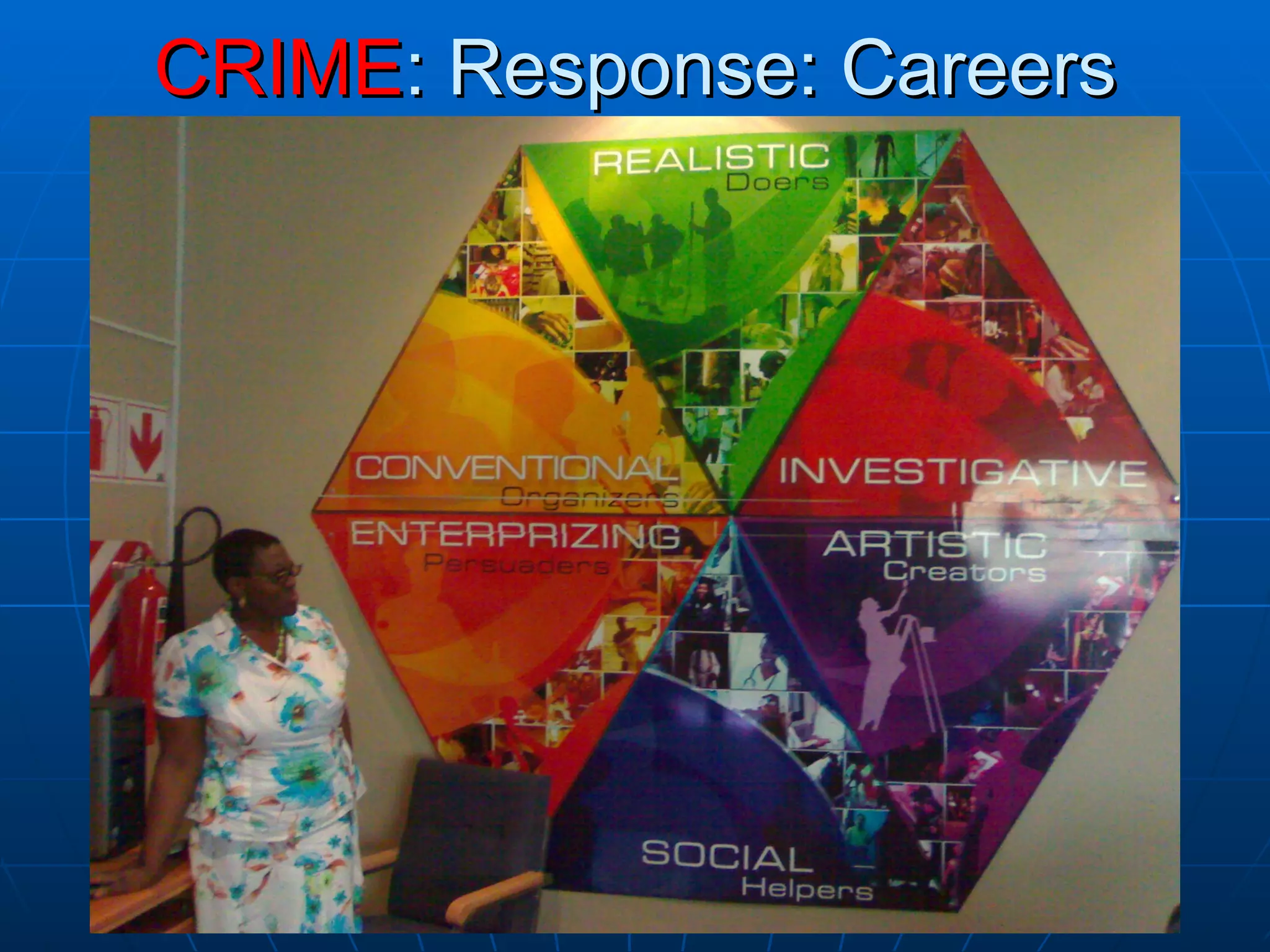
CRIME : Response: Careers
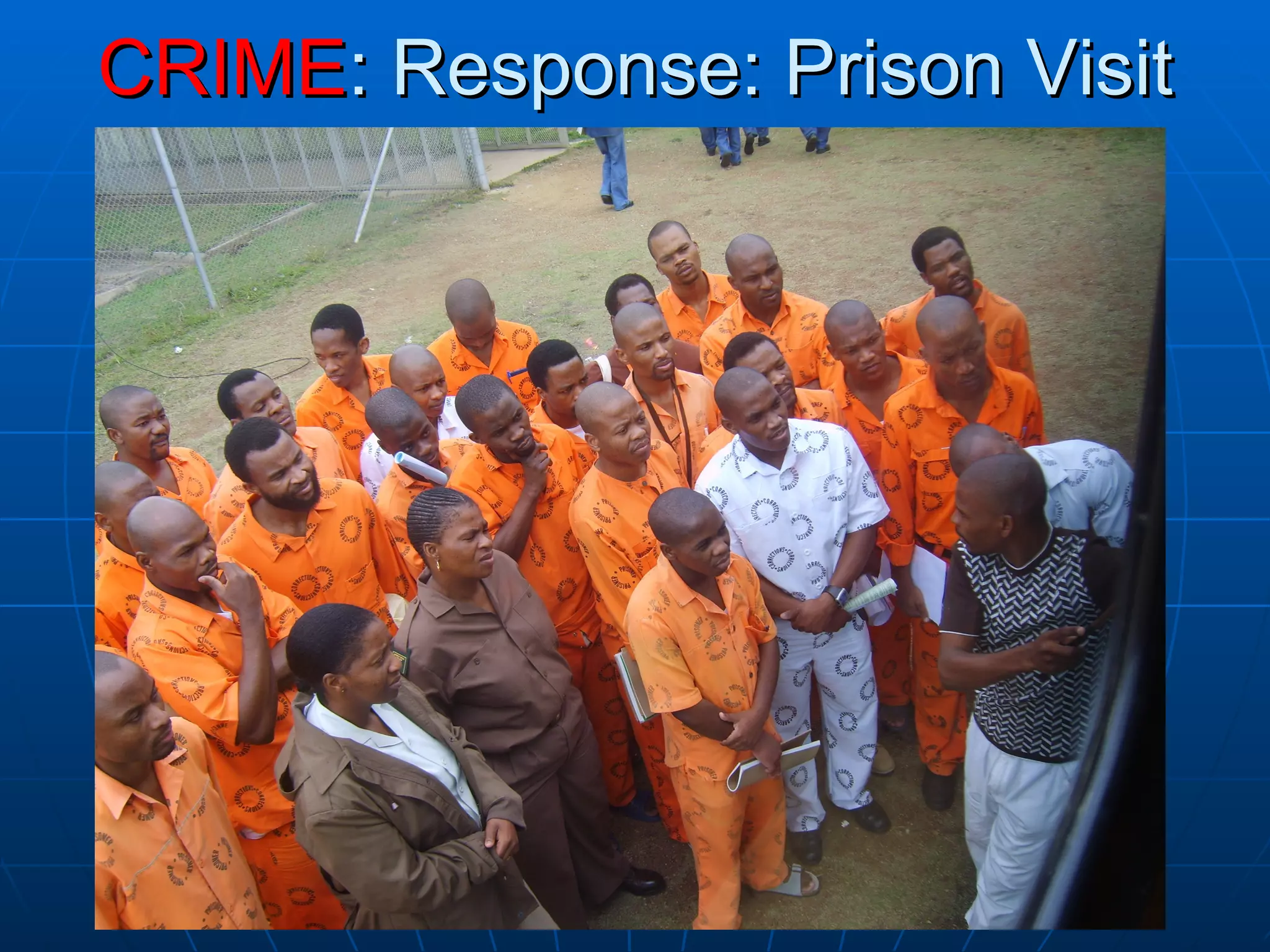
CRIME : Response: Prison Visit
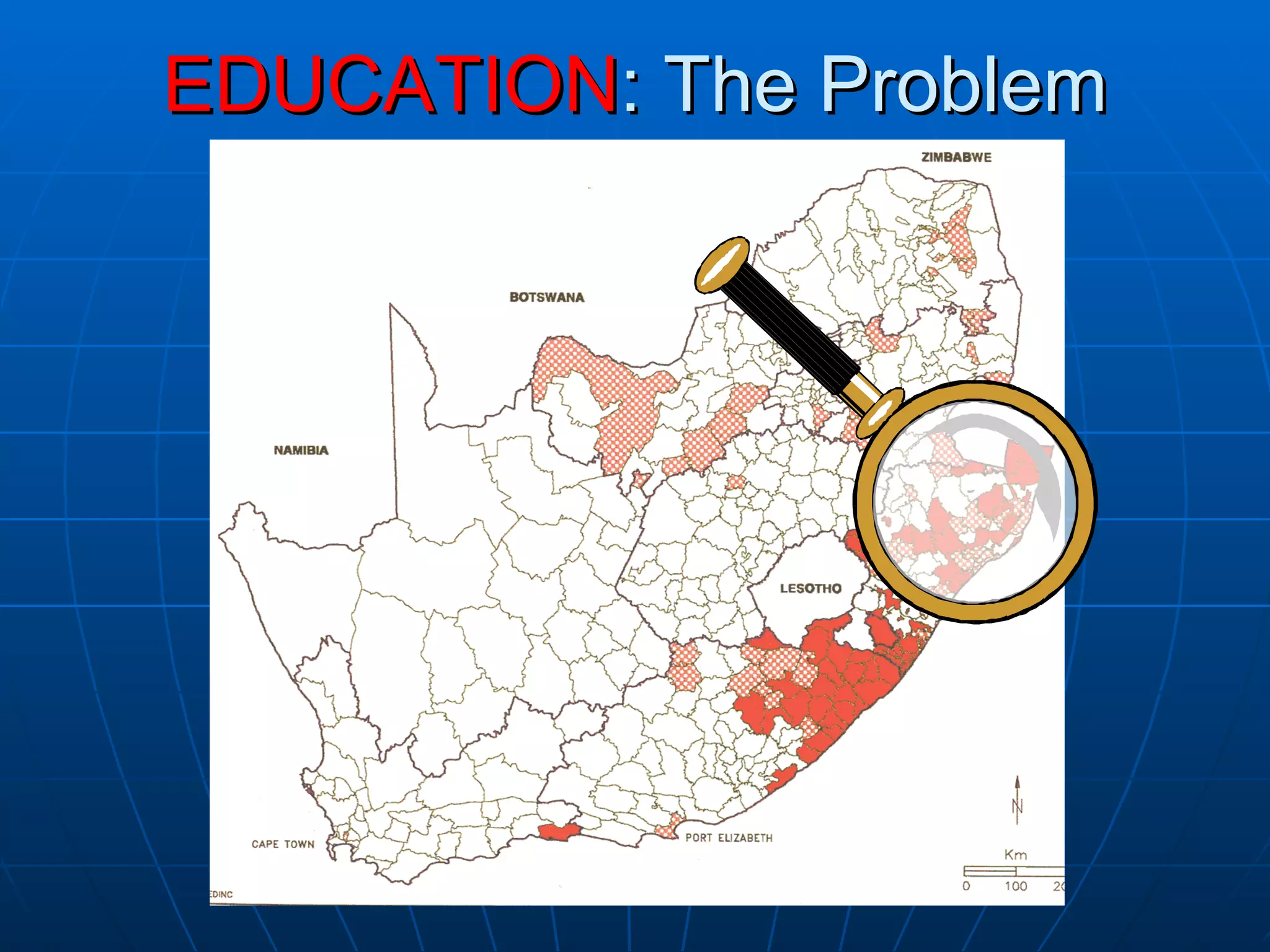
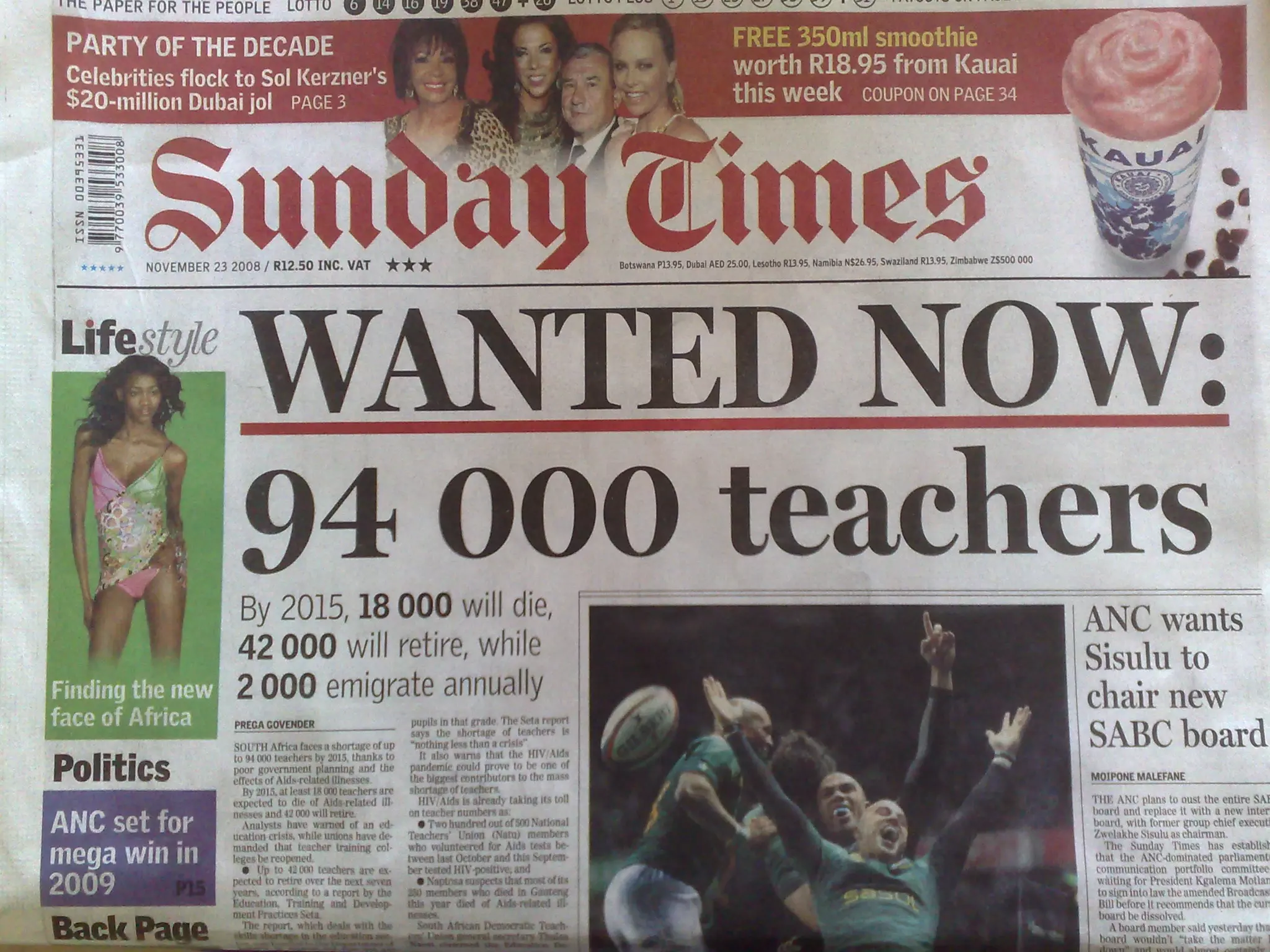
EDUCATION : The Problem
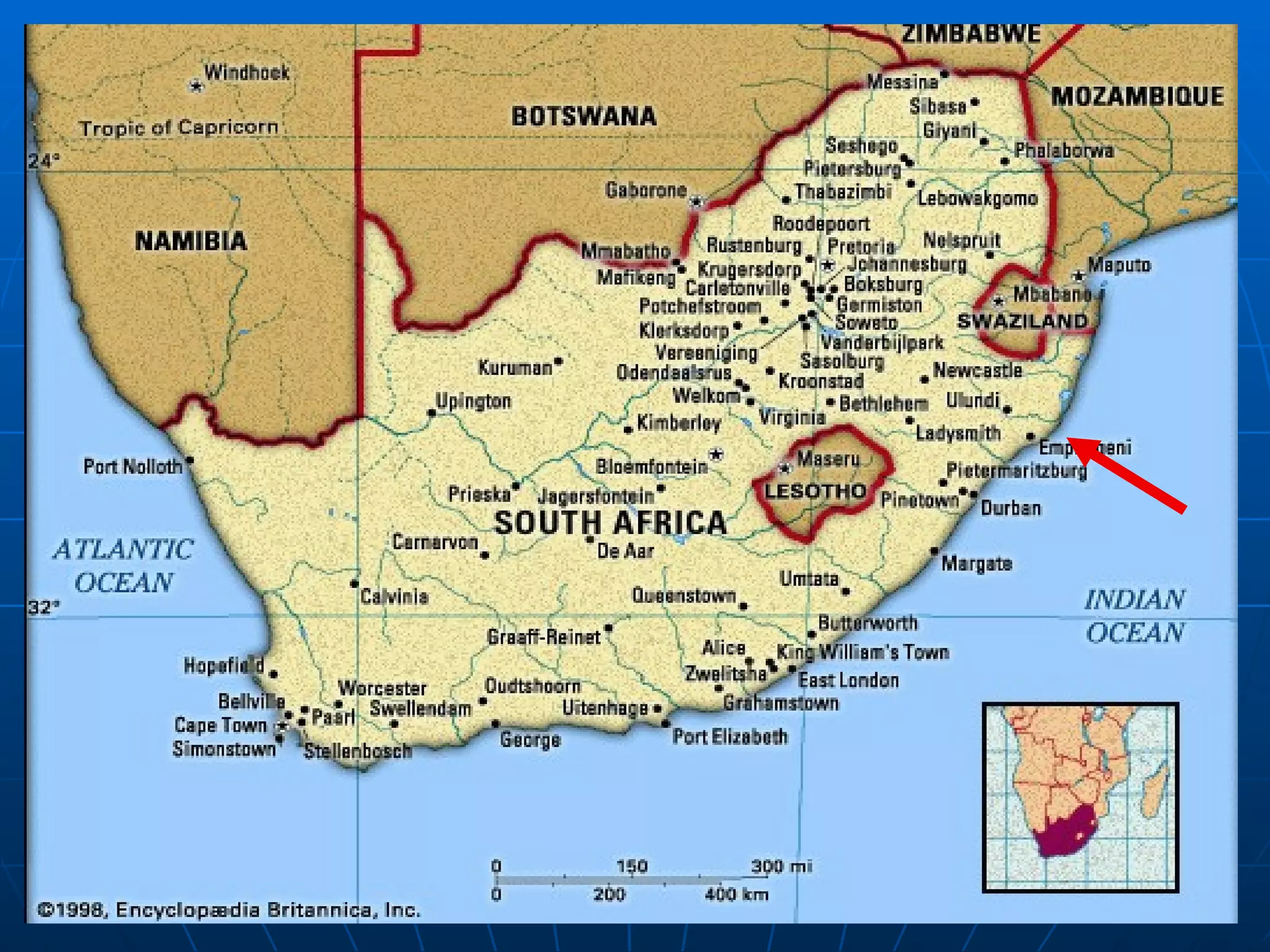
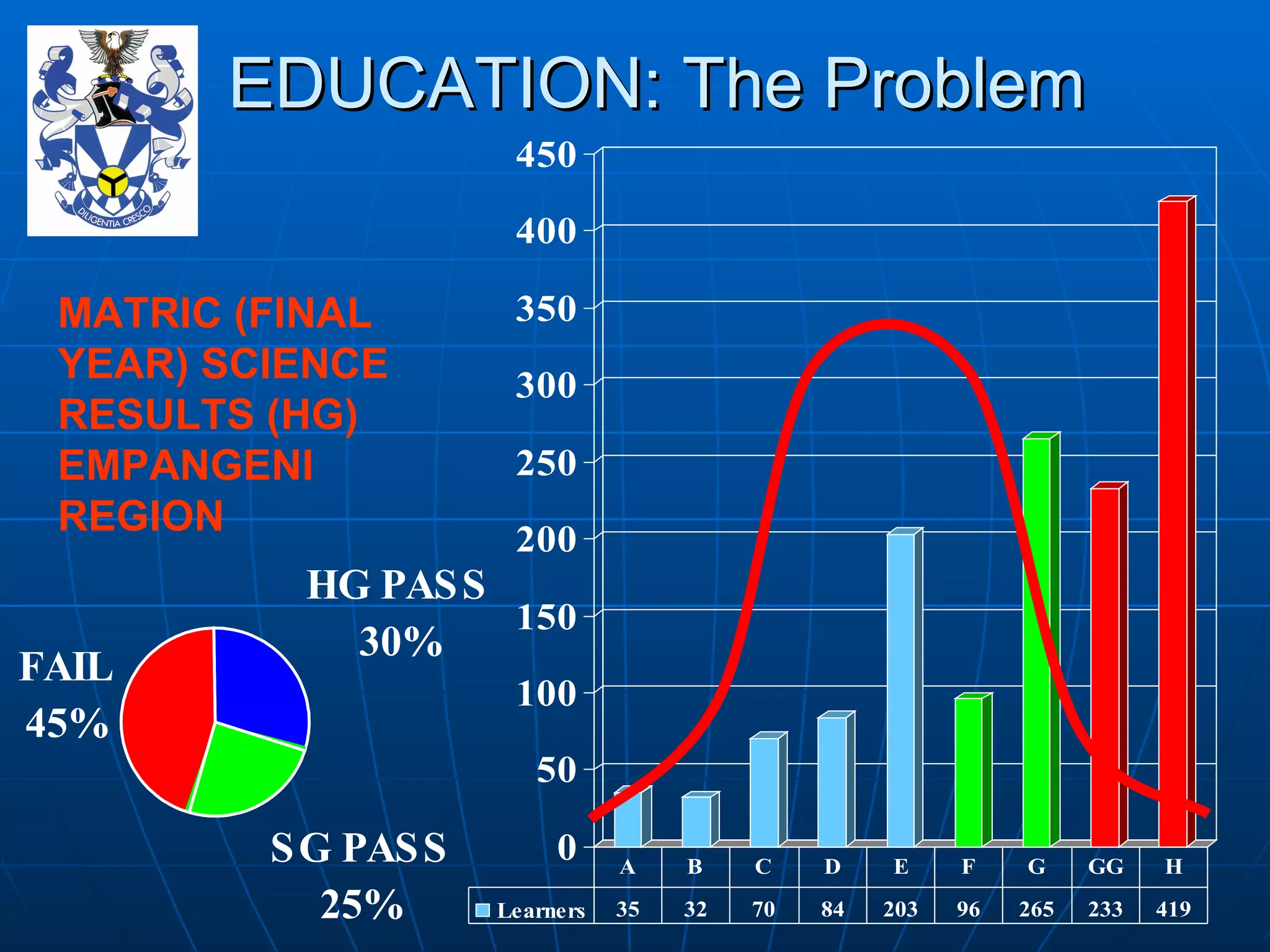
EDUCATION: The Problem MATRIC (FINAL YEAR) SCIENCE RESULTS (HG) EMPANGENI REGION
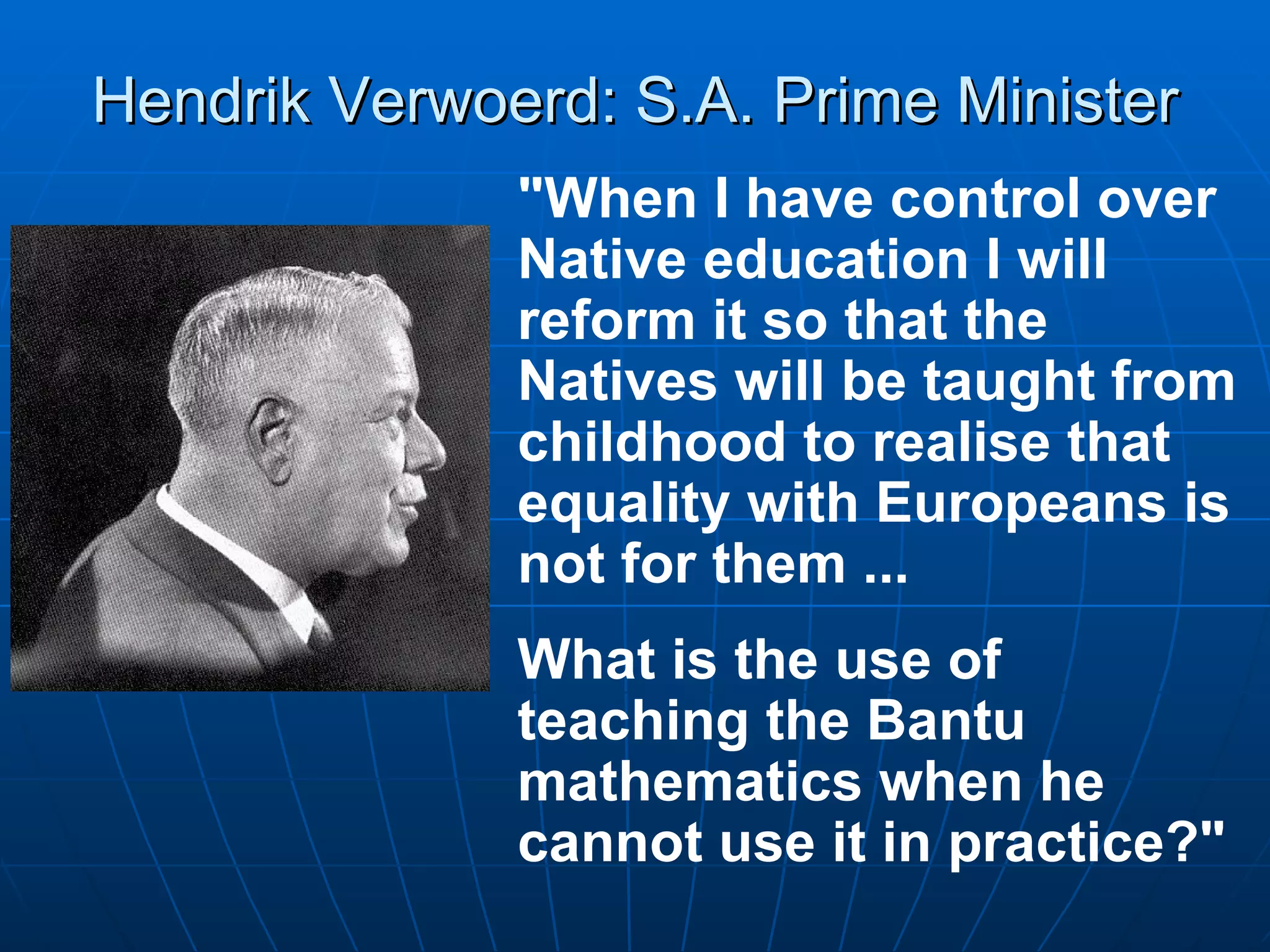
Hendrik Verwoerd: S.A. Prime Minister "When I have control over Native education I will reform it so that the Natives will be taught from childhood to realise that equality with Europeans is not for them ...  What is the use of teaching the Bantu mathematics when he cannot use it in practice?"
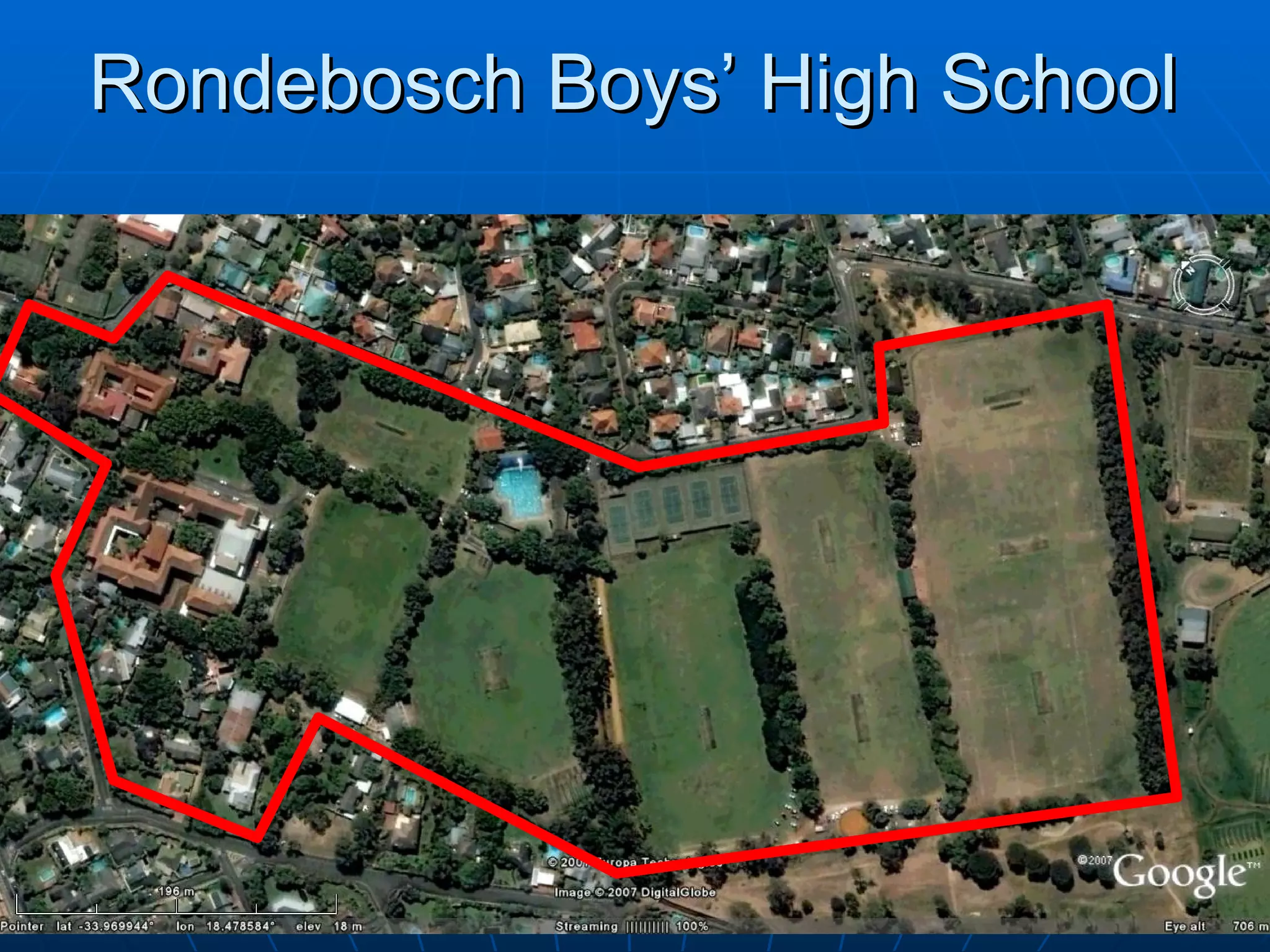
Rondebosch Boys’ High School
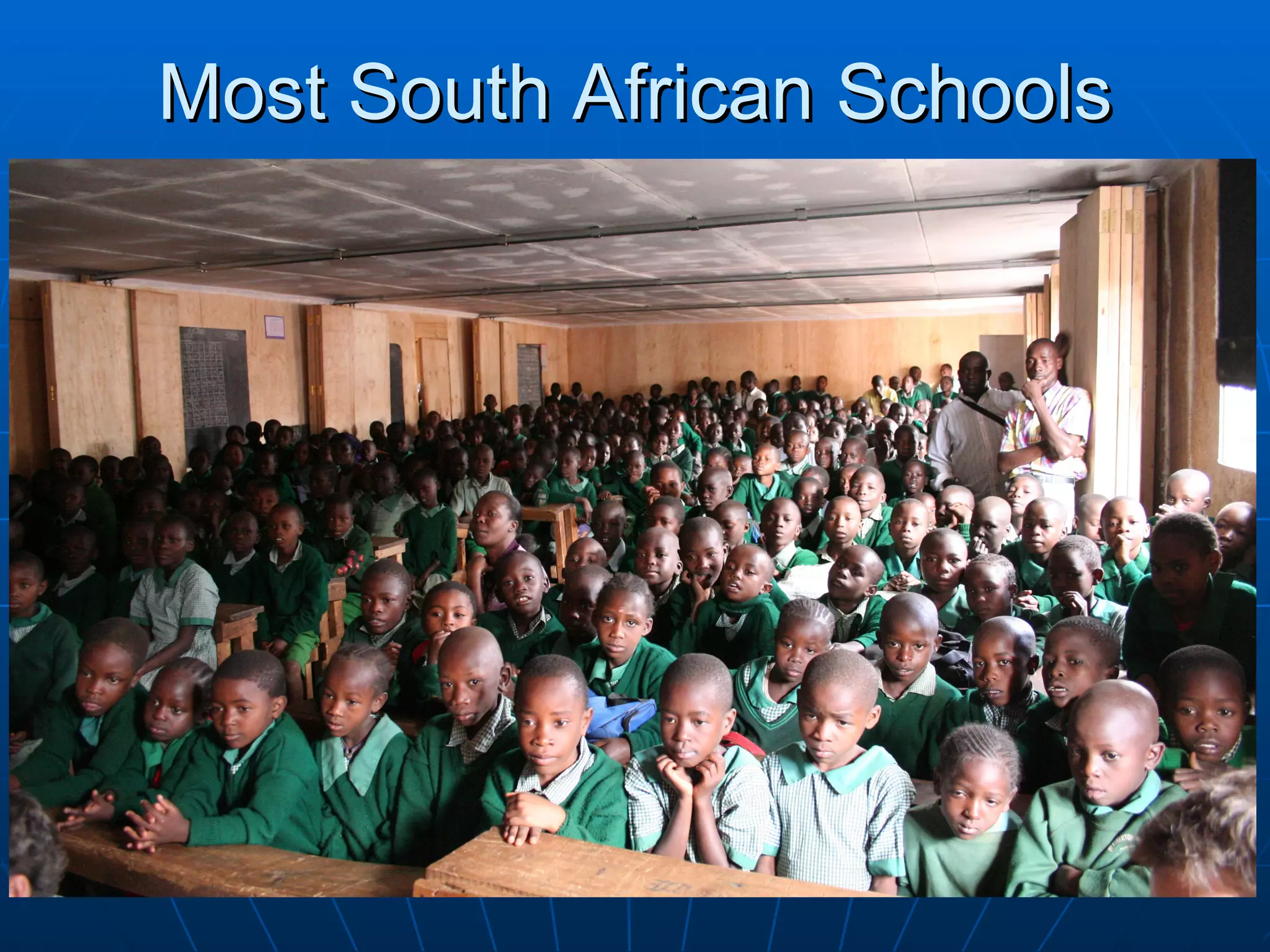
Most South African Schools
 
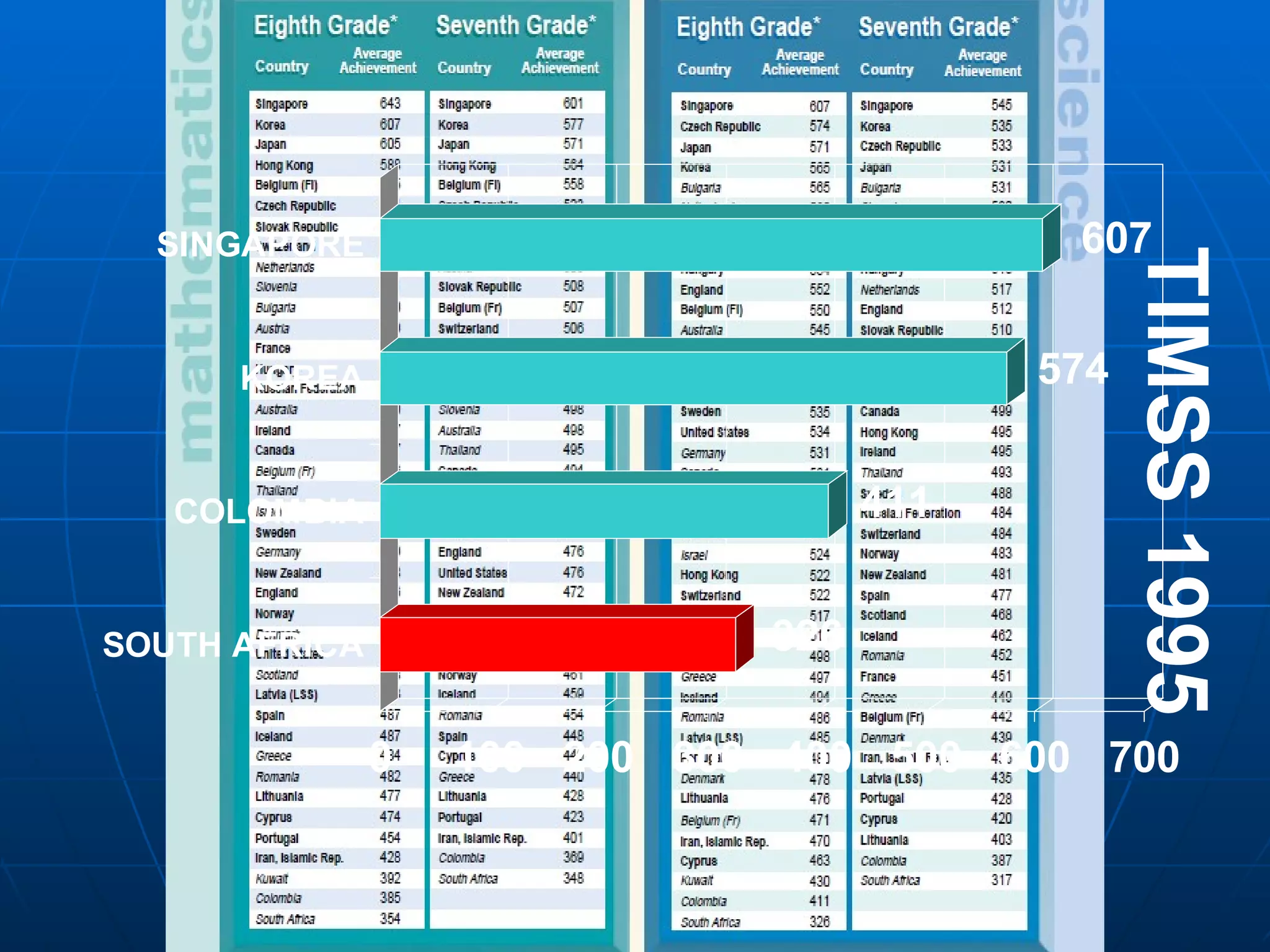
TIMSS 1995
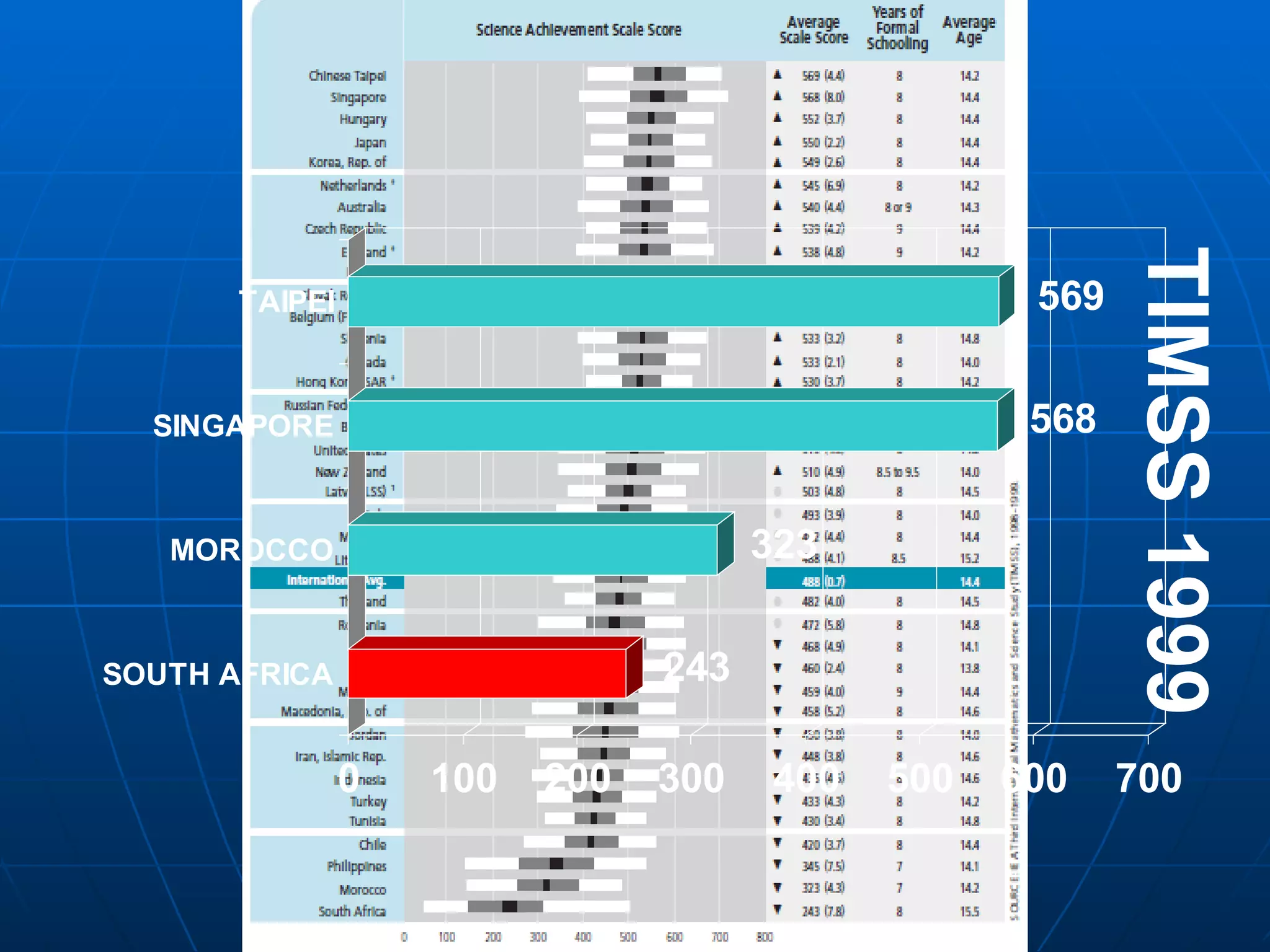
TIMSS 1999
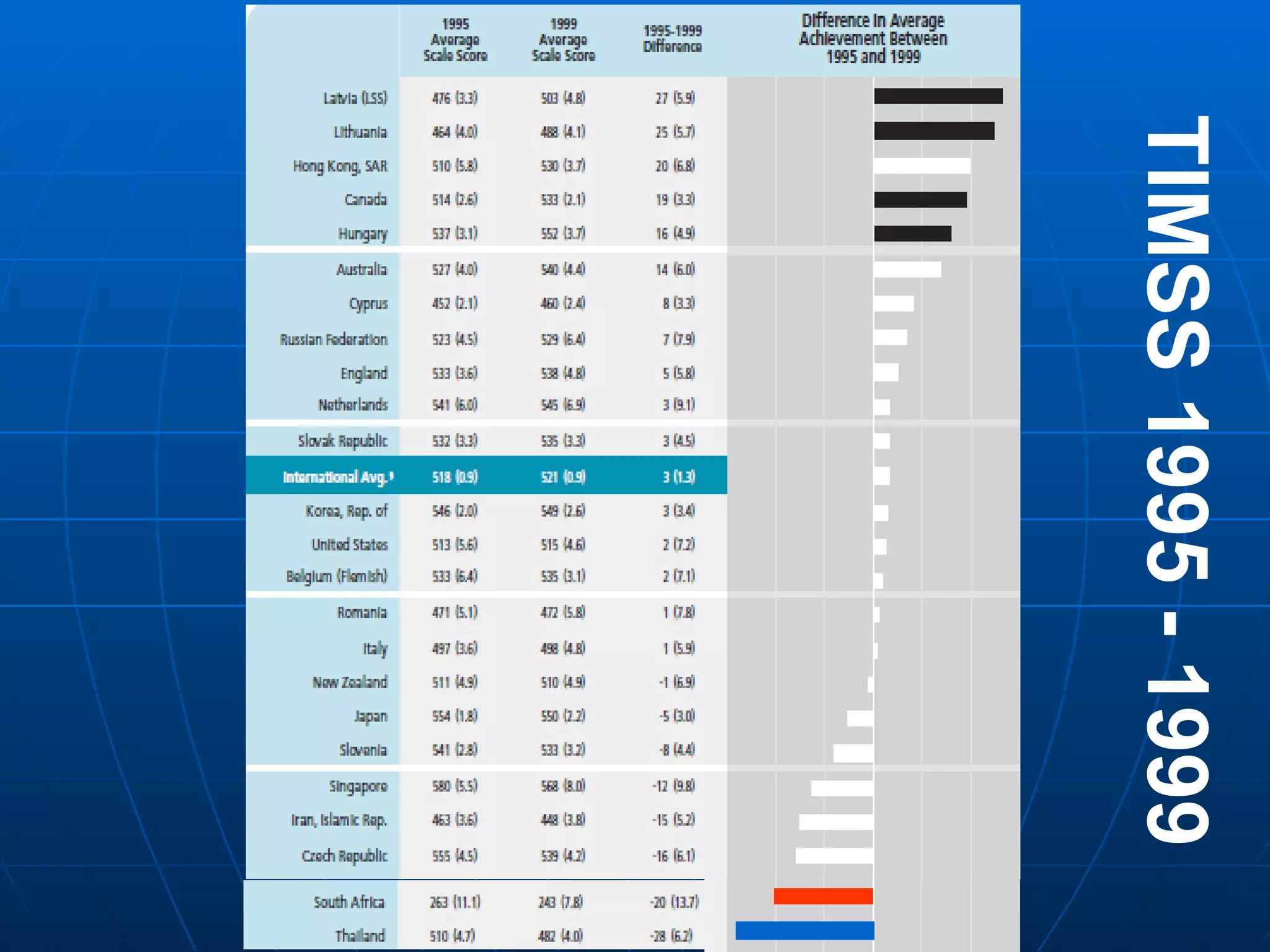
TIMSS 1995 - 1999
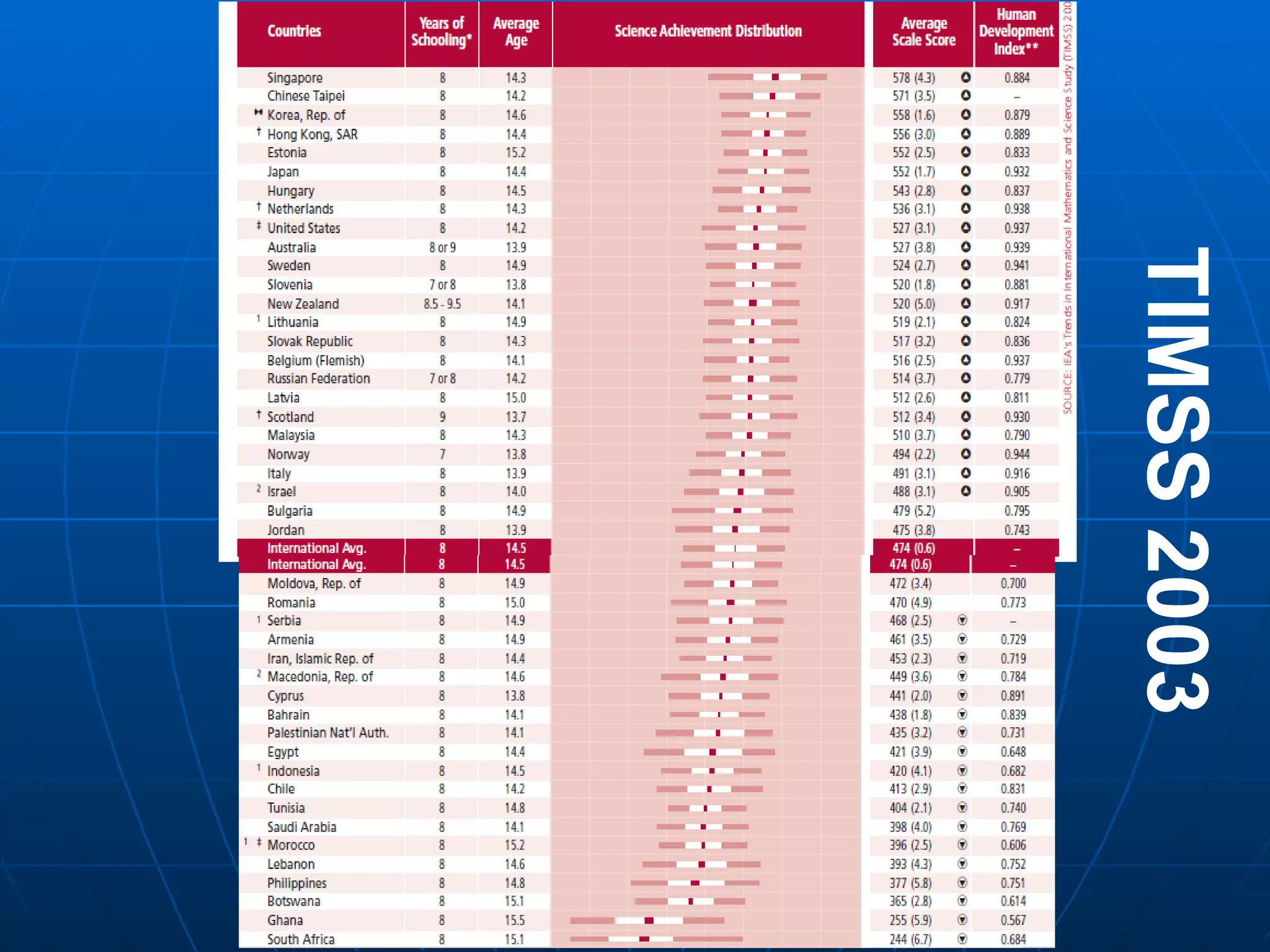
TIMSS 2003
 
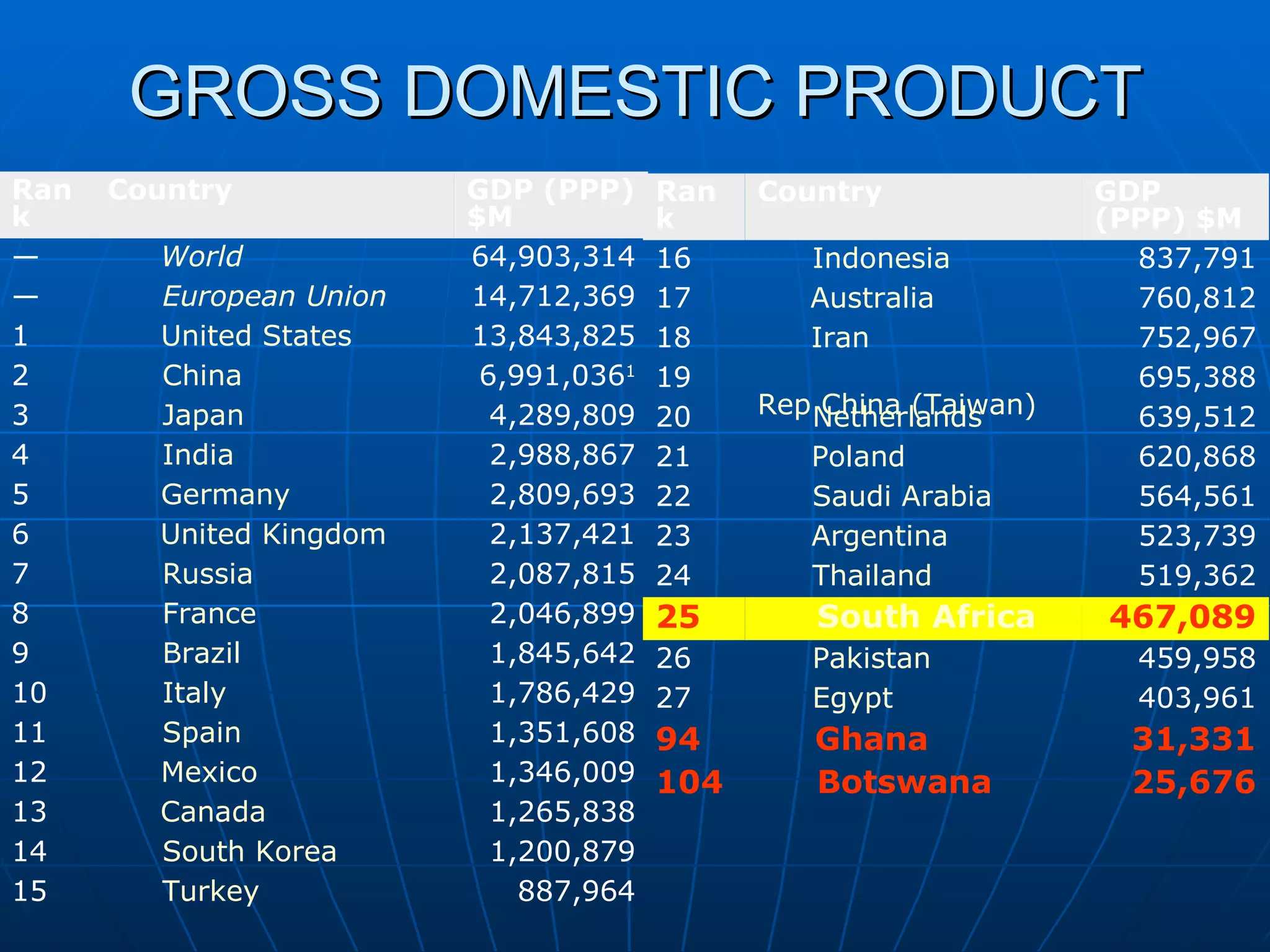
GROSS DOMESTIC PRODUCT 887,964          Turkey 15 1,200,879          South Korea 14 1,265,838          Canada 13 1,346,009          Mexico 12 1,351,608          Spain 11 1,786,429          Italy 10 1,845,642          Brazil 9 2,046,899          France 8 2,087,815          Russia 7 2,137,421          United Kingdom 6 2,809,693          Germany 5 2,988,867          India 4 4,289,809          Japan 3 6,991,036 1          China 2 13,843,825          United States 1 14,712,369          European Union — 64,903,314          World — GDP (PPP) $M Country Rank 25,676          Botswana 104 31,331          Ghana 94 403,961          Egypt 27 459,958          Pakistan 26 467,089          South Africa 25 519,362          Thailand 24 523,739          Argentina 23 564,561          Saudi Arabia 22 620,868          Poland 21 639,512          Netherlands 20 695,388          Rep China (Taiwan) 19 752,967          Iran 18 760,812          Australia 17 837,791          Indonesia 16 GDP (PPP) $M Country Rank
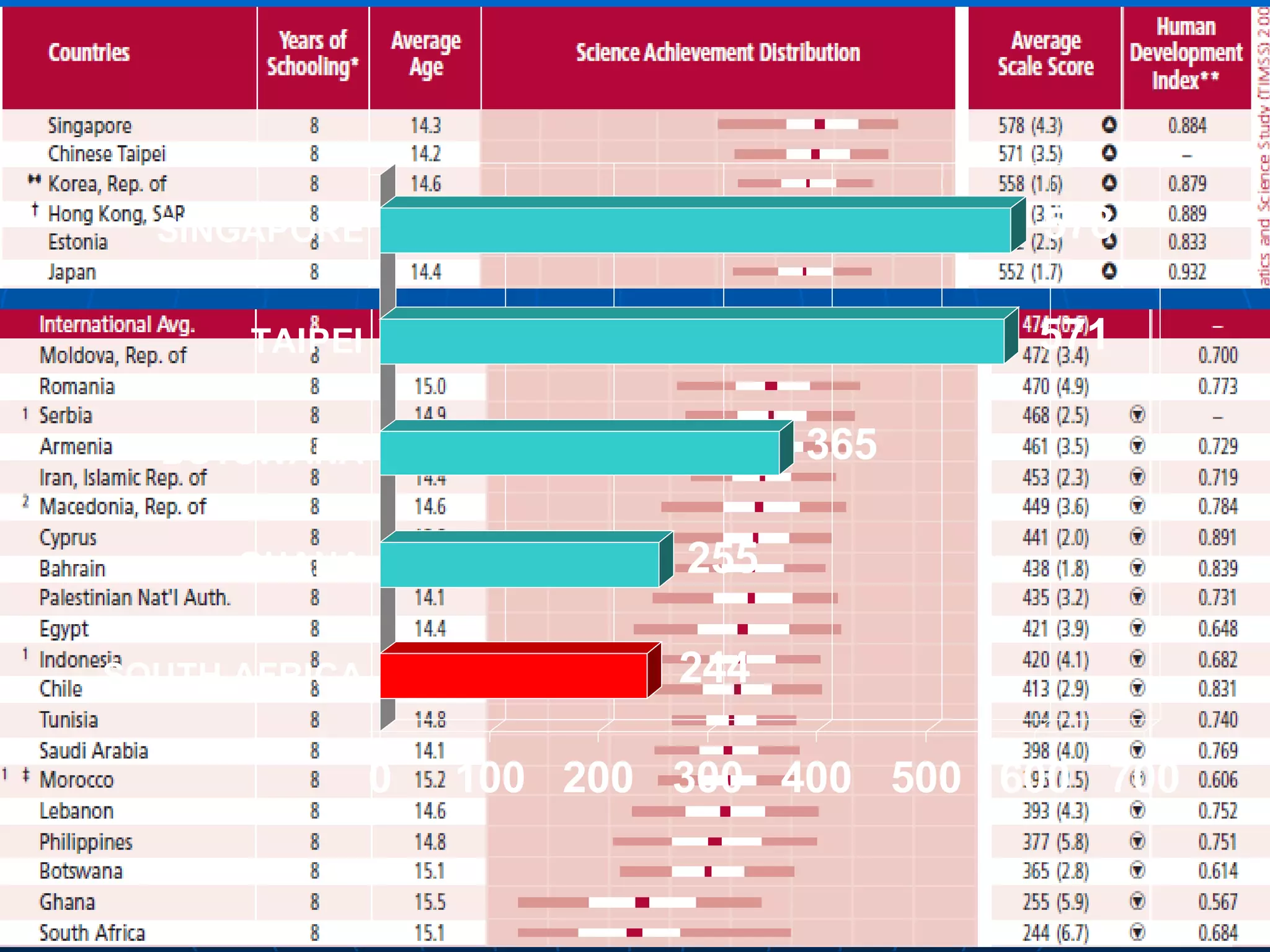
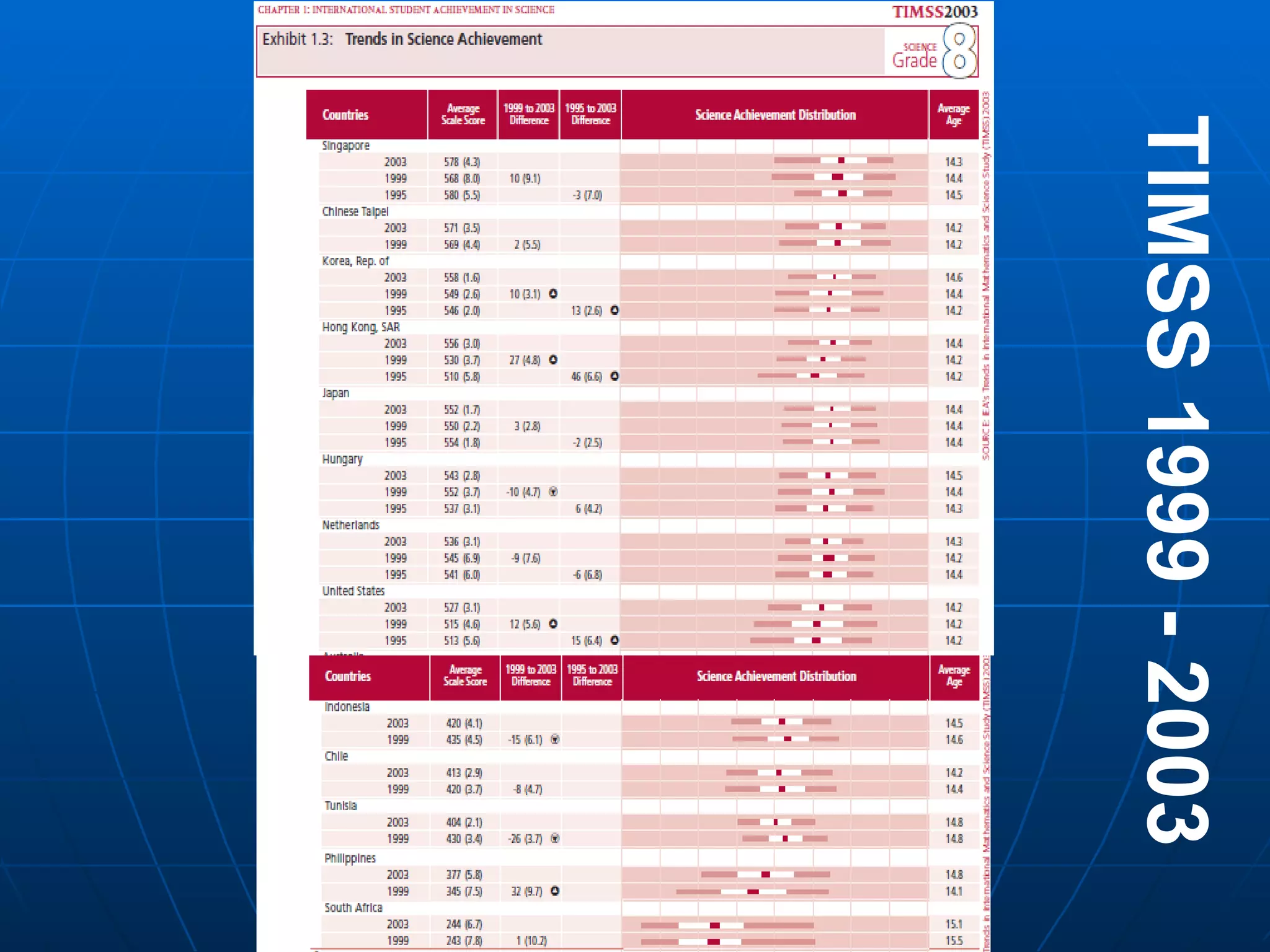
TIMSS 1999 - 2003
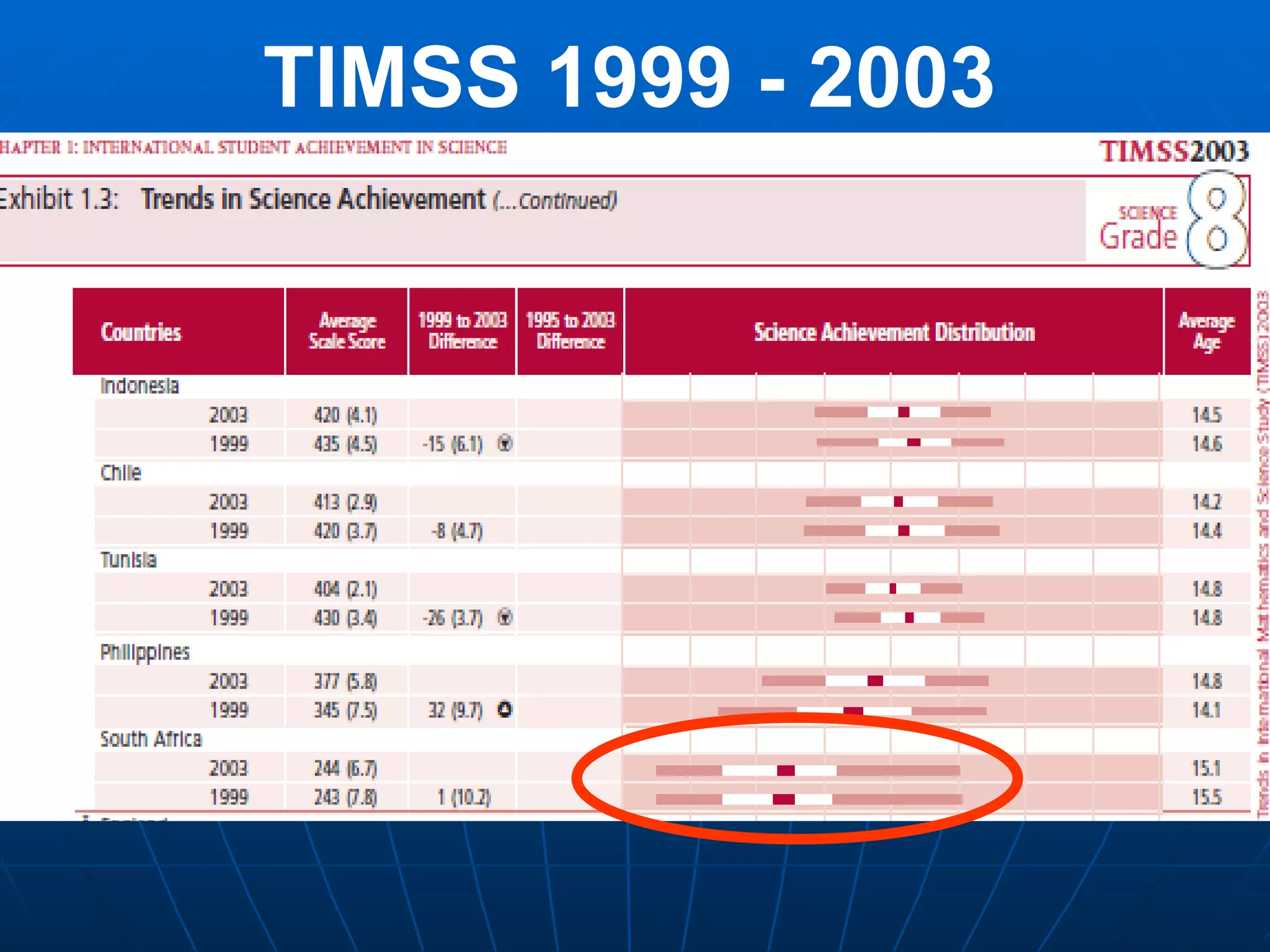
TIMSS 1999 - 2003
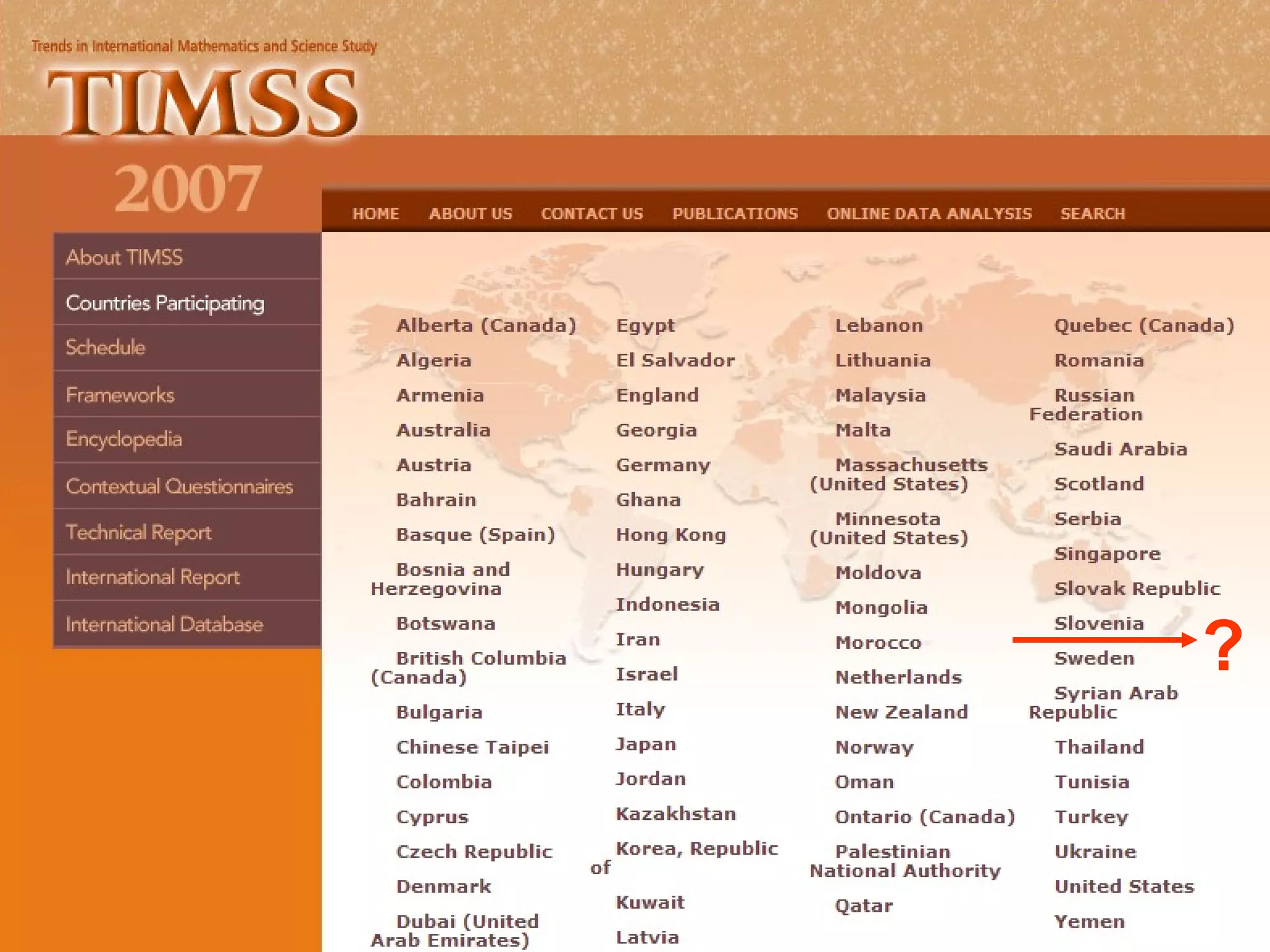
?
 
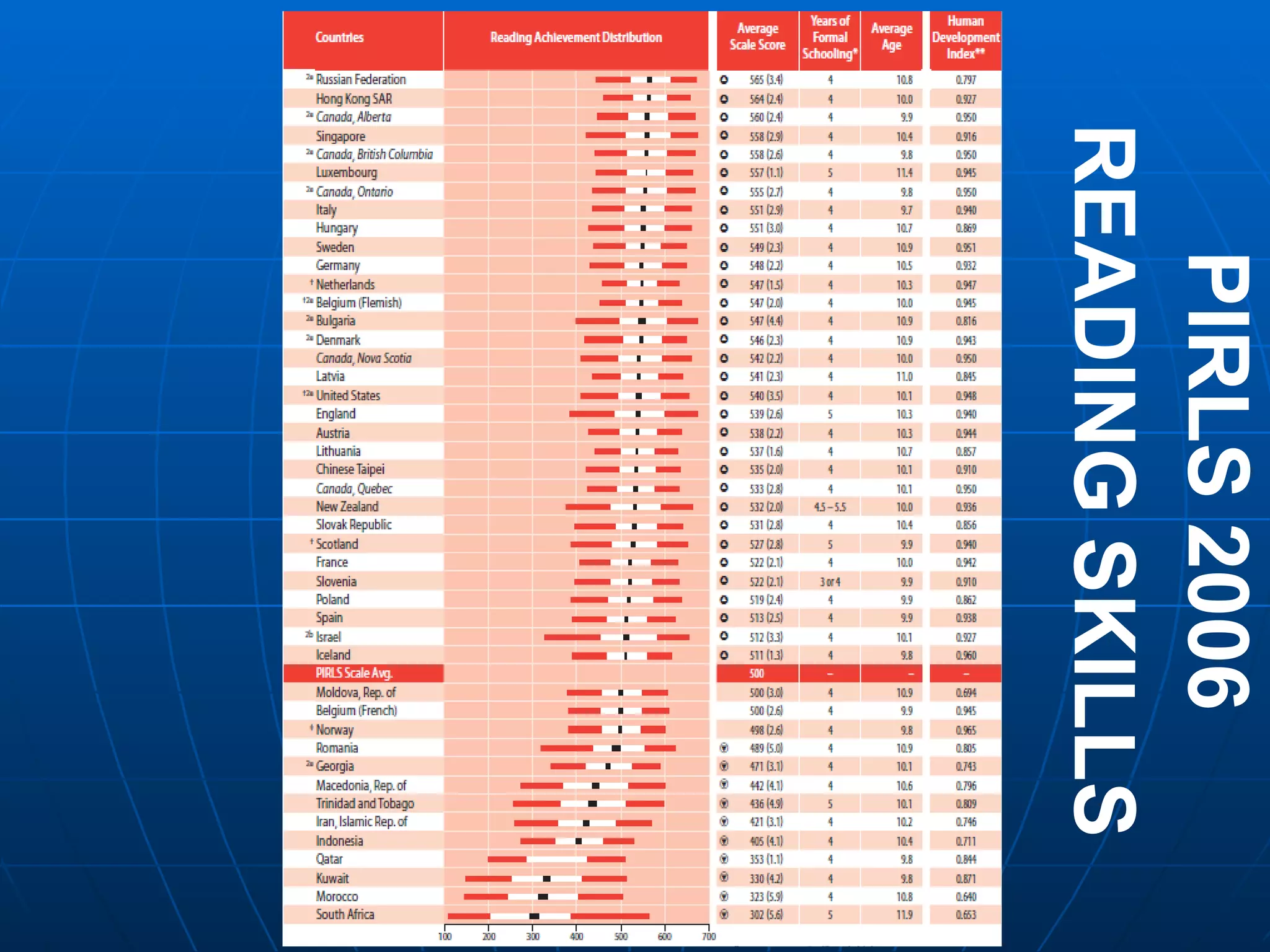
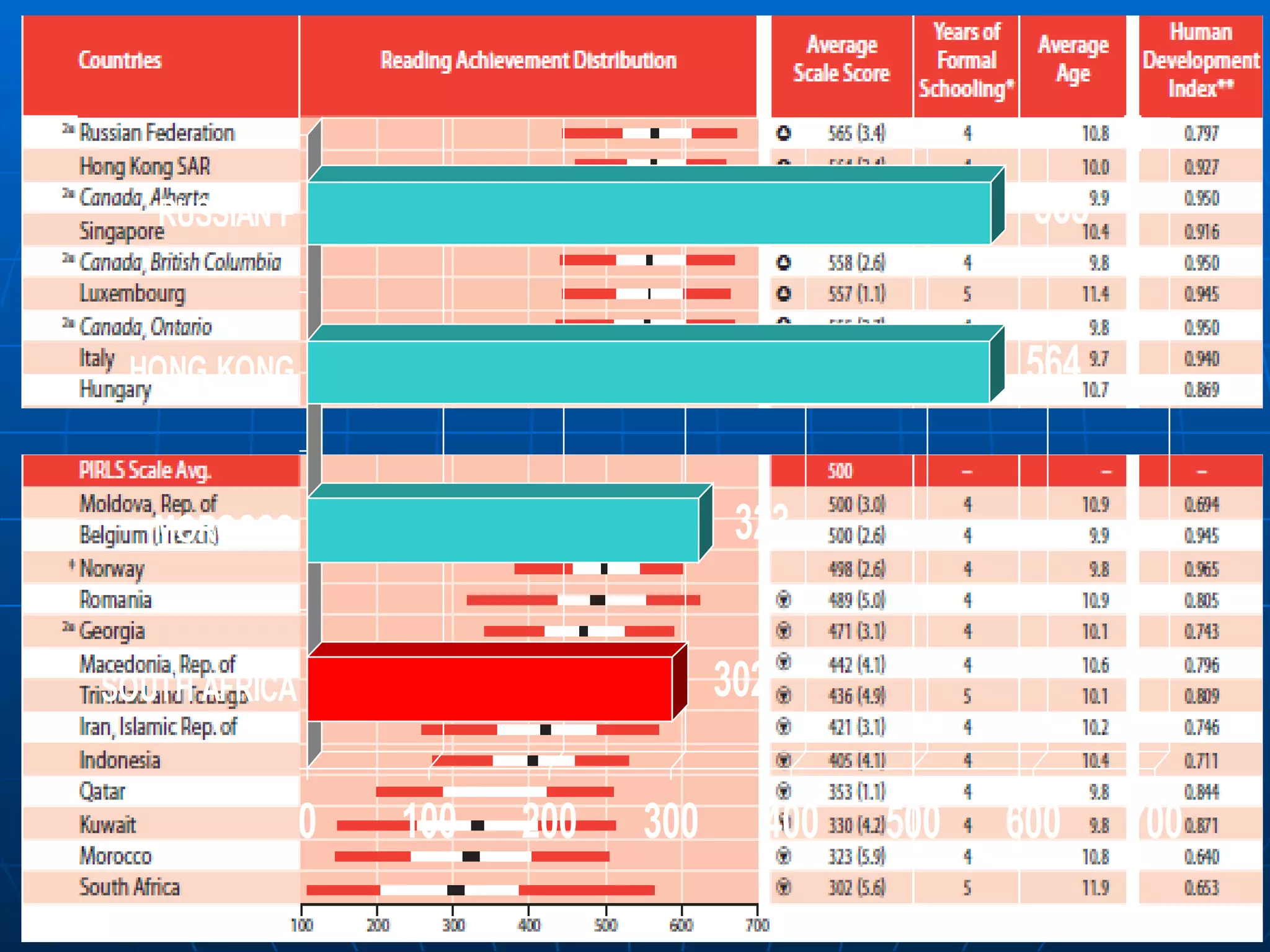
PIRLS 2006 READING SKILLS
 
 
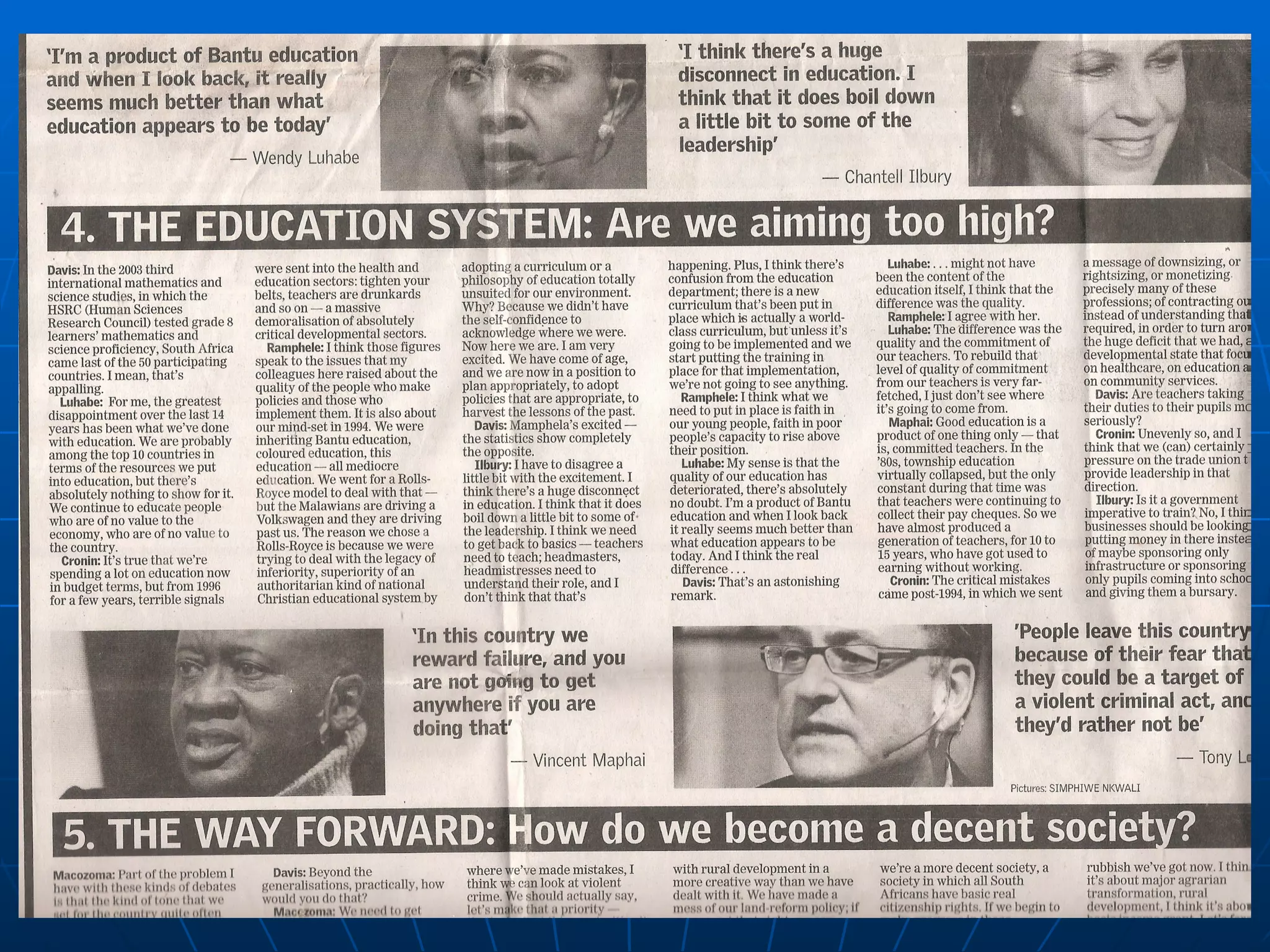
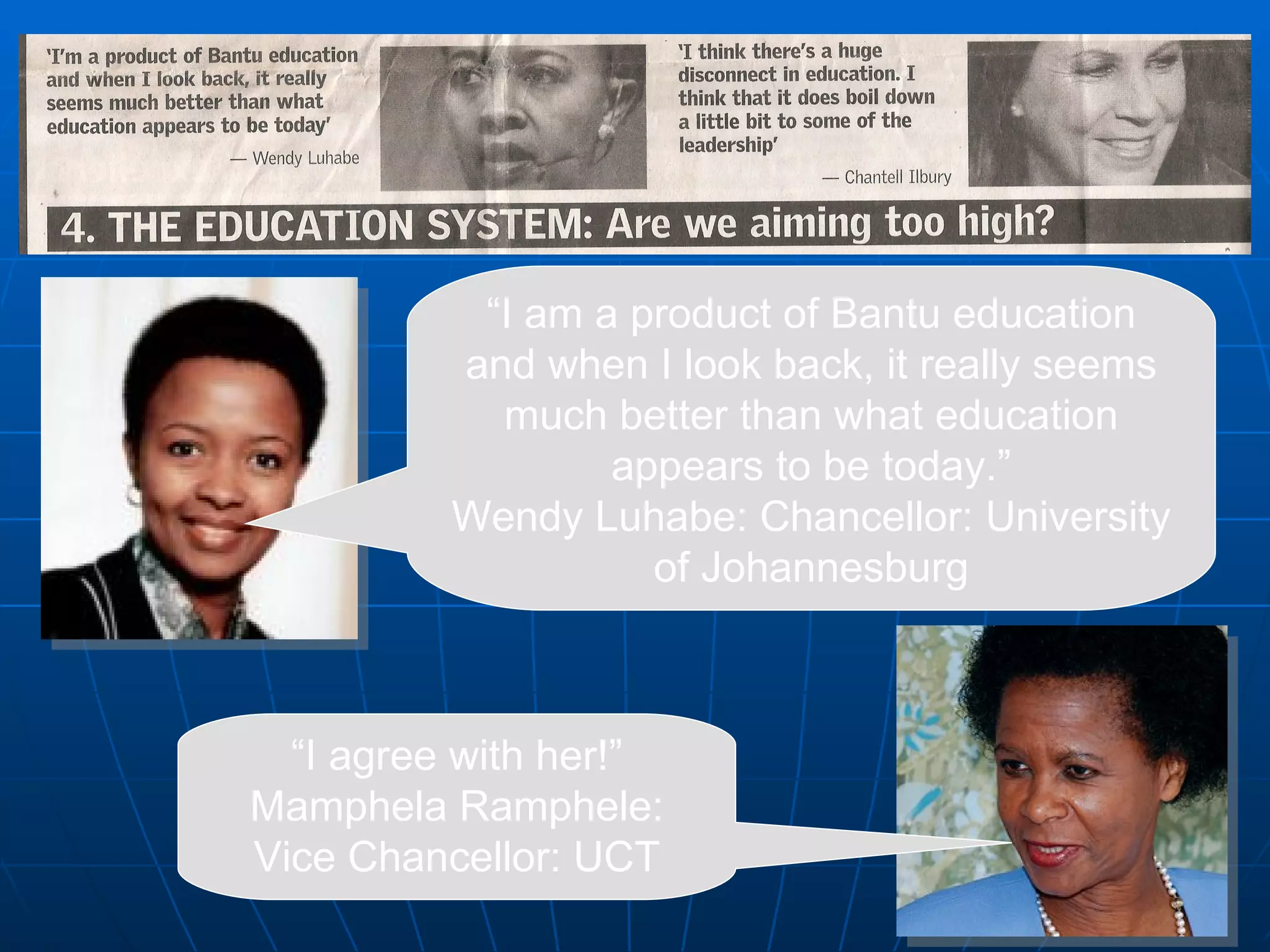
“ I am a product of Bantu education and when I look back, it really seems much better than what education appears to be today.” Wendy Luhabe: Chancellor: University of Johannesburg “ I agree with her!” Mamphela Ramphele: Vice Chancellor: UCT
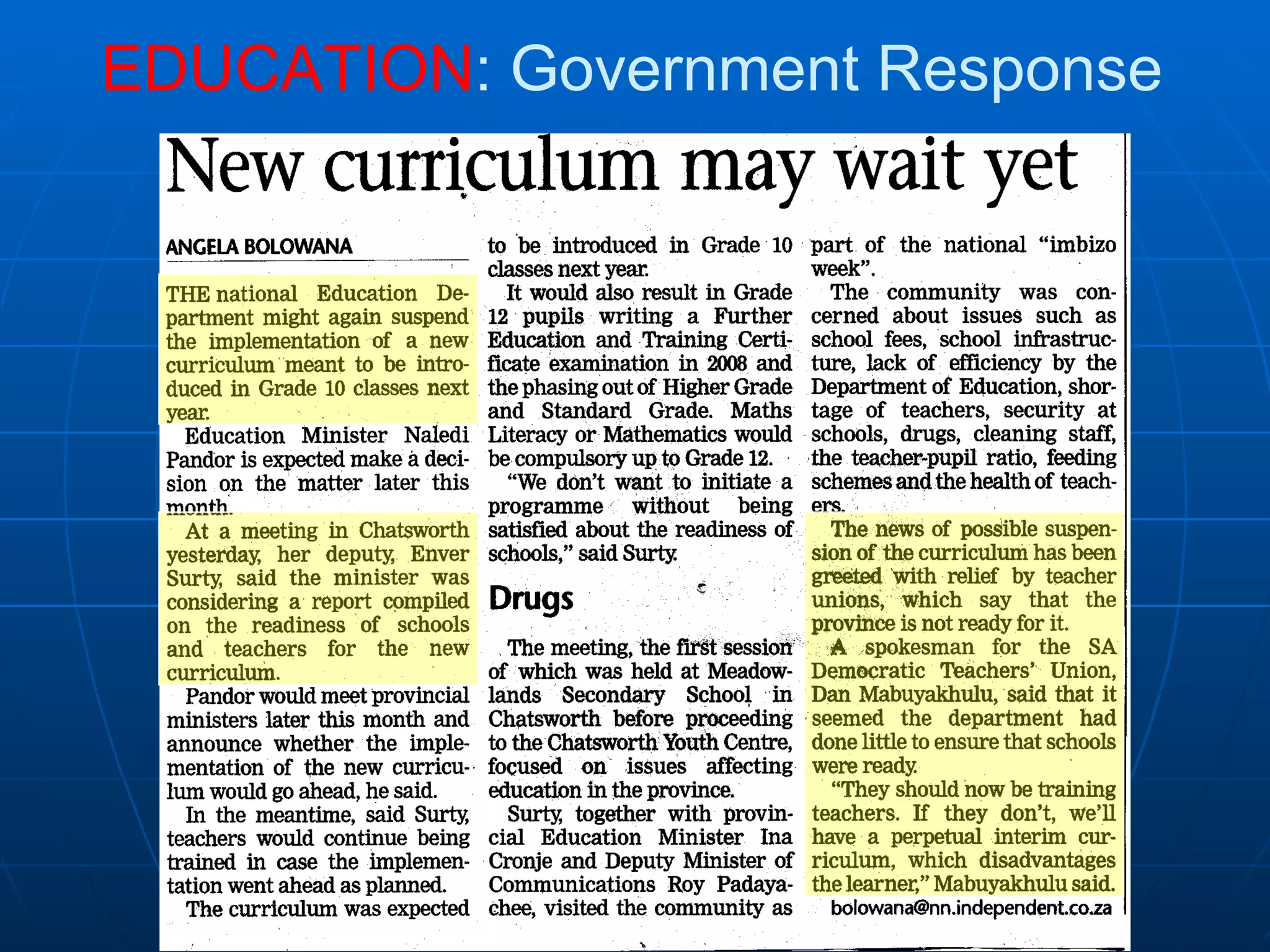
EDUCATION : Government Response
“ We went for a Rolls Royce model to deal with that [Apartheid education] – but the Malawians are driving a Volkswagen and they are driving past us.” Mamphela Ramphele:  Vice Chancellor: UCT
“ [We have adopted] a curriculum of education totally unsuited for our environment. Why? Because we didn’t have the self-confidence to acknowledge where we are.” Mamphela Ramphele:  Vice Chancellor: UCT
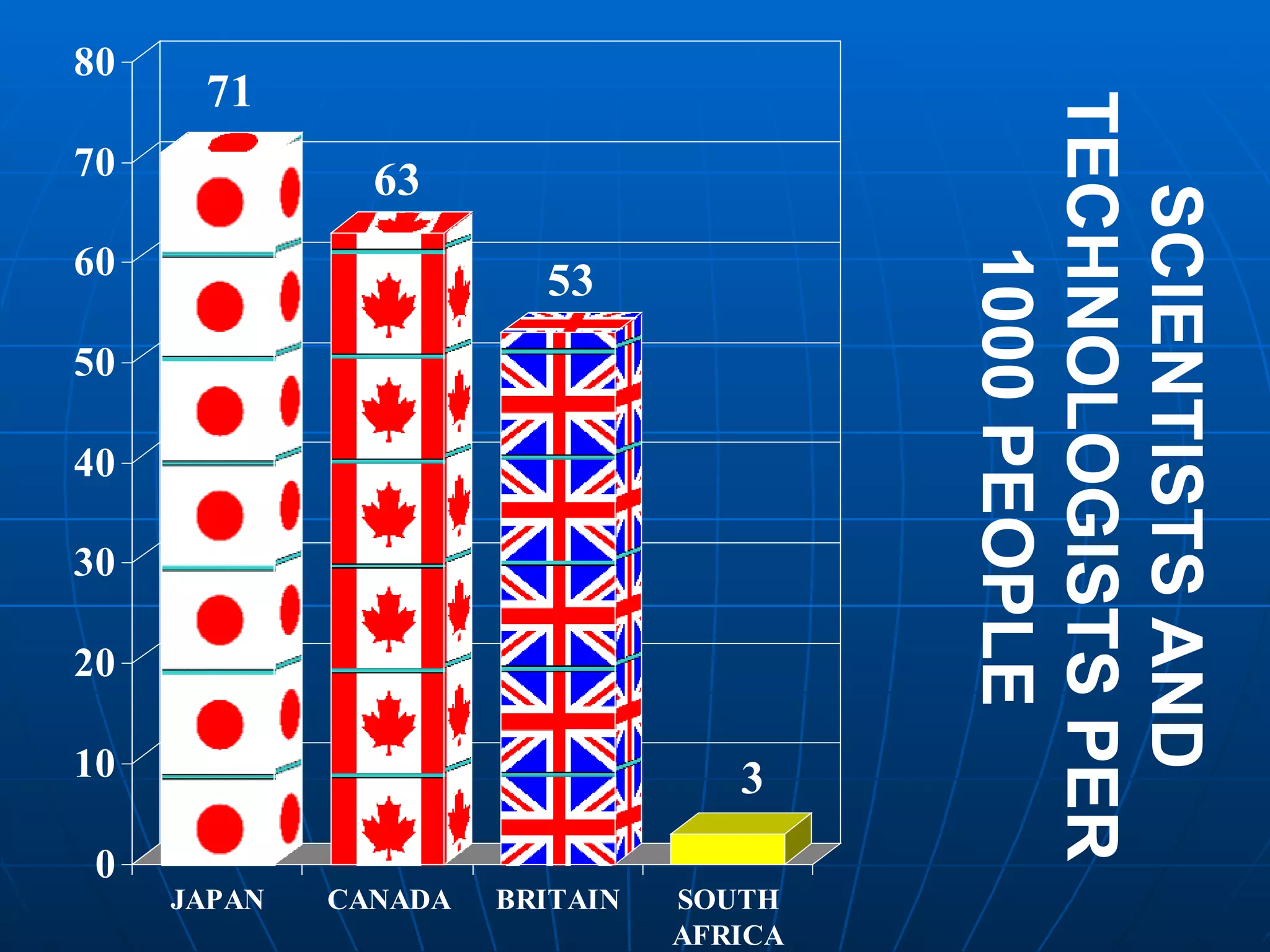
SCIENTISTS AND TECHNOLOGISTS PER 1000 PEOPLE
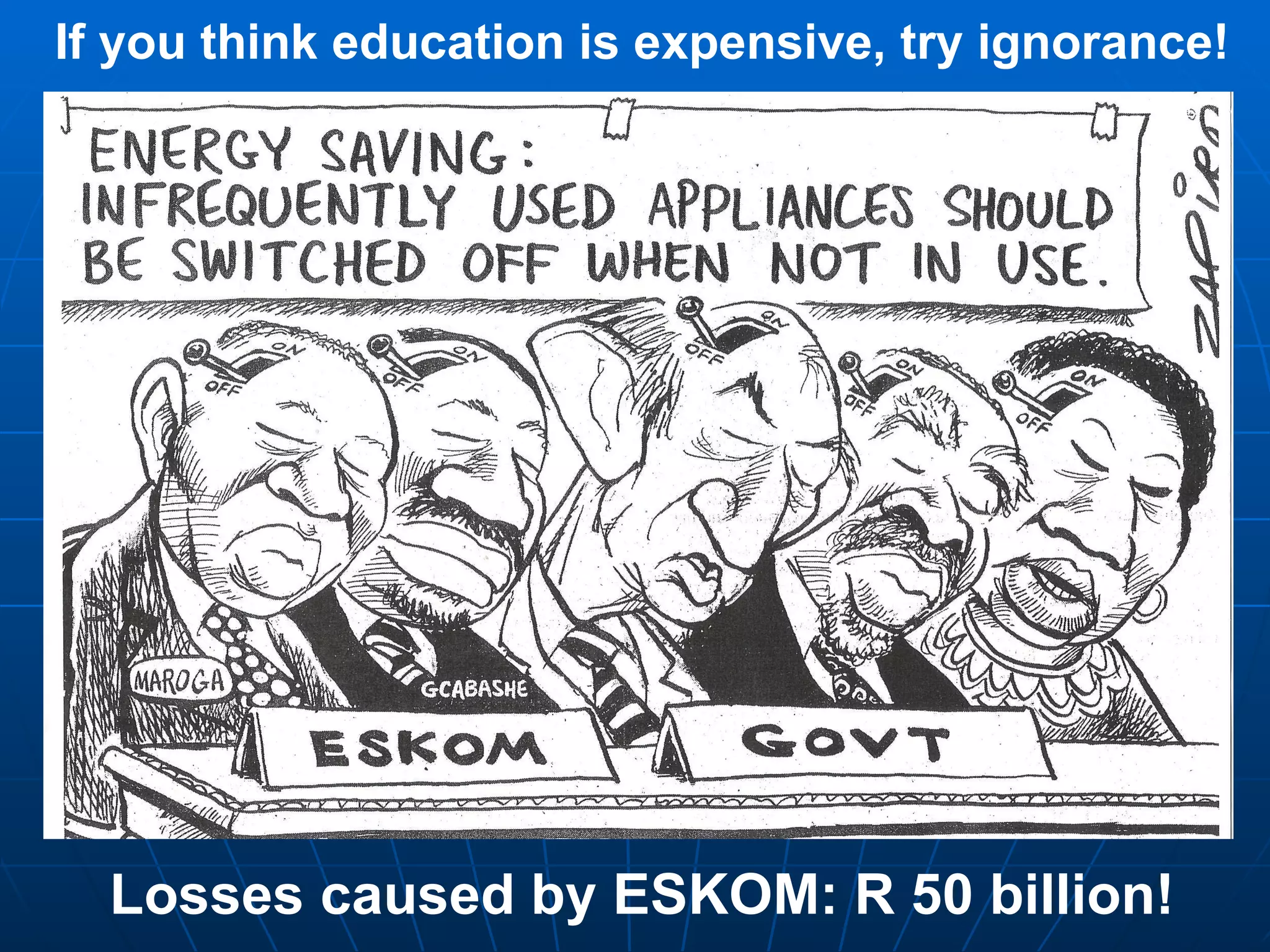
If you think education is expensive, try ignorance! Losses caused by ESKOM: R 50 billion!
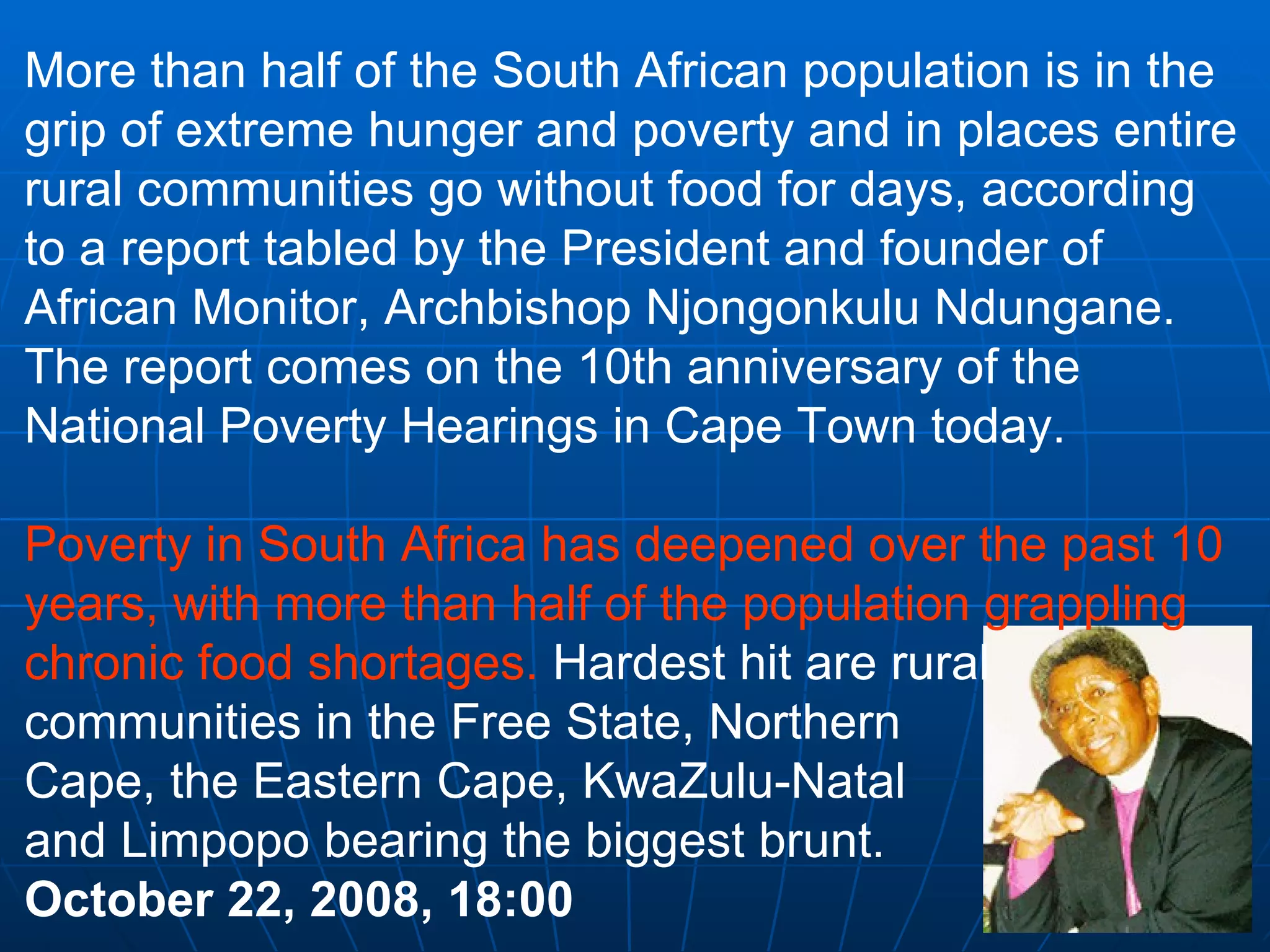
More than half of the South African population is in the grip of extreme hunger and poverty and in places entire rural communities go without food for days, according to a report tabled by the President and founder of African Monitor, Archbishop Njongonkulu Ndungane. The report comes on the 10th anniversary of the National Poverty Hearings in Cape Town today. Poverty in South Africa has deepened over the past 10 years, with more than half of the population grappling chronic food shortages.  Hardest hit are rural communities in the Free State, Northern  Cape, the Eastern Cape, KwaZulu-Natal  and Limpopo bearing the biggest brunt.  October 22, 2008, 18:00
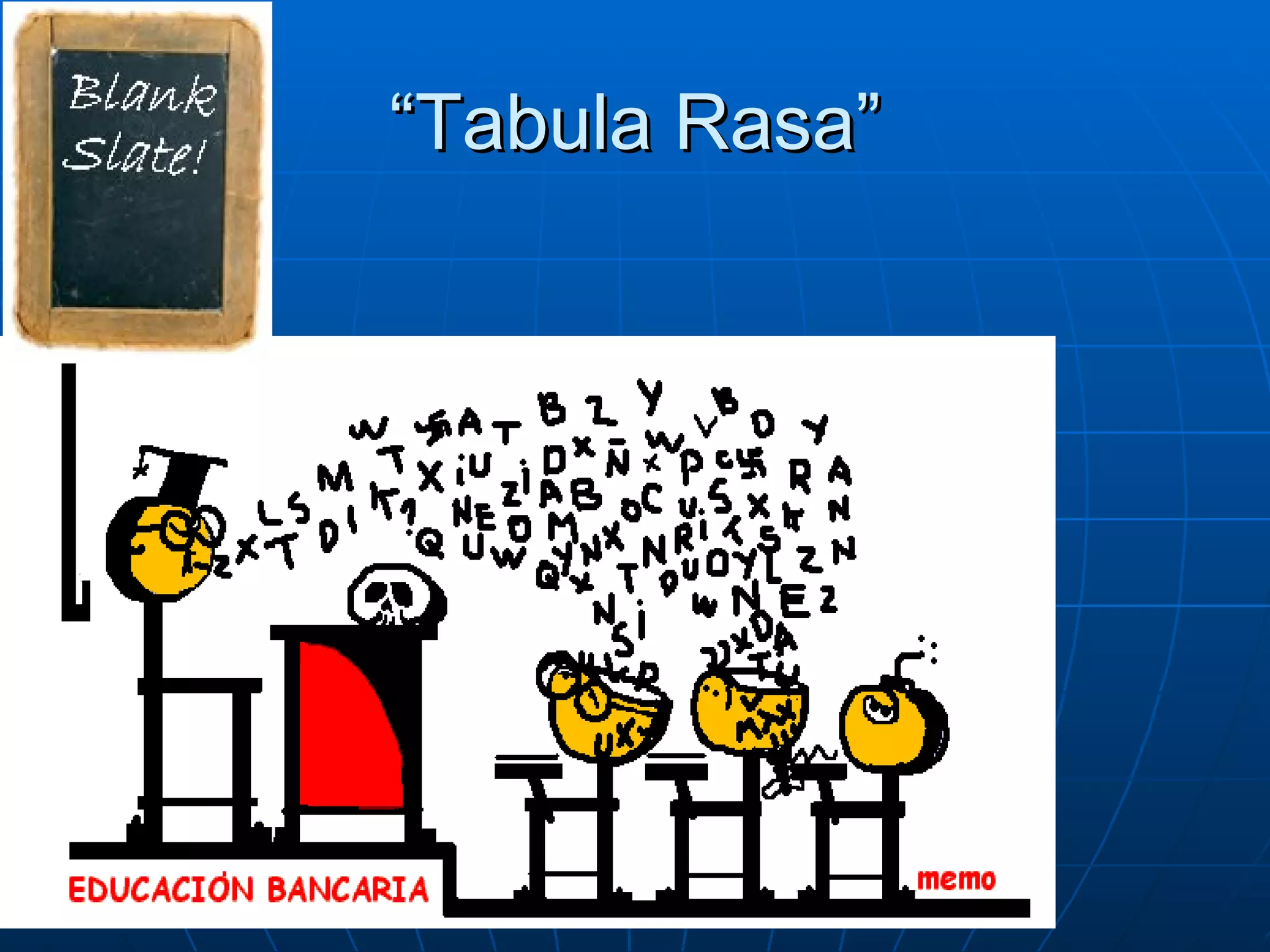
“Tabula Rasa”
Carl Friedrich  Gauss (1785 - age 8) Punishment : Add the numbers from 1 to 100 ! 1 +  2  +  3  +  4 + ………...97 + 98 + 99 + 100 100 +99 + 98 + 97+ ……….+ 4  + 3  + 2  +  1 101+101+101+101+ ……...+101+101+101 +101 100 x 101 = 10100 = twice the sum  The sum=  100 / 2 x 101 = 5050   =  ½ (Number of terms) [First + Last]   =  ½ n [ a + l ]
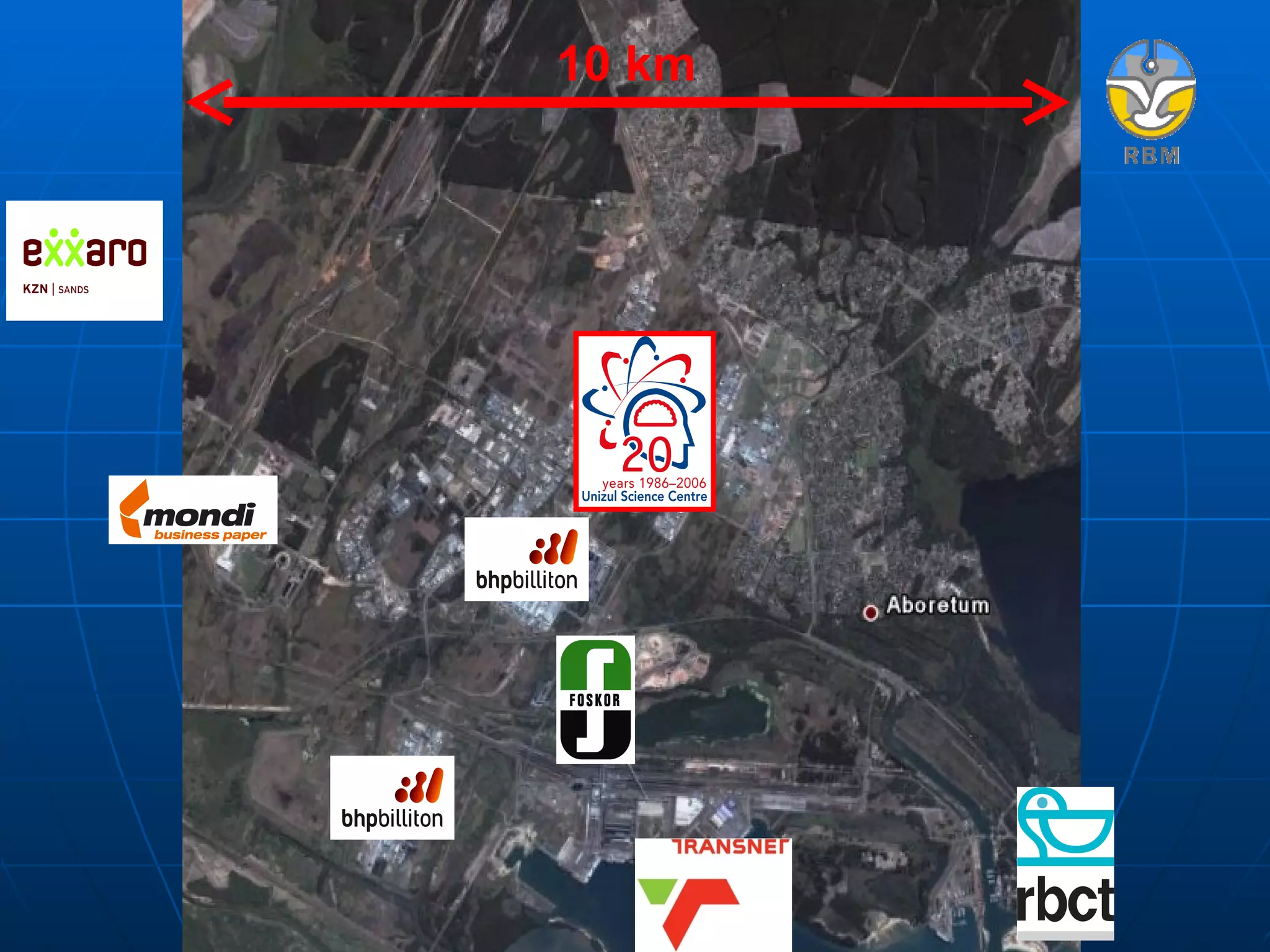
10 km
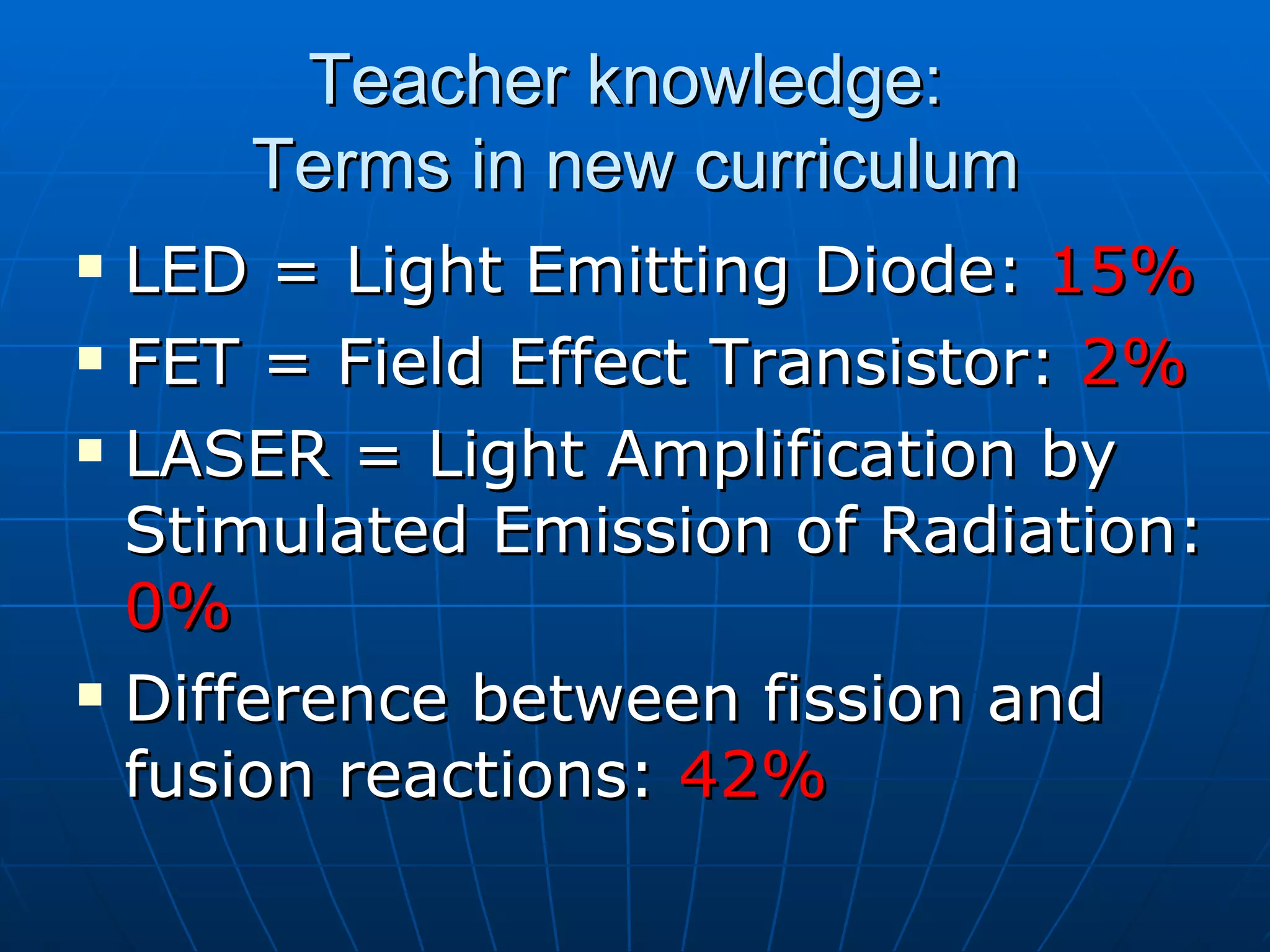
LED = Light Emitting Diode:  15% FET = Field Effect Transistor:  2% LASER = Light Amplification by Stimulated Emission of Radiation:  0% Difference between fission and fusion reactions:  42% Teacher knowledge:  Terms in new curriculum
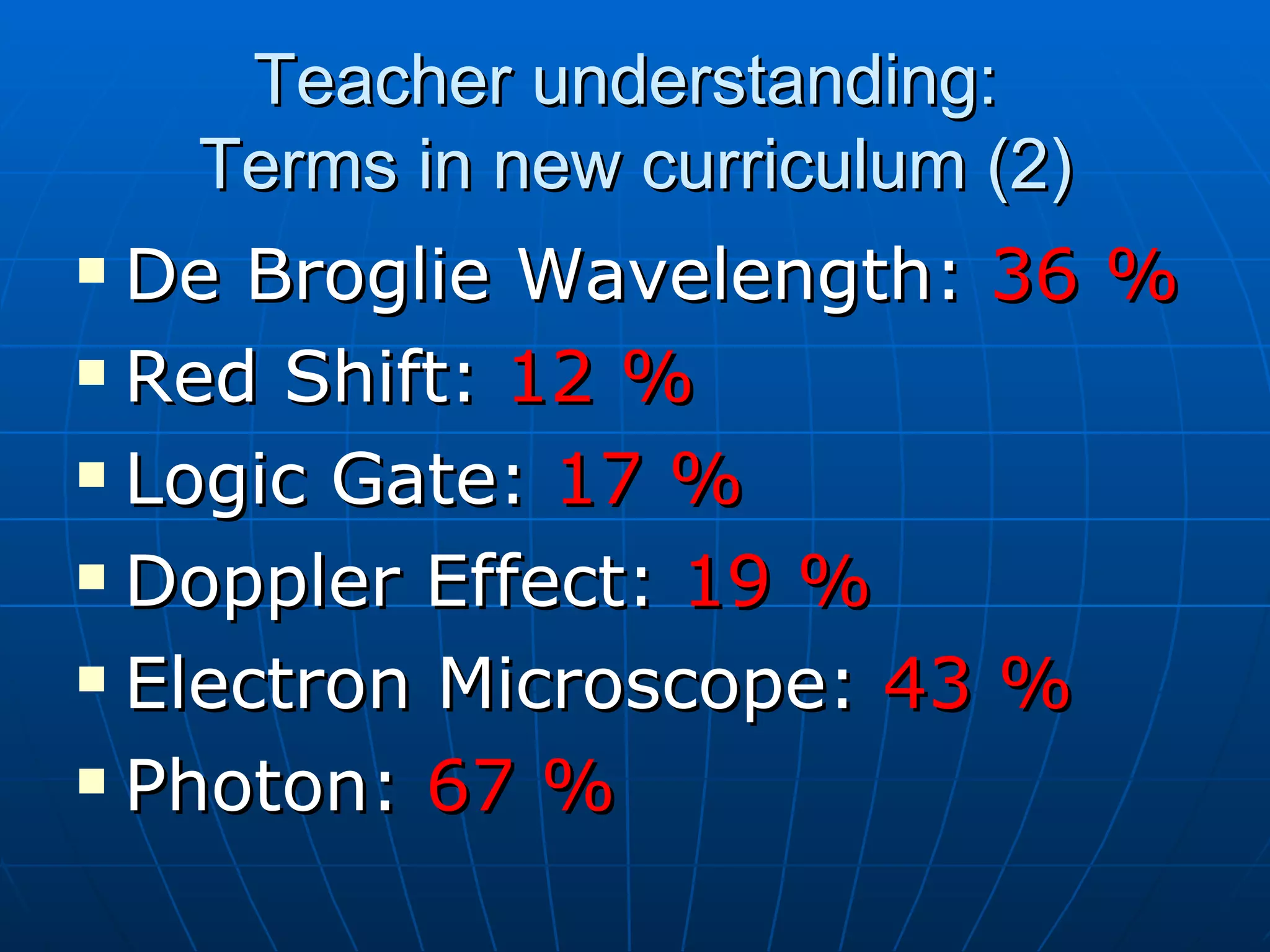
De Broglie Wavelength:  36 % Red Shift:  12 % Logic Gate:  17 % Doppler Effect:  19 % Electron Microscope:  43 % Photon:  67 % Teacher understanding:  Terms in new curriculum (2)
 
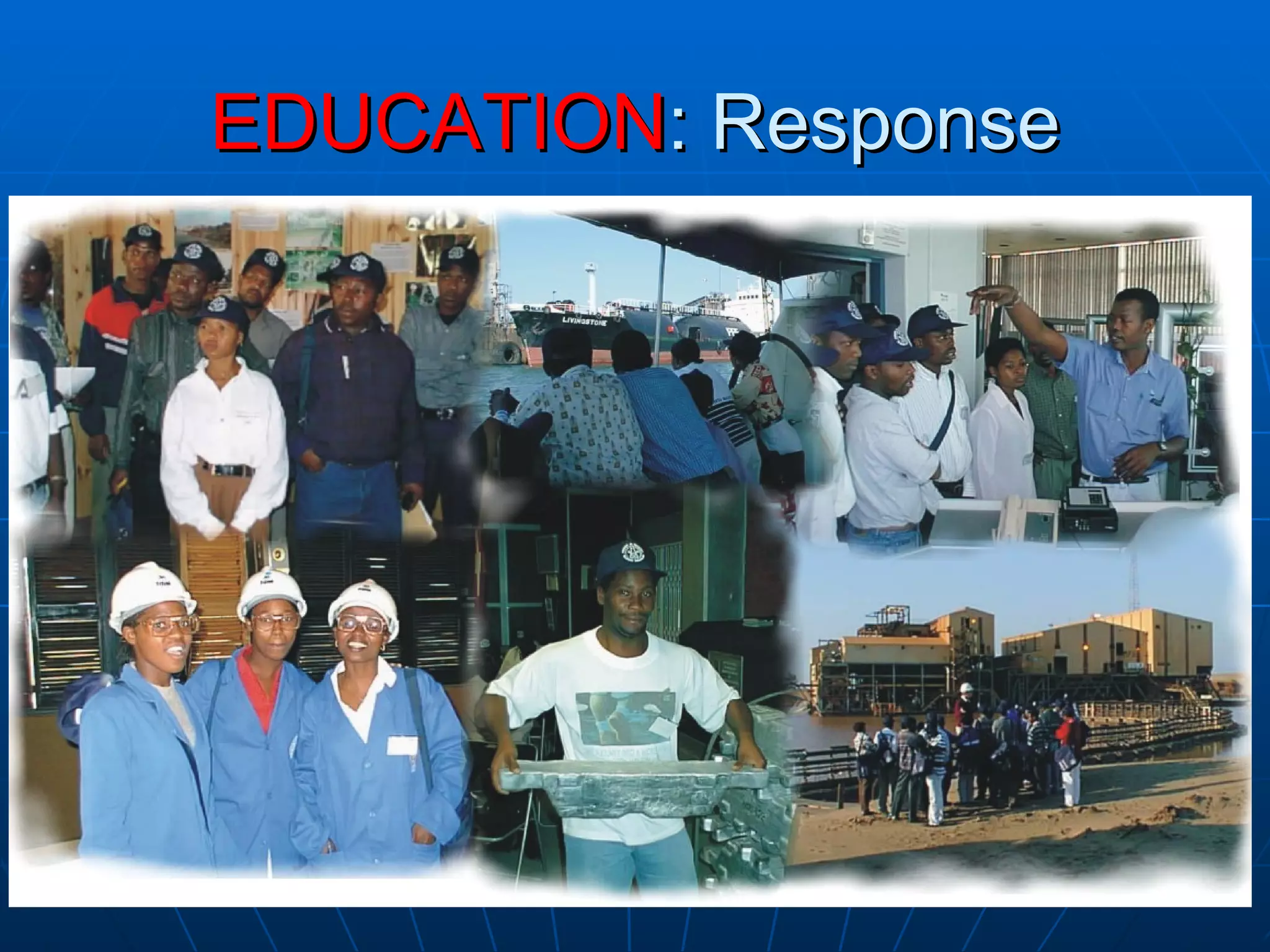
EDUCATION : Response
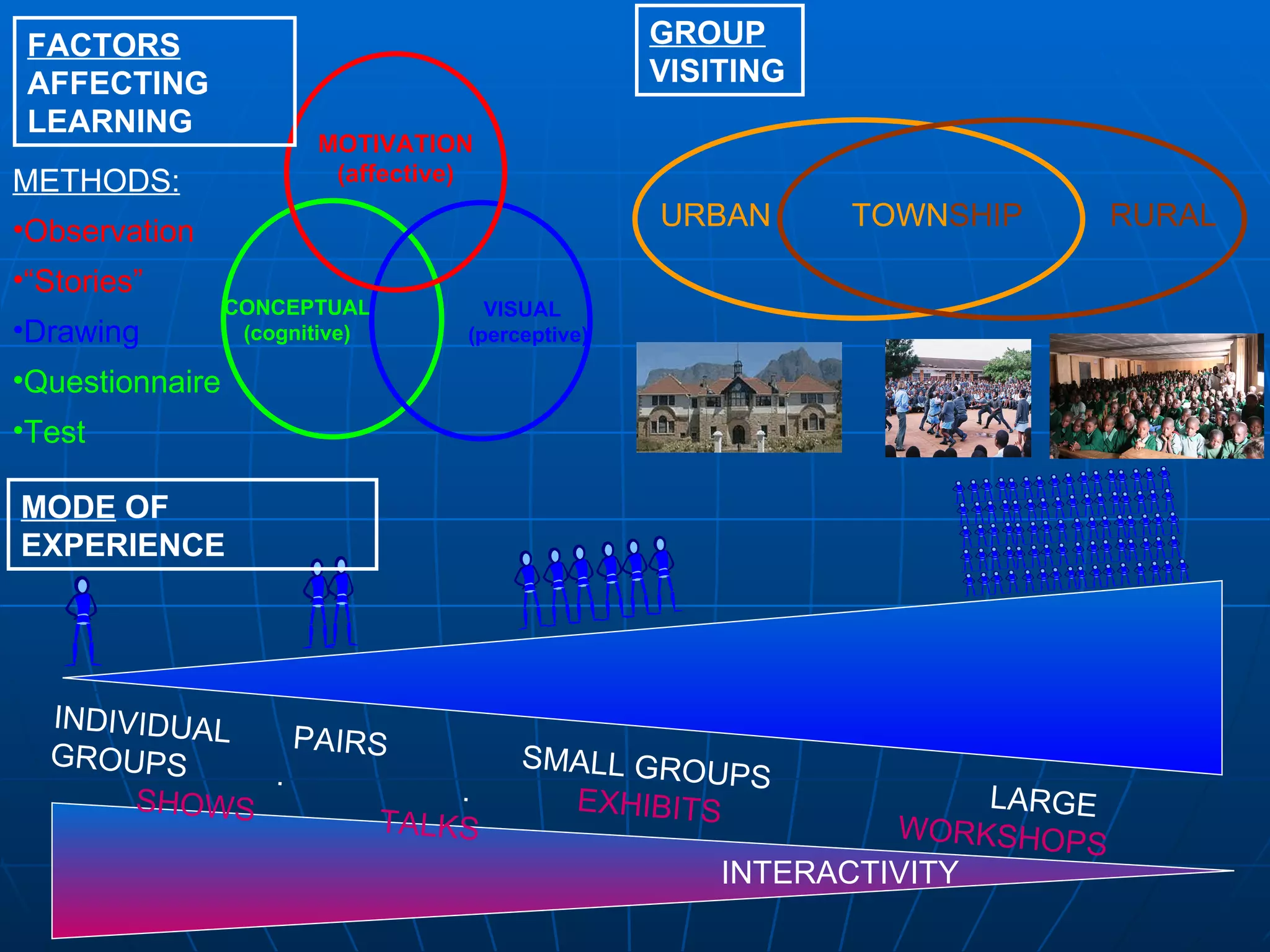
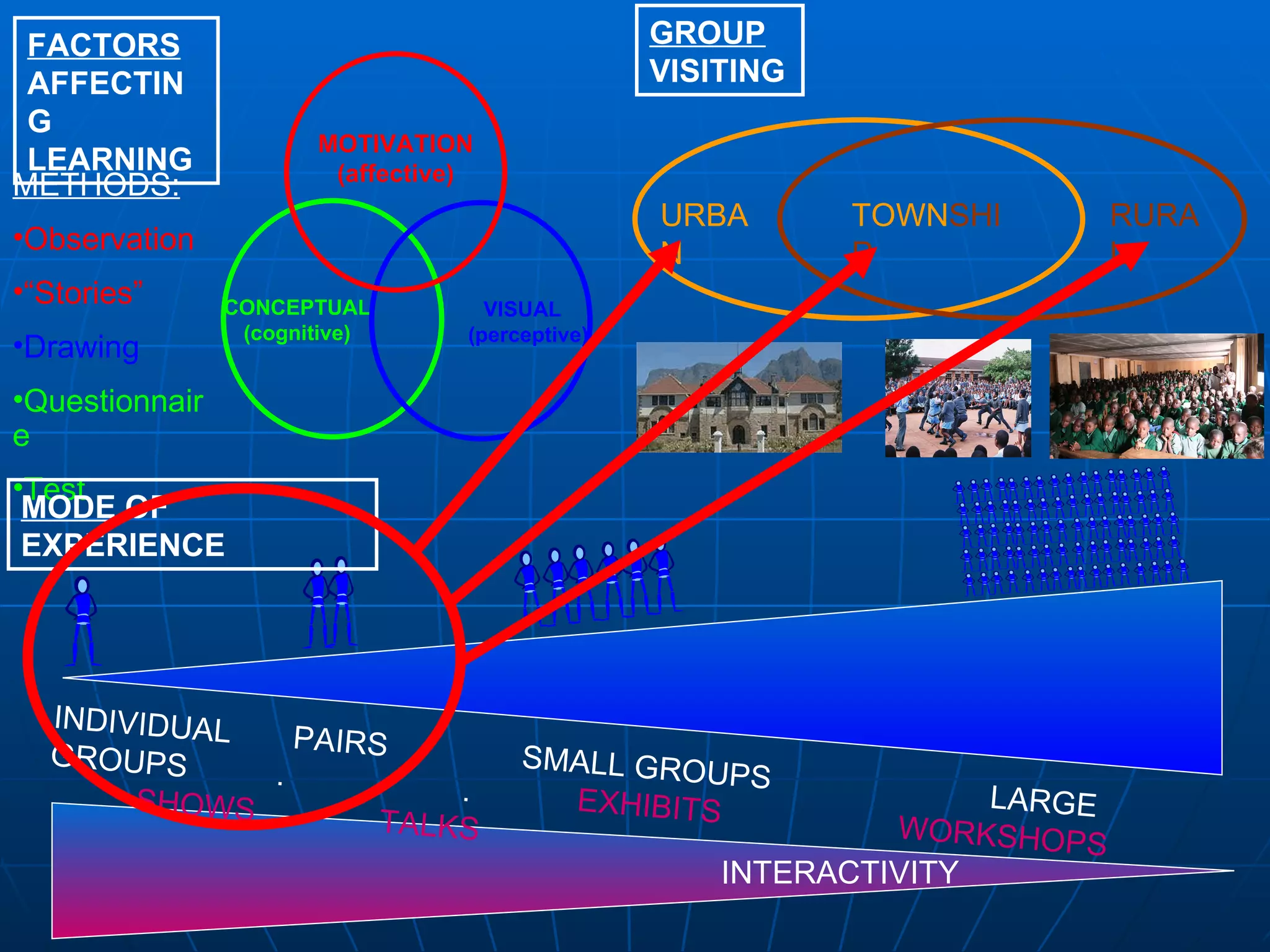
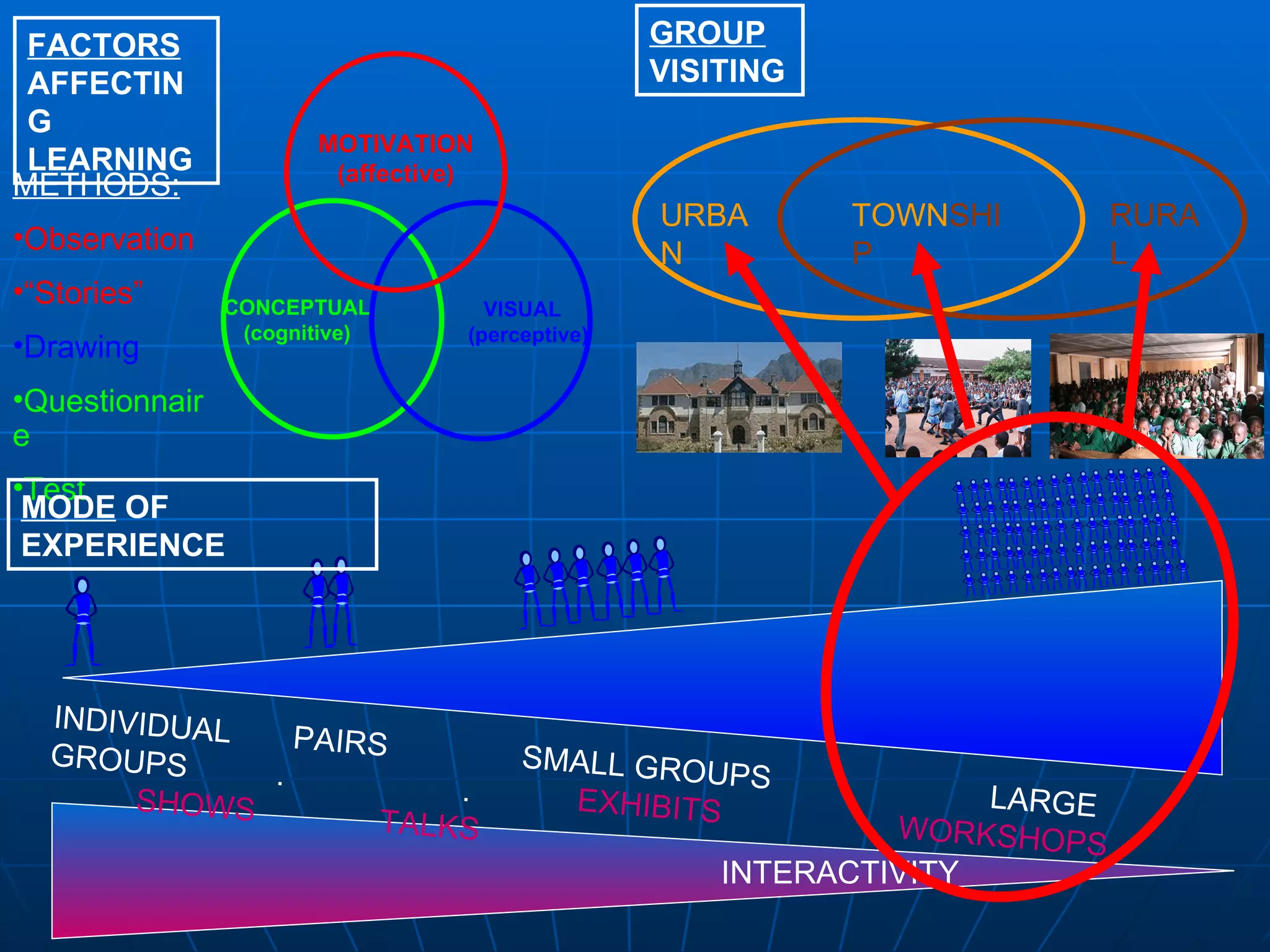
CONCEPTUAL  (cognitive)  VISUAL (perceptive) MOTIVATION (affective) FACTORS  AFFECTING LEARNING METHODS: Observation “ Stories” Drawing Questionnaire Test INTERACTIVITY INDIVIDUAL  PAIRS   SMALL GROUPS   LARGE GROUPS  .  .  EXHIBITS   WORKSHOPS   SHOWS  TALKS MODE  OF EXPERIENCE GROUP  VISITING URBAN TOWN SHIP RURAL
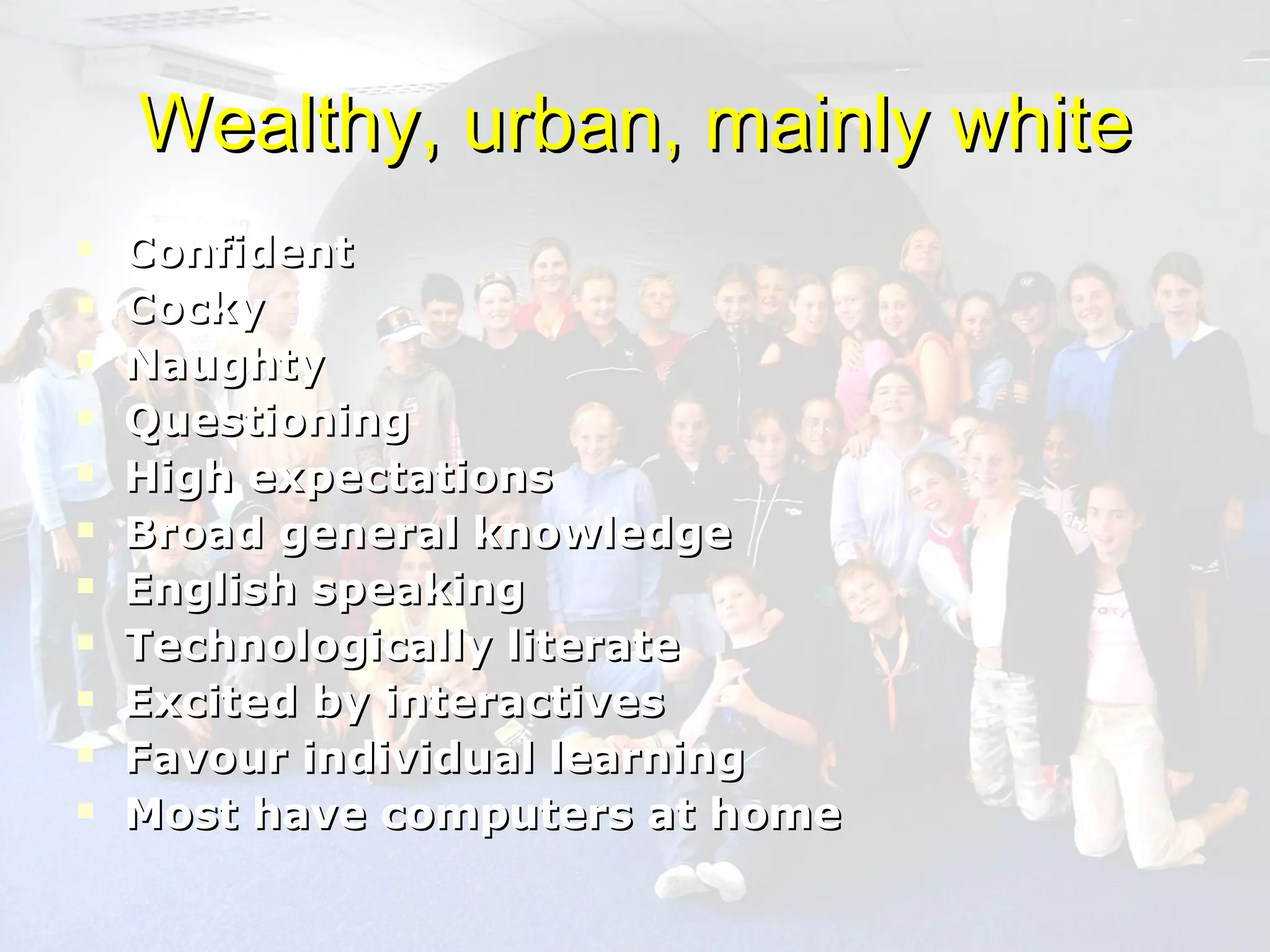
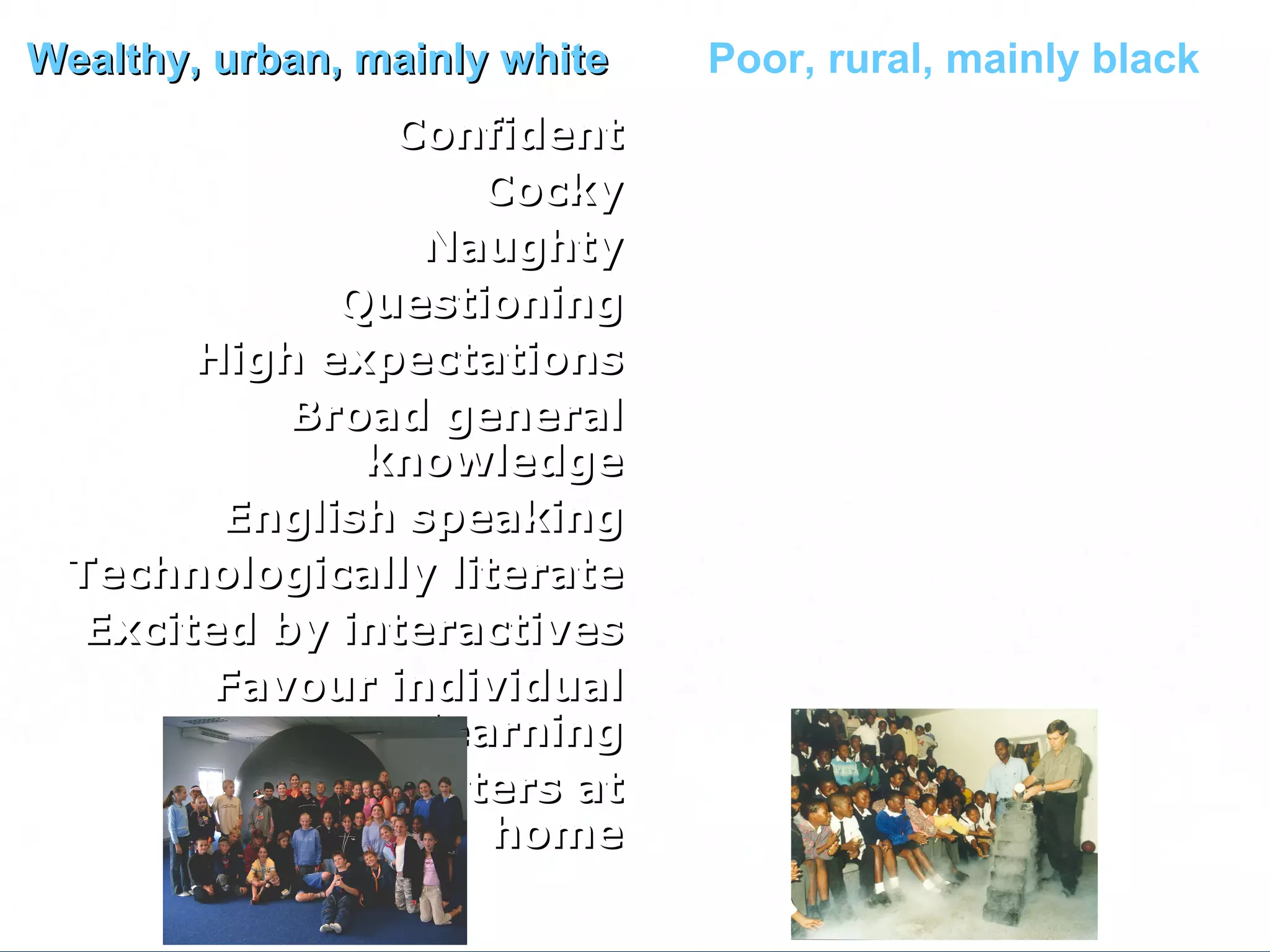
Wealthy, urban, mainly white Confident Cocky Naughty Questioning High expectations Broad general knowledge English speaking Technologically literate Excited by interactives Favour individual learning Most have computers at home
Poor, rural, mainly black Lacking confidence Reserved Well behaved Accepting Low expectations Poor general knowledge isiZulu speaking No access to technology (Initially) Afraid of interactives Favour group learning None have used a computer before . . . Ever!
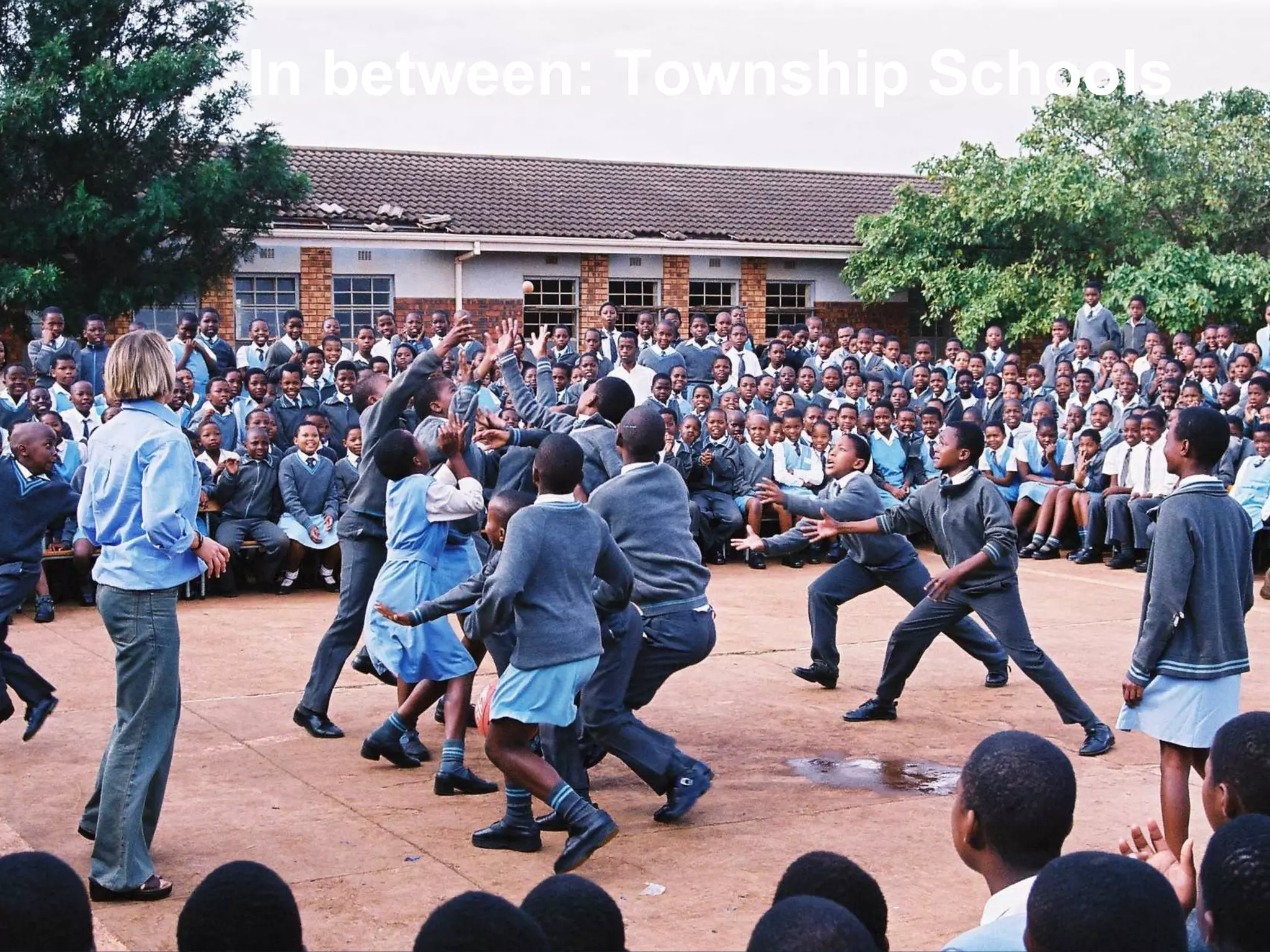
In between: Township Schools
Wealthy, urban, mainly white Confident Cocky Naughty Questioning High expectations Broad general knowledge English speaking Technologically literate Excited by interactives Favour individual learning Have computers at home Lacking confidence Reserved Well behaved Accepting Low expectations Poor general knowledge isiZulu speaking No access to technology (Initially) Afraid of interactives Favour group learning Never used a computer Poor, rural, mainly black
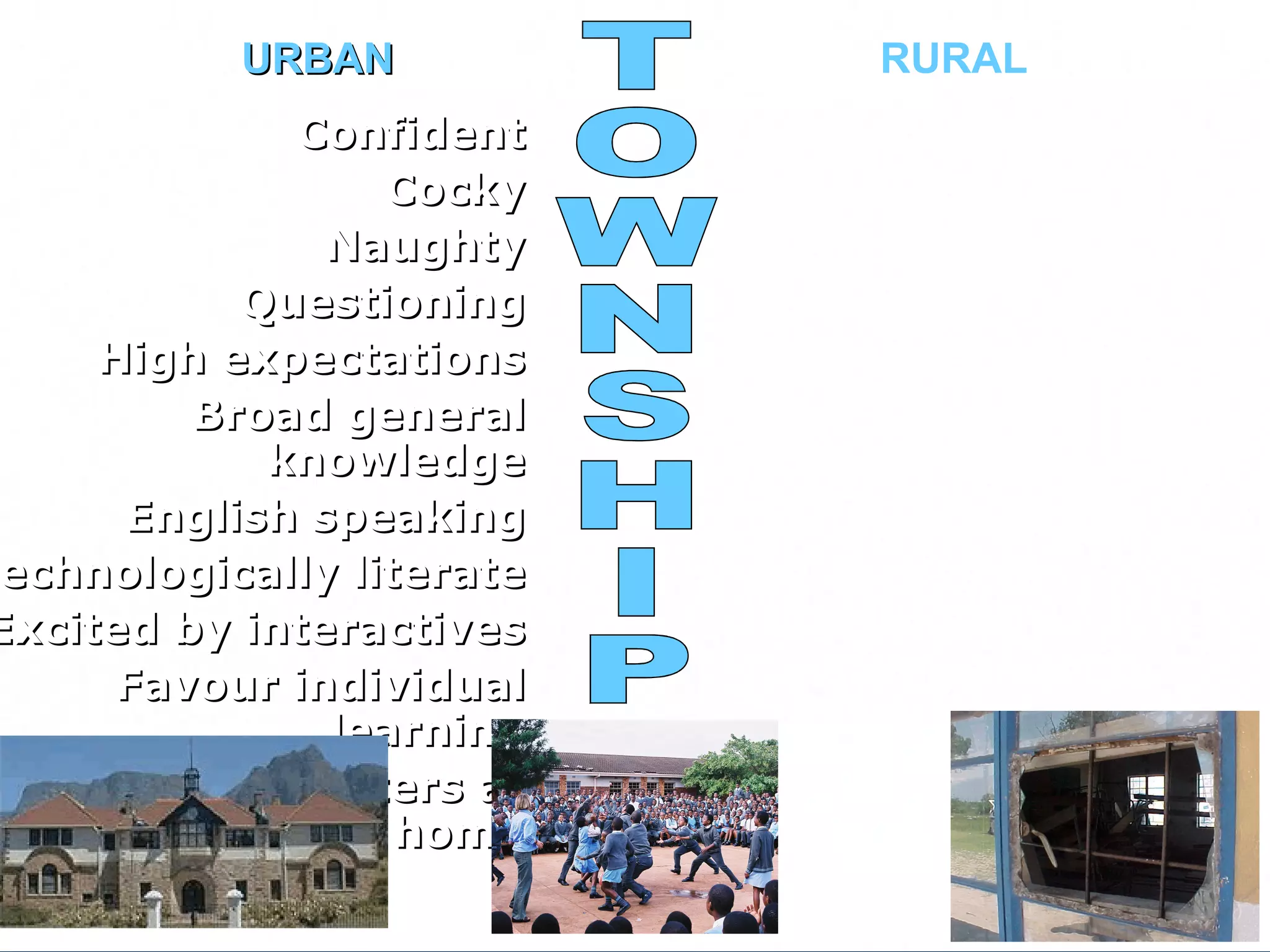
URBAN Confident Cocky Naughty Questioning High expectations Broad general knowledge English speaking Technologically literate Excited by interactives Favour individual learning Have computers at home Lacking confidence Reserved Well behaved Accepting Low expectations Poor general knowledge isiZulu speaking No access to technology (Initially) Afraid of interactives Favour group learning Never used a computer RURAL TOWNSHIP
CONCEPTUAL  (cognitive)  VISUAL (perceptive) MOTIVATION (affective) FACTORS  AFFECTING LEARNING METHODS: Observation “ Stories” Drawing Questionnaire Test INTERACTIVITY INDIVIDUAL  PAIRS   SMALL GROUPS   LARGE GROUPS  .  .  EXHIBITS   WORKSHOPS   SHOWS  TALKS MODE  OF EXPERIENCE GROUP  VISITING URBAN TOWN SHIP RURAL
 

Different Media for communicating Science to different groups

  • 1.
    DIFFERENT MEDIA FORCOMMUNICATING SCIENCE TO DIFFERENT GROUPS Derek Fish Unizul Science Centre South Africa
  • 2.
    AFRICAN ISSUES GLOBALWARMING GENETICALLY MOD. FOODS TECHNOLOGY ADDICTIONS ENERGY CRISIS CLONING MAD COW DAY TO DAY SURVIVAL
  • 3.
    South Africa has RACE problems ROADS AIDS CRIME EDUCATION R A C E
  • 4.
    AIDS : TheProblem
  • 5.
  • 6.
  • 7.
  • 8.
    AIDS : Response:Aids Exhibits
  • 9.
  • 10.
    CRIME : TheProblem 200 PEOPLE MURDERED!
  • 11.
  • 12.
  • 13.
  • 14.
    CRIME : Response:Prison Visit
  • 15.
  • 16.
    EDUCATION: The ProblemMATRIC (FINAL YEAR) SCIENCE RESULTS (HG) EMPANGENI REGION
  • 17.
    Hendrik Verwoerd: S.A.Prime Minister "When I have control over Native education I will reform it so that the Natives will be taught from childhood to realise that equality with Europeans is not for them ... What is the use of teaching the Bantu mathematics when he cannot use it in practice?"
  • 18.
  • 19.
  • 20.
  • 21.
  • 22.
  • 23.
  • 24.
  • 25.
  • 26.
    GROSS DOMESTIC PRODUCT887,964      Turkey 15 1,200,879      South Korea 14 1,265,838      Canada 13 1,346,009      Mexico 12 1,351,608      Spain 11 1,786,429      Italy 10 1,845,642      Brazil 9 2,046,899      France 8 2,087,815      Russia 7 2,137,421      United Kingdom 6 2,809,693      Germany 5 2,988,867      India 4 4,289,809      Japan 3 6,991,036 1      China 2 13,843,825      United States 1 14,712,369      European Union — 64,903,314      World — GDP (PPP) $M Country Rank 25,676      Botswana 104 31,331      Ghana 94 403,961      Egypt 27 459,958      Pakistan 26 467,089      South Africa 25 519,362      Thailand 24 523,739      Argentina 23 564,561      Saudi Arabia 22 620,868      Poland 21 639,512      Netherlands 20 695,388      Rep China (Taiwan) 19 752,967      Iran 18 760,812      Australia 17 837,791      Indonesia 16 GDP (PPP) $M Country Rank
  • 27.
  • 28.
  • 29.
  • 30.
  • 31.
  • 32.
  • 33.
  • 34.
    “ I ama product of Bantu education and when I look back, it really seems much better than what education appears to be today.” Wendy Luhabe: Chancellor: University of Johannesburg “ I agree with her!” Mamphela Ramphele: Vice Chancellor: UCT
  • 35.
  • 36.
    “ We wentfor a Rolls Royce model to deal with that [Apartheid education] – but the Malawians are driving a Volkswagen and they are driving past us.” Mamphela Ramphele: Vice Chancellor: UCT
  • 37.
    “ [We haveadopted] a curriculum of education totally unsuited for our environment. Why? Because we didn’t have the self-confidence to acknowledge where we are.” Mamphela Ramphele: Vice Chancellor: UCT
  • 38.
  • 39.
    If you thinkeducation is expensive, try ignorance! Losses caused by ESKOM: R 50 billion!
  • 40.
    More than halfof the South African population is in the grip of extreme hunger and poverty and in places entire rural communities go without food for days, according to a report tabled by the President and founder of African Monitor, Archbishop Njongonkulu Ndungane. The report comes on the 10th anniversary of the National Poverty Hearings in Cape Town today. Poverty in South Africa has deepened over the past 10 years, with more than half of the population grappling chronic food shortages. Hardest hit are rural communities in the Free State, Northern Cape, the Eastern Cape, KwaZulu-Natal and Limpopo bearing the biggest brunt. October 22, 2008, 18:00
  • 41.
  • 42.
    Carl Friedrich Gauss (1785 - age 8) Punishment : Add the numbers from 1 to 100 ! 1 + 2 + 3 + 4 + ………...97 + 98 + 99 + 100 100 +99 + 98 + 97+ ……….+ 4 + 3 + 2 + 1 101+101+101+101+ ……...+101+101+101 +101 100 x 101 = 10100 = twice the sum The sum= 100 / 2 x 101 = 5050 = ½ (Number of terms) [First + Last] = ½ n [ a + l ]
  • 43.
  • 44.
    LED = LightEmitting Diode: 15% FET = Field Effect Transistor: 2% LASER = Light Amplification by Stimulated Emission of Radiation: 0% Difference between fission and fusion reactions: 42% Teacher knowledge: Terms in new curriculum
  • 45.
    De Broglie Wavelength: 36 % Red Shift: 12 % Logic Gate: 17 % Doppler Effect: 19 % Electron Microscope: 43 % Photon: 67 % Teacher understanding: Terms in new curriculum (2)
  • 46.
  • 47.
  • 48.
    CONCEPTUAL (cognitive) VISUAL (perceptive) MOTIVATION (affective) FACTORS AFFECTING LEARNING METHODS: Observation “ Stories” Drawing Questionnaire Test INTERACTIVITY INDIVIDUAL PAIRS SMALL GROUPS LARGE GROUPS . . EXHIBITS WORKSHOPS SHOWS TALKS MODE OF EXPERIENCE GROUP VISITING URBAN TOWN SHIP RURAL
  • 49.
    Wealthy, urban, mainlywhite Confident Cocky Naughty Questioning High expectations Broad general knowledge English speaking Technologically literate Excited by interactives Favour individual learning Most have computers at home
  • 50.
    Poor, rural, mainlyblack Lacking confidence Reserved Well behaved Accepting Low expectations Poor general knowledge isiZulu speaking No access to technology (Initially) Afraid of interactives Favour group learning None have used a computer before . . . Ever!
  • 51.
  • 52.
    Wealthy, urban, mainlywhite Confident Cocky Naughty Questioning High expectations Broad general knowledge English speaking Technologically literate Excited by interactives Favour individual learning Have computers at home Lacking confidence Reserved Well behaved Accepting Low expectations Poor general knowledge isiZulu speaking No access to technology (Initially) Afraid of interactives Favour group learning Never used a computer Poor, rural, mainly black
  • 53.
    URBAN Confident CockyNaughty Questioning High expectations Broad general knowledge English speaking Technologically literate Excited by interactives Favour individual learning Have computers at home Lacking confidence Reserved Well behaved Accepting Low expectations Poor general knowledge isiZulu speaking No access to technology (Initially) Afraid of interactives Favour group learning Never used a computer RURAL TOWNSHIP
  • 54.
    CONCEPTUAL (cognitive) VISUAL (perceptive) MOTIVATION (affective) FACTORS AFFECTING LEARNING METHODS: Observation “ Stories” Drawing Questionnaire Test INTERACTIVITY INDIVIDUAL PAIRS SMALL GROUPS LARGE GROUPS . . EXHIBITS WORKSHOPS SHOWS TALKS MODE OF EXPERIENCE GROUP VISITING URBAN TOWN SHIP RURAL
  • 55.
    CONCEPTUAL (cognitive) VISUAL (perceptive) MOTIVATION (affective) FACTORS AFFECTING LEARNING METHODS: Observation “ Stories” Drawing Questionnaire Test INTERACTIVITY INDIVIDUAL PAIRS SMALL GROUPS LARGE GROUPS . . EXHIBITS WORKSHOPS SHOWS TALKS MODE OF EXPERIENCE GROUP VISITING URBAN TOWN SHIP RURAL
  • 56.