

RULES IN TAG
QUESTION
They are mainly used in speech
when we want to:
confirm that something is true or not,
 to encourage a reply from the person we
are speaking to.
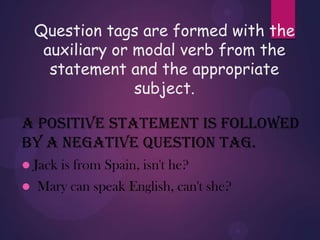
Question tags are formed with the
auxiliary or modal verb from the
statement and the appropriate
subject.
A positive statement is followed
by a negative question tag.
 Jack is from Spain, isn't he?
 Mary can speak English, can't she?
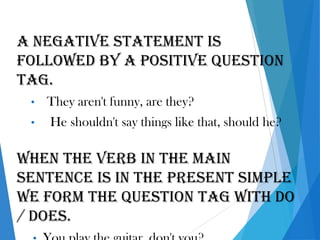
A negative statement is
followed by a positive question
tag.
• They aren't funny, are they?
• He shouldn't say things like that, should he?
When the verb in the main
sentence is in the present simple
we form the question tag with do
/ does.
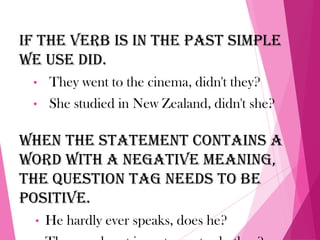
If the verb is in the past simple
we use did.
• They went to the cinema, didn't they?
• She studied in New Zealand, didn't she?
When the statement contains a
word with a negative meaning,
the question tag needs to be
positive.
• He hardly ever speaks, does he?
Tag question rules

Tag question rules

  • 1.
  • 2.
    They are mainlyused in speech when we want to: confirm that something is true or not,  to encourage a reply from the person we are speaking to.
  • 3.
    Question tags areformed with the auxiliary or modal verb from the statement and the appropriate subject. A positive statement is followed by a negative question tag.  Jack is from Spain, isn't he?  Mary can speak English, can't she?
  • 4.
    A negative statementis followed by a positive question tag. • They aren't funny, are they? • He shouldn't say things like that, should he? When the verb in the main sentence is in the present simple we form the question tag with do / does.
  • 5.
    If the verbis in the past simple we use did. • They went to the cinema, didn't they? • She studied in New Zealand, didn't she? When the statement contains a word with a negative meaning, the question tag needs to be positive. • He hardly ever speaks, does he?