Grammar Mini
Lesson:
Tag Questions
Katie Kresge
Wilkes University
Lesson Objectives
 What are tag questions?
 How do I form them and use them correctly?
 How do I respond to them?
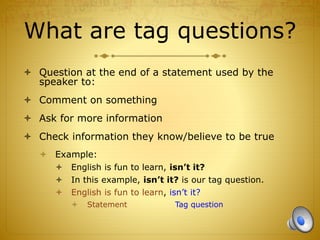
What are tag questions?
 Question at the end of a statement used by the
speaker to:
 Comment on something
 Ask for more information
 Check information they know/believe to be true
 Example:
 English is fun to learn, isn’t it?
 In this example, isn’t it? is our tag question.
 English is fun to learn, isn’t it?
 Statement Tag question
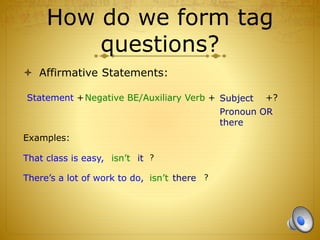
How do we form tag
questions?
 Affirmative Statements:
Statement +Negative BE/Auxiliary Verb + Subject
Pronoun OR
there
+?
Examples:
That class is easy, isn’t it ?
There’s a lot of work to do, isn’t there ?
Common Affirmative Tag
Questions
isn’t there? doesn’t it?
isn’t he? didn’t they?
wasn’t she? hasn’t she?
weren’t there? shouldn’t we?
hadn’t they? can’t they?
right?* aren’t I?*
Did you catch the pattern?
Affirmative statements create negative tag questions!
Affirmative Activity
 You love to travel, __________?
 Tag questions are exciting, _________?
 They moved to London, __________?
 It looks like it’s going to rain, __________?
 We should study more, ____________?
don’t you
aren’t they
didn’t they
doesn’t it
shouldn’t we
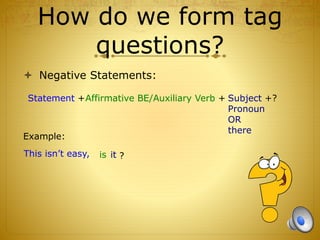
How do we form tag
questions?
 Negative Statements:
Statement +Affirmative BE/Auxiliary Verb + Subject
Pronoun
OR
there
+?
Example:
This isn’t easy, is it ?
Common Negative Tag
Questions
is there? does it?
is he? did they?
was she? has she?
were there? should we?
had they? can they?
right?* am I?*
Negative statements produce affirmative tag
questions!
Negative Activity
 He isn’t from here, ___________?
 She wasn’t happy, ___________?
 There weren’t too many people, ___________?
 This doesn’t seem good, _____________?
 She can’t go to the party, ______________?
is he
was she
were there
does it
can she
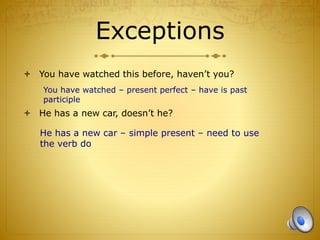
Exceptions
 You have watched this before, haven’t you?
 He has a new car, doesn’t he?
You have watched – present perfect – have is past
participle
He has a new car – simple present – need to use
the verb do
Responses
 Yes, no, I don’t know
 Commenting on a situation:
 It wasn’t nice out yesterday, was it?
 Looking for more information/Checking information
 That is Eric, isn’t it?
Review
 Tag questions are used to comment on
information, find out more information, or
check information.
 Negative statements produce affirmative tags.
 Positive statements produce negative tags.
 Intonation is important!
Game
 http://www.eslgamesplus.com/tag-questions-
game/
Great job!
Resources
 http://www.eslcafe.com/grammar/tag_questio
ns01.html
 http://www.eslcafe.com/grammar/tag_questio
ns02.html
 http://www.eslcafe.com/grammar/tag_questio
ns03.html
 http://www.eslgamesplus.com/tag-questions-
game/

Tag Question Mini Lesson

  • 1.
  • 2.
    Lesson Objectives  Whatare tag questions?  How do I form them and use them correctly?  How do I respond to them?
  • 3.
    What are tagquestions?  Question at the end of a statement used by the speaker to:  Comment on something  Ask for more information  Check information they know/believe to be true  Example:  English is fun to learn, isn’t it?  In this example, isn’t it? is our tag question.  English is fun to learn, isn’t it?  Statement Tag question
  • 4.
    How do weform tag questions?  Affirmative Statements: Statement +Negative BE/Auxiliary Verb + Subject Pronoun OR there +? Examples: That class is easy, isn’t it ? There’s a lot of work to do, isn’t there ?
  • 5.
    Common Affirmative Tag Questions isn’tthere? doesn’t it? isn’t he? didn’t they? wasn’t she? hasn’t she? weren’t there? shouldn’t we? hadn’t they? can’t they? right?* aren’t I?* Did you catch the pattern? Affirmative statements create negative tag questions!
  • 6.
    Affirmative Activity  Youlove to travel, __________?  Tag questions are exciting, _________?  They moved to London, __________?  It looks like it’s going to rain, __________?  We should study more, ____________? don’t you aren’t they didn’t they doesn’t it shouldn’t we
  • 7.
    How do weform tag questions?  Negative Statements: Statement +Affirmative BE/Auxiliary Verb + Subject Pronoun OR there +? Example: This isn’t easy, is it ?
  • 8.
    Common Negative Tag Questions isthere? does it? is he? did they? was she? has she? were there? should we? had they? can they? right?* am I?* Negative statements produce affirmative tag questions!
  • 9.
    Negative Activity  Heisn’t from here, ___________?  She wasn’t happy, ___________?  There weren’t too many people, ___________?  This doesn’t seem good, _____________?  She can’t go to the party, ______________? is he was she were there does it can she
  • 10.
    Exceptions  You havewatched this before, haven’t you?  He has a new car, doesn’t he? You have watched – present perfect – have is past participle He has a new car – simple present – need to use the verb do
  • 11.
    Responses  Yes, no,I don’t know  Commenting on a situation:  It wasn’t nice out yesterday, was it?  Looking for more information/Checking information  That is Eric, isn’t it?
  • 12.
    Review  Tag questionsare used to comment on information, find out more information, or check information.  Negative statements produce affirmative tags.  Positive statements produce negative tags.  Intonation is important!
  • 13.
  • 14.
    Resources  http://www.eslcafe.com/grammar/tag_questio ns01.html  http://www.eslcafe.com/grammar/tag_questio ns02.html http://www.eslcafe.com/grammar/tag_questio ns03.html  http://www.eslgamesplus.com/tag-questions- game/