Tactical to Transformational:
The Evolution of Marketing Operations
Featured Analyst:
Craig Moore
Services Director, Marketing
Operations Strategies
James Thomas
CMO
Presenters
Agenda
Housekeeping
• Questions? Use the
Question/Chat pane on
GoToWebinar
• Technical Difficulties? Contact
brittany.wong@allocadia.com
• The Evolving Role of Marketing
Operations in strategy, infrastructure,
enablement and accountability
• Strategy Alignment. How to align
marketing strategy and investments to
business goals and revenue
performance
• Financial Planning. An overview of
key financial planning perspectives that
provide the basis for aligned
measurement and performance
© 2014 SiriusDecisions. All Rights Reserved 4
Craig Moore
Service Director, Marketing Operations Strategies
@cramoore | #sdwebinar
Up-leveling Marketing Operations
for Improved Performance
Tactical or
Transformational
Craig Moore, Service Director,
Marketing Operations Strategies
How Do You Define
Marketing Operations?
© 2014 SiriusDecisions. All Rights Reserved 7
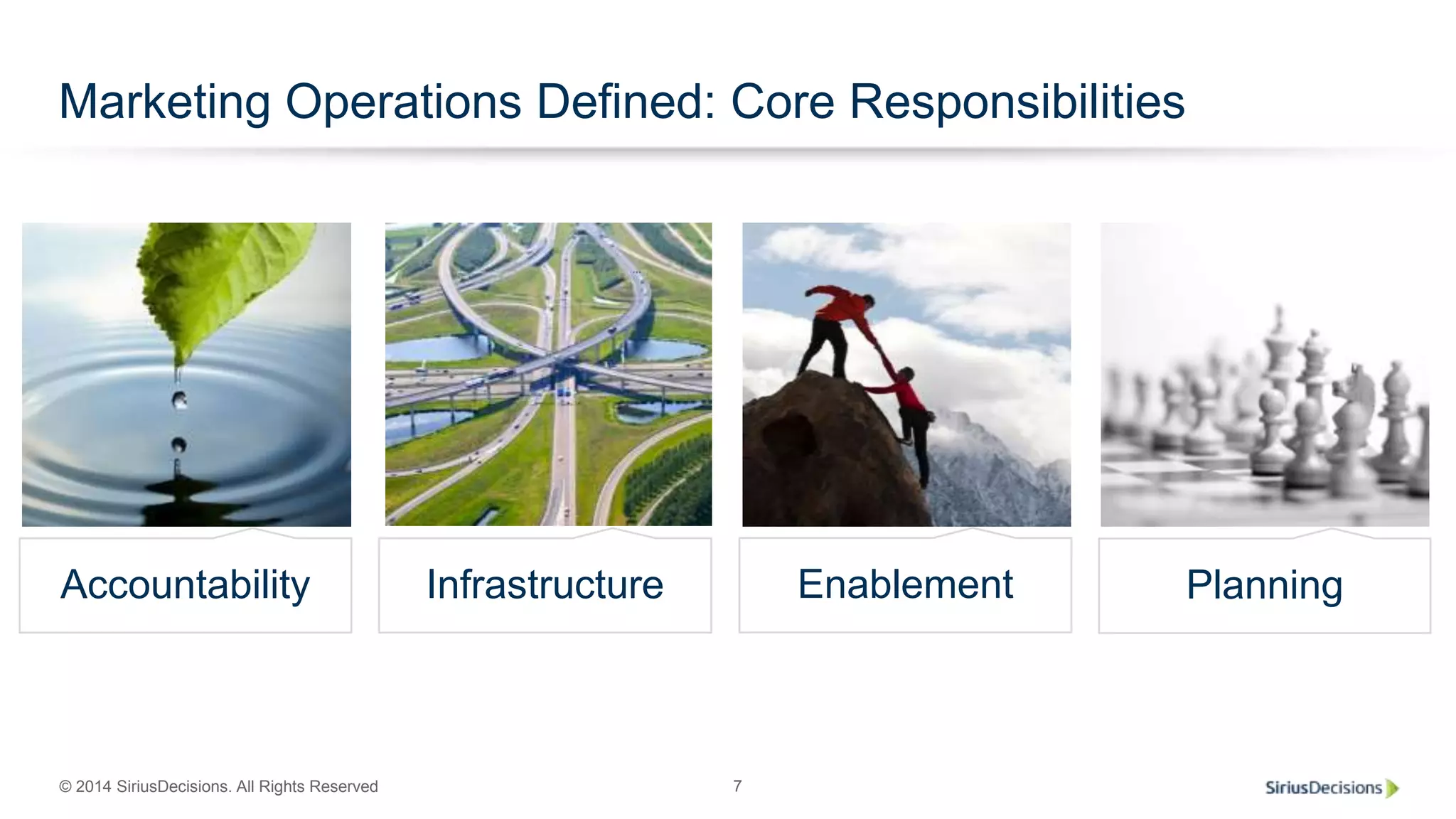
Marketing Operations Defined: Core Responsibilities
EnablementAccountability PlanningInfrastructure
© 2014 SiriusDecisions. All Rights Reserved 8
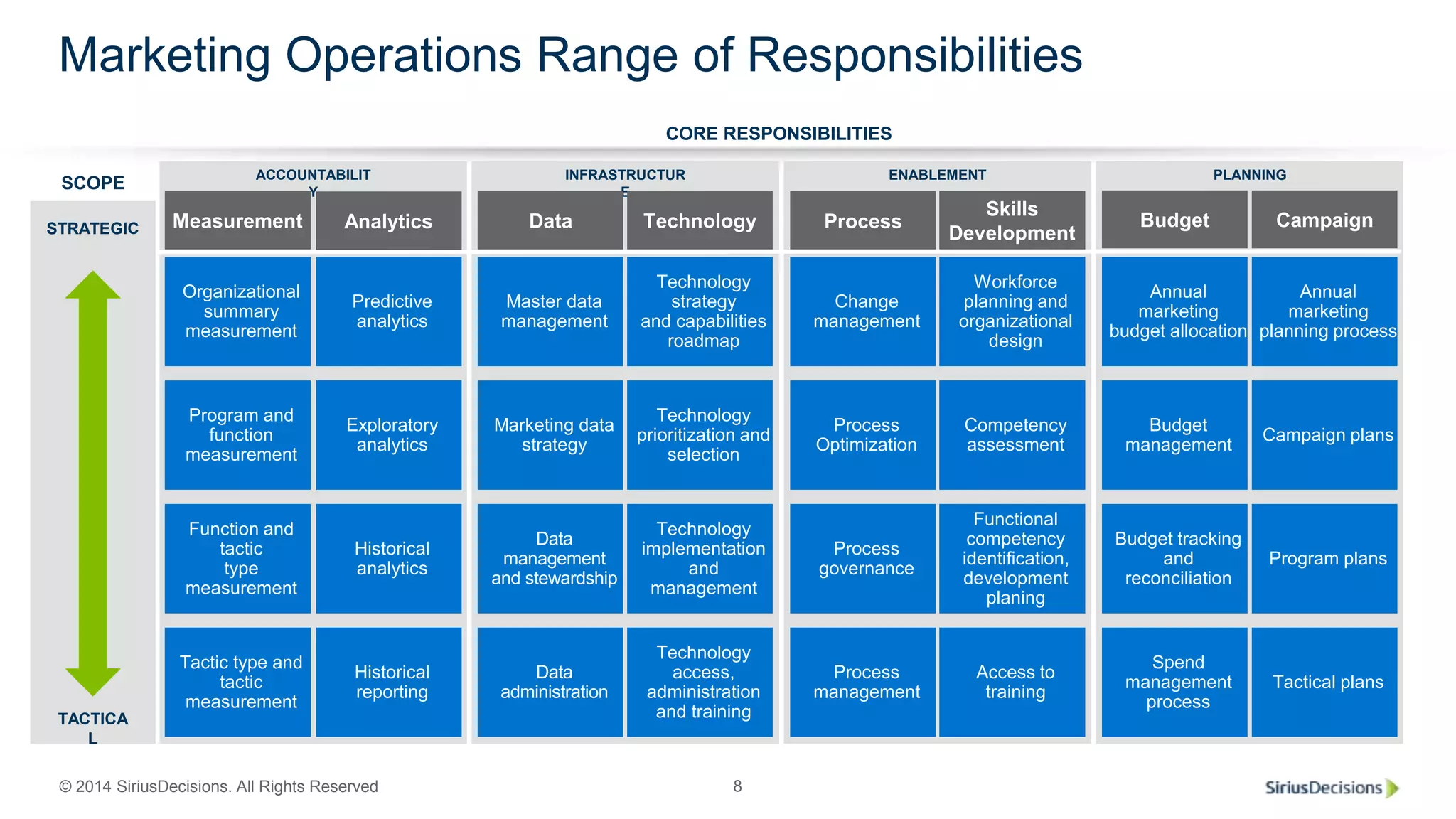
Marketing Operations Range of Responsibilities
CORE RESPONSIBILITIES
PLANNING
Budget
Annual
marketing
budget allocation
Budget
management
Budget tracking
and
reconciliation
Spend
management
process
Campaign
Annual
marketing
planning process
Campaign plans
Program plans
Tactical plans
INFRASTRUCTUR
E
Process
Technology
Technology
strategy
and capabilities
roadmap
Process
Optimization
Technology
prioritization and
selection
The Campaign
Implementation
Process
Technology
implementation
and
management
Technology
access,
administration
and training
Data
Master data
management
Marketing data
strategy
Data
management
and stewardship
Data
administration
ENABLEMENT
Skills
Development
Workforce
planning and
organizational
design
Competency
assessment
Functional
competency
identification,
development
planing
Access to
training
Process
Change
management
Process
Optimization
Process
governance
Process
management
ACCOUNTABILIT
Y
Measurement
Organizational
summary
measurement
Program and
function
measurement
Function and
tactic
type
measurement
Tactic type and
tactic
measurement
Predictive
analytics
Exploratory
analytics
Analytics
Historical
analytics
Historical
reporting
SCOPE
STRATEGIC
TACTICA
L
© 2014 SiriusDecisions. All Rights Reserved 9
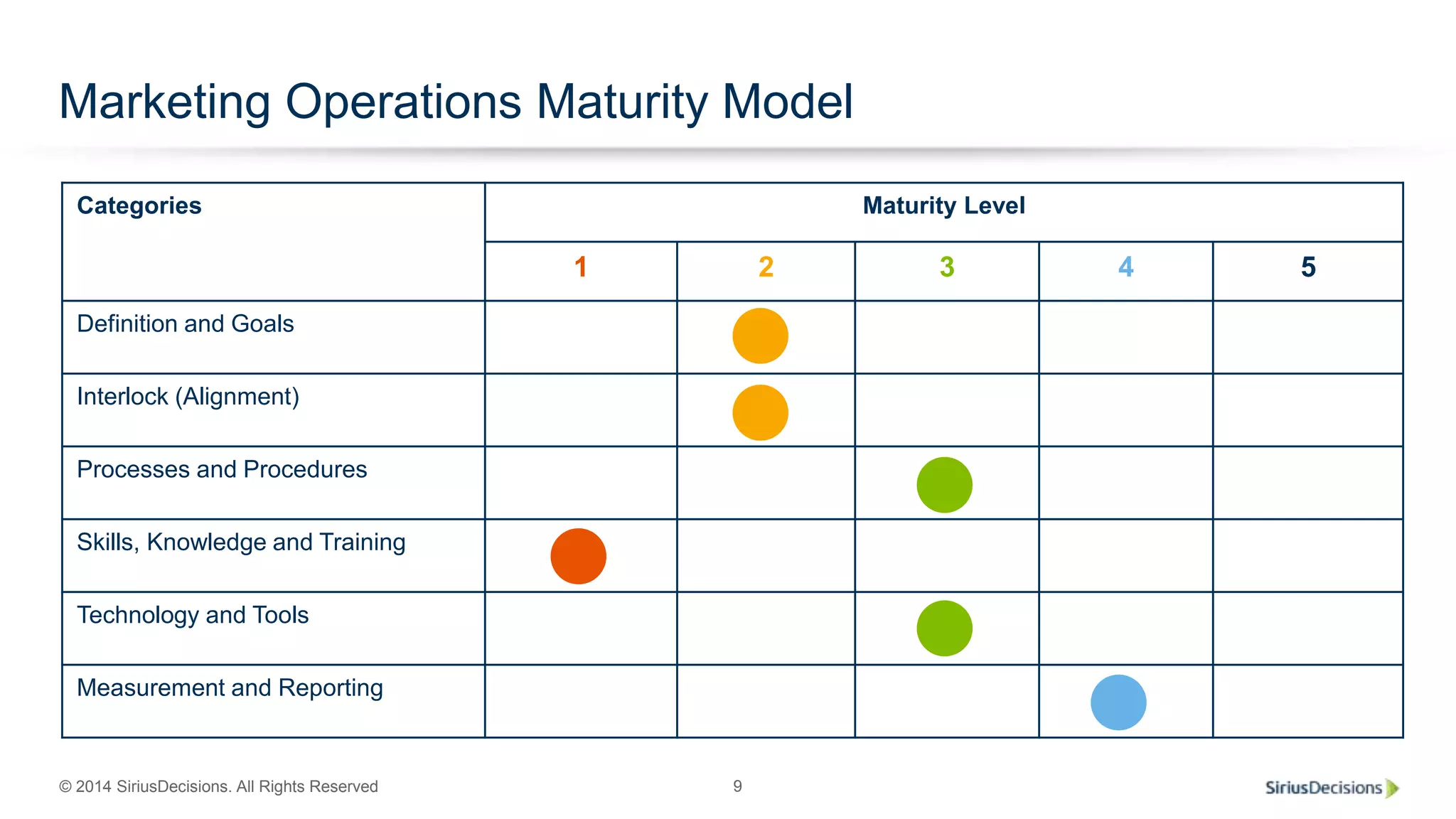
Marketing Operations Maturity Model
Categories Maturity Level
1 2 3 4 5
Definition and Goals
Interlock (Alignment)
Processes and Procedures
Skills, Knowledge and Training
Technology and Tools
Measurement and Reporting
© 2014 SiriusDecisions. All Rights Reserved 10
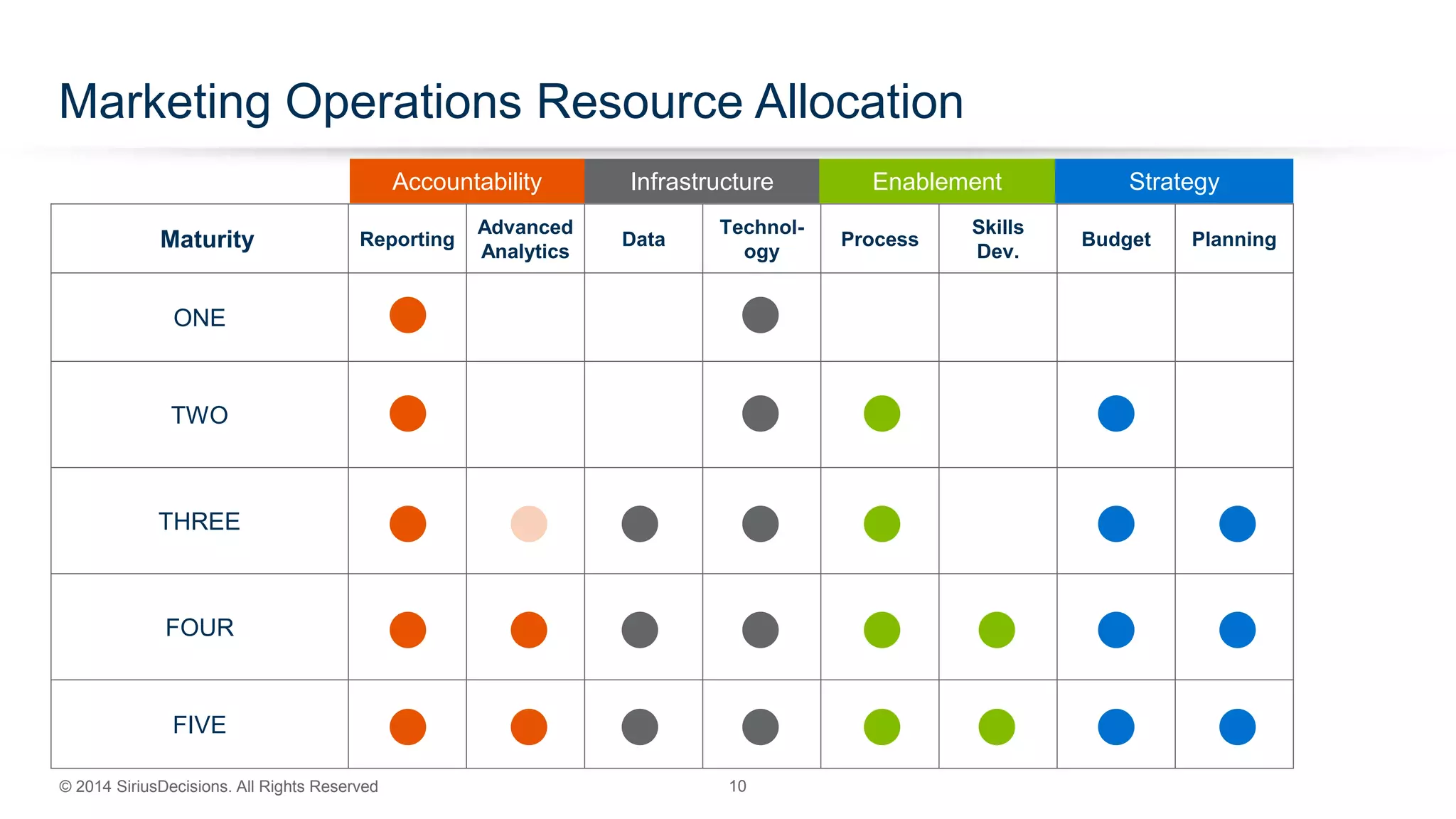
Marketing Operations Resource Allocation
Maturity Reporting
Advanced
Analytics
Data
Technol-
ogy
Process
Skills
Dev.
Budget Planning
ONE
TWO
THREE
FOUR
FIVE
Accountability Infrastructure Enablement Strategy
Strategic Alignment
Aligning marketing strategy and investments to business goals
and revenue performance
© 2014 SiriusDecisions. All Rights Reserved 12
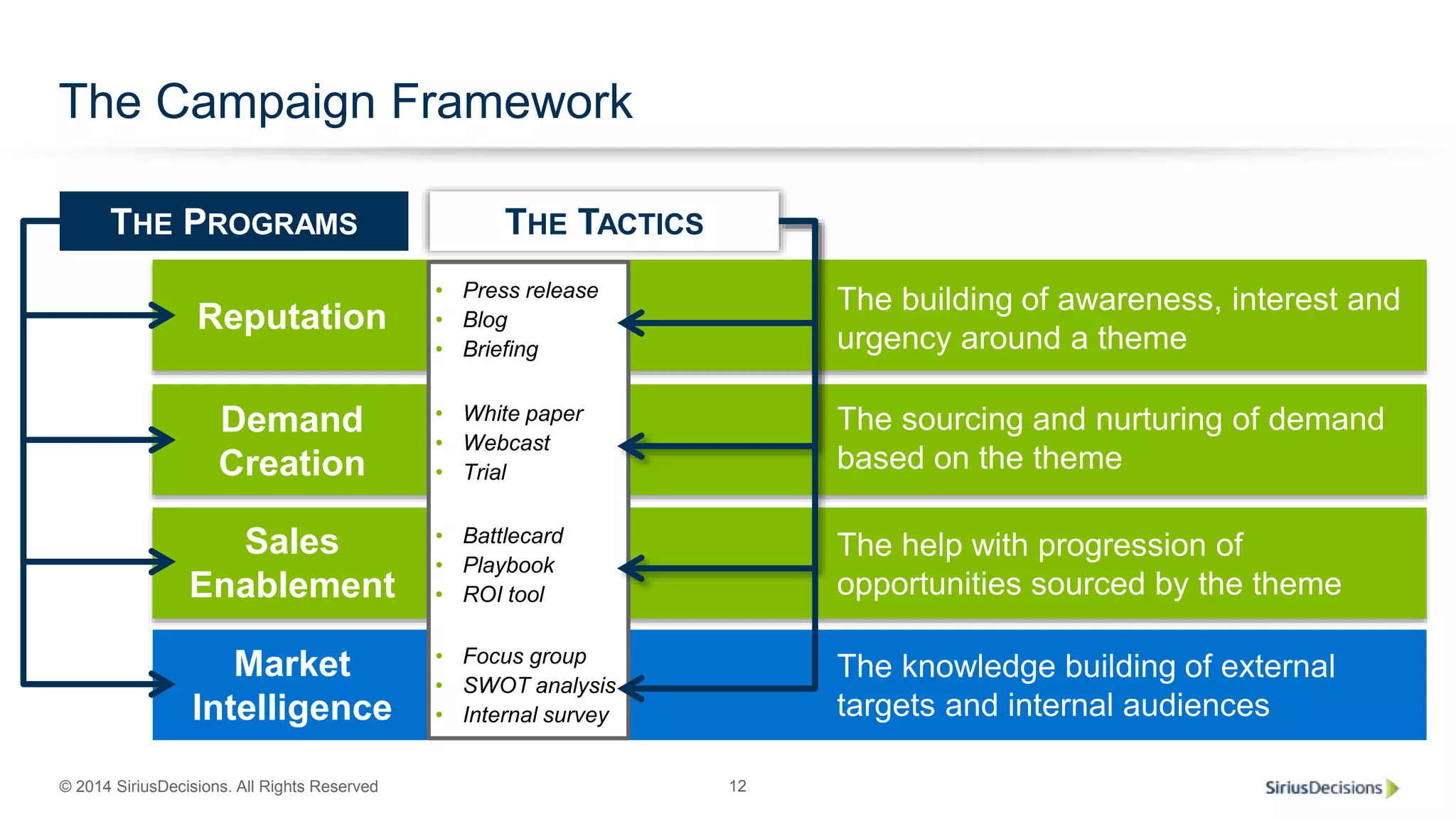
The Campaign Framework
The building of awareness, interest and
urgency around a theme
The sourcing and nurturing of demand
based on the theme
The help with progression of
opportunities sourced by the theme
• Focus group
• SWOT analysis
• Internal survey
• Press release
• Blog
• Briefing
• White paper
• Webcast
• Trial
• Battlecard
• Playbook
• ROI tool
THE TACTICS
The knowledge building of external
targets and internal audiences
Market
Intelligence
Reputation
Demand
Creation
Sales
Enablement
THE PROGRAMS
© 2014 SiriusDecisions. All Rights Reserved 13
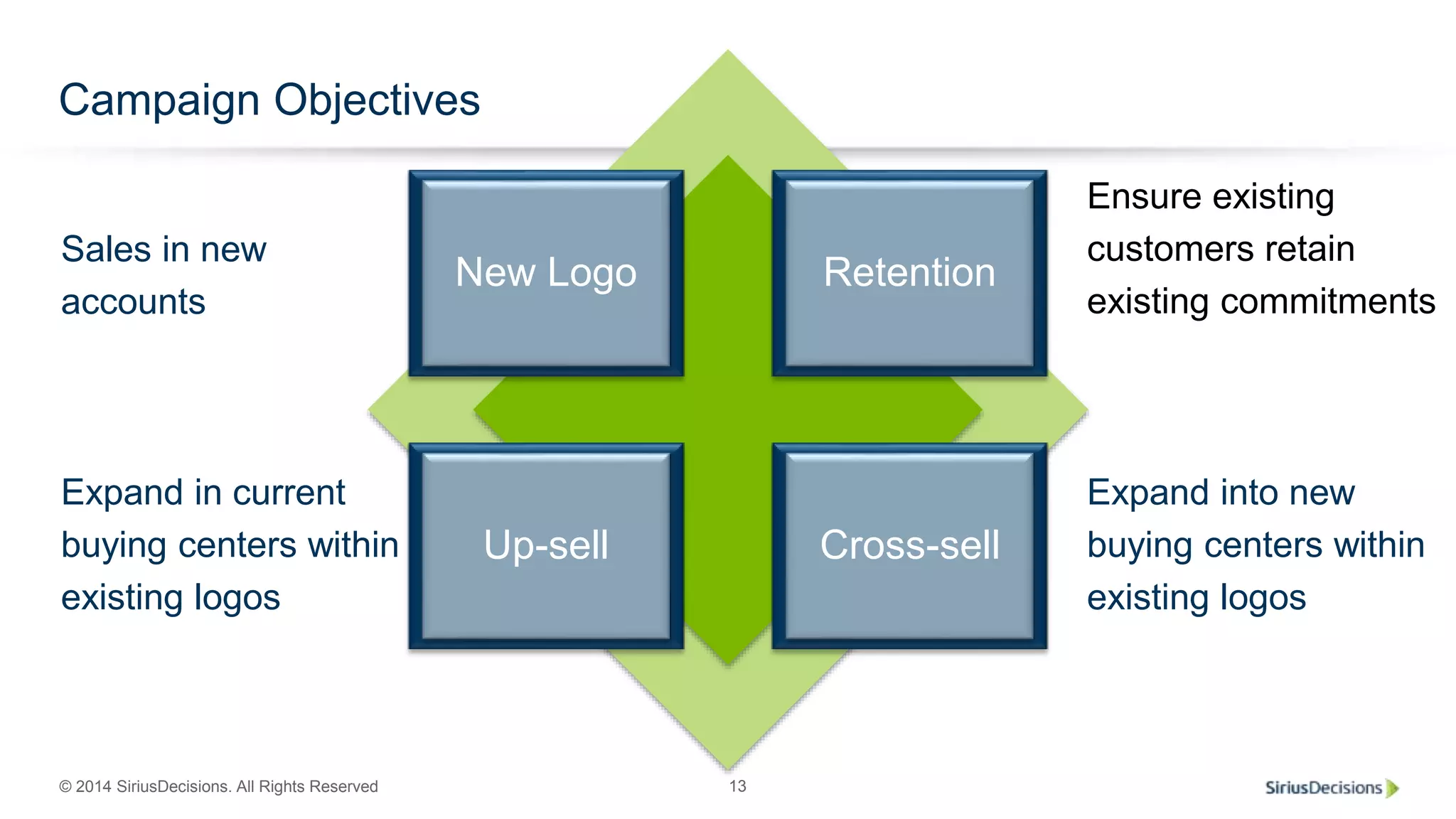
Campaign Objectives
New Logo Retention
Up-sell Cross-sell
Sales in new
accounts
Ensure existing
customers retain
existing commitments
Expand into new
buying centers within
existing logos
Expand in current
buying centers within
existing logos
© 2014 SiriusDecisions. All Rights Reserved 14
Reputation
Demand Creation
Sales Enablement
Market Intelligence
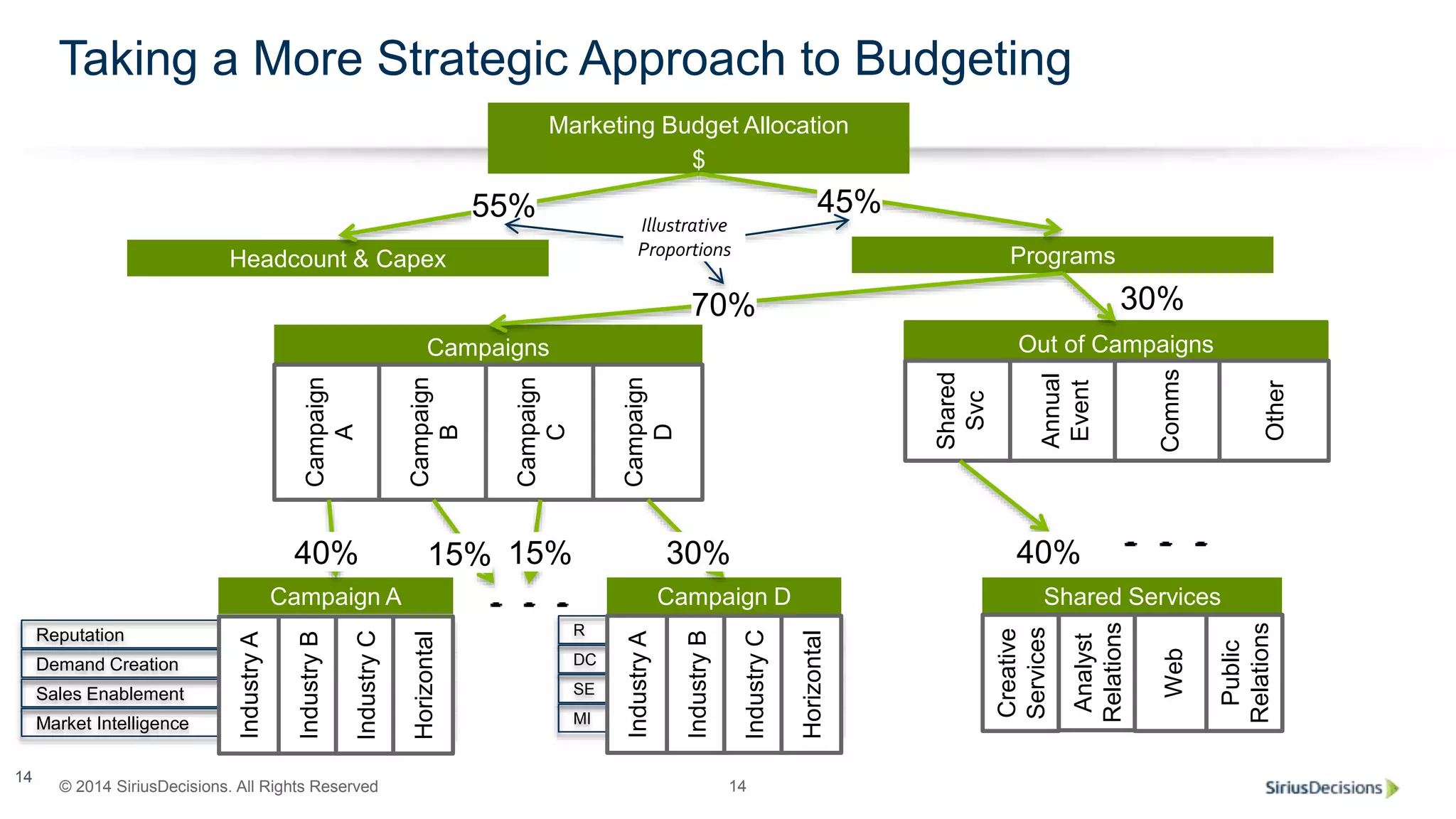
Marketing Budget Allocation
$
Headcount & Capex Programs
Campaigns
Campaign A Shared Services
Out of Campaigns
Campaign
A
Campaign
B
Campaign
C
Campaign
D
Shared
Svc
Annual
Event
Comms
Other
IndustryA
IndustryB
IndustryC
Horizontal
Creative
Services
Analyst
Relations
Web
Public
Relations
R
DC
SE
MI
Campaign D
IndustryA
IndustryB
IndustryC
Horizontal
40% 30%
55% 45%
70% 30%
40%
Illustrative
Proportions
15% 15%
Taking a More Strategic Approach to Budgeting
14
SiriusPerspective:
© 2014 SiriusDecisions. All Rights Reserved 15
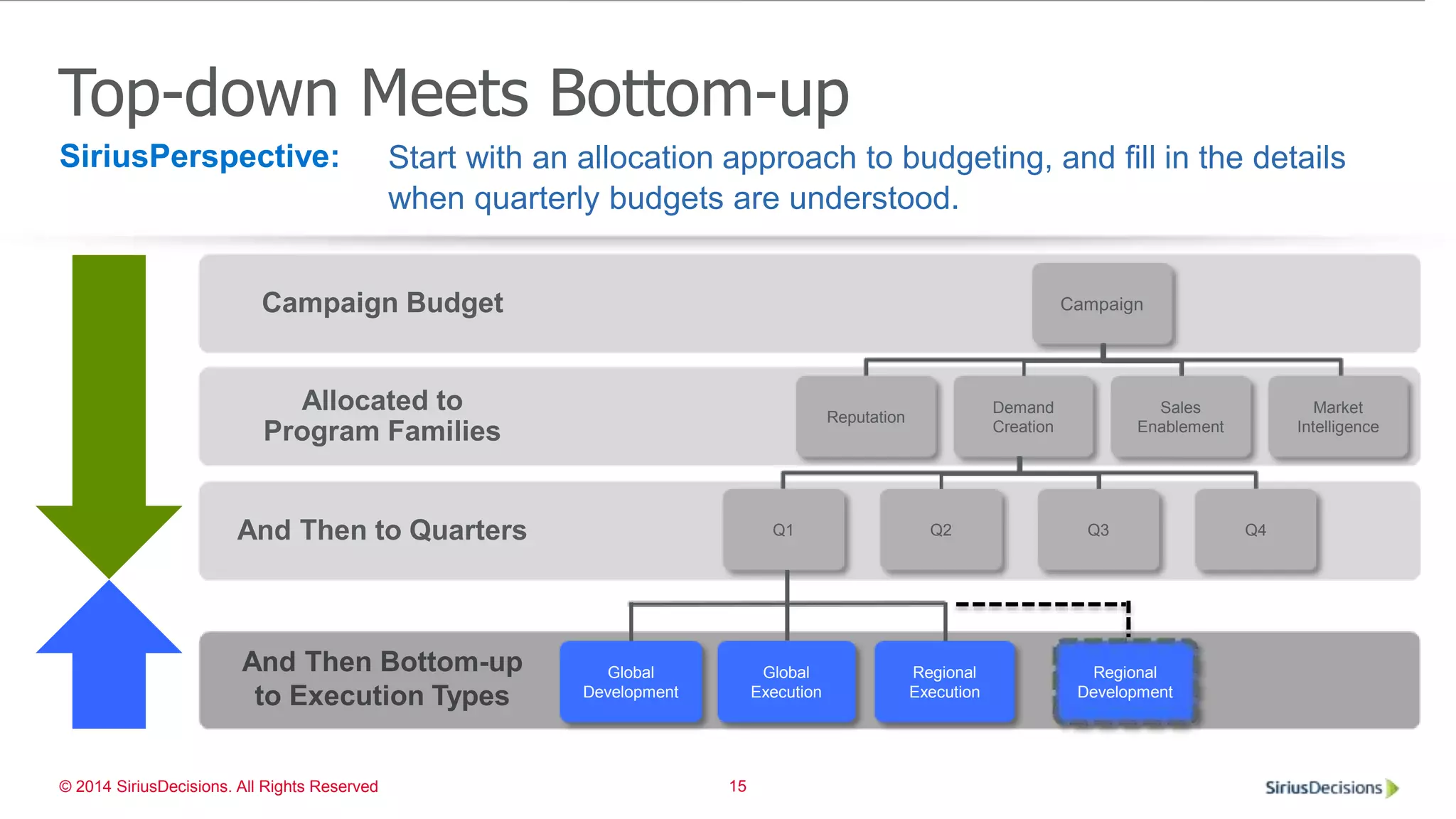
Start with an allocation approach to budgeting, and fill in the details
when quarterly budgets are understood.
Top-down Meets Bottom-up
And Then to Quarters
Allocated to
Program Families
Campaign Budget Campaign
Reputation
Demand
Creation
Q2 Q3 Q4
Sales
Enablement
Market
Intelligence
Q1
And Then Bottom-up
to Execution Types
Global
Development
Global
Execution
Regional
Execution
Regional
Development
© 2014 SiriusDecisions. All Rights Reserved 16
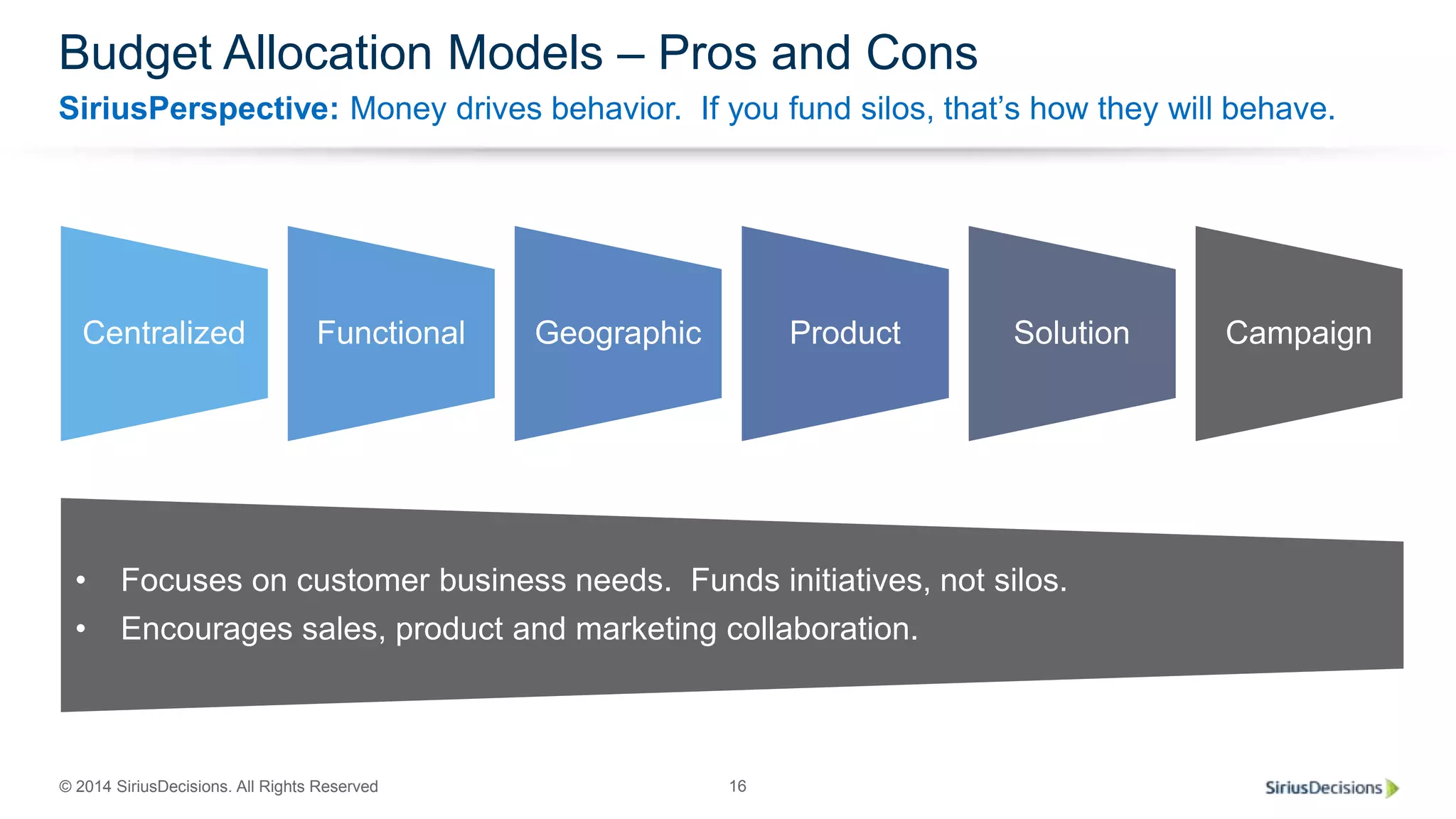
Budget Allocation Models – Pros and Cons
SiriusPerspective: Money drives behavior. If you fund silos, that’s how they will behave.
Centralized
• Simple; ensures control
• Collaboration, communication and collective thinking are difficult
• Provides autonomy
• Collaboration is difficult; encourages “tin-cupping”.
Functional
• Aligned with sales & focused on execution
• Encourages geo-silos, redundancy, and short-term initiatives supporting deals
Geographic
• Less about how marketing is organized
• Focused on product, not customer
Product
• Focuses on portfolio of offerings that address customer needs
• Lacks balance across reputation, demand creation, sales enablement and MI
Solution
• Focuses on customer business needs. Funds initiatives, not silos.
• Encourages sales, product and marketing collaboration.
Campaign
SiriusPerspective:
© 2014 SiriusDecisions. All Rights Reserved 17
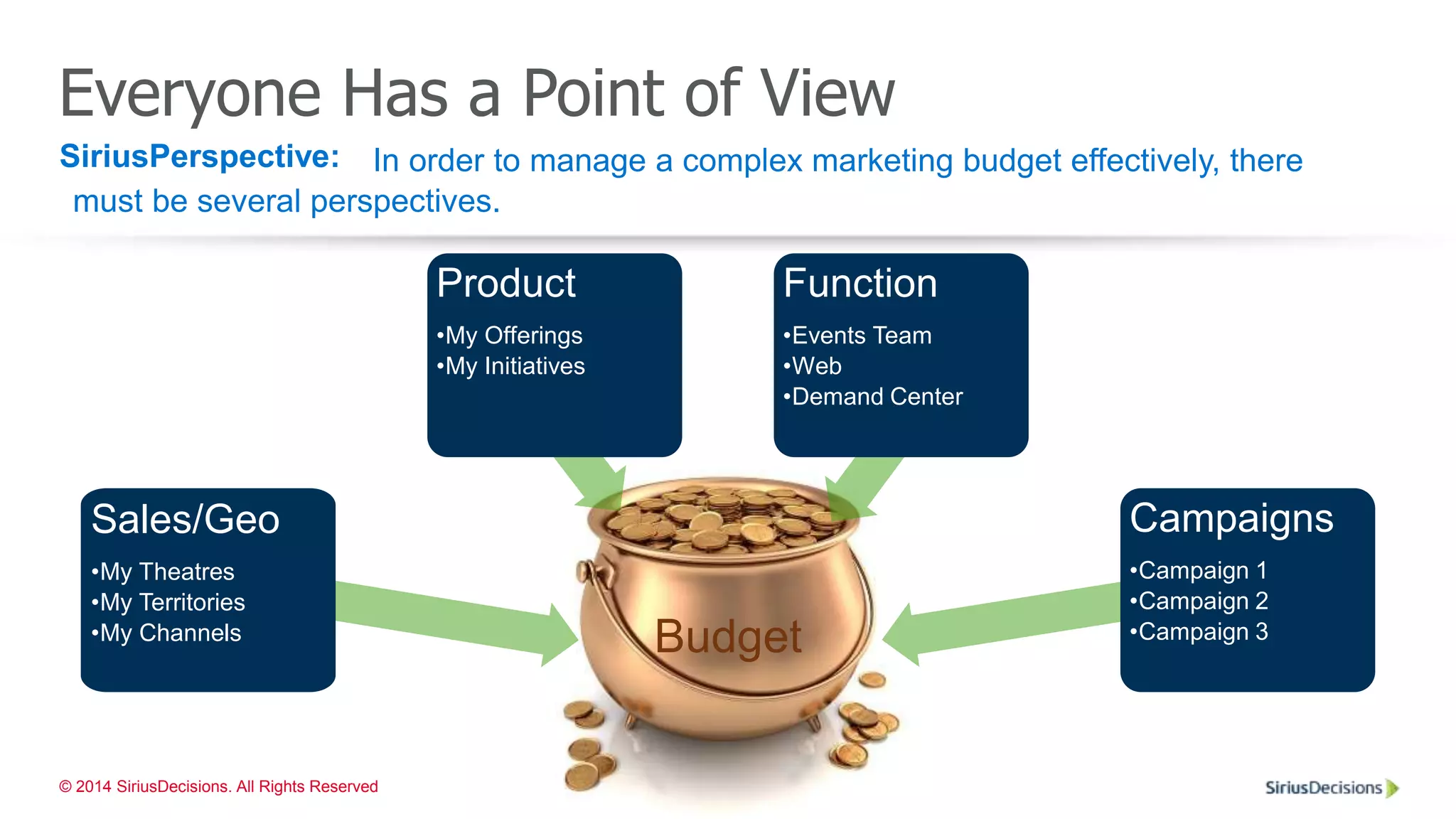
Budget
Sales/Geo
•My Theatres
•My Territories
•My Channels
Product
•My Offerings
•My Initiatives
Function
•Events Team
•Web
•Demand Center
Campaigns
•Campaign 1
•Campaign 2
•Campaign 3
Everyone Has a Point of View
In order to manage a complex marketing budget effectively, there
must be several perspectives.
SiriusPerspective:
© 2014 SiriusDecisions. All Rights Reserved 18
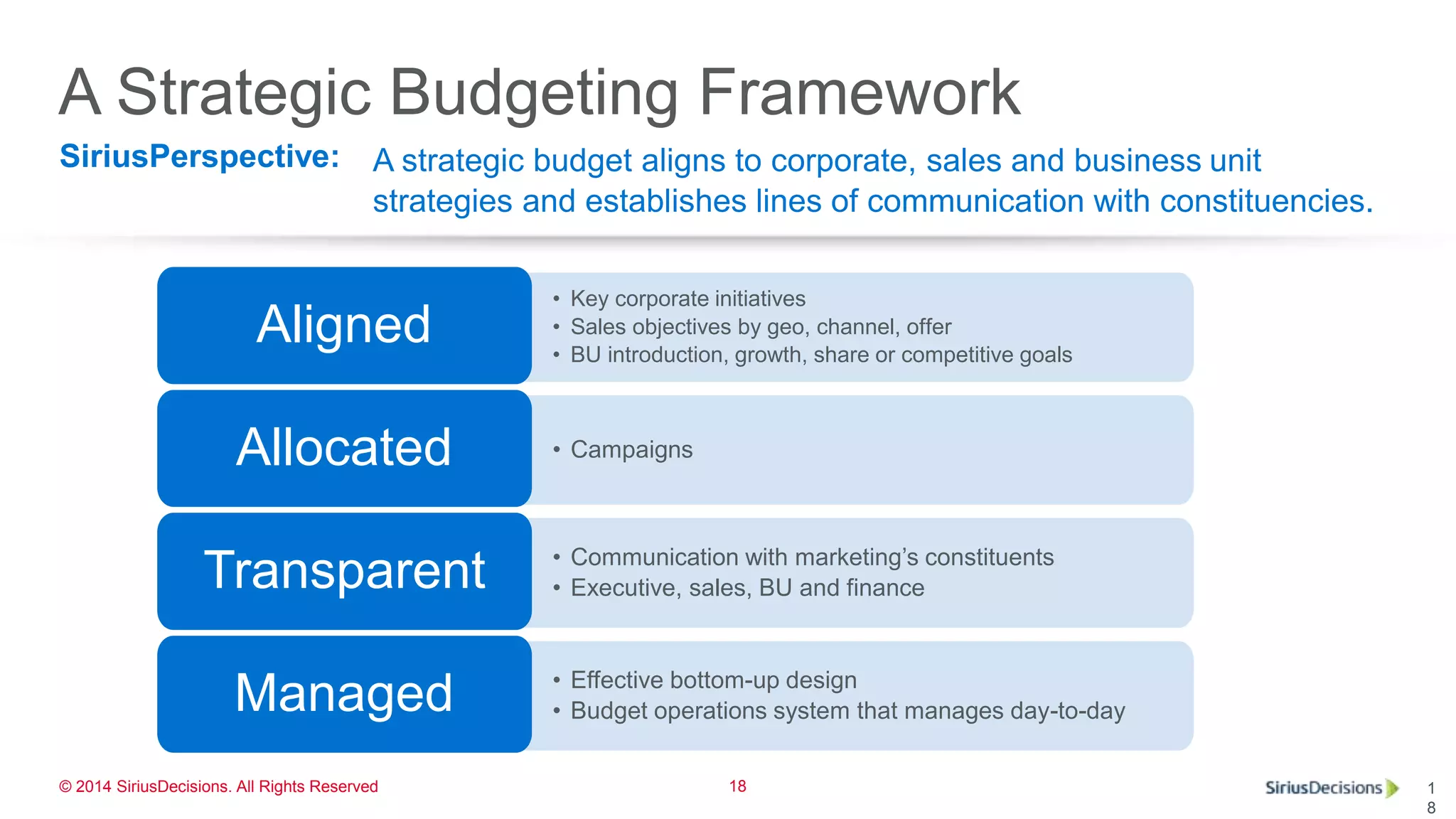
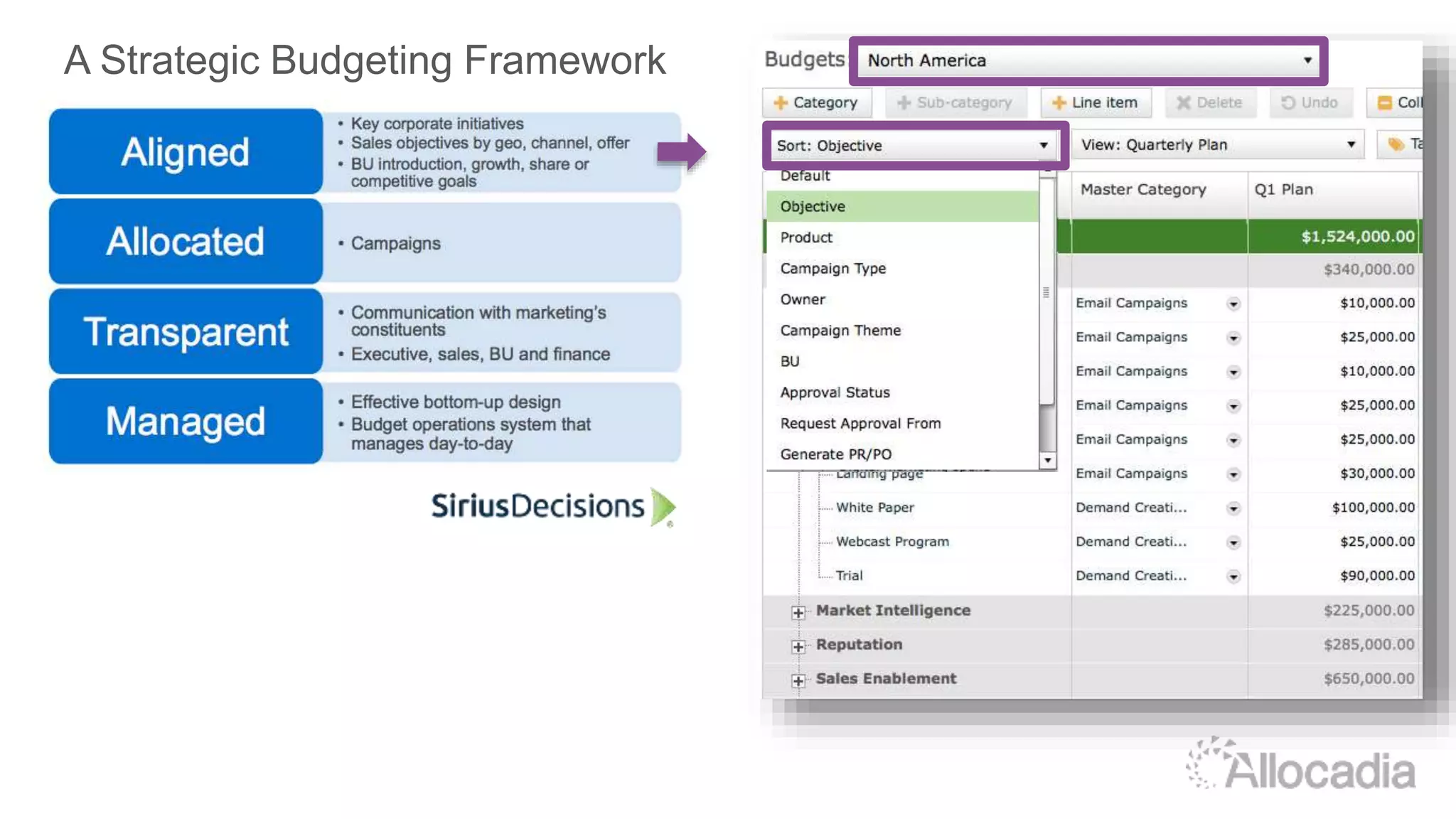
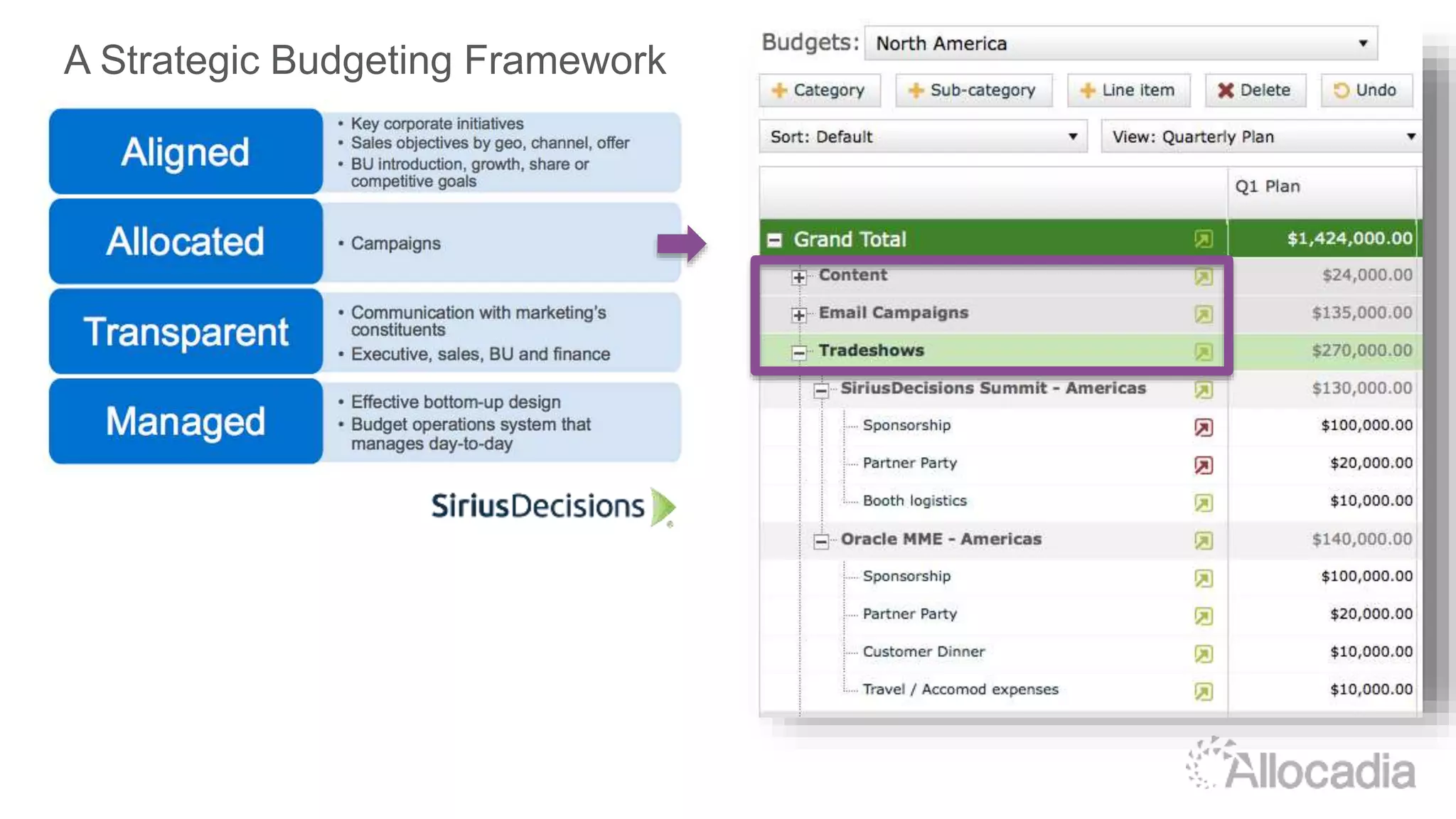
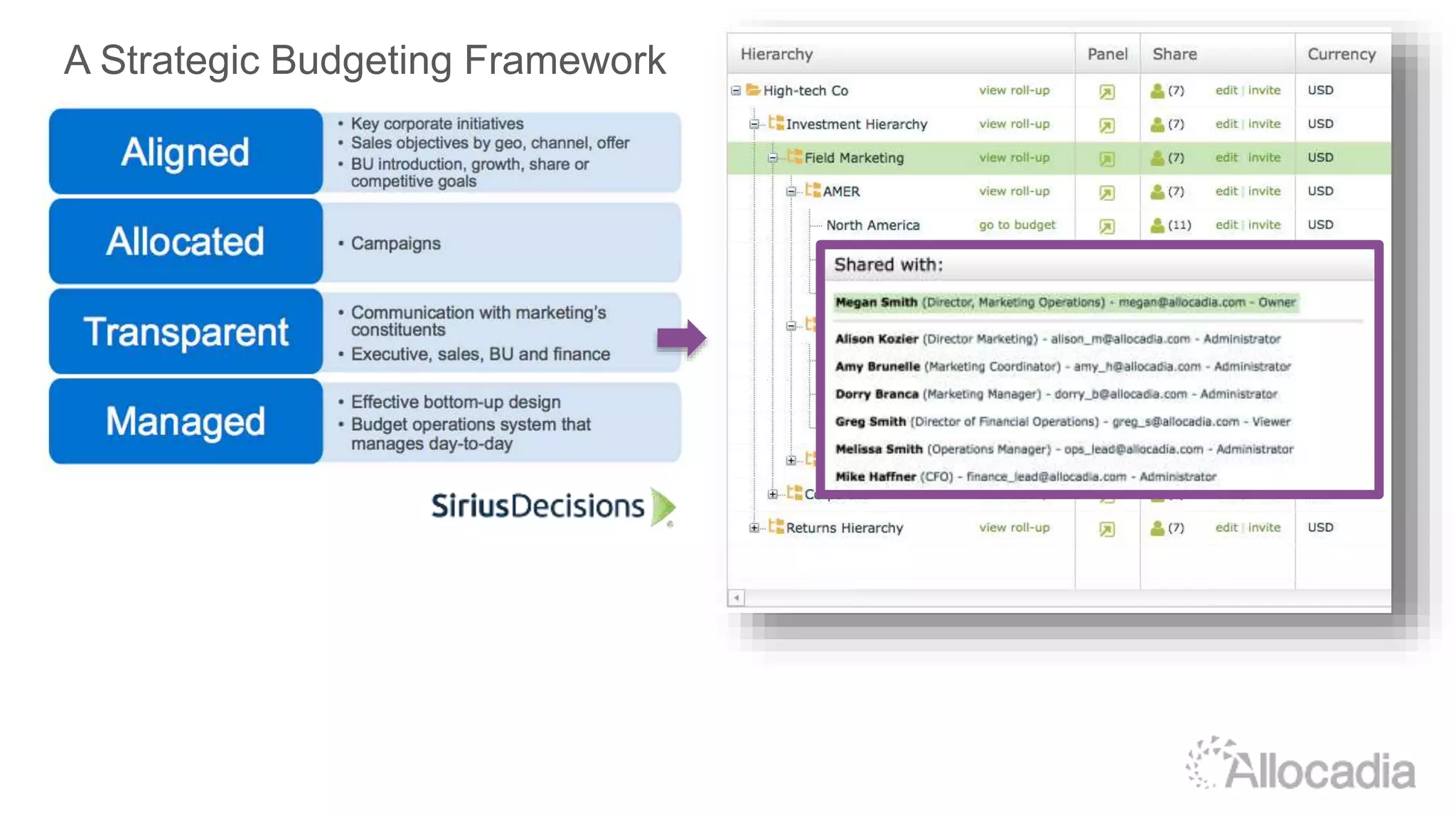
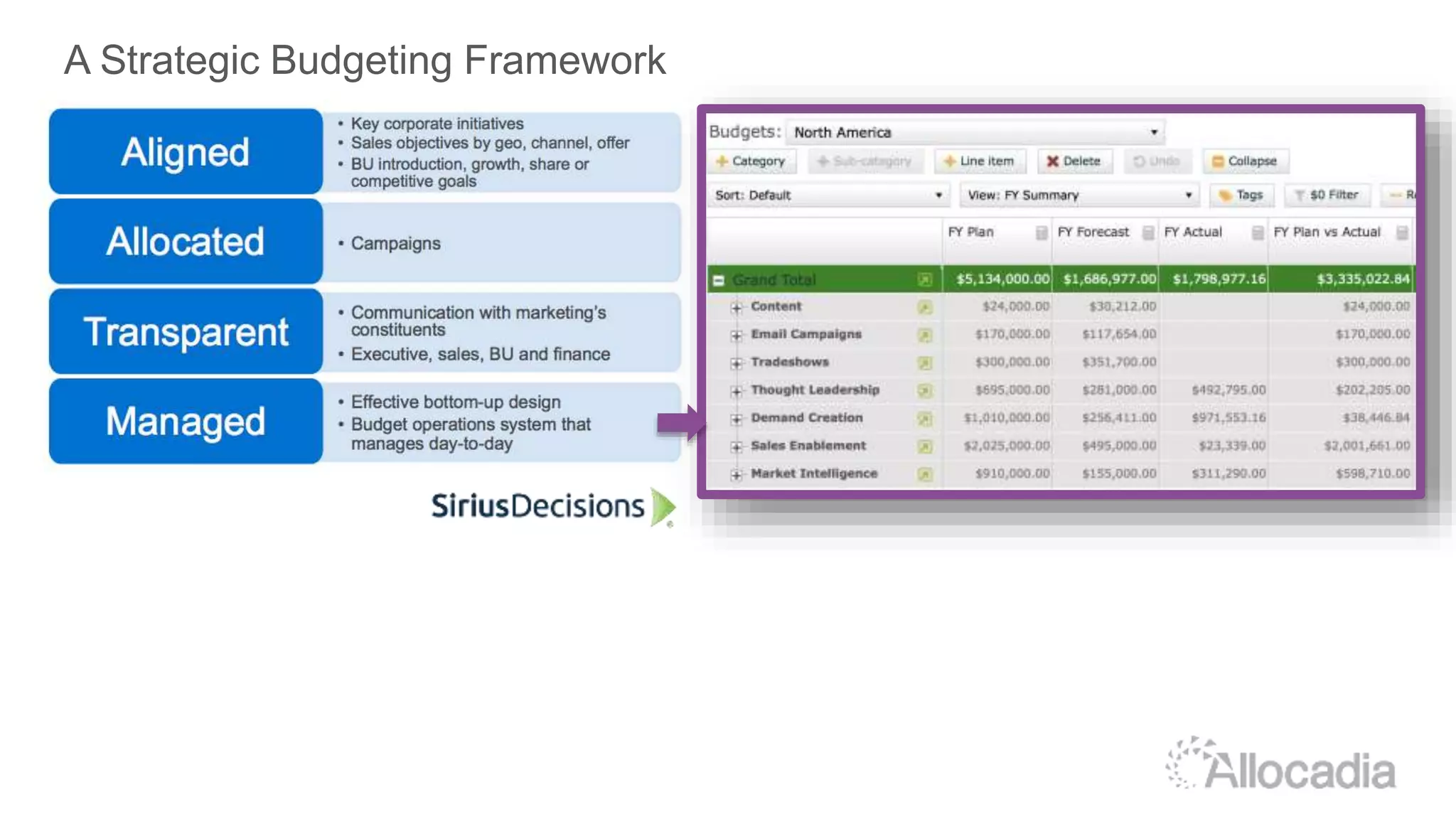
A Strategic Budgeting Framework
A strategic budget aligns to corporate, sales and business unit
strategies and establishes lines of communication with constituencies.
1
8
• Key corporate initiatives
• Sales objectives by geo, channel, offer
• BU introduction, growth, share or competitive goals
Aligned
• CampaignsAllocated
• Communication with marketing’s constituents
• Executive, sales, BU and financeTransparent
• Effective bottom-up design
• Budget operations system that manages day-to-dayManaged
James Thomas
CMO, Allocadia
@jthomas_44 | @allocadia
A Strategic Budgeting Framework
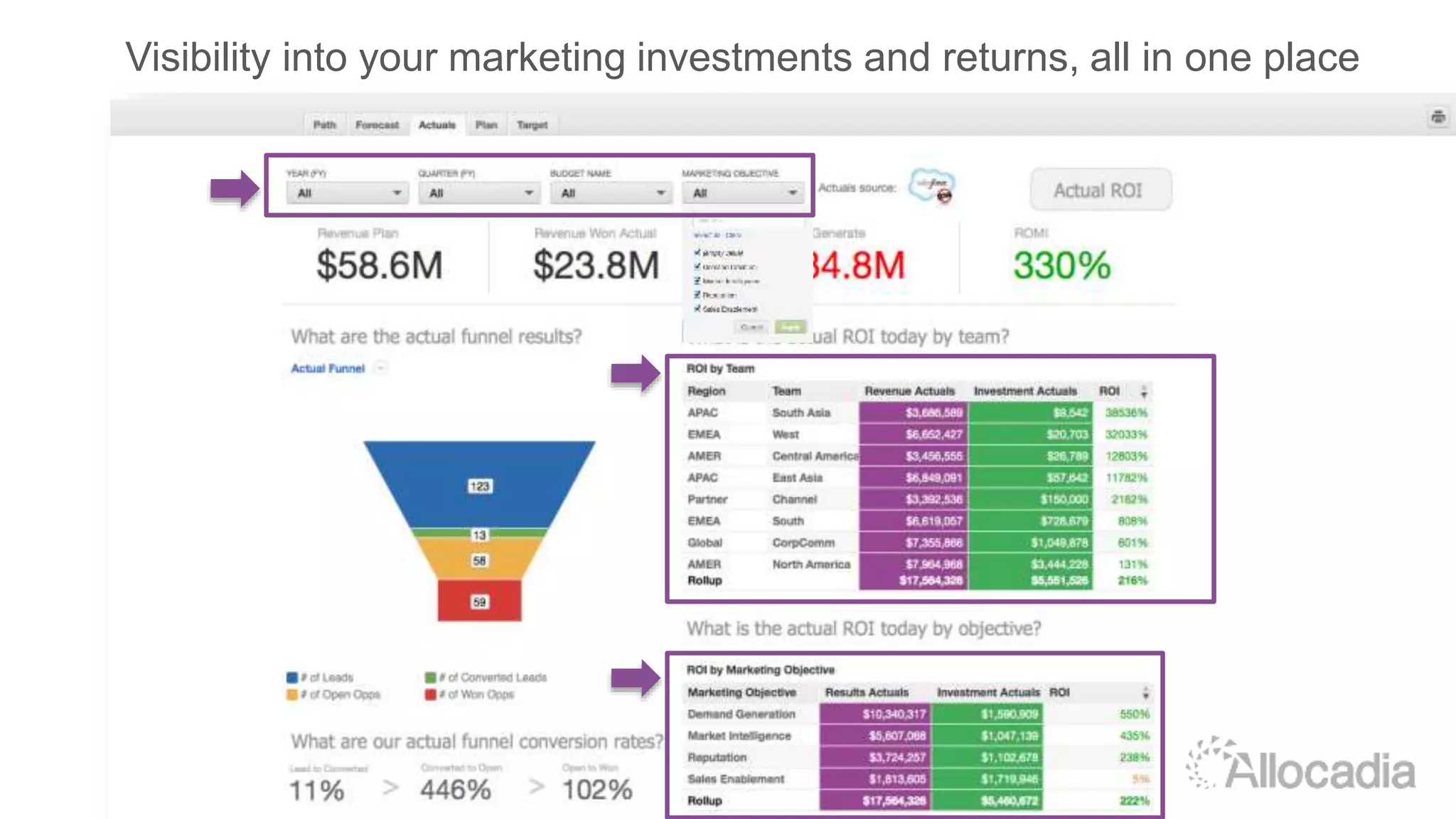
Visibility into your marketing investments and returns, all in one place
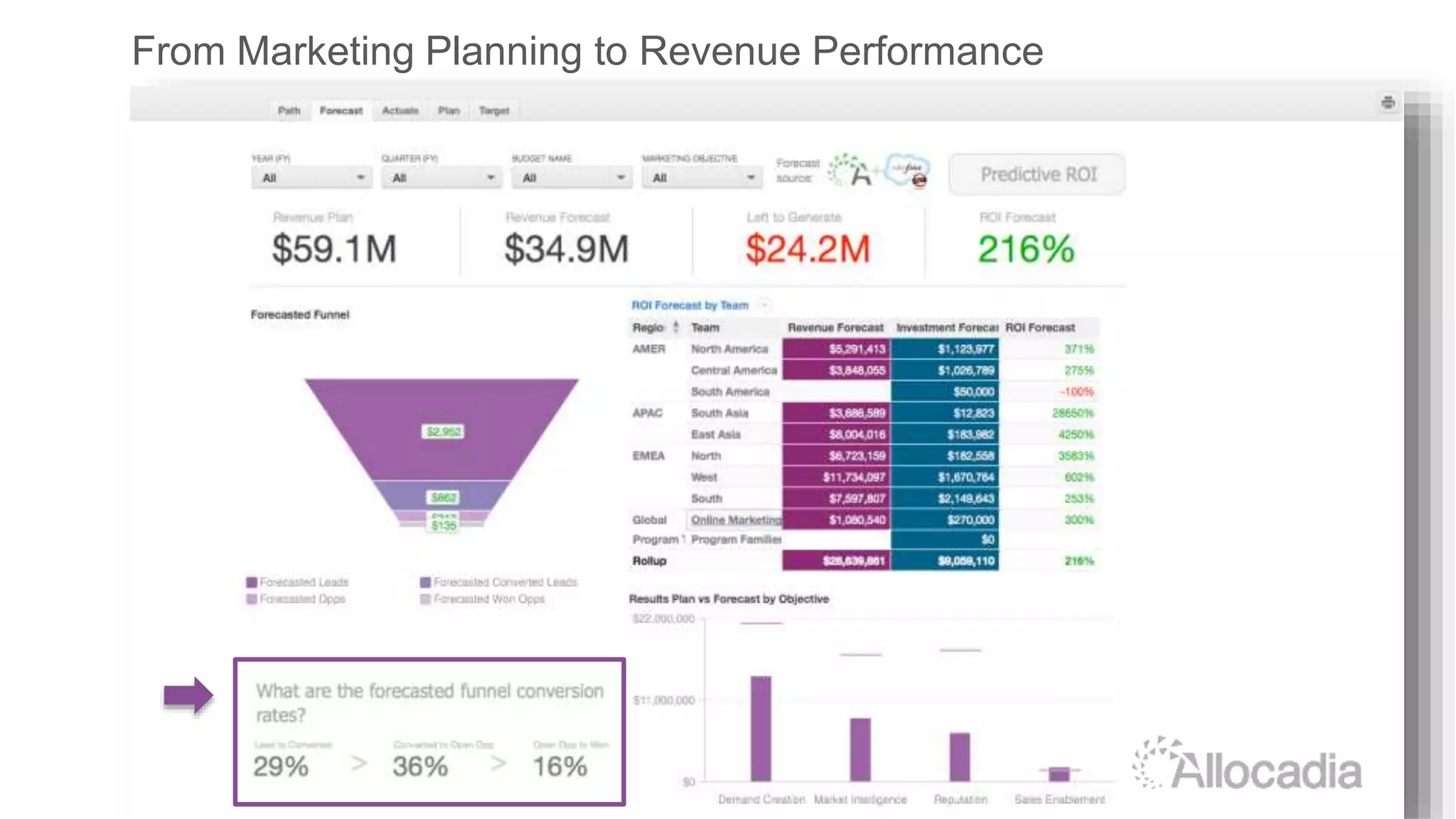
From Marketing Planning to Revenue Performance
Demo
Turn theory into action
SD Framework into Allocadia
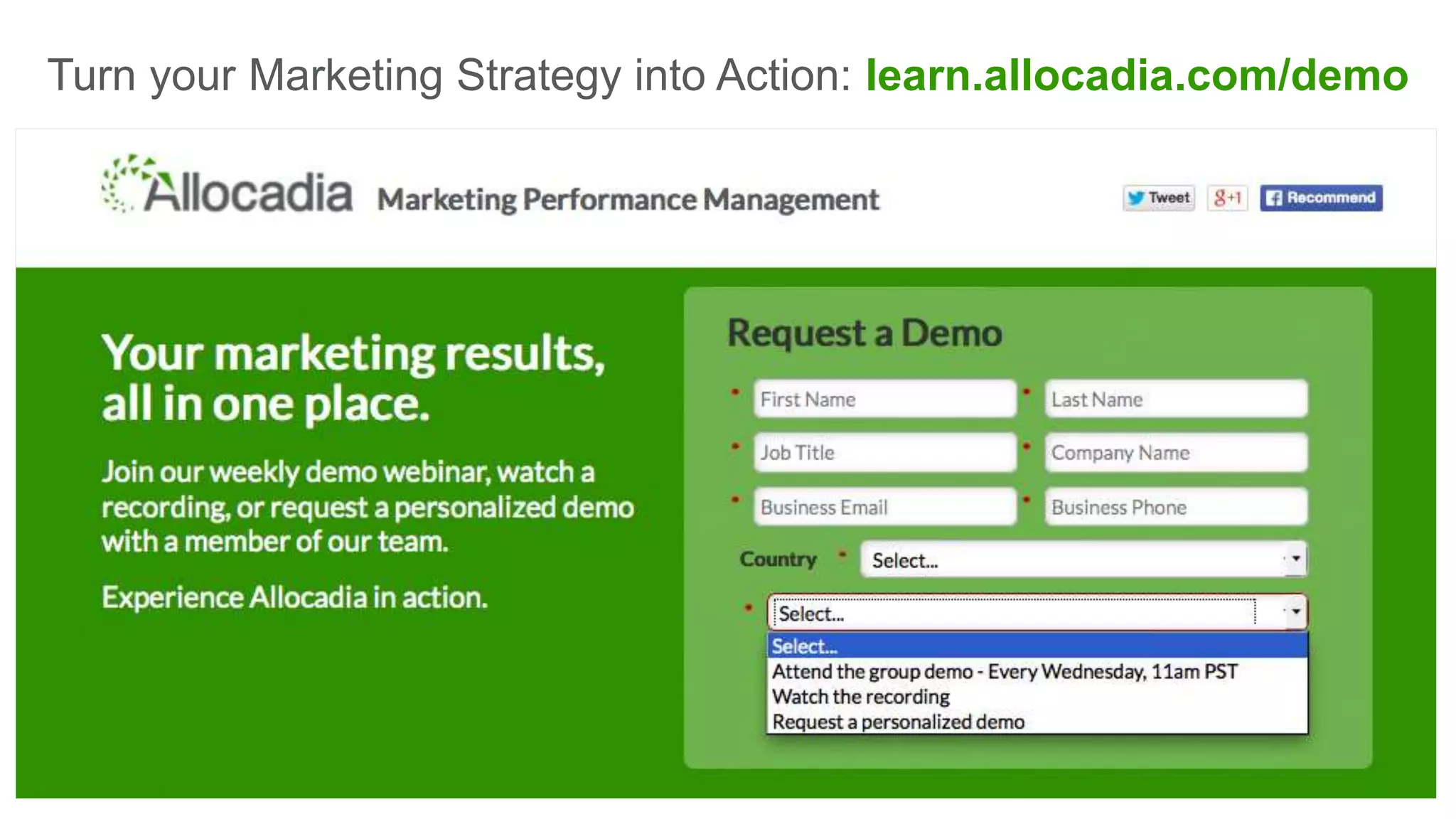
Turn your Marketing Strategy into Action: learn.allocadia.com/demo
Thank you.
To see a demo of Allocadia, go to:
learn.allocadia.com/demo
James Thomas
CMO | Allocadia
james.thomas@allocadia.com
@Jthomas_44
@allocadia
Craig Moore
Services Director, Marketing
Operations Strategies
craig.moore@siriusdecisions.com
@cramoore
@siriusdecisions

Tactical to Transformational: The Evolution of Marketing Operations

  • 1.
    Tactical to Transformational: TheEvolution of Marketing Operations Featured Analyst:
  • 2.
    Craig Moore Services Director,Marketing Operations Strategies James Thomas CMO Presenters
  • 3.
    Agenda Housekeeping • Questions? Usethe Question/Chat pane on GoToWebinar • Technical Difficulties? Contact brittany.wong@allocadia.com • The Evolving Role of Marketing Operations in strategy, infrastructure, enablement and accountability • Strategy Alignment. How to align marketing strategy and investments to business goals and revenue performance • Financial Planning. An overview of key financial planning perspectives that provide the basis for aligned measurement and performance
  • 4.
    © 2014 SiriusDecisions.All Rights Reserved 4 Craig Moore Service Director, Marketing Operations Strategies @cramoore | #sdwebinar
  • 5.
    Up-leveling Marketing Operations forImproved Performance Tactical or Transformational Craig Moore, Service Director, Marketing Operations Strategies
  • 6.
    How Do YouDefine Marketing Operations?
  • 7.
    © 2014 SiriusDecisions.All Rights Reserved 7 Marketing Operations Defined: Core Responsibilities EnablementAccountability PlanningInfrastructure
  • 8.
    © 2014 SiriusDecisions.All Rights Reserved 8 Marketing Operations Range of Responsibilities CORE RESPONSIBILITIES PLANNING Budget Annual marketing budget allocation Budget management Budget tracking and reconciliation Spend management process Campaign Annual marketing planning process Campaign plans Program plans Tactical plans INFRASTRUCTUR E Process Technology Technology strategy and capabilities roadmap Process Optimization Technology prioritization and selection The Campaign Implementation Process Technology implementation and management Technology access, administration and training Data Master data management Marketing data strategy Data management and stewardship Data administration ENABLEMENT Skills Development Workforce planning and organizational design Competency assessment Functional competency identification, development planing Access to training Process Change management Process Optimization Process governance Process management ACCOUNTABILIT Y Measurement Organizational summary measurement Program and function measurement Function and tactic type measurement Tactic type and tactic measurement Predictive analytics Exploratory analytics Analytics Historical analytics Historical reporting SCOPE STRATEGIC TACTICA L
  • 9.
    © 2014 SiriusDecisions.All Rights Reserved 9 Marketing Operations Maturity Model Categories Maturity Level 1 2 3 4 5 Definition and Goals Interlock (Alignment) Processes and Procedures Skills, Knowledge and Training Technology and Tools Measurement and Reporting
  • 10.
    © 2014 SiriusDecisions.All Rights Reserved 10 Marketing Operations Resource Allocation Maturity Reporting Advanced Analytics Data Technol- ogy Process Skills Dev. Budget Planning ONE TWO THREE FOUR FIVE Accountability Infrastructure Enablement Strategy
  • 11.
    Strategic Alignment Aligning marketingstrategy and investments to business goals and revenue performance
  • 12.
    © 2014 SiriusDecisions.All Rights Reserved 12 The Campaign Framework The building of awareness, interest and urgency around a theme The sourcing and nurturing of demand based on the theme The help with progression of opportunities sourced by the theme • Focus group • SWOT analysis • Internal survey • Press release • Blog • Briefing • White paper • Webcast • Trial • Battlecard • Playbook • ROI tool THE TACTICS The knowledge building of external targets and internal audiences Market Intelligence Reputation Demand Creation Sales Enablement THE PROGRAMS
  • 13.
    © 2014 SiriusDecisions.All Rights Reserved 13 Campaign Objectives New Logo Retention Up-sell Cross-sell Sales in new accounts Ensure existing customers retain existing commitments Expand into new buying centers within existing logos Expand in current buying centers within existing logos
  • 14.
    © 2014 SiriusDecisions.All Rights Reserved 14 Reputation Demand Creation Sales Enablement Market Intelligence Marketing Budget Allocation $ Headcount & Capex Programs Campaigns Campaign A Shared Services Out of Campaigns Campaign A Campaign B Campaign C Campaign D Shared Svc Annual Event Comms Other IndustryA IndustryB IndustryC Horizontal Creative Services Analyst Relations Web Public Relations R DC SE MI Campaign D IndustryA IndustryB IndustryC Horizontal 40% 30% 55% 45% 70% 30% 40% Illustrative Proportions 15% 15% Taking a More Strategic Approach to Budgeting 14
  • 15.
    SiriusPerspective: © 2014 SiriusDecisions.All Rights Reserved 15 Start with an allocation approach to budgeting, and fill in the details when quarterly budgets are understood. Top-down Meets Bottom-up And Then to Quarters Allocated to Program Families Campaign Budget Campaign Reputation Demand Creation Q2 Q3 Q4 Sales Enablement Market Intelligence Q1 And Then Bottom-up to Execution Types Global Development Global Execution Regional Execution Regional Development
  • 16.
    © 2014 SiriusDecisions.All Rights Reserved 16 Budget Allocation Models – Pros and Cons SiriusPerspective: Money drives behavior. If you fund silos, that’s how they will behave. Centralized • Simple; ensures control • Collaboration, communication and collective thinking are difficult • Provides autonomy • Collaboration is difficult; encourages “tin-cupping”. Functional • Aligned with sales & focused on execution • Encourages geo-silos, redundancy, and short-term initiatives supporting deals Geographic • Less about how marketing is organized • Focused on product, not customer Product • Focuses on portfolio of offerings that address customer needs • Lacks balance across reputation, demand creation, sales enablement and MI Solution • Focuses on customer business needs. Funds initiatives, not silos. • Encourages sales, product and marketing collaboration. Campaign
  • 17.
    SiriusPerspective: © 2014 SiriusDecisions.All Rights Reserved 17 Budget Sales/Geo •My Theatres •My Territories •My Channels Product •My Offerings •My Initiatives Function •Events Team •Web •Demand Center Campaigns •Campaign 1 •Campaign 2 •Campaign 3 Everyone Has a Point of View In order to manage a complex marketing budget effectively, there must be several perspectives.
  • 18.
    SiriusPerspective: © 2014 SiriusDecisions.All Rights Reserved 18 A Strategic Budgeting Framework A strategic budget aligns to corporate, sales and business unit strategies and establishes lines of communication with constituencies. 1 8 • Key corporate initiatives • Sales objectives by geo, channel, offer • BU introduction, growth, share or competitive goals Aligned • CampaignsAllocated • Communication with marketing’s constituents • Executive, sales, BU and financeTransparent • Effective bottom-up design • Budget operations system that manages day-to-dayManaged
  • 19.
  • 21.
  • 22.
  • 23.
  • 24.
  • 25.
    Visibility into yourmarketing investments and returns, all in one place
  • 26.
    From Marketing Planningto Revenue Performance
  • 27.
    Demo Turn theory intoaction SD Framework into Allocadia Turn your Marketing Strategy into Action: learn.allocadia.com/demo
  • 28.
    Thank you. To seea demo of Allocadia, go to: learn.allocadia.com/demo James Thomas CMO | Allocadia james.thomas@allocadia.com @Jthomas_44 @allocadia Craig Moore Services Director, Marketing Operations Strategies craig.moore@siriusdecisions.com @cramoore @siriusdecisions

Editor's Notes

  • #8 Accountability and Insights Responsibilities: Measurement / Reporting Analytics Infrastructure Responsibilities: Data Technology Operations Enablement Responsibilities: Process / Best Practice Identification Skills Development Planning Responsibilities: Alignment Investment Technology Roadmap CMO Chief of Staff
  • #10 We know that many of you are in different organizational roles. SD has developed these maturity models for other functions—so there is a maturity model for you. It is a helpful tool for you as a functional leader to understand where your team is in an improvement continuum.
  • #11 What are current levels of investment in marketing operations? Funding levels for operations have continued to grow over the last five years, with some variation based on company size. There are common evolution paths. The role typically begins as an outpost with a few resources in small and mid-size companies; with success, it begins to scale. Changes are evident in key areas: Budget Operations: Marketing budget needs to align to strategy, and marketing ownership of budget operations is critical. Budget drives behavior (functional vs. collaborative). Finance doesn’t understand this, and they don’t have the marketing domain knowledge to manage this. Regional Operations: Regional operations teams begin to heavily decentralize at the $500 million mark; by the time this threshold is reached, marketing operations must be well established, with strong central process management or the function will spiral out of control. Marketing Analysis: As an organization grows, it allots marketing analysis resources from the central function in a “consulting” fashion to regions and BUs. This ensures use of a consistent set of metrics and process to judge marketing’s performance across the enterprise. Data: At the $1B revenue band, the role of data becomes significant and there is a need for dedicated resources to manage it. In bands one and two, no one really owns the data. Different functions collect and store data, and it is held in different systems or even spreadsheets. There are no real controls on data acquisition or standards. This doesn’t scale. Marketing Systems: When an organization is under $500 million in revenue, ops typically works with IT for marketing technology needs. Once this threshold is passed, the function tends to receive its own resources in the department. Using the logic that greater influence over systems will yield higher quality data and accountability, SiriusDecisions recommends putting dedicated IT resources in place as soon as possible. Technology is now about configuration, not implementation or maintenance, in the SaaS-based model.
  • #12 Annual planning is around the corner for many organizations.
  • #14 SiriusDecisions conducted research to identify how best-in-class companies organized and managed their marketing operations functions Best in class is defined in terms of revenue and profitability; B2B companies only Here is what they found: Strong focus on alignment with Sales Operations Focus on strong processes Focus on consistent, accurate, and meaningful reporting Goal to make sense of investment in Marketing Invest in gaining insights Planning and alignment with corporate, sales, and BU strategy Budgeting that is comprehensive and strategically aligned Dedicated effort to understand buyer Identification of best practices, either internally or externally Lead the marketing organization’s IT challenges Liaison with IT, develop and articulate requirements Own/drive deployment and management of systems Develop processes Manage the data process – data collection. aggregation, refinement Lead the marketing measurement function Measure performance parameters Calculate ROI Execute benchmarks (process, budget)
  • #15 [What’s the track?]
  • #16 © Copyright SiriusDecisions. All Rights Protected and Reserved.
  • #19 Craig Aligned to strategy Allocated to solutions or campaigns Transparent and trusted Operationally excellent