System Dynamics of Recycling Scenarios
Rebecca Pickens, NorthStar Initiative for Sustainable Enterprise, University of Minnesota
WE12 Conference – Houston, TX – November 9, 2012
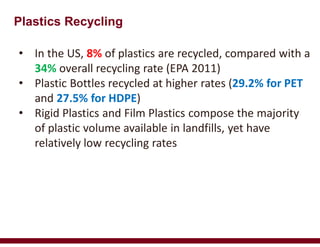
• In the US, 8% of plastics are recycled, compared with a
34% overall recycling rate (EPA 2011)
• Plastic Bottles recycled at higher rates (29.2% for PET
and 27.5% for HDPE)
• Rigid Plastics and Film Plastics compose the majority
of plastic volume available in landfills, yet have
relatively low recycling rates
Plastics Recycling
• Reduced Energy Use
• Reduced Global
Warming &
Acidification Potential
• Solid Waste Diversion
from Landfills
• Local Economic
Impacts
Plastics Recycling Policies
• Policy Changes: mandating collection of all plastics,
extended producer responsibility laws and
voluntary programs
Consumption
of Plastic
Goods
Post-Industrial
Virgin Plastic
Resin Reprocessors
Recycled Plastics
Brokers & Contracts
Landfill
Recycling
MRFs
Waste-to-Energy
International
MarketsFood
Packaging
Plastic Disposed
Waste-to-Fuel
Non-Food
Packaging
Food-Grade
Recycled
Plastic Resin
Sorted Plastic
Bales
Cleaned,
Recycled
Plastic Flake
Mixed Plastic
Bales
Recycled
Plastic Resin
Dirty,
Recycled
Plastic Grind
Plastic
Products
Converters
Food-Grade
Converters
Post-Commercial
Brand Owners
Post-Consumer
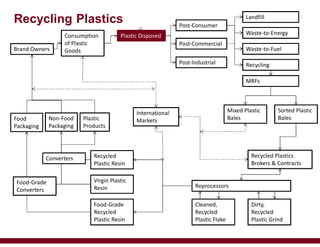
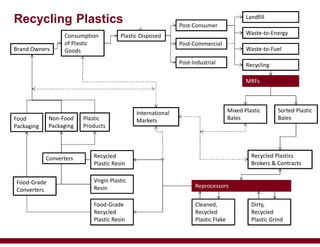
Recycling Plastics
Consumption
of Plastic
Goods
Post-Industrial
Virgin Plastic
Resin Reprocessors
Recycled Plastics
Brokers & Contracts
Landfill
Recycling
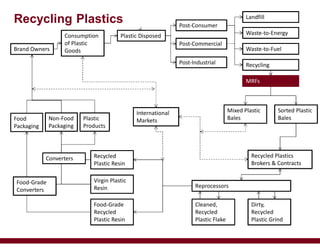
MRFs
Waste-to-Energy
International
MarketsFood
Packaging
Plastic Disposed
Waste-to-Fuel
Non-Food
Packaging
Food-Grade
Recycled
Plastic Resin
Sorted Plastic
Bales
Cleaned,
Recycled
Plastic Flake
Mixed Plastic
Bales
Recycled
Plastic Resin
Dirty,
Recycled
Plastic Grind
Plastic
Products
Converters
Food-Grade
Converters
Post-Commercial
Brand Owners
Post-Consumer
Recycling Plastics
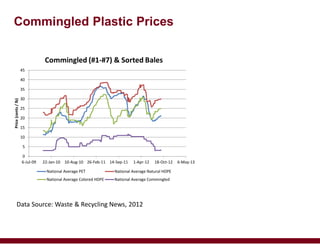
Commingled Plastic Prices
0
5
10
15
20
25
30
35
40
45
6-Jul-09 22-Jan-10 10-Aug-10 26-Feb-11 14-Sep-11 1-Apr-12 18-Oct-12 6-May-13
Price(cents/lb)
Commingled (#1-#7) & Sorted Bales
National Average PET National Average Natural HDPE
National Average Colored HDPE National Average Commingled
Data Source: Waste & Recycling News, 2012
Consumption
of Plastic
Goods
Post-Industrial
Virgin Plastic
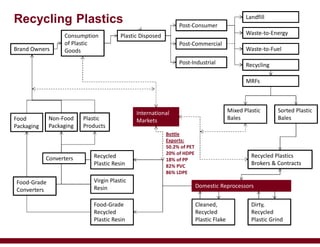
Resin Domestic Reprocessors
Recycled Plastics
Brokers & Contracts
Landfill
Recycling
MRFs
Waste-to-Energy
International
MarketsFood
Packaging
Plastic Disposed
Waste-to-Fuel
Non-Food
Packaging
Food-Grade
Recycled
Plastic Resin
Sorted Plastic
Bales
Cleaned,
Recycled
Plastic Flake
Mixed Plastic
Bales
Recycled
Plastic Resin
Dirty,
Recycled
Plastic Grind
Plastic
Products
Converters
Food-Grade
Converters
Post-Commercial
Brand Owners
Post-Consumer
Recycling Plastics
Consumption
of Plastic
Goods
Post-Industrial
Virgin Plastic
Resin Domestic Reprocessors
Recycled Plastics
Brokers & Contracts
Landfill
Recycling
MRFs
Waste-to-Energy
International
MarketsFood
Packaging
Plastic Disposed
Waste-to-Fuel
Non-Food
Packaging
Food-Grade
Recycled
Plastic Resin
Sorted Plastic
Bales
Cleaned,
Recycled
Plastic Flake
Mixed Plastic
Bales
Recycled
Plastic Resin
Dirty,
Recycled
Plastic Grind
Plastic
Products
Converters
Food-Grade
Converters
Post-Commercial
Brand Owners
Post-Consumer
Recycling Plastics
Bottle
Exports:
50.2% of PET
20% of HDPE
18% of PP
82% PVC
86% LDPE
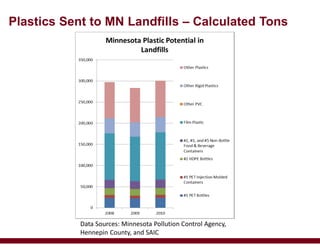
Plastics Sent to MN Landfills – Calculated Tons
Data Sources: Minnesota Pollution Control Agency,
Hennepin County, and SAIC
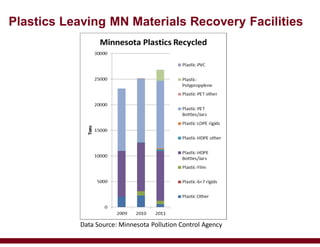
Plastics Leaving MN Materials Recovery Facilities
Data Source: Minnesota Pollution Control Agency
Consumption
of Plastic
Goods
Post-Industrial
Virgin Plastic
Resin Reprocessors
Recycled Plastics
Brokers & Contracts
Landfill
Recycling
MRFs
Waste-to-Energy
International
MarketsFood
Packaging
Plastic Disposed
Waste-to-Fuel
Non-Food
Packaging
Food-Grade
Recycled
Plastic Resin
Sorted Plastic
Bales
Cleaned,
Recycled
Plastic Flake
Mixed Plastic
Bales
Recycled
Plastic Resin
Dirty,
Recycled
Plastic Grind
Plastic
Products
Converters
Food-Grade
Converters
Post-Commercial
Brand Owners
Post-Consumer
Recycling Plastics
Consumption
of Plastic
Goods
Post-Industrial
Virgin Plastic
Resin Reprocessors
Recycled Plastics
Brokers & Contracts
Landfill
Recycling
MRFs
Waste-to-Energy
International
MarketsFood
Packaging
Plastic Disposed
Waste-to-Fuel
Non-Food
Packaging
Food-Grade
Recycled
Plastic Resin
Sorted Plastic
Bales
Cleaned,
Recycled
Plastic Flake
Mixed Plastic
Bales
Recycled
Plastic Resin
Dirty,
Recycled
Plastic Grind
Plastic
Products
Converters
Food-Grade
Converters
Post-Commercial
Brand Owners
Post-Consumer
Recycling Plastics
Consumption
of Plastic
Goods
Post-Industrial
Virgin Plastic
Resin Reprocessors
Recycled Plastics
Brokers & Contracts
Landfill
Recycling
MRFs
Waste-to-Energy
International
MarketsFood
Packaging
Plastic Disposed
Waste-to-Fuel
Non-Food
Packaging
Food-Grade
Recycled
Plastic Resin
Sorted Plastic
Bales
Cleaned,
Recycled
Plastic Flake
Mixed Plastic
Bales
Recycled
Plastic Resin
Dirty,
Recycled
Plastic Grind
Plastic
Products
Converters
Food-Grade
Converters
Post-Commercial
Brand Owners
Post-Consumer
Recycling Plastics
• Reduced Energy Use
• Reduced Global
Warming &
Acidification Potential
• Solid Waste Diversion
from Landfills
• Local Economic
Impacts
Plastics Recycling Policies
• Policy Changes: mandating collection of all plastics,
extended producer responsibility laws and
voluntary programs
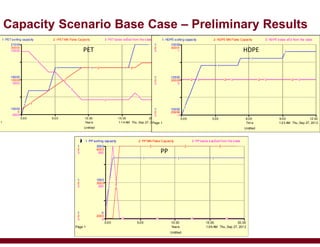
Capacity Scenario Base Case – Preliminary Results
1:06 AM Thu,Sep 27, 2012
Untitled
Page 1
0.00 5.00 10.00 15.00 20.00
Years
1:
1:
1:
2:
2:
2:
3:
3:
3:
0
1500
3000
2000
3000
4000
0
250
500
1: PP sorting capacity 2: PP MN Flake Capacity 3: PP bales expÉed from the s tate
1
1 1 1
2
2 2 2
3 3 3 3
1:14 AM Thu, Sep 27, 2012
Untitled
1
0.00 5.00 10.00 15.00 20.00
Years
15000
18000
21000
0
15000
30000
-5000
5000
15000
1: PET sorting capacity 2: rPET MN Flake Capacity 3: PET bales exÉed from the s tate
1
1 1 1
2
2
2 2
3
3
3
3
1:23 AM Thu, Sep 27, 2012
Untitled
Page 1
0.00 3.00 6.00 9.00 12.00
Tim e
1:
1:
1:
2:
2:
2:
3:
3:
3:
10000
12500
15000
29999
30000
30001
-1
0
1
1: HDPE s orting capacity 2: HDPE MN Flake Capacity 3: HDPE bales eÉd from the state
1
1
1
1
2 2 2 23 3 3 3
PET HDPE
PP
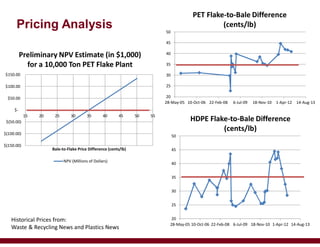
Pricing Analysis
$(150.00)
$(100.00)
$(50.00)
$-
$50.00
$100.00
$150.00
15 20 25 30 35 40 45 50 55
Bale-to-Flake Price Difference (cents/lb)
Preliminary NPV Estimate (in $1,000)
for a 10,000 Ton PET Flake Plant
NPV (Millions of Dollars)
20
25
30
35
40
45
50
28-May-05 10-Oct-06 22-Feb-08 6-Jul-09 18-Nov-10 1-Apr-12 14-Aug-13
HDPE Flake-to-Bale Difference
(cents/lb)
20
25
30
35
40
45
50
28-May-05 10-Oct-06 22-Feb-08 6-Jul-09 18-Nov-10 1-Apr-12 14-Aug-13
PET Flake-to-Bale Difference
(cents/lb)
Historical Prices from:
Waste & Recycling News and Plastics News
7:25 PM Mon, Nov 05, 2012
Untitled
Page 1
0.00 5.00 10.00 15.00 20.00
Years
1:
1:
1:
2:
2:
2:
3:
3:
3:
0
1500
3000
2000
3000
4000
0
250
500
1: PP sorting capacity 2: PP MN Flake Capacity 3: PP bales expÉed from the state
1
1 1 1
2
2 2 23
3 3 3
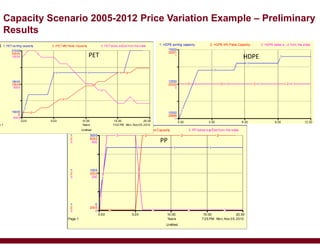
Capacity Scenario 2005-2012 Price Variation Example – Preliminary
Results
PP
PET
HDPE
7:02 PM Mon, Nov 05, 2012
Untitled
e 1
0.00 5.00 10.00 15.00 20.00
Years
15000
18000
21000
0
15000
30000
-5000
5000
15000
1: PET sorting capacity 2: rPET MN Flake Capacity 3: PET bales exÉed from the s tate
1
1 1 1
2
2
2
2
3
3
3
3
PET
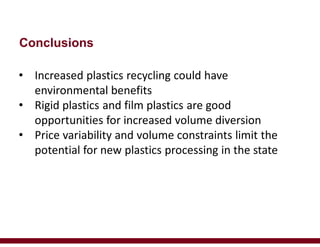
• Increased plastics recycling could have
environmental benefits
• Rigid plastics and film plastics are good
opportunities for increased volume diversion
• Price variability and volume constraints limit the
potential for new plastics processing in the state
Conclusions
Association of Postconsumer Plastic Recyclers and American Chemistry Council. (2011).
2010 United States National Post-Consumer Plastics Bottle Recycling Report.
Lazarevic, D., Aoustin, E., Buclet, N., & Brandt, N. (2010). Plastic waste management in
the context of a European recycling society: Comparing results and uncertainties in a life
cycle perspective. Resources, Conservation and Recycling, 55(2), 246–259.
Ford, A. Modeling the Environment, 2nd Ed. (2010). Island Press.
U.S. Environmental Protection Agency (2011). Municipal Solid Waste Generation ,
Recycling , and Disposal in the United States : Facts and Figures for 2010.
Stella Software for System Dynamics Modeling: http://www.iseesystems.com/
Vensim Software for System Dynamics Modeling: http://www.vensim.com/
Resources
• Professor Timothy Smith, Director, NorthStar
Initiative for Sustainable Enterprise
• Hennepin County, Minnesota Pollution Control
Agency, Minnesota Technical Assistance Program,
Resource Recycling Systems, Keep America Beautiful,
Aspen Research
Thank you
Questions?

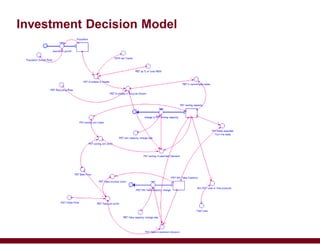
System Dynamics Model of Recycling Scenarios

  • 1.
    System Dynamics ofRecycling Scenarios Rebecca Pickens, NorthStar Initiative for Sustainable Enterprise, University of Minnesota WE12 Conference – Houston, TX – November 9, 2012
  • 2.
    • In theUS, 8% of plastics are recycled, compared with a 34% overall recycling rate (EPA 2011) • Plastic Bottles recycled at higher rates (29.2% for PET and 27.5% for HDPE) • Rigid Plastics and Film Plastics compose the majority of plastic volume available in landfills, yet have relatively low recycling rates Plastics Recycling
  • 3.
    • Reduced EnergyUse • Reduced Global Warming & Acidification Potential • Solid Waste Diversion from Landfills • Local Economic Impacts Plastics Recycling Policies • Policy Changes: mandating collection of all plastics, extended producer responsibility laws and voluntary programs
  • 4.
    Consumption of Plastic Goods Post-Industrial Virgin Plastic ResinReprocessors Recycled Plastics Brokers & Contracts Landfill Recycling MRFs Waste-to-Energy International MarketsFood Packaging Plastic Disposed Waste-to-Fuel Non-Food Packaging Food-Grade Recycled Plastic Resin Sorted Plastic Bales Cleaned, Recycled Plastic Flake Mixed Plastic Bales Recycled Plastic Resin Dirty, Recycled Plastic Grind Plastic Products Converters Food-Grade Converters Post-Commercial Brand Owners Post-Consumer Recycling Plastics
  • 5.
    Consumption of Plastic Goods Post-Industrial Virgin Plastic ResinReprocessors Recycled Plastics Brokers & Contracts Landfill Recycling MRFs Waste-to-Energy International MarketsFood Packaging Plastic Disposed Waste-to-Fuel Non-Food Packaging Food-Grade Recycled Plastic Resin Sorted Plastic Bales Cleaned, Recycled Plastic Flake Mixed Plastic Bales Recycled Plastic Resin Dirty, Recycled Plastic Grind Plastic Products Converters Food-Grade Converters Post-Commercial Brand Owners Post-Consumer Recycling Plastics
  • 6.
    Commingled Plastic Prices 0 5 10 15 20 25 30 35 40 45 6-Jul-0922-Jan-10 10-Aug-10 26-Feb-11 14-Sep-11 1-Apr-12 18-Oct-12 6-May-13 Price(cents/lb) Commingled (#1-#7) & Sorted Bales National Average PET National Average Natural HDPE National Average Colored HDPE National Average Commingled Data Source: Waste & Recycling News, 2012
  • 8.
    Consumption of Plastic Goods Post-Industrial Virgin Plastic ResinDomestic Reprocessors Recycled Plastics Brokers & Contracts Landfill Recycling MRFs Waste-to-Energy International MarketsFood Packaging Plastic Disposed Waste-to-Fuel Non-Food Packaging Food-Grade Recycled Plastic Resin Sorted Plastic Bales Cleaned, Recycled Plastic Flake Mixed Plastic Bales Recycled Plastic Resin Dirty, Recycled Plastic Grind Plastic Products Converters Food-Grade Converters Post-Commercial Brand Owners Post-Consumer Recycling Plastics
  • 9.
    Consumption of Plastic Goods Post-Industrial Virgin Plastic ResinDomestic Reprocessors Recycled Plastics Brokers & Contracts Landfill Recycling MRFs Waste-to-Energy International MarketsFood Packaging Plastic Disposed Waste-to-Fuel Non-Food Packaging Food-Grade Recycled Plastic Resin Sorted Plastic Bales Cleaned, Recycled Plastic Flake Mixed Plastic Bales Recycled Plastic Resin Dirty, Recycled Plastic Grind Plastic Products Converters Food-Grade Converters Post-Commercial Brand Owners Post-Consumer Recycling Plastics Bottle Exports: 50.2% of PET 20% of HDPE 18% of PP 82% PVC 86% LDPE
  • 10.
    Plastics Sent toMN Landfills – Calculated Tons Data Sources: Minnesota Pollution Control Agency, Hennepin County, and SAIC
  • 11.
    Plastics Leaving MNMaterials Recovery Facilities Data Source: Minnesota Pollution Control Agency
  • 12.
    Consumption of Plastic Goods Post-Industrial Virgin Plastic ResinReprocessors Recycled Plastics Brokers & Contracts Landfill Recycling MRFs Waste-to-Energy International MarketsFood Packaging Plastic Disposed Waste-to-Fuel Non-Food Packaging Food-Grade Recycled Plastic Resin Sorted Plastic Bales Cleaned, Recycled Plastic Flake Mixed Plastic Bales Recycled Plastic Resin Dirty, Recycled Plastic Grind Plastic Products Converters Food-Grade Converters Post-Commercial Brand Owners Post-Consumer Recycling Plastics
  • 13.
    Consumption of Plastic Goods Post-Industrial Virgin Plastic ResinReprocessors Recycled Plastics Brokers & Contracts Landfill Recycling MRFs Waste-to-Energy International MarketsFood Packaging Plastic Disposed Waste-to-Fuel Non-Food Packaging Food-Grade Recycled Plastic Resin Sorted Plastic Bales Cleaned, Recycled Plastic Flake Mixed Plastic Bales Recycled Plastic Resin Dirty, Recycled Plastic Grind Plastic Products Converters Food-Grade Converters Post-Commercial Brand Owners Post-Consumer Recycling Plastics
  • 14.
    Consumption of Plastic Goods Post-Industrial Virgin Plastic ResinReprocessors Recycled Plastics Brokers & Contracts Landfill Recycling MRFs Waste-to-Energy International MarketsFood Packaging Plastic Disposed Waste-to-Fuel Non-Food Packaging Food-Grade Recycled Plastic Resin Sorted Plastic Bales Cleaned, Recycled Plastic Flake Mixed Plastic Bales Recycled Plastic Resin Dirty, Recycled Plastic Grind Plastic Products Converters Food-Grade Converters Post-Commercial Brand Owners Post-Consumer Recycling Plastics
  • 15.
    • Reduced EnergyUse • Reduced Global Warming & Acidification Potential • Solid Waste Diversion from Landfills • Local Economic Impacts Plastics Recycling Policies • Policy Changes: mandating collection of all plastics, extended producer responsibility laws and voluntary programs
  • 16.
    Capacity Scenario BaseCase – Preliminary Results 1:06 AM Thu,Sep 27, 2012 Untitled Page 1 0.00 5.00 10.00 15.00 20.00 Years 1: 1: 1: 2: 2: 2: 3: 3: 3: 0 1500 3000 2000 3000 4000 0 250 500 1: PP sorting capacity 2: PP MN Flake Capacity 3: PP bales expÉed from the s tate 1 1 1 1 2 2 2 2 3 3 3 3 1:14 AM Thu, Sep 27, 2012 Untitled 1 0.00 5.00 10.00 15.00 20.00 Years 15000 18000 21000 0 15000 30000 -5000 5000 15000 1: PET sorting capacity 2: rPET MN Flake Capacity 3: PET bales exÉed from the s tate 1 1 1 1 2 2 2 2 3 3 3 3 1:23 AM Thu, Sep 27, 2012 Untitled Page 1 0.00 3.00 6.00 9.00 12.00 Tim e 1: 1: 1: 2: 2: 2: 3: 3: 3: 10000 12500 15000 29999 30000 30001 -1 0 1 1: HDPE s orting capacity 2: HDPE MN Flake Capacity 3: HDPE bales eÉd from the state 1 1 1 1 2 2 2 23 3 3 3 PET HDPE PP
  • 17.
    Pricing Analysis $(150.00) $(100.00) $(50.00) $- $50.00 $100.00 $150.00 15 2025 30 35 40 45 50 55 Bale-to-Flake Price Difference (cents/lb) Preliminary NPV Estimate (in $1,000) for a 10,000 Ton PET Flake Plant NPV (Millions of Dollars) 20 25 30 35 40 45 50 28-May-05 10-Oct-06 22-Feb-08 6-Jul-09 18-Nov-10 1-Apr-12 14-Aug-13 HDPE Flake-to-Bale Difference (cents/lb) 20 25 30 35 40 45 50 28-May-05 10-Oct-06 22-Feb-08 6-Jul-09 18-Nov-10 1-Apr-12 14-Aug-13 PET Flake-to-Bale Difference (cents/lb) Historical Prices from: Waste & Recycling News and Plastics News
  • 18.
    7:25 PM Mon,Nov 05, 2012 Untitled Page 1 0.00 5.00 10.00 15.00 20.00 Years 1: 1: 1: 2: 2: 2: 3: 3: 3: 0 1500 3000 2000 3000 4000 0 250 500 1: PP sorting capacity 2: PP MN Flake Capacity 3: PP bales expÉed from the state 1 1 1 1 2 2 2 23 3 3 3 Capacity Scenario 2005-2012 Price Variation Example – Preliminary Results PP PET HDPE 7:02 PM Mon, Nov 05, 2012 Untitled e 1 0.00 5.00 10.00 15.00 20.00 Years 15000 18000 21000 0 15000 30000 -5000 5000 15000 1: PET sorting capacity 2: rPET MN Flake Capacity 3: PET bales exÉed from the s tate 1 1 1 1 2 2 2 2 3 3 3 3 PET
  • 19.
    • Increased plasticsrecycling could have environmental benefits • Rigid plastics and film plastics are good opportunities for increased volume diversion • Price variability and volume constraints limit the potential for new plastics processing in the state Conclusions
  • 20.
    Association of PostconsumerPlastic Recyclers and American Chemistry Council. (2011). 2010 United States National Post-Consumer Plastics Bottle Recycling Report. Lazarevic, D., Aoustin, E., Buclet, N., & Brandt, N. (2010). Plastic waste management in the context of a European recycling society: Comparing results and uncertainties in a life cycle perspective. Resources, Conservation and Recycling, 55(2), 246–259. Ford, A. Modeling the Environment, 2nd Ed. (2010). Island Press. U.S. Environmental Protection Agency (2011). Municipal Solid Waste Generation , Recycling , and Disposal in the United States : Facts and Figures for 2010. Stella Software for System Dynamics Modeling: http://www.iseesystems.com/ Vensim Software for System Dynamics Modeling: http://www.vensim.com/ Resources
  • 21.
    • Professor TimothySmith, Director, NorthStar Initiative for Sustainable Enterprise • Hennepin County, Minnesota Pollution Control Agency, Minnesota Technical Assistance Program, Resource Recycling Systems, Keep America Beautiful, Aspen Research Thank you
  • 22.