1
Challenges, Risks and Opportunities in
Transition to Recyclable Multi-material
Packaging
Plasticity 2017
2
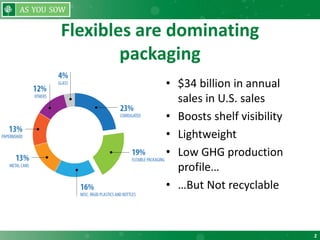
Flexibles are dominating
packaging
• $34 billion in annual
sales in U.S. sales
• Boosts shelf visibility
• Lightweight
• Low GHG production
profile…
• …But Not recyclable
3
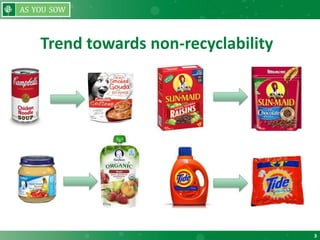
Trend towards non-recyclability
4
Lack of Pouch Recyclability Adds
to Pollution Burden
• Growing threat to water quality, fish, birds
• High volume of plastics ocean dumping
• Potential transfer of toxics to fish tissue
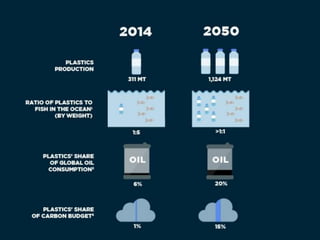
Links to climate change -
• Plastic use of oil equivalent to aviation sector
• Plastic share of carbon budget 15% by 2050
5
6
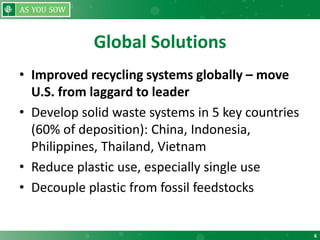
Global Solutions
• Improved recycling systems globally – move
U.S. from laggard to leader
• Develop solid waste systems in 5 key countries
(60% of deposition): China, Indonesia,
Philippines, Thailand, Vietnam
• Reduce plastic use, especially single use
• Decouple plastic from fossil feedstocks
7
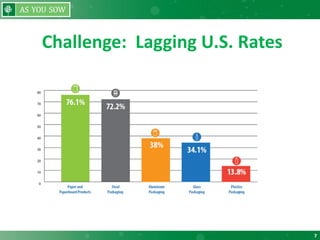
Challenge: Lagging U.S. Rates
8
9
0
0.2
0.4
0.6
0.8
1
1.2
1.4
1.6
TOTAL NEEDED Closed Loop Fund Recycling Partnership
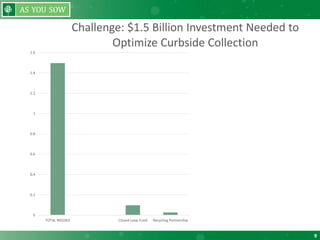
Challenge: $1.5 Billion Investment Needed to
Optimize Curbside Collection
10
Challenge: Rising NGO Activity
• Break Free From Plastic campaigns will evolve
in 2017-2018
• Rise of Zero Waste cities and pressure to not
no burn waste
11
Challenges - Building waste
systems in developing countries
• Traditional highly centralized systems or
decentralized zero waste models?
• Making low value plastics valuable
• Who will finance systems in poor countries –
tied to producer responsibility debate
• Can millions of waste pickers be transitioned
into more formal systems?
12
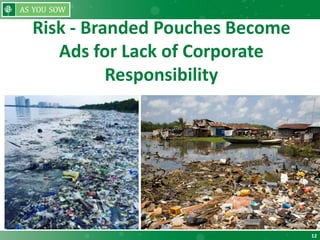
Risk - Branded Pouches Become
Ads for Lack of Corporate
Responsibility
13
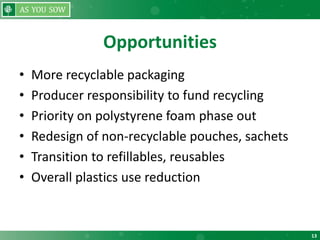
Opportunities
• More recyclable packaging
• Producer responsibility to fund recycling
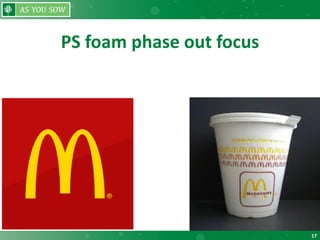
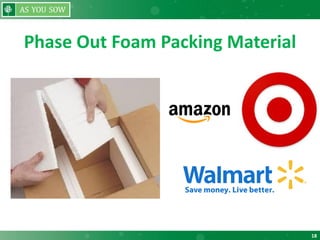
• Priority on polystyrene foam phase out
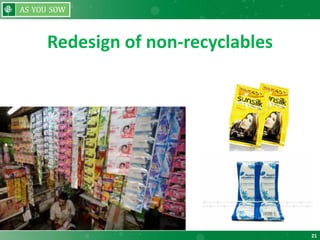
• Redesign of non-recyclable pouches, sachets
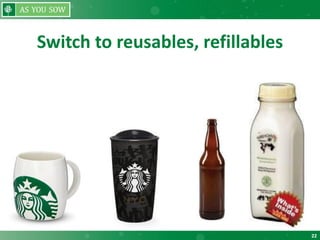
• Transition to refillables, reusables
• Overall plastics use reduction
14
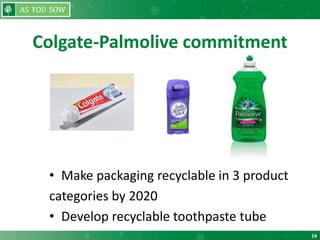
Colgate-Palmolive commitment
• Make packaging recyclable in 3 product
categories by 2020
• Develop recyclable toothpaste tube
15
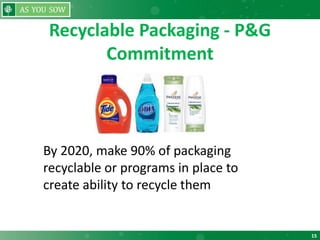
Recyclable Packaging - P&G
Commitment
By 2020, make 90% of packaging
recyclable or programs in place to
create ability to recycle them
16
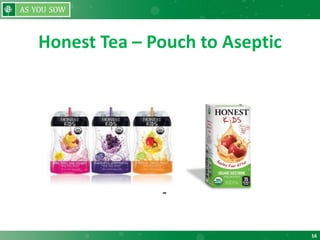
Honest Tea – Pouch to Aseptic
-
17
PS foam phase out focus
18
Phase Out Foam Packing Material
19
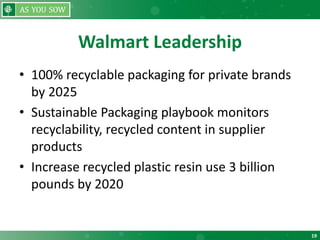
Walmart Leadership
• 100% recyclable packaging for private brands
by 2025
• Sustainable Packaging playbook monitors
recyclability, recycled content in supplier
products
• Increase recycled plastic resin use 3 billion
pounds by 2020
20
21
Redesign of non-recyclables
22
Switch to reusables, refillables
23
Europe Moving Forward
• Recycling Goals Set in Packaging Directive
• Industry Cooperation Developed through
Implementing EPR
• EU Circular Economy Proposal
• EU Plastics Strategy
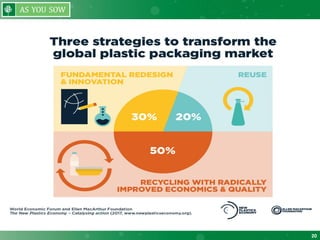
• Ellen MacArthur – New Plastics Economy
24
U.S. Treading Water
• No Federal mandate or leadership
• Sporadic state efforts
• Rejection of EPR with no scalable alternative
• Inadequately funded municipal programs
• Disruptive packaging allowed without primary
consideration of recyclability, impact on end
markets
25
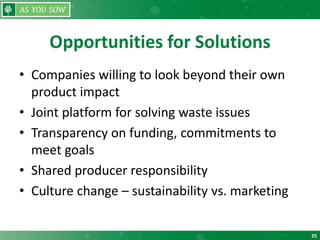
Opportunities for Solutions
• Companies willing to look beyond their own
product impact
• Joint platform for solving waste issues
• Transparency on funding, commitments to
meet goals
• Shared producer responsibility
• Culture change – sustainability vs. marketing
26
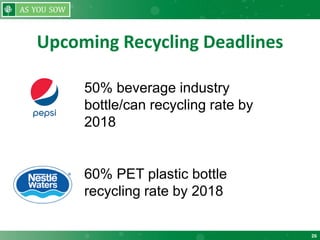
Upcoming Recycling Deadlines
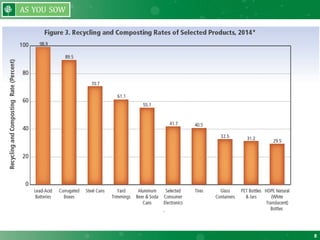
50% beverage industry
bottle/can recycling rate by
2018
60% PET plastic bottle
recycling rate by 2018
27
Contact
Conrad MacKerron
As You Sow
mack@asyousow.org
Thank you!
The
Circular Economy
in the
Asia Pacific Region

Transition to Recyclable Multi-Material Packaging

  • 1.
    1 Challenges, Risks andOpportunities in Transition to Recyclable Multi-material Packaging Plasticity 2017
  • 2.
    2 Flexibles are dominating packaging •$34 billion in annual sales in U.S. sales • Boosts shelf visibility • Lightweight • Low GHG production profile… • …But Not recyclable
  • 3.
  • 4.
    4 Lack of PouchRecyclability Adds to Pollution Burden • Growing threat to water quality, fish, birds • High volume of plastics ocean dumping • Potential transfer of toxics to fish tissue Links to climate change - • Plastic use of oil equivalent to aviation sector • Plastic share of carbon budget 15% by 2050
  • 5.
  • 6.
    6 Global Solutions • Improvedrecycling systems globally – move U.S. from laggard to leader • Develop solid waste systems in 5 key countries (60% of deposition): China, Indonesia, Philippines, Thailand, Vietnam • Reduce plastic use, especially single use • Decouple plastic from fossil feedstocks
  • 7.
  • 8.
  • 9.
    9 0 0.2 0.4 0.6 0.8 1 1.2 1.4 1.6 TOTAL NEEDED ClosedLoop Fund Recycling Partnership Challenge: $1.5 Billion Investment Needed to Optimize Curbside Collection
  • 10.
    10 Challenge: Rising NGOActivity • Break Free From Plastic campaigns will evolve in 2017-2018 • Rise of Zero Waste cities and pressure to not no burn waste
  • 11.
    11 Challenges - Buildingwaste systems in developing countries • Traditional highly centralized systems or decentralized zero waste models? • Making low value plastics valuable • Who will finance systems in poor countries – tied to producer responsibility debate • Can millions of waste pickers be transitioned into more formal systems?
  • 12.
    12 Risk - BrandedPouches Become Ads for Lack of Corporate Responsibility
  • 13.
    13 Opportunities • More recyclablepackaging • Producer responsibility to fund recycling • Priority on polystyrene foam phase out • Redesign of non-recyclable pouches, sachets • Transition to refillables, reusables • Overall plastics use reduction
  • 14.
    14 Colgate-Palmolive commitment • Makepackaging recyclable in 3 product categories by 2020 • Develop recyclable toothpaste tube
  • 15.
    15 Recyclable Packaging -P&G Commitment By 2020, make 90% of packaging recyclable or programs in place to create ability to recycle them
  • 16.
    16 Honest Tea –Pouch to Aseptic -
  • 17.
  • 18.
    18 Phase Out FoamPacking Material
  • 19.
    19 Walmart Leadership • 100%recyclable packaging for private brands by 2025 • Sustainable Packaging playbook monitors recyclability, recycled content in supplier products • Increase recycled plastic resin use 3 billion pounds by 2020
  • 20.
  • 21.
  • 22.
  • 23.
    23 Europe Moving Forward •Recycling Goals Set in Packaging Directive • Industry Cooperation Developed through Implementing EPR • EU Circular Economy Proposal • EU Plastics Strategy • Ellen MacArthur – New Plastics Economy
  • 24.
    24 U.S. Treading Water •No Federal mandate or leadership • Sporadic state efforts • Rejection of EPR with no scalable alternative • Inadequately funded municipal programs • Disruptive packaging allowed without primary consideration of recyclability, impact on end markets
  • 25.
    25 Opportunities for Solutions •Companies willing to look beyond their own product impact • Joint platform for solving waste issues • Transparency on funding, commitments to meet goals • Shared producer responsibility • Culture change – sustainability vs. marketing
  • 26.
    26 Upcoming Recycling Deadlines 50%beverage industry bottle/can recycling rate by 2018 60% PET plastic bottle recycling rate by 2018
  • 27.
    27 Contact Conrad MacKerron As YouSow mack@asyousow.org Thank you!
  • 28.