 Switching is a process moving data from one
interface and delivering it through another
interface, selecting the best paths between
machines that stores messages.
 The fundamental purpose of a communication
system is to exchange information between two
or more devices.
 A switched network consists of a service of
interlinked nodes called switches, switches are
hardware and or software device capable of
creating temporary connections b/w to or more
devices linked to a switch but not to each other.
 CIRCUIT SWITCHING
 PACKET SWITCHING
 MESSAGE SWITCHING
 Circuit switching is the dominant technology
for both voice and data communication.
 Communication via circuit switching in data
communication networks implies that there is
dedicated electrical, communication path
between two ports or hosts.
 The electrical path may be realized by
physical wires or co axial cables or radio or
satellite communication.
 Data transmission using a public switched
telphone network connection is a typical
example of a circuit switched data transfer.
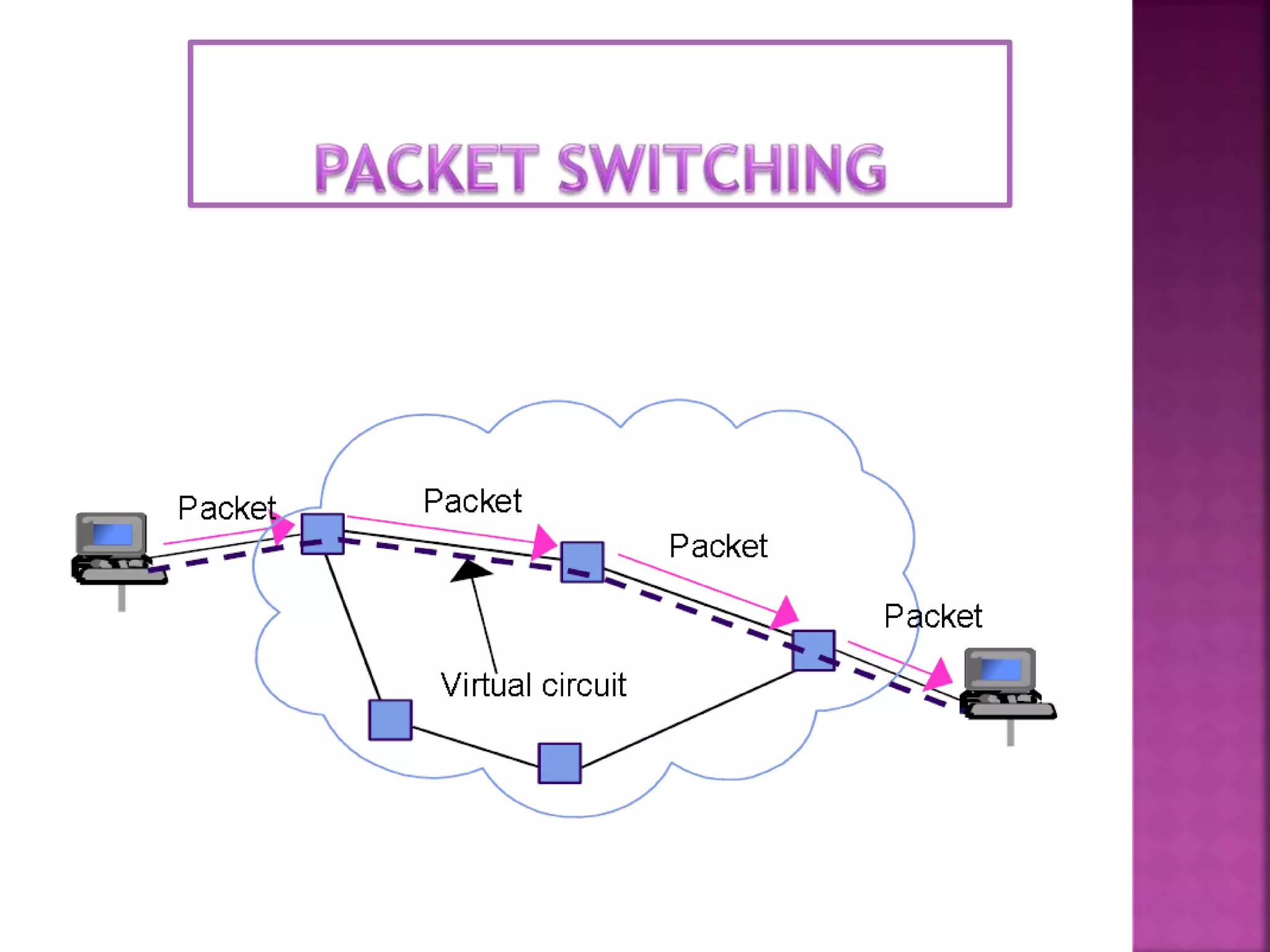
 Packet-switched describes the type of network in
which relatively small units of data
called packets are routed through a network
based on the destination address contained
within each packet.
 Breaking communication down into packets
allows the same data path to be shared among
many users in the network.
 This type of communication between sender and
receiver is known as connectionless .
 Most traffic over the Internet uses packet
switching and the Internet is basically a
connectionless network.
 A message is a logical unit of information and
can be of any length.
 In message switching, if a station wishes to
send a message to another station, it first
adds the destination address to the message.
 Message switching does not establish a
dedicated path between the two
communicating devices i.e. no direct link is
established between sender and receiver.

 Each message is treated as an independent
unit.
 In message switching, each complete
message is then transmitted from device to
device through the
internetwork i.e. message is transmitted
from the source node to intermediate node.
 The actual path taken by the message to its
destination is dynamic as the path is
established as it travels along.
 When the message reaches a node, the
channel on which it came is released for use
by another message.
Switching
Switching

Switching

  • 2.
     Switching isa process moving data from one interface and delivering it through another interface, selecting the best paths between machines that stores messages.  The fundamental purpose of a communication system is to exchange information between two or more devices.  A switched network consists of a service of interlinked nodes called switches, switches are hardware and or software device capable of creating temporary connections b/w to or more devices linked to a switch but not to each other.
  • 3.
     CIRCUIT SWITCHING PACKET SWITCHING  MESSAGE SWITCHING
  • 4.
     Circuit switchingis the dominant technology for both voice and data communication.  Communication via circuit switching in data communication networks implies that there is dedicated electrical, communication path between two ports or hosts.  The electrical path may be realized by physical wires or co axial cables or radio or satellite communication.  Data transmission using a public switched telphone network connection is a typical example of a circuit switched data transfer.
  • 6.
     Packet-switched describesthe type of network in which relatively small units of data called packets are routed through a network based on the destination address contained within each packet.  Breaking communication down into packets allows the same data path to be shared among many users in the network.  This type of communication between sender and receiver is known as connectionless .  Most traffic over the Internet uses packet switching and the Internet is basically a connectionless network.
  • 8.
     A messageis a logical unit of information and can be of any length.  In message switching, if a station wishes to send a message to another station, it first adds the destination address to the message.  Message switching does not establish a dedicated path between the two communicating devices i.e. no direct link is established between sender and receiver.  Each message is treated as an independent unit.
  • 9.
     In messageswitching, each complete message is then transmitted from device to device through the internetwork i.e. message is transmitted from the source node to intermediate node.  The actual path taken by the message to its destination is dynamic as the path is established as it travels along.  When the message reaches a node, the channel on which it came is released for use by another message.