SWITCHING
CIRCUIT SWITCHING & PACKET SWITCHING
UNIT II: CHAPTER III
Switched Network
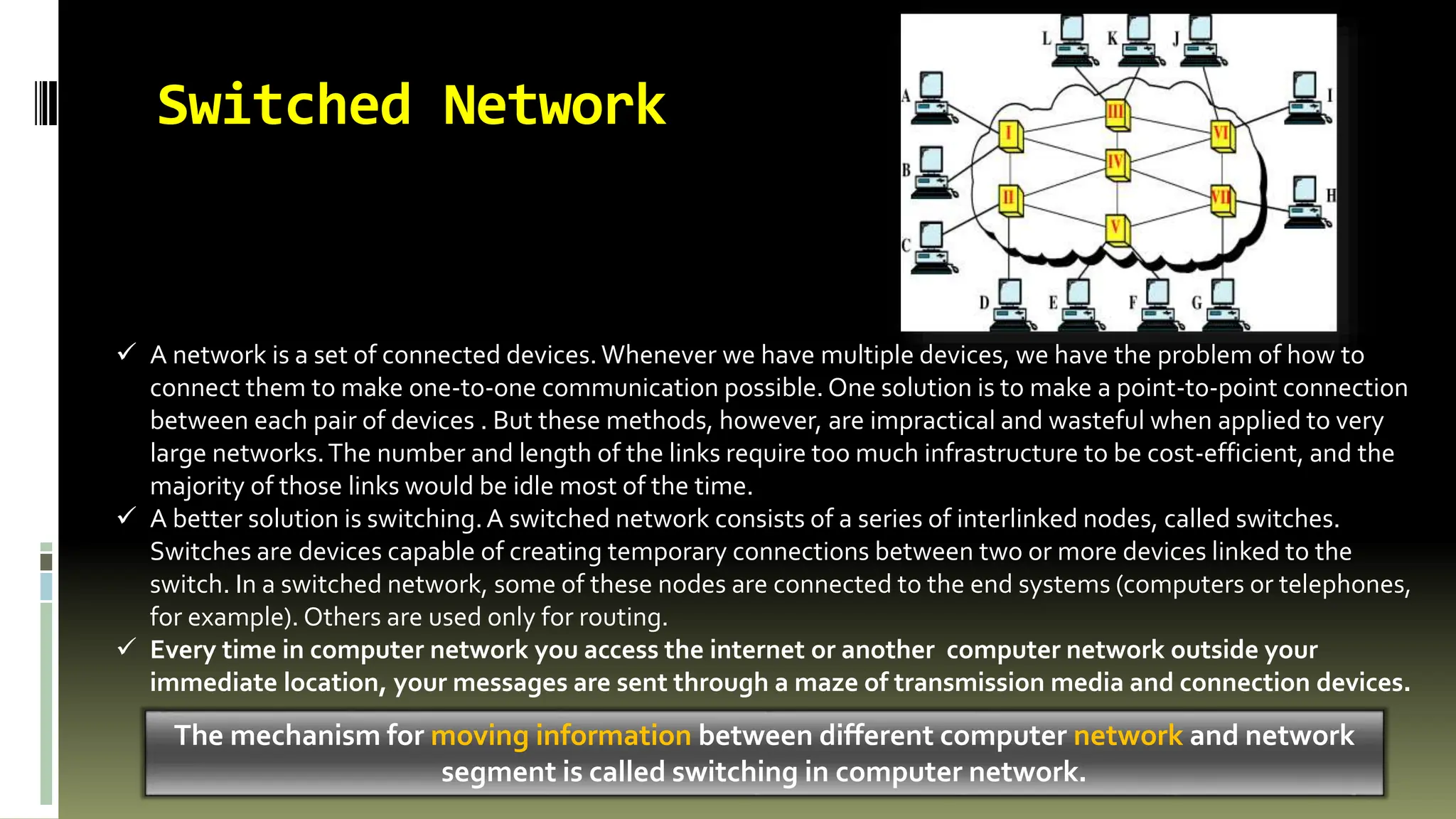
 A network is a set of connected devices. Whenever we have multiple devices, we have the problem of how to
connect them to make one-to-one communication possible. One solution is to make a point-to-point connection
between each pair of devices . But these methods, however, are impractical and wasteful when applied to very
large networks.The number and length of the links require too much infrastructure to be cost-efficient, and the
majority of those links would be idle most of the time.
 A better solution is switching.A switched network consists of a series of interlinked nodes, called switches.
Switches are devices capable of creating temporary connections between two or more devices linked to the
switch. In a switched network, some of these nodes are connected to the end systems (computers or telephones,
for example). Others are used only for routing.
 Every time in computer network you access the internet or another computer network outside your
immediate location, your messages are sent through a maze of transmission media and connection devices.
The mechanism for moving information between different computer network and network
segment is called switching in computer network.
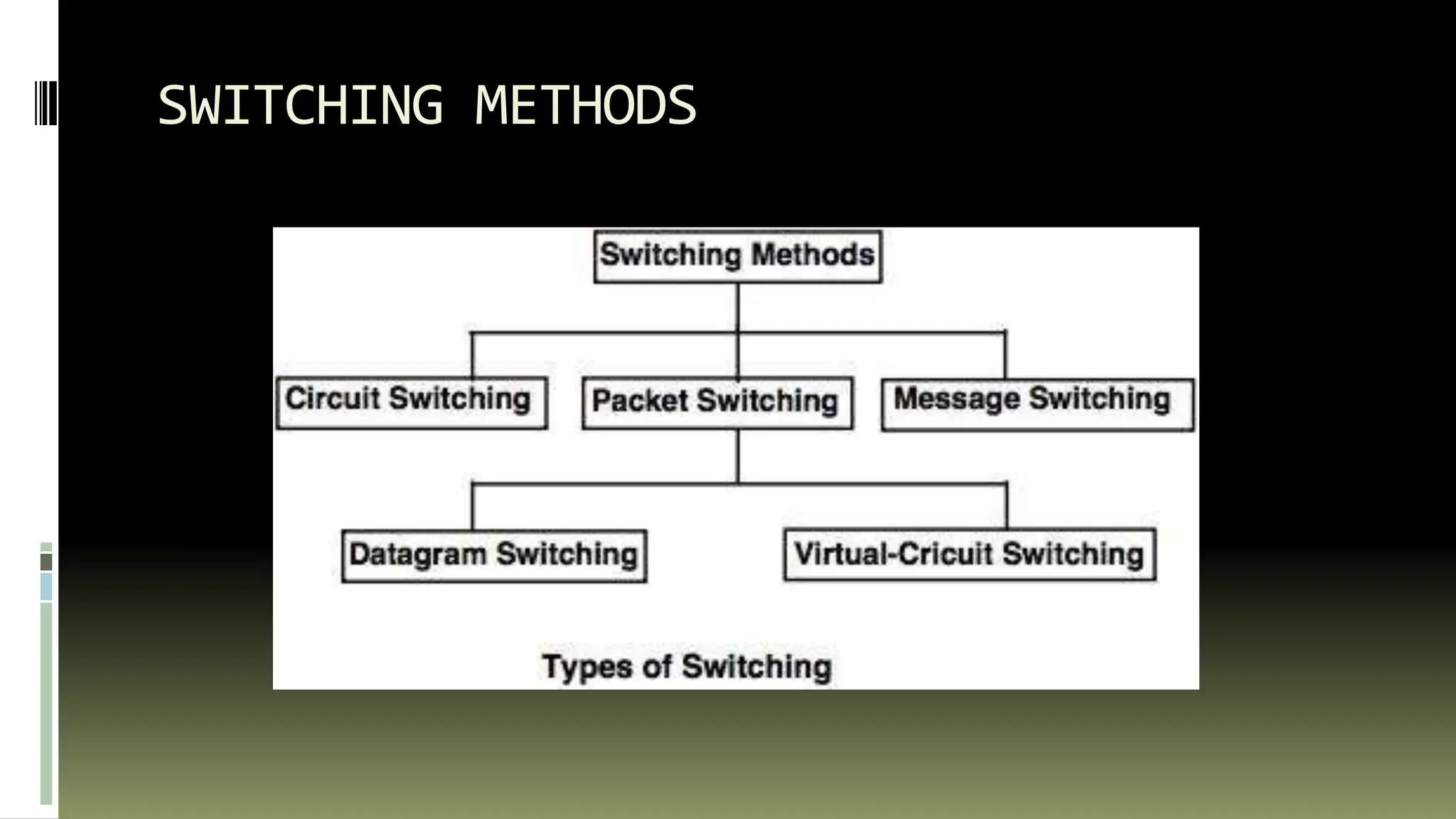
SWITCHING METHODS
Circuit-Switched Network
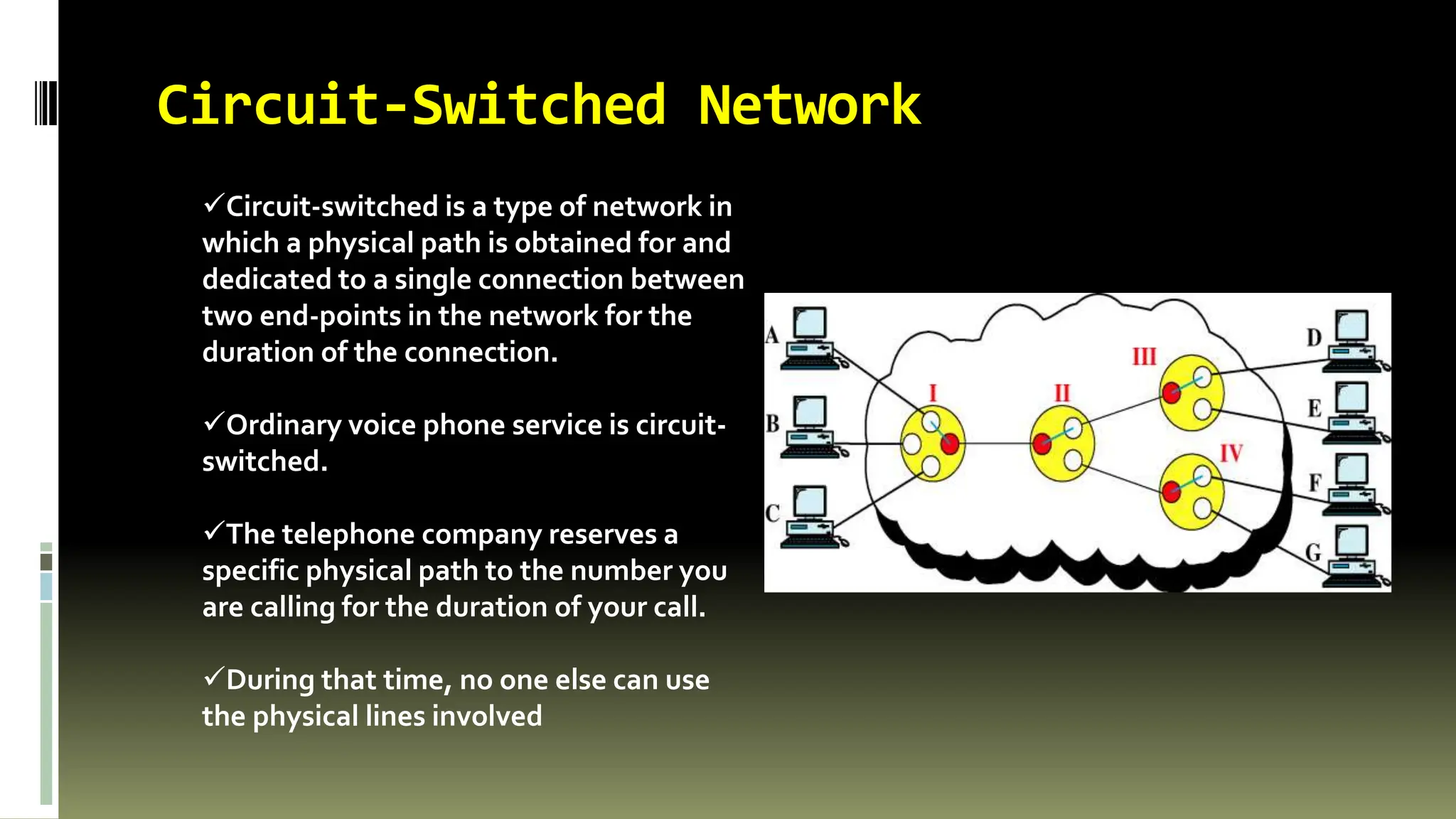
Circuit-switched is a type of network in
which a physical path is obtained for and
dedicated to a single connection between
two end-points in the network for the
duration of the connection.
Ordinary voice phone service is circuit-
switched.
The telephone company reserves a
specific physical path to the number you
are calling for the duration of your call.
During that time, no one else can use
the physical lines involved
Circuit-Switched Network:Video
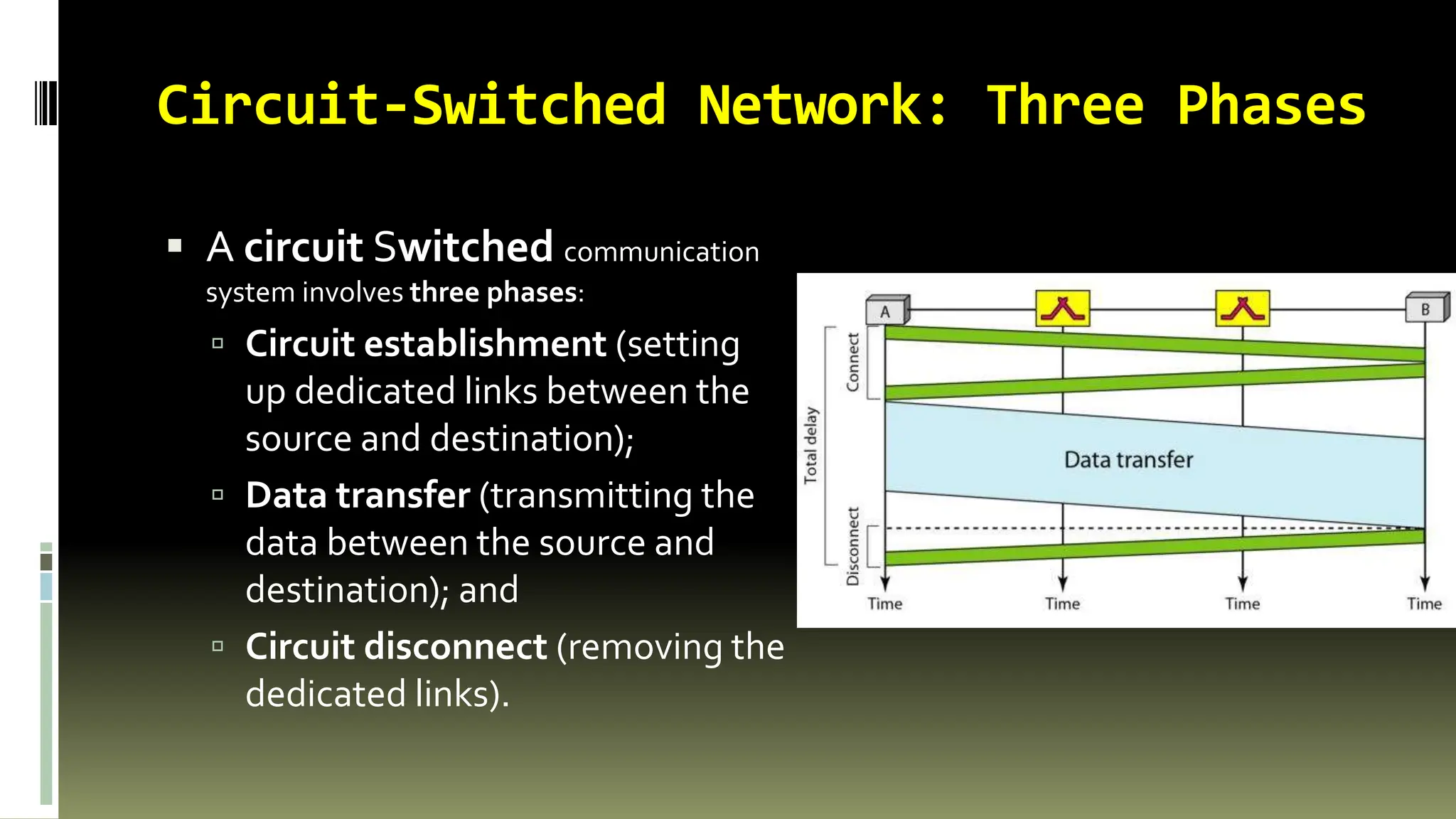
Circuit-Switched Network: Three Phases
 A circuit Switched communication
system involves three phases:
 Circuit establishment (setting
up dedicated links between the
source and destination);
 Data transfer (transmitting the
data between the source and
destination); and
 Circuit disconnect (removing the
dedicated links).
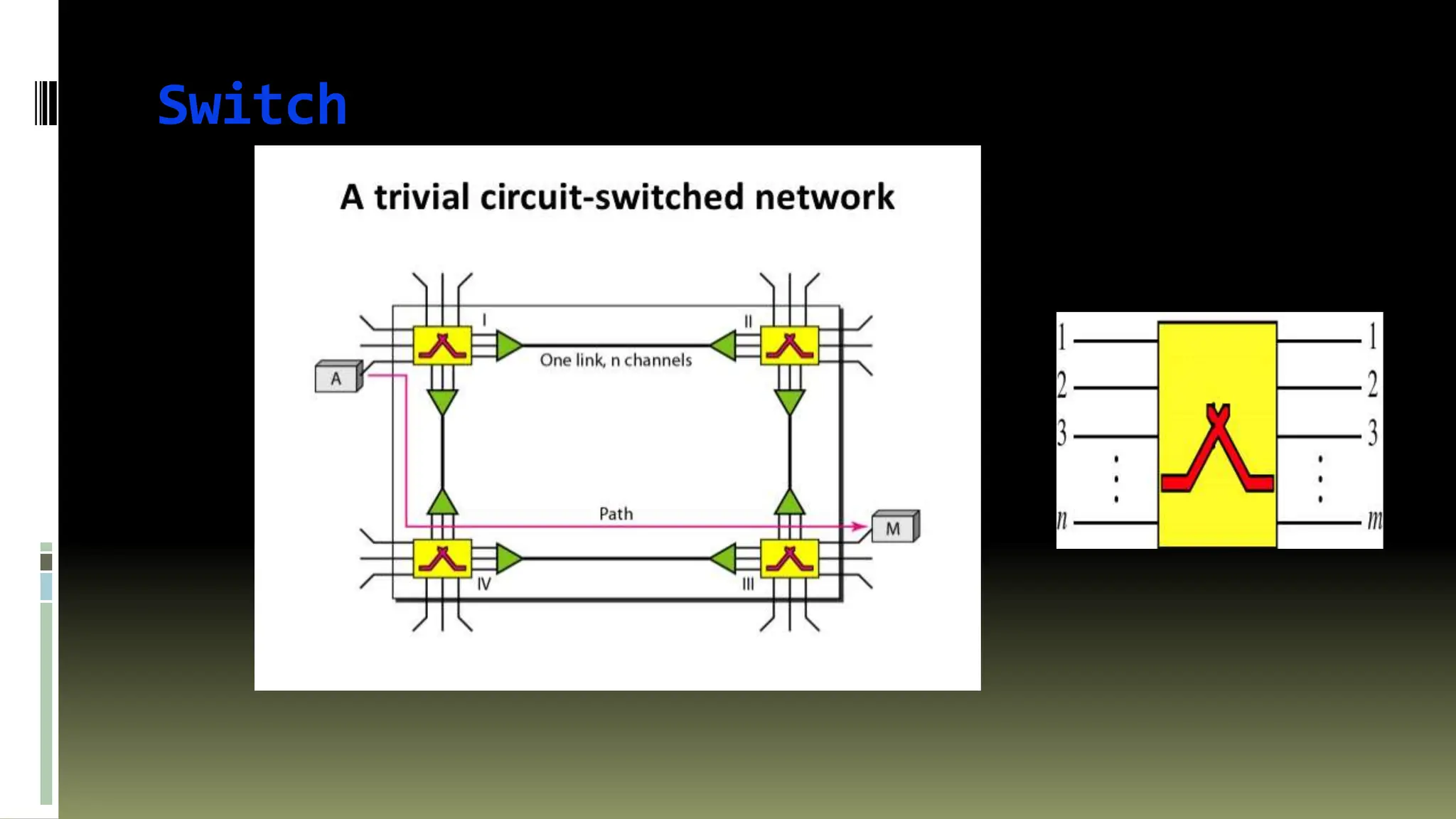
Switch
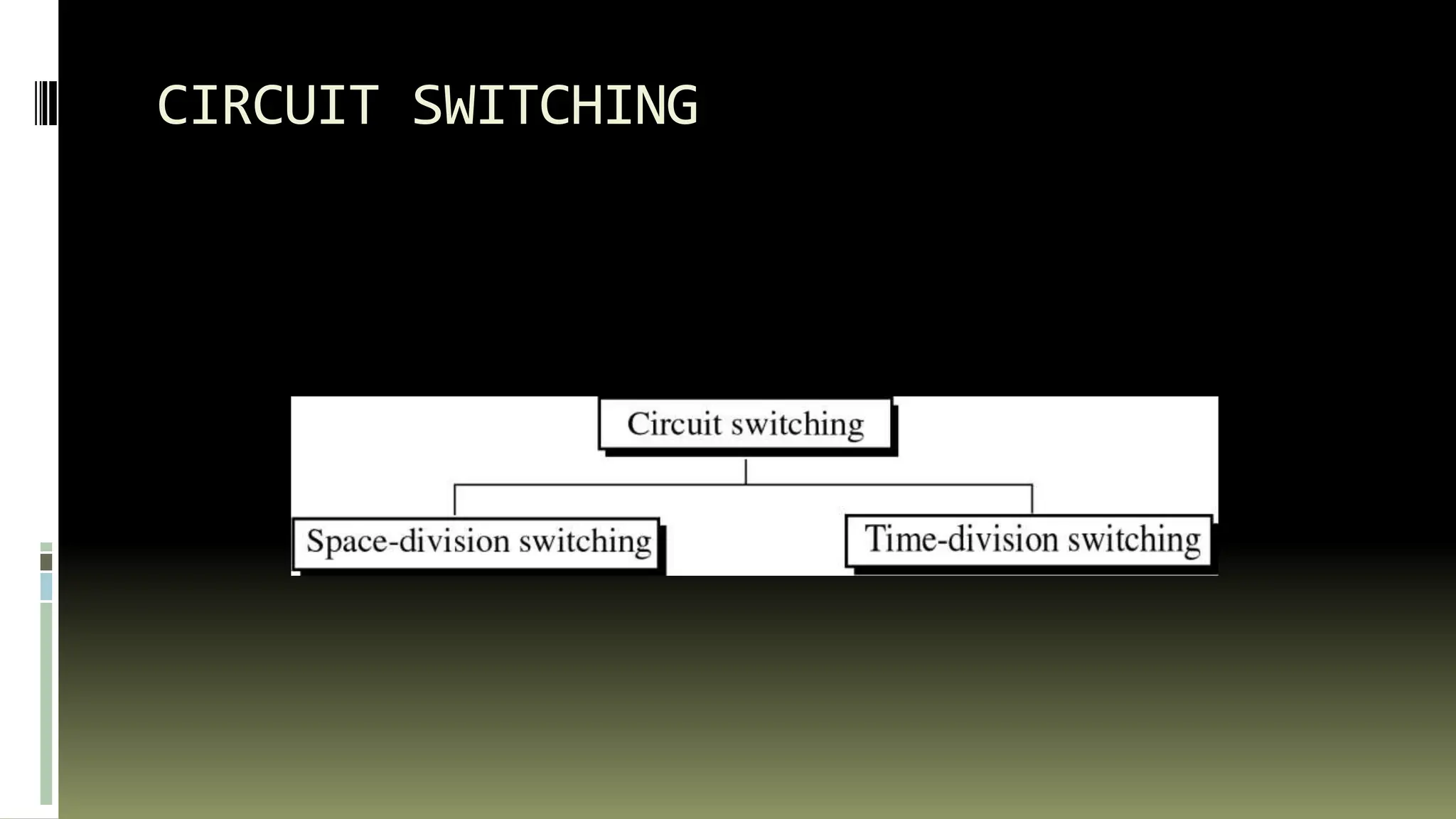
CIRCUIT SWITCHING
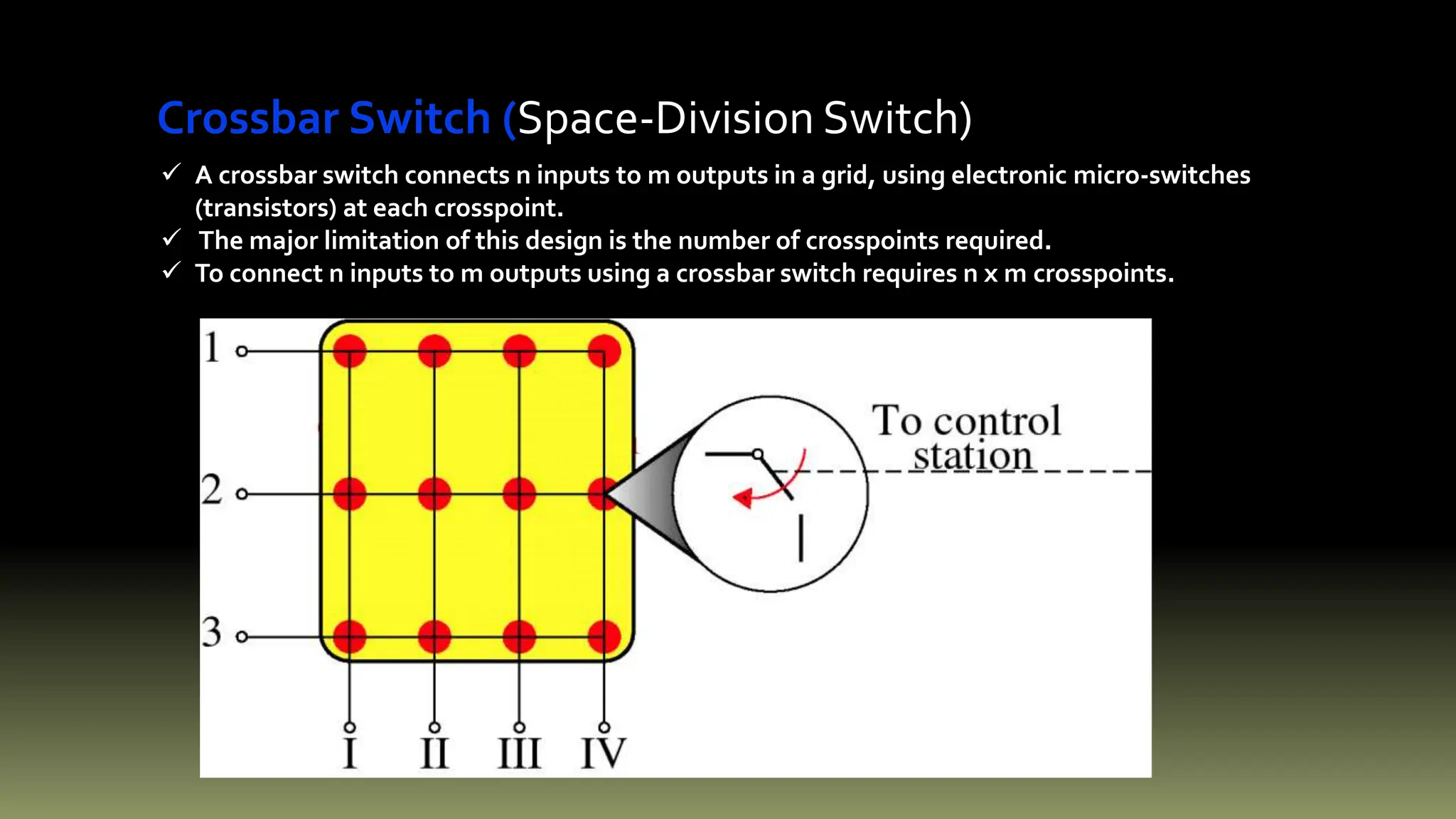
 A crossbar switch connects n inputs to m outputs in a grid, using electronic micro-switches
(transistors) at each crosspoint.
 The major limitation of this design is the number of crosspoints required.
 To connect n inputs to m outputs using a crossbar switch requires n x m crosspoints.
Crossbar Switch (Space-Division Switch)
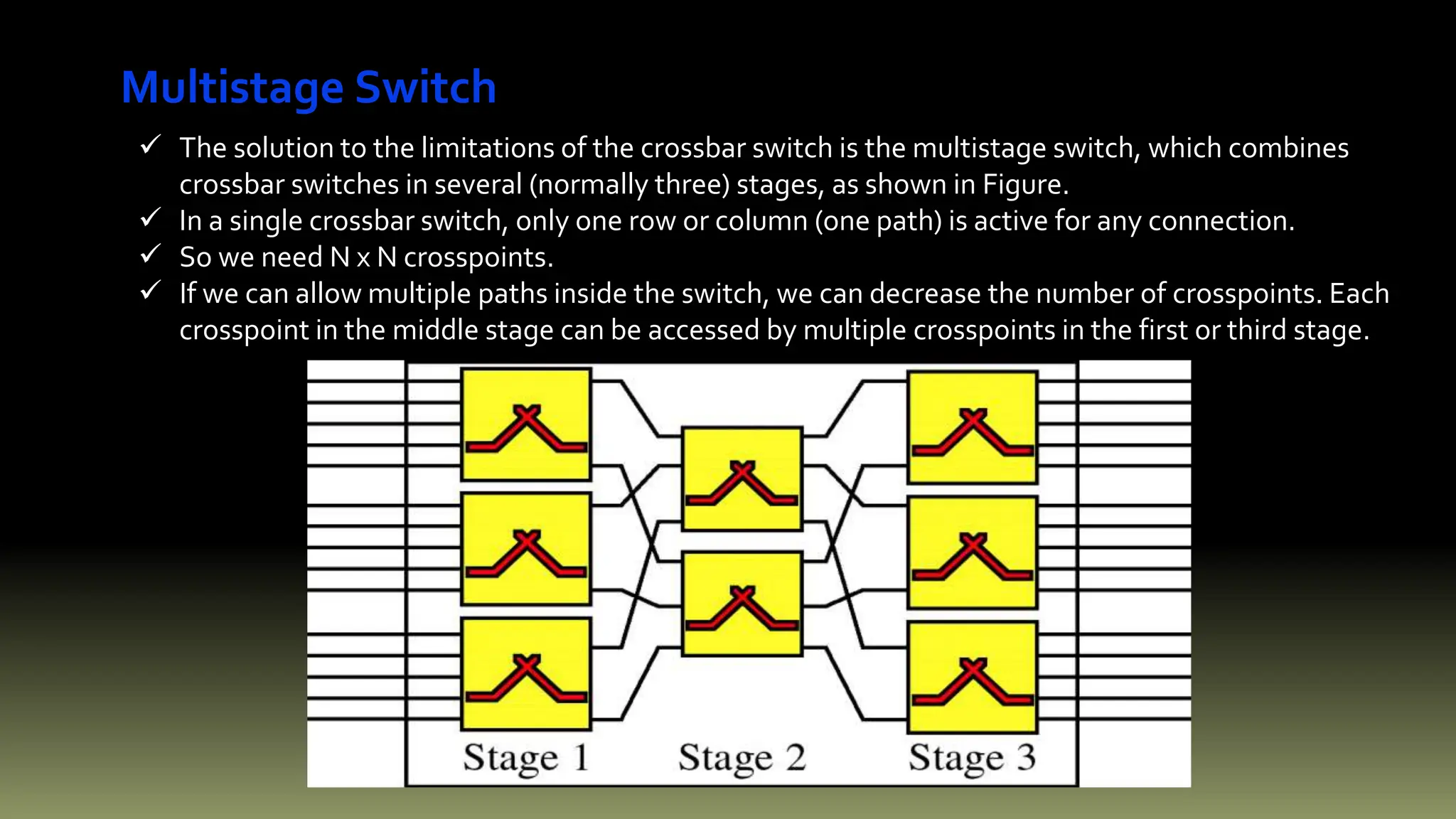
 The solution to the limitations of the crossbar switch is the multistage switch, which combines
crossbar switches in several (normally three) stages, as shown in Figure.
 In a single crossbar switch, only one row or column (one path) is active for any connection.
 So we need N x N crosspoints.
 If we can allow multiple paths inside the switch, we can decrease the number of crosspoints. Each
crosspoint in the middle stage can be accessed by multiple crosspoints in the first or third stage.
Multistage Switch
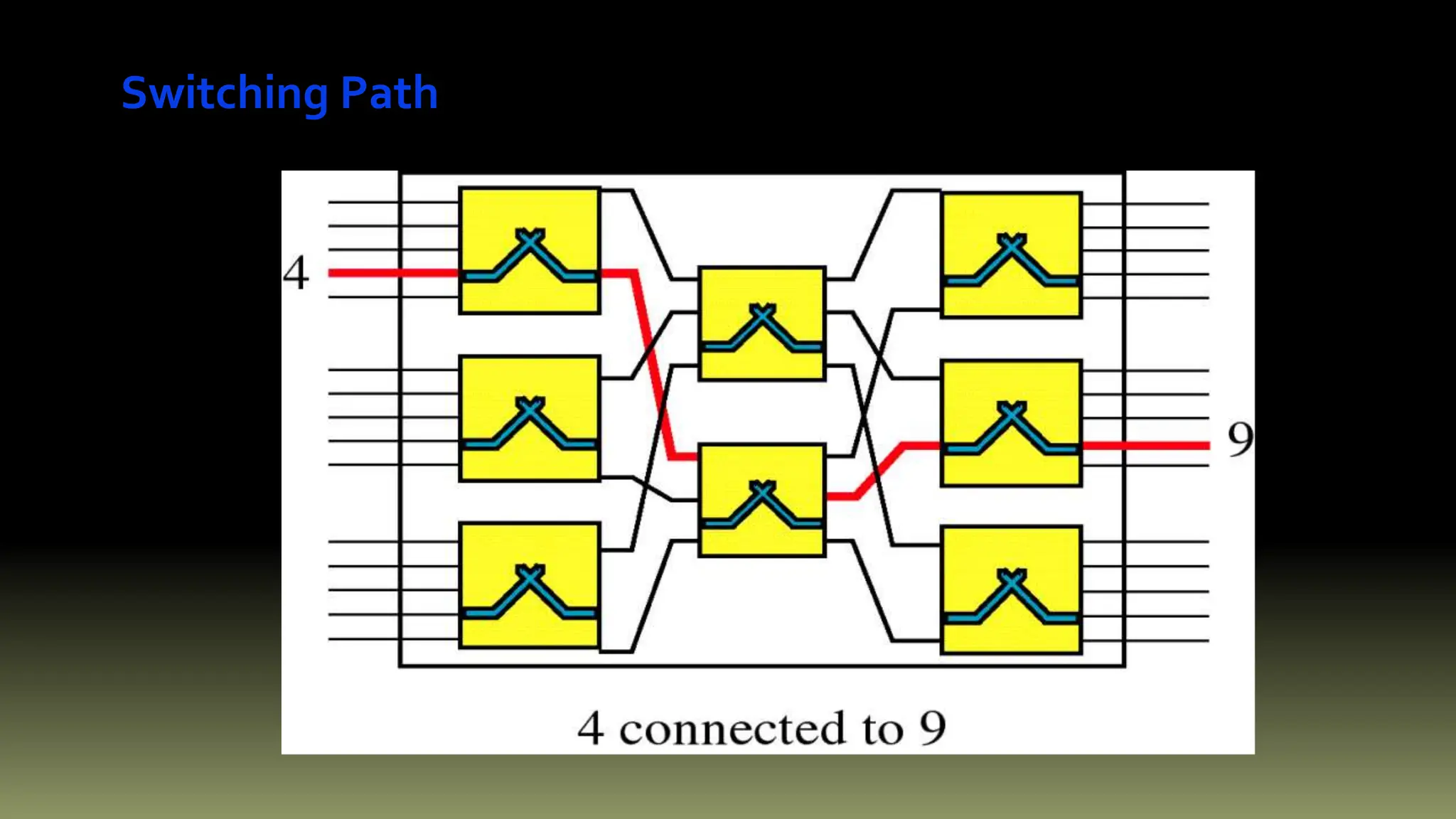
Switching Path
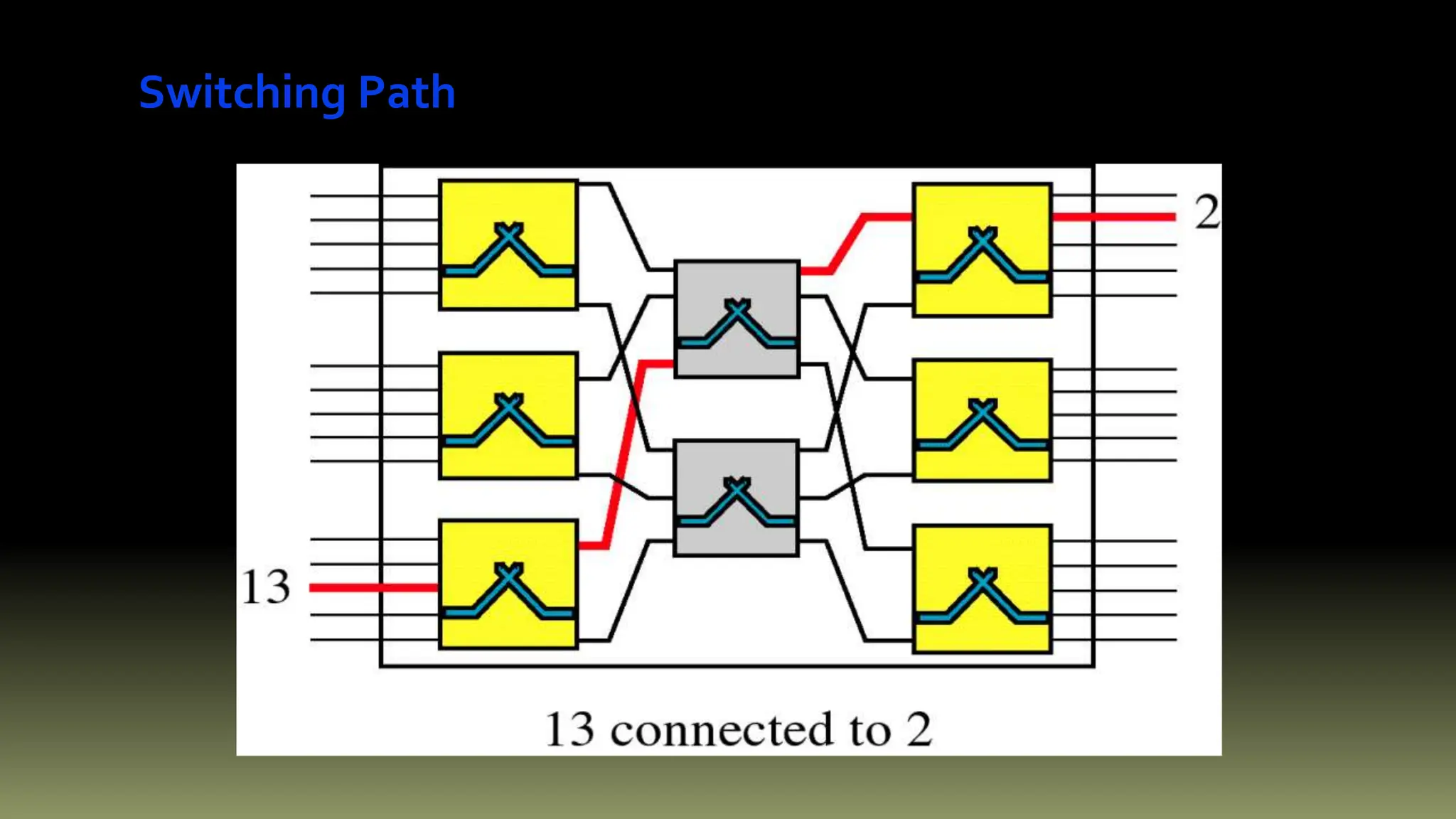
Switching Path
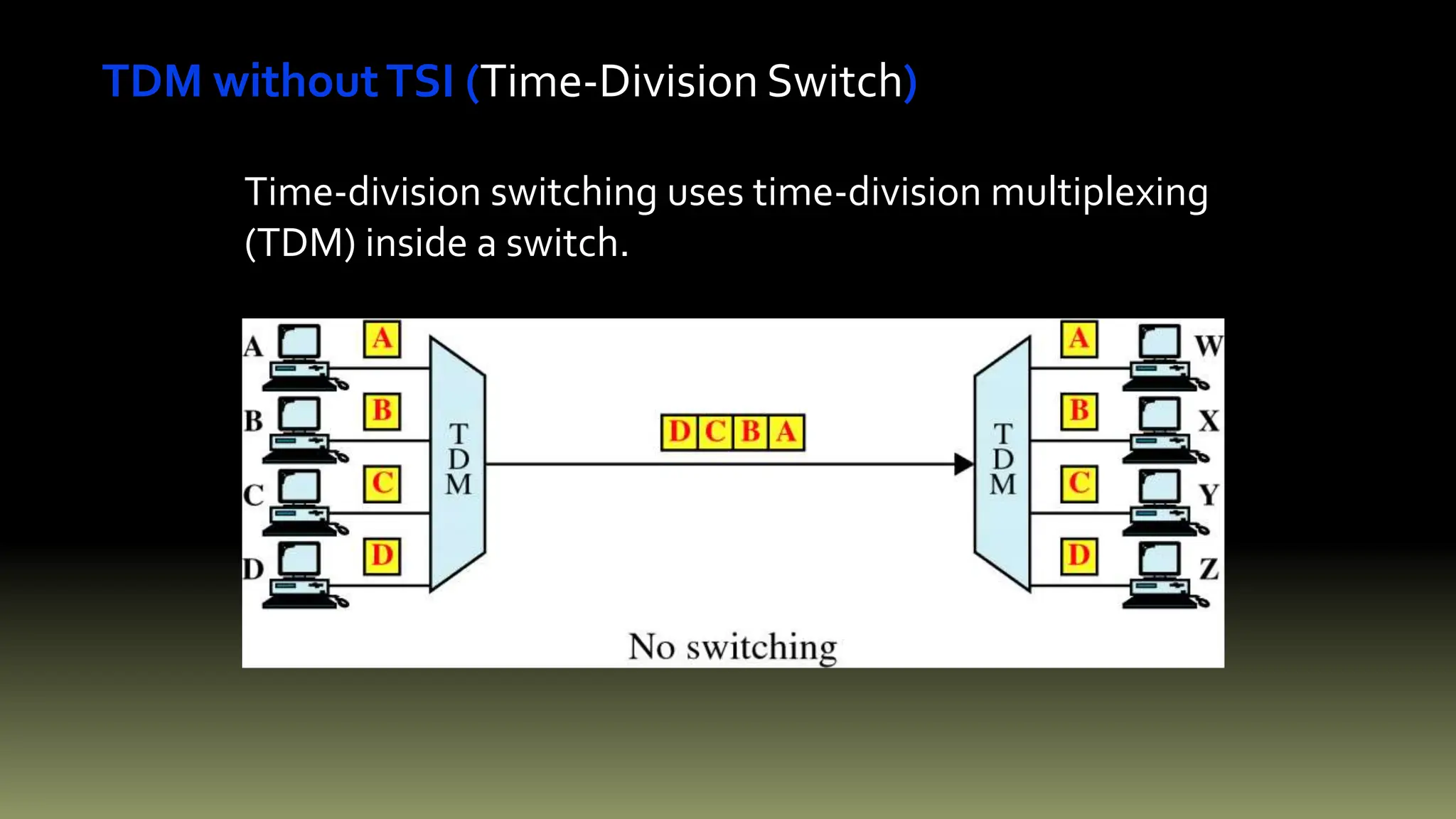
Time-division switching uses time-division multiplexing
(TDM) inside a switch.
TDM withoutTSI (Time-Division Switch)
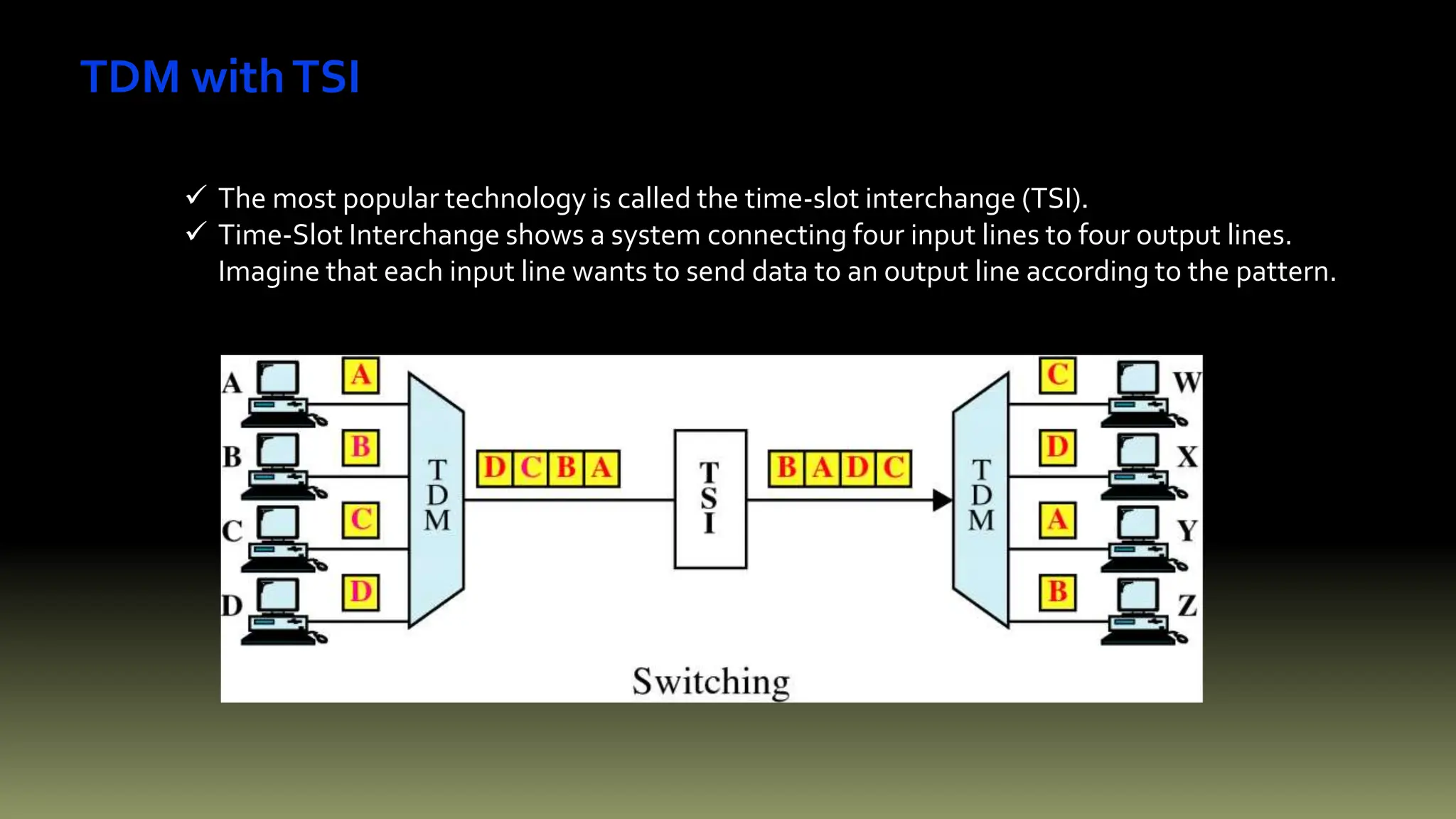
TDM withTSI
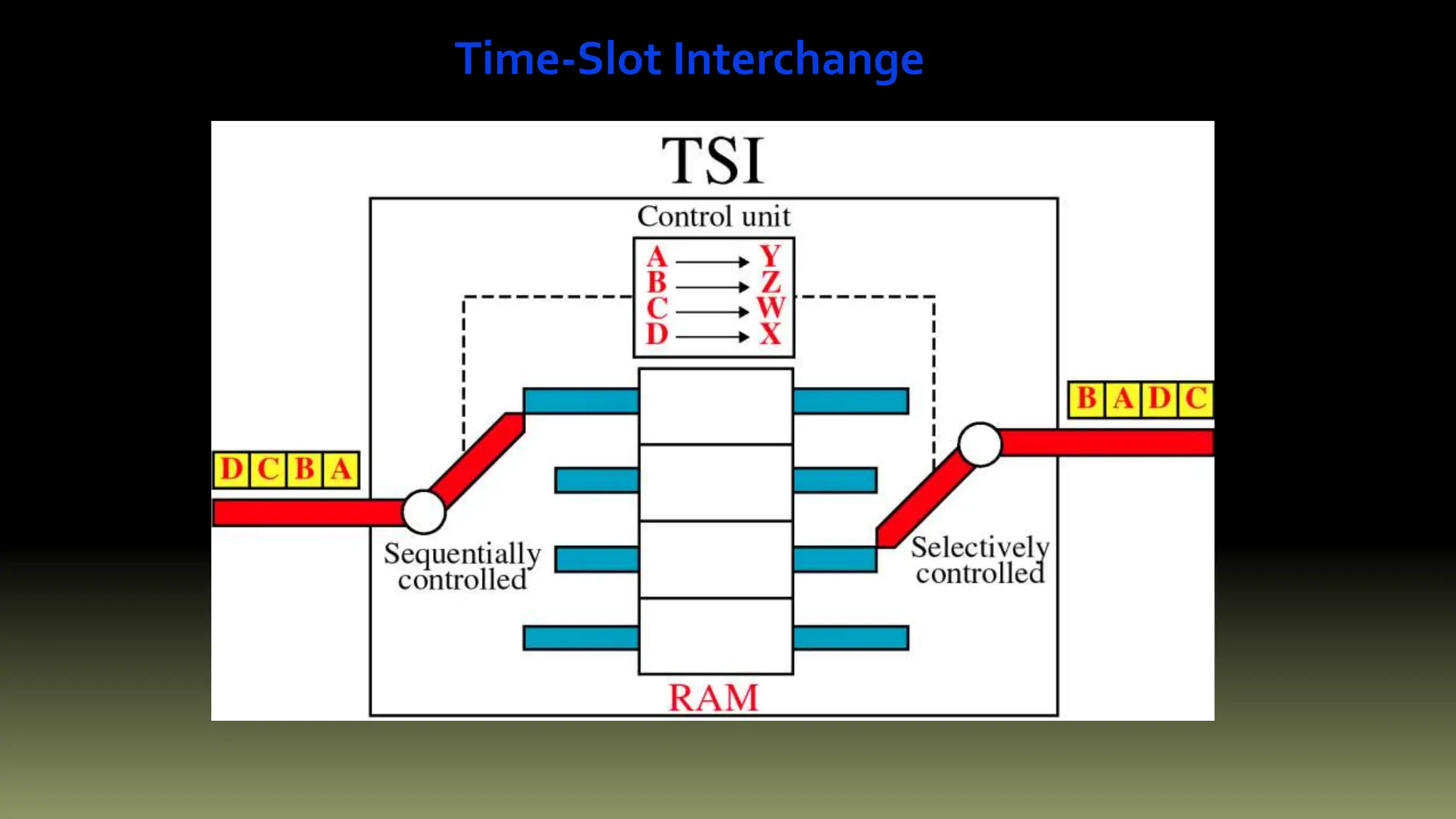
 The most popular technology is called the time-slot interchange (TSI).
 Time-Slot Interchange shows a system connecting four input lines to four output lines.
Imagine that each input line wants to send data to an output line according to the pattern.
Time-Slot Interchange
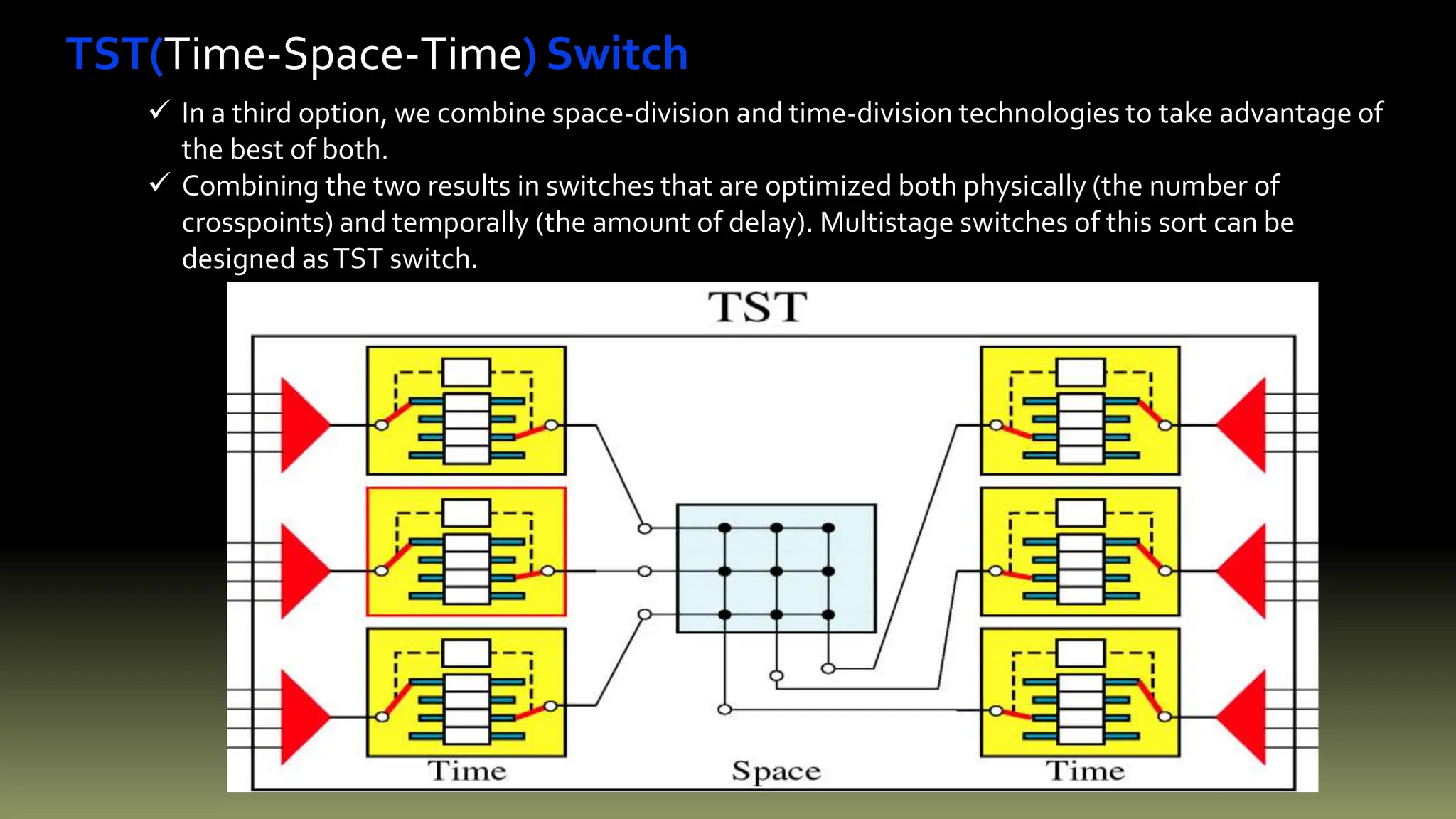
TST(Time-Space-Time) Switch
 In a third option, we combine space-division and time-division technologies to take advantage of
the best of both.
 Combining the two results in switches that are optimized both physically (the number of
crosspoints) and temporally (the amount of delay). Multistage switches of this sort can be
designed asTST switch.
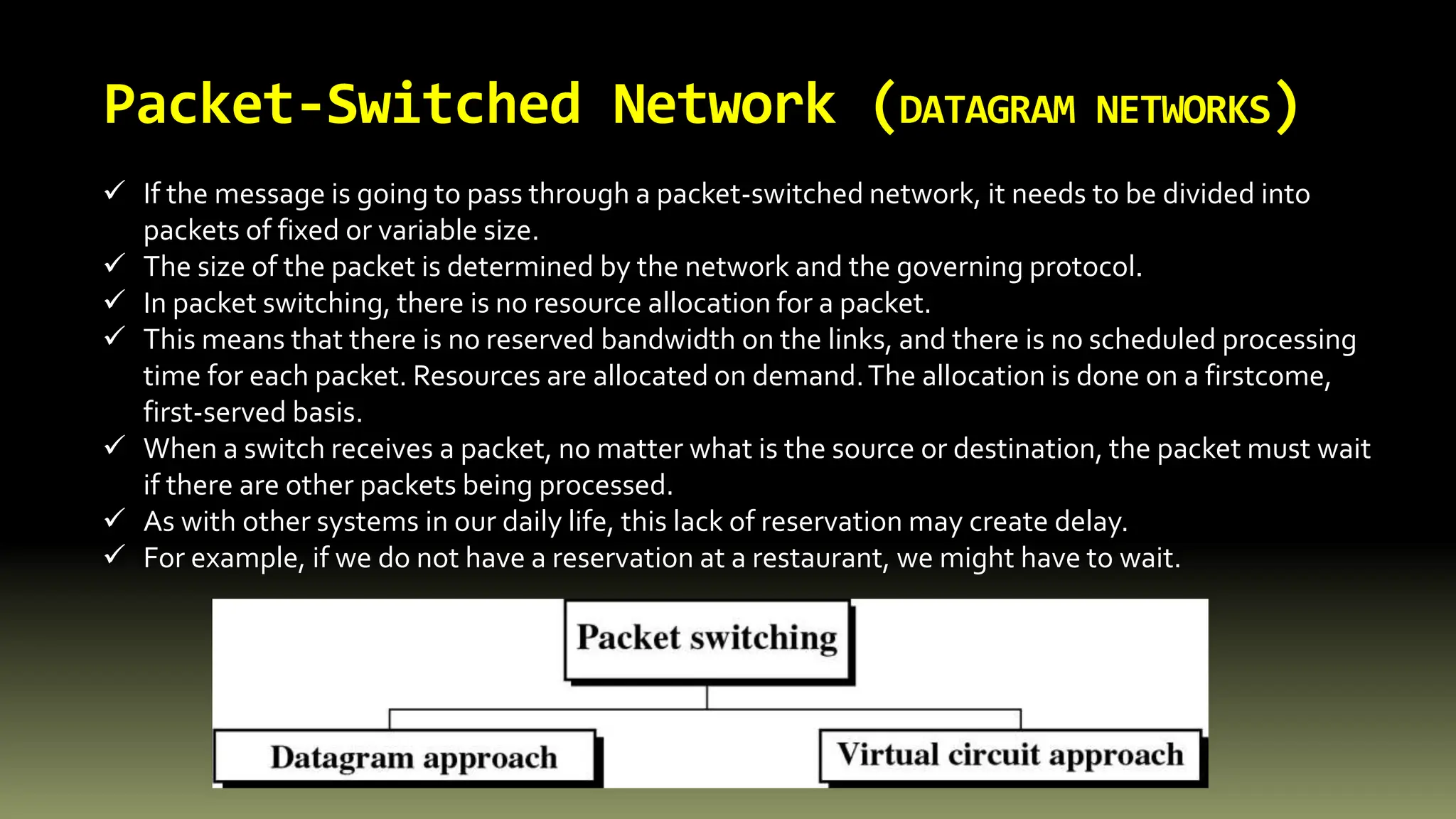
 If the message is going to pass through a packet-switched network, it needs to be divided into
packets of fixed or variable size.
 The size of the packet is determined by the network and the governing protocol.
 In packet switching, there is no resource allocation for a packet.
 This means that there is no reserved bandwidth on the links, and there is no scheduled processing
time for each packet. Resources are allocated on demand.The allocation is done on a firstcome,
first-served basis.
 When a switch receives a packet, no matter what is the source or destination, the packet must wait
if there are other packets being processed.
 As with other systems in our daily life, this lack of reservation may create delay.
 For example, if we do not have a reservation at a restaurant, we might have to wait.
Packet-Switched Network (DATAGRAM NETWORKS)
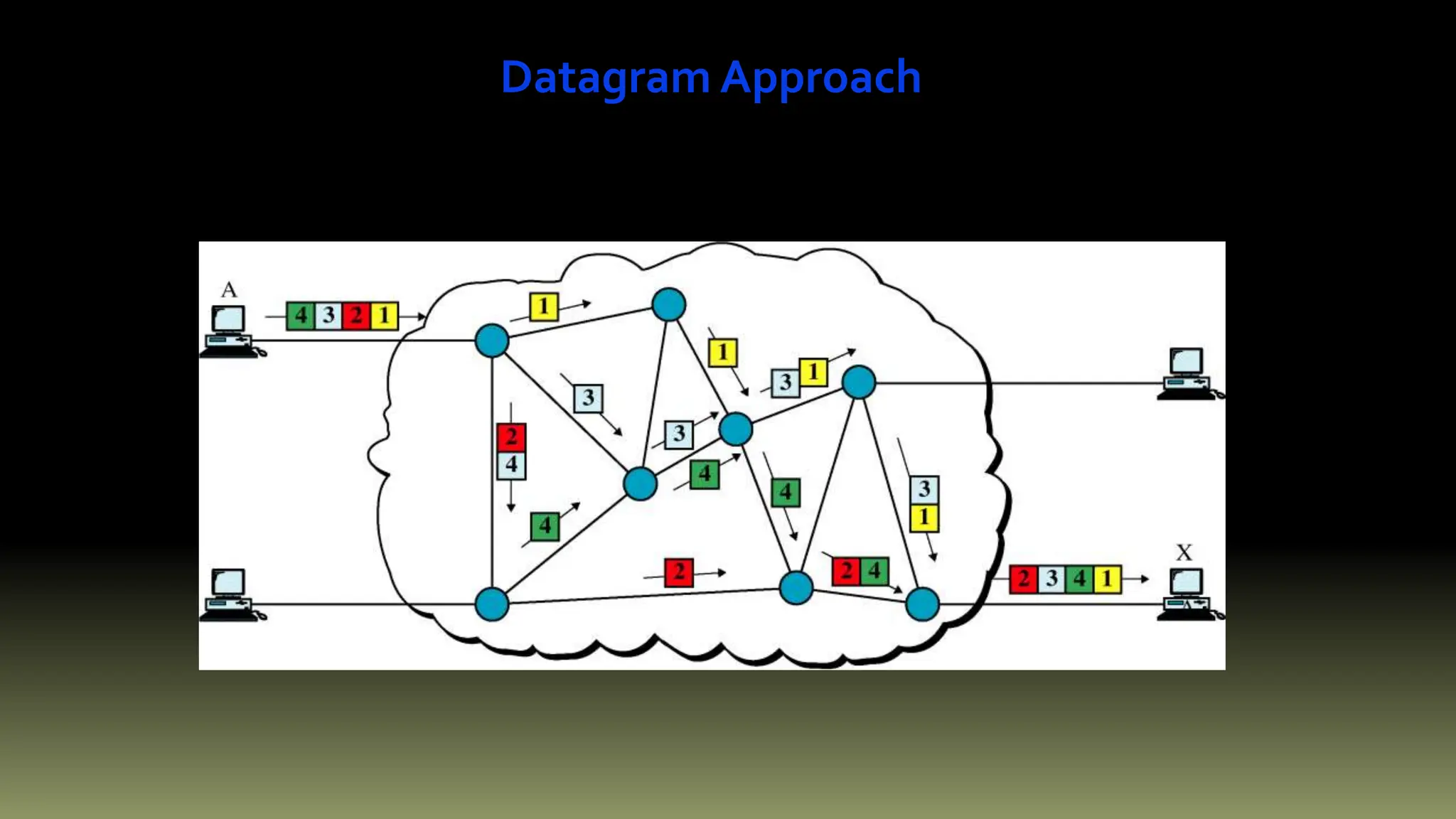
Datagram Approach
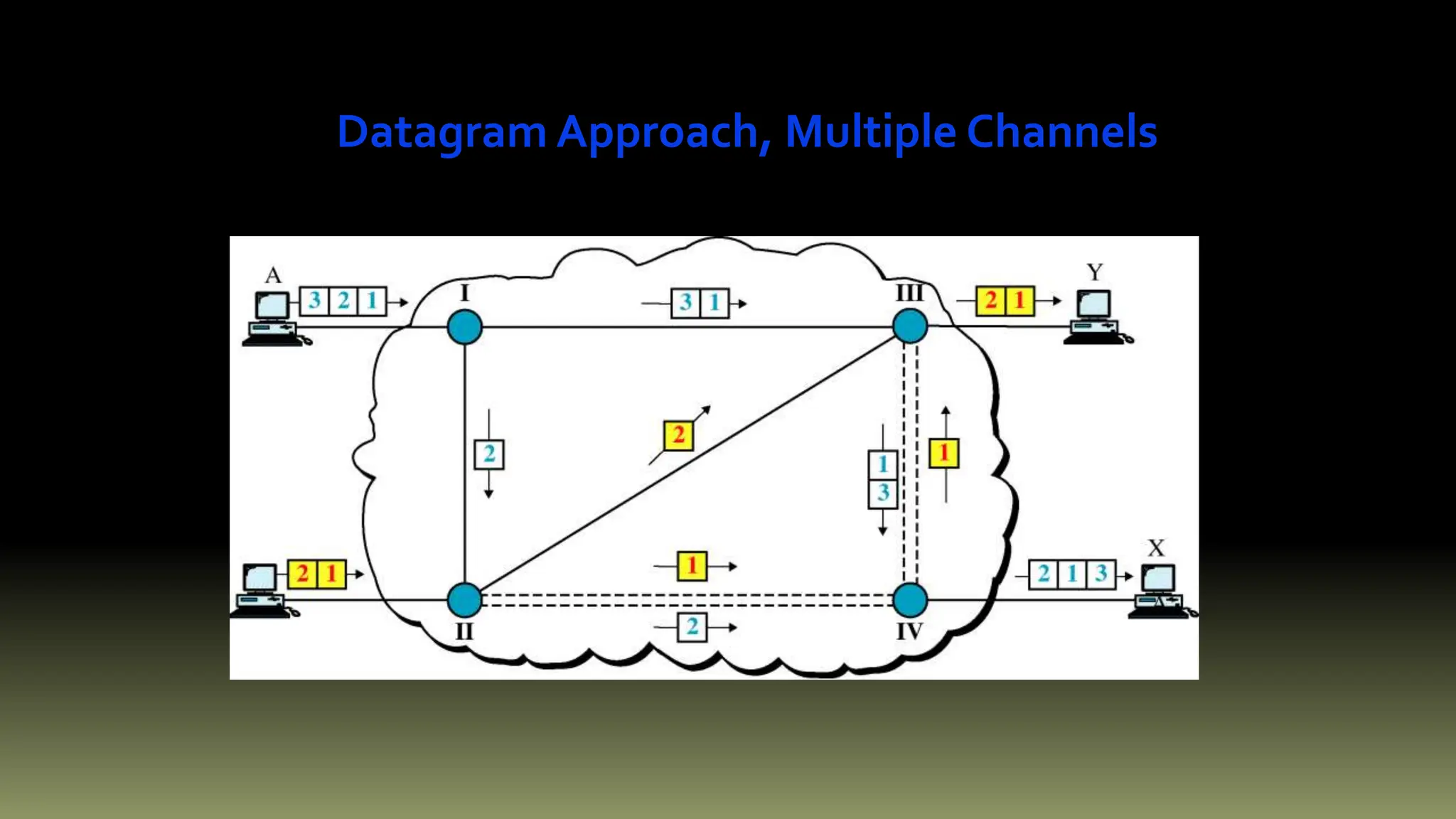
Datagram Approach, Multiple Channels
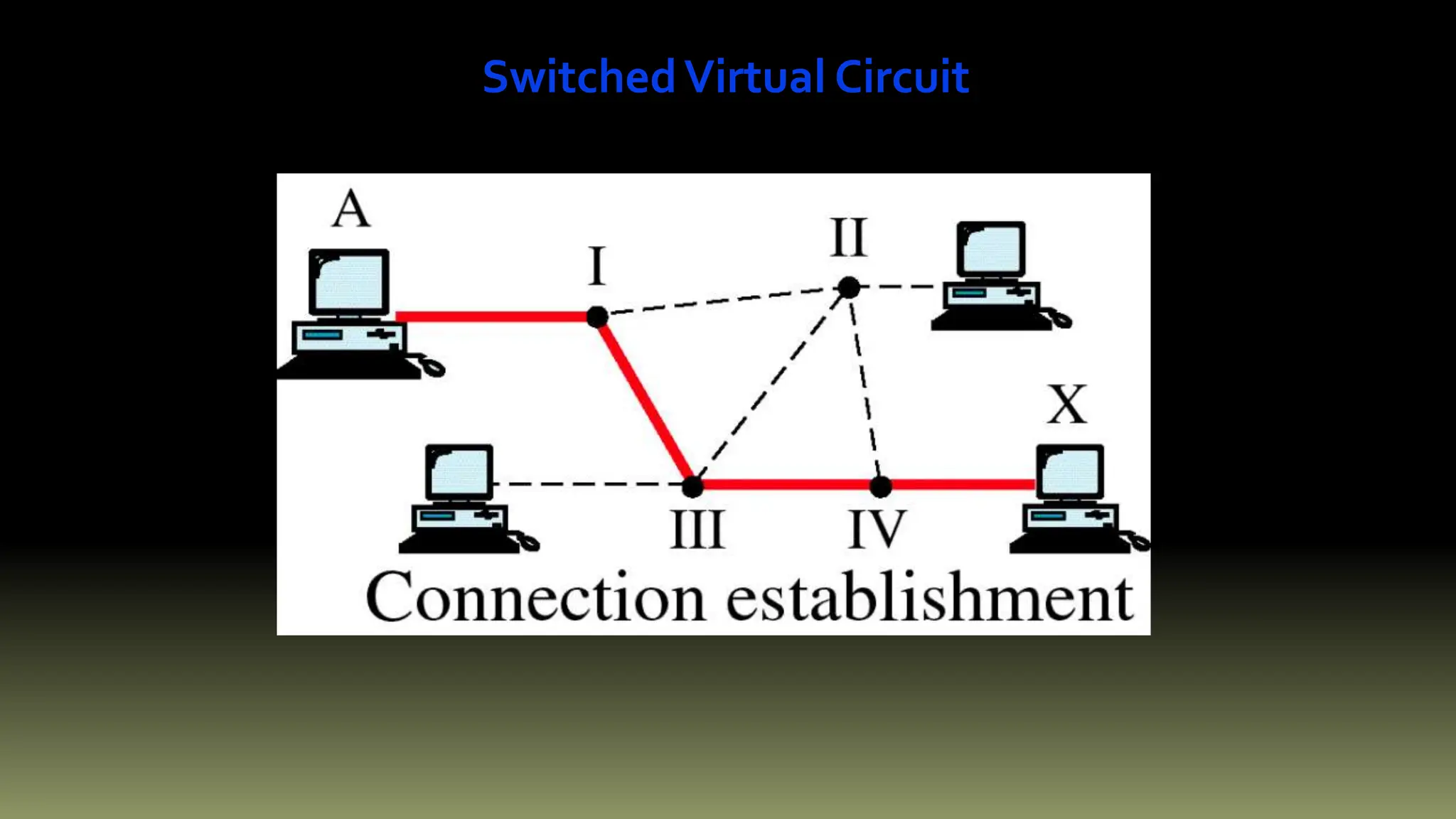
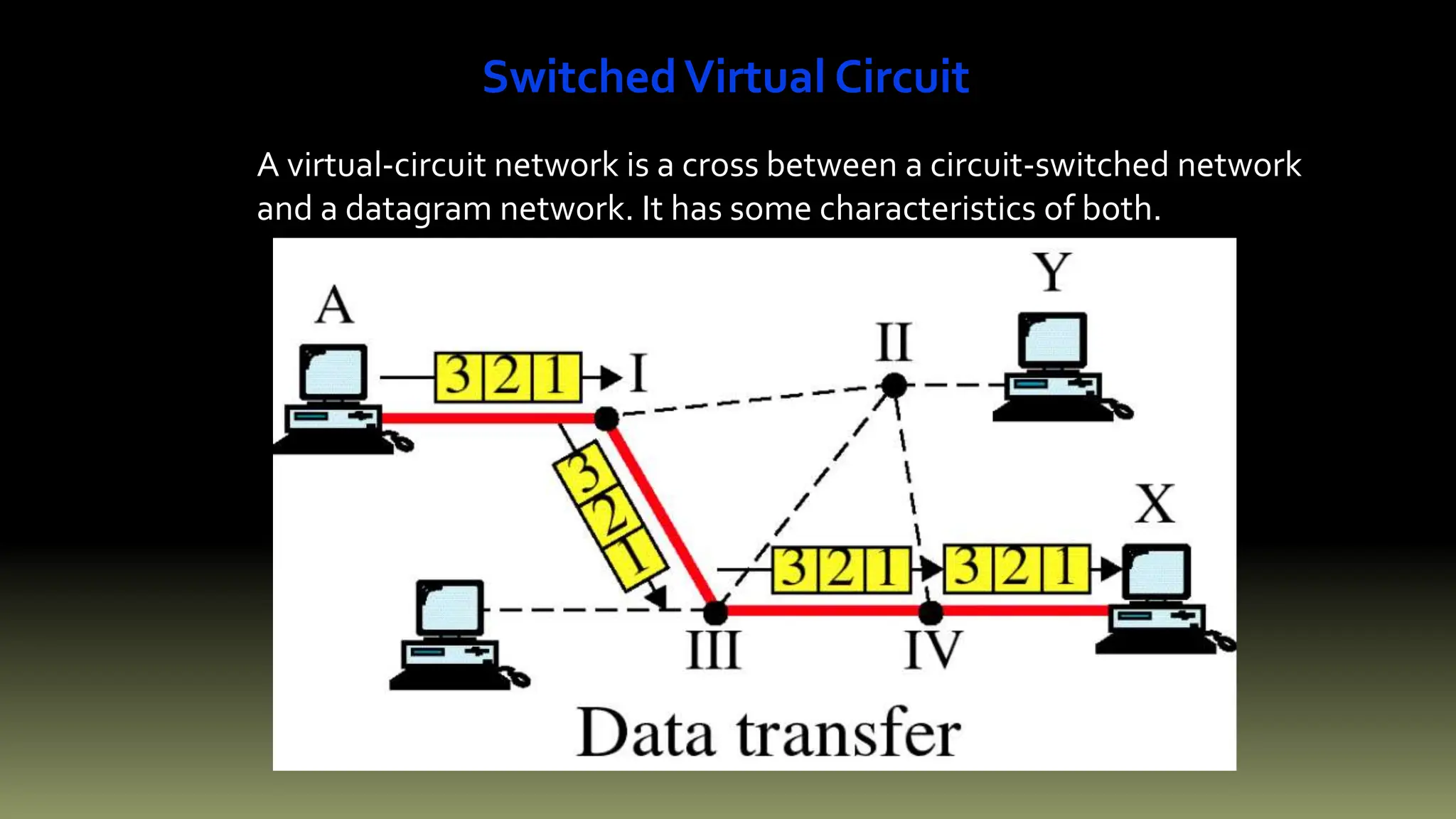
SwitchedVirtual Circuit
A virtual-circuit network is a cross between a circuit-switched network
and a datagram network. It has some characteristics of both.
SwitchedVirtual Circuit
Switching Techniques and types of switching in computer networks

Switching Techniques and types of switching in computer networks

  • 1.
    SWITCHING CIRCUIT SWITCHING &PACKET SWITCHING UNIT II: CHAPTER III
  • 2.
    Switched Network  Anetwork is a set of connected devices. Whenever we have multiple devices, we have the problem of how to connect them to make one-to-one communication possible. One solution is to make a point-to-point connection between each pair of devices . But these methods, however, are impractical and wasteful when applied to very large networks.The number and length of the links require too much infrastructure to be cost-efficient, and the majority of those links would be idle most of the time.  A better solution is switching.A switched network consists of a series of interlinked nodes, called switches. Switches are devices capable of creating temporary connections between two or more devices linked to the switch. In a switched network, some of these nodes are connected to the end systems (computers or telephones, for example). Others are used only for routing.  Every time in computer network you access the internet or another computer network outside your immediate location, your messages are sent through a maze of transmission media and connection devices. The mechanism for moving information between different computer network and network segment is called switching in computer network.
  • 3.
  • 4.
    Circuit-Switched Network Circuit-switched isa type of network in which a physical path is obtained for and dedicated to a single connection between two end-points in the network for the duration of the connection. Ordinary voice phone service is circuit- switched. The telephone company reserves a specific physical path to the number you are calling for the duration of your call. During that time, no one else can use the physical lines involved
  • 5.
  • 6.
    Circuit-Switched Network: ThreePhases  A circuit Switched communication system involves three phases:  Circuit establishment (setting up dedicated links between the source and destination);  Data transfer (transmitting the data between the source and destination); and  Circuit disconnect (removing the dedicated links).
  • 7.
  • 8.
  • 9.
     A crossbarswitch connects n inputs to m outputs in a grid, using electronic micro-switches (transistors) at each crosspoint.  The major limitation of this design is the number of crosspoints required.  To connect n inputs to m outputs using a crossbar switch requires n x m crosspoints. Crossbar Switch (Space-Division Switch)
  • 10.
     The solutionto the limitations of the crossbar switch is the multistage switch, which combines crossbar switches in several (normally three) stages, as shown in Figure.  In a single crossbar switch, only one row or column (one path) is active for any connection.  So we need N x N crosspoints.  If we can allow multiple paths inside the switch, we can decrease the number of crosspoints. Each crosspoint in the middle stage can be accessed by multiple crosspoints in the first or third stage. Multistage Switch
  • 11.
  • 12.
  • 13.
    Time-division switching usestime-division multiplexing (TDM) inside a switch. TDM withoutTSI (Time-Division Switch)
  • 14.
    TDM withTSI  Themost popular technology is called the time-slot interchange (TSI).  Time-Slot Interchange shows a system connecting four input lines to four output lines. Imagine that each input line wants to send data to an output line according to the pattern.
  • 15.
  • 16.
    TST(Time-Space-Time) Switch  Ina third option, we combine space-division and time-division technologies to take advantage of the best of both.  Combining the two results in switches that are optimized both physically (the number of crosspoints) and temporally (the amount of delay). Multistage switches of this sort can be designed asTST switch.
  • 17.
     If themessage is going to pass through a packet-switched network, it needs to be divided into packets of fixed or variable size.  The size of the packet is determined by the network and the governing protocol.  In packet switching, there is no resource allocation for a packet.  This means that there is no reserved bandwidth on the links, and there is no scheduled processing time for each packet. Resources are allocated on demand.The allocation is done on a firstcome, first-served basis.  When a switch receives a packet, no matter what is the source or destination, the packet must wait if there are other packets being processed.  As with other systems in our daily life, this lack of reservation may create delay.  For example, if we do not have a reservation at a restaurant, we might have to wait. Packet-Switched Network (DATAGRAM NETWORKS)
  • 18.
  • 19.
  • 20.
  • 21.
    A virtual-circuit networkis a cross between a circuit-switched network and a datagram network. It has some characteristics of both. SwitchedVirtual Circuit