WATER CONSERVATION
ADAPTATION TO WATER
SUSTAINABILITY UNIT
PRESENTATION 2
WATER CONSERVATION
Water is our most precious resource but what is the most
water used for in our house?
In most households, about 30% of household water is used
in the shower or bath, 30% for the toilet, 20% on washing
clothes and 20% on other activities, like washing dishes.
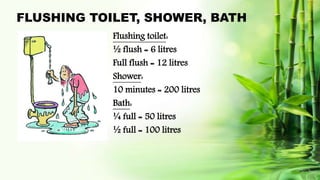
FLUSHING TOILET, SHOWER, BATH
Flushing toilet:
½ flush = 6 litres
Full flush = 12 litres
Shower:
10 minutes = 200 litres
Bath:
¼ full = 50 litres
½ full = 100 litres
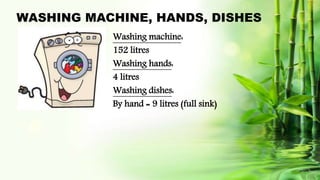
WASHING MACHINE, HANDS, DISHES
Washing machine:
152 litres
Washing hands:
4 litres
Washing dishes:
By hand = 9 litres (full sink)
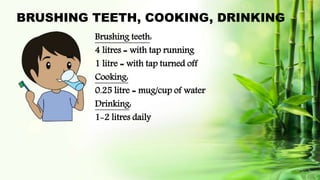
BRUSHING TEETH, COOKING, DRINKING
Brushing teeth:
4 litres = with tap running
1 litre = with tap turned off
Cooking:
0.25 litre = mug/cup of water
Drinking:
1-2 litres daily
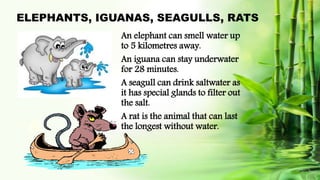
ELEPHANTS, IGUANAS, SEAGULLS, RATS
An elephant can smell water up
to 5 kilometres away.
An iguana can stay underwater
for 28 minutes.
A seagull can drink saltwater as
it has special glands to filter out
the salt.
A rat is the animal that can last
the longest without water.
FACTS ABOUT WATER
There is as much water in the world today as there was
when the Earth was formed. Earth will not get any more
water!
Water moves in a never ending cycle; nature recycles it
over and over again.
The sun evaporates a trillion tonnes of water each day,
which is 1,000,000,000,000!
A single tree can give off 256 litres of water per day in
evaporation.
Water is colourless, tasteless and odourless.
A person can survive without food for more than 30 days
but less than a week without water.
FACTS ABOUT WATER
The longest non-stop swim was made by Susie Maroney
from Australia in 1998. She swam from Mexico to Cuba
(197 km) in 38 hours and 33 minutes.
Succulent plants are juicy full of water. This allows them to
survive in times of drought.
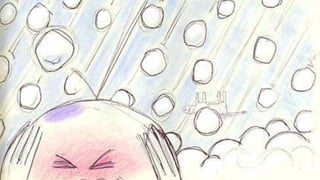
The heaviest hailstones to fall weighed 1 kilogram each
and killed 92 people in Bangladesh in 1986.
All foods contain water.
We are using our fresh water faster than we are
recharging our ground water.
Water controls the Earth’s and our bodies temperatures.
AMAZING WATER
FACTS ACTIVITY
ADAPTATION IN DESERTS
Animals and plants living in desert regions must adapt to
the extreme temperatures and lack of water.
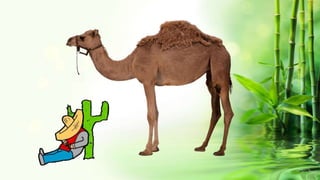
The dromedary camel had been used by desert people for
transport for thousands of years.
The camel adapts to the dry environment by drinking up to
240 litres of water at one time.
It can survive without drinking for up to a week as long as
grass is available.
Cacti look different from other plants because of their
spines. These sharp needles help to protect the cactus from
predators who want to eat the most leaves. Roots stretch a
long way to find any water.
ADAPTATION IN RAINFORESTS
Animals and plants living in the wet and humid rainforest
adapt to the plentiful supply of food and water but they
must compete for it and for sunlight.
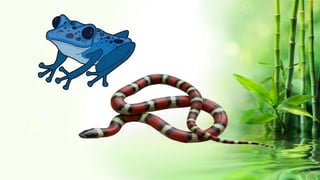
The coral snake of the Amazon forest has brilliant colours
of red, yellow and black to attract its prey. It is also armed
with a dangerous poison.
The Poison Arrow frog has beautiful colours on its skin
that carries the strongest natural poison in the world.
Plants that live here have their own unique adaptations.
Many have waxy leaves that repel water and are designed
with “drip-tips” to drain excess water.
ADAPTATION IN ALPINE REGIONS
Animals and plants living in extremely cold environments
must struggle to keep their body temperature above
freezing.
Plant and animal cells contain water. In cold climates, this
water can freeze and expand just like water in an ice-cube
tray. This expansion can destroy the cells and the animals.
Fish and insects that live in freezing conditions have a
special “antifreeze” chemical in their bloodstream which
prevents them from freezing.
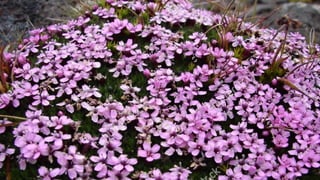
Moss Campion is found growing on the Alps in
Switzerland. Small leaves and tiny pink flowers allow for
less of the plant being exposed to the harsh winds. Moss
Campion only grows to a maximum of 15cm.
ADAPTATION TO
WATER ACTIVITY

SUSTAINABILITY: WATER CONSERVATION AND ADAPTATION

  • 1.
    WATER CONSERVATION ADAPTATION TOWATER SUSTAINABILITY UNIT PRESENTATION 2
  • 2.
    WATER CONSERVATION Water isour most precious resource but what is the most water used for in our house? In most households, about 30% of household water is used in the shower or bath, 30% for the toilet, 20% on washing clothes and 20% on other activities, like washing dishes.
  • 4.
    FLUSHING TOILET, SHOWER,BATH Flushing toilet: ½ flush = 6 litres Full flush = 12 litres Shower: 10 minutes = 200 litres Bath: ¼ full = 50 litres ½ full = 100 litres
  • 5.
    WASHING MACHINE, HANDS,DISHES Washing machine: 152 litres Washing hands: 4 litres Washing dishes: By hand = 9 litres (full sink)
  • 6.
    BRUSHING TEETH, COOKING,DRINKING Brushing teeth: 4 litres = with tap running 1 litre = with tap turned off Cooking: 0.25 litre = mug/cup of water Drinking: 1-2 litres daily
  • 7.
    ELEPHANTS, IGUANAS, SEAGULLS,RATS An elephant can smell water up to 5 kilometres away. An iguana can stay underwater for 28 minutes. A seagull can drink saltwater as it has special glands to filter out the salt. A rat is the animal that can last the longest without water.
  • 8.
    FACTS ABOUT WATER Thereis as much water in the world today as there was when the Earth was formed. Earth will not get any more water! Water moves in a never ending cycle; nature recycles it over and over again. The sun evaporates a trillion tonnes of water each day, which is 1,000,000,000,000! A single tree can give off 256 litres of water per day in evaporation. Water is colourless, tasteless and odourless. A person can survive without food for more than 30 days but less than a week without water.
  • 9.
    FACTS ABOUT WATER Thelongest non-stop swim was made by Susie Maroney from Australia in 1998. She swam from Mexico to Cuba (197 km) in 38 hours and 33 minutes. Succulent plants are juicy full of water. This allows them to survive in times of drought. The heaviest hailstones to fall weighed 1 kilogram each and killed 92 people in Bangladesh in 1986. All foods contain water. We are using our fresh water faster than we are recharging our ground water. Water controls the Earth’s and our bodies temperatures.
  • 11.
  • 12.
    ADAPTATION IN DESERTS Animalsand plants living in desert regions must adapt to the extreme temperatures and lack of water. The dromedary camel had been used by desert people for transport for thousands of years. The camel adapts to the dry environment by drinking up to 240 litres of water at one time. It can survive without drinking for up to a week as long as grass is available. Cacti look different from other plants because of their spines. These sharp needles help to protect the cactus from predators who want to eat the most leaves. Roots stretch a long way to find any water.
  • 14.
    ADAPTATION IN RAINFORESTS Animalsand plants living in the wet and humid rainforest adapt to the plentiful supply of food and water but they must compete for it and for sunlight. The coral snake of the Amazon forest has brilliant colours of red, yellow and black to attract its prey. It is also armed with a dangerous poison. The Poison Arrow frog has beautiful colours on its skin that carries the strongest natural poison in the world. Plants that live here have their own unique adaptations. Many have waxy leaves that repel water and are designed with “drip-tips” to drain excess water.
  • 16.
    ADAPTATION IN ALPINEREGIONS Animals and plants living in extremely cold environments must struggle to keep their body temperature above freezing. Plant and animal cells contain water. In cold climates, this water can freeze and expand just like water in an ice-cube tray. This expansion can destroy the cells and the animals. Fish and insects that live in freezing conditions have a special “antifreeze” chemical in their bloodstream which prevents them from freezing. Moss Campion is found growing on the Alps in Switzerland. Small leaves and tiny pink flowers allow for less of the plant being exposed to the harsh winds. Moss Campion only grows to a maximum of 15cm.
  • 18.