Wastage of Water
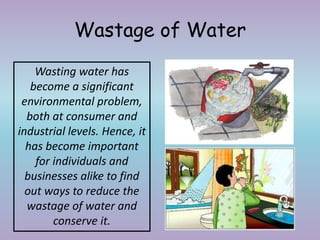
Wasting water has
become a significant
environmental problem,
both at consumer and
industrial levels. Hence, it
has become important
for individuals and
businesses alike to find
out ways to reduce the
wastage of water and
conserve it.
What is water conservation?
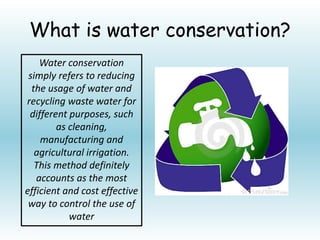
Water conservation
simply refers to reducing
the usage of water and
recycling waste water for
different purposes, such
as cleaning,
manufacturing and
agricultural irrigation.
This method definitely
accounts as the most
efficient and cost effective
way to control the use of
water
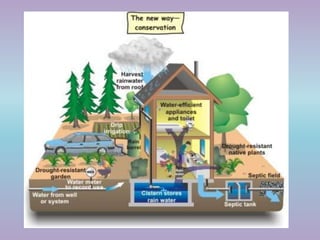
Ways to conserve
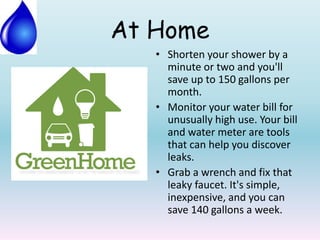
At Home
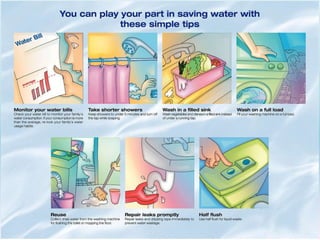
• Shorten your shower by a
minute or two and you'll
save up to 150 gallons per
month.
• Monitor your water bill for
unusually high use. Your bill
and water meter are tools
that can help you discover
leaks.
• Grab a wrench and fix that
leaky faucet. It's simple,
inexpensive, and you can
save 140 gallons a week.
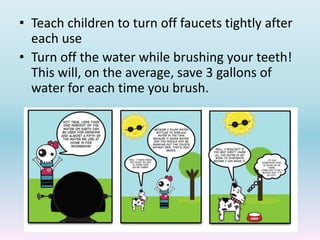
• Teach children to turn off faucets tightly after
each use
• Turn off the water while brushing your teeth!
This will, on the average, save 3 gallons of
water for each time you brush.
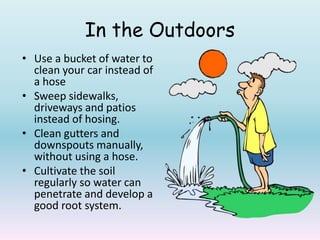
In the Outdoors
• Use a bucket of water to
clean your car instead of
a hose
• Sweep sidewalks,
driveways and patios
instead of hosing.
• Clean gutters and
downspouts manually,
without using a hose.
• Cultivate the soil
regularly so water can
penetrate and develop a
good root system.
In Industries
Food Processors
Food processing companies typically
use water for washing and
sanitation, cooling and heating,
processing food products and other
functions.
Typically, the opportunities for
water conservation include:
— Reusing water in another
Process (i.e., using rinse water in
cooling towers)
— Modifying processes to
consume less water
— Recycling water within a
specific process (where health
regulations allow)
— Modifying cooling towers to
recycle water
Hotels and Motels
Hospitality industry businesses,
primarily hotels and motels, use
water for a variety of functions
including laundry, preparation of
food, cooling and heating, and
landscaping. Typically the largest of
water use occurs in
guest rooms . Therefore , many of
the water conservation approaches
that have been successfully used to
reduce water among residential
customers (such as installation of
ultra-low-flush toilets, low-flow
showerheads, and faucet aerators)
a re recommended for hotels and
motels.
Thank you
Done by Sharanya

Water conservation

  • 2.
    Wastage of Water Wastingwater has become a significant environmental problem, both at consumer and industrial levels. Hence, it has become important for individuals and businesses alike to find out ways to reduce the wastage of water and conserve it.
  • 3.
    What is waterconservation? Water conservation simply refers to reducing the usage of water and recycling waste water for different purposes, such as cleaning, manufacturing and agricultural irrigation. This method definitely accounts as the most efficient and cost effective way to control the use of water
  • 4.
  • 5.
    At Home • Shortenyour shower by a minute or two and you'll save up to 150 gallons per month. • Monitor your water bill for unusually high use. Your bill and water meter are tools that can help you discover leaks. • Grab a wrench and fix that leaky faucet. It's simple, inexpensive, and you can save 140 gallons a week.
  • 7.
    • Teach childrento turn off faucets tightly after each use • Turn off the water while brushing your teeth! This will, on the average, save 3 gallons of water for each time you brush.
  • 9.
    In the Outdoors •Use a bucket of water to clean your car instead of a hose • Sweep sidewalks, driveways and patios instead of hosing. • Clean gutters and downspouts manually, without using a hose. • Cultivate the soil regularly so water can penetrate and develop a good root system.
  • 11.
    In Industries Food Processors Foodprocessing companies typically use water for washing and sanitation, cooling and heating, processing food products and other functions. Typically, the opportunities for water conservation include: — Reusing water in another Process (i.e., using rinse water in cooling towers) — Modifying processes to consume less water — Recycling water within a specific process (where health regulations allow) — Modifying cooling towers to recycle water Hotels and Motels Hospitality industry businesses, primarily hotels and motels, use water for a variety of functions including laundry, preparation of food, cooling and heating, and landscaping. Typically the largest of water use occurs in guest rooms . Therefore , many of the water conservation approaches that have been successfully used to reduce water among residential customers (such as installation of ultra-low-flush toilets, low-flow showerheads, and faucet aerators) a re recommended for hotels and motels.
  • 12.