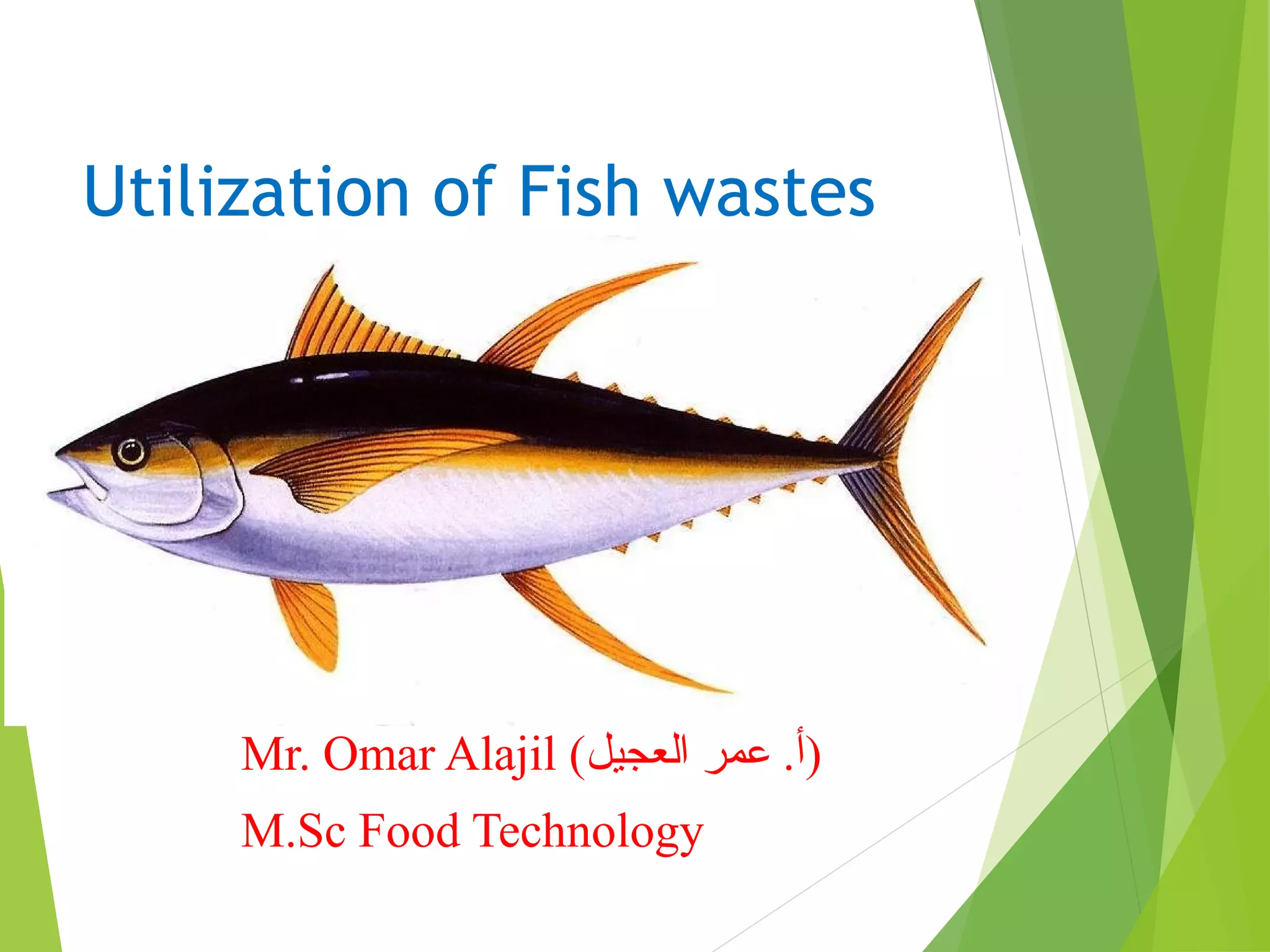
Utilization of Fish wastes
Mr. Omar Alajil (‫العجيل‬ ‫عمر‬ .‫)أ‬
M.Sc Food Technology
Introduction
 About 70% of the fish is processed before final sale.
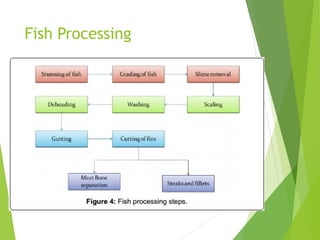
 Processing of fish involves stunning, grading, slime removal,
de-heading, washing, scaling, gutting, cutting of fish, meat
bone separation and steaks and filet.
 During these steps significant amount of waste (20-80%
depending upon the level of processing and type of fish) is
generated.
 In addition, a significant amount of the total catch from fish
farming is discarded each year. Also, fish processing
operation require large volumes of potable water which
results in significant amounts of waste water .
 The majority of fish wastes are disposed of in the
ocean.
 The aerobic bacteria present in the water breakdown the
organic matter in the presence of oxygen leading to a
considerable reduction of oxygen in water.
 There are also overloads of nitrogen, phosphorous and
ammonia, which lead to pH variation, increased
turbidity of the water and as a result of the
decomposition of algae.
 the reduction in water oxygen content creates an
anaerobic condition that leads to the release of foul
gases such as hydrogen sulfide and ammonia, organic
acids and greenhouse gases such as carbon dioxide and
methane .
Fish Processing
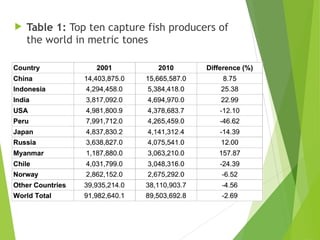
 Table 1: Top ten capture fish producers of
the world in metric tones
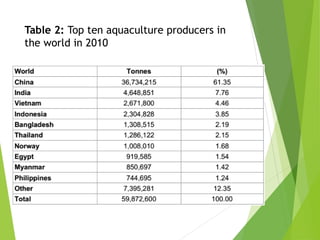
Table 2: Top ten aquaculture producers in
the world in 2010
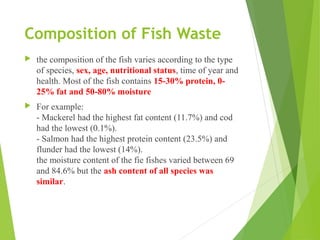
Composition of Fish Waste
 the composition of the fish varies according to the type
of species, sex, age, nutritional status, time of year and
health. Most of the fish contains 15-30% protein, 0-
25% fat and 50-80% moisture
 For example:
- Mackerel had the highest fat content (11.7%) and cod
had the lowest (0.1%).
- Salmon had the highest protein content (23.5%) and
flunder had the lowest (14%).
the moisture content of the fie fishes varied between 69
and 84.6% but the ash content of all species was
similar.
 Solid fish waste consists of head, tails, skin, gut,
fish and frames.
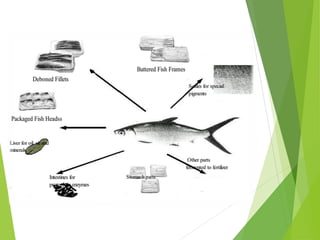
 These by products of the fish processing industry
can be a great source of value added products
such as proteins and amino acids, collagen and
gelatin, oil and enzymes.
 These wastes contain proteins (58%), ether extract
or fat (19%) and minerals.
 Also, mono-saturated acids, palmitic acid and
oleic acid are abundant in fish waste (22%).
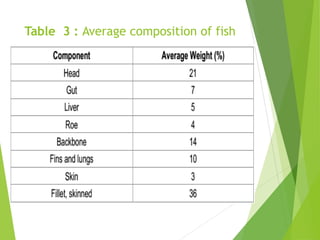
Table 3 : Average composition of fish
Current Utilization of Spoiled
Fish and Fish Waste
1- Fish silage
Fish silage is an excellent protein source having high biological
properties for animal feeding.
Fish silage is a liquid product made from whole fish or parts of fish
that are liquefied by the action of enzymes in the fish in the
presence of added acid.
the enzymes present in the acidic medium breakdown fish proteins
into smaller soluble units while the acid helps to speed up their
activity and prevent bacterial spoilage.
Fish silage can be made from spoiled fish, sub-utilized species, by-
products from marine fish, commercial fish waste and industrial
residues from the fileting industry . the proteins present in the fish
silage can also be hydrolyzed to free amino acids, making the silage
the most available source of amino acids for protein bio synthesis.
 During fish silage preparation, The raw material is
chopped into small pieces and a 3% by weight solution of
98% formic acid is added and mixed well and then stored
for 48 days. the pH of the mixture should be less than 4 to
prevent bacterial action
 Fish silage can also be prepared by a fermentation method
in which fish is chopped, minced and mixed with 5% (w/w)
sugar beet molasses. A culture of Lactobacillus plantarum is
inoculated into molasses and incubated until a population
of 107
bacteria per g of molasses is obtained. This culture is
then added in the ratio of 2 ml/kg to the minced fish.
 the inoculum is inside sealed plastic buckets. the
autolysis is later stopped by heating the silage at 90°C
for 30 min.
 Fish silage can be mixed with wheat bran and oven
dried at 105°C. Co-drying fish silage with cereals
reduces the drying times of the silage and improves the

nutritional content of the silage.
 To prevent spoilage of the dried silage it should contain
low moisture content. Water levels greater than 120
g/kg can support bacterial, mould and yeast growth s
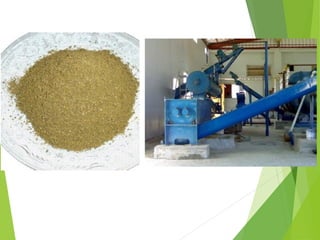
2- Fish meal
fish meal is a dry powder prepared from whole fish or
from fish filleting wastes which are unacceptable for
human consumption.
the production of fish meal is carried out in six steps:
heating, pressing, separation, evaporation, drying and
grinding.
1- When the fish is heated the protein present in it
coagulates and ruptures the fat deposits. This liberates oil
and water.
2- the fish is then pressed which removes large amounts of
liquid from the raw material.
3- the liquid is collected to separate oil from water.
4- the water which is also known as stick water is
evaporated to a thick syrup containing 30 to 40% solids.
5- Then it is subjected to drying using press cake method to
obtain a stable meal.
6- This meal is grinded to the desired particle size .
It is estimated that 25% (1.23 million tones in 2008) of the
total fish meal produced is from fish by-products .
In 1988, around 80% of the total fish meal produced was
used as feed for pigs and poultry and 10% of the total was
used for aquaculture.
Currently, 63% of the fish meal is being consumed by the
aquaculture industry, 25% by the pigs, 8% by the poultry
and 4% by other animals.
3- Fish sauce
Fish sauce is made from small pelagic fish or by-
products using salt fermentation.
 Fish are mixed with salt in the ratio of 3:1 at 30°C for
six months and an amber protein solution is drained from
the bottom of the tank.
It can be used as a condiment on vegetable dishes and is
very nutritious due to the presence of essential amino acids.
Fermented fish sauce has various biological activities
including angiotensin I-converting enzyme (ACE)
inhibitory activity and insulin secretion stimulating activity.
Various studies reported ACE inhibitory activity in the
fermented fish sauce from salmon, sardine and anchovy.
Thee ACE peptides (gly-trp, ile-trp and val-trp) were found
in fermented fish sauce.
Production and utilization of Fish
Protein
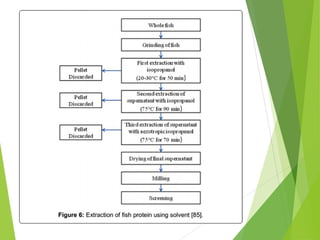
 Fish proteins are extracted from fish using
chemically and enzymatic methods.
 Protein hydrolysates obtained from these
processes have various industrial uses such as
milk replacers, protein supplements,
stabilizers in beverages and flavor
enhancers.
Utilization of Fish Protein
Fish protein contains many bio-active peptides that are
easily absorbed and can be used for various metabolic
activities.
They can be used as a functional ingredient in many food
items as they have properties such as water holding
capacity, oil absorption, gelling activity, foaming
capacity and emulsifiation property.
Kristinsson and Rasco reported that fish protein
hydrolysate can be used as a milk replacer with high
protein Efficiency ratio (PER) value and in a cost effective
manner than dried skimmed milk.
 Due to its rich amino acid composition, fish protein can
be as supplementing cereal proteins and can be used
in bakery products, soups and infant formulas.
 It is also reported that fish proteins can serve as nitrogen
source for the growth of micro organisms for the
production of extracellular lipases .
 the fish protein hydrolysates also possess various bio-
activities such as antioxidative, antithrombic and
antihypertensive properties
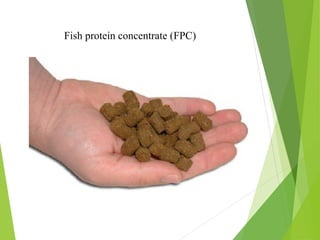
Fish protein concentrate (FPC)
Production and Utilization of Fish
Amino Acids
 Amino acids can be produced by hydrolyzing proteins.
Chemical (acid or alkali) and biological (enzymatic)
methods are most commonly used for the hydrolysis of
proteins . Microwave induced hydrolysis of protein has
also been reported.
 the aim of the hydrolysis process is to liberate amino
acids and recover them without degrading their
properties.
 the factors affecting the hydrolysis of proteins are
temperature, time, hydrolysis agent and additives.
These factors affect the quality and yield .
Utilization of amino acids
the largest consumer of amino acids is the food flavoring
industry which uses mono sodium glutamate, alanine,
aspartate and arginine to improve the flavor of food.
the second largest consumer of amino acids is the animal
feed industry which uses lysine, methionine, threonine,
tryptophan and others to improve the nutritional quality of
animal feed.
the amino acids can also used in various pharmaceutical
applications such as protein purification and formulations
and production of antibiotics such as jadomycin.
the total amino acid market in 1996 was estimated to be
$4.5 billion. the market value of amino acids has drastically
increased since 1996.
Amino were the second most important category after
antibiotics in 2009 .
Production and Utilization of Fish Oil
Utilization of Fish Oil For human
consumption
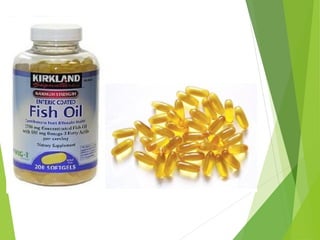
 Fish oils are readily available sources for long chain
polyunsaturated fatty acids which consist of omega-3
fatty acids mainly composed of cis-5,8,11,14,17-
eicosapentaenoic acid (EPA) and cis-4,7,10,13,16,19-
docosahexaenoic acid (DHA) .
 the omega-3 fatty acids have many beneficial bio-
activities including prevention of atherosclerosis,
protection against arrhythmias, reduced blood pressure,
benefit to diabetic patients, protection against manic-
depressive illness, reduced symptoms in asthma
patients, protection against chronic obstructive
pulmonary diseases, alleviating the symptoms of cystic
firosis, improving survival of cancer patients, reduction
in cardiovascular disease and improved learning ability
For bio-diesel production
 bio-diesel is comprised of monoalkyl esters of vegetable
oils, animal fats or fish oils which can be synthesized from
edible, non-edible and waste oils
 It is a non-toxic, biodegradable and renewable energy
source.
 bio-diesel can be produced chemically or enzymatically.
 Chemically, using alkali (NaOH) as catalyst due to high
conversion ratio of triglycerols (TAG) to methyl esters (bio-
diesel) and low reaction times (4-10 h).
 There are several disadvantages using chemical catalysts
including high reaction temperature, soap formation, waste
generation and contamination of glycerol with alkali
catalysts.
 Enzymatic trans-esterifiation is mainly carried out
using lipases such as Canadida Antarctica, Carica
papaya, Rhizopusoryzae, Pseudomonas cepacia,
Pseusdomonas floresces, Rhizomucormiehei and
Mucormiehei.
 the advantages of using enzymatic method are: there is
no soap formation, low temperature requirement, no
waste generation and high quality of glycerol.
 the disadvantages of using enzymatic transesterifiation
are: high reaction times (12-24 h) and high cost of
enzymes
Conclusion
 Processing of fish involves stunning, grading, slime
removal, deheading, washing, scaling, gutting, cutting
of fish, meat bone separation and steaks and fillets.
 During these steps significant amount of waste is
generated which can be utilized as fish silage, fish meal
and fish sauce
 Fish waste can also be used for production of various
value added products such as proteins, oil, amino acids,
minerals, enzymes, bio-active peptides, collagen and
gelatin.
 The fish proteins can be extracted by chemical and
enzymatic process.
 These fish proteins can be used as a functional
ingredient in many food items because of their
properties (water holding capacity, oil absorption,
gelling activity, foaming capacity and emulsifying
properties). They can also be used as milk replacers,
bakery substitutes, soups and infant formulas.
 The amino acids are the building blocks of protein.
There are 16-18 amino acids present in fish proteins.
The amino acids can be produced from fish protein by
enzymatic or chemical processes
 The amino acids present in the fish can be utilized in
animal feed in the form of fishmeal and sauce or can be
used in the production of various pharmaceuticals
 The fish oil contains two important polyunsaturated
fatty acids called EPA and DHA or otherwise called as
omega-3 fatty acids. These omega-3 fatty acids have
beneficial bioactivities including prevention of
atherosclerosis, protection against maniac–depressive
illness and various other medicinal properties.
 Fish oil can also be converted to non-toxic,
biodegradable, environment friendly biodiesel using
chemical or enzymatic transesterifiation.
THANK you
for listening

Utilization of fish wastes

  • 1.
    Utilization of Fishwastes Mr. Omar Alajil (‫العجيل‬ ‫عمر‬ .‫)أ‬ M.Sc Food Technology
  • 2.
    Introduction  About 70%of the fish is processed before final sale.  Processing of fish involves stunning, grading, slime removal, de-heading, washing, scaling, gutting, cutting of fish, meat bone separation and steaks and filet.  During these steps significant amount of waste (20-80% depending upon the level of processing and type of fish) is generated.  In addition, a significant amount of the total catch from fish farming is discarded each year. Also, fish processing operation require large volumes of potable water which results in significant amounts of waste water .
  • 3.
     The majorityof fish wastes are disposed of in the ocean.  The aerobic bacteria present in the water breakdown the organic matter in the presence of oxygen leading to a considerable reduction of oxygen in water.  There are also overloads of nitrogen, phosphorous and ammonia, which lead to pH variation, increased turbidity of the water and as a result of the decomposition of algae.  the reduction in water oxygen content creates an anaerobic condition that leads to the release of foul gases such as hydrogen sulfide and ammonia, organic acids and greenhouse gases such as carbon dioxide and methane .
  • 4.
  • 5.
     Table 1:Top ten capture fish producers of the world in metric tones
  • 6.
    Table 2: Topten aquaculture producers in the world in 2010
  • 7.
    Composition of FishWaste  the composition of the fish varies according to the type of species, sex, age, nutritional status, time of year and health. Most of the fish contains 15-30% protein, 0- 25% fat and 50-80% moisture  For example: - Mackerel had the highest fat content (11.7%) and cod had the lowest (0.1%). - Salmon had the highest protein content (23.5%) and flunder had the lowest (14%). the moisture content of the fie fishes varied between 69 and 84.6% but the ash content of all species was similar.
  • 8.
     Solid fishwaste consists of head, tails, skin, gut, fish and frames.  These by products of the fish processing industry can be a great source of value added products such as proteins and amino acids, collagen and gelatin, oil and enzymes.  These wastes contain proteins (58%), ether extract or fat (19%) and minerals.  Also, mono-saturated acids, palmitic acid and oleic acid are abundant in fish waste (22%).
  • 9.
    Table 3 :Average composition of fish
  • 11.
    Current Utilization ofSpoiled Fish and Fish Waste 1- Fish silage Fish silage is an excellent protein source having high biological properties for animal feeding. Fish silage is a liquid product made from whole fish or parts of fish that are liquefied by the action of enzymes in the fish in the presence of added acid. the enzymes present in the acidic medium breakdown fish proteins into smaller soluble units while the acid helps to speed up their activity and prevent bacterial spoilage. Fish silage can be made from spoiled fish, sub-utilized species, by- products from marine fish, commercial fish waste and industrial residues from the fileting industry . the proteins present in the fish silage can also be hydrolyzed to free amino acids, making the silage the most available source of amino acids for protein bio synthesis.
  • 12.
     During fishsilage preparation, The raw material is chopped into small pieces and a 3% by weight solution of 98% formic acid is added and mixed well and then stored for 48 days. the pH of the mixture should be less than 4 to prevent bacterial action  Fish silage can also be prepared by a fermentation method in which fish is chopped, minced and mixed with 5% (w/w) sugar beet molasses. A culture of Lactobacillus plantarum is inoculated into molasses and incubated until a population of 107 bacteria per g of molasses is obtained. This culture is then added in the ratio of 2 ml/kg to the minced fish.
  • 13.
     the inoculumis inside sealed plastic buckets. the autolysis is later stopped by heating the silage at 90°C for 30 min.  Fish silage can be mixed with wheat bran and oven dried at 105°C. Co-drying fish silage with cereals reduces the drying times of the silage and improves the nutritional content of the silage.  To prevent spoilage of the dried silage it should contain low moisture content. Water levels greater than 120 g/kg can support bacterial, mould and yeast growth s
  • 14.
    2- Fish meal fishmeal is a dry powder prepared from whole fish or from fish filleting wastes which are unacceptable for human consumption. the production of fish meal is carried out in six steps: heating, pressing, separation, evaporation, drying and grinding. 1- When the fish is heated the protein present in it coagulates and ruptures the fat deposits. This liberates oil and water. 2- the fish is then pressed which removes large amounts of liquid from the raw material. 3- the liquid is collected to separate oil from water.
  • 15.
    4- the waterwhich is also known as stick water is evaporated to a thick syrup containing 30 to 40% solids. 5- Then it is subjected to drying using press cake method to obtain a stable meal. 6- This meal is grinded to the desired particle size . It is estimated that 25% (1.23 million tones in 2008) of the total fish meal produced is from fish by-products . In 1988, around 80% of the total fish meal produced was used as feed for pigs and poultry and 10% of the total was used for aquaculture. Currently, 63% of the fish meal is being consumed by the aquaculture industry, 25% by the pigs, 8% by the poultry and 4% by other animals.
  • 17.
    3- Fish sauce Fishsauce is made from small pelagic fish or by- products using salt fermentation.  Fish are mixed with salt in the ratio of 3:1 at 30°C for six months and an amber protein solution is drained from the bottom of the tank. It can be used as a condiment on vegetable dishes and is very nutritious due to the presence of essential amino acids. Fermented fish sauce has various biological activities including angiotensin I-converting enzyme (ACE) inhibitory activity and insulin secretion stimulating activity. Various studies reported ACE inhibitory activity in the fermented fish sauce from salmon, sardine and anchovy. Thee ACE peptides (gly-trp, ile-trp and val-trp) were found in fermented fish sauce.
  • 18.
    Production and utilizationof Fish Protein  Fish proteins are extracted from fish using chemically and enzymatic methods.  Protein hydrolysates obtained from these processes have various industrial uses such as milk replacers, protein supplements, stabilizers in beverages and flavor enhancers.
  • 20.
    Utilization of FishProtein Fish protein contains many bio-active peptides that are easily absorbed and can be used for various metabolic activities. They can be used as a functional ingredient in many food items as they have properties such as water holding capacity, oil absorption, gelling activity, foaming capacity and emulsifiation property. Kristinsson and Rasco reported that fish protein hydrolysate can be used as a milk replacer with high protein Efficiency ratio (PER) value and in a cost effective manner than dried skimmed milk.
  • 21.
     Due toits rich amino acid composition, fish protein can be as supplementing cereal proteins and can be used in bakery products, soups and infant formulas.  It is also reported that fish proteins can serve as nitrogen source for the growth of micro organisms for the production of extracellular lipases .  the fish protein hydrolysates also possess various bio- activities such as antioxidative, antithrombic and antihypertensive properties
  • 22.
  • 23.
    Production and Utilizationof Fish Amino Acids  Amino acids can be produced by hydrolyzing proteins. Chemical (acid or alkali) and biological (enzymatic) methods are most commonly used for the hydrolysis of proteins . Microwave induced hydrolysis of protein has also been reported.  the aim of the hydrolysis process is to liberate amino acids and recover them without degrading their properties.  the factors affecting the hydrolysis of proteins are temperature, time, hydrolysis agent and additives. These factors affect the quality and yield .
  • 24.
    Utilization of aminoacids the largest consumer of amino acids is the food flavoring industry which uses mono sodium glutamate, alanine, aspartate and arginine to improve the flavor of food. the second largest consumer of amino acids is the animal feed industry which uses lysine, methionine, threonine, tryptophan and others to improve the nutritional quality of animal feed. the amino acids can also used in various pharmaceutical applications such as protein purification and formulations and production of antibiotics such as jadomycin. the total amino acid market in 1996 was estimated to be $4.5 billion. the market value of amino acids has drastically increased since 1996. Amino were the second most important category after antibiotics in 2009 .
  • 25.
    Production and Utilizationof Fish Oil Utilization of Fish Oil For human consumption  Fish oils are readily available sources for long chain polyunsaturated fatty acids which consist of omega-3 fatty acids mainly composed of cis-5,8,11,14,17- eicosapentaenoic acid (EPA) and cis-4,7,10,13,16,19- docosahexaenoic acid (DHA) .  the omega-3 fatty acids have many beneficial bio- activities including prevention of atherosclerosis, protection against arrhythmias, reduced blood pressure, benefit to diabetic patients, protection against manic- depressive illness, reduced symptoms in asthma patients, protection against chronic obstructive pulmonary diseases, alleviating the symptoms of cystic firosis, improving survival of cancer patients, reduction in cardiovascular disease and improved learning ability
  • 27.
    For bio-diesel production bio-diesel is comprised of monoalkyl esters of vegetable oils, animal fats or fish oils which can be synthesized from edible, non-edible and waste oils  It is a non-toxic, biodegradable and renewable energy source.  bio-diesel can be produced chemically or enzymatically.  Chemically, using alkali (NaOH) as catalyst due to high conversion ratio of triglycerols (TAG) to methyl esters (bio- diesel) and low reaction times (4-10 h).  There are several disadvantages using chemical catalysts including high reaction temperature, soap formation, waste generation and contamination of glycerol with alkali catalysts.
  • 28.
     Enzymatic trans-esterifiationis mainly carried out using lipases such as Canadida Antarctica, Carica papaya, Rhizopusoryzae, Pseudomonas cepacia, Pseusdomonas floresces, Rhizomucormiehei and Mucormiehei.  the advantages of using enzymatic method are: there is no soap formation, low temperature requirement, no waste generation and high quality of glycerol.  the disadvantages of using enzymatic transesterifiation are: high reaction times (12-24 h) and high cost of enzymes
  • 29.
    Conclusion  Processing offish involves stunning, grading, slime removal, deheading, washing, scaling, gutting, cutting of fish, meat bone separation and steaks and fillets.  During these steps significant amount of waste is generated which can be utilized as fish silage, fish meal and fish sauce  Fish waste can also be used for production of various value added products such as proteins, oil, amino acids, minerals, enzymes, bio-active peptides, collagen and gelatin.  The fish proteins can be extracted by chemical and enzymatic process.  These fish proteins can be used as a functional ingredient in many food items because of their properties (water holding capacity, oil absorption, gelling activity, foaming capacity and emulsifying properties). They can also be used as milk replacers, bakery substitutes, soups and infant formulas.
  • 30.
     The aminoacids are the building blocks of protein. There are 16-18 amino acids present in fish proteins. The amino acids can be produced from fish protein by enzymatic or chemical processes  The amino acids present in the fish can be utilized in animal feed in the form of fishmeal and sauce or can be used in the production of various pharmaceuticals  The fish oil contains two important polyunsaturated fatty acids called EPA and DHA or otherwise called as omega-3 fatty acids. These omega-3 fatty acids have beneficial bioactivities including prevention of atherosclerosis, protection against maniac–depressive illness and various other medicinal properties.  Fish oil can also be converted to non-toxic, biodegradable, environment friendly biodiesel using chemical or enzymatic transesterifiation.
  • 33.

Editor's Notes