SURGICAL AUDIT
Outline
• Definition
• Historical Perspective
• Aims and need of audit
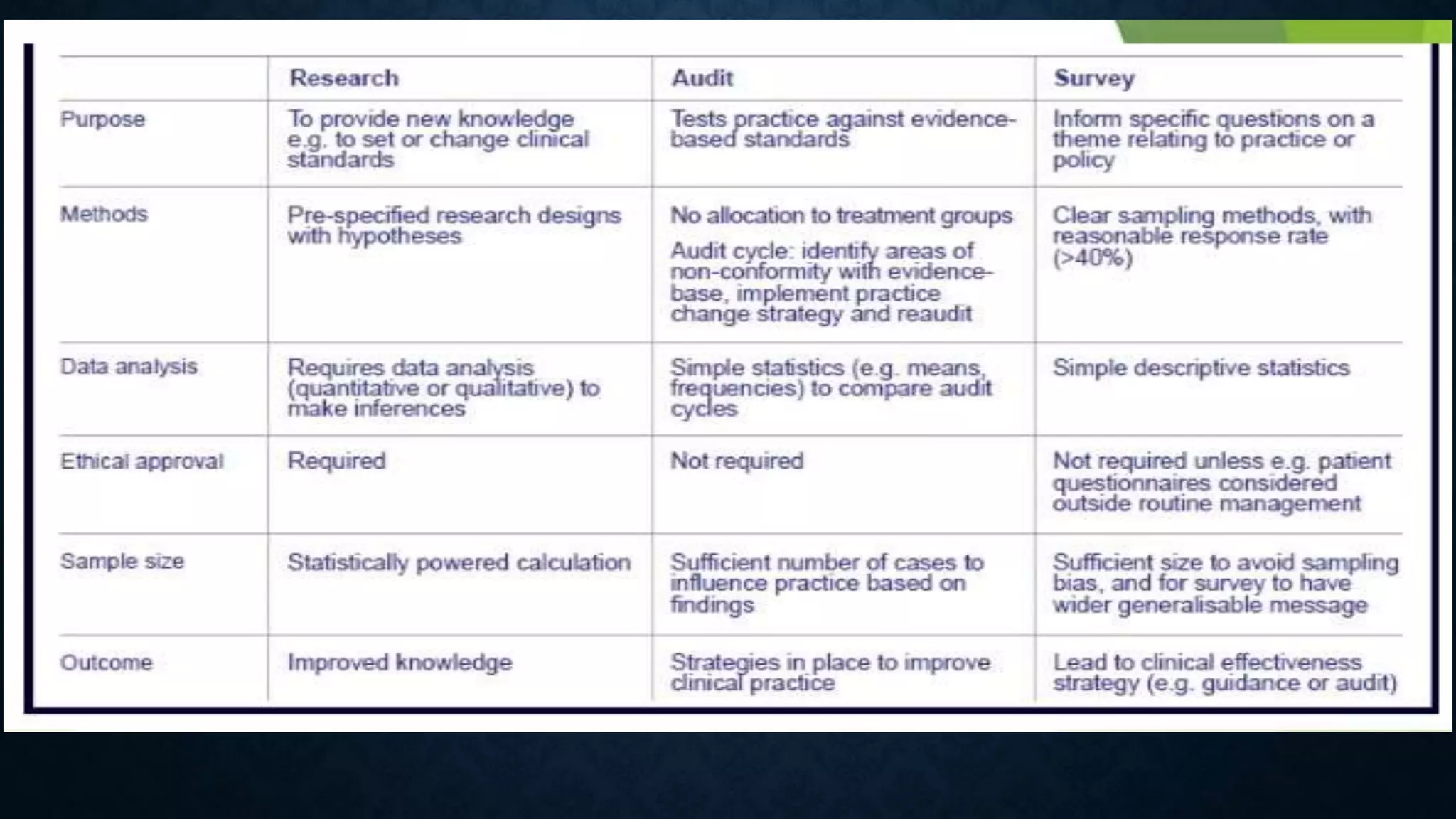
• Audit v/s Research v/s Survey
• Types of audit
• Stages of surgical Audit
• Advantages and Disadvantages of audits
• Take home message
SURGICAL AUDIT
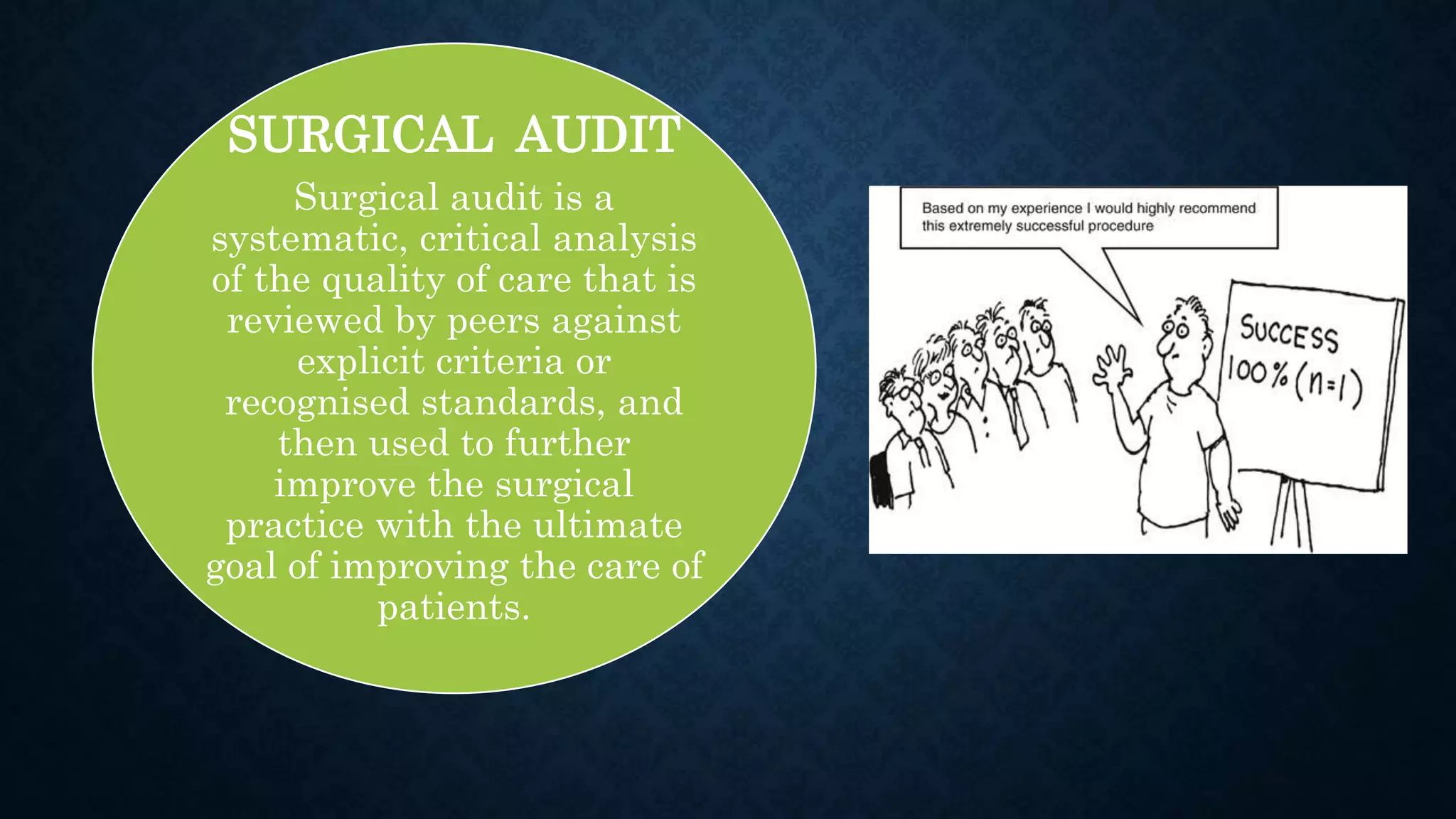
Surgical audit is a
systematic, critical analysis
of the quality of care that is
reviewed by peers against
explicit criteria or
recognised standards, and
then used to further
improve the surgical
practice with the ultimate
goal of improving the care of
patients.
- Earliest pioneers of clinical audit.
- Applied strict standards of hygiene
for the hospital and its equipment
and demonstrated a fall in mortality
rates from 40% to 2%.
FLORENCE NIGHTINGALE
AIMS
To identify whether standards are being met, and evidence from research are being used in practice.
To identify baselines for development of standards.
To reduce clinical risk.
To ensure cost effective use of resources, and effectiveness of a service.
To highlight problems, and help in the solution.
To improve team working and communication.
To improve patient care and outcomes.
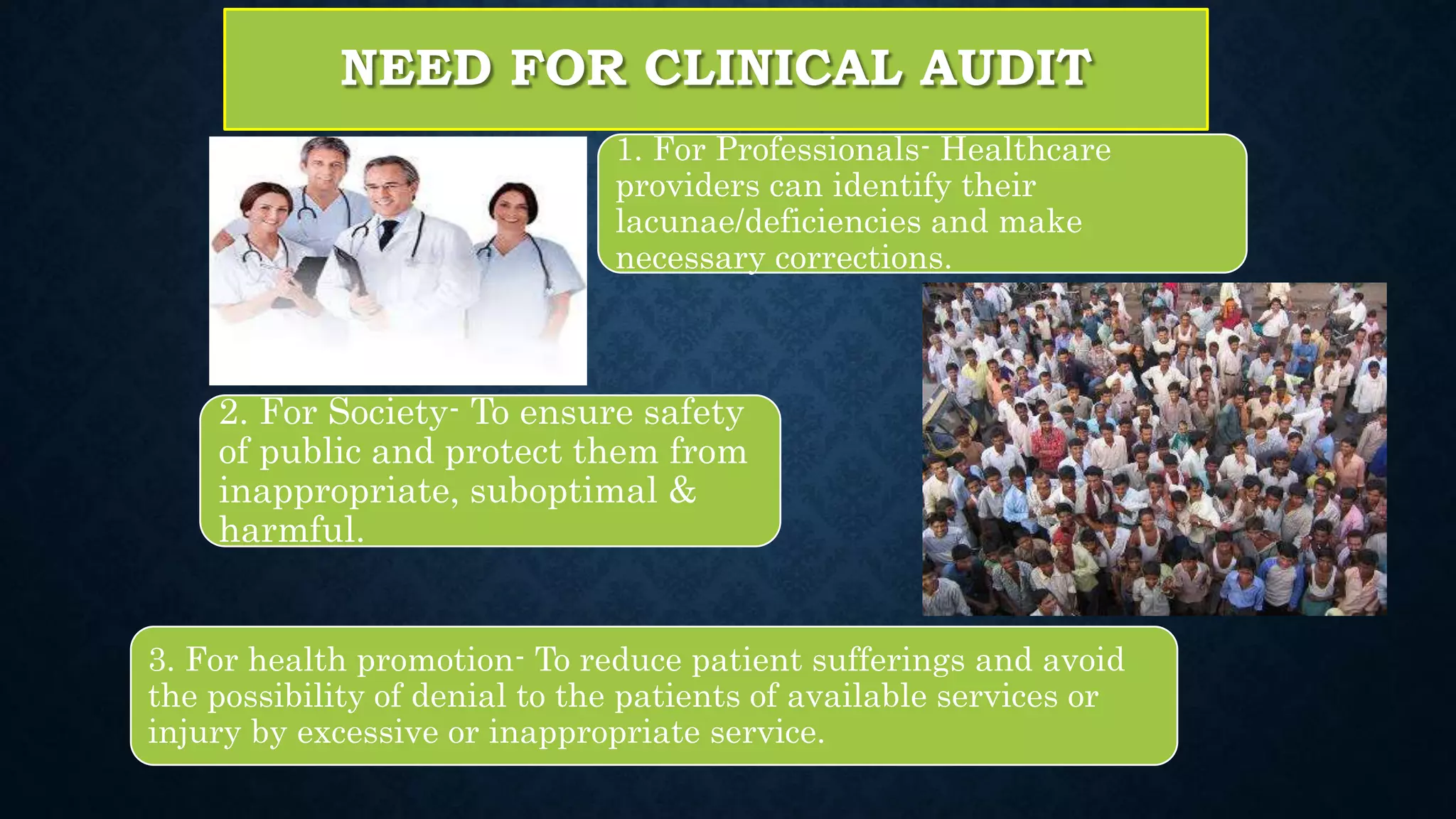
NEED FOR CLINICAL AUDIT
2. For Society- To ensure safety
of public and protect them from
inappropriate, suboptimal &
harmful.
1. For Professionals- Healthcare
providers can identify their
lacunae/deficiencies and make
necessary corrections.
3. For health promotion- To reduce patient sufferings and avoid
the possibility of denial to the patients of available services or
injury by excessive or inappropriate service.
TYPES OF AUDIT
BASED ON EVENTS BASED ON SIZE
• Retrospective
• concurrent
• Individual
• Unit
• Hospital
• State
• Regional
• National
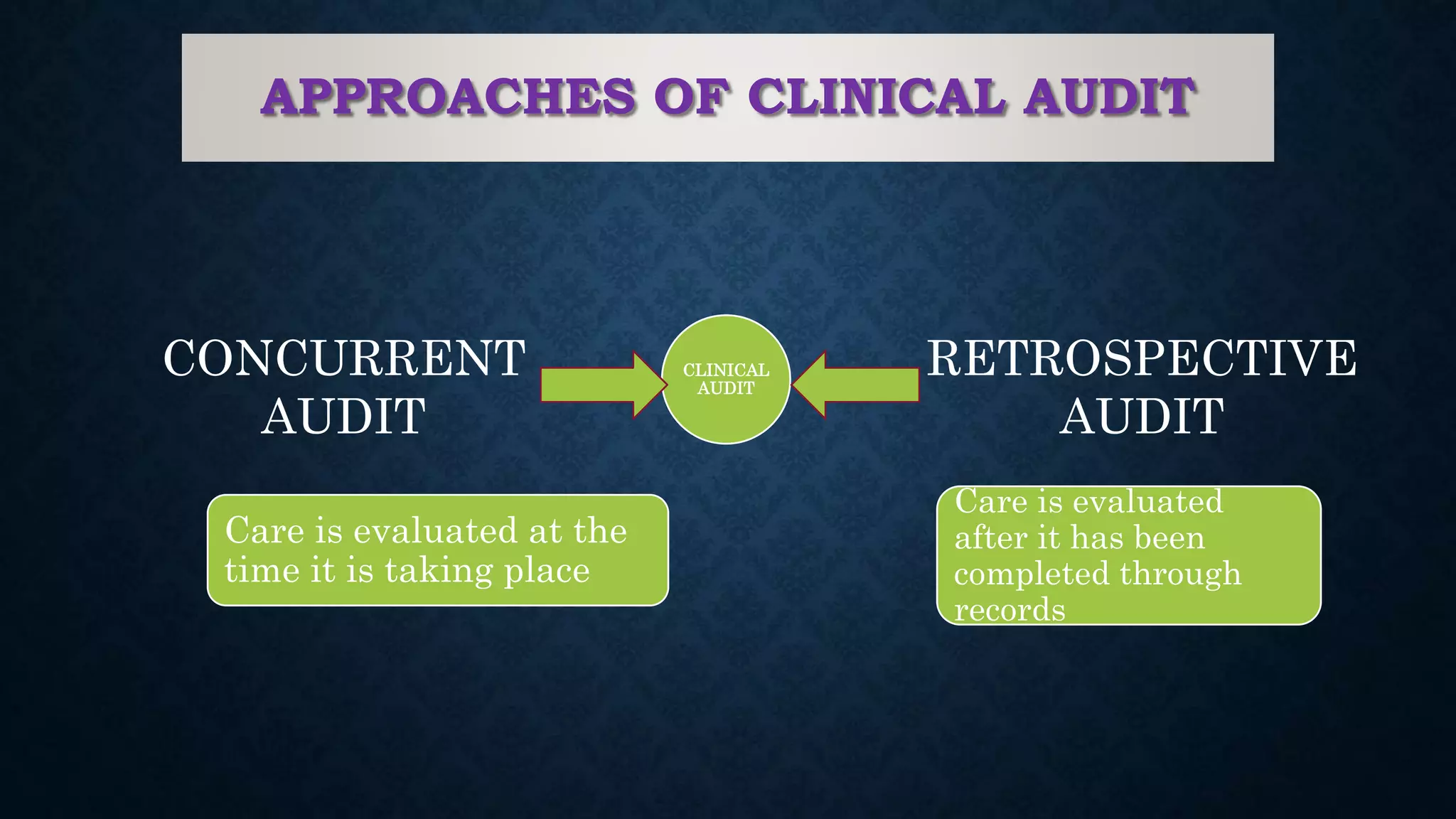
APPROACHES OF CLINICAL AUDIT
Care is evaluated at the
time it is taking place
CLINICAL
AUDIT
CONCURRENT
AUDIT
RETROSPECTIVE
AUDIT
Care is evaluated
after it has been
completed through
records
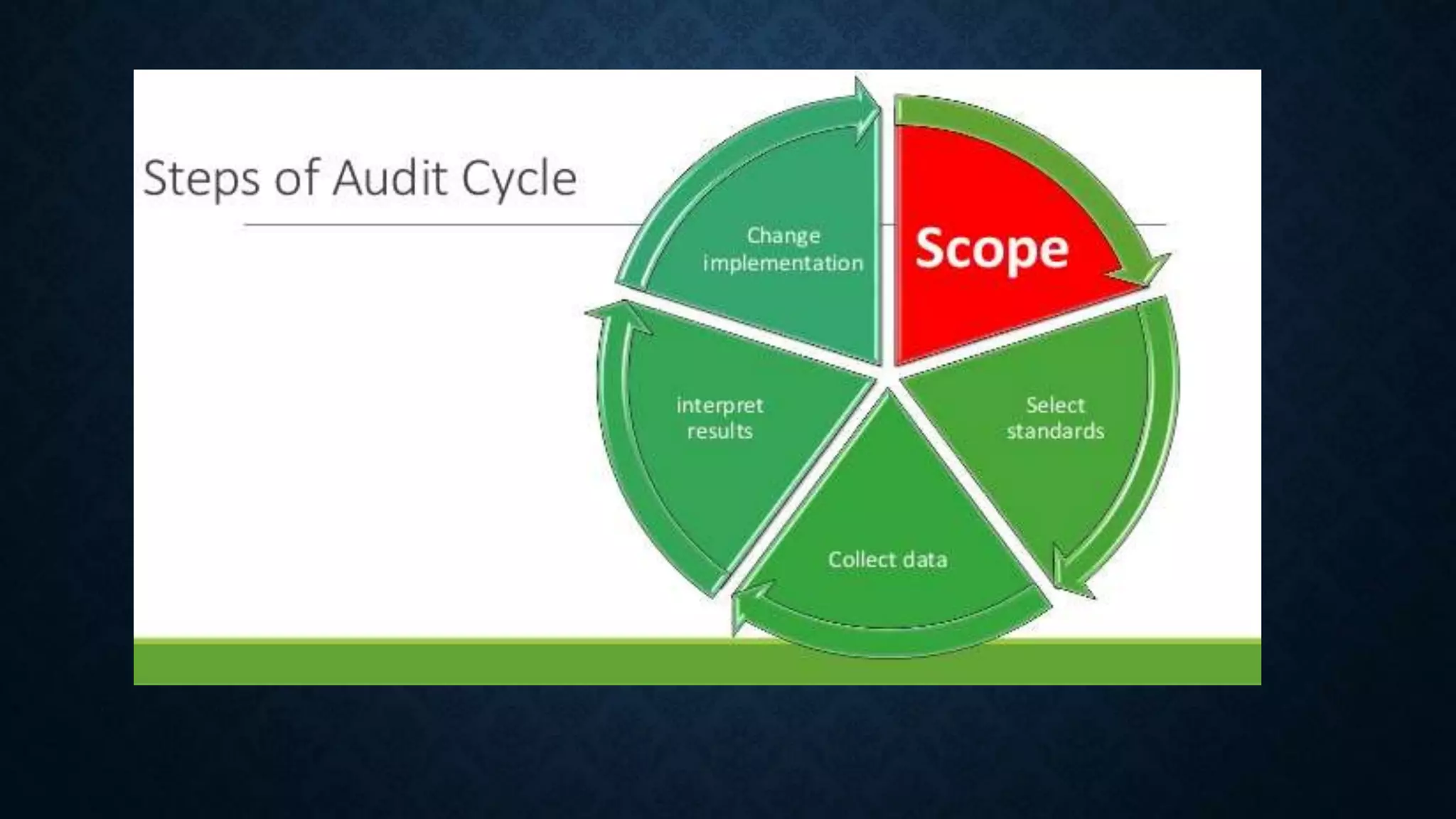
COLLECT DATA
- The information necessary to answer the audit
question.
- Collect prospectively or retrospectively.
- Follow up data collected.
- Data can be collected from a register, medical records
data, review of referrals, or from previous
appointment schedules.
Example
Audit title- the incidence of wound infection
following Meshplasty.
Criteria- there should be no wound infection
in such cases.
Standard- 95%, i.e. practice is satisfactory if
less than
5% of cases have wound infection.
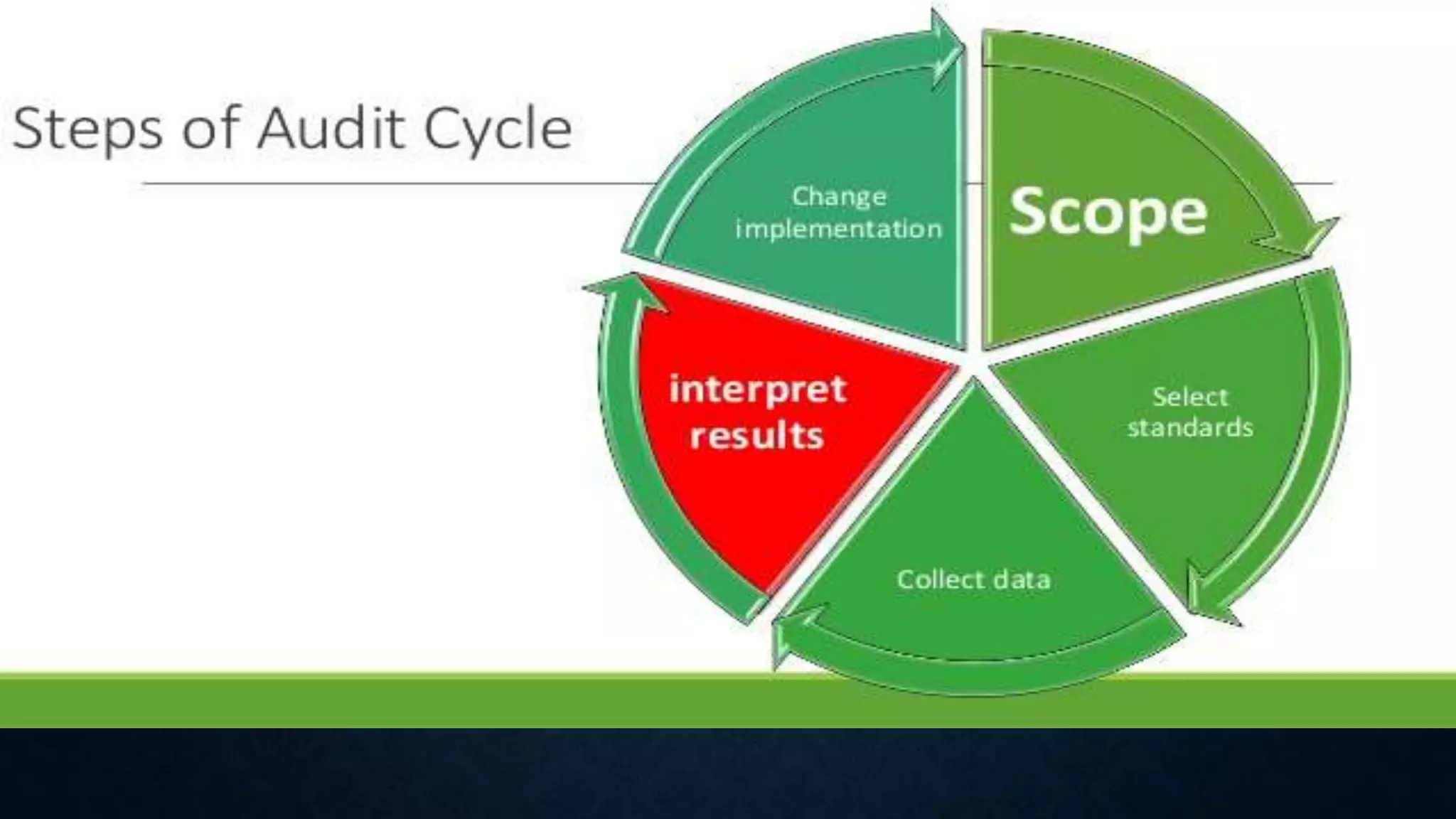
- Analysis stage, whereby the results of the data
collection are compared with criteria and
standards.
-The end stage of analysis is concluding how well
the standards were met and, if applicable,
identifying reasons why the standards weren’t met
in all cases.
-These reasons might be agreed to be acceptable,
i.e. could be added to the exception criteria for the
standard in future, or will suggest a focus for
improvement measures.
DISCUSS YOUR RESULTS
- Concludes if standards were met,
and if not, because of what.
-What needs to be done about that ?
-Is the solution practical ?
-Was the standard itself applicable
- Once the results of the audit have been
published and discussed, it is time to
formulate and action and, that should
include;
- What needs to be done or changed.
- Who is going to do it.
- How it will be done.
- Involve higher authorities.
RE-AUDITING CYCLE
- After an agreed time frame, the audit should be repeated.
- The same methods and data analysis are used to ensure
comparability.
- The re-audit should demonstrate that the changes have been
implemented and that improvements have been made.
- This stage critical to the successful outcome of the audit process as
it verifies whether the changes implemented have had an effect.
ADVANTAGES
OF AUDIT
• Identifies bad practice
• Reduces unnecessary investigations, medications and
treatment
• Decreased length of admission
• Allows continuous refinement of treatment modalities
• Allows objective assessment of quality of care
• Improves efficiency and guides resource allocation
• Improved education, training and feedback
• Healthy competition
DISADVANTAGES
OF AUDIT
• Takes considerable time and effort
• Highlights bad practice and “bad doctors”
• Exposes doctors to punitive action
• Doesn’t always tell the full story
• Pointless if no ability to make changes
• Promotes reliance on protocols and guidelines above
clinical judgment
- Keep audits simple
- Get everyone involved
- Do not confuse clinical audit with research
- Take care with statistics-errors can lead to
inaccurate conclusion
- Share learning-tell everyone about your audit.
- Tell- The Organisation about audit
- Re-audit to ensure improvement in clinical care.
surgical audit
surgical audit

surgical audit

  • 1.
  • 2.
    Outline • Definition • HistoricalPerspective • Aims and need of audit • Audit v/s Research v/s Survey • Types of audit • Stages of surgical Audit • Advantages and Disadvantages of audits • Take home message
  • 3.
    SURGICAL AUDIT Surgical auditis a systematic, critical analysis of the quality of care that is reviewed by peers against explicit criteria or recognised standards, and then used to further improve the surgical practice with the ultimate goal of improving the care of patients.
  • 4.
    - Earliest pioneersof clinical audit. - Applied strict standards of hygiene for the hospital and its equipment and demonstrated a fall in mortality rates from 40% to 2%. FLORENCE NIGHTINGALE
  • 5.
    AIMS To identify whetherstandards are being met, and evidence from research are being used in practice. To identify baselines for development of standards. To reduce clinical risk. To ensure cost effective use of resources, and effectiveness of a service. To highlight problems, and help in the solution. To improve team working and communication. To improve patient care and outcomes.
  • 6.
    NEED FOR CLINICALAUDIT 2. For Society- To ensure safety of public and protect them from inappropriate, suboptimal & harmful. 1. For Professionals- Healthcare providers can identify their lacunae/deficiencies and make necessary corrections. 3. For health promotion- To reduce patient sufferings and avoid the possibility of denial to the patients of available services or injury by excessive or inappropriate service.
  • 9.
    TYPES OF AUDIT BASEDON EVENTS BASED ON SIZE • Retrospective • concurrent • Individual • Unit • Hospital • State • Regional • National
  • 10.
    APPROACHES OF CLINICALAUDIT Care is evaluated at the time it is taking place CLINICAL AUDIT CONCURRENT AUDIT RETROSPECTIVE AUDIT Care is evaluated after it has been completed through records
  • 16.
    COLLECT DATA - Theinformation necessary to answer the audit question. - Collect prospectively or retrospectively. - Follow up data collected. - Data can be collected from a register, medical records data, review of referrals, or from previous appointment schedules.
  • 19.
    Example Audit title- theincidence of wound infection following Meshplasty. Criteria- there should be no wound infection in such cases. Standard- 95%, i.e. practice is satisfactory if less than 5% of cases have wound infection.
  • 20.
    - Analysis stage,whereby the results of the data collection are compared with criteria and standards. -The end stage of analysis is concluding how well the standards were met and, if applicable, identifying reasons why the standards weren’t met in all cases. -These reasons might be agreed to be acceptable, i.e. could be added to the exception criteria for the standard in future, or will suggest a focus for improvement measures.
  • 21.
    DISCUSS YOUR RESULTS -Concludes if standards were met, and if not, because of what. -What needs to be done about that ? -Is the solution practical ? -Was the standard itself applicable
  • 22.
    - Once theresults of the audit have been published and discussed, it is time to formulate and action and, that should include; - What needs to be done or changed. - Who is going to do it. - How it will be done. - Involve higher authorities.
  • 23.
    RE-AUDITING CYCLE - Afteran agreed time frame, the audit should be repeated. - The same methods and data analysis are used to ensure comparability. - The re-audit should demonstrate that the changes have been implemented and that improvements have been made. - This stage critical to the successful outcome of the audit process as it verifies whether the changes implemented have had an effect.
  • 24.
    ADVANTAGES OF AUDIT • Identifiesbad practice • Reduces unnecessary investigations, medications and treatment • Decreased length of admission • Allows continuous refinement of treatment modalities • Allows objective assessment of quality of care • Improves efficiency and guides resource allocation • Improved education, training and feedback • Healthy competition
  • 25.
    DISADVANTAGES OF AUDIT • Takesconsiderable time and effort • Highlights bad practice and “bad doctors” • Exposes doctors to punitive action • Doesn’t always tell the full story • Pointless if no ability to make changes • Promotes reliance on protocols and guidelines above clinical judgment
  • 26.
    - Keep auditssimple - Get everyone involved - Do not confuse clinical audit with research - Take care with statistics-errors can lead to inaccurate conclusion - Share learning-tell everyone about your audit. - Tell- The Organisation about audit - Re-audit to ensure improvement in clinical care.