Supply Chain Management
Resilience
Tom Craig
tomc@ltdmgmt.com
1
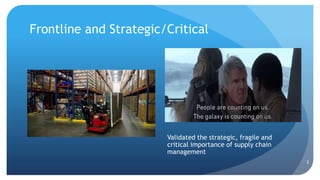
Frontline and Strategic/Critical
2
Validated the strategic, fragile and
critical importance of supply chain
management
First and
pre-pandemic
3
How well did your
supply chain operate?
How did you measure its
performance?
Where are your pain
points?
What would you change
about your supply chain?
Asking
• How has the robust supply
chain & its logistics uncertainty
& chaos affected your
operations, planning, sales,
and ERP?
• What have you learned?
• What ongoing problems do you
have?
• Beyond the immediate, what
are you doing to adapt and
change going forward?
4
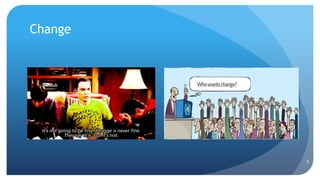
Change
5
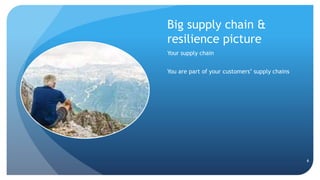
Big supply chain &
resilience picture
Your supply chain
You are part of your customers’ supply chains
6
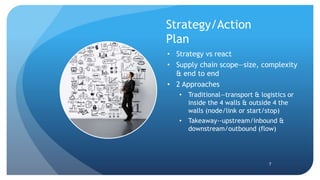
Strategy/Action
Plan
• Strategy vs react
• Supply chain scope—size, complexity
& end to end
• 2 Approaches
• Traditional—transport & logistics or
inside the 4 walls & outside 4 the
walls (node/link or start/stop)
• Takeaway--upstream/inbound &
downstream/outbound (flow)
7
Resilience &
Lessons Learned
Inside the 4 Walls
Structure
 Organization
 Process
 Technology
Metrics
Outside the 4 Walls
8
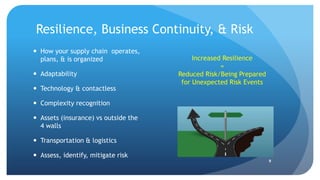
Resilience, Business Continuity, & Risk
 How your supply chain operates,
plans, & is organized
 Adaptability
 Technology & contactless
 Complexity recognition
 Assets (insurance) vs outside the
4 walls
 Transportation & logistics
 Assess, identify, mitigate risk
9
Increased Resilience
=
Reduced Risk/Being Prepared
for Unexpected Risk Events
Resilience
• Upstream & downstream
• Hidden parts
 Nonlinearity
 Supply chains within
supply chains
• Mapping
• Supplier tiers
• Chain of custody
10
Resilience & Change
 Sales channels
 Customer supply chains
 Visibility
 Resource positioning / network
 Outsourcing
• Diversify production
• Shifting sales—demographics,
businesses, channels, etc.
• Supply chain network
• Redesign
• Outside logistics/transport providers
11
Inside the 4 walls
Upstream & downstream
Structure
Organization
Process
Technology
Metrics
12
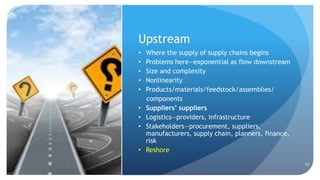
Upstream
• Where the supply of supply chains begins
• Problems here—exponential as flow downstream
• Size and complexity
• Nonlinearity
• Products/materials/feedstock/assemblies/
components
• Suppliers’ suppliers
• Logistics—providers, infrastructure
• Stakeholders—procurement, suppliers,
manufacturers, supply chain, planners, finance,
risk
• Reshore
13
Downstream
 Customer facing/customer centric
 Brand image
 Sales channels & different SCM
approaches/strategies
 Products/parts/materials
 Logistics—providers, infrastructure
 Stakeholders—supply chain, planners,
finance, risk, marketing, sales, real
estate
14
Start Upstream
15
Structure
• Organization
• Process
• Technology
16
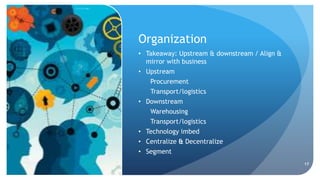
Organization
• Takeaway: Upstream & downstream / Align &
mirror with business
• Upstream
Procurement
Transport/logistics
• Downstream
Warehousing
Transport/logistics
• Technology imbed
• Centralize & Decentralize
• Segment
17
Process
Horizontal process (biggest process you have)
Internal
External: upstream & downstream
Gaps & Redundancies
Align operations & sales to SCM (more than S&OP)
18
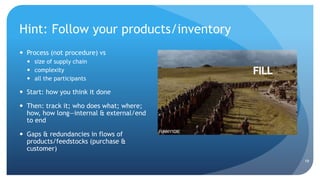
Hint: Follow your products/inventory
 Process (not procedure) vs
 size of supply chain
 complexity
 all the participants
 Start: how you think it done
 Then: track it; who does what; where;
how, how long—internal & external/end
to end
 Gaps & redundancies in flows of
products/feedstocks (purchase &
customer)
19
Technology
 Contactless: Drones, driverless trucks, warehouse robotics, 3D printing
 Data and analytics end-to-end/internal & external (and data sharing)
 Digitization
 Blockchain
 Visibility
20
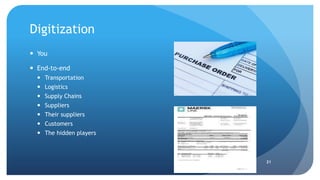
Digitization
21
 You
 End-to-end
 Transportation
 Logistics
 Supply Chains
 Suppliers
 Their suppliers
 Customers
 The hidden players
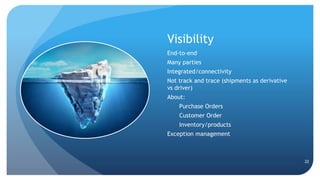
Visibility
End-to-end
Many parties
Integrated/connectivity
Not track and trace (shipments as derivative
vs driver)
About:
Purchase Orders
Customer Order
Inventory/products
Exception management
22
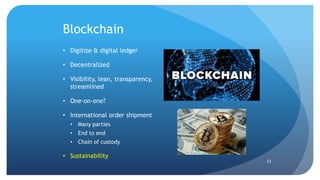
Blockchain
23
• Digitize & digital ledger
• Decentralized
• Visibility, lean, transparency,
streamlined
• One-on-one?
• International order shipment
• Many parties
• End to end
• Chain of custody
• Sustainability
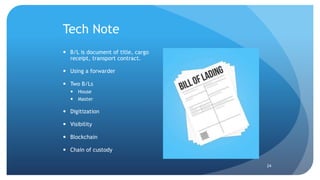
Tech Note
 B/L is document of title, cargo
receipt, transport contract.
 Using a forwarder
 Two B/Ls
 House
 Master
 Digitization
 Visibility
 Blockchain
 Chain of custody
24
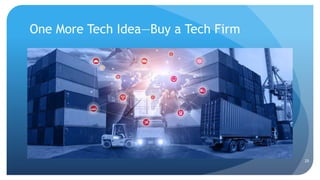
One More Tech Idea—Buy a Tech Firm
25
Riddle me this
1) Technology as part of strategy or
reactions
2) Digitization and Contactless
Delivered shipment quantity vs bill
of lading quantity
26
27
Defined by Costs
or
Defined by Performance
Metrics
Metrics
• Meaningful, validate direction
• 2 types--C-suite & performance vs
SCM & logistics
• Customer order delivery
performance—perfect order
• Purchase order delivery
performance—perfect PO
• Inventory turns—E2E
28
Where the visuals are
& what they mean
29
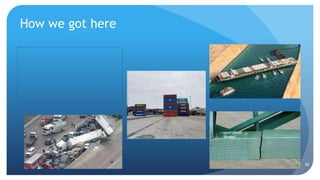
How we got here
30
What is going on
 Lack of empties
 Blank sailings
 Missed ports of call
 Rolled containers
 Poor on-time performance
 Rates going UP across modes
31
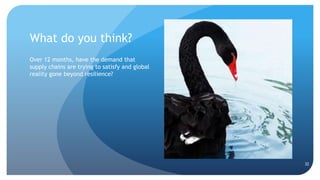
What do you think?
Over 12 months, have the demand that
supply chains are trying to satisfy and global
reality gone beyond resilience?
32
The Outside: Logistics
• Across transport modes
• Providers—who & why
• Power shift
• New way of negotiating and what to
target in negotiations
• Buying rates or service
• Rates or relationship
33
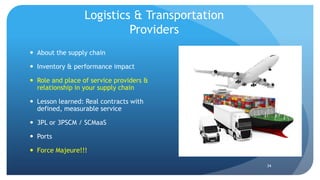
Logistics & Transportation
Providers
 About the supply chain
 Inventory & performance impact
 Role and place of service providers &
relationship in your supply chain
 Lesson learned: Real contracts with
defined, measurable service
 3PL or 3PSCM / SCMaaS
 Ports
 Force Majeure!!!
34
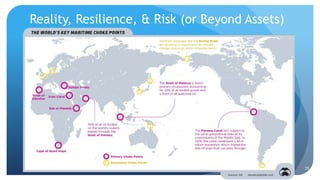
Reality, Resilience, & Risk (or Beyond Assets)
35
Redefining/expanding who they are
 Maersk—E2E integrated
logistics
 CMA CGM--airplanes
 FedEx and Adobe
 CSX buying Quality Carriers
36
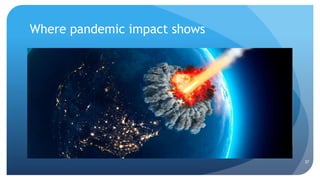
Where pandemic impact shows
37
Ship Cargo/Container Is Your Inventory
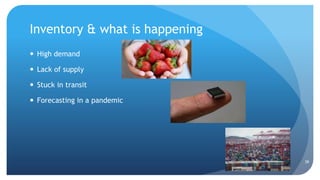
Inventory & what is happening
 High demand
 Lack of supply
 Stuck in transit
 Forecasting in a pandemic
39
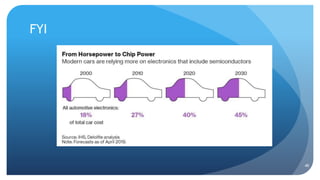
FYI
40
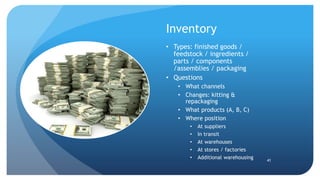
Inventory
• Types: finished goods /
feedstock / ingredients /
parts / components
/assemblies / packaging
• Questions
• What channels
• Changes: kitting &
repackaging
• What products (A, B, C)
• Where position
• At suppliers
• In transit
• At warehouses
• At stores / factories
• Additional warehousing 41
Inventory
• Forecasting in a pandemic
• “Optimization”
• Inventory (inventory turns/days of
inventory) speed –HOW OFTEN YOU GET
PAID
• Critical products
• A,B,C
• More stocking points as to inventory &
complexity
• Velocity/turns & alternative investments
• Integrated visibility
• CoViD—more or buffer inventory
• Inventory & warehousing
42
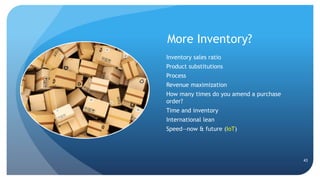
More Inventory?
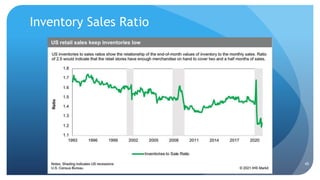
Inventory sales ratio
Product substitutions
Process
Revenue maximization
How many times do you amend a purchase
order?
Time and inventory
International lean
Speed—now & future (IoT)
43
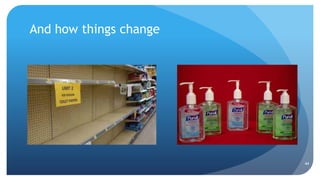
And how things change
44
Inventory Sales Ratio
45
46
SKU Rationalization
47
48
Your New Supply Chain
49
Release
the
Kraken
50

Supply Chain Management Resilience

  • 1.
  • 2.
    Frontline and Strategic/Critical 2 Validatedthe strategic, fragile and critical importance of supply chain management
  • 3.
    First and pre-pandemic 3 How welldid your supply chain operate? How did you measure its performance? Where are your pain points? What would you change about your supply chain?
  • 4.
    Asking • How hasthe robust supply chain & its logistics uncertainty & chaos affected your operations, planning, sales, and ERP? • What have you learned? • What ongoing problems do you have? • Beyond the immediate, what are you doing to adapt and change going forward? 4
  • 5.
  • 6.
    Big supply chain& resilience picture Your supply chain You are part of your customers’ supply chains 6
  • 7.
    Strategy/Action Plan • Strategy vsreact • Supply chain scope—size, complexity & end to end • 2 Approaches • Traditional—transport & logistics or inside the 4 walls & outside 4 the walls (node/link or start/stop) • Takeaway--upstream/inbound & downstream/outbound (flow) 7
  • 8.
    Resilience & Lessons Learned Insidethe 4 Walls Structure  Organization  Process  Technology Metrics Outside the 4 Walls 8
  • 9.
    Resilience, Business Continuity,& Risk  How your supply chain operates, plans, & is organized  Adaptability  Technology & contactless  Complexity recognition  Assets (insurance) vs outside the 4 walls  Transportation & logistics  Assess, identify, mitigate risk 9 Increased Resilience = Reduced Risk/Being Prepared for Unexpected Risk Events
  • 10.
    Resilience • Upstream &downstream • Hidden parts  Nonlinearity  Supply chains within supply chains • Mapping • Supplier tiers • Chain of custody 10
  • 11.
    Resilience & Change Sales channels  Customer supply chains  Visibility  Resource positioning / network  Outsourcing • Diversify production • Shifting sales—demographics, businesses, channels, etc. • Supply chain network • Redesign • Outside logistics/transport providers 11
  • 12.
    Inside the 4walls Upstream & downstream Structure Organization Process Technology Metrics 12
  • 13.
    Upstream • Where thesupply of supply chains begins • Problems here—exponential as flow downstream • Size and complexity • Nonlinearity • Products/materials/feedstock/assemblies/ components • Suppliers’ suppliers • Logistics—providers, infrastructure • Stakeholders—procurement, suppliers, manufacturers, supply chain, planners, finance, risk • Reshore 13
  • 14.
    Downstream  Customer facing/customercentric  Brand image  Sales channels & different SCM approaches/strategies  Products/parts/materials  Logistics—providers, infrastructure  Stakeholders—supply chain, planners, finance, risk, marketing, sales, real estate 14
  • 15.
  • 16.
  • 17.
    Organization • Takeaway: Upstream& downstream / Align & mirror with business • Upstream Procurement Transport/logistics • Downstream Warehousing Transport/logistics • Technology imbed • Centralize & Decentralize • Segment 17
  • 18.
    Process Horizontal process (biggestprocess you have) Internal External: upstream & downstream Gaps & Redundancies Align operations & sales to SCM (more than S&OP) 18
  • 19.
    Hint: Follow yourproducts/inventory  Process (not procedure) vs  size of supply chain  complexity  all the participants  Start: how you think it done  Then: track it; who does what; where; how, how long—internal & external/end to end  Gaps & redundancies in flows of products/feedstocks (purchase & customer) 19
  • 20.
    Technology  Contactless: Drones,driverless trucks, warehouse robotics, 3D printing  Data and analytics end-to-end/internal & external (and data sharing)  Digitization  Blockchain  Visibility 20
  • 21.
    Digitization 21  You  End-to-end Transportation  Logistics  Supply Chains  Suppliers  Their suppliers  Customers  The hidden players
  • 22.
    Visibility End-to-end Many parties Integrated/connectivity Not trackand trace (shipments as derivative vs driver) About: Purchase Orders Customer Order Inventory/products Exception management 22
  • 23.
    Blockchain 23 • Digitize &digital ledger • Decentralized • Visibility, lean, transparency, streamlined • One-on-one? • International order shipment • Many parties • End to end • Chain of custody • Sustainability
  • 24.
    Tech Note  B/Lis document of title, cargo receipt, transport contract.  Using a forwarder  Two B/Ls  House  Master  Digitization  Visibility  Blockchain  Chain of custody 24
  • 25.
    One More TechIdea—Buy a Tech Firm 25
  • 26.
    Riddle me this 1)Technology as part of strategy or reactions 2) Digitization and Contactless Delivered shipment quantity vs bill of lading quantity 26
  • 27.
    27 Defined by Costs or Definedby Performance Metrics
  • 28.
    Metrics • Meaningful, validatedirection • 2 types--C-suite & performance vs SCM & logistics • Customer order delivery performance—perfect order • Purchase order delivery performance—perfect PO • Inventory turns—E2E 28
  • 29.
    Where the visualsare & what they mean 29
  • 30.
    How we gothere 30
  • 31.
    What is goingon  Lack of empties  Blank sailings  Missed ports of call  Rolled containers  Poor on-time performance  Rates going UP across modes 31
  • 32.
    What do youthink? Over 12 months, have the demand that supply chains are trying to satisfy and global reality gone beyond resilience? 32
  • 33.
    The Outside: Logistics •Across transport modes • Providers—who & why • Power shift • New way of negotiating and what to target in negotiations • Buying rates or service • Rates or relationship 33
  • 34.
    Logistics & Transportation Providers About the supply chain  Inventory & performance impact  Role and place of service providers & relationship in your supply chain  Lesson learned: Real contracts with defined, measurable service  3PL or 3PSCM / SCMaaS  Ports  Force Majeure!!! 34
  • 35.
    Reality, Resilience, &Risk (or Beyond Assets) 35
  • 36.
    Redefining/expanding who theyare  Maersk—E2E integrated logistics  CMA CGM--airplanes  FedEx and Adobe  CSX buying Quality Carriers 36
  • 37.
  • 38.
  • 39.
    Inventory & whatis happening  High demand  Lack of supply  Stuck in transit  Forecasting in a pandemic 39
  • 40.
  • 41.
    Inventory • Types: finishedgoods / feedstock / ingredients / parts / components /assemblies / packaging • Questions • What channels • Changes: kitting & repackaging • What products (A, B, C) • Where position • At suppliers • In transit • At warehouses • At stores / factories • Additional warehousing 41
  • 42.
    Inventory • Forecasting ina pandemic • “Optimization” • Inventory (inventory turns/days of inventory) speed –HOW OFTEN YOU GET PAID • Critical products • A,B,C • More stocking points as to inventory & complexity • Velocity/turns & alternative investments • Integrated visibility • CoViD—more or buffer inventory • Inventory & warehousing 42
  • 43.
    More Inventory? Inventory salesratio Product substitutions Process Revenue maximization How many times do you amend a purchase order? Time and inventory International lean Speed—now & future (IoT) 43
  • 44.
    And how thingschange 44
  • 45.
  • 46.
  • 47.
  • 48.
  • 49.
    Your New SupplyChain 49 Release the Kraken
  • 50.

Editor's Notes
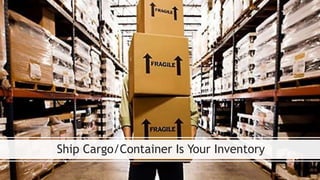
  • #37 They know the how of logistics. They do not know the what and why of supply chain management. Maersk—doing disintermediation?