Using technology-enhanced PLEs to
support mobile learning
Sean Dowling
Prof. Inmaculada Arnedillo-Sánchez
Prof. Declan O’ Sullivan
About the Presenter
• Almost 20 years experience in education;
• Worked as an EFL teacher in Japan, Thailand and the Middle East;
• Last 10 years – educational technologist in the Middle East;
• Currently Marie Curie Research Fellow in Trinity College Dublin, Ireland.
• Working on PhD as part of the European Commission funded EDUWORKS
project.
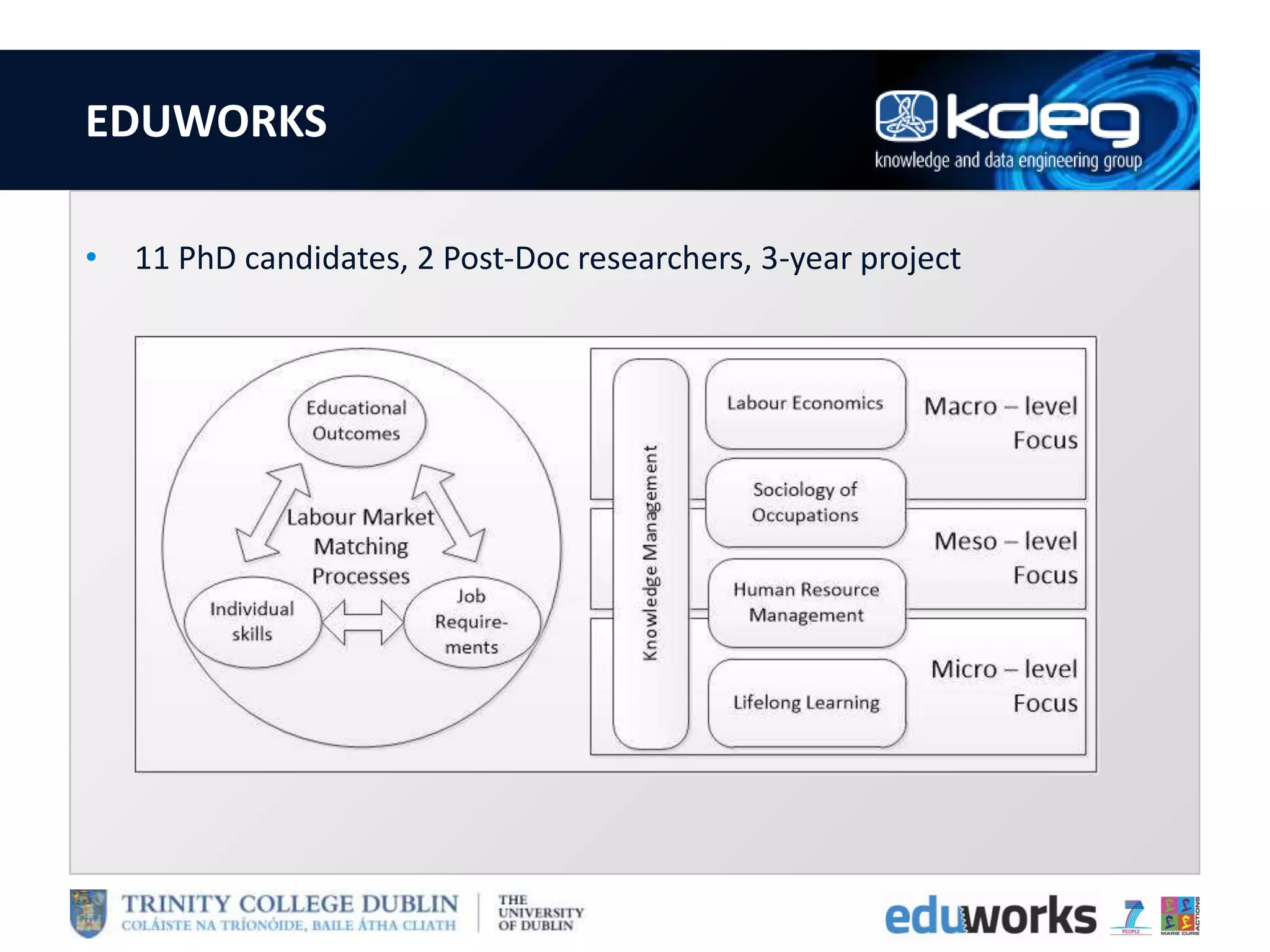
EDUWORKS
• 11 PhD candidates, 2 Post-Doc researchers, 3-year project
Presentation Overview
• Lifelong learning (LLL), informal learning, mobile learning
• Learning trajectories and transitions
• Challenges to maintaining learning trajectories
• Using technology-enhanced personal learning environments (PLEs) to
respond to the challenges
Lifelong learning
All learning activity undertaken throughout life,
with the aim of improving knowledge, skills and
competencies within a personal, civic, social
and/or employment-related perspective.
(European Commission, 2001)
Lifelong learning
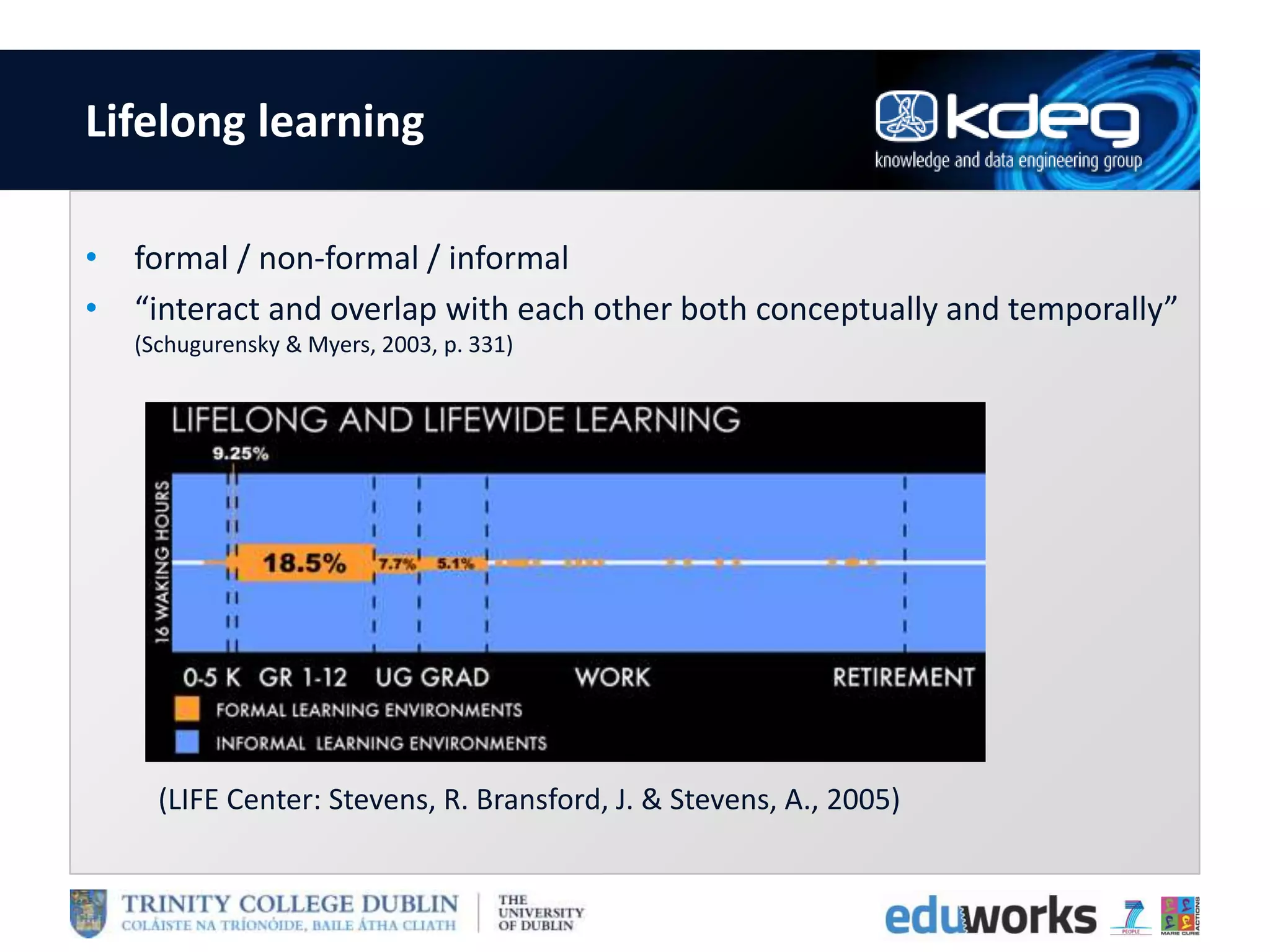
• formal / non-formal / informal
• “interact and overlap with each other both conceptually and temporally”
(Schugurensky & Myers, 2003, p. 331)
(LIFE Center: Stevens, R. Bransford, J. & Stevens, A., 2005)
Informal learning
• Incidental learning that results from everyday
experiences occurring in a wide variety of
contexts.
• Mobile in nature
Mobile Learning
• Learning that occurs in different locations, with
different people, interwoven with other activities,
using different technologies and dispersed over
time. (Sharples et al, 2009)
• Multi-dimensional
• Formal, non-formal or informal
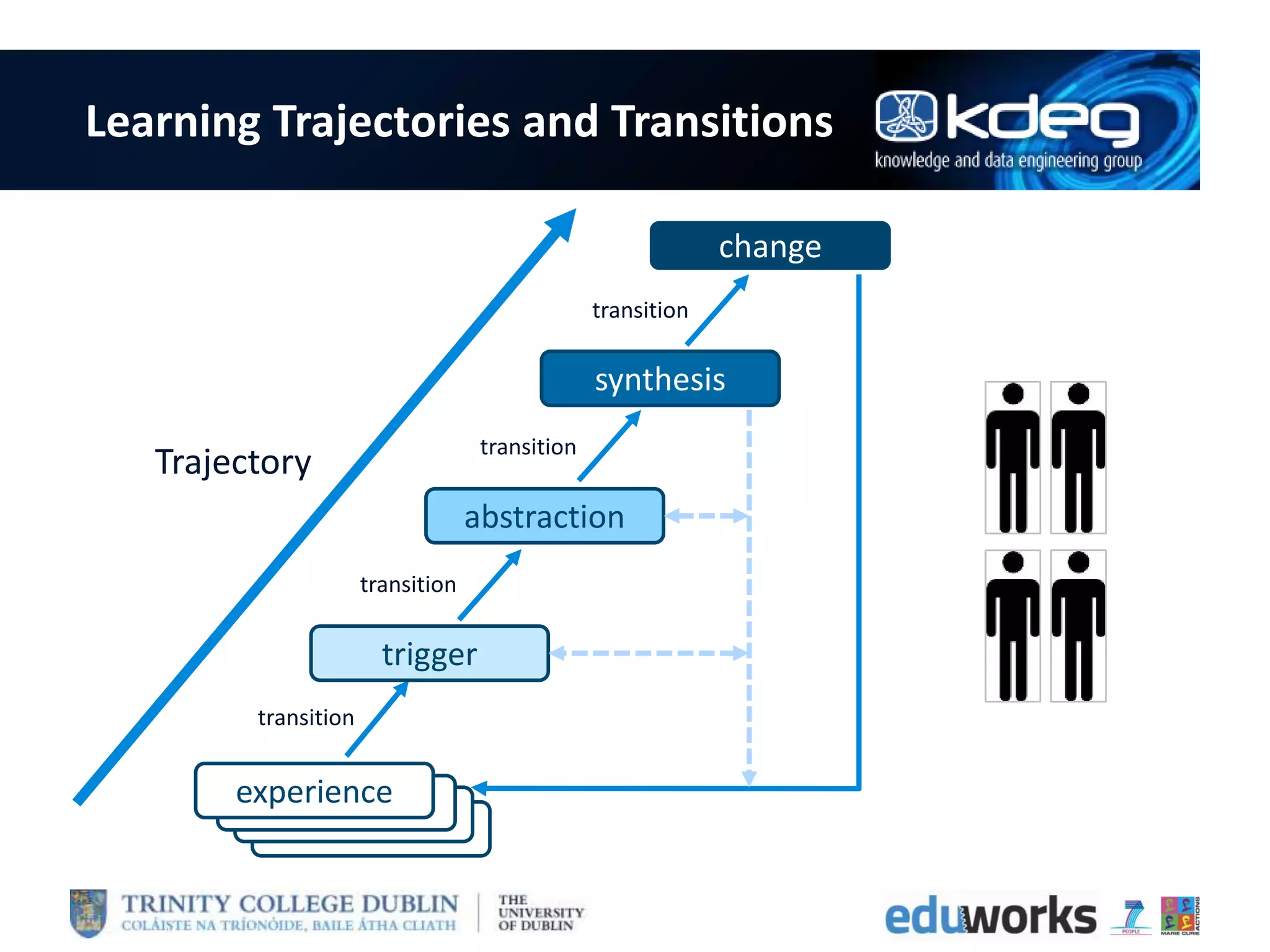
Learning Trajectories and Transitions
change
trigger
abstraction
synthesis
Trajectory
transition
transition
transition
transition
experience
Challenges to learning trajectories
Mobility of learners presents some challenges:
1. Competing conceptual demands;
2. Limited access to existing knowledge;
3. Poor recall of original experiences.
Technology-enhanced solutions
Challenge 1 – Competing conceptual demands
• Record experience for later reflection
• Audio / Video / Photo / Text
• Text editor
Technology-enhanced Solutions
Challenge 2 – Limited access to existing knowledge
• Record experience for later reflection
• Recommendation systems
• Sharing / collaboration with others
• Organizing / connection learning experiences
Technology-enhanced Solutions
Challenge 3 – Poor recall of original experiences
• Record experience for later reflection
• Notifications
Personal Learning Environments
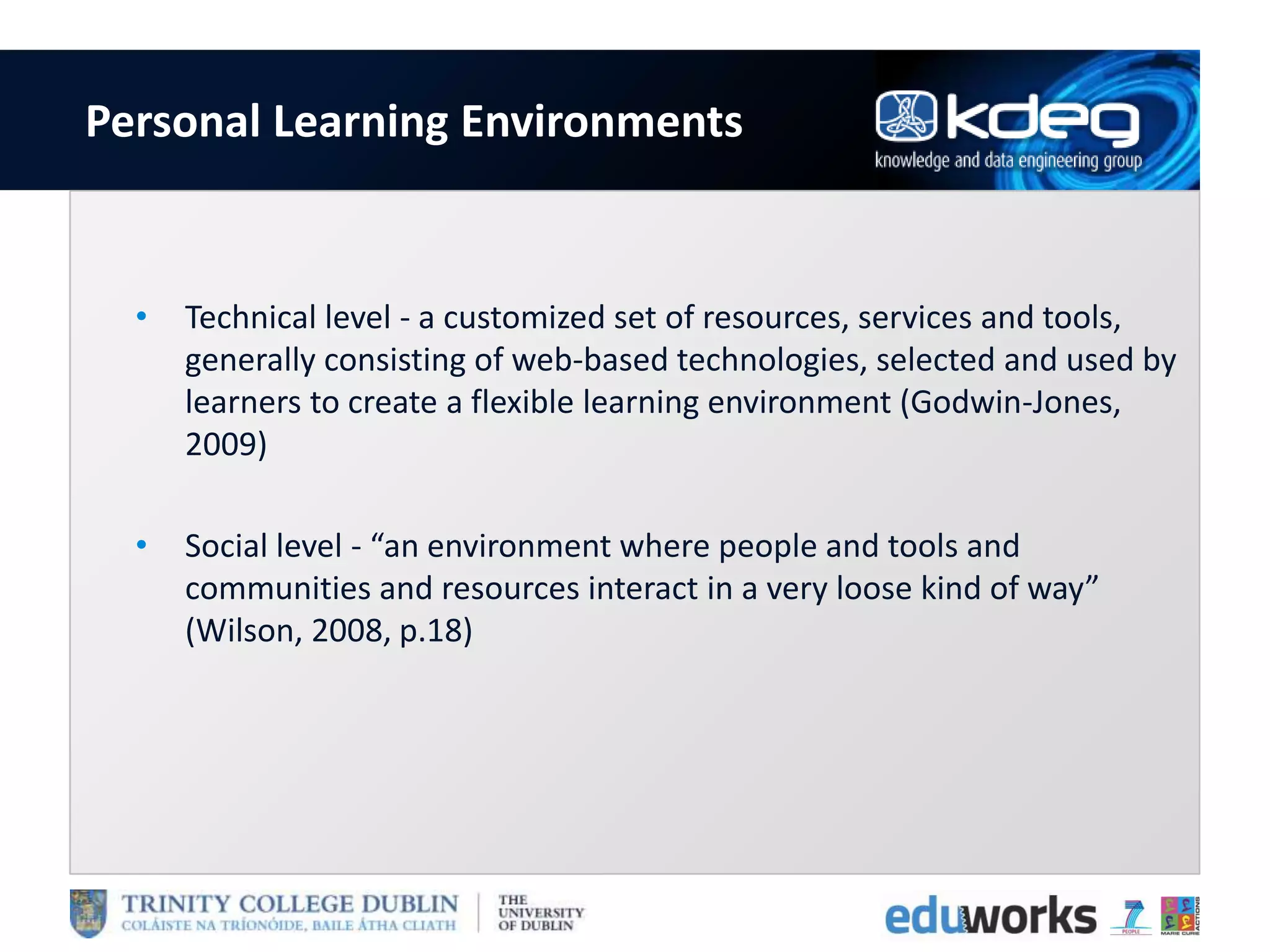
• Technical level - a customized set of resources, services and tools,
generally consisting of web-based technologies, selected and used by
learners to create a flexible learning environment (Godwin-Jones,
2009)
• Social level - “an environment where people and tools and
communities and resources interact in a very loose kind of way”
(Wilson, 2008, p.18)
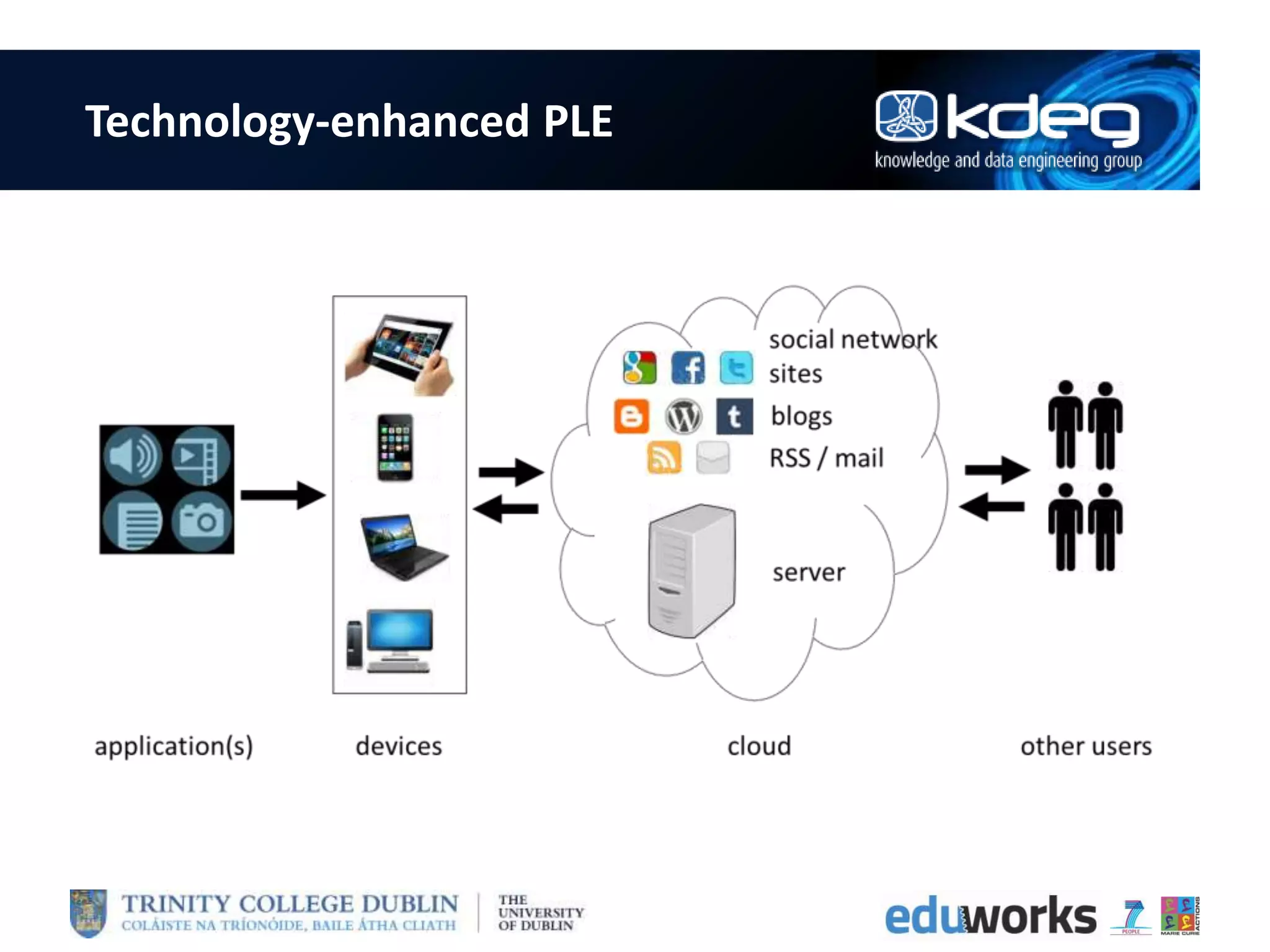
Technology-enhanced PLE
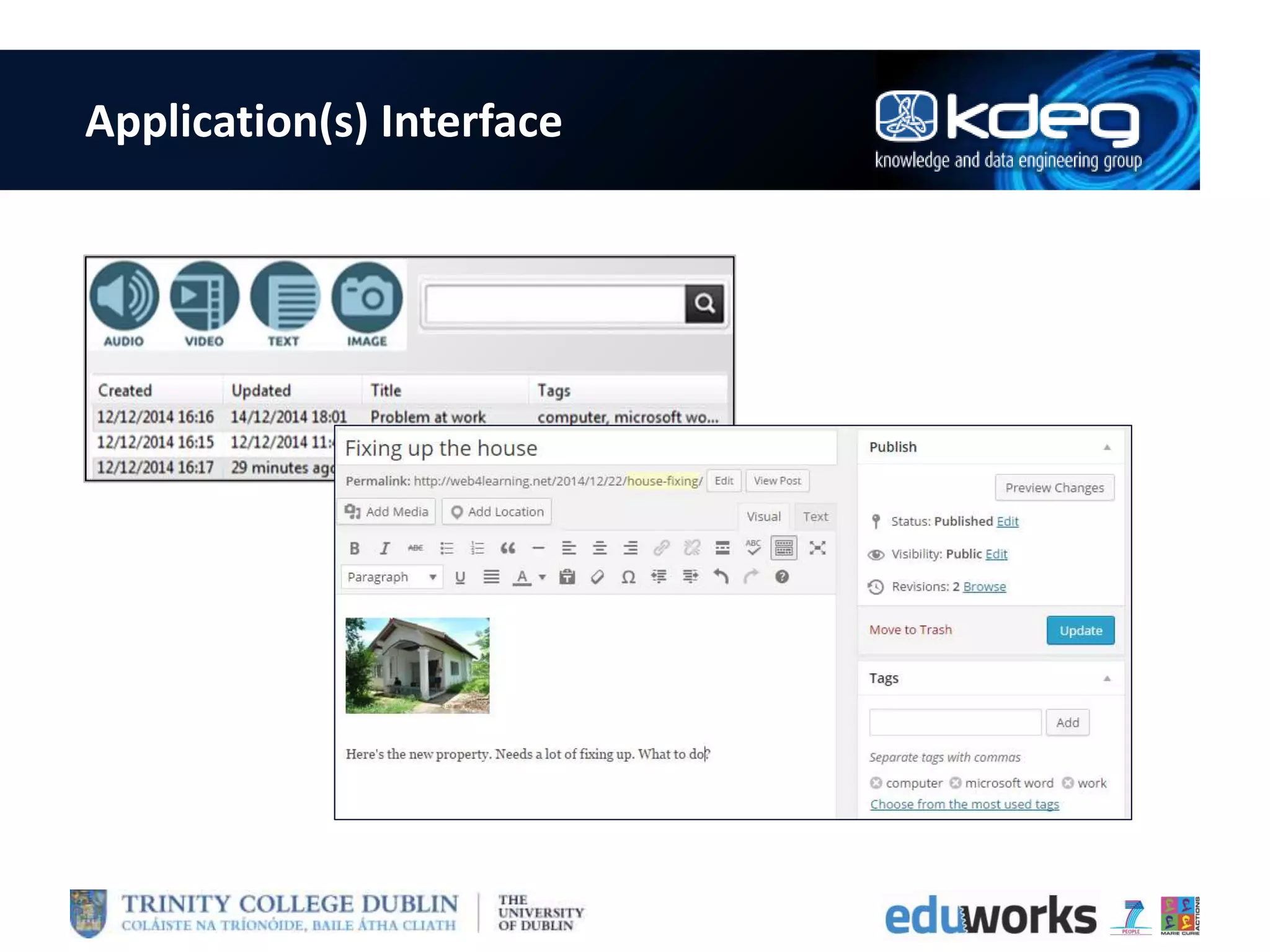
Application(s) Interface
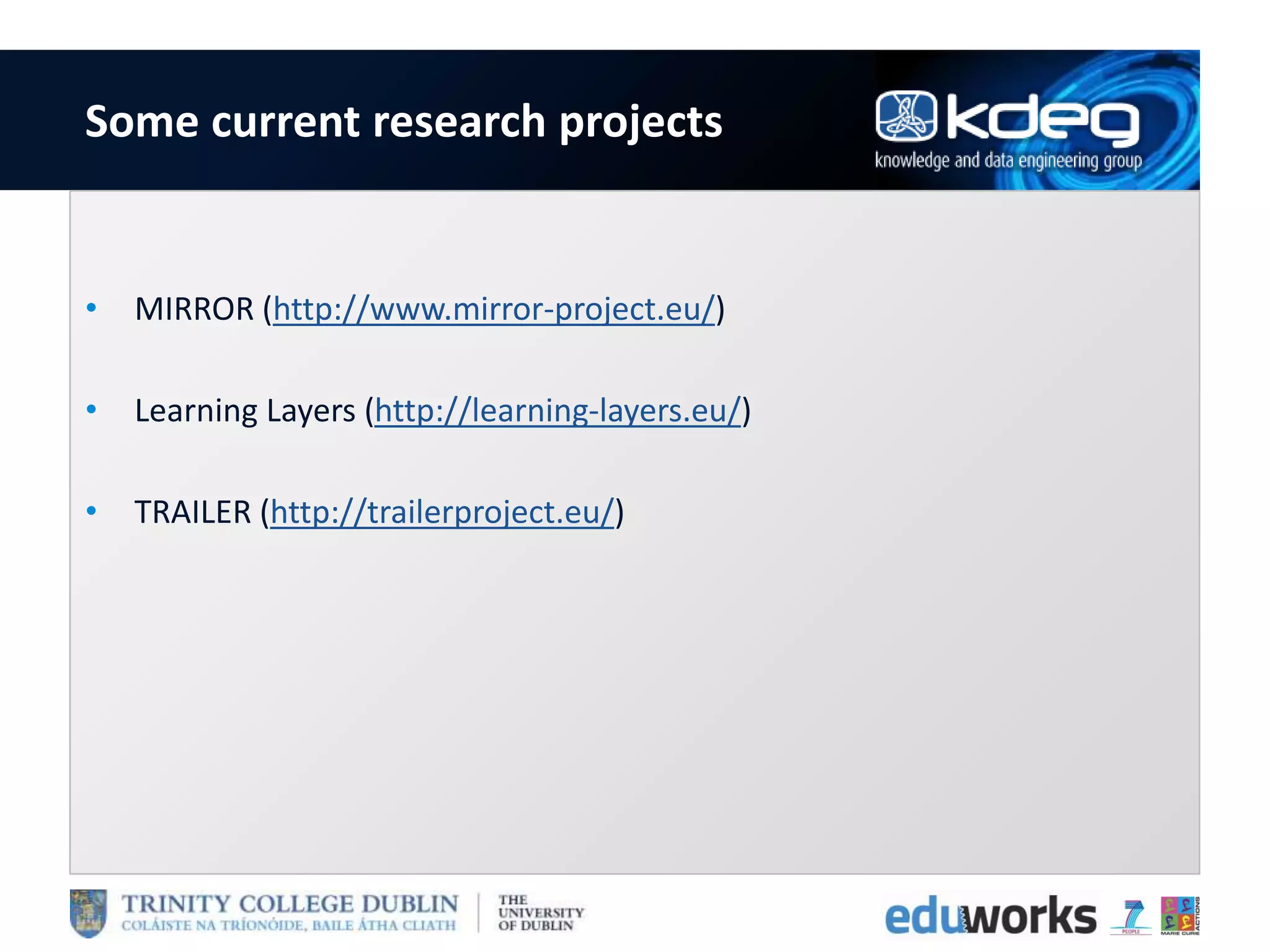
Some current research projects
• MIRROR (http://www.mirror-project.eu/)
• Learning Layers (http://learning-layers.eu/)
• TRAILER (http://trailerproject.eu/)
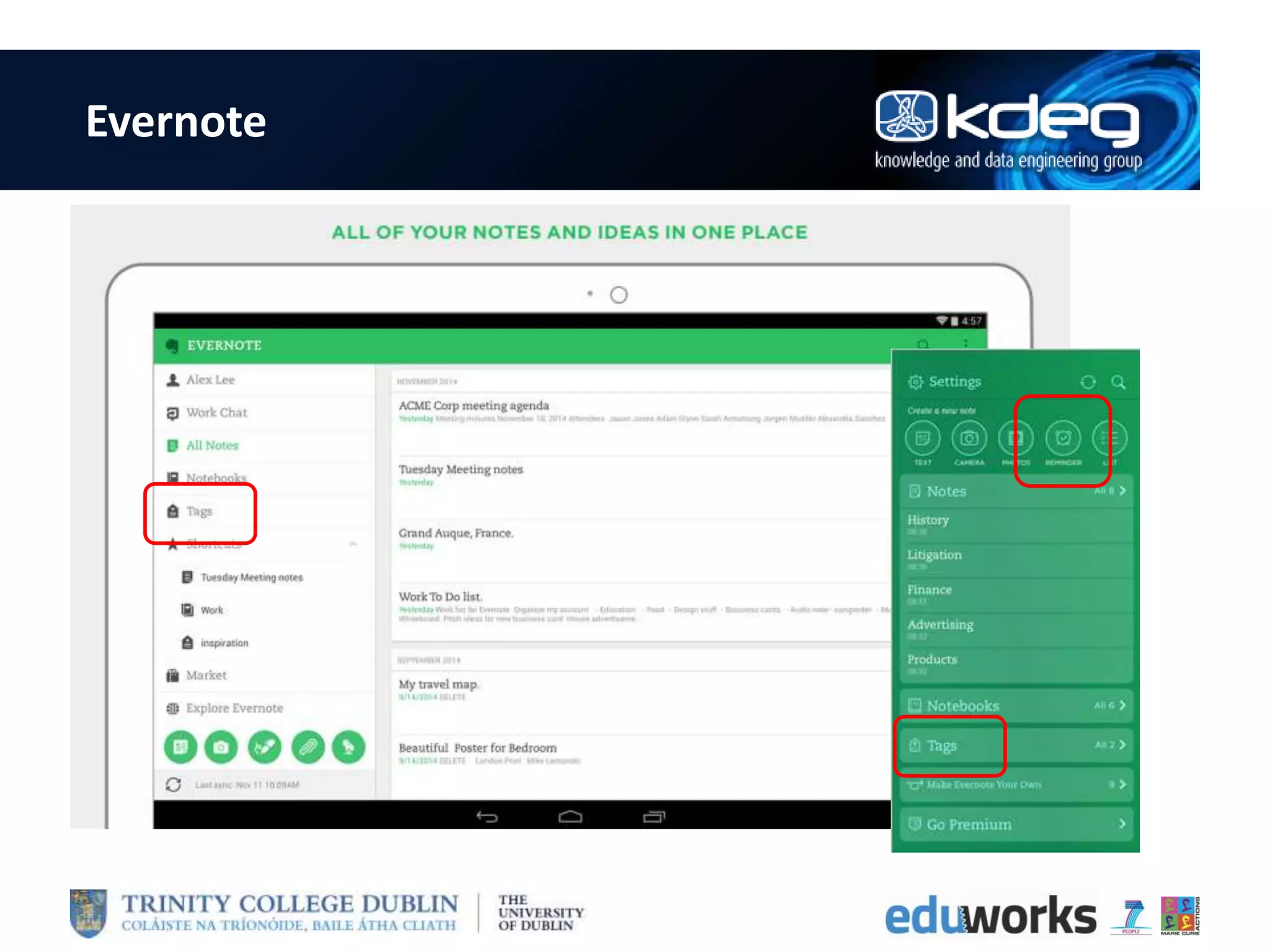
Evernote
Future work
• Collect data on 1) how technology (in particular, PLEs) is being used to
support lifelong learning trajectories; 2) effects (positive and negative) of
learner mobility on lifelong learning trajectories;
• Identify any significant patterns in this data;
• Recommendations for future learning technologies based on the
data/patterns.
Acknowledgments
• Prof. Inmaculada Arnedillo-Sánchez / Prof. Declan O’ Sullivan
• EDUWORKS – European Commission FP7 funding
References
• European Commission. (2001). Making a European Area of Lifelong Learning
a Reality. Communication from the Commission. European Commission.
Retrieved from http://eric.ed.gov/?id=ED476026.
• Godwin-Jones, R. (2009). Emerging technologies: Personal learning
environments. Language Learning & Technology, 13(2), 3–9.
• LIFE Center: Stevens, R. Bransford, J. & Stevens, A. (2005). Details on the LIFE
Center Lifelong and Lifewide Learning Diagram. Retrieved from http://life-
slc.org/about/citationdetails.html
• Sharples, M., Arnedillo-Sanchez, I., Milrad, M., & Vavoula, G. (2009). Chapter
14 Small devices , Big issues. In Technology-Enhanced Learning - Principles
and Products (pp. 233–251).
• Schugurensky, D., & Myers, J. (2003). A framework to explore lifelong
learning: the case of the civic education of civics teachers. International
Journal of Lifelong Education, 22(4), 325–352.
• Wilson, S. (2008). Patterns of personal learning environments. Interactive
Learning Environments, 16(1), 17–34.
Acknowledgments
Any questions or feedback?
Thank you.

Suny presentation jan13_2015

  • 1.
    Using technology-enhanced PLEsto support mobile learning Sean Dowling Prof. Inmaculada Arnedillo-Sánchez Prof. Declan O’ Sullivan
  • 2.
    About the Presenter •Almost 20 years experience in education; • Worked as an EFL teacher in Japan, Thailand and the Middle East; • Last 10 years – educational technologist in the Middle East; • Currently Marie Curie Research Fellow in Trinity College Dublin, Ireland. • Working on PhD as part of the European Commission funded EDUWORKS project.
  • 3.
    EDUWORKS • 11 PhDcandidates, 2 Post-Doc researchers, 3-year project
  • 4.
    Presentation Overview • Lifelonglearning (LLL), informal learning, mobile learning • Learning trajectories and transitions • Challenges to maintaining learning trajectories • Using technology-enhanced personal learning environments (PLEs) to respond to the challenges
  • 5.
    Lifelong learning All learningactivity undertaken throughout life, with the aim of improving knowledge, skills and competencies within a personal, civic, social and/or employment-related perspective. (European Commission, 2001)
  • 6.
    Lifelong learning • formal/ non-formal / informal • “interact and overlap with each other both conceptually and temporally” (Schugurensky & Myers, 2003, p. 331) (LIFE Center: Stevens, R. Bransford, J. & Stevens, A., 2005)
  • 7.
    Informal learning • Incidentallearning that results from everyday experiences occurring in a wide variety of contexts. • Mobile in nature
  • 8.
    Mobile Learning • Learningthat occurs in different locations, with different people, interwoven with other activities, using different technologies and dispersed over time. (Sharples et al, 2009) • Multi-dimensional • Formal, non-formal or informal
  • 9.
    Learning Trajectories andTransitions change trigger abstraction synthesis Trajectory transition transition transition transition experience
  • 10.
    Challenges to learningtrajectories Mobility of learners presents some challenges: 1. Competing conceptual demands; 2. Limited access to existing knowledge; 3. Poor recall of original experiences.
  • 11.
    Technology-enhanced solutions Challenge 1– Competing conceptual demands • Record experience for later reflection • Audio / Video / Photo / Text • Text editor
  • 12.
    Technology-enhanced Solutions Challenge 2– Limited access to existing knowledge • Record experience for later reflection • Recommendation systems • Sharing / collaboration with others • Organizing / connection learning experiences
  • 13.
    Technology-enhanced Solutions Challenge 3– Poor recall of original experiences • Record experience for later reflection • Notifications
  • 14.
    Personal Learning Environments •Technical level - a customized set of resources, services and tools, generally consisting of web-based technologies, selected and used by learners to create a flexible learning environment (Godwin-Jones, 2009) • Social level - “an environment where people and tools and communities and resources interact in a very loose kind of way” (Wilson, 2008, p.18)
  • 15.
  • 16.
  • 17.
    Some current researchprojects • MIRROR (http://www.mirror-project.eu/) • Learning Layers (http://learning-layers.eu/) • TRAILER (http://trailerproject.eu/)
  • 18.
  • 19.
    Future work • Collectdata on 1) how technology (in particular, PLEs) is being used to support lifelong learning trajectories; 2) effects (positive and negative) of learner mobility on lifelong learning trajectories; • Identify any significant patterns in this data; • Recommendations for future learning technologies based on the data/patterns.
  • 20.
    Acknowledgments • Prof. InmaculadaArnedillo-Sánchez / Prof. Declan O’ Sullivan • EDUWORKS – European Commission FP7 funding
  • 21.
    References • European Commission.(2001). Making a European Area of Lifelong Learning a Reality. Communication from the Commission. European Commission. Retrieved from http://eric.ed.gov/?id=ED476026. • Godwin-Jones, R. (2009). Emerging technologies: Personal learning environments. Language Learning & Technology, 13(2), 3–9. • LIFE Center: Stevens, R. Bransford, J. & Stevens, A. (2005). Details on the LIFE Center Lifelong and Lifewide Learning Diagram. Retrieved from http://life- slc.org/about/citationdetails.html • Sharples, M., Arnedillo-Sanchez, I., Milrad, M., & Vavoula, G. (2009). Chapter 14 Small devices , Big issues. In Technology-Enhanced Learning - Principles and Products (pp. 233–251). • Schugurensky, D., & Myers, J. (2003). A framework to explore lifelong learning: the case of the civic education of civics teachers. International Journal of Lifelong Education, 22(4), 325–352. • Wilson, S. (2008). Patterns of personal learning environments. Interactive Learning Environments, 16(1), 17–34.
  • 22.

Editor's Notes

  • #6 Mention about the EU’s LLL push for 2020.