
How many times you have gone to a restaurant  and did not like the dish you ordered and wished someone would have told you what to order?
W ho knows the best about the food and beverage in a restaurant?
Its  y ou!
Do you know that  70%  of the guest do not know what they will order when they come to the restaurant..
So it depends on you to make a guest’s experience even better by  suggesting them food and beverages as per their needs and wants.
S elling by  S uggestions
S uggestive  s elling:   Is to increase a guest’s original order by giving them suggestions and ideas and in turn increasing guest satisfaction and average spend.
Suggestive selling is an integral part of guest service. It is your responsibility to get the guest order for the product which is right for them; but it should be done discreetly.
And moreover guest’s are open to suggestions because.. It saves them time It saves them money It saves them effort They get to experiment new products. And it’s a win-win situation for both!!
The  S elling  P rocess
PROSPECTING:  IDENTIFYING POTENTIAL CUSTOMERS FOLLOWING UP ASKING FOR THE SALE HANDLING OBJECTIONS PRE APPROACH: KNOW YOUR PRODUCT APPROACHING THE GUEST MAKING THE SALES
Know your Product The name and pronunciation The ingredients The method of cooking The portion size The sauces and accompaniments The replacements
The Opening Welcome: Smile, Eye contact and appropriate greeting Build Rapport : By asking questions Identifying Wants and Needs : Want is something that a guest may like but not need. Needs are the essentials.
Making the sales presentation and Handing objections Identify the opportunities. Recommend dishes or sides as   required. Give the guest choices. Don’t push. Mention a unique feature of the product
Use descriptive words while explaining the dishes; adjectives like delicious, freshly prepared, home made, chilled, refreshing etc will make the dish more tempting Speak with confidence Read the body language of the guest. If he seems disinterested then change the recommendations, suggest something else.  Suggest a smaller portion or sharing
Asking for the sale Asking the guest whether he would like to order the recommended dish. Reassure the guest of the choice that he/ she has made
Objections Don’t take it personally if the guests says no to the sale
Following up Ascertain the guest’s satisfaction. Thank the guest.
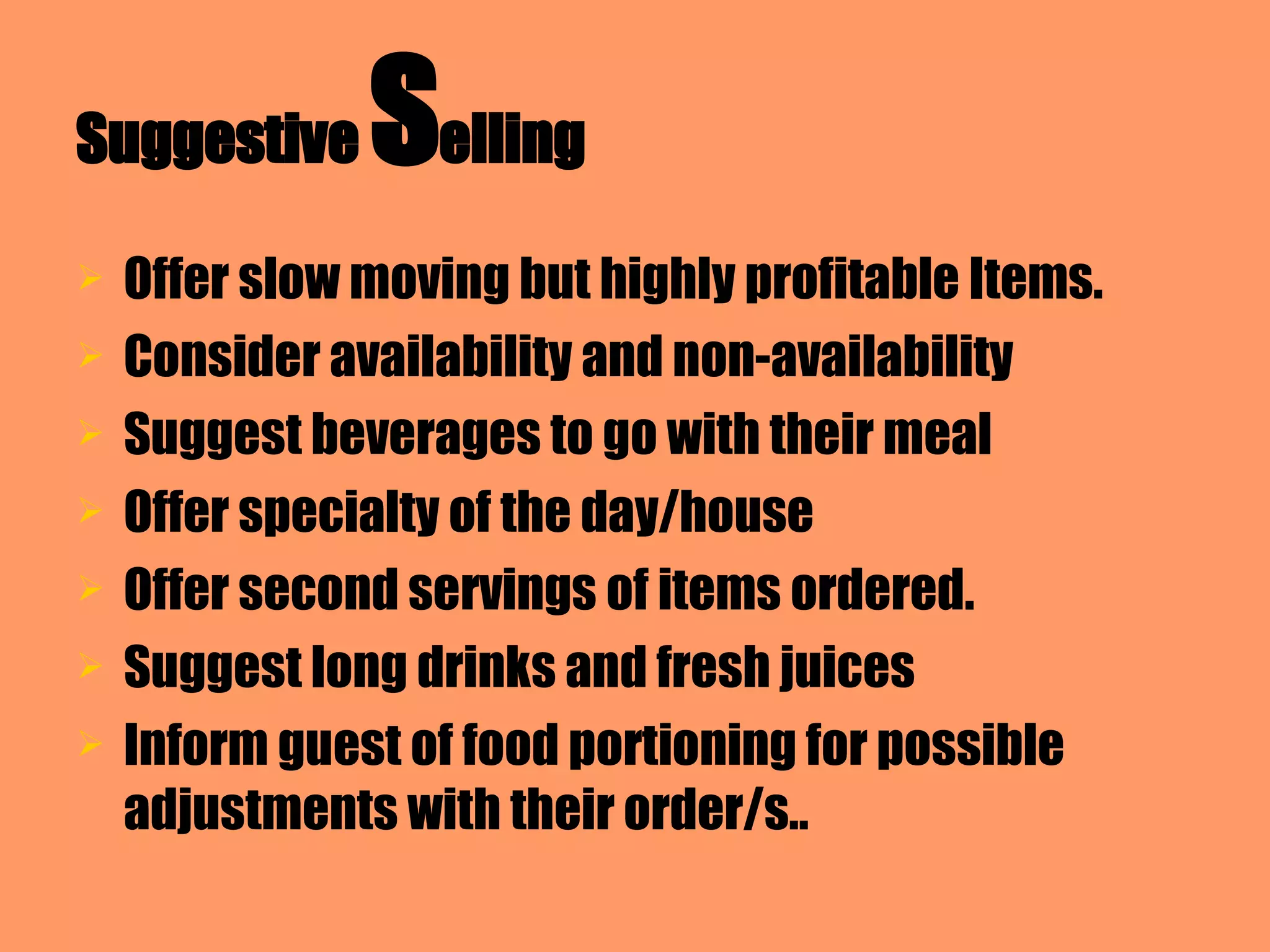
Suggestive  S elling Offer slow moving but highly profitable Items. Consider availability and non-availability Suggest beverages to go with their meal Offer specialty of the day/house Offer second servings of items ordered. Suggest long drinks and fresh juices Inform guest of food portioning for possible adjustments with their order/s..

Suggestive Selling in the Restaurants

  • 1.
    How many timesyou have gone to a restaurant and did not like the dish you ordered and wished someone would have told you what to order?
  • 2.
    W ho knowsthe best about the food and beverage in a restaurant?
  • 3.
    Its you!
  • 4.
    Do you knowthat 70% of the guest do not know what they will order when they come to the restaurant..
  • 5.
    So it dependson you to make a guest’s experience even better by suggesting them food and beverages as per their needs and wants.
  • 6.
    S elling by S uggestions
  • 7.
    S uggestive s elling: Is to increase a guest’s original order by giving them suggestions and ideas and in turn increasing guest satisfaction and average spend.
  • 8.
    Suggestive selling isan integral part of guest service. It is your responsibility to get the guest order for the product which is right for them; but it should be done discreetly.
  • 9.
    And moreover guest’sare open to suggestions because.. It saves them time It saves them money It saves them effort They get to experiment new products. And it’s a win-win situation for both!!
  • 10.
    The Selling P rocess
  • 11.
    PROSPECTING: IDENTIFYINGPOTENTIAL CUSTOMERS FOLLOWING UP ASKING FOR THE SALE HANDLING OBJECTIONS PRE APPROACH: KNOW YOUR PRODUCT APPROACHING THE GUEST MAKING THE SALES
  • 12.
    Know your ProductThe name and pronunciation The ingredients The method of cooking The portion size The sauces and accompaniments The replacements
  • 13.
    The Opening Welcome:Smile, Eye contact and appropriate greeting Build Rapport : By asking questions Identifying Wants and Needs : Want is something that a guest may like but not need. Needs are the essentials.
  • 14.
    Making the salespresentation and Handing objections Identify the opportunities. Recommend dishes or sides as required. Give the guest choices. Don’t push. Mention a unique feature of the product
  • 15.
    Use descriptive wordswhile explaining the dishes; adjectives like delicious, freshly prepared, home made, chilled, refreshing etc will make the dish more tempting Speak with confidence Read the body language of the guest. If he seems disinterested then change the recommendations, suggest something else. Suggest a smaller portion or sharing
  • 16.
    Asking for thesale Asking the guest whether he would like to order the recommended dish. Reassure the guest of the choice that he/ she has made
  • 17.
    Objections Don’t takeit personally if the guests says no to the sale
  • 18.
    Following up Ascertainthe guest’s satisfaction. Thank the guest.
  • 19.
    Suggestive Selling Offer slow moving but highly profitable Items. Consider availability and non-availability Suggest beverages to go with their meal Offer specialty of the day/house Offer second servings of items ordered. Suggest long drinks and fresh juices Inform guest of food portioning for possible adjustments with their order/s..