DEFINITION
 Sugar substitute is based on the
 concept of replacing sucrose in
 food stuff which are proved to
 be highly cariogenic
TYPES
These are of two types:


(C) Non nutritive sweeteners


(B) Nutritive sweeteners
NON NUTRITIVE
       SWEETNERS
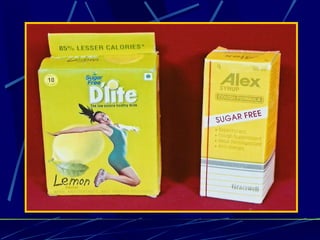
These are intense sweeteners,
non caloric sweeteners

Much sweeter than sugar

Yield little or no energy,provide no
bulk

Used in small quantities in drinks or
blended with sugar substitutes in
food & snacks
Approved products in market
are
 ASPARTATE
 SACCHARINE
 CYCLANATE
 SUCRALASE
 ACESULFAME-K

From dental point of view caloric
sweeteners are very useful as they are
not fermented to acid by oral bacteria
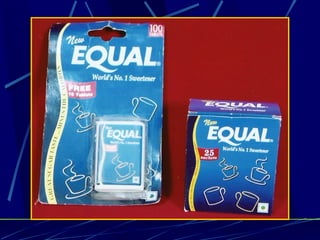
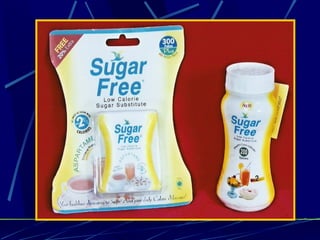
ASPARTATE
White, crystalline, odourless, slightly
water soluble non carbohydrate
powder


About 150 to 200 times sweeter than
sucrose


Used as low calorie sugar substitute
in soft drinks,table sweeteners &
other food products
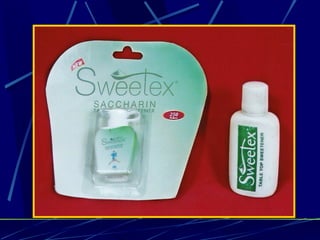
SACCHARINE
White, crystalline, odourless, slightly water
soluble powder produced synthetically
500 times sweeter than sugar in dilute
solution
Its soluble sodium salt is used as a non
caloric sugar substitute
Also called as benzosulfimide or gluside
Widely used in “diet” soft drinks, dietic
foods,mouth washes,medicines & as a
sweetener for table use since 1940
DISADVANTAGE


May cause   bladder cancer


banned in USA & Canada
CYCLAMATE
  An organic sweetener

  30 times sweeter than sucrose

    When ingested,absorbed into
blood streams & excreted almost
unchanged in urine
However part of it is converted to
Cyclohexylamine by microorganism in
lower intestinal tract

Banned in USA & Canada as it can
cause cancer

Cyclohexylamine    can     produce
vasoconstriction &     hypertensive
effect by affecting sympathetic
nervous system
NUTRITIVE
      SWEETENERS sugar
Caloric sweetener, carbohydrate
substitute

Includes    a    large   number     of
monosaccharide &        disaccharides,
various polyols & starch hydrolysates
& hydrogenates

Relative     sweetness  of     these
compounds is only occasionally more
than equal to sucrose, in most
instances it is lower
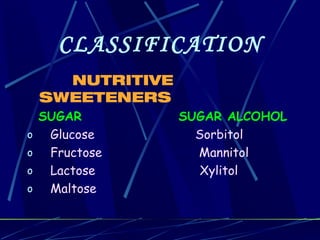
CLASSIFICATION
      NUTRITIVE
    SWEETENERS
    SUGAR         SUGAR ALCOHOL
o    Glucose        Sorbitol
o    Fructose       Mannitol
o    Lactose         Xylitol
o    Maltose
SUGARS
Sugars other than sucrose used now a
days in a large scale in various food
items,reason for this is not dental
but     rather    technological    or
economical

Lactose used in most of baby foods

Has    lower     cariogenicity   than
sucrose,glucose & fructose
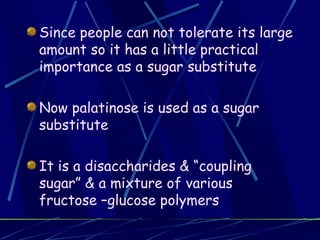
Since people can not tolerate its large
amount so it has a little practical
importance as a sugar substitute

Now palatinose is used as a sugar
substitute

It is a disaccharides & “coupling
sugar” & a mixture of various
fructose –glucose polymers
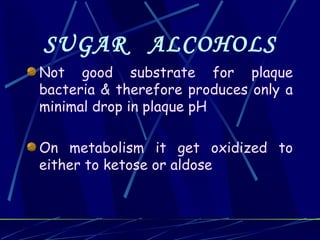
SUGAR ALCOHOLS
Not good substrate for plaque
bacteria & therefore produces only a
minimal drop in plaque pH

On metabolism it get oxidized to
either to ketose or aldose
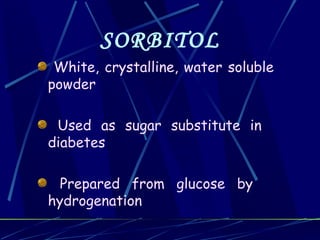
SORBITOL
 White, crystalline, water soluble
powder

 Used as sugar substitute in
diabetes

  Prepared from glucose by
hydrogenation
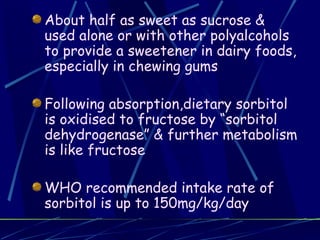
About half as sweet as sucrose &
used alone or with other polyalcohols
to provide a sweetener in dairy foods,
especially in chewing gums

Following absorption,dietary sorbitol
is oxidised to fructose by “sorbitol
dehydrogenase” & further metabolism
is like fructose

WHO recommended intake rate of
sorbitol is up to 150mg/kg/day
MANNITOL

White ,crystalline,water
soluble carbohydrate alcohol
XYLITOL
Well established that it is non cariogenic
& is used in chewing gums

It is one of a sugar sweetner approved
for use in food & other items in many
countries

It has specific as well as non specific
effects on oral flora & especially on
certain strains of mutans streptococci
add to its caries preventive profile
PLAQUE
1.non fermentability by plaque organism
2.reduction in plaque quantity
3.selective reduction of mutans
  streptococci
4.introduction of mutans streptococcus
  strain with reduced virulence.
  It has some proposed actions
5.increased conc. Of ammonia in plaque
6.accumulation of xylitol-5PO4 in some
  plaque streptococci
7.participation in a futile metabolic
  cycle in some plaque organisms
8.reduced adhesion of plaque flora
9.reduced transmission of mutans
  streptococci
SALIVA
1.changes in quantity & quality of saliva
ENAMEL
1.aids remineralisation
sugar-substitutes-pedo

sugar-substitutes-pedo

  • 2.
    DEFINITION Sugar substituteis based on the concept of replacing sucrose in food stuff which are proved to be highly cariogenic
  • 3.
    TYPES These are oftwo types: (C) Non nutritive sweeteners (B) Nutritive sweeteners
  • 4.
    NON NUTRITIVE SWEETNERS These are intense sweeteners, non caloric sweeteners Much sweeter than sugar Yield little or no energy,provide no bulk Used in small quantities in drinks or blended with sugar substitutes in food & snacks
  • 5.
    Approved products inmarket are ASPARTATE SACCHARINE CYCLANATE SUCRALASE ACESULFAME-K From dental point of view caloric sweeteners are very useful as they are not fermented to acid by oral bacteria
  • 6.
    ASPARTATE White, crystalline, odourless,slightly water soluble non carbohydrate powder About 150 to 200 times sweeter than sucrose Used as low calorie sugar substitute in soft drinks,table sweeteners & other food products
  • 9.
    SACCHARINE White, crystalline, odourless,slightly water soluble powder produced synthetically 500 times sweeter than sugar in dilute solution Its soluble sodium salt is used as a non caloric sugar substitute Also called as benzosulfimide or gluside Widely used in “diet” soft drinks, dietic foods,mouth washes,medicines & as a sweetener for table use since 1940
  • 11.
    DISADVANTAGE May cause bladder cancer banned in USA & Canada
  • 12.
    CYCLAMATE Anorganic sweetener 30 times sweeter than sucrose When ingested,absorbed into blood streams & excreted almost unchanged in urine
  • 13.
    However part ofit is converted to Cyclohexylamine by microorganism in lower intestinal tract Banned in USA & Canada as it can cause cancer Cyclohexylamine can produce vasoconstriction & hypertensive effect by affecting sympathetic nervous system
  • 14.
    NUTRITIVE SWEETENERS sugar Caloric sweetener, carbohydrate substitute Includes a large number of monosaccharide & disaccharides, various polyols & starch hydrolysates & hydrogenates Relative sweetness of these compounds is only occasionally more than equal to sucrose, in most instances it is lower
  • 15.
    CLASSIFICATION NUTRITIVE SWEETENERS SUGAR SUGAR ALCOHOL o Glucose Sorbitol o Fructose Mannitol o Lactose Xylitol o Maltose
  • 16.
    SUGARS Sugars other thansucrose used now a days in a large scale in various food items,reason for this is not dental but rather technological or economical Lactose used in most of baby foods Has lower cariogenicity than sucrose,glucose & fructose
  • 17.
    Since people cannot tolerate its large amount so it has a little practical importance as a sugar substitute Now palatinose is used as a sugar substitute It is a disaccharides & “coupling sugar” & a mixture of various fructose –glucose polymers
  • 18.
    SUGAR ALCOHOLS Not goodsubstrate for plaque bacteria & therefore produces only a minimal drop in plaque pH On metabolism it get oxidized to either to ketose or aldose
  • 19.
    SORBITOL White, crystalline,water soluble powder Used as sugar substitute in diabetes Prepared from glucose by hydrogenation
  • 20.
    About half assweet as sucrose & used alone or with other polyalcohols to provide a sweetener in dairy foods, especially in chewing gums Following absorption,dietary sorbitol is oxidised to fructose by “sorbitol dehydrogenase” & further metabolism is like fructose WHO recommended intake rate of sorbitol is up to 150mg/kg/day
  • 21.
  • 22.
    XYLITOL Well established thatit is non cariogenic & is used in chewing gums It is one of a sugar sweetner approved for use in food & other items in many countries It has specific as well as non specific effects on oral flora & especially on certain strains of mutans streptococci add to its caries preventive profile
  • 23.
    PLAQUE 1.non fermentability byplaque organism 2.reduction in plaque quantity 3.selective reduction of mutans streptococci 4.introduction of mutans streptococcus strain with reduced virulence. It has some proposed actions 5.increased conc. Of ammonia in plaque
  • 24.
    6.accumulation of xylitol-5PO4in some plaque streptococci 7.participation in a futile metabolic cycle in some plaque organisms 8.reduced adhesion of plaque flora 9.reduced transmission of mutans streptococci
  • 25.
    SALIVA 1.changes in quantity& quality of saliva ENAMEL 1.aids remineralisation