Sudden Cardiac Death
Michelle Antimano, RN
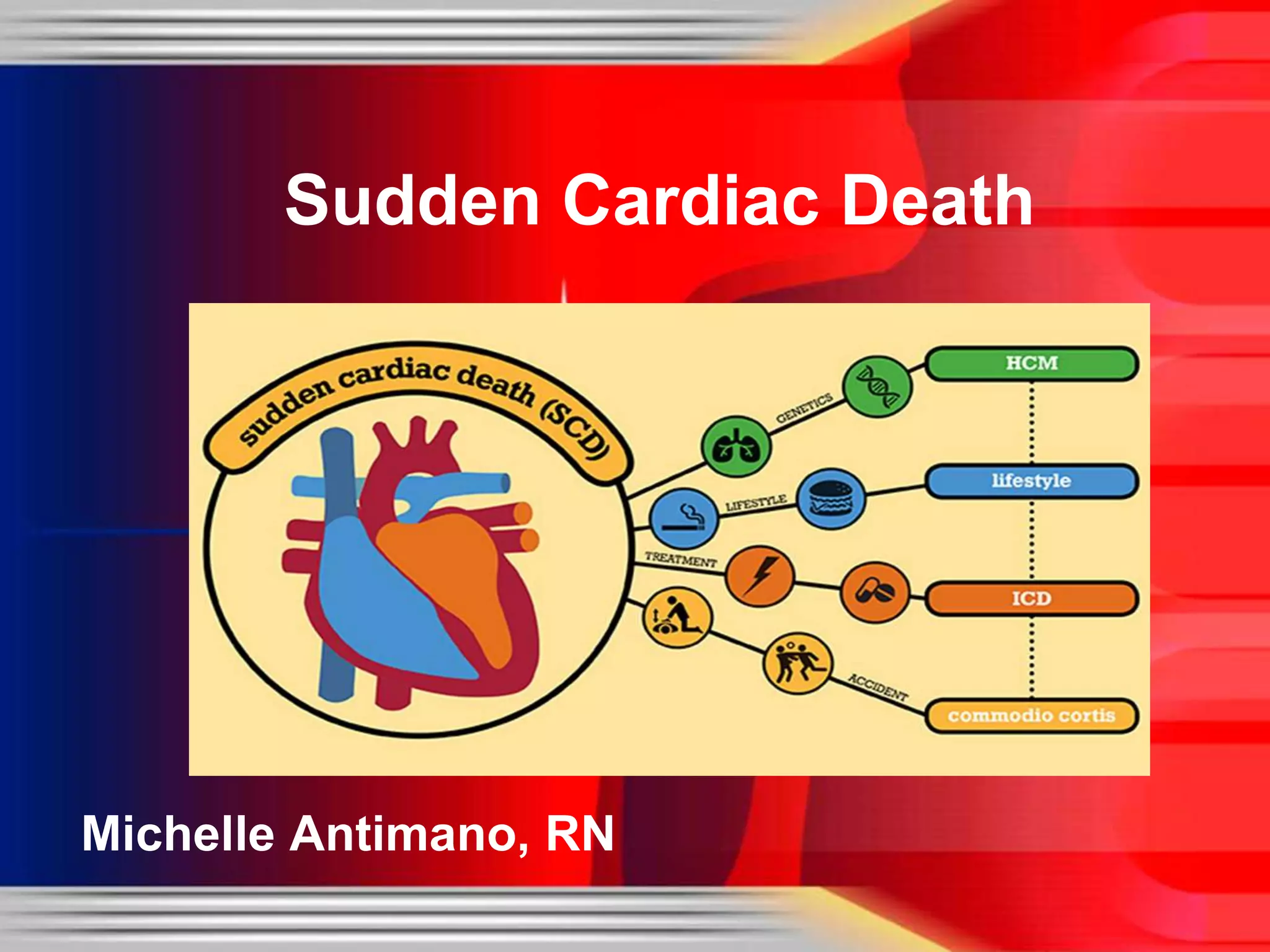
Sudden Cardiac Death
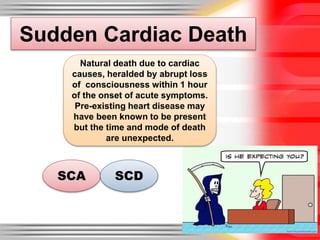
Natural death due to cardiac
causes, heralded by abrupt loss
of consciousness within 1 hour
of the onset of acute symptoms.
Pre-existing heart disease may
have been known to be present
but the time and mode of death
are unexpected.
SCA SCD
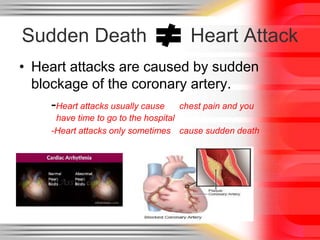
Sudden Death Heart Attack
• Heart attacks are caused by sudden
blockage of the coronary artery.
-Heart attacks usually cause chest pain and you
have time to go to the hospital
-Heart attacks only sometimes cause sudden death
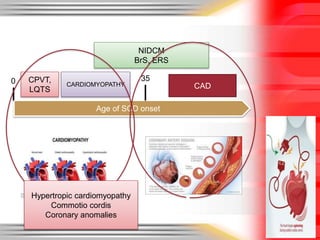
Age of SCD onset
CPVT,
LQTS
CARDIOMYOPATHY
350
CAD
NIDCM
BrS, ERS
Hypertropic cardiomyopathy
Commotio cordis
Coronary anomalies
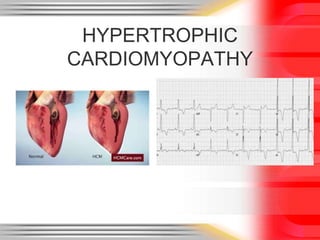
HYPERTROPHIC
CARDIOMYOPATHY
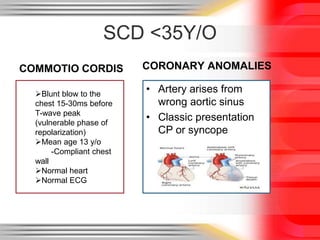
SCD <35Y/O
COMMOTIO CORDIS CORONARY ANOMALIES
• Artery arises from
wrong aortic sinus
• Classic presentation
CP or syncope
Blunt blow to the
chest 15-30ms before
T-wave peak
(vulnerable phase of
repolarization)
Mean age 13 y/o
-Compliant chest
wall
Normal heart
Normal ECG
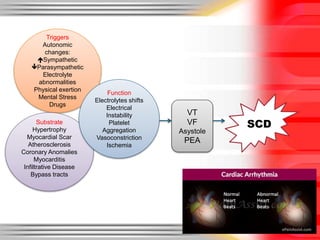
Triggers
Autonomic
changes:
Sympathetic
Parasympathetic
Electrolyte
abnormalities
Physical exertion
Mental Stress
Drugs
Substrate
Hypertrophy
Myocardial Scar
Atherosclerosis
Coronary Anomalies
Myocarditis
Infiltrative Disease
Bypass tracts
Function
Electrolytes shifts
Electrical
Instability
Platelet
Aggregation
Vasoconstriction
Ischemia
VT
VF
Asystole
PEA
SCD
Coronary
• CAD
• Coronary Artery
Anomalies
Muscle Disorders
• HCM
• ARVC
• DCM
• Myocarditis
• Left Ventricular Non
Compaction
Electrical Abnormalities
• Brugada Syndrome
• Long QT Syndrome
• CPVT
• WPW
SCD
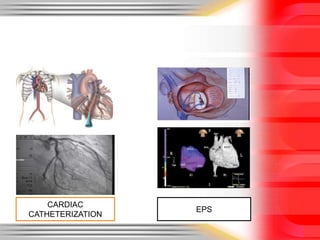
CARDIAC
CATHETERIZATION
EPS
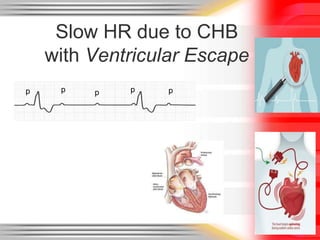
Slow HR due to CHB
with Ventricular Escape
pp p pp
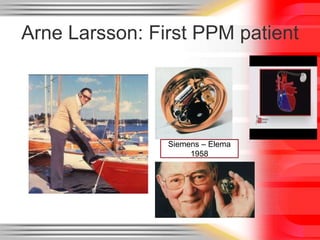
Arne Larsson: First PPM patient
Siemens – Elema
1958
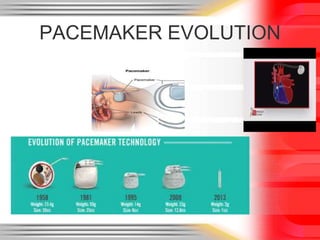
PACEMAKER EVOLUTION
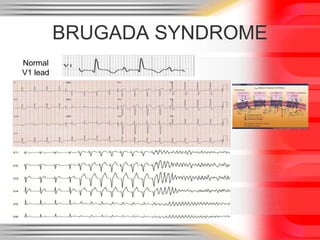
BRUGADA SYNDROME
Normal
V1 lead
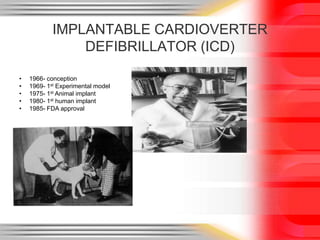
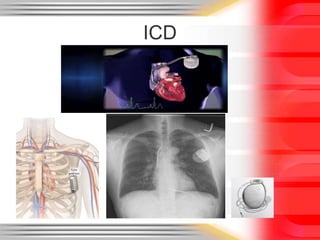
IMPLANTABLE CARDIOVERTER
DEFIBRILLATOR (ICD)
• 1966- conception
• 1969- 1st Experimental model
• 1975- 1st Animal implant
• 1980- 1st human implant
• 1985- FDA approval
ICD
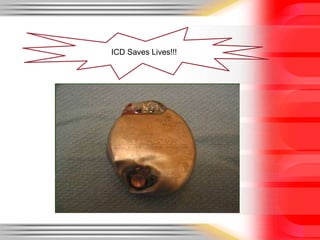
ICD Saves Lives!!!
CONCLUSIONS
• SCD is a common cause of death.
• Main Cause of SCD:
-Over 35: Heart Attack
-Under 35: HCM, Commotio Cordis &
Coronary Anomalies
• Pacemakers and ICDs save lives.
Sudden Cardiac Death

Sudden Cardiac Death

Editor's Notes

  • #3 SCD is defined as natural death due to cardiac causes heralded by abrupt loss of consciousness within 1 hour of the onset of acute symptoms. Pre-existing heart disease may have been known to be present but the time and mode of death are unexpected. SCD is mainly the end result of untreated rapd VT/ VF. OR EXTREME BRADYCARDIA. While previous heart disease is recognized risk factor for SCD, an individual may have no history or symptoms of heart disease prior to the onset of SCD. The Event is referred to as SCA (aborted SCD) if an intervention like defibrillation or spontaneous reversion restores circulation, and the event is called SCD if the patient dies. Reduction in mortality from SCD involves 2 issues: prevention and treatment of underlying risk factors and interruption of SCD events through rapid defibrillation of the heart and eventually BLS or ACLS maneuvers.
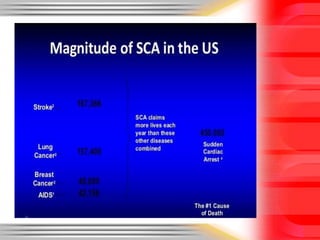
  • #4 TURNS OUT THAT WHEN YOU COMBINED THE DEATHS FROM STROKE, LUNG CANCER, BREAST CANCER AND AIDS, SD STILL CLAIMS MORE LIVES THAN ALL THIS COMBINED. EVEN THOUGH IT DOESN’T ALWAYS GET RECOGNIZED AS THE MAJOR CAUSE OF DEATH.
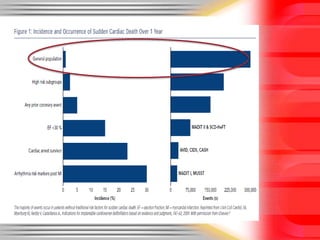
  • #5 AND HERE’S ONE OF THE PARADOXIS ABOUT SD, SO WE KNOW THAT CERTAIN TYPES OF PATIENTS HAVE HEART DISEASE LIKE PATIENTS WITH PREVIOUS MI OR HEART ATTACK, PEOPLE WITH PREVIOUS CARDIAC ARREST OUTSIDE THE HOSPITAL, PEOPLE WITH LOW EF AND HEART ARE WEAK. WE KNOW THAT THE INCIDENT OF SD IS RELATIVELY HIGH. 30 %, 25% AND 20% HERE. BUT IT TURNS OUT THAT THEY MAKE UP A VERY SMALL PROPORTION OF SD IN THE WORLD, THAT’S BECAUSE NOT AS MANY PEOPLE IN THIS CATEGORY. IN CONTRAST, WHEN YOU LOOK AT THE GENERAL POPULATION, YOU, ME OR OTHER PEOPLE WHO HAVE NO KNOWN HEART DISEASE, OUR RISK ARE VERY LOW, LESS THAN 5%.BUT BECAUSE THERE’S SO MANY PEOPLE WITH NO KNOWN HEART DISEASE, AND SO MANY ARE STILL DYING OF SCD THEY MAKE UP THE LARGEST PROPORTION OR NUMBER OF PEOPLE WHO ARE DROPPING DEAD SUDDENLY.
  • #6 ONE OF THE BIG MYTHS THAT WE NEED TO DISPELL RIGHT AWAY IS THAT SCD DOES NOT EQUAL HEART ATTACKS. OFTENTIMES PEOPLE WHO HAVE A FRIEND OR RELATIVE WHO COLLAPSE AND DIED SUDDENLY, PEOPLE AUTOMATICALLY ASSUMES THEY MIGHT HAD A HEART ATTACK. HEART ATTACKS ARE INDEED ARE CAUSE OF SOME SCD. HEART ATTACKS AS YOU PROBABLY KNOW ARE CAUSED BY SUDDEN BLOCKAGED OF CORONARY ARTERIES. SO HERE’S THE ARTERY, AND IT CAN BE BLOCKED, WHEN OVERTIME THE ARTERIES START TO NARROW BECAUSE OF CHOLESTEROL DEPOSITION. AND SOMETIMES DUE TO STRESS PLAQUE RUPTURE AND PLAQUE CAN FORM THERE AND WHEN THAT HAPPENS, THERE’S A PART OF HEART THAT COULD NOT GET ENOUGH BLOOD. AND USUALLY IN THE SETTING OF HEART ATTACK, YOU CAN JUST GET CHEST PAIN AND YOU HAVE TIME TO GET TO THE HOSPITAL ANG GET THAT ARTERY OPEN UP VIA ANGIOPLASTY AND STENTING. ON OCCASION THOUGH HEART ATTACKS WHEN THET’RE VERY LARGE, WHEN THEY ELECTRICALLY DESTABILIZE YOU DO LEAD TO SD. SO HEART ATTACKS MIGHT CAN SOMETIMES CAUSE SD, BUT SD ARE NOT ALWAYS HEART ATTACK. SO THE NATURAL QUESTION IS WHAT OTHER CAUSE SUDDEN DEATH??
  • #7 WELL, IF YOU’RE OVER AGE 35, IT’S TRUE THAT MOST OF THE SUDDEN DEATH ARE CAUSED BY HEART ATTACK, CORONARY ATHEROSCLEROSIS OR NARROWING OF THE ARTERIES LEADING TO AN ACUTE HEART ATTACKOR AN OLD HEART ATTACK WHERE THE SCAR CAUSES ELECTRICAL ABNORMALITIES BUT THEN THERE OTHER KINDS OF CAUSES OF SD AND SOME OF THESE AREGENETIC BASED DISEASE LIKE CARDIOMYOPATHY WHERE YOUR HEART HEART CAN BE VERY DILATED OR VERY THICKENED. THIS CALLED DILATED CARIOMYOPATHY THIS CALLED HYPERTROPHIC CARDIOMYOPATHY AND THERE IS SMALL PROPORTION OF PEOPLEWHO HAVE OTHER GENETICS ABNORMALITIES THAT HAVE CAUSE THE HEART TO BE ELECTRICALLY UNSTABLE. SO HOW ABOUT THOSE PEOPLE WHO ARE UNDER AGE 35. THOSE YOUNGER THAN 35 DON’T HAVE ATTACKS VERY OFTEN. AND THESE OTHER DISEASES BECOMES MORE FACTOR OF PEOPLE DROPPED DEAD. AND WHEN THEY LOOKED UP AUTOPSIES, PEOPLE WHO WERE YOUNG, UNDERAGE OF 35 AND DIED SUDDENLY, THEY COLLATED THE CAUSES AND FOUND THIS 3 AND MOST THEM ARE THESE 3 ENTRIES. HCM, COMMOTIO CORDIS AND CORONARY ANOMALIES.
  • #8 SO HERE THE BIGGEST KILLER FOR THOSE UNDER AGE 35, ITS CALLED HCM.AND WHAT HAPPENS IS THAT INSTEAD OF A NORMAL HEART LIKE THIS , WITH VERY REASONABLE SIZE, THE HEART WALLS BECOME EXTREMELY DILATED, EXTREMELY LARGE AND YOU CAN SEE THE HEART WALL IS EXTRAORDINARILY THICKENED. THIS DISORDER IN THE MYOCARDIUM CAN LEAD TO ELECTRICAL ABORMALITES AND LEAD TO VENTRICULAR ARRYTHMIAS THAT CAN LEAD TO SCD. HERE’ AN ECG WITH HCP,THIS WAVES HERE ARE VERY TALL OR CALLED HIGH VOLTAGE ECG, THIS IS INDICATIVE OF A VERY THICKENED HEART MUSCLEAND THERE’S A LOT OF ELETRICAL ENERGY TRAVELLING THROUGH THAT HEART EVRY BEAT OF THE HEART. AND THE OTHER THING ABNORNORMAL IN THIS ECG IS THAT YOU COULD SEE THAT INVERTED T WAVES.
  • #9 THE 2ND COMMON CAUSE OF scd is commotio cordis, it is a situation when you got a blunt blow to the chest about 15-30.ms after T wave on your ecg and that’s when you heart muscle is finished depolarizing and now repolarizing . and it trns out that that’s a vulnerable period of time for the heart at that moment and a blow to the heart at that moment can cause Ventricular arrhythmia a life threatening arrhythmia. The mean age is about 13 y/o and it could be something about the compliant chest wall. Patients have normal heart structure and normal ecg. Most probably because of the fact that the heart is vulnerable at that time. 3RD MOST COMMON CAUSE OF SDIN LESS TH IS CONGENITAL CORONARY ARTERY ANOMALIES. BORN WITH CORONARY ARTERIES COMING OFF IN ABNORMAL AREA OF THE AORTA AND WHEN THAT HAPPENS, IT CAN GET PINCHED OFF BY VARIOUS STRUCTURE AND YOU CANT GET ENOUGH COLLATERAL CIRCULATION. THE CLASSIC PRESENTATION OF THIS IS CHEST PAIN AND FAINTING WITH EXERCISE. THIS COULD BY DIAGNOSED BY STRESS TEST, ECHO, CARDIAC MRI, CT OR CATHETERIZAION.
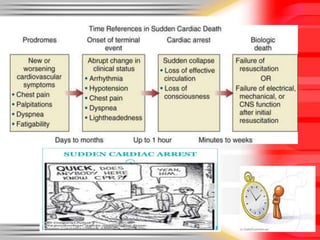
  • #10 4SCD viewed from 4 temporal perpectives: 1 prodromes 2 onset of the terminal event 3 cardiac arrest and 4 biological death. Prodromes , occurring weeks or months before an event, are not sensitive or specific predictors of an impending event, but premonitory signs and symptoms, which can occur during the days or weeks before CA, may be more specific for imminent cardiac arrest when they begin abruptly. Sudden onset of chest pain, dyspnea, or palpitations and other symptoms of arrhythmias often precede the onset of cardiac arrest and define the 1 hour onset of terminal event that brackets the CA. The 4th element, biologic death, is an immediate consequence of CA and usually occur within minutes.
  • #11 SCD occurs when a triggering factor serves as catalyst in an anatomic or electrophysiological substrate, either genetically determined or acquired, resulting in final common pathway of VF, VT degenerating to VF and resultant hemodynamic collapse with cessation cardiac mechanical activity.
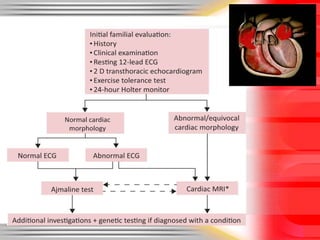
  • #12 Screening-All first –degree blood relatives of patients with inherited cardiac diseases or victims of SADS should be investigated in an expert cardiac setting. Particular emphasis should be placed on the personal and family history in conjunction with a potentially comprehensive array of investigations. In cases where no cardiac pathology is identified at initial screening, an ajmaline, flecainide or procainamide provocation test is advised to unmask concealed forms of brugada syndromes. Most SCDs in young individuals occur in the absence of prodromal warning symptoms particularly in the athletic community.   12 lead ECG-should be thoroughly reviewed with emphasis on signature ECG patterns in rare but well defined causes of SCD like CAD, BrS, ARVD, TDP, WPW.   Echo-is routinely performed to evaluate LV and RV systolic function, EF, endocardial borders, chamber hypertrophy and dilation.   Treadmill test should be performed as provocation test CPVT and idiopathic VT.   Cardiac MRI- should be strongly considered when the clinical suspicion is heightened for ARVD and myocarditis.   Drug provocation has pivotal role in unmasking some primary electric causes of SCA. Epinephrine-/isoprotenol- unmask concealed LQT1/LQT2 syndromes-increasing ventricular ectopy that degenerates to PMVT. Ajmaline, flecainide and procainamide- unmask brugada syndrome  
  • #13 EPS is not routinely performed when there is an established cause of SCA. However, in those unidentifiable cause has not been established, EPS can be valuable in identifying.