
WEBINAR BROUGHT 
TO YOU BY:
? 
What is your most pressing concern about your next generation of leaders?
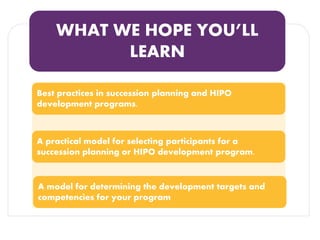
WHAT WE HOPE YOU’LL LEARN 
Best practices in succession planning and HIPO development programs. 
A practical model for selecting participants for a succession planning or HIPO development program. 
A model for determining the development targets and competencies for your program
It’s not just succession to the top – it’s getting the right person in place for every job. Some of tomorrow’s key jobs may not even 
exist now. 
Robert M. Fulmer, Growing Your Company’s Leaders
Critical Trends 
•Broad market forces and trends 
•Emerging competencies 
•Future job needs – likely unknown today 
•Reduced employee loyalty
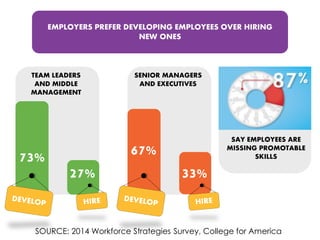
EMPLOYERS PREFER DEVELOPING EMPLOYEES OVER HIRING NEW ONES 
TEAM LEADERS 
AND MIDDLE MANAGEMENT 
73% 
27% 
SENIOR MANAGERS AND EXECUTIVES 
33% 
67% 
SOURCE: 2014 Workforce Strategies Survey, College for America 
SAY EMPLOYEES ARE MISSING PROMOTABLE SKILLS
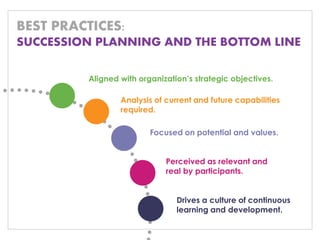
BEST PRACTICES: 
SUCCESSION PLANNING AND THE BOTTOM LINE 
Aligned with organization’s strategic objectives. 
Analysis of current and future capabilities required. 
Focused on potential and values. 
Perceived as relevant and real by participants. 
Drives a culture of continuous learning and development.
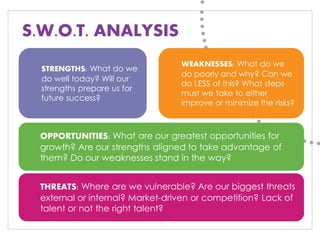
S.W.O.T. ANALYSIS 
STRENGTHS: What do we do well today? Will our strengths prepare us for future success? 
WEAKNESSES: What do we do poorly and why? Can we do LESS of this? What steps must we take to either improve or minimize the risks? 
OPPORTUNITIES: What are our greatest opportunities for growth? Are our strengths aligned to take advantage of them? Do our weaknesses stand in the way? 
THREATS: Where are we vulnerable? Are our biggest threats external or internal? Market-driven or competition? Lack of talent or not the right talent?
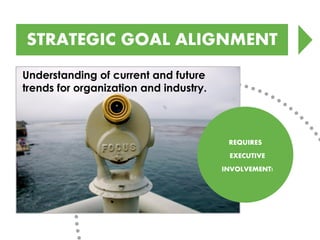
REQUIRES EXECUTIVE INVOLVEMENT! 
STRATEGIC GOAL ALIGNMENT 
Understanding of current and future trends for organization and industry.
OPPORTUNITIES 
THREATS 
Are our strengths aligned to take advantage of opportunities? 
Do our weaknesses stand in the way? 
Where are we vulnerable? 
Can we influence or control biggest threats? 
Market-driven or competition? 
Lack of talent or not the right talent?
Deciding Whom to Groom
Readiness 
SELF- SELECTION 
ASSESSMENTS 
•Values-driven behavior 
•Competencies 
•Career readiness 
OBSERVATION
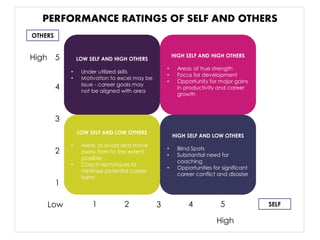
LOW SELF AND HIGH OTHERS 
•Under utilized skills 
•Motivation to excel may be issue - career goals may not be aligned with area 
HIGH SELF AND HIGH OTHERS 
•Areas of true strength 
•Focus for development 
•Opportunity for major gains in productivity and career growth 
HIGH SELF AND LOW OTHERS 
•Blind Spots 
•Substantial need for coaching 
•Opportunities for significant career conflict and disaster 
LOW SELF AND LOW OTHERS 
•Areas to avoid and move away from to the extent possible 
•Coach techniques to minimize potential career harm 
5 
5 
4 
4 
3 
1 
2 
1 
2 
3 
High 
High 
Low 
PERFORMANCE RATINGS OF SELF AND OTHERS 
OTHERS 
SELF
CURIOSITY 
INSIGHT 
ENGAGEMENT 
DETERMINATION 
LOOK FOR POTENTIAL 
Understanding of current and future trends for organization and industry.
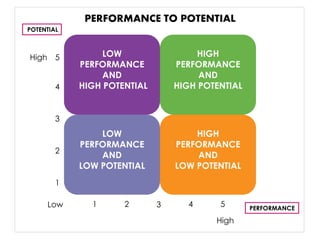
LOW PERFORMANCE AND 
HIGH POTENTIAL 
HIGH PERFORMANCE AND HIGH POTENTIAL 
HIGH PERFORMANCE AND LOW POTENTIAL 
LOW PERFORMANCE AND LOW POTENTIAL 
5 
5 
4 
4 
3 
1 
2 
1 
2 
3 
High 
High 
Low 
PERFORMANCE TO POTENTIAL 
POTENTIAL 
PERFORMANCE
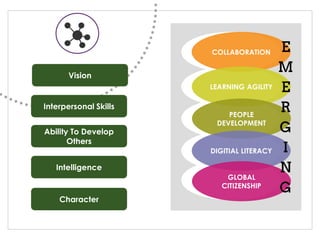
COLLABORATION 
LEARNING AGILITY 
PEOPLE DEVELOPMENT 
DIGITIAL LITERACY 
GLOBAL CITIZENSHIP 
Vision 
Interpersonal Skills 
Ability To Develop Others 
Intelligence 
Character
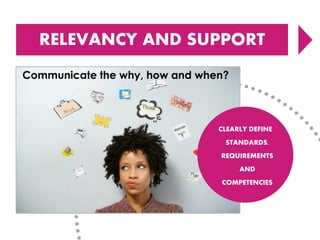
CLEARLY DEFINE STANDARDS, REQUIREMENTS AND COMPETENCIES 
RELEVANCY AND SUPPORT 
Communicate the why, how and when?
Managers need to stretch, challenge, and coach their high-potential employees… Without multi-dimensional dialogue about these issues, managers tend to hold on to their high-potential people instead of helping them along an intentional developmental pathway. High-potentials then may interpret this as a lack of company support and will be inclined to look elsewhere. Ron Ashkenas, The Paradox of High Potentials Harvard Business Review
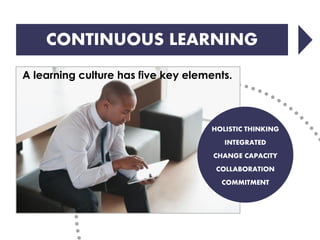
HOLISTIC THINKING INTEGRATED CHANGE CAPACITY COLLABORATION COMMITMENT 
CONTINUOUS LEARNING 
A learning culture has five key elements.
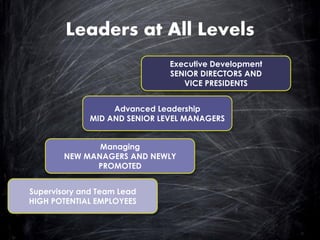
Leaders at All Levels 
Supervisory and Team Lead 
HIGH POTENTIAL EMPLOYEES 
Managing 
NEW MANAGERS AND NEWLY PROMOTED 
Advanced Leadership 
MID AND SENIOR LEVEL MANAGERS 
Executive Development SENIOR DIRECTORS AND VICE PRESIDENTS
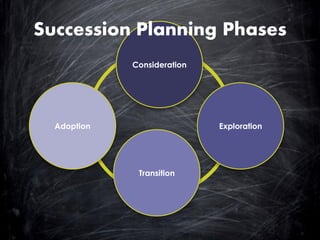
Consideration 
Exploration 
Transition 
Adoption 
Succession Planning Phases
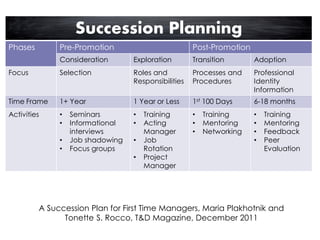
Succession Planning 
Phases 
Pre-Promotion 
Post-Promotion 
Consideration 
Exploration 
Transition 
Adoption 
Focus 
Selection 
Roles and Responsibilities 
Processes and Procedures 
Professional Identity Information 
Time Frame 
1+ Year 
1 Year or Less 
1st 100 Days 
6-18 months 
Activities 
•Seminars 
•Informational interviews 
•Job shadowing 
•Focus groups 
•Training 
•Acting Manager 
•Job Rotation 
•Project Manager 
•Training 
•Mentoring 
•Networking 
•Training 
•Mentoring 
•Feedback 
•Peer Evaluation 
A Succession Plan for First Time Managers, Maria Plakhotnik and Tonette S. Rocco, T&D Magazine, December 2011
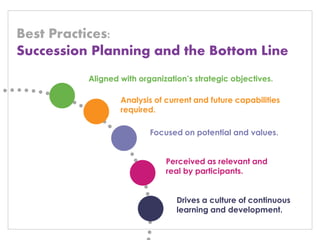
Best Practices: 
Succession Planning and the Bottom Line 
Aligned with organization’s strategic objectives. 
Analysis of current and future capabilities required. 
Focused on potential and values. 
Perceived as relevant and real by participants. 
Drives a culture of continuous learning and development.
BIZLIBRARY.COM 
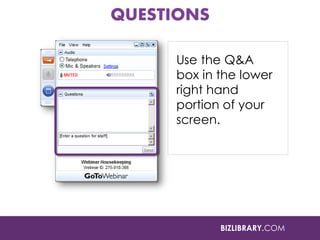
QUESTIONS 
Use the Q&A box in the lower right hand portion of your screen.
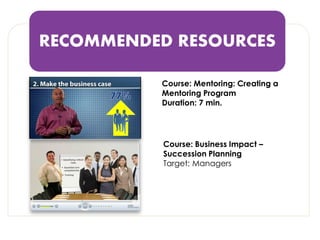
RECOMMENDED RESOURCES 
Course: Business Impact – Succession Planning 
Target: Managers 
Course: Mentoring: Creating a Mentoring Program 
Duration: 7 min.
WWW.BIZLIBRARY.COM/FREE-TRIAL 
7,000+ COURSES . 25 TOPIC AREAS . UNLIMITED ACCESS
Jessica Petry 
Sr. Marketing Specialist 
jpetry@bizlibrary.com 
@JessLPetry 
@BizLibrary 
Chris Osborn 
Vice President of Marketing 
cosborn@bizlibrary.com 
@chrisosbornstl 
#BIZWEBINAR

Succession Planning and the Development of Your High Potentials | Webinar 11.13.14

  • 1.
  • 2.
    ? What isyour most pressing concern about your next generation of leaders?
  • 3.
    WHAT WE HOPEYOU’LL LEARN Best practices in succession planning and HIPO development programs. A practical model for selecting participants for a succession planning or HIPO development program. A model for determining the development targets and competencies for your program
  • 4.
    It’s not justsuccession to the top – it’s getting the right person in place for every job. Some of tomorrow’s key jobs may not even exist now. Robert M. Fulmer, Growing Your Company’s Leaders
  • 5.
    Critical Trends •Broadmarket forces and trends •Emerging competencies •Future job needs – likely unknown today •Reduced employee loyalty
  • 6.
    EMPLOYERS PREFER DEVELOPINGEMPLOYEES OVER HIRING NEW ONES TEAM LEADERS AND MIDDLE MANAGEMENT 73% 27% SENIOR MANAGERS AND EXECUTIVES 33% 67% SOURCE: 2014 Workforce Strategies Survey, College for America SAY EMPLOYEES ARE MISSING PROMOTABLE SKILLS
  • 8.
    BEST PRACTICES: SUCCESSIONPLANNING AND THE BOTTOM LINE Aligned with organization’s strategic objectives. Analysis of current and future capabilities required. Focused on potential and values. Perceived as relevant and real by participants. Drives a culture of continuous learning and development.
  • 9.
    S.W.O.T. ANALYSIS STRENGTHS:What do we do well today? Will our strengths prepare us for future success? WEAKNESSES: What do we do poorly and why? Can we do LESS of this? What steps must we take to either improve or minimize the risks? OPPORTUNITIES: What are our greatest opportunities for growth? Are our strengths aligned to take advantage of them? Do our weaknesses stand in the way? THREATS: Where are we vulnerable? Are our biggest threats external or internal? Market-driven or competition? Lack of talent or not the right talent?
  • 10.
    REQUIRES EXECUTIVE INVOLVEMENT! STRATEGIC GOAL ALIGNMENT Understanding of current and future trends for organization and industry.
  • 11.
    OPPORTUNITIES THREATS Areour strengths aligned to take advantage of opportunities? Do our weaknesses stand in the way? Where are we vulnerable? Can we influence or control biggest threats? Market-driven or competition? Lack of talent or not the right talent?
  • 12.
  • 13.
    Readiness SELF- SELECTION ASSESSMENTS •Values-driven behavior •Competencies •Career readiness OBSERVATION
  • 14.
    LOW SELF ANDHIGH OTHERS •Under utilized skills •Motivation to excel may be issue - career goals may not be aligned with area HIGH SELF AND HIGH OTHERS •Areas of true strength •Focus for development •Opportunity for major gains in productivity and career growth HIGH SELF AND LOW OTHERS •Blind Spots •Substantial need for coaching •Opportunities for significant career conflict and disaster LOW SELF AND LOW OTHERS •Areas to avoid and move away from to the extent possible •Coach techniques to minimize potential career harm 5 5 4 4 3 1 2 1 2 3 High High Low PERFORMANCE RATINGS OF SELF AND OTHERS OTHERS SELF
  • 15.
    CURIOSITY INSIGHT ENGAGEMENT DETERMINATION LOOK FOR POTENTIAL Understanding of current and future trends for organization and industry.
  • 16.
    LOW PERFORMANCE AND HIGH POTENTIAL HIGH PERFORMANCE AND HIGH POTENTIAL HIGH PERFORMANCE AND LOW POTENTIAL LOW PERFORMANCE AND LOW POTENTIAL 5 5 4 4 3 1 2 1 2 3 High High Low PERFORMANCE TO POTENTIAL POTENTIAL PERFORMANCE
  • 17.
    COLLABORATION LEARNING AGILITY PEOPLE DEVELOPMENT DIGITIAL LITERACY GLOBAL CITIZENSHIP Vision Interpersonal Skills Ability To Develop Others Intelligence Character
  • 18.
    CLEARLY DEFINE STANDARDS,REQUIREMENTS AND COMPETENCIES RELEVANCY AND SUPPORT Communicate the why, how and when?
  • 19.
    Managers need tostretch, challenge, and coach their high-potential employees… Without multi-dimensional dialogue about these issues, managers tend to hold on to their high-potential people instead of helping them along an intentional developmental pathway. High-potentials then may interpret this as a lack of company support and will be inclined to look elsewhere. Ron Ashkenas, The Paradox of High Potentials Harvard Business Review
  • 20.
    HOLISTIC THINKING INTEGRATEDCHANGE CAPACITY COLLABORATION COMMITMENT CONTINUOUS LEARNING A learning culture has five key elements.
  • 21.
    Leaders at AllLevels Supervisory and Team Lead HIGH POTENTIAL EMPLOYEES Managing NEW MANAGERS AND NEWLY PROMOTED Advanced Leadership MID AND SENIOR LEVEL MANAGERS Executive Development SENIOR DIRECTORS AND VICE PRESIDENTS
  • 22.
    Consideration Exploration Transition Adoption Succession Planning Phases
  • 23.
    Succession Planning Phases Pre-Promotion Post-Promotion Consideration Exploration Transition Adoption Focus Selection Roles and Responsibilities Processes and Procedures Professional Identity Information Time Frame 1+ Year 1 Year or Less 1st 100 Days 6-18 months Activities •Seminars •Informational interviews •Job shadowing •Focus groups •Training •Acting Manager •Job Rotation •Project Manager •Training •Mentoring •Networking •Training •Mentoring •Feedback •Peer Evaluation A Succession Plan for First Time Managers, Maria Plakhotnik and Tonette S. Rocco, T&D Magazine, December 2011
  • 24.
    Best Practices: SuccessionPlanning and the Bottom Line Aligned with organization’s strategic objectives. Analysis of current and future capabilities required. Focused on potential and values. Perceived as relevant and real by participants. Drives a culture of continuous learning and development.
  • 25.
    BIZLIBRARY.COM QUESTIONS Usethe Q&A box in the lower right hand portion of your screen.
  • 26.
    RECOMMENDED RESOURCES Course:Business Impact – Succession Planning Target: Managers Course: Mentoring: Creating a Mentoring Program Duration: 7 min.
  • 27.
    WWW.BIZLIBRARY.COM/FREE-TRIAL 7,000+ COURSES. 25 TOPIC AREAS . UNLIMITED ACCESS
  • 28.
    Jessica Petry Sr.Marketing Specialist jpetry@bizlibrary.com @JessLPetry @BizLibrary Chris Osborn Vice President of Marketing cosborn@bizlibrary.com @chrisosbornstl #BIZWEBINAR