Successful Adoption of Machine
Learning
Rudradeb Mitra | http://www.linkedin.com/in/mitrar/
Brief Bio
• 2002: Published first research paper on AI in an International conference.
• 2003-2009: Worked in Germany, Belgium and Scotland at Research Labs,
Universities and Startups on AI/ML.
• 2010: Graduated from University of Cambridge, UK
• 2010-2017: Built 6 startups.
• 2017-: Writer. Product Mentor of Google Launchpad. Democratization and
Decentralization of building ML products.
What is Machine Learning?
• Learning: Algorithms that can find patterns in past data and predict future patterns.
• Three kinds of Learning: Supervised, Unsupervised and Reinforcement.
How to build successful Machine Learning products?
Step I
• Select the right problem to solve
How to select the right problem?
"Stop identifying cats and start creating value"
• Bayesian error (Lowest possible error) rate is >80%
• Bayesian error rate is <20%
@copyright: Rudradeb Mitra
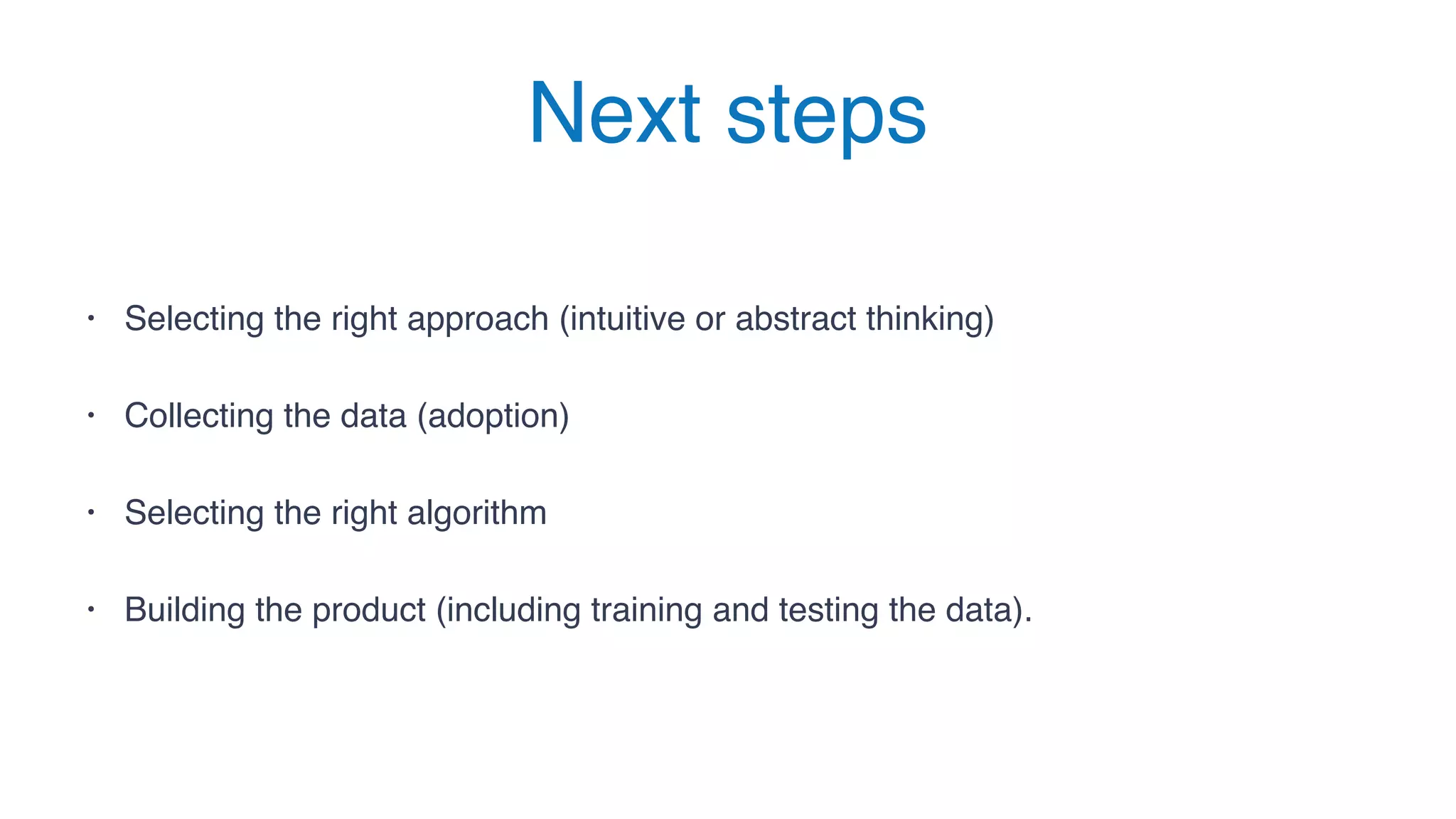
Next steps
• Selecting the right approach (intuitive or abstract thinking)
• Collecting the data (adoption)
• Selecting the right algorithm
• Building the product (including training and testing the data).
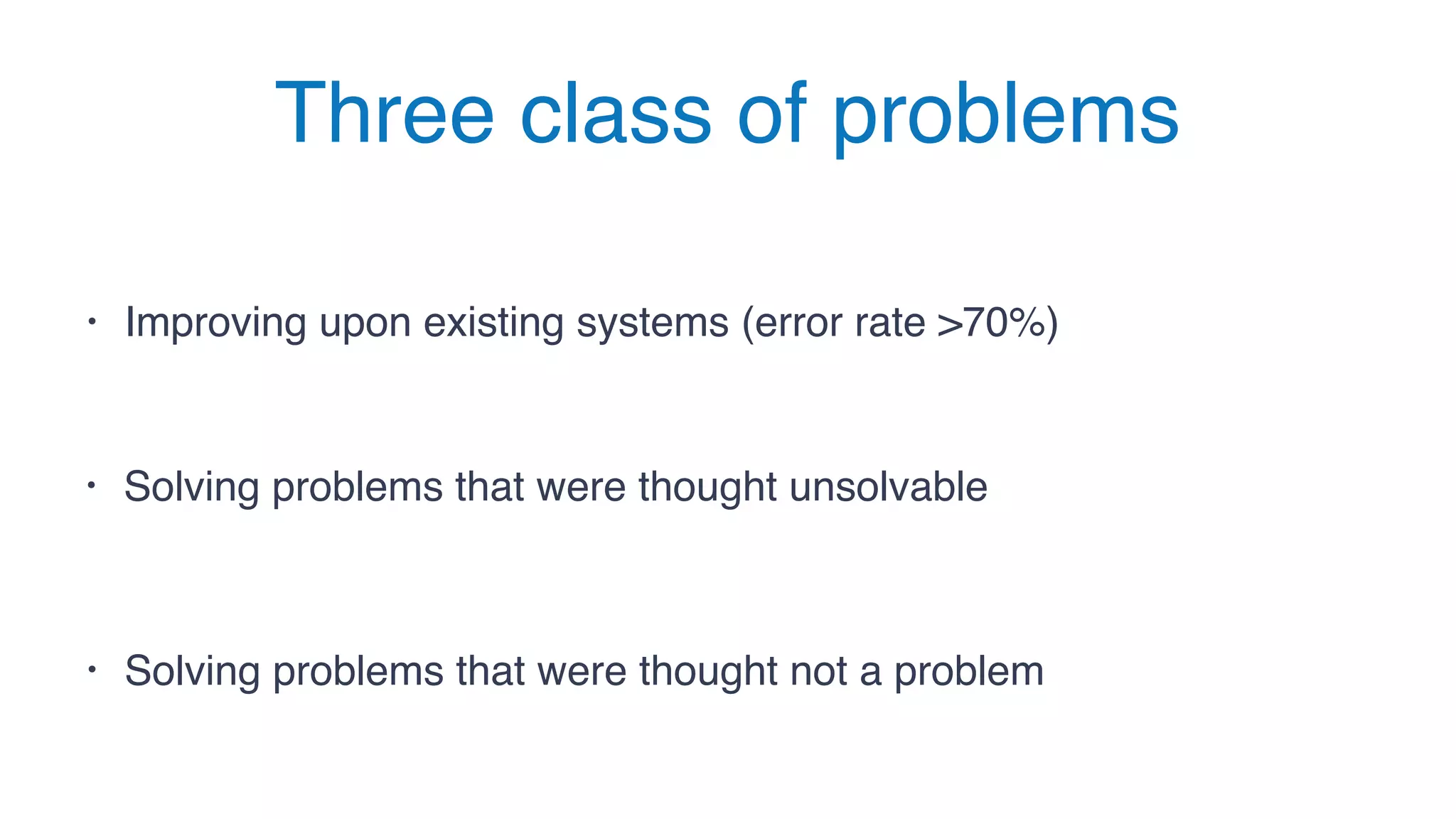
Three class of problems
• Solving problems that were thought unsolvable
• Solving problems that were thought not a problem
• Improving upon existing systems (error rate >70%)
Problem 1: Improving upon an existing system
Case study: Better risk premiums for young drivers
• Young drivers have high premiums so insurance companies fight
it difficult to attract new customers.
The problem
In partnership with:
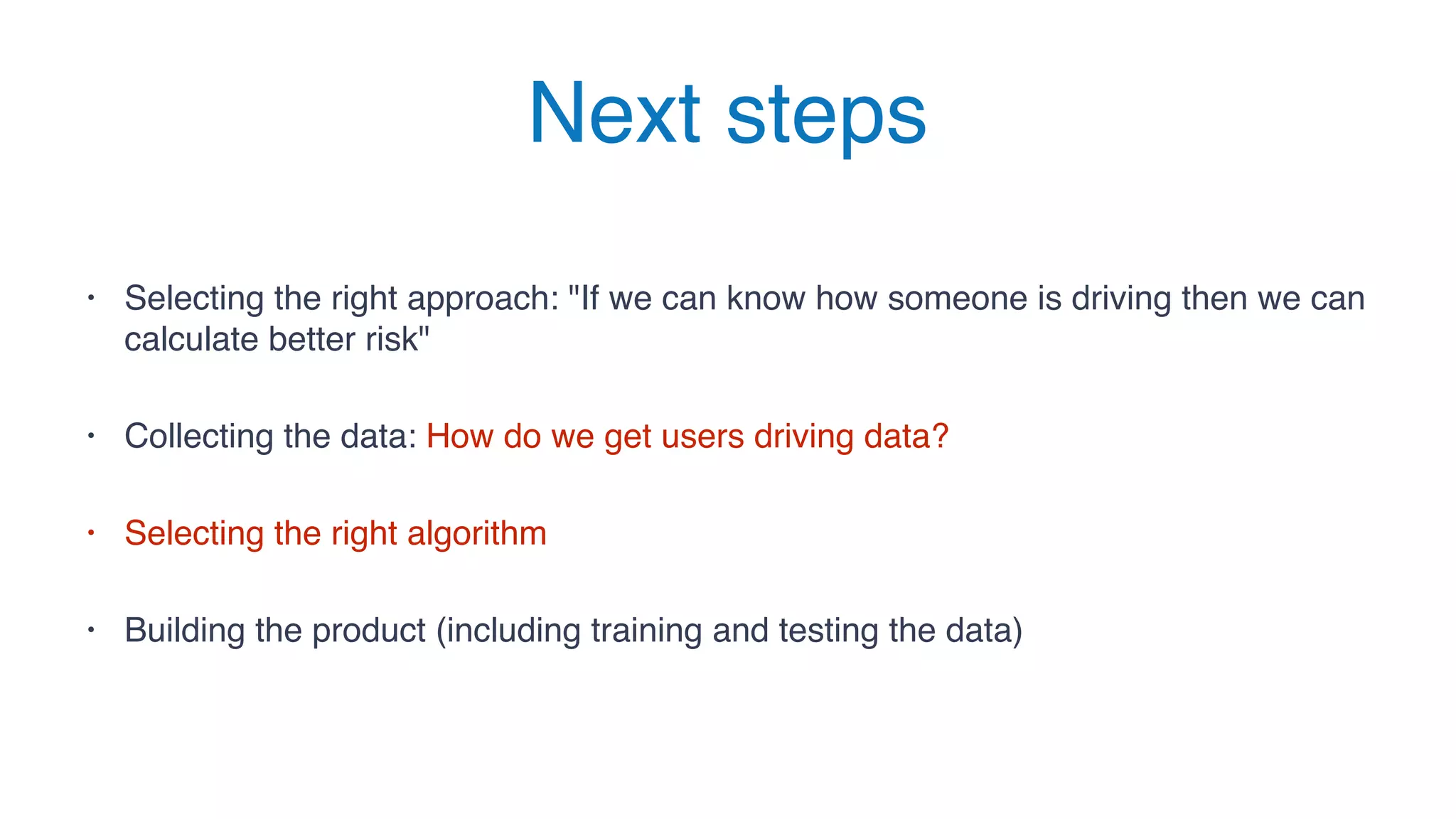
Next steps
• Selecting the right approach: "If we can know how someone is driving then we can
calculate better risk"
• Collecting the data: How do we get users driving data?
• Selecting the right algorithm
• Building the product (including training and testing the data)
Collecting the data
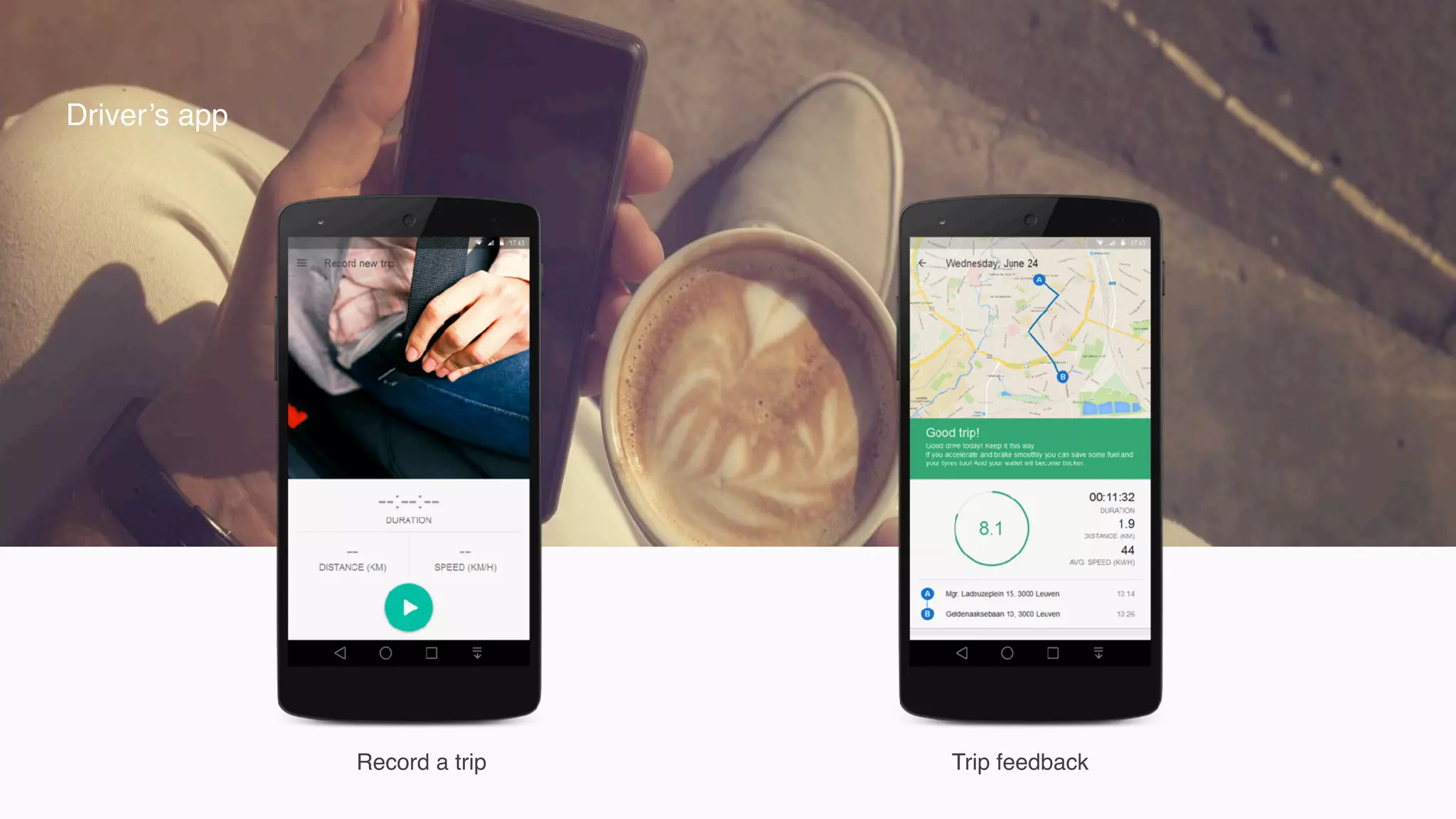
Driver’s app
Record a trip Trip feedback
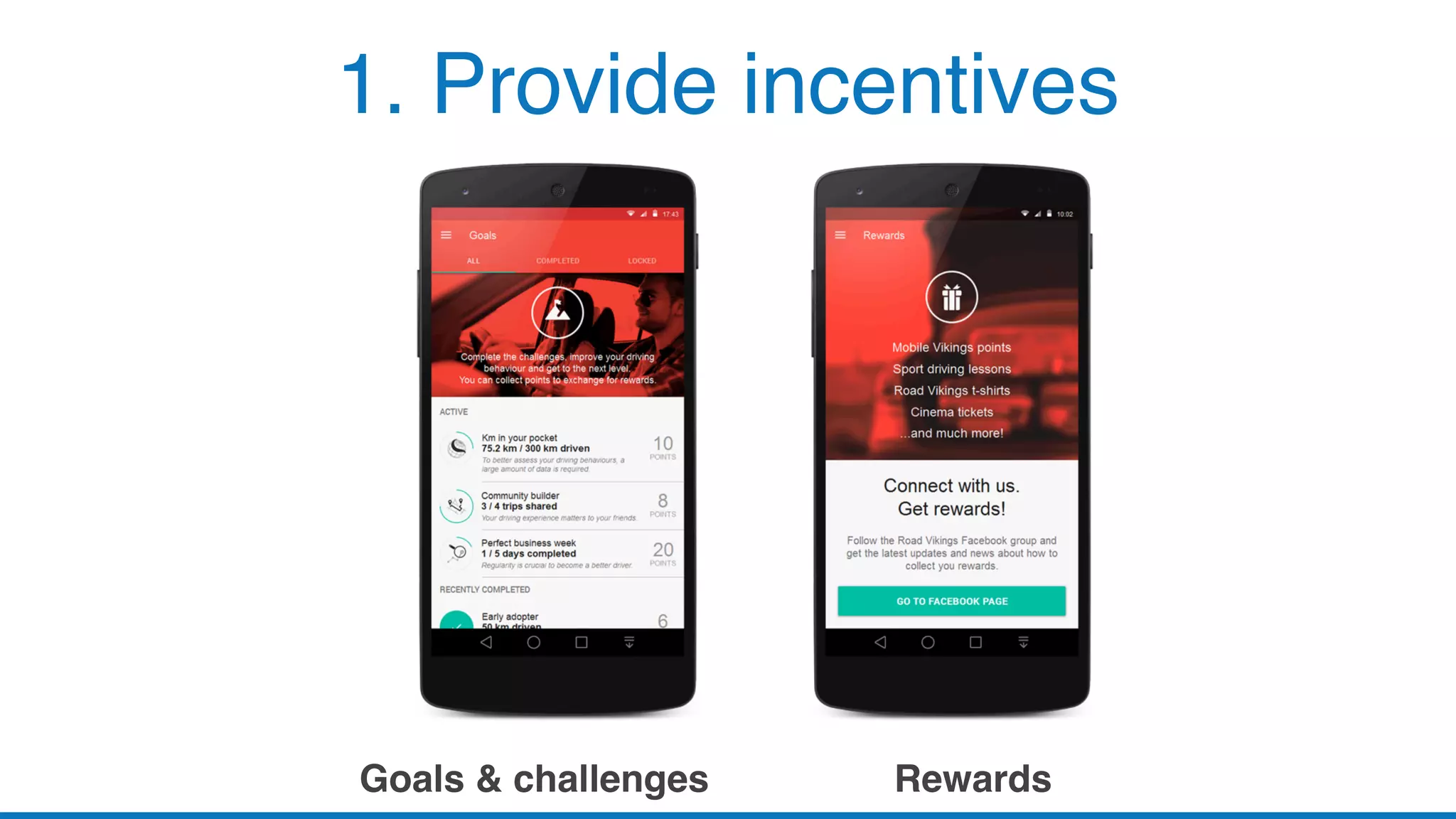
Goals & challenges Rewards
1. Provide incentives
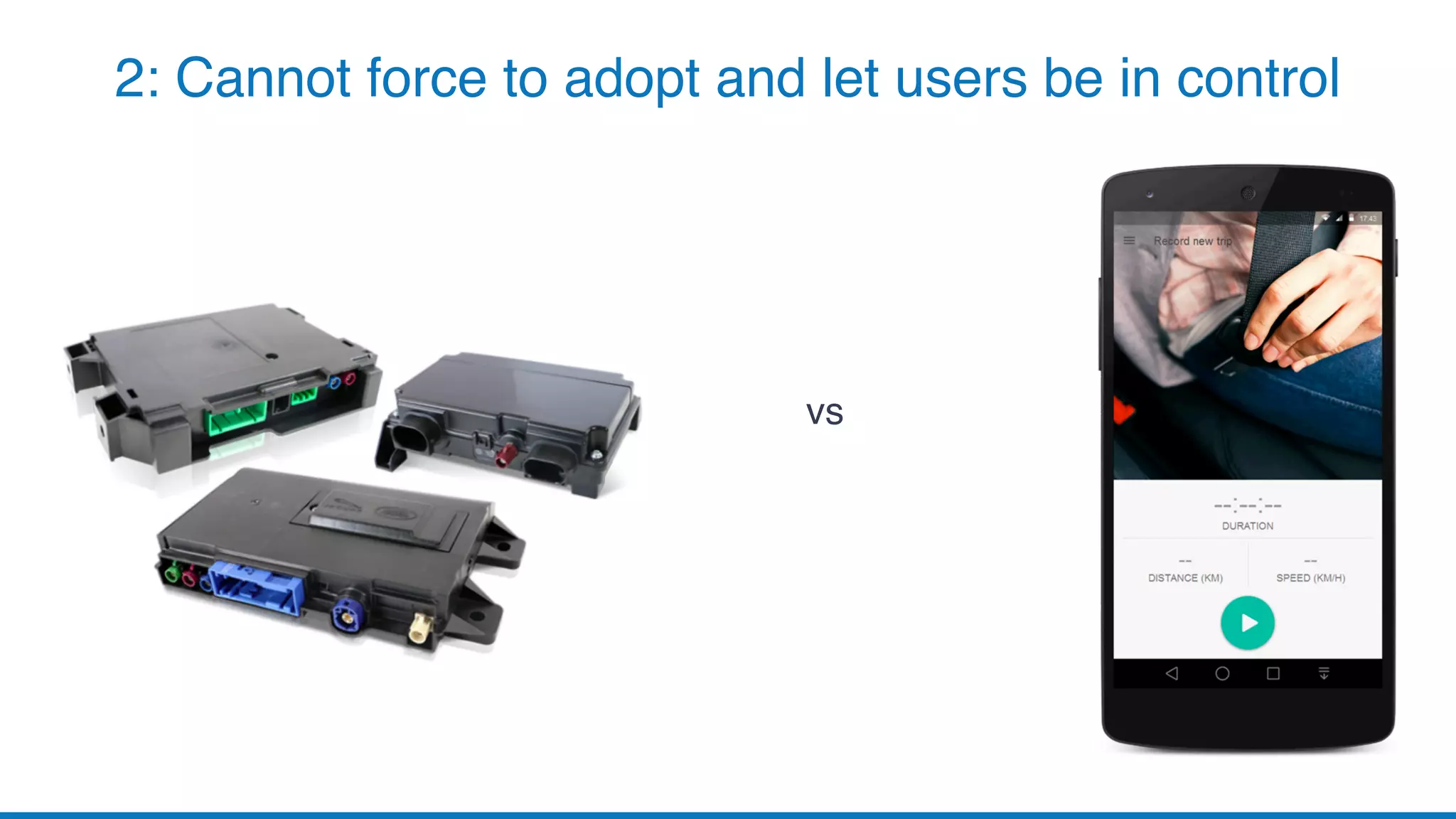
2: Cannot force to adopt and let users be in control
vs
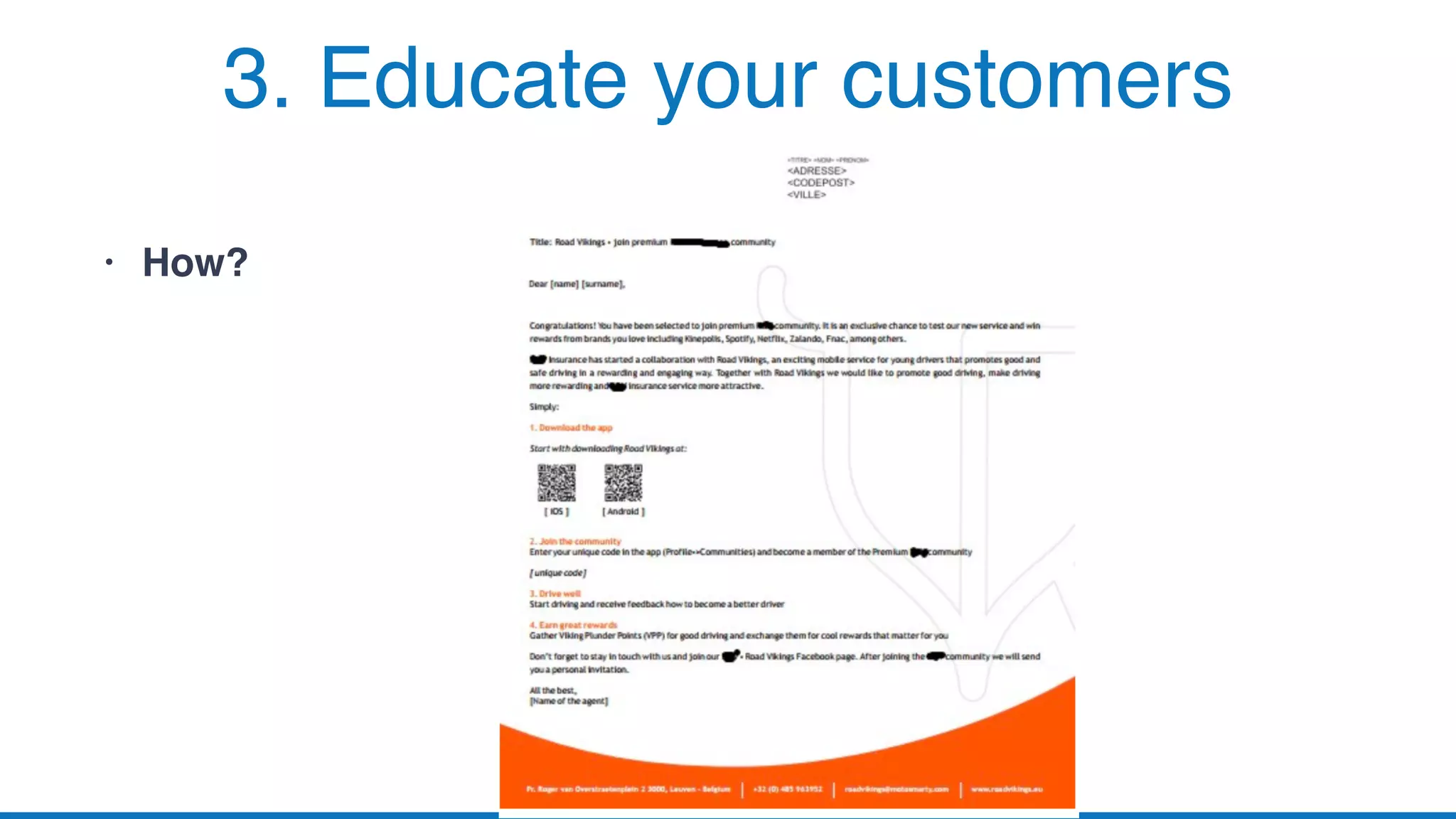
• How?
3. Educate your customers
4. Create a community
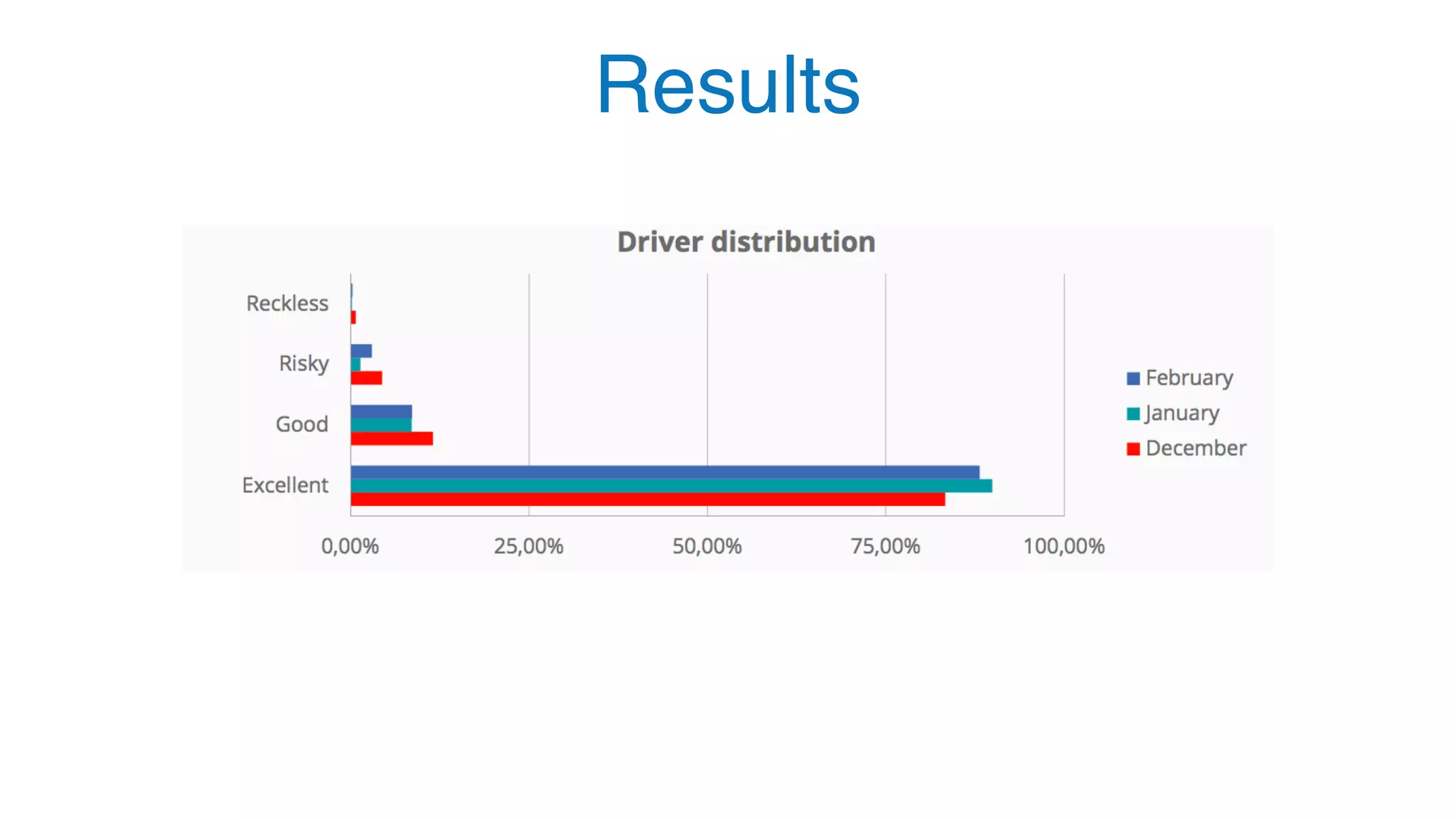
Results
What Machine Learning Algorithm to use
Data but ...
• Do not know who is a good or a a bad driver as we do not have labeled data.
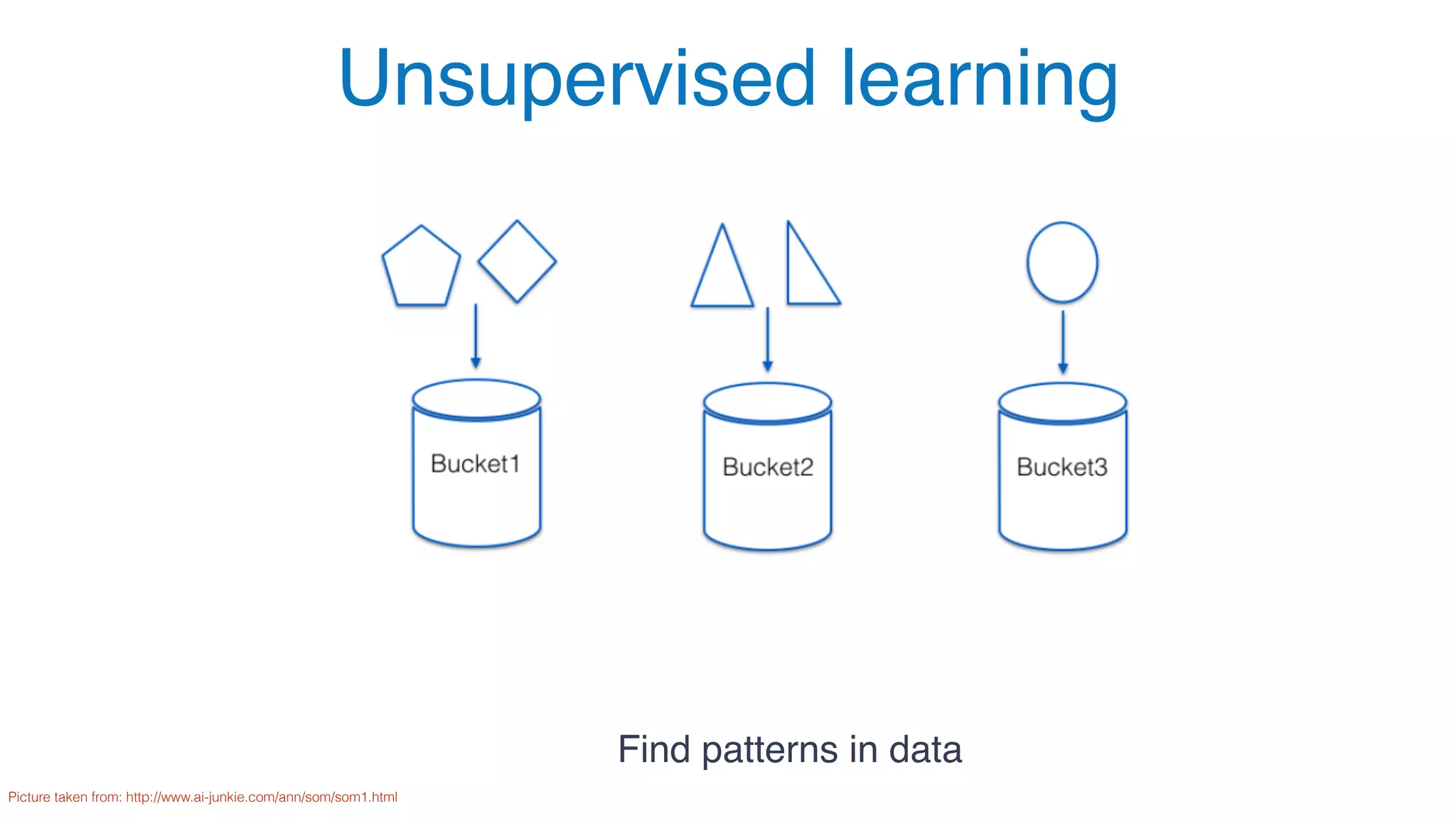
Unsupervised learning
Picture taken from: http://www.ai-junkie.com/ann/som/som1.html
Find patterns in data
Problem 2: Problems that were thought unsolvable
Case study: Decentralized energy via Solar rooftop
• Solar adoption is low as the sales process is like 1960s vacuum
cleaner sale process.
The problem
Next steps
• Selecting the right approach: "If we can know how remotely find rooftops of the
people and create a simulator"
• Collecting the data: "Use solar satellite images" (public data)
• Making the algorithm: "From solar images to calculating rooftop energy potential".
• Building the product (including training and testing the data)
What we want?
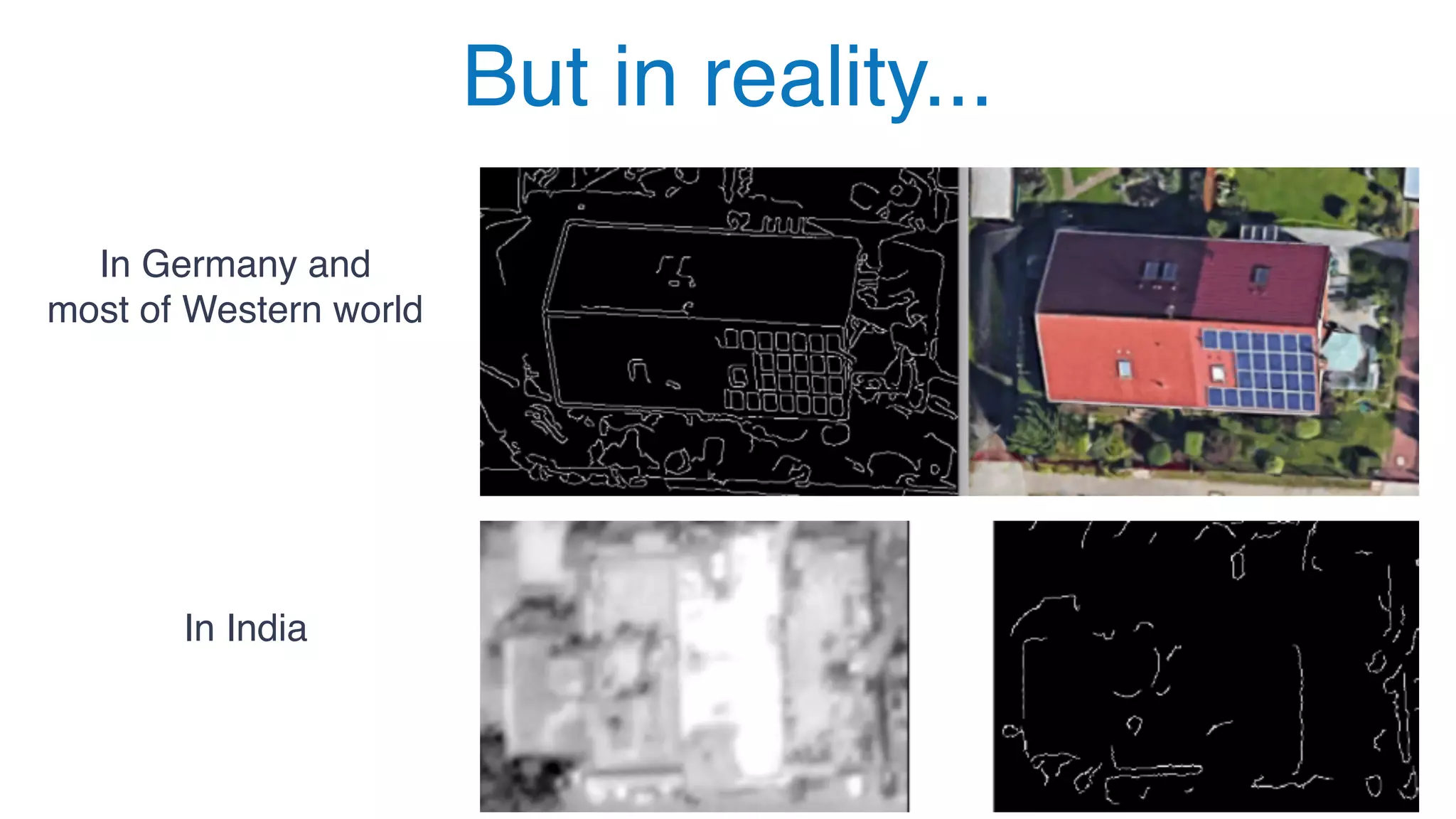
But in reality...
In Germany and
most of Western world
In India
And google object detection does not work...
Plus the problem is slightly more complicated with
obstacles
Water tanks
Turbo
ventilator
Mumpty
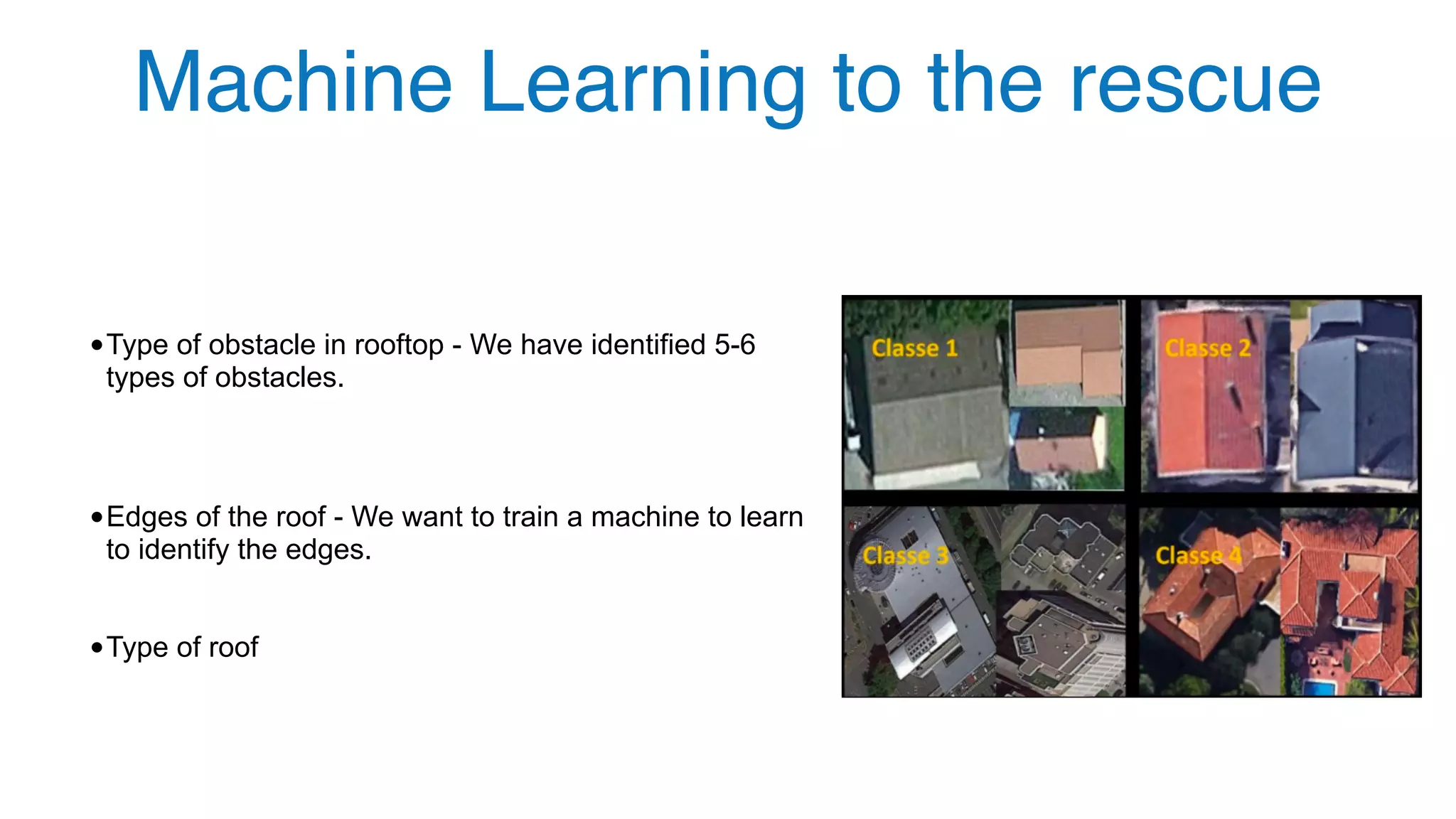
•Type of obstacle in rooftop - We have identified 5-6
types of obstacles.
•Edges of the roof - We want to train a machine to learn
to identify the edges.
•Type of roof
Machine Learning to the rescue
Supervised learning
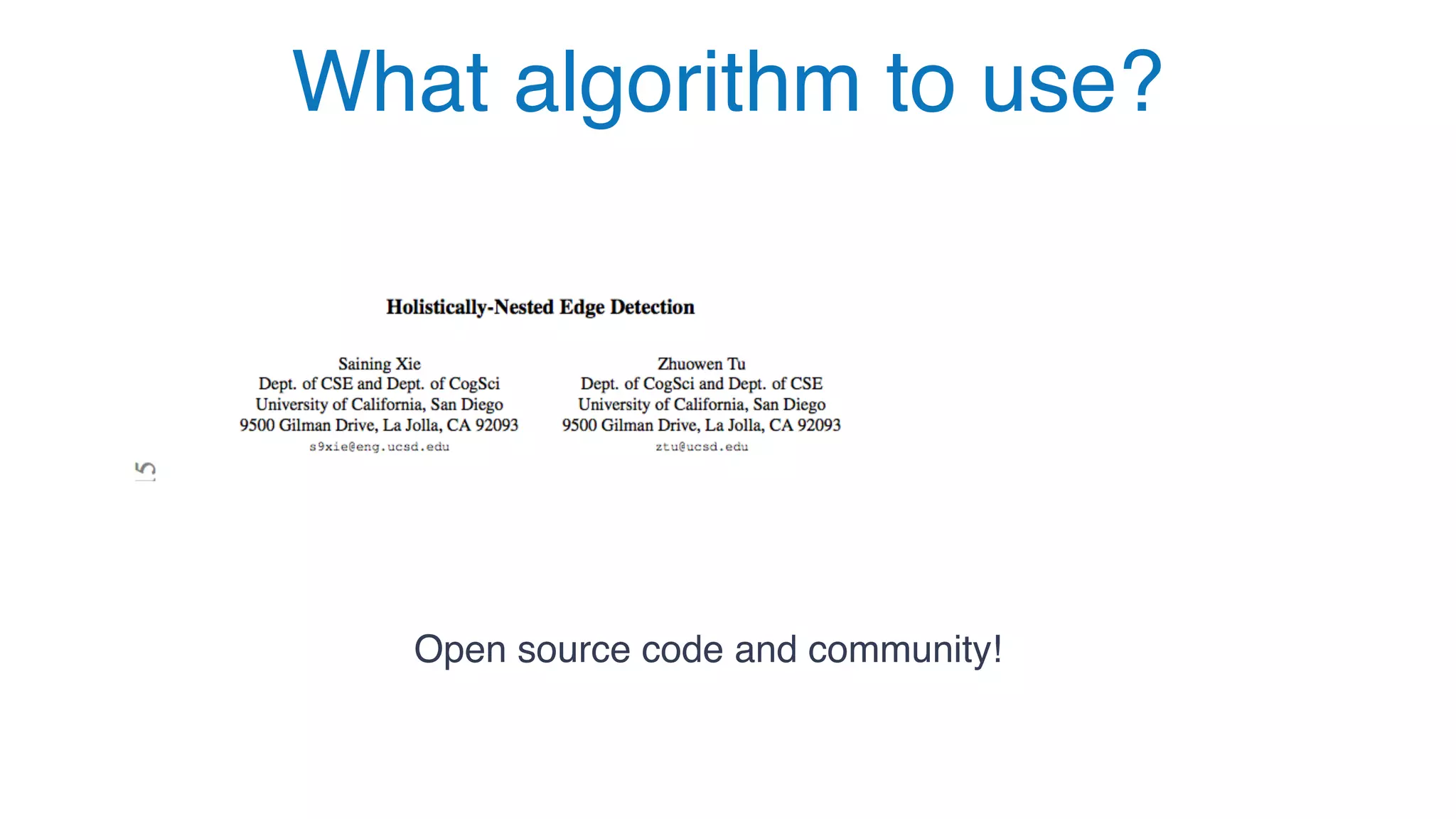
What algorithm to use?
Open source code and community!
Problem 3: Problems that were not a problem
Case study: Loans to people without bank account
• 70% of people in Vietnam don't have a bank account.
The problem
Next steps
• Selecting the right approach: "How can we predict future behavior?"
• Collecting the data: "Why would users give data?" (because want to get loans)
• Making the algorithm
• Building the product (including training and testing the data)
Future behavior of income earnings
• Education level
• Family background
• Current address
• Current job and salary
Unsupervised learning
Picture taken from: http://www.ai-junkie.com/ann/som/som1.html
Find patterns in data
Summarizing it all
• Select the right problem.
• Select the right approach through intuitive thinking.
• Collect data via incentivizing users to share data, do not get data behind their
backs.
• Select the right algorithm(s).
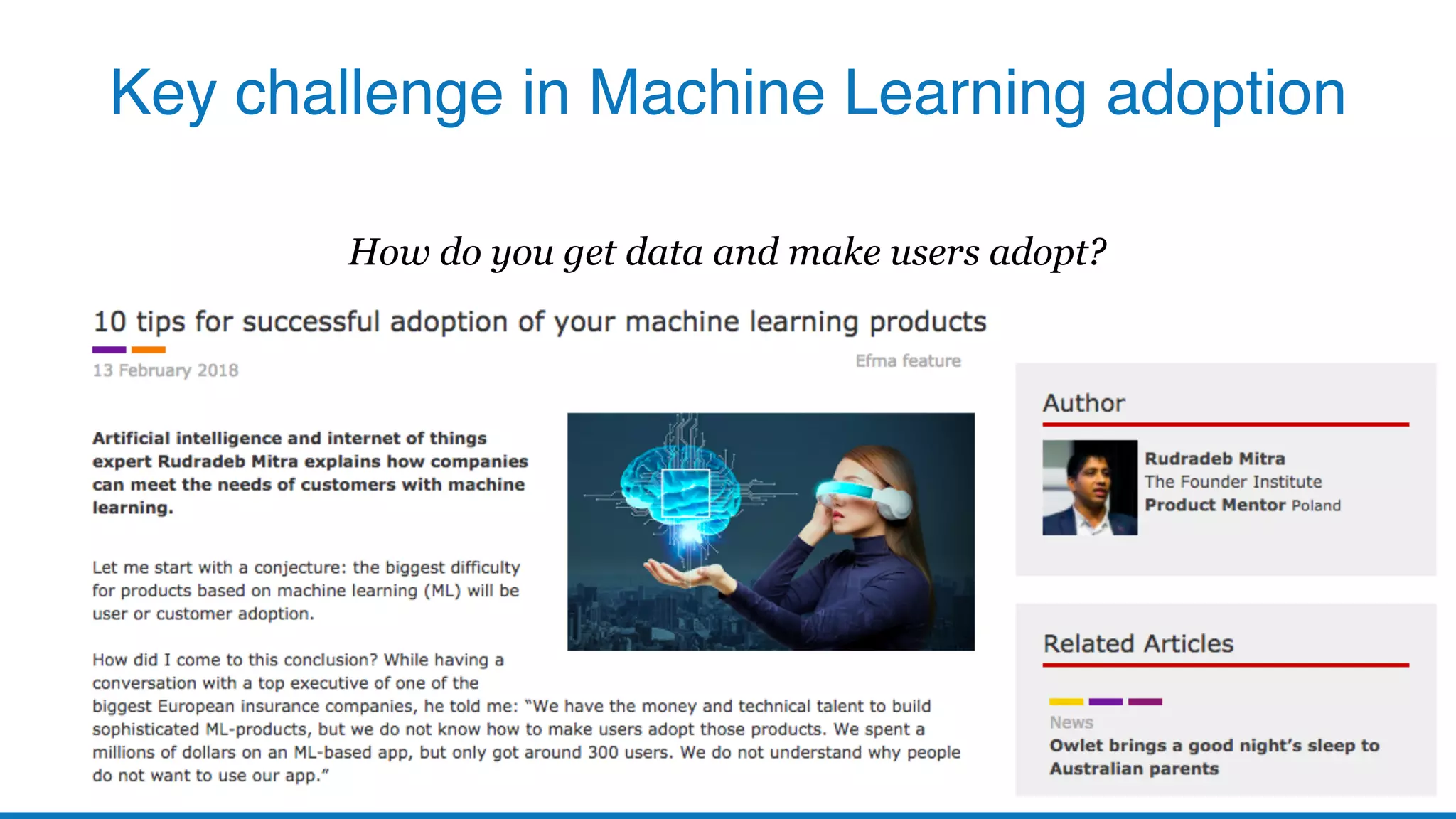
Key challenge in Machine Learning adoption
How do you get data and make users adopt?
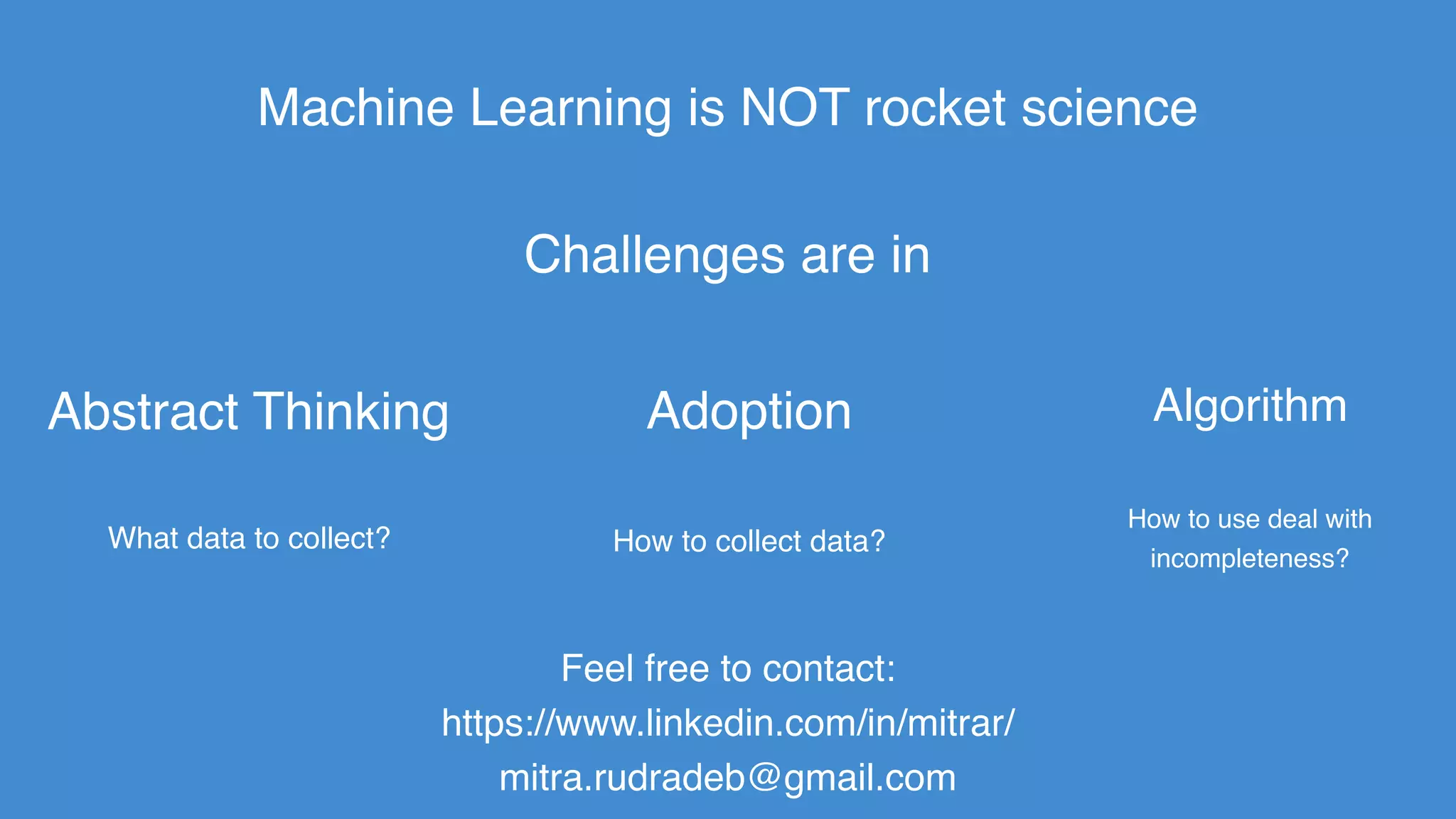
Machine Learning is NOT rocket science
Adoption
How to collect data?
Abstract Thinking
Feel free to contact:
https://www.linkedin.com/in/mitrar/
mitra.rudradeb@gmail.com
Challenges are in
Algorithm
How to use deal with
incompleteness?
What data to collect?

Successful adoption of Machine Learning

  • 1.
    Successful Adoption ofMachine Learning Rudradeb Mitra | http://www.linkedin.com/in/mitrar/
  • 2.
    Brief Bio • 2002:Published first research paper on AI in an International conference. • 2003-2009: Worked in Germany, Belgium and Scotland at Research Labs, Universities and Startups on AI/ML. • 2010: Graduated from University of Cambridge, UK • 2010-2017: Built 6 startups. • 2017-: Writer. Product Mentor of Google Launchpad. Democratization and Decentralization of building ML products.
  • 3.
    What is MachineLearning? • Learning: Algorithms that can find patterns in past data and predict future patterns. • Three kinds of Learning: Supervised, Unsupervised and Reinforcement.
  • 4.
    How to buildsuccessful Machine Learning products?
  • 5.
    Step I • Selectthe right problem to solve
  • 6.
    How to selectthe right problem? "Stop identifying cats and start creating value" • Bayesian error (Lowest possible error) rate is >80% • Bayesian error rate is <20%
  • 7.
  • 8.
    Next steps • Selectingthe right approach (intuitive or abstract thinking) • Collecting the data (adoption) • Selecting the right algorithm • Building the product (including training and testing the data).
  • 9.
    Three class ofproblems • Solving problems that were thought unsolvable • Solving problems that were thought not a problem • Improving upon existing systems (error rate >70%)
  • 10.
    Problem 1: Improvingupon an existing system Case study: Better risk premiums for young drivers
  • 11.
    • Young drivershave high premiums so insurance companies fight it difficult to attract new customers. The problem
  • 12.
  • 13.
    Next steps • Selectingthe right approach: "If we can know how someone is driving then we can calculate better risk" • Collecting the data: How do we get users driving data? • Selecting the right algorithm • Building the product (including training and testing the data)
  • 14.
  • 15.
    Driver’s app Record atrip Trip feedback
  • 16.
    Goals & challengesRewards 1. Provide incentives
  • 17.
    2: Cannot forceto adopt and let users be in control vs
  • 18.
    • How? 3. Educateyour customers
  • 19.
    4. Create acommunity
  • 20.
  • 21.
    What Machine LearningAlgorithm to use
  • 22.
    Data but ... •Do not know who is a good or a a bad driver as we do not have labeled data.
  • 23.
    Unsupervised learning Picture takenfrom: http://www.ai-junkie.com/ann/som/som1.html Find patterns in data
  • 24.
    Problem 2: Problemsthat were thought unsolvable Case study: Decentralized energy via Solar rooftop
  • 25.
    • Solar adoptionis low as the sales process is like 1960s vacuum cleaner sale process. The problem
  • 27.
    Next steps • Selectingthe right approach: "If we can know how remotely find rooftops of the people and create a simulator" • Collecting the data: "Use solar satellite images" (public data) • Making the algorithm: "From solar images to calculating rooftop energy potential". • Building the product (including training and testing the data)
  • 28.
  • 29.
    But in reality... InGermany and most of Western world In India
  • 30.
    And google objectdetection does not work...
  • 31.
    Plus the problemis slightly more complicated with obstacles Water tanks Turbo ventilator Mumpty
  • 32.
    •Type of obstaclein rooftop - We have identified 5-6 types of obstacles. •Edges of the roof - We want to train a machine to learn to identify the edges. •Type of roof Machine Learning to the rescue
  • 33.
  • 34.
    What algorithm touse? Open source code and community!
  • 35.
    Problem 3: Problemsthat were not a problem Case study: Loans to people without bank account
  • 36.
    • 70% ofpeople in Vietnam don't have a bank account. The problem
  • 37.
    Next steps • Selectingthe right approach: "How can we predict future behavior?" • Collecting the data: "Why would users give data?" (because want to get loans) • Making the algorithm • Building the product (including training and testing the data)
  • 38.
    Future behavior ofincome earnings • Education level • Family background • Current address • Current job and salary
  • 39.
    Unsupervised learning Picture takenfrom: http://www.ai-junkie.com/ann/som/som1.html Find patterns in data
  • 40.
    Summarizing it all •Select the right problem. • Select the right approach through intuitive thinking. • Collect data via incentivizing users to share data, do not get data behind their backs. • Select the right algorithm(s).
  • 41.
    Key challenge inMachine Learning adoption How do you get data and make users adopt?
  • 42.
    Machine Learning isNOT rocket science Adoption How to collect data? Abstract Thinking Feel free to contact: https://www.linkedin.com/in/mitrar/ mitra.rudradeb@gmail.com Challenges are in Algorithm How to use deal with incompleteness? What data to collect?