



SaaS Application Architecture
Defined
Unveiling SaaS Reference Architectures
welcome
speakers
page
02
Susana Castro
Business Systems Analyst
Matthew
Rochester
Manager Solutions
Architecture
Tony Dyck
IT Director
Adam Kessler
Solution Architect
why do we need
architecture?
page
03
a well articulated architecture can
provide perspective on the effort
required to make the past meet the
future.
perspectiv
e
what is the
“ideal” architecture ?
page
04
An ideal architecture optimizes an
organization’s:
1. business needs / goals
2. current state application
3. core principles
4. team skillset
it
depends.
example
architecture build
“inputs”
page
05
01
outline business goals
Scale order to cash cycle. Consistency.
Customer Focus. Maximize Zuora usage
03
define core principles
Nine keys.
Be your own reference account. Cloud first.
Agility. Expect Change
02
analyze system (SWOT)
Zuora. Salesforce. Drawloop. DocuSign.
Financial Force. NetSuite
04
analyze team (SWOT)
Salesforce and Zuora development.
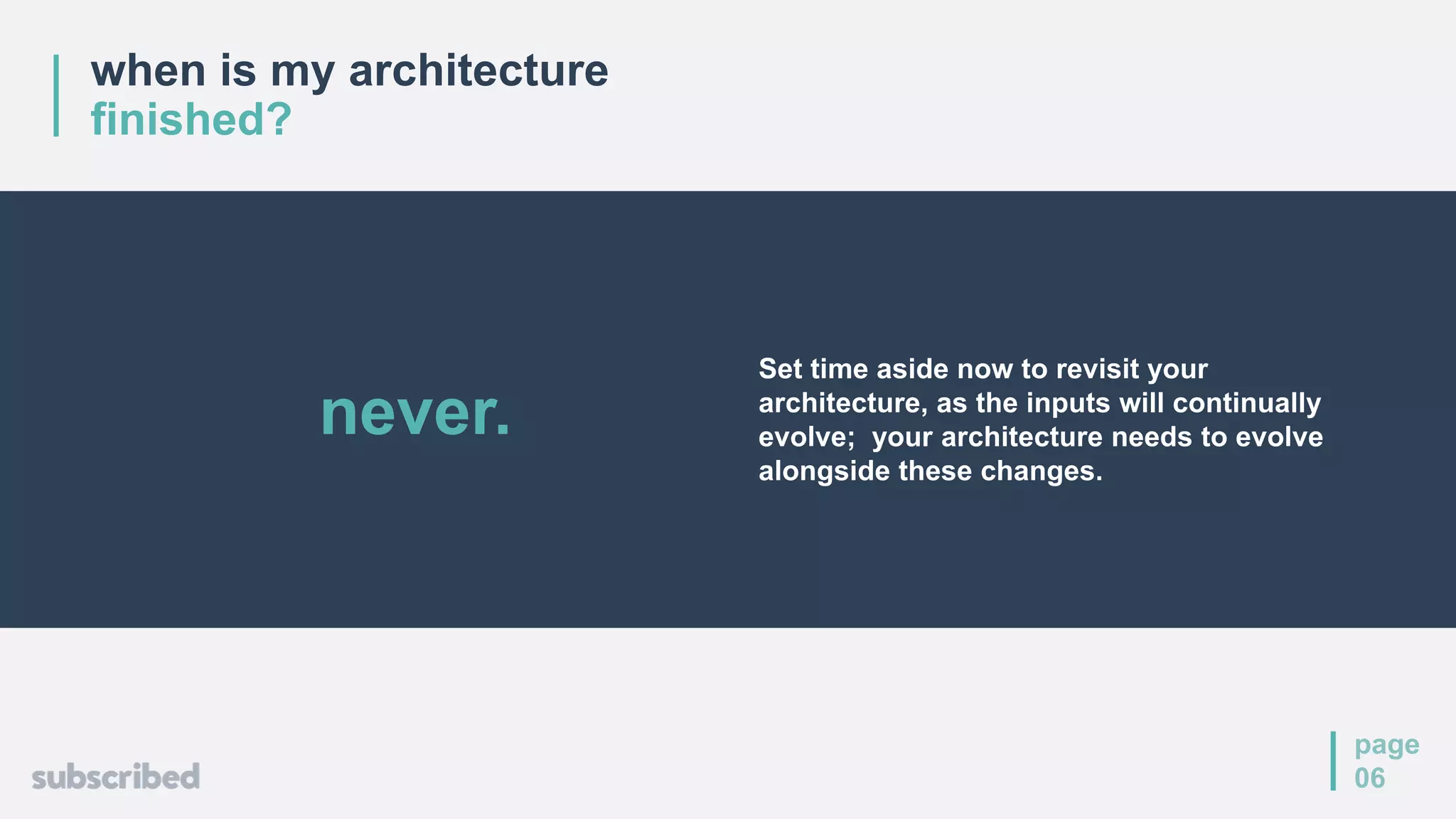
when is my architecture
finished?
page
06
Set time aside now to revisit your
architecture, as the inputs will continually
evolve; your architecture needs to evolve
alongside these changes.
never.
page
07
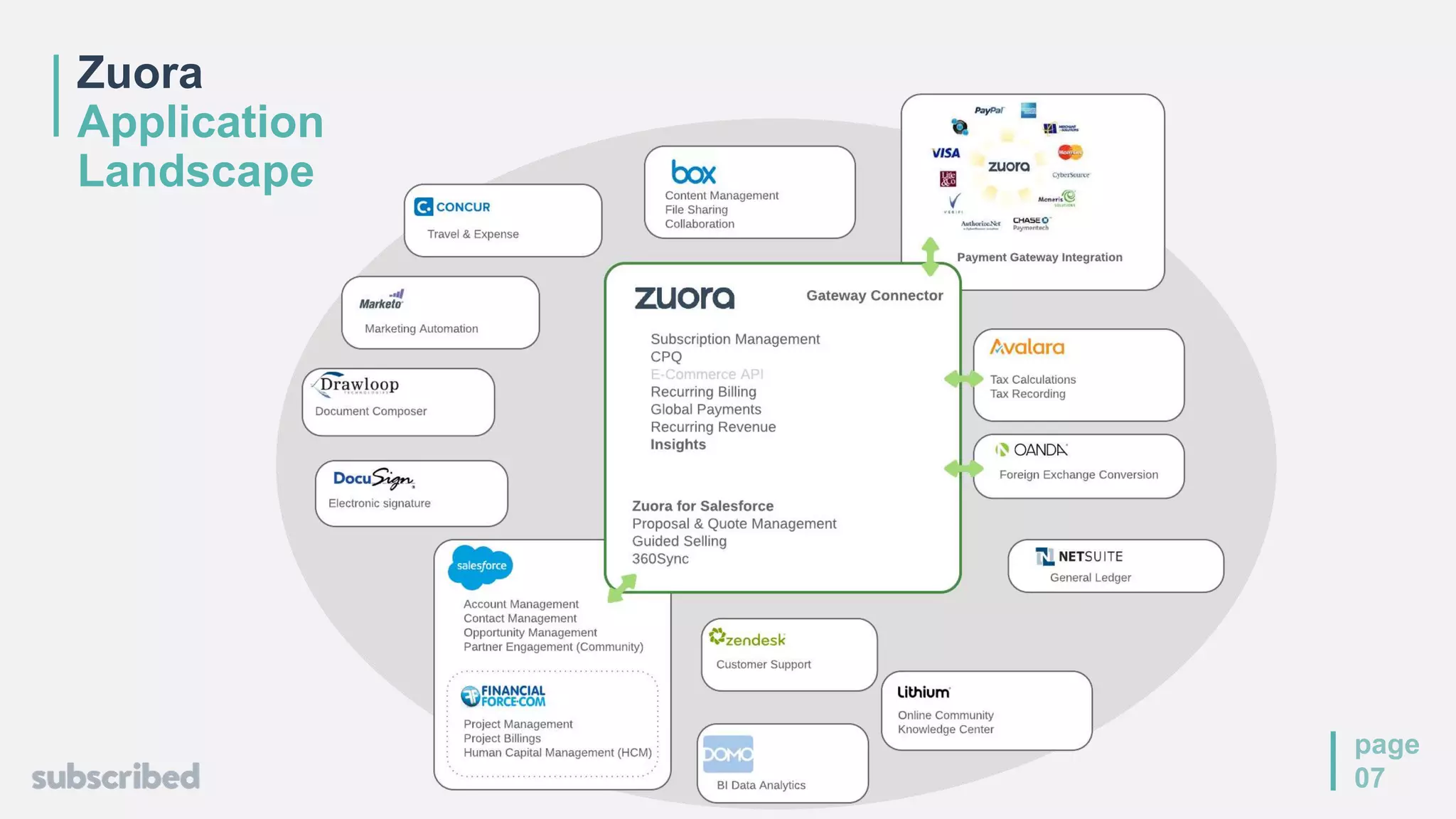
Zuora
Application
Landscape
page
08
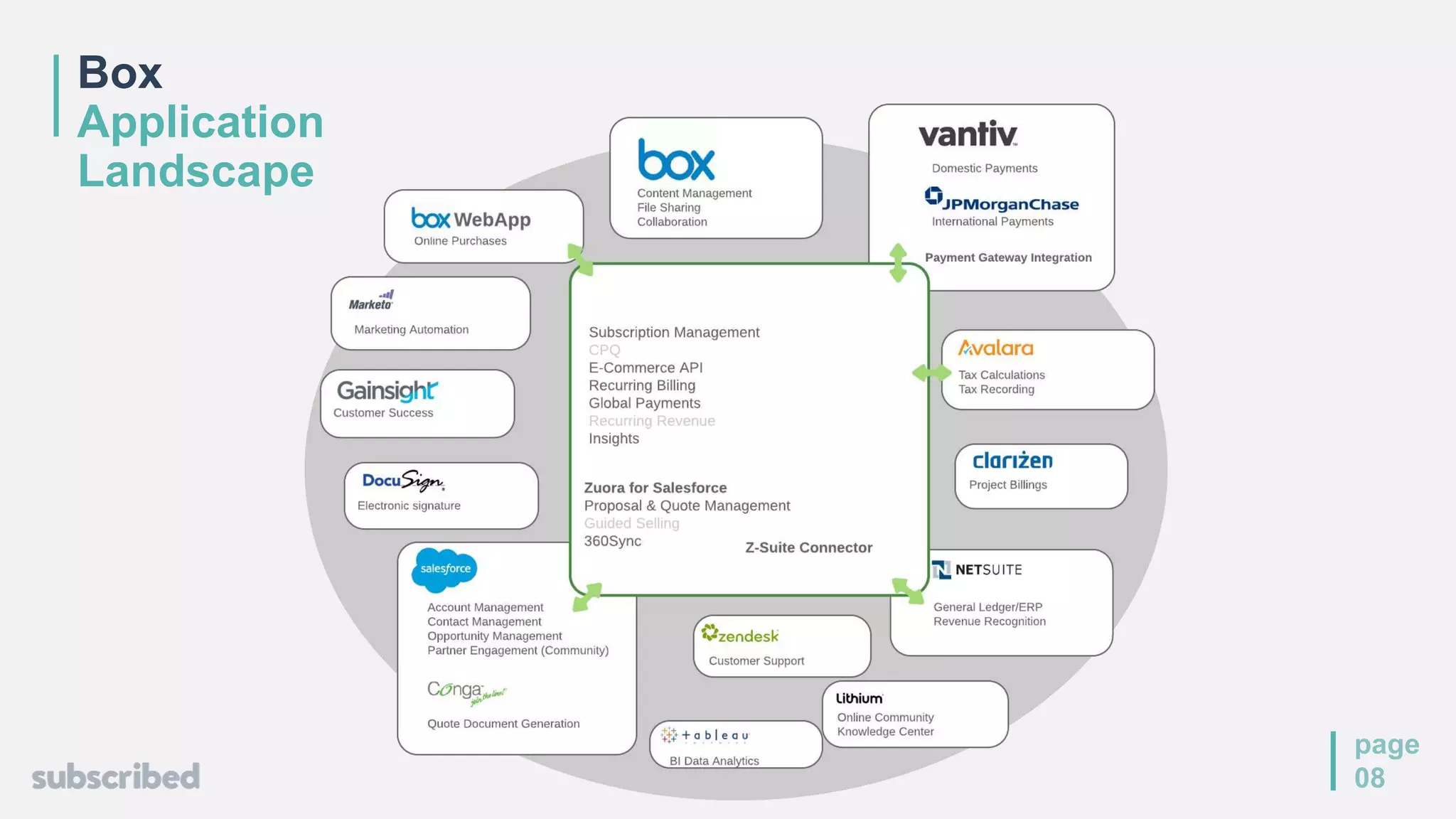
Box
Application
Landscape
page
9
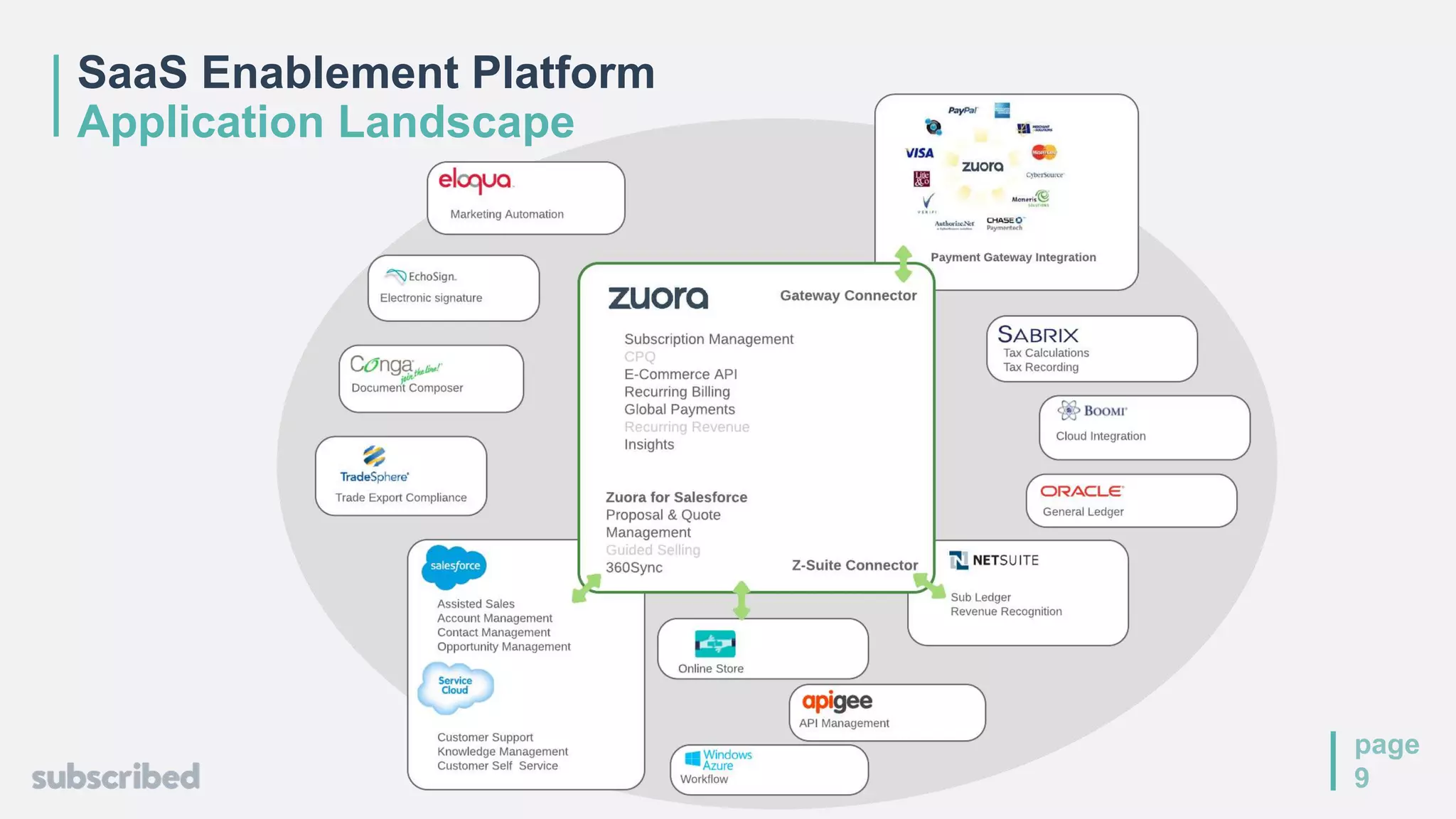
SaaS Enablement Platform
Application Landscape
page
10
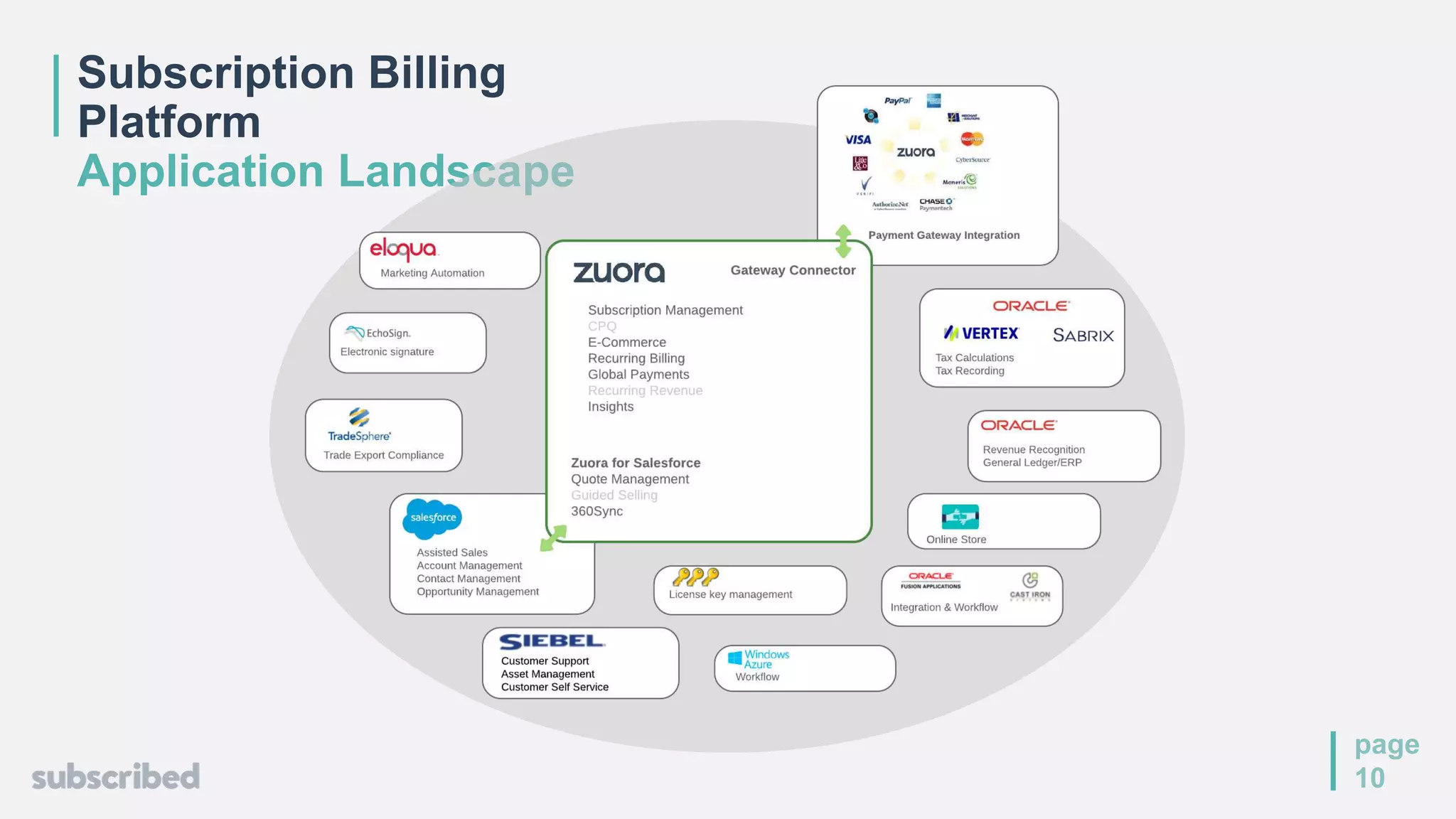
Subscription Billing
Platform
Application Landscape
key
takeaways
page
11
1. Architecture gives perspective
2. Architecture evolves
3. Leverage your peers architecture experience
Q&A
page
012
Susana Castro
Business Systems Analyst
Matthew
Rochester
Manager Solutions
Architecture
Tony Dyck
IT Director
Adam Kessler
Solution Architect
Check out Zuora Academy for more great info and actionable
advice.
All the info you need to build and run
an amazing subscription business.
https://www.zuora.com/academy/
Subscribed 2016: SaaS Application Architecture Defined

Subscribed 2016: SaaS Application Architecture Defined

Editor's Notes

  • #2 Today we are going to talk about architecture. We will explore what architecture is and why it is important. We will discuss a process for gathering key information necessary to build your own architecture. And we will hear from 3 distinguished panelists – they will describe the architecture in place at their organization and give color to some of the process that went into defining their architecture. Before we start, let me introduce our panelists:
  • #4 If you are in front of one of those big mazes (labyrinth) you can devise a plan to get you out of the current problem.  That is not architecture – that is solution design.  Architecture is the process of rising up above the maze to get a perspective of the whole landscape ahead à see other obstacles after it (rivers, mountains, ravines), and determining the best path to your goal given your assets, skills and preferences.   A client can have business needs to expand their subscription-based business model.  Simply implementing a subscription-based billing tool is a project-based solution.  Architecture zooms out to look at other parts of the business, applications, teams and core principles, to determine whether there are other factors to consider rather than just “implementing application XYZ”.   In our example, the client was already in the mids of replacing its ERP system without understanding the impact a subscription-based billing tool would have on that implementation. Implementing an ERP solution would out looking at the larger landscape would  have been short-sighted, solving only part of the problem.
  • #5 There is no single architecture that is optimized for everybody. However, we can learn from our peers – what principles they hold high, what needs are they prioritizing, and see how these drive their reference architecture. This can help validate points in our architecture, and give us other ideas of things to include.
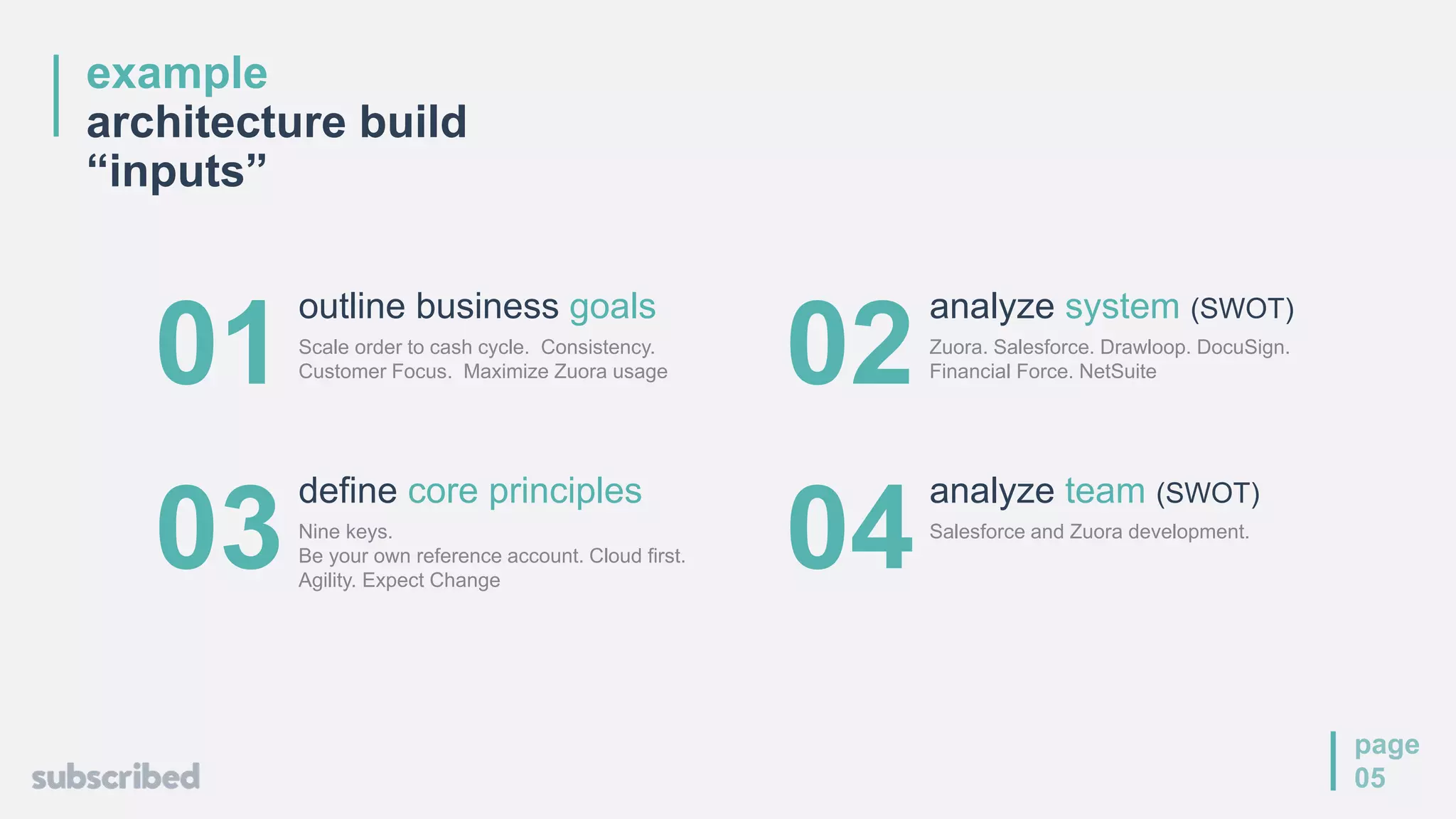
  • #6 Here are a few examples from the inputs we at Zuora put into our reference architecture. Obviously this is not the detail, but just there to get a few items on the board for you to see. And in case you are not familiar – SWOT stands for Strengths, Weaknesses, Opportunities and Threats. For instance our relationship with Salesforce is a strength, and we have an opportunity (which aligns with a business goal) to increase the use of our own product. I don’t think we had a weakness on the system side (however if you have a brittle, difficult to change legacy system, it would definitely be a weakness). From a system threat perspective, if one of your applications was failing to continually evolve, or be acquired by a competitor, you might consider that a threat.
  • #7 Every time your organization adds a feature, buys additional software / licenses, existing software is upgraded, business goals change or you team skillset changes, you need to validate and adjust your architecture. Make it a point to continually track the changes to inputs and set aside regular inputs to evaluate the changes and adjust the architecture accordingly. Your architecture evolves with your business.
  • #12 Architecture balances several key inputs that are organization-specific Architecture should constantly evolve as those key inputs change. Review often Leverage your peers architecture experience – especially lessons learned