Submitted by
K.DivyaTirumala
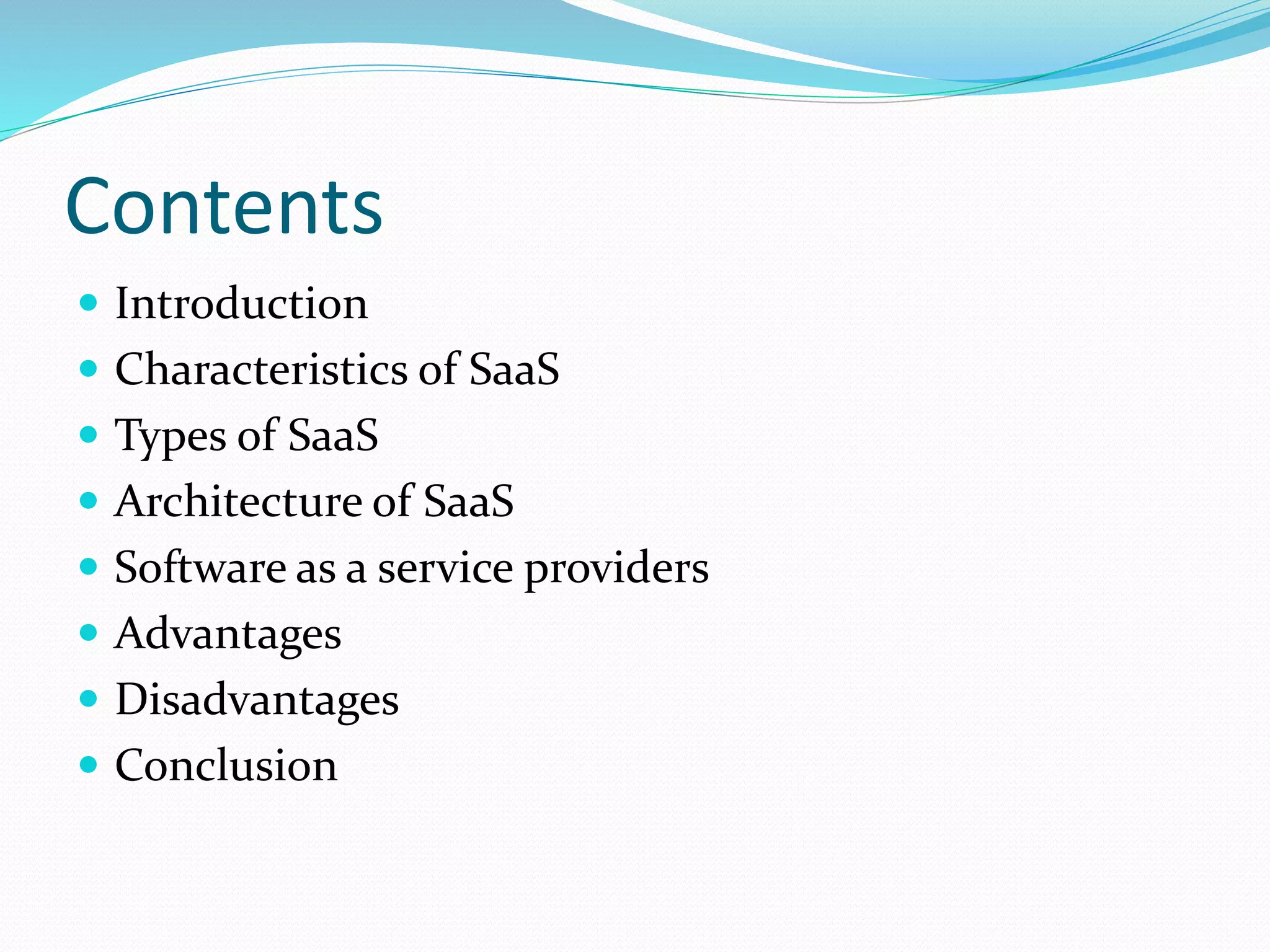
Contents
 Introduction
 Characteristics of SaaS
 Types of SaaS
 Architecture of SaaS
 Software as a service providers
 Advantages
 Disadvantages
 Conclusion
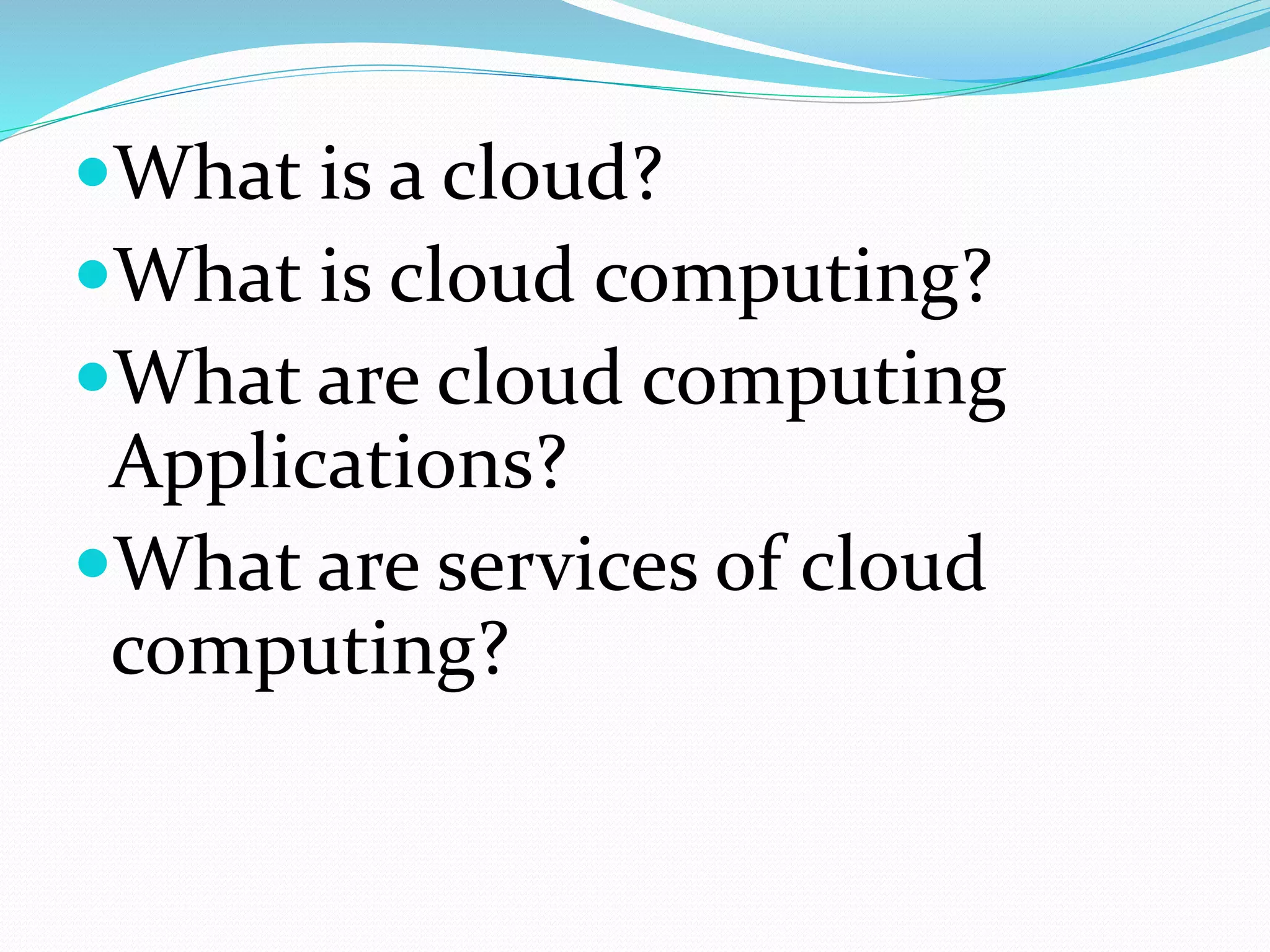
What is a cloud?
What is cloud computing?
What are cloud computing
Applications?
What are services of cloud
computing?
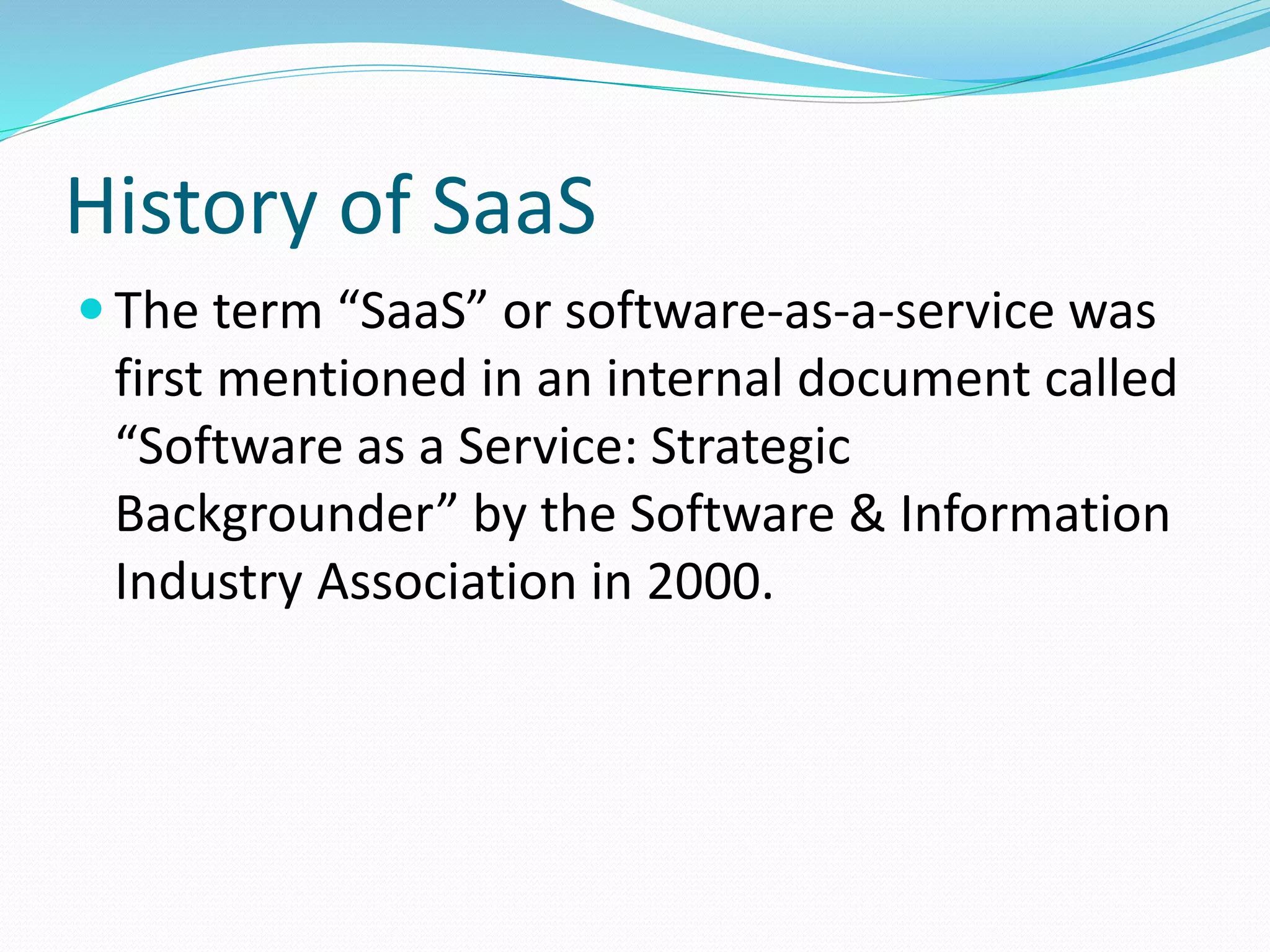
History of SaaS
 The term “SaaS” or software-as-a-service was
first mentioned in an internal document called
“Software as a Service: Strategic
Backgrounder” by the Software & Information
Industry Association in 2000.
Introduction to SaaS
 Software as a Service (SaaS), on demand software, is a
software delivery model in which software and its
associated data are hosted centrally and accessed using
a thin-client, usually a web browser over the internet.
Characteristics of SaaS
 Easy customization
 Better access
 Multitenant architecture
 Integration
 Operational performance
characteristics
 Multitenancy: This is an architecture whereby a
single instance of a software app is meant to serve
multiple customers.
 Security and Compliance: The responsibility of the
SaaS application and hardware security solely lies with
the application developer. He should ensure that
multiple tenants on a shared infrastructure have their
data virtually segregated and made accessible to those
individuals intended to access it.
Types of SaaS
There are two types of SaaS
1. The Ups of SaaS
No need to buy the applications, deploy them
and maintain them
No need to maintain the equipment and
infrastructure.
Lower costs
2. The Downs of SaaS
Dependency on the SaaS provider
Security issues
Limited applications
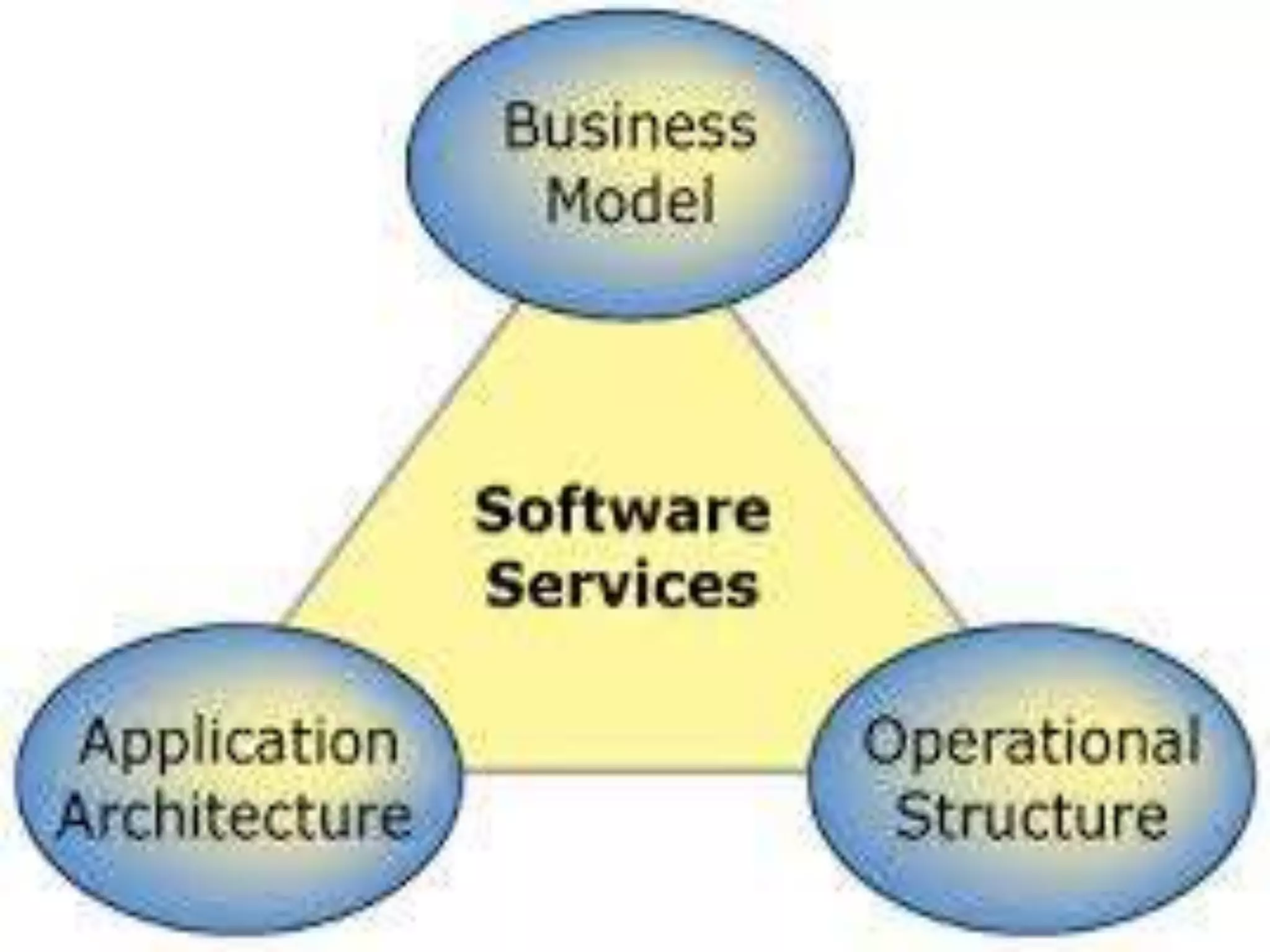
Architecture of SaaS
Application design for SaaS or
cloud infrastructure requires a number of
key considerations to leverage the benefits
delivered by the cloud. The design of the
traditional applications considered limited
resources.
Architecture of SaaS
 Vertical SaaS
A Software which answers the needs of a specific
industry (e.g., software for the healthcare, agriculture,
real estate, finance industries)
 Horizontal SaaS
The products which focus on a software category
(marketing, sales, developer tools, HR) but are
industry agnostic
SaaS providers
 SalesForce
 LinkedIn
 Workday
 Netsuite
 ServiceNow
 Concur Technologies
Advantages
 Easy to use
 Scalability
 Vendor accountability
Disadvantages
 Robustness
 Privacy
 Security
 Reliability
 Compliance
 Performance
Conclusion
Use of SaaS services is pervasive in the development
and deployment of modern applications
In conclusion, the SaaS methodology is very mature
and would play a central to the future of computing.
Software as a service

Software as a service

  • 1.
  • 2.
    Contents  Introduction  Characteristicsof SaaS  Types of SaaS  Architecture of SaaS  Software as a service providers  Advantages  Disadvantages  Conclusion
  • 3.
    What is acloud? What is cloud computing? What are cloud computing Applications? What are services of cloud computing?
  • 4.
    History of SaaS The term “SaaS” or software-as-a-service was first mentioned in an internal document called “Software as a Service: Strategic Backgrounder” by the Software & Information Industry Association in 2000.
  • 5.
    Introduction to SaaS Software as a Service (SaaS), on demand software, is a software delivery model in which software and its associated data are hosted centrally and accessed using a thin-client, usually a web browser over the internet.
  • 6.
    Characteristics of SaaS Easy customization  Better access  Multitenant architecture  Integration  Operational performance
  • 7.
    characteristics  Multitenancy: Thisis an architecture whereby a single instance of a software app is meant to serve multiple customers.  Security and Compliance: The responsibility of the SaaS application and hardware security solely lies with the application developer. He should ensure that multiple tenants on a shared infrastructure have their data virtually segregated and made accessible to those individuals intended to access it.
  • 8.
    Types of SaaS Thereare two types of SaaS 1. The Ups of SaaS No need to buy the applications, deploy them and maintain them No need to maintain the equipment and infrastructure. Lower costs
  • 9.
    2. The Downsof SaaS Dependency on the SaaS provider Security issues Limited applications
  • 10.
    Architecture of SaaS Applicationdesign for SaaS or cloud infrastructure requires a number of key considerations to leverage the benefits delivered by the cloud. The design of the traditional applications considered limited resources.
  • 11.
    Architecture of SaaS Vertical SaaS A Software which answers the needs of a specific industry (e.g., software for the healthcare, agriculture, real estate, finance industries)  Horizontal SaaS The products which focus on a software category (marketing, sales, developer tools, HR) but are industry agnostic
  • 14.
    SaaS providers  SalesForce LinkedIn  Workday  Netsuite  ServiceNow  Concur Technologies
  • 15.
    Advantages  Easy touse  Scalability  Vendor accountability
  • 16.
    Disadvantages  Robustness  Privacy Security  Reliability  Compliance  Performance
  • 17.
    Conclusion Use of SaaSservices is pervasive in the development and deployment of modern applications In conclusion, the SaaS methodology is very mature and would play a central to the future of computing.