Subjects and Predicates
What is a Sentence?
• A sentence is a group of words that
contains two things:
– A subject (the doer of the action)
– A verb (the action or condition)
• A sentence must express a complete
thought.
What is a Sentence?
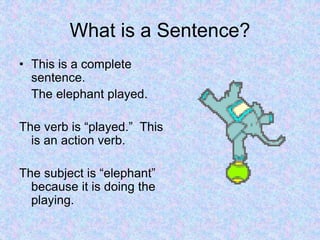
• This is a complete
sentence.
The elephant played.
The verb is “played.” This
is an action verb.
The subject is “elephant”
because it is doing the
playing.
What is a Sentence?
• This is not a
complete sentence.
Ex. Building a sandcastle.
The verb is “building.”
In this sentence no one is doing this action;
therefore, there is no subject.
What is a Fragment?
A fragment is a group of words that is not a
complete sentence. It contains some of the
elements needed to make a sentence, but not all
three parts.
A fragment may contain a subject but not a verb.
Ex. The man on the street
A fragment may contain a verb but no subject.
Ex. Walking down the street
A fragment may contain a subject and a verb,
but it may not be a complete thought.
Ex. While the man was walking down the
street
The Predicate
• Predicate is a fancy word for “verb.” That means
that a predicate can include:
1. action verbs
2. linking verbs
3. verbs of condition
4. helping verbs
• To find the predicate in the sentence, look for
any verbs that you have learned.
The Complete Predicate
• The complete predicate begins with the first verb
and includes all words following it. The actual
verb or verb phrase is called the simple
predicate.
Ex. The tall girls played a game of basketball.
The verb is an action verb. It is “played.”
That makes it the simple predicate.
Everything that follows “played” is a part of the
complete predicate. That means it includes the
words “played a game of basketball.”
The Compound Predicate
• A compound predicate would contain more than one
main verb. Compounds are connected by conjunctions
such as and, but, or, for, nor, yet, or so.
– Ex. I first walked and then ran down the street.
(“Walked” is one main verb and “ran” is another.)
– Ex. I have seen the film and enjoyed it.
(“Have seen” is one verb and “enjoyed” is another.)
– Ex. I have seen the movie.
(This sentence Does NOT contain a compound predicate. “Have
seen” is one verb phrase. “Seen” is the only main verb.)
The Subject
• The subject of the sentence must be a:
1. noun (person, place, or thing)
2. pronoun ( a word that takes the place of
a person, place, or thing.)
• The subject is called the “doer” of the
action.
The Subject
• To find the subject of the sentence you must:
1. Find the verb
2. Ask “who?” or “what?” before it
Ex. Mary threw the ball.
Step one – Find the verb. It is “threw.”
Step two – Ask “who?’” or “what?”
before it. “Who threw?”
The answer is “Mary; therefore, “Mary”
is the subject of the sentence.
The Subject
• Try to find this subject:
Ex. On the table lay a pencil.
Step one – find the verb. It is “lay.”
Step two – Ask “who?” or “what?”
before it. Who lay? What lay? The
answer is “pencil; therefore, pencil is
the subject of the sentence.
The Complete Subject
• The complete subject includes all words up until the verb
begins. Within the complete subject, there will be the
main subject called a simple subject.
Ex. The tall girls played a game.
The verb is “played,” so you would divide directly in front of
“played.” That means the complete subject includes the words
“The tall girls.”
Within these words is the simple subject which tells who actually
played. The simple subject is “girls” since it answered the
question, “Who played?”
The Compound Subject
• A compound subject would contain more than
one “doer” of the action. Often they are
connected by conjunctions such as and, but, or,
for, nor, yet, or so.
Ex. The boys and the girls saw the play.
(Both “boys” and “girls” answer the question of
“Who saw?” That means both of them are
subjects of this sentence. They are compound.)

Subjects and Predicates - Grade 4.ppt

  • 1.
  • 2.
    What is aSentence? • A sentence is a group of words that contains two things: – A subject (the doer of the action) – A verb (the action or condition) • A sentence must express a complete thought.
  • 3.
    What is aSentence? • This is a complete sentence. The elephant played. The verb is “played.” This is an action verb. The subject is “elephant” because it is doing the playing.
  • 4.
    What is aSentence? • This is not a complete sentence. Ex. Building a sandcastle. The verb is “building.” In this sentence no one is doing this action; therefore, there is no subject.
  • 5.
    What is aFragment? A fragment is a group of words that is not a complete sentence. It contains some of the elements needed to make a sentence, but not all three parts. A fragment may contain a subject but not a verb. Ex. The man on the street A fragment may contain a verb but no subject. Ex. Walking down the street A fragment may contain a subject and a verb, but it may not be a complete thought. Ex. While the man was walking down the street
  • 6.
    The Predicate • Predicateis a fancy word for “verb.” That means that a predicate can include: 1. action verbs 2. linking verbs 3. verbs of condition 4. helping verbs • To find the predicate in the sentence, look for any verbs that you have learned.
  • 7.
    The Complete Predicate •The complete predicate begins with the first verb and includes all words following it. The actual verb or verb phrase is called the simple predicate. Ex. The tall girls played a game of basketball. The verb is an action verb. It is “played.” That makes it the simple predicate. Everything that follows “played” is a part of the complete predicate. That means it includes the words “played a game of basketball.”
  • 8.
    The Compound Predicate •A compound predicate would contain more than one main verb. Compounds are connected by conjunctions such as and, but, or, for, nor, yet, or so. – Ex. I first walked and then ran down the street. (“Walked” is one main verb and “ran” is another.) – Ex. I have seen the film and enjoyed it. (“Have seen” is one verb and “enjoyed” is another.) – Ex. I have seen the movie. (This sentence Does NOT contain a compound predicate. “Have seen” is one verb phrase. “Seen” is the only main verb.)
  • 9.
    The Subject • Thesubject of the sentence must be a: 1. noun (person, place, or thing) 2. pronoun ( a word that takes the place of a person, place, or thing.) • The subject is called the “doer” of the action.
  • 10.
    The Subject • Tofind the subject of the sentence you must: 1. Find the verb 2. Ask “who?” or “what?” before it Ex. Mary threw the ball. Step one – Find the verb. It is “threw.” Step two – Ask “who?’” or “what?” before it. “Who threw?” The answer is “Mary; therefore, “Mary” is the subject of the sentence.
  • 11.
    The Subject • Tryto find this subject: Ex. On the table lay a pencil. Step one – find the verb. It is “lay.” Step two – Ask “who?” or “what?” before it. Who lay? What lay? The answer is “pencil; therefore, pencil is the subject of the sentence.
  • 12.
    The Complete Subject •The complete subject includes all words up until the verb begins. Within the complete subject, there will be the main subject called a simple subject. Ex. The tall girls played a game. The verb is “played,” so you would divide directly in front of “played.” That means the complete subject includes the words “The tall girls.” Within these words is the simple subject which tells who actually played. The simple subject is “girls” since it answered the question, “Who played?”
  • 13.
    The Compound Subject •A compound subject would contain more than one “doer” of the action. Often they are connected by conjunctions such as and, but, or, for, nor, yet, or so. Ex. The boys and the girls saw the play. (Both “boys” and “girls” answer the question of “Who saw?” That means both of them are subjects of this sentence. They are compound.)