A G R AMMA R L E S S O N FO R T H I R D 
G R A D E E N G L I S H 
BY: 
AY S H A B A D E R A L I A L T IMIMI 
G R A D E 3 - B
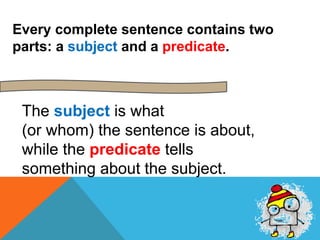
Every complete sentence contains two 
parts: a subject and a predicate. 
The subject is what 
(or whom) the sentence is about, 
while the predicate tells 
something about the subject.
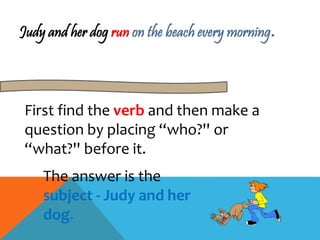
Judy and her dog run on the beach every morning.
Judy and her dog run on the beach every morning. 
First find the verb and then make a 
question by placing “who?'' or 
“what?'' before it. 
The answer is the 
subject - Judy and her 
dog.
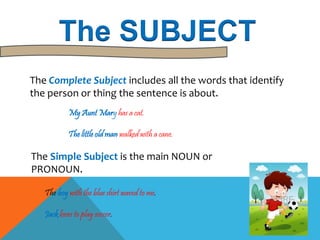
The SUBJECT 
The Complete Subject includes all the words that identify 
the person or thing the sentence is about. 
My Aunt Mary has a cat. 
The little old man walked with a cane. 
The Simple Subject is the main NOUN or 
PRONOUN. 
The boy with the blue shirt waved to me. 
Jack loves to play soccer.
The PREDICATE 
The Complete Predicate includes all the words that tells 
what the subject is or does. 
Tim took three marbles from the pile. 
The Simple Predicate is the main VERB or 
VERB Phrase.
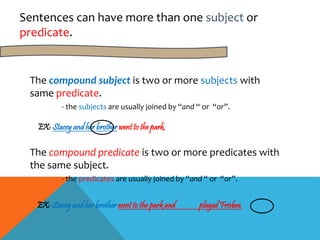
Sentences can have more than one subject or 
predicate. 
The compound subject is two or more subjects with 
same predicate. 
- the subjects are usually joined by “and “ or “or”. 
EX: Stacey and her brother went to the park. 
The compound predicate is two or more predicates with 
the same subject. 
- the predicates are usually joined by “and “ or “or”. 
EX: Stacey and her brother went to the park and played Frisbee.
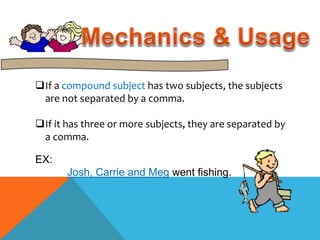
If a compound subject has two subjects, the subjects 
are not separated by a comma. 
If it has three or more subjects, they are separated by 
a comma. 
EX: 
Josh, Carrie and Meg went fishing.
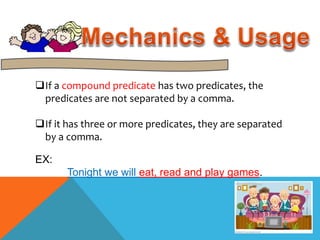
If a compound predicate has two predicates, the 
predicates are not separated by a comma. 
If it has three or more predicates, they are separated 
by a comma. 
EX: 
Tonight we will eat, read and play games.

SUBJECT AND PREDICATE

  • 1.
    A G RAMMA R L E S S O N FO R T H I R D G R A D E E N G L I S H BY: AY S H A B A D E R A L I A L T IMIMI G R A D E 3 - B
  • 2.
    Every complete sentencecontains two parts: a subject and a predicate. The subject is what (or whom) the sentence is about, while the predicate tells something about the subject.
  • 3.
    Judy and herdog run on the beach every morning.
  • 4.
    Judy and herdog run on the beach every morning. First find the verb and then make a question by placing “who?'' or “what?'' before it. The answer is the subject - Judy and her dog.
  • 5.
    The SUBJECT TheComplete Subject includes all the words that identify the person or thing the sentence is about. My Aunt Mary has a cat. The little old man walked with a cane. The Simple Subject is the main NOUN or PRONOUN. The boy with the blue shirt waved to me. Jack loves to play soccer.
  • 6.
    The PREDICATE TheComplete Predicate includes all the words that tells what the subject is or does. Tim took three marbles from the pile. The Simple Predicate is the main VERB or VERB Phrase.
  • 7.
    Sentences can havemore than one subject or predicate. The compound subject is two or more subjects with same predicate. - the subjects are usually joined by “and “ or “or”. EX: Stacey and her brother went to the park. The compound predicate is two or more predicates with the same subject. - the predicates are usually joined by “and “ or “or”. EX: Stacey and her brother went to the park and played Frisbee.
  • 8.
    If a compoundsubject has two subjects, the subjects are not separated by a comma. If it has three or more subjects, they are separated by a comma. EX: Josh, Carrie and Meg went fishing.
  • 9.
    If a compoundpredicate has two predicates, the predicates are not separated by a comma. If it has three or more predicates, they are separated by a comma. EX: Tonight we will eat, read and play games.