Prepared by: Teacher
Charry
Compound Subject and
Compound Predicate
LEARNING OBJECTIVES:
At the end of the session, all of the
students must be able to ;
 Understand the concept of compound
subject and compound predicate;
 Identify the compound subject and the
compound predicate from the given
sentence; and
 Construct a sentence with the use of
compound subject and compound
predicate.
Activity
Capture Me A
SENTENCE
Construct a sentence based from the
pictures presented
Compound Subject and
Compound Predicate
 A sentence has a compound subject
when it has more than one subject. It
has a compound predicate when there
is more than one predicate.
Sometimes sentences can have both
a compound subject and a compound
predicate.
Examples:
 Rachel and Steffi read the same
book. (compound subject)
 Ulysses ran, swam, and rode a bicycle
in the triathlon. (compound predicate)
 My dog and ferrets play and sleep tog
ether.
(compound subject and predicate)
 Compound subjects and predicates
are joined with either the coordinating
conjunctions (and, but, or, nor) or the
correlative conjunctions (both/and,
either/or, neither/nor, not only/but
also).
A compound predicate might share a
helping verb, or it might be two (or more)
separate verb phrases.
 Dolphins are
swimming and splashing near our dock.
(swimming and splashing share the helping verb are.)
 Dolphins do swim and do splash near
our dock. (do swim and do splash have the
same helping verb but are two separate verb
phrases.)
 Dolphins do swim and might splash near
our dock (do swim and might splash are two
Let’s try!
 Directions: Read the following sentences
carefully. Identify the compound subject and
compound predicate.
 If the sentence has a compound subject,
underline each simple subject once.
Encircle the conjunction.
 If the sentence has a compound
predicate, underline each verb twice and
encircle the conjunction.
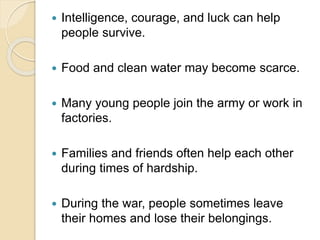
 Intelligence, courage, and luck can help
people survive.
 Food and clean water may become scarce.
 Many young people join the army or work in
factories.
 Families and friends often help each other
during times of hardship.
 During the war, people sometimes leave
their homes and lose their belongings.
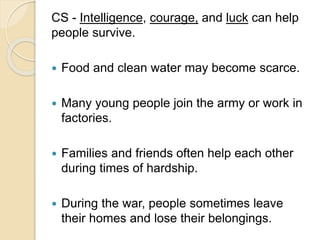
CS - Intelligence, courage, and luck can help
people survive.
 Food and clean water may become scarce.
 Many young people join the army or work in
factories.
 Families and friends often help each other
during times of hardship.
 During the war, people sometimes leave
their homes and lose their belongings.
Assessment
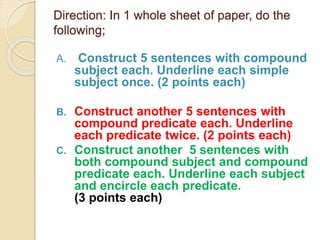
Direction: In 1 whole sheet of paper, do the
following;
A. Construct 5 sentences with compound
subject each. Underline each simple
subject once. (2 points each)
B. Construct another 5 sentences with
compound predicate each. Underline
each predicate twice. (2 points each)
C. Construct another 5 sentences with
both compound subject and compound
predicate each. Underline each subject
and encircle each predicate.
(3 points each)
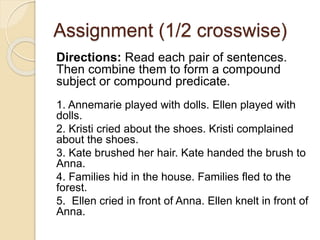
Assignment (1/2 crosswise)
Directions: Read each pair of sentences.
Then combine them to form a compound
subject or compound predicate.
1. Annemarie played with dolls. Ellen played with
dolls.
2. Kristi cried about the shoes. Kristi complained
about the shoes.
3. Kate brushed her hair. Kate handed the brush to
Anna.
4. Families hid in the house. Families fled to the
forest.
5. Ellen cried in front of Anna. Ellen knelt in front of
Anna.

compound subject and compound predicate

  • 1.
    Prepared by: Teacher Charry CompoundSubject and Compound Predicate
  • 2.
    LEARNING OBJECTIVES: At theend of the session, all of the students must be able to ;  Understand the concept of compound subject and compound predicate;  Identify the compound subject and the compound predicate from the given sentence; and  Construct a sentence with the use of compound subject and compound predicate.
  • 3.
    Activity Capture Me A SENTENCE Constructa sentence based from the pictures presented
  • 7.
  • 8.
     A sentencehas a compound subject when it has more than one subject. It has a compound predicate when there is more than one predicate. Sometimes sentences can have both a compound subject and a compound predicate.
  • 9.
    Examples:  Rachel andSteffi read the same book. (compound subject)  Ulysses ran, swam, and rode a bicycle in the triathlon. (compound predicate)  My dog and ferrets play and sleep tog ether. (compound subject and predicate)
  • 10.
     Compound subjectsand predicates are joined with either the coordinating conjunctions (and, but, or, nor) or the correlative conjunctions (both/and, either/or, neither/nor, not only/but also).
  • 11.
    A compound predicatemight share a helping verb, or it might be two (or more) separate verb phrases.  Dolphins are swimming and splashing near our dock. (swimming and splashing share the helping verb are.)  Dolphins do swim and do splash near our dock. (do swim and do splash have the same helping verb but are two separate verb phrases.)  Dolphins do swim and might splash near our dock (do swim and might splash are two
  • 12.
    Let’s try!  Directions:Read the following sentences carefully. Identify the compound subject and compound predicate.  If the sentence has a compound subject, underline each simple subject once. Encircle the conjunction.  If the sentence has a compound predicate, underline each verb twice and encircle the conjunction.
  • 13.
     Intelligence, courage,and luck can help people survive.  Food and clean water may become scarce.  Many young people join the army or work in factories.  Families and friends often help each other during times of hardship.  During the war, people sometimes leave their homes and lose their belongings.
  • 14.
    CS - Intelligence,courage, and luck can help people survive.  Food and clean water may become scarce.  Many young people join the army or work in factories.  Families and friends often help each other during times of hardship.  During the war, people sometimes leave their homes and lose their belongings.
  • 15.
  • 16.
    Direction: In 1whole sheet of paper, do the following; A. Construct 5 sentences with compound subject each. Underline each simple subject once. (2 points each) B. Construct another 5 sentences with compound predicate each. Underline each predicate twice. (2 points each) C. Construct another 5 sentences with both compound subject and compound predicate each. Underline each subject and encircle each predicate. (3 points each)
  • 17.
    Assignment (1/2 crosswise) Directions:Read each pair of sentences. Then combine them to form a compound subject or compound predicate. 1. Annemarie played with dolls. Ellen played with dolls. 2. Kristi cried about the shoes. Kristi complained about the shoes. 3. Kate brushed her hair. Kate handed the brush to Anna. 4. Families hid in the house. Families fled to the forest. 5. Ellen cried in front of Anna. Ellen knelt in front of Anna.