AN ASSIGNMENT ON
SUBCUTANEOUS
CYST
Dept. Of Medicine , Surgery & Obstetrics
Faculty of Veterinary and Animal
Science
Hajee Mohammad Danesh Science and Technology University,Dinajpur-5200
.
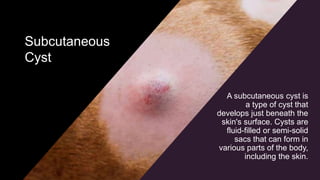
Subcutaneous
Cyst
A subcutaneous cyst is
a type of cyst that
develops just beneath the
skin's surface. Cysts are
fluid-filled or semi-solid
sacs that can form in
various parts of the body,
including the skin.
Symptoms
1.Visible Lump
2.Painlessness
3.Mobility: Subcutaneous cysts are usually movable.
4.Contents: The cyst is filled with a fluid, semi-solid,
or cheesy material.
Diagnosis
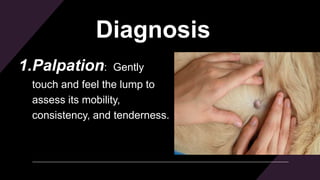
1.Palpation: Gently
touch and feel the lump to
assess its mobility,
consistency, and tenderness.
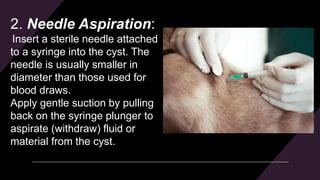
2. Needle Aspiration:
Insert a sterile needle attached
to a syringe into the cyst. The
needle is usually smaller in
diameter than those used for
blood draws.
Apply gentle suction by pulling
back on the syringe plunger to
aspirate (withdraw) fluid or
material from the cyst.
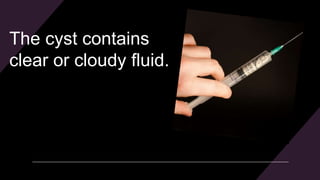
The cyst contains
clear or cloudy fluid.
Treatment
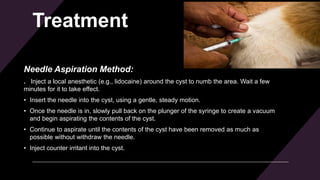
Needle Aspiration Method:
. Inject a local anesthetic (e.g., lidocaine) around the cyst to numb the area. Wait a few
minutes for it to take effect.
• Insert the needle into the cyst, using a gentle, steady motion.
• Once the needle is in, slowly pull back on the plunger of the syringe to create a vacuum
and begin aspirating the contents of the cyst.
• Continue to aspirate until the contents of the cyst have been removed as much as
possible without withdraw the needle.
• Inject counter irritant into the cyst.
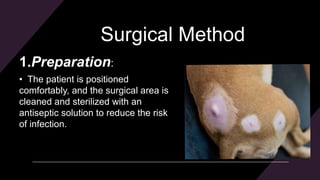
Surgical Method
1.Preparation:
• The patient is positioned
comfortably, and the surgical area is
cleaned and sterilized with an
antiseptic solution to reduce the risk
of infection.
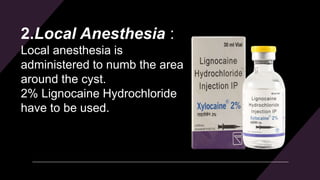
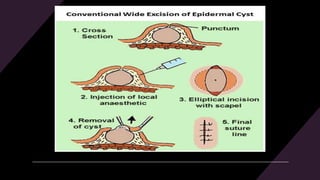
2.Local Anesthesia :
Local anesthesia is
administered to numb the area
around the cyst.
2% Lignocaine Hydrochloride
have to be used.
3.Incision:
• A small surgical incision is made over the cyst. The size and location
of the incision depend on the cyst's characteristics and location.
4. Cyst Removal:
• Dissects the tissues surrounding the cyst to expose it.
• The cyst is then removed intact, along with its cyst wall, which helps
prevent recurrence.
• In some cases, the cyst may be punctured and drained before
removal.
•
5.Closure:
.The incision is closed using sutures. The type of sutures used
can vary and they may be absorbable or non-absorbable.
6. Dressing and Bandaging:
.A sterile dressing and bandage are applied to the incision
site to protect it and promote healing.
Post Operative Care
• 1.Antibiotic ( Amoxicillin @ 10mg/kg BW )
• 2.Anti-inflammatory, Analgesic,Antipyretic (Meloxicam @ )
• 3.Dressing
THANK YOU

Subcutaneous Cyst and its correction.pptx

  • 1.
    AN ASSIGNMENT ON SUBCUTANEOUS CYST Dept.Of Medicine , Surgery & Obstetrics Faculty of Veterinary and Animal Science Hajee Mohammad Danesh Science and Technology University,Dinajpur-5200 .
  • 2.
    Subcutaneous Cyst A subcutaneous cystis a type of cyst that develops just beneath the skin's surface. Cysts are fluid-filled or semi-solid sacs that can form in various parts of the body, including the skin.
  • 3.
    Symptoms 1.Visible Lump 2.Painlessness 3.Mobility: Subcutaneouscysts are usually movable. 4.Contents: The cyst is filled with a fluid, semi-solid, or cheesy material.
  • 4.
    Diagnosis 1.Palpation: Gently touch andfeel the lump to assess its mobility, consistency, and tenderness.
  • 5.
    2. Needle Aspiration: Inserta sterile needle attached to a syringe into the cyst. The needle is usually smaller in diameter than those used for blood draws. Apply gentle suction by pulling back on the syringe plunger to aspirate (withdraw) fluid or material from the cyst.
  • 6.
    The cyst contains clearor cloudy fluid.
  • 7.
    Treatment Needle Aspiration Method: .Inject a local anesthetic (e.g., lidocaine) around the cyst to numb the area. Wait a few minutes for it to take effect. • Insert the needle into the cyst, using a gentle, steady motion. • Once the needle is in, slowly pull back on the plunger of the syringe to create a vacuum and begin aspirating the contents of the cyst. • Continue to aspirate until the contents of the cyst have been removed as much as possible without withdraw the needle. • Inject counter irritant into the cyst.
  • 8.
    Surgical Method 1.Preparation: • Thepatient is positioned comfortably, and the surgical area is cleaned and sterilized with an antiseptic solution to reduce the risk of infection.
  • 9.
    2.Local Anesthesia : Localanesthesia is administered to numb the area around the cyst. 2% Lignocaine Hydrochloride have to be used.
  • 10.
    3.Incision: • A smallsurgical incision is made over the cyst. The size and location of the incision depend on the cyst's characteristics and location. 4. Cyst Removal: • Dissects the tissues surrounding the cyst to expose it. • The cyst is then removed intact, along with its cyst wall, which helps prevent recurrence. • In some cases, the cyst may be punctured and drained before removal. •
  • 11.
    5.Closure: .The incision isclosed using sutures. The type of sutures used can vary and they may be absorbable or non-absorbable. 6. Dressing and Bandaging: .A sterile dressing and bandage are applied to the incision site to protect it and promote healing.
  • 13.
    Post Operative Care •1.Antibiotic ( Amoxicillin @ 10mg/kg BW ) • 2.Anti-inflammatory, Analgesic,Antipyretic (Meloxicam @ ) • 3.Dressing
  • 14.