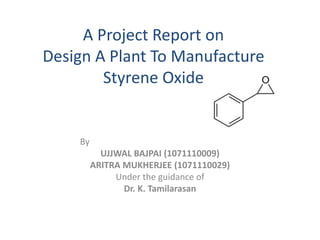
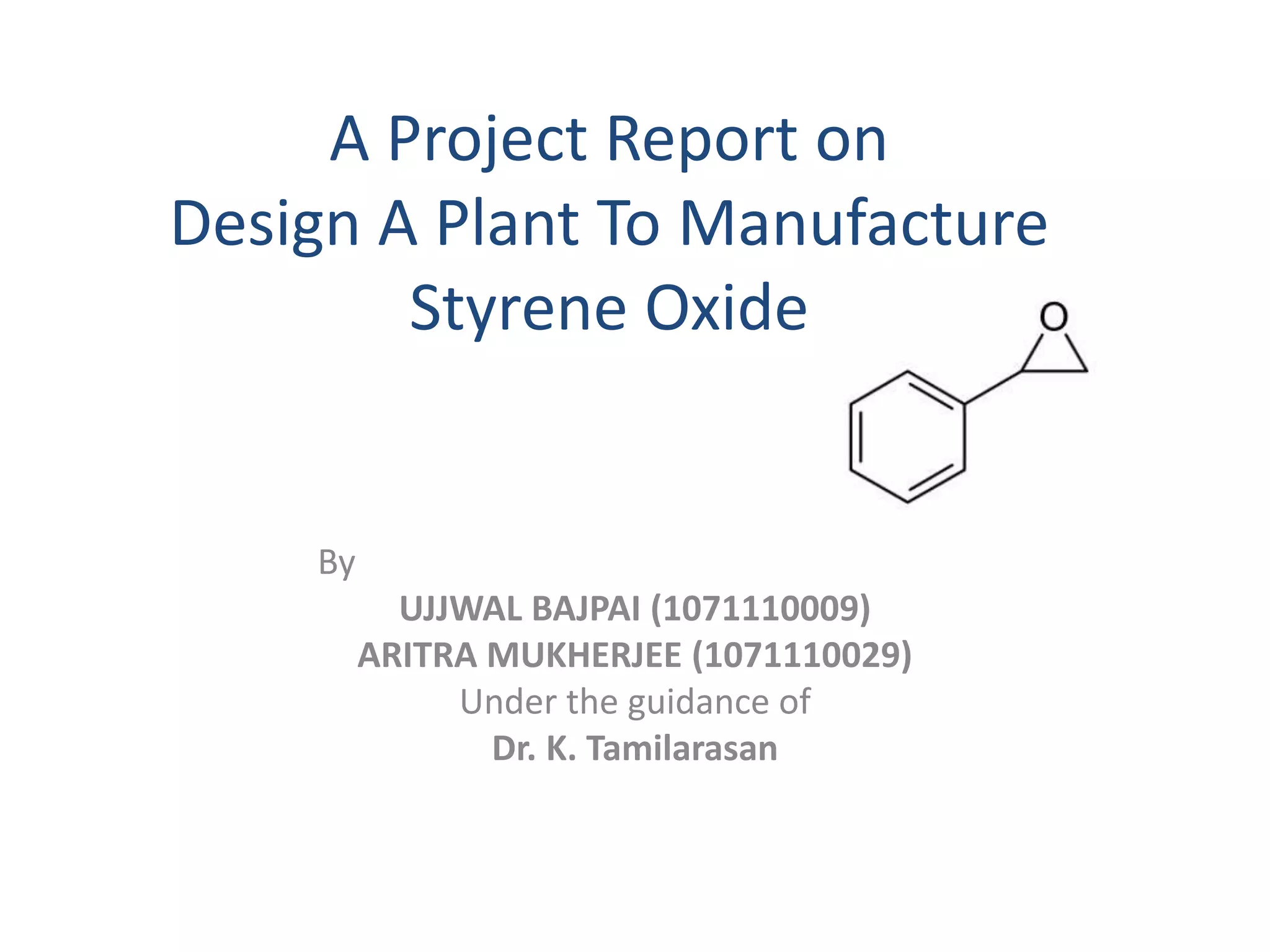
A Project Report on 
Design A Plant To Manufacture 
Styrene Oxide 
By 
UJJWAL BAJPAI (1071110009) 
ARITRA MUKHERJEE (1071110029) 
Under the guidance of 
Dr. K. Tamilarasan
Objective To design a plant for manufacturing Styrene Oxide of capacity 50000 tons per annum 
Styrene Oxide-Introduction 
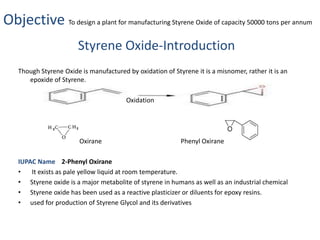
Though Styrene Oxide is manufactured by oxidation of Styrene it is a misnomer, rather it is an 
epoxide of Styrene. 
Oxidation 
Oxirane Phenyl Oxirane 
IUPAC Name 2-Phenyl Oxirane 
• It exists as pale yellow liquid at room temperature. 
• Styrene oxide is a major metabolite of styrene in humans as well as an industrial chemical 
• Styrene oxide has been used as a reactive plasticizer or diluents for epoxy resins. 
• used for production of Styrene Glycol and its derivatives
Physical Properties 
• Molecular formula: C8H8O 
• Molar mass: 120.15 g/mol 
• pale straw-coloured liquid 
• Pleasant odour 
• vapour pressure 0.3 mm Hg at 20°C. 
• Density : 1.052 g/cc 
• Melting point: -35.6oC 
• Boiling point: 194.1oC 
• Completely soluble in acetone , benzene , 
carbon tetrachloride 
Chemical Properties 
•Racemic mixture is formed when exposed 
to nucelophiles like acidic 
solutions. 
•SN1 mechanism is 
followed 
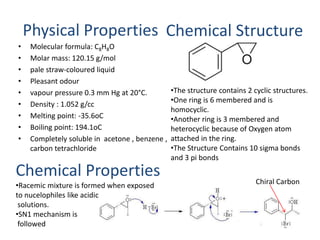
Chemical Structure 
•The structure contains 2 cyclic structures. 
•One ring is 6 membered and is 
homocyclic. 
•Another ring is 3 membered and 
heterocyclic because of Oxygen atom 
attached in the ring. 
•The Structure Contains 10 sigma bonds 
and 3 pi bonds 
Chiral Carbon
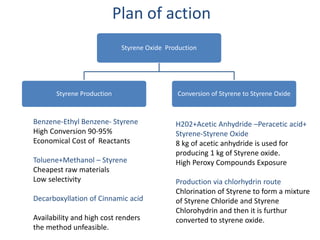
Plan of action 
Styrene Oxide Production 
Styrene Production Conversion of Styrene to Styrene Oxide 
Benzene-Ethyl Benzene- Styrene 
High Conversion 90-95% 
Economical Cost of Reactants 
Toluene+Methanol – Styrene 
Cheapest raw materials 
Low selectivity 
Decarboxyllation of Cinnamic acid 
Availability and high cost renders 
the method unfeasible. 
H202+Acetic Anhydride –Peracetic acid+ 
Styrene-Styrene Oxide 
8 kg of acetic anhydride is used for 
producing 1 kg of Styrene oxide. 
High Peroxy Compounds Exposure 
Production via chlorhydrin route 
Chlorination of Styrene to form a mixture 
of Styrene Chloride and Styrene 
Chlorohydrin and then it is furthur 
converted to styrene oxide.
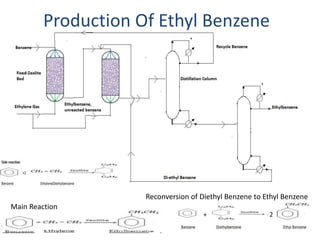
Production Of Ethyl Benzene 
Main Reaction 
Reconversion of Diethyl Benzene to Ethyl Benzene
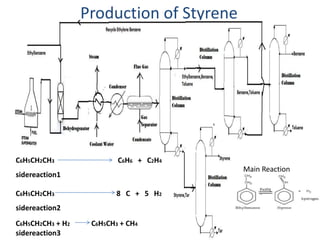
Production of Styrene 
C6H5CH2CH3 C6H6 + C2H4 
sidereaction1 
C6H5CH2CH3 8 C + 5 H2 
sidereaction2 
C6H5CH2CH3 + H2 C6H5CH3 + CH4 
sidereaction3 
Main Reaction
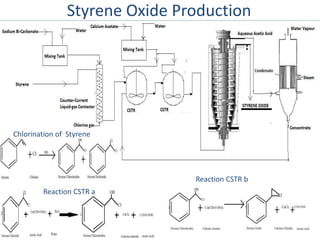
Styrene Oxide Production 
Chlorination of Styrene 
Reaction CSTR a 
Reaction CSTR b
Hazards 
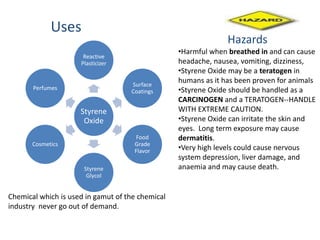
•Harmful when breathed in and can cause 
headache, nausea, vomiting, dizziness, 
•Styrene Oxide may be a teratogen in 
humans as it has been proven for animals 
•Styrene Oxide should be handled as a 
CARCINOGEN and a TERATOGEN--HANDLE 
WITH EXTREME CAUTION. 
•Styrene Oxide can irritate the skin and 
eyes. Long term exposure may cause 
dermatitis. 
•Very high levels could cause nervous 
system depression, liver damage, and 
anaemia and may cause death. 
Uses 
Reactive 
Plasticizer 
Styrene 
Oxide 
Surface 
Coatings 
Food 
Grade 
Flavor 
Styrene 
Glycol 
Perfumes 
Cosmetics 
Chemical which is used in gamut of the chemical 
industry never go out of demand.
References 
• George T. Austin Shreve’s Chemical Process Industries Fifth Edition page 661-687. 
• M. Gopala Rao Marshall Sittig Dryden’s Outline of Chemical Technology Third 
Edition East West Press page 518-525 
• Oxford University chemicals safety data sheet, Styrene Oxide. 
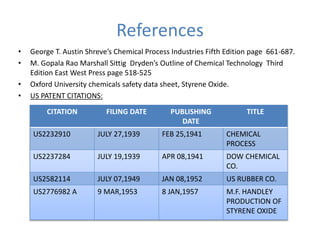
• US PATENT CITATIONS: 
CITATION FILING DATE PUBLISHING 
DATE 
TITLE 
US2232910 JULY 27,1939 FEB 25,1941 CHEMICAL 
PROCESS 
US2237284 JULY 19,1939 APR 08,1941 DOW CHEMICAL 
CO. 
US2582114 JULY 07,1949 JAN 08,1952 US RUBBER CO. 
US2776982 A 9 MAR,1953 8 JAN,1957 M.F. HANDLEY 
PRODUCTION OF 
STYRENE OXIDE
Styrene Oxide : A Brief Reiew

Styrene Oxide : A Brief Reiew

  • 1.
    A Project Reporton Design A Plant To Manufacture Styrene Oxide By UJJWAL BAJPAI (1071110009) ARITRA MUKHERJEE (1071110029) Under the guidance of Dr. K. Tamilarasan
  • 2.
    Objective To designa plant for manufacturing Styrene Oxide of capacity 50000 tons per annum Styrene Oxide-Introduction Though Styrene Oxide is manufactured by oxidation of Styrene it is a misnomer, rather it is an epoxide of Styrene. Oxidation Oxirane Phenyl Oxirane IUPAC Name 2-Phenyl Oxirane • It exists as pale yellow liquid at room temperature. • Styrene oxide is a major metabolite of styrene in humans as well as an industrial chemical • Styrene oxide has been used as a reactive plasticizer or diluents for epoxy resins. • used for production of Styrene Glycol and its derivatives
  • 3.
    Physical Properties •Molecular formula: C8H8O • Molar mass: 120.15 g/mol • pale straw-coloured liquid • Pleasant odour • vapour pressure 0.3 mm Hg at 20°C. • Density : 1.052 g/cc • Melting point: -35.6oC • Boiling point: 194.1oC • Completely soluble in acetone , benzene , carbon tetrachloride Chemical Properties •Racemic mixture is formed when exposed to nucelophiles like acidic solutions. •SN1 mechanism is followed Chemical Structure •The structure contains 2 cyclic structures. •One ring is 6 membered and is homocyclic. •Another ring is 3 membered and heterocyclic because of Oxygen atom attached in the ring. •The Structure Contains 10 sigma bonds and 3 pi bonds Chiral Carbon
  • 4.
    Plan of action Styrene Oxide Production Styrene Production Conversion of Styrene to Styrene Oxide Benzene-Ethyl Benzene- Styrene High Conversion 90-95% Economical Cost of Reactants Toluene+Methanol – Styrene Cheapest raw materials Low selectivity Decarboxyllation of Cinnamic acid Availability and high cost renders the method unfeasible. H202+Acetic Anhydride –Peracetic acid+ Styrene-Styrene Oxide 8 kg of acetic anhydride is used for producing 1 kg of Styrene oxide. High Peroxy Compounds Exposure Production via chlorhydrin route Chlorination of Styrene to form a mixture of Styrene Chloride and Styrene Chlorohydrin and then it is furthur converted to styrene oxide.
  • 5.
    Production Of EthylBenzene Main Reaction Reconversion of Diethyl Benzene to Ethyl Benzene
  • 6.
    Production of Styrene C6H5CH2CH3 C6H6 + C2H4 sidereaction1 C6H5CH2CH3 8 C + 5 H2 sidereaction2 C6H5CH2CH3 + H2 C6H5CH3 + CH4 sidereaction3 Main Reaction
  • 7.
    Styrene Oxide Production Chlorination of Styrene Reaction CSTR a Reaction CSTR b
  • 8.
    Hazards •Harmful whenbreathed in and can cause headache, nausea, vomiting, dizziness, •Styrene Oxide may be a teratogen in humans as it has been proven for animals •Styrene Oxide should be handled as a CARCINOGEN and a TERATOGEN--HANDLE WITH EXTREME CAUTION. •Styrene Oxide can irritate the skin and eyes. Long term exposure may cause dermatitis. •Very high levels could cause nervous system depression, liver damage, and anaemia and may cause death. Uses Reactive Plasticizer Styrene Oxide Surface Coatings Food Grade Flavor Styrene Glycol Perfumes Cosmetics Chemical which is used in gamut of the chemical industry never go out of demand.
  • 9.
    References • GeorgeT. Austin Shreve’s Chemical Process Industries Fifth Edition page 661-687. • M. Gopala Rao Marshall Sittig Dryden’s Outline of Chemical Technology Third Edition East West Press page 518-525 • Oxford University chemicals safety data sheet, Styrene Oxide. • US PATENT CITATIONS: CITATION FILING DATE PUBLISHING DATE TITLE US2232910 JULY 27,1939 FEB 25,1941 CHEMICAL PROCESS US2237284 JULY 19,1939 APR 08,1941 DOW CHEMICAL CO. US2582114 JULY 07,1949 JAN 08,1952 US RUBBER CO. US2776982 A 9 MAR,1953 8 JAN,1957 M.F. HANDLEY PRODUCTION OF STYRENE OXIDE