STYLISTIC ANALYSIS
I died for beauty but was scarce
By
Emily Dickinson
STYLISTIC ANALYSIS
Submitted to Mazhar Hayat
Submitted by Anum shahzadie
M.PHIL APPLIED LINGUISTICS
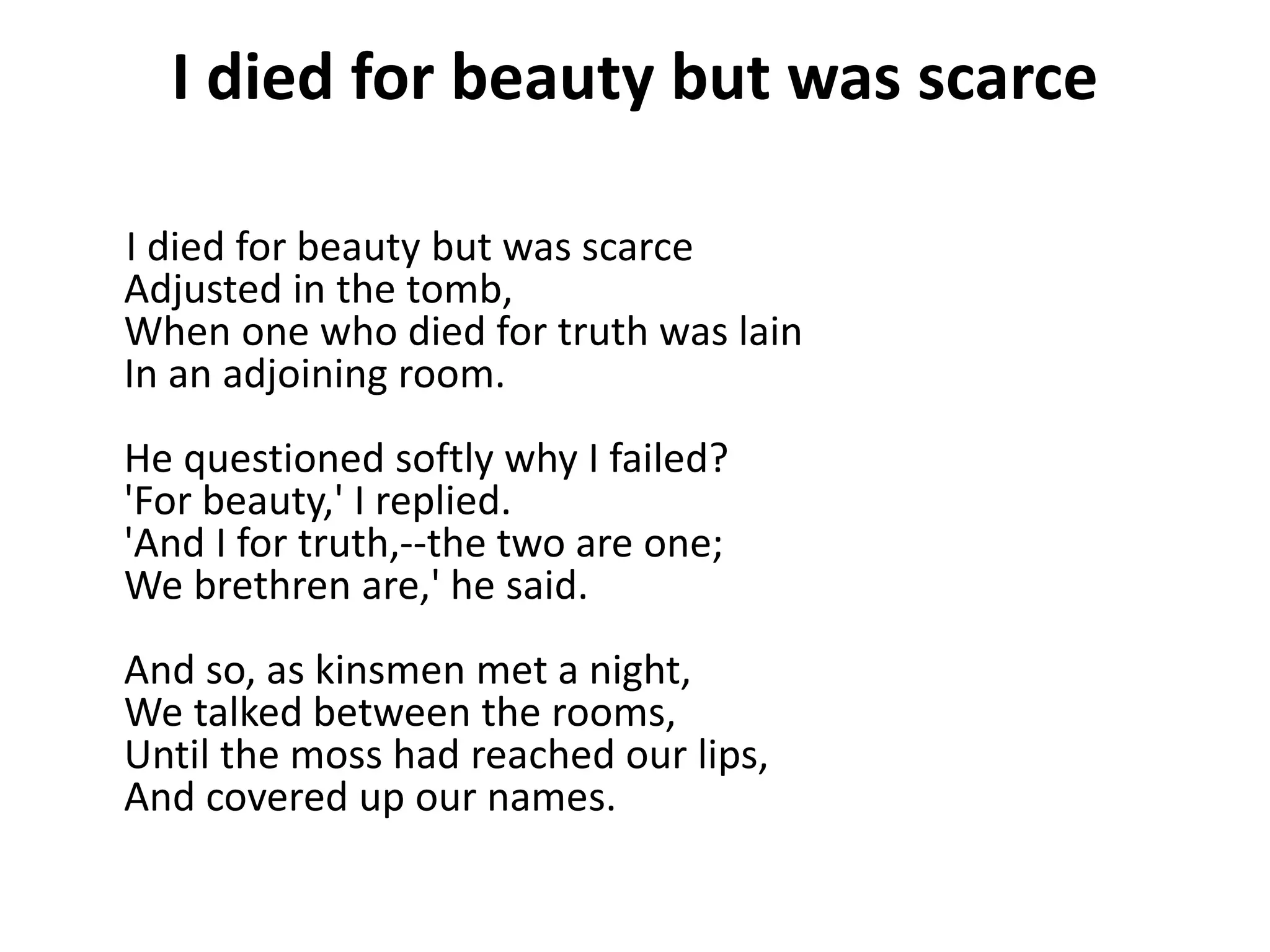
I died for beauty but was scarce
Adjusted in the tomb,
When one who died for truth was lain
In an adjoining room.
He questioned softly why I failed?
'For beauty,' I replied.
'And I for truth,--the two are one;
We brethren are,' he said.
And so, as kinsmen met a night,
We talked between the rooms,
Until the moss had reached our lips,
And covered up our names.
About poem
• The poetry of Emily Dickinson is radically original and
innovative. She was a poet of immense depth and stylistic
complexity. Her works are so unique that it is difficult to
place them in a single tradition. Dickinson developed her
arguments through startling metaphors, metrical variations,
and angular, imprecise rhymes. Visual aspects of her poetry
are very peculiar: unusual capitalization of nouns,
unconventional punctuation, and omission of titles helped
Dickinson to create extraordinary poems that amazed
readers. Some people praised her imagistic qualities and
the supreme mastery of words; others considered
Dickinson's poetic innovations as a result of ineptitude, but
nobody remained indifferent.
About poem
• The are two people in there grave talking about
how they died. One died for truth, but the other,
the narrator, died for her beauty of which she did
not really have "But was scarce".
•
"We brethren are" is beauty and truth. There is
beauty in truth and also truth in beauty. They
possibly both fail because they canceled each
other out. Or, they fail because when you die, the
truth goes with you and so does your beauty.
Stylistic Analysis
• Phonological level
• Grammatical level
• Semantic level
• Pragmatic level
• Graphological level
• Discourse level
• Lexical level
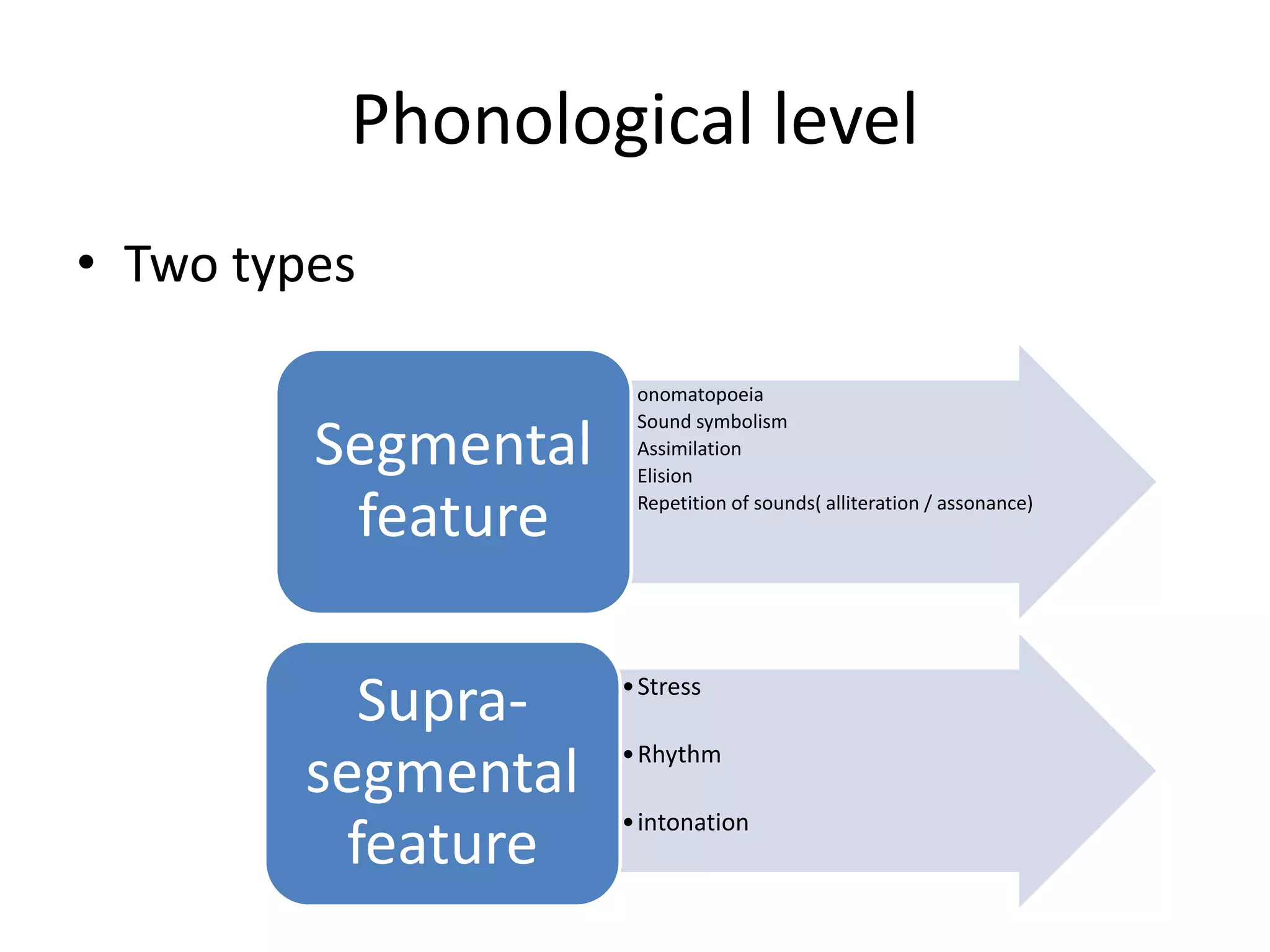
Phonological level
• Two types
• onomatopoeia
• Sound symbolism
• Assimilation
• Elision
• Repetition of sounds( alliteration / assonance)
Segmental
feature
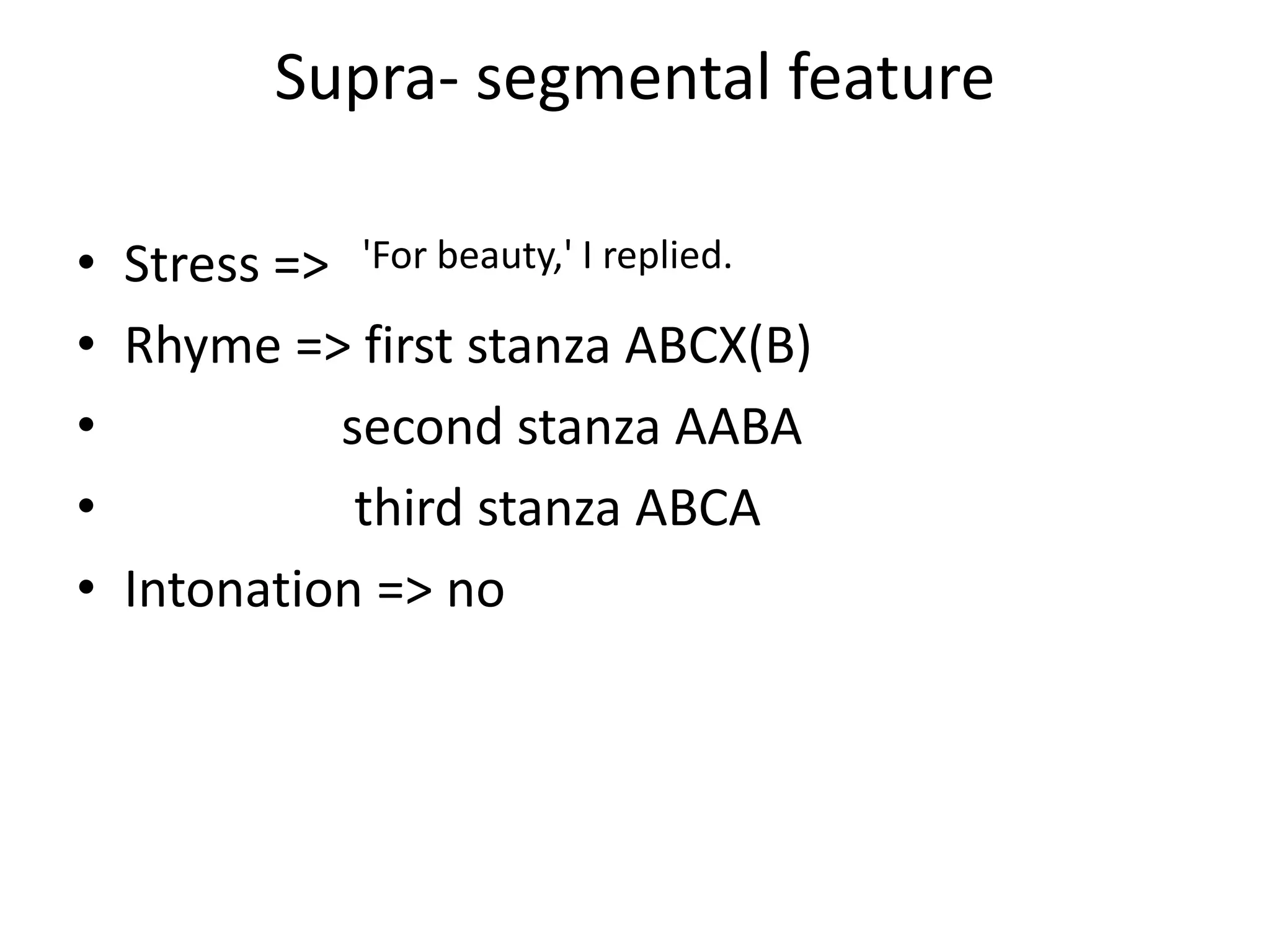
•Stress
•Rhythm
•intonation
Supra-
segmental
feature
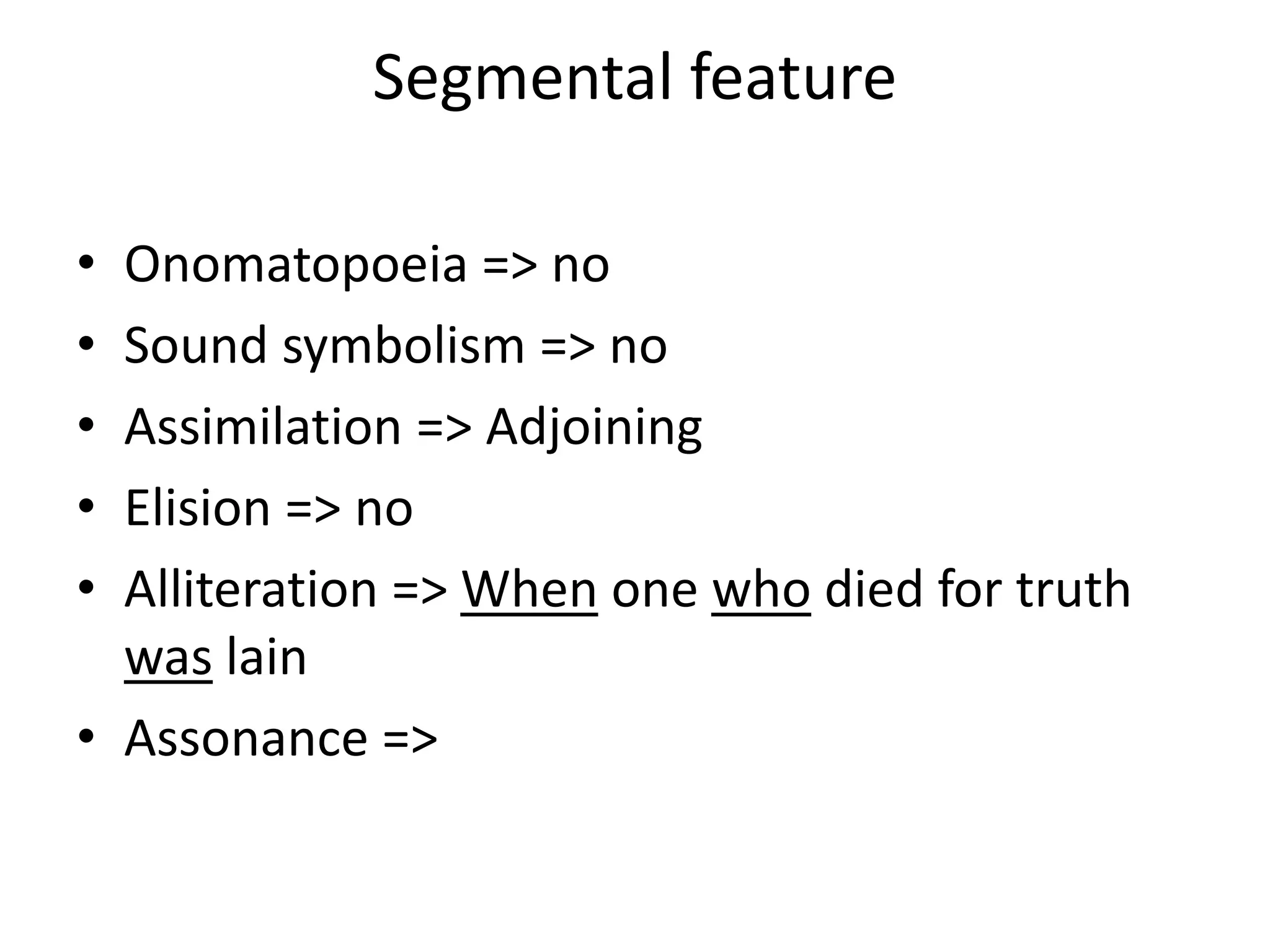
Segmental feature
• Onomatopoeia => no
• Sound symbolism => no
• Assimilation => Adjoining
• Elision => no
• Alliteration => When one who died for truth
was lain
• Assonance =>
Supra- segmental feature
• Stress =>
• Rhyme => first stanza ABCX(B)
• second stanza AABA
• third stanza ABCA
• Intonation => no
'For beauty,' I replied.
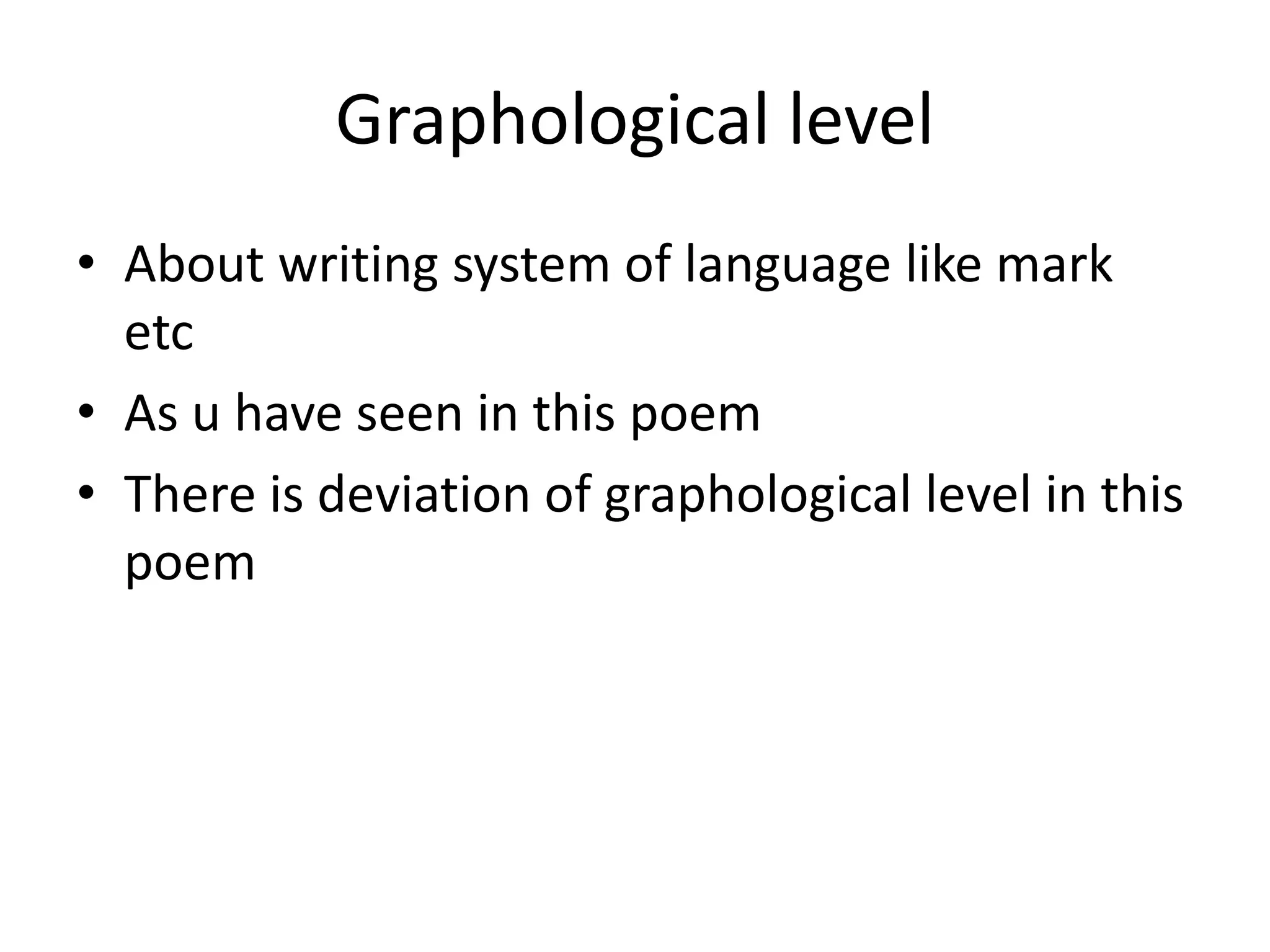
Graphological level
• About writing system of language like mark
etc
• As u have seen in this poem
• There is deviation of graphological level in this
poem
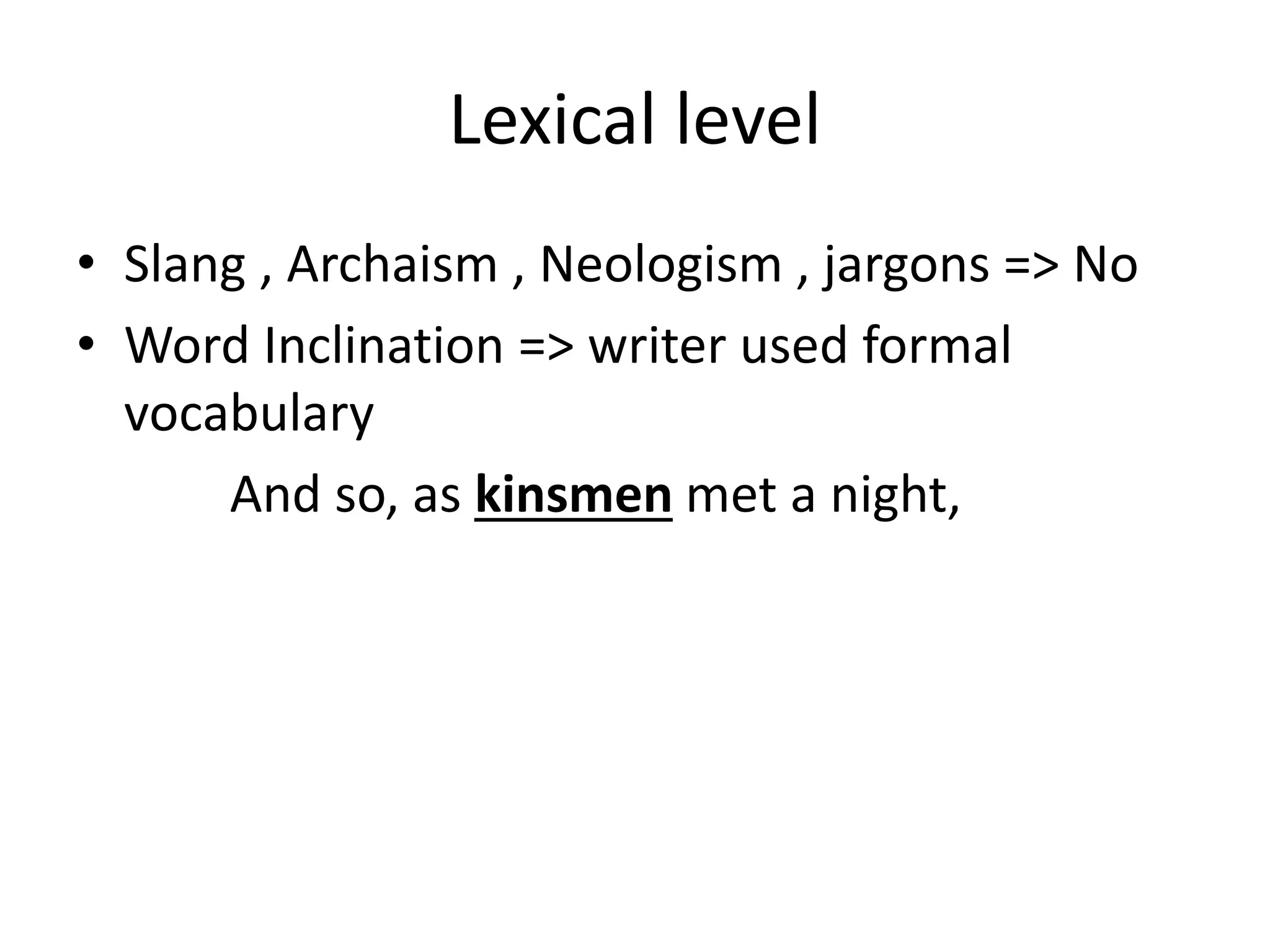
Lexical level
• Slang , Archaism , Neologism , jargons => No
• Word Inclination => writer used formal
vocabulary
And so, as kinsmen met a night,
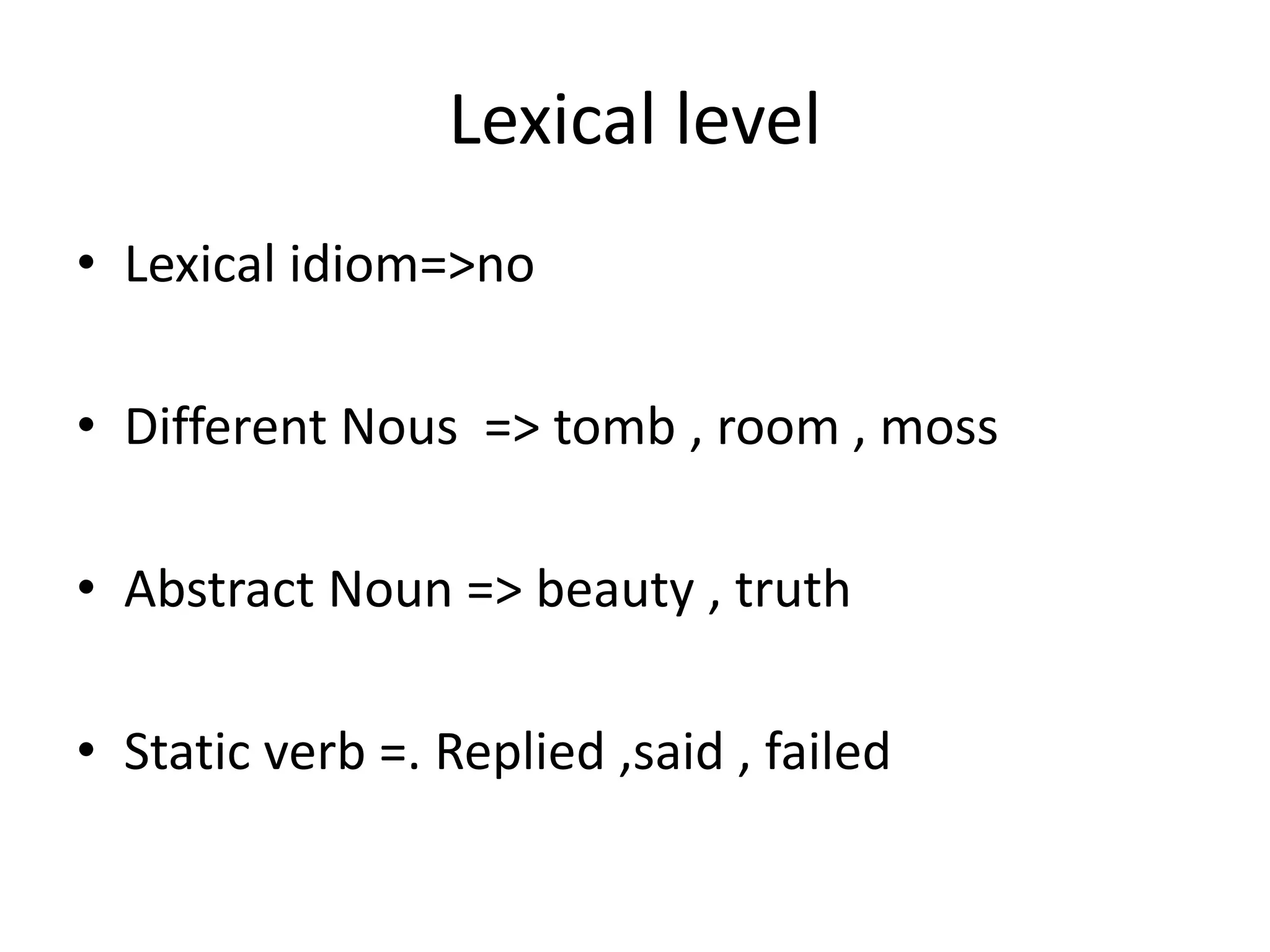
Lexical level
• Lexical idiom=>no
• Different Nous => tomb , room , moss
• Abstract Noun => beauty , truth
• Static verb =. Replied ,said , failed
lexical level
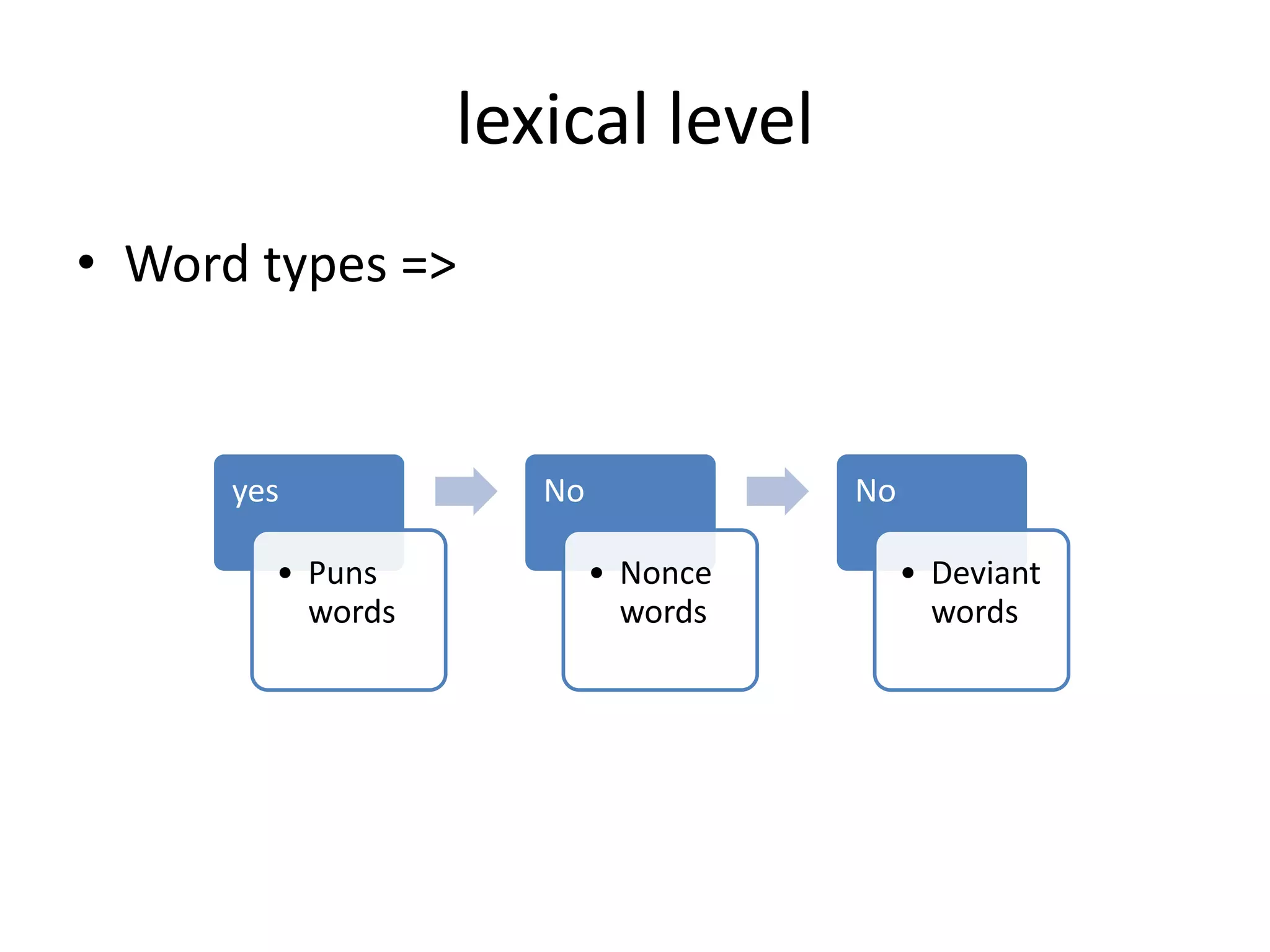
• Word types =>
yes
• Puns
words
No
• Nonce
words
No
• Deviant
words
Lexical level
• Puns words =>
In this poem there is one word ‘failed’
1) Their ‘failure’ is life ultimate defeat death.
2) Alternatively failure represent the futility of all
human endeavor for good failure
3) It is also personal stumbling , an imperfection or
shortcoming.
4) Both seem to accept that their death are failure
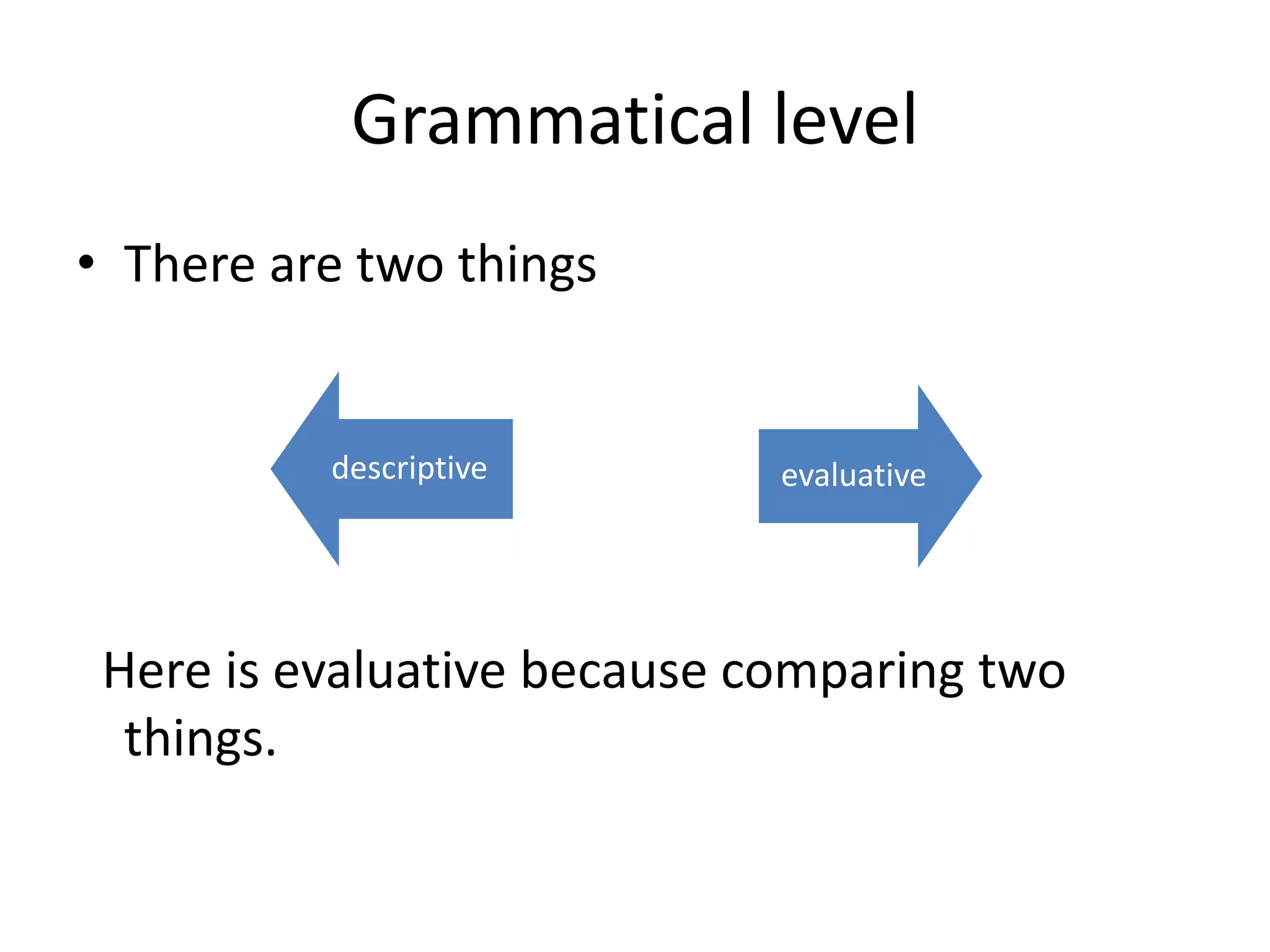
Grammatical level
• There are two things
Here is evaluative because comparing two
things.
descriptive evaluative
Discourse level
• Natural or responsible connection in context
of text
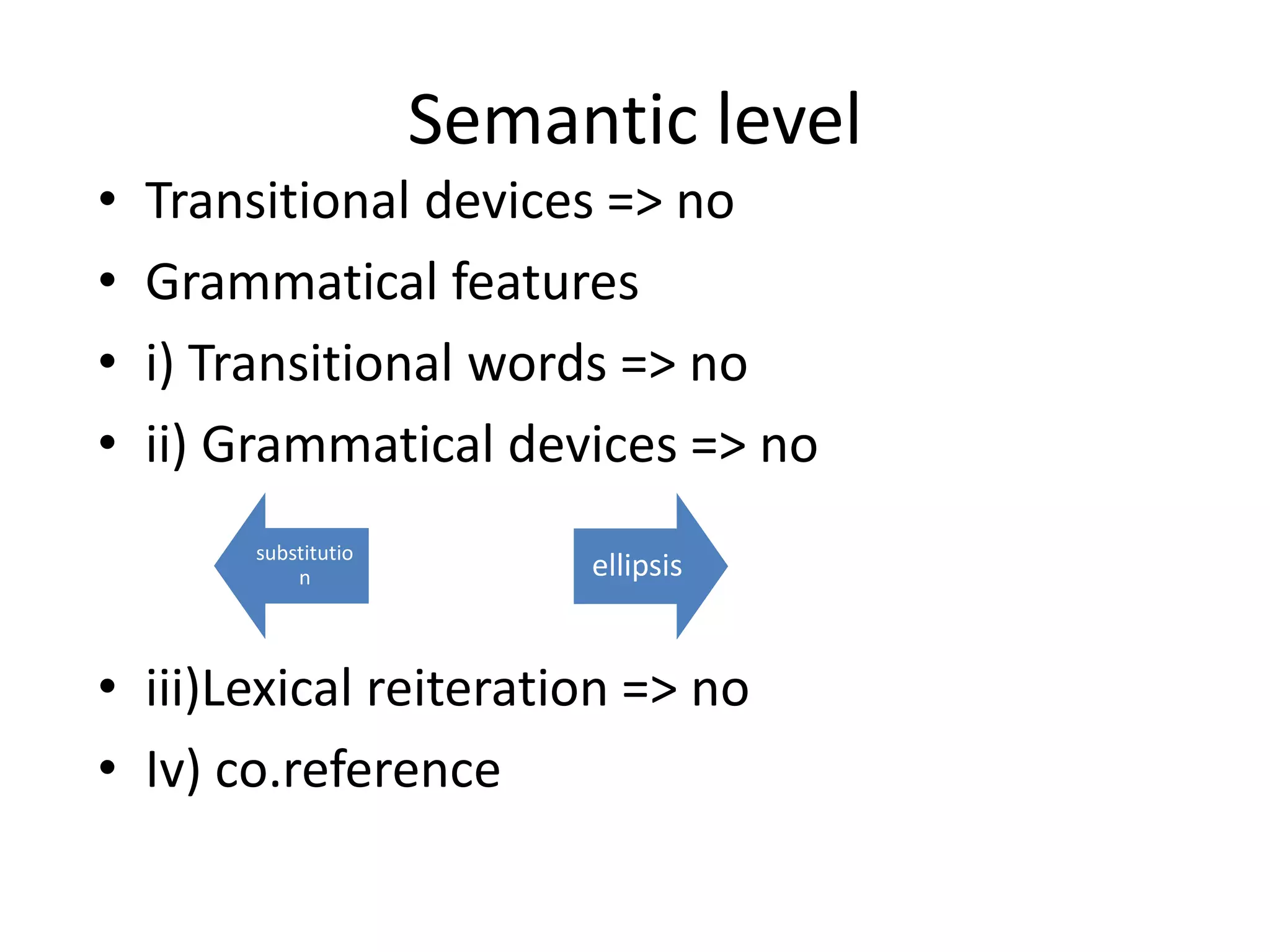
Semantic level
• Transitional devices => no
• Grammatical features
• i) Transitional words => no
• ii) Grammatical devices => no
• iii)Lexical reiteration => no
• Iv) co.reference
substitutio
n ellipsis
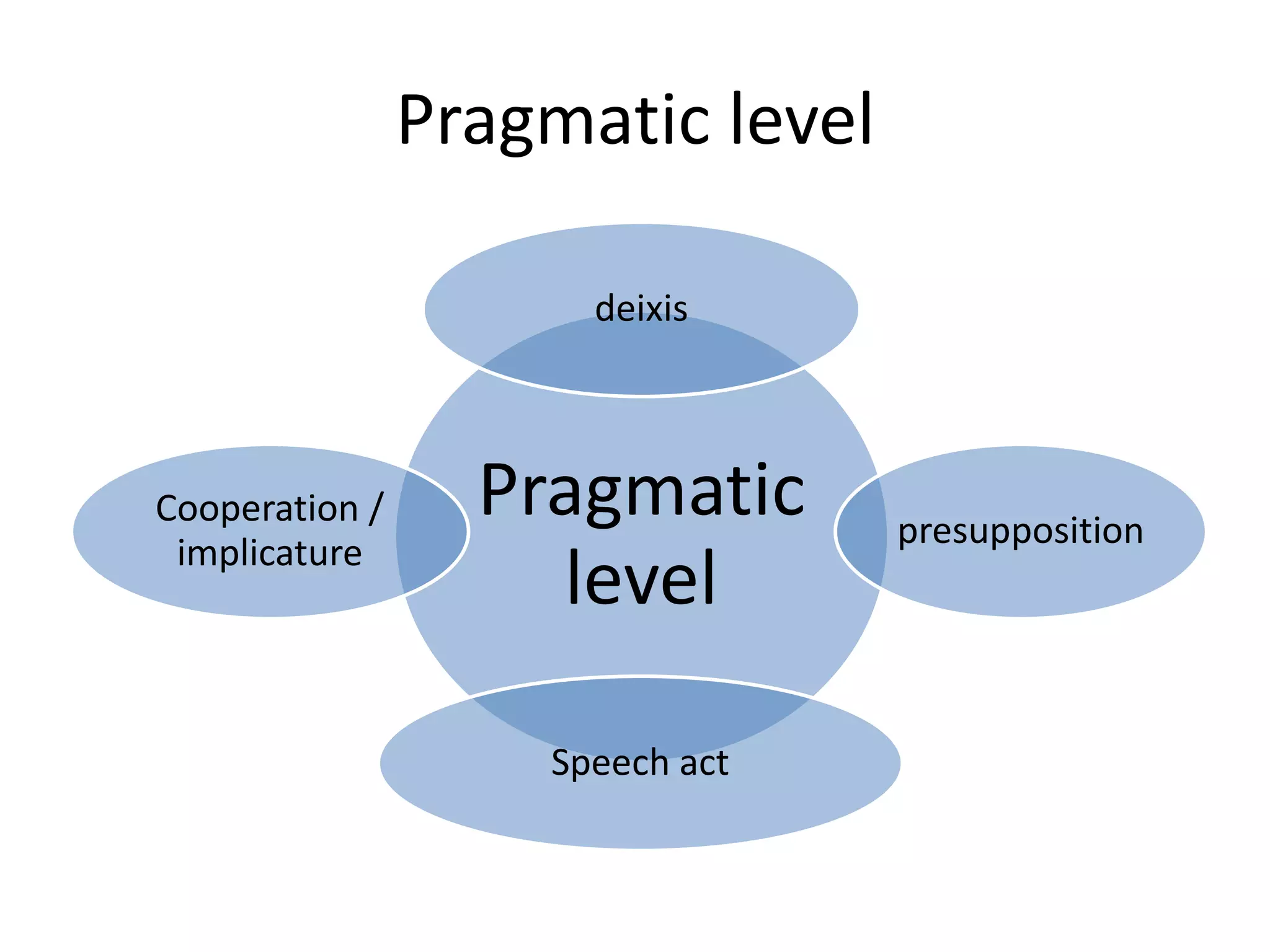
Pragmatic level
Pragmatic
level
deixis
presupposition
Speech act
Cooperation /
implicature
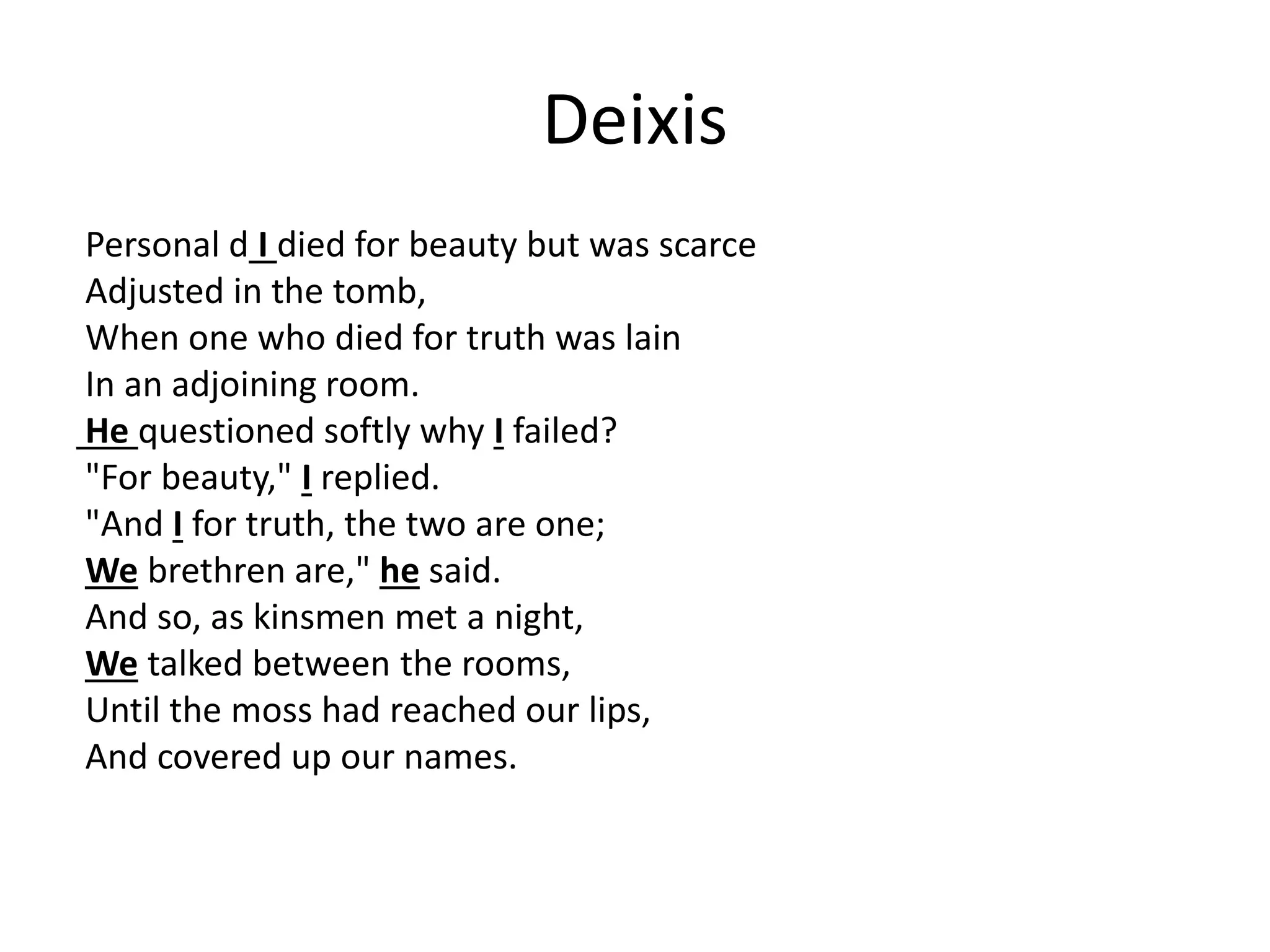
Deixis
Personal d I died for beauty but was scarce
Adjusted in the tomb,
When one who died for truth was lain
In an adjoining room.
He questioned softly why I failed?
"For beauty," I replied.
"And I for truth, the two are one;
We brethren are," he said.
And so, as kinsmen met a night,
We talked between the rooms,
Until the moss had reached our lips,
And covered up our names.
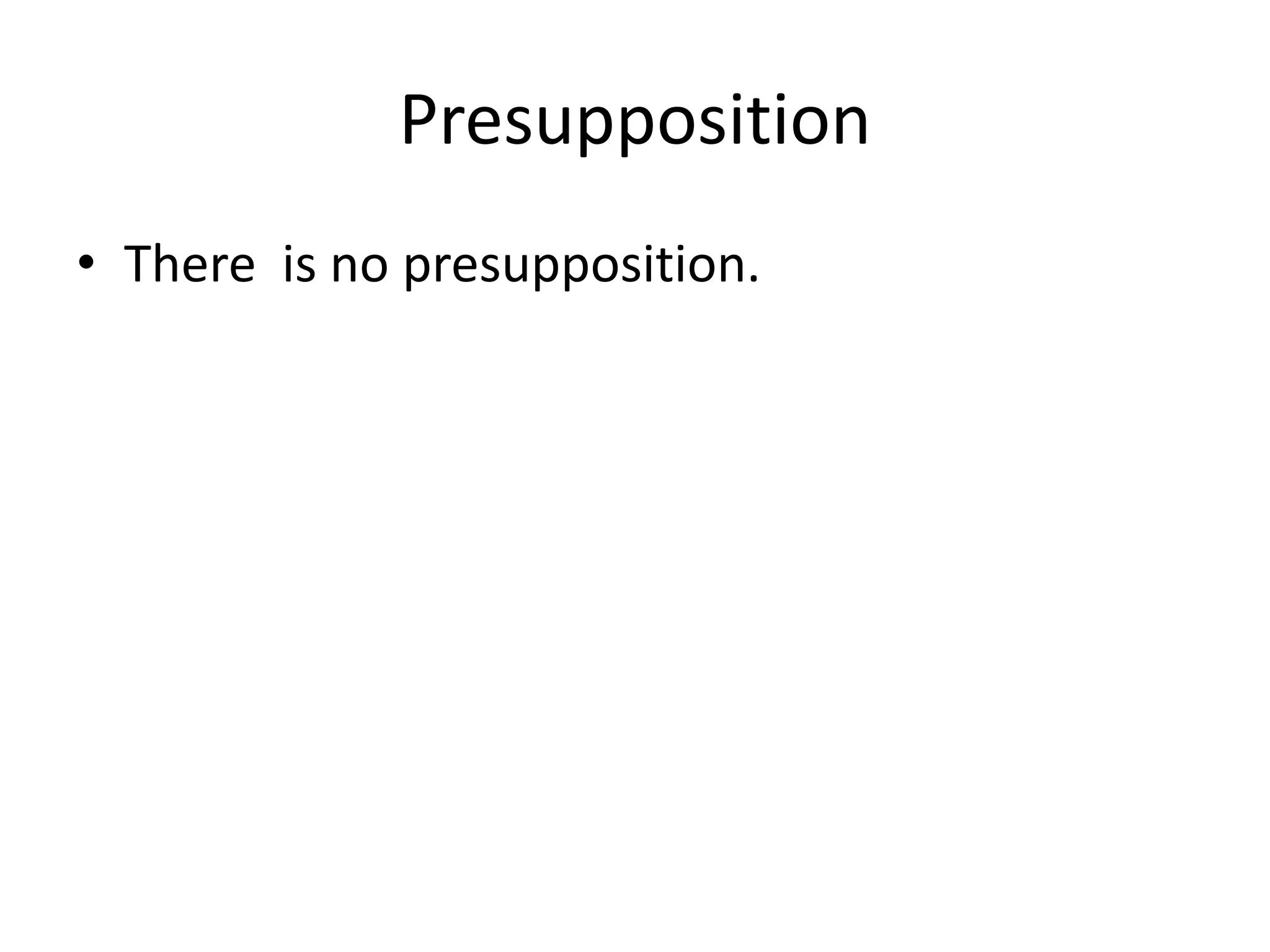
Presupposition
• There is no presupposition.
Implicature
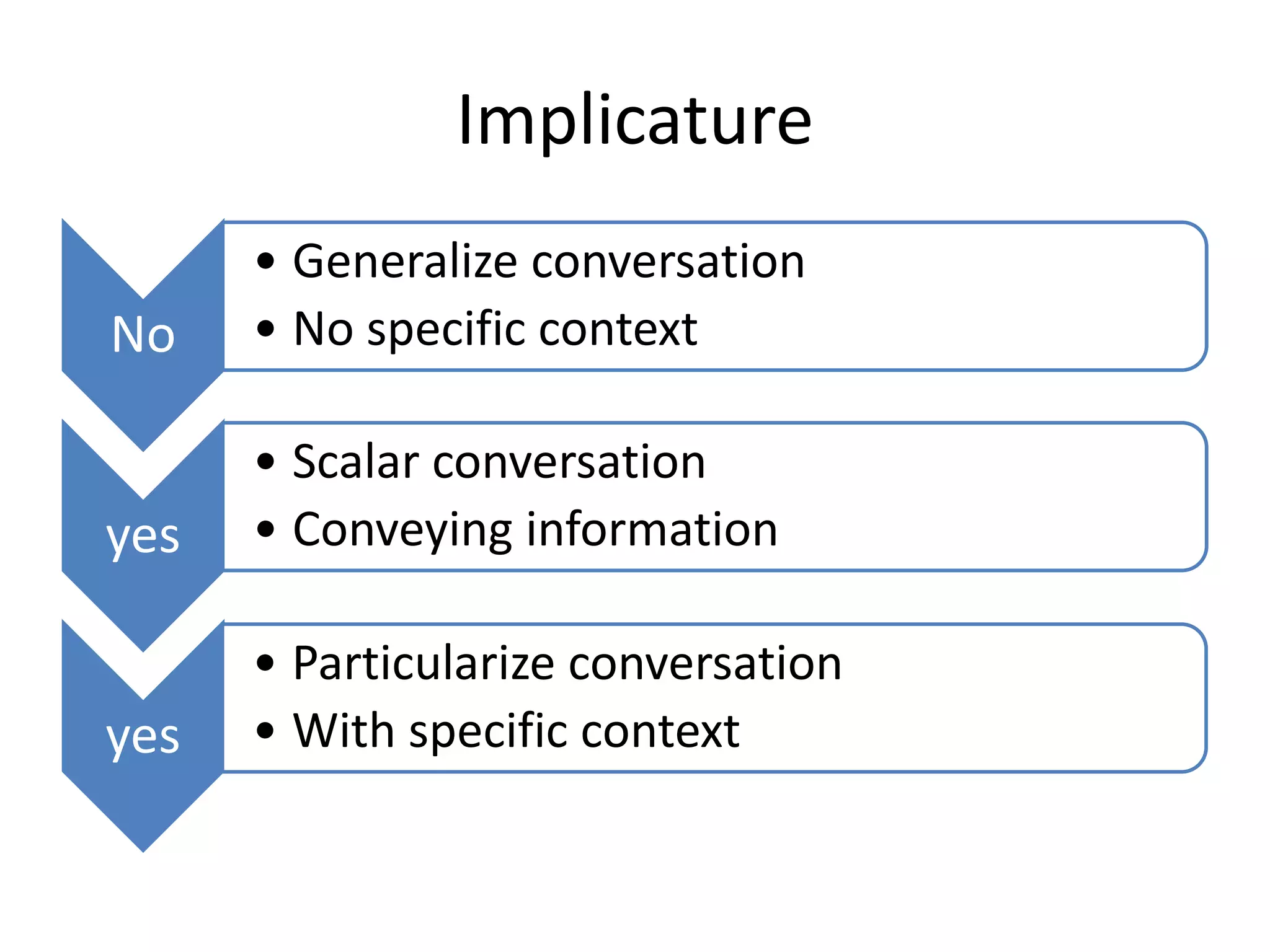
No
• Generalize conversation
• No specific context
yes
• Scalar conversation
• Conveying information
yes
• Particularize conversation
• With specific context
Cooperative principle
• Presence of maxim
maxim of quality , quantity , relation and
manner
•
• The End :)

STYLISTIC ANALYSIS OF Emily Dickinson

  • 1.
    STYLISTIC ANALYSIS I diedfor beauty but was scarce By Emily Dickinson
  • 2.
    STYLISTIC ANALYSIS Submitted toMazhar Hayat Submitted by Anum shahzadie M.PHIL APPLIED LINGUISTICS
  • 3.
    I died forbeauty but was scarce I died for beauty but was scarce Adjusted in the tomb, When one who died for truth was lain In an adjoining room. He questioned softly why I failed? 'For beauty,' I replied. 'And I for truth,--the two are one; We brethren are,' he said. And so, as kinsmen met a night, We talked between the rooms, Until the moss had reached our lips, And covered up our names.
  • 4.
    About poem • Thepoetry of Emily Dickinson is radically original and innovative. She was a poet of immense depth and stylistic complexity. Her works are so unique that it is difficult to place them in a single tradition. Dickinson developed her arguments through startling metaphors, metrical variations, and angular, imprecise rhymes. Visual aspects of her poetry are very peculiar: unusual capitalization of nouns, unconventional punctuation, and omission of titles helped Dickinson to create extraordinary poems that amazed readers. Some people praised her imagistic qualities and the supreme mastery of words; others considered Dickinson's poetic innovations as a result of ineptitude, but nobody remained indifferent.
  • 5.
    About poem • Theare two people in there grave talking about how they died. One died for truth, but the other, the narrator, died for her beauty of which she did not really have "But was scarce". • "We brethren are" is beauty and truth. There is beauty in truth and also truth in beauty. They possibly both fail because they canceled each other out. Or, they fail because when you die, the truth goes with you and so does your beauty.
  • 6.
    Stylistic Analysis • Phonologicallevel • Grammatical level • Semantic level • Pragmatic level • Graphological level • Discourse level • Lexical level
  • 7.
    Phonological level • Twotypes • onomatopoeia • Sound symbolism • Assimilation • Elision • Repetition of sounds( alliteration / assonance) Segmental feature •Stress •Rhythm •intonation Supra- segmental feature
  • 8.
    Segmental feature • Onomatopoeia=> no • Sound symbolism => no • Assimilation => Adjoining • Elision => no • Alliteration => When one who died for truth was lain • Assonance =>
  • 9.
    Supra- segmental feature •Stress => • Rhyme => first stanza ABCX(B) • second stanza AABA • third stanza ABCA • Intonation => no 'For beauty,' I replied.
  • 10.
    Graphological level • Aboutwriting system of language like mark etc • As u have seen in this poem • There is deviation of graphological level in this poem
  • 11.
    Lexical level • Slang, Archaism , Neologism , jargons => No • Word Inclination => writer used formal vocabulary And so, as kinsmen met a night,
  • 12.
    Lexical level • Lexicalidiom=>no • Different Nous => tomb , room , moss • Abstract Noun => beauty , truth • Static verb =. Replied ,said , failed
  • 13.
    lexical level • Wordtypes => yes • Puns words No • Nonce words No • Deviant words
  • 14.
    Lexical level • Punswords => In this poem there is one word ‘failed’ 1) Their ‘failure’ is life ultimate defeat death. 2) Alternatively failure represent the futility of all human endeavor for good failure 3) It is also personal stumbling , an imperfection or shortcoming. 4) Both seem to accept that their death are failure
  • 15.
    Grammatical level • Thereare two things Here is evaluative because comparing two things. descriptive evaluative
  • 16.
    Discourse level • Naturalor responsible connection in context of text
  • 17.
    Semantic level • Transitionaldevices => no • Grammatical features • i) Transitional words => no • ii) Grammatical devices => no • iii)Lexical reiteration => no • Iv) co.reference substitutio n ellipsis
  • 18.
  • 19.
    Deixis Personal d Idied for beauty but was scarce Adjusted in the tomb, When one who died for truth was lain In an adjoining room. He questioned softly why I failed? "For beauty," I replied. "And I for truth, the two are one; We brethren are," he said. And so, as kinsmen met a night, We talked between the rooms, Until the moss had reached our lips, And covered up our names.
  • 20.
    Presupposition • There isno presupposition.
  • 21.
    Implicature No • Generalize conversation •No specific context yes • Scalar conversation • Conveying information yes • Particularize conversation • With specific context
  • 22.
    Cooperative principle • Presenceof maxim maxim of quality , quantity , relation and manner
  • 23.