Downloaded 426 times
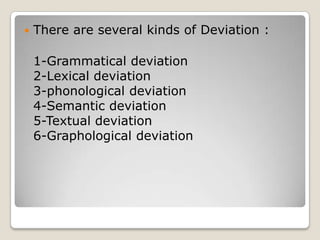
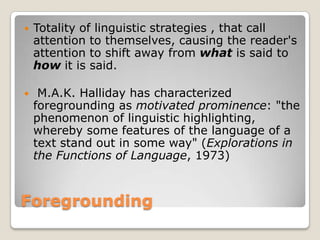
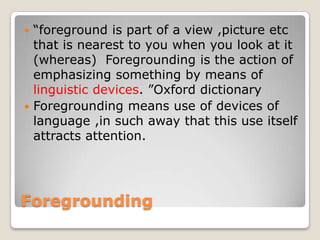





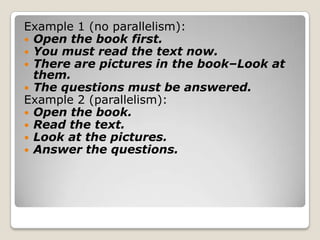
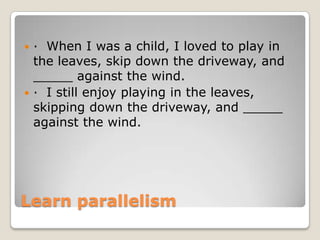

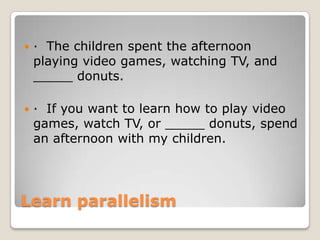

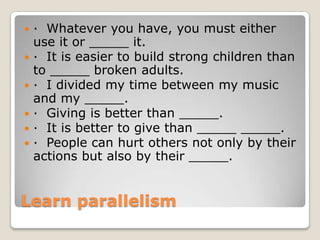
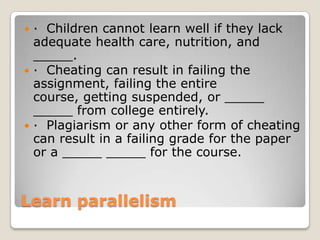

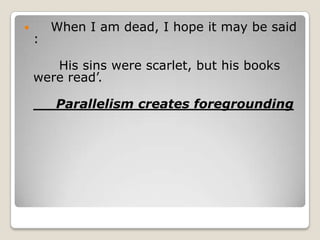
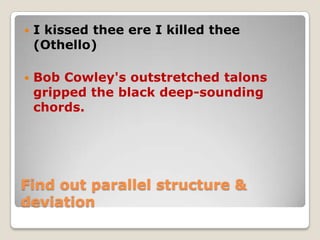
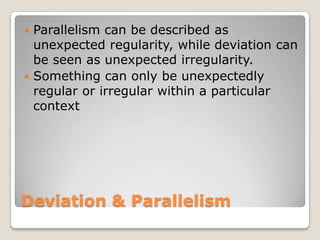


The document discusses deviation and parallelism as techniques for foregrounding in literature. Deviation refers to breaking linguistic rules or conventions in a way that stands out from expectations. Parallelism creates foregrounding through unexpected regularity, using similar grammatical structures within a text. Foregrounding draws attention to the linguistic features used rather than just the content, making a text more memorable and open to interpretation. Both deviation and parallelism can achieve foregrounding on phonological, graphical, morphological, lexical, syntactic, semantic and pragmatic levels of language.


![Getting Started with Apache Spark: Big Data Made Simple [Free Meetup]](https://cdn.slidesharecdn.com/ss_thumbnails/apachesparkgettingstarted-260203175547-8361bcc3-thumbnail.jpg?width=640&height=640&fit=bounds)
