STRUCTURE
OF NEURON
Presented by
ARATHY CHANDRAN
NEURON
 Defined as nerve cell
 Building block of nervous system
 Miniature self – contained information processor
 Receives input – processes information – generates
output
 Communicate with other neurons through chemical
signals
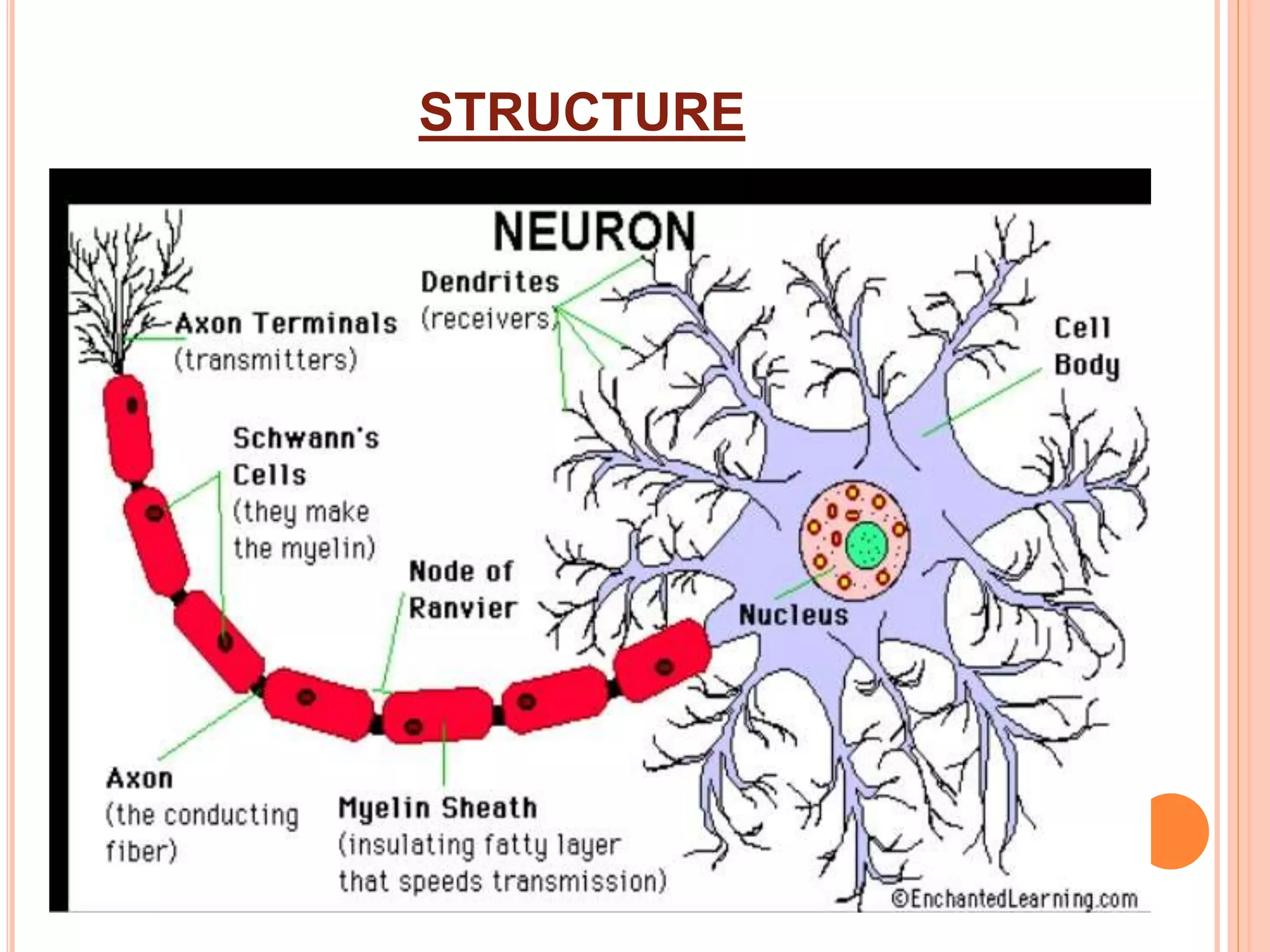
STRUCTURE
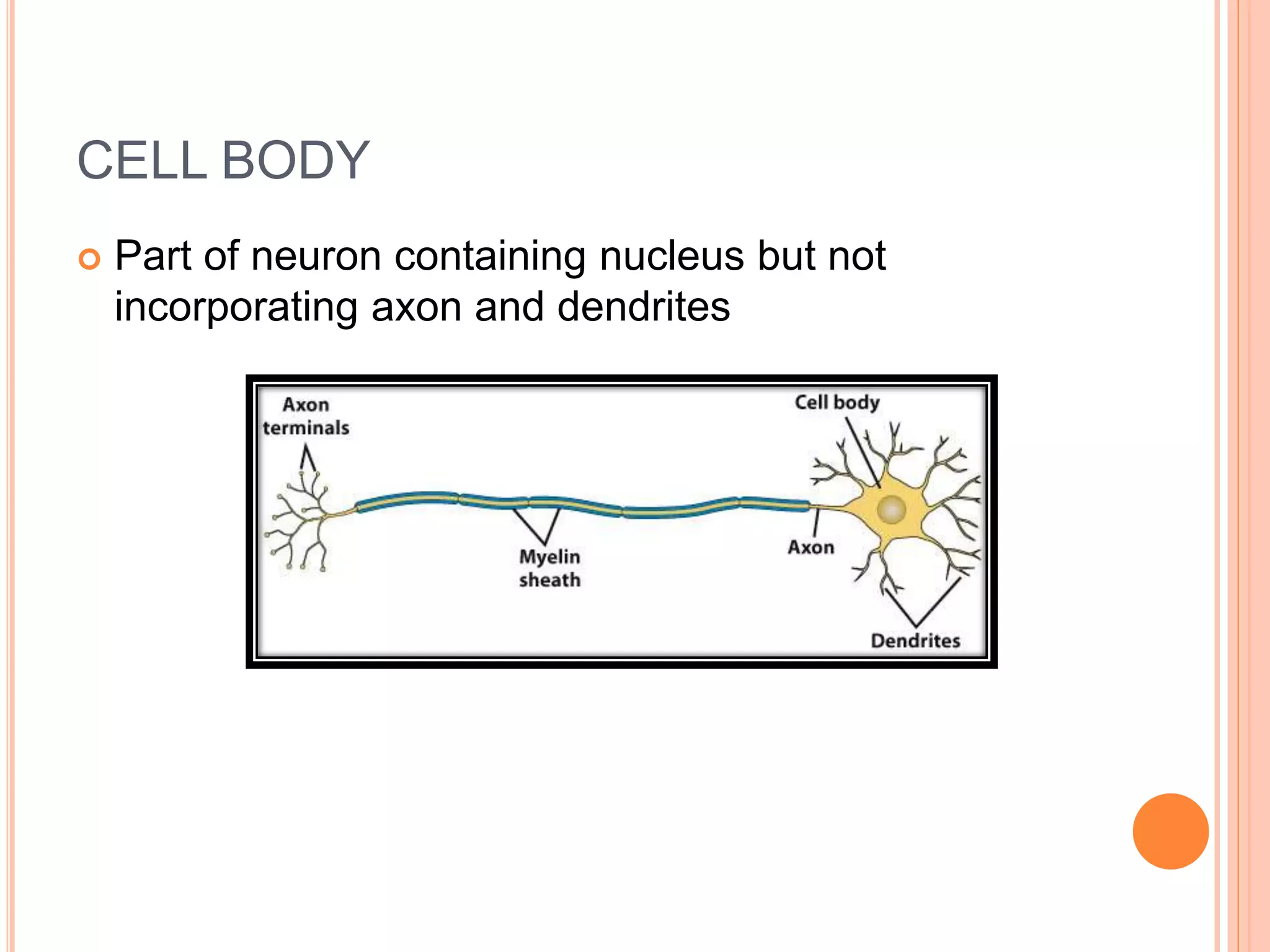
CELL BODY
 Part of neuron containing nucleus but not
incorporating axon and dendrites
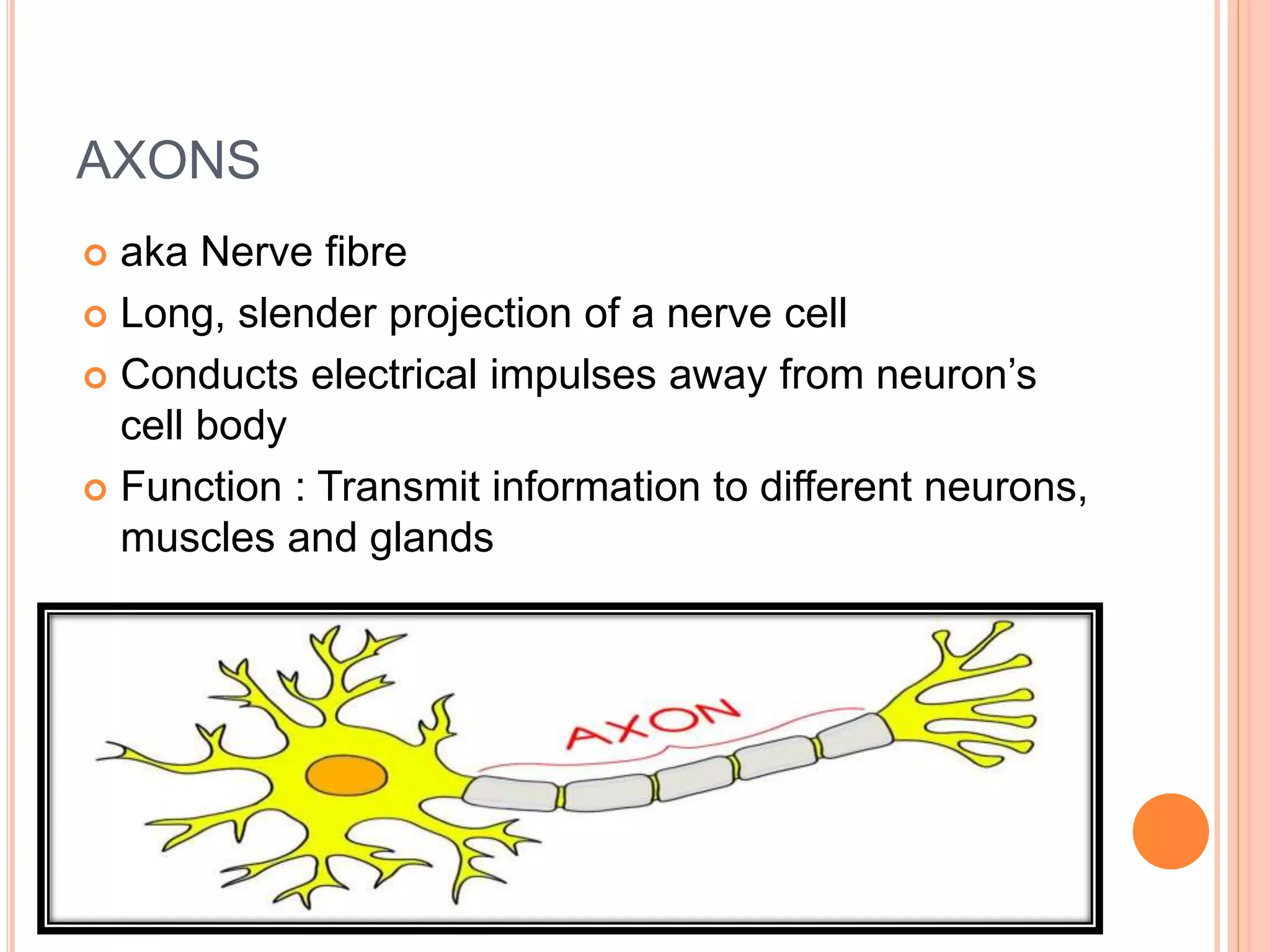
AXONS
 aka Nerve fibre
 Long, slender projection of a nerve cell
 Conducts electrical impulses away from neuron’s
cell body
 Function : Transmit information to different neurons,
muscles and glands
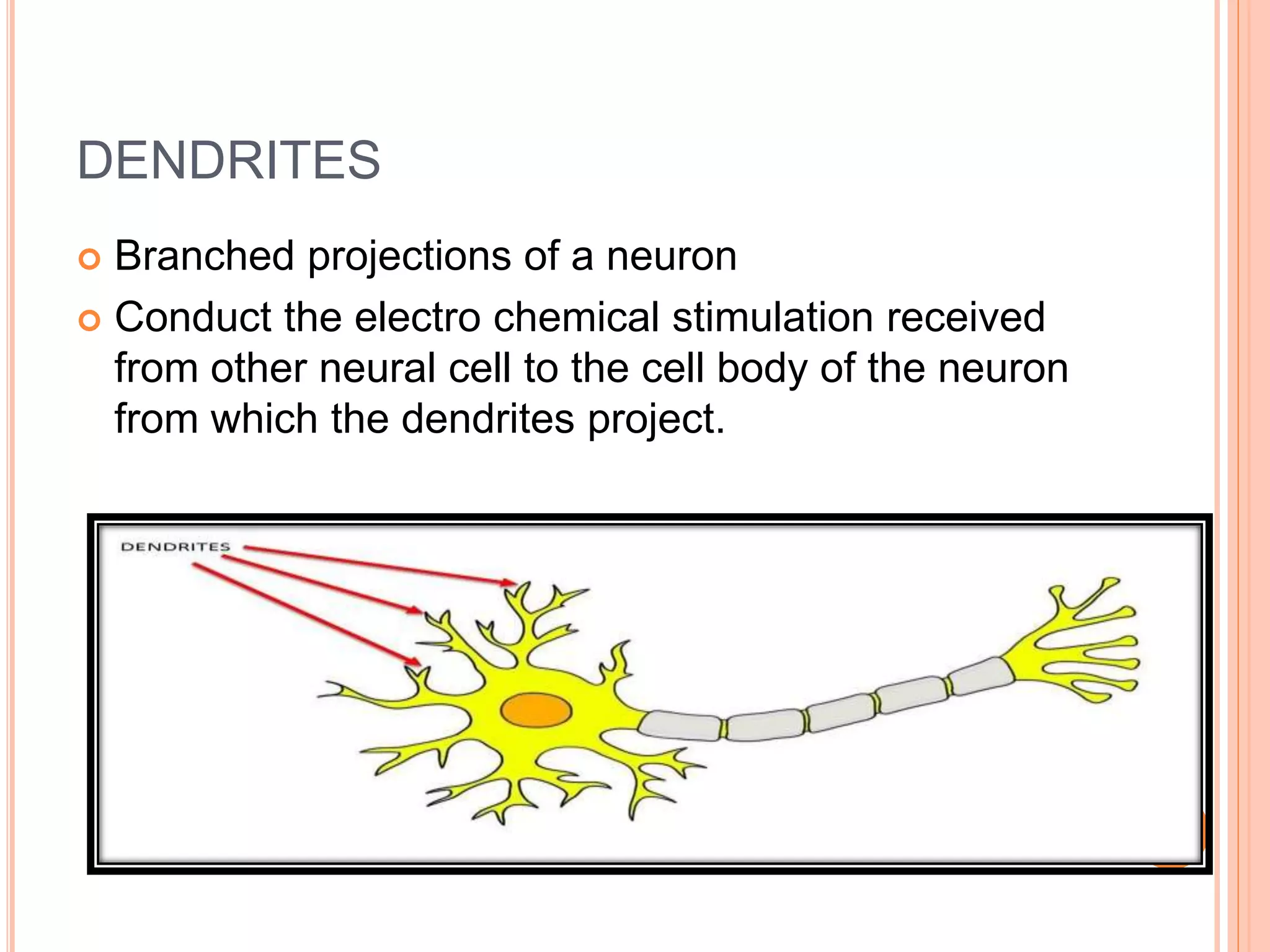
DENDRITES
 Branched projections of a neuron
 Conduct the electro chemical stimulation received
from other neural cell to the cell body of the neuron
from which the dendrites project.
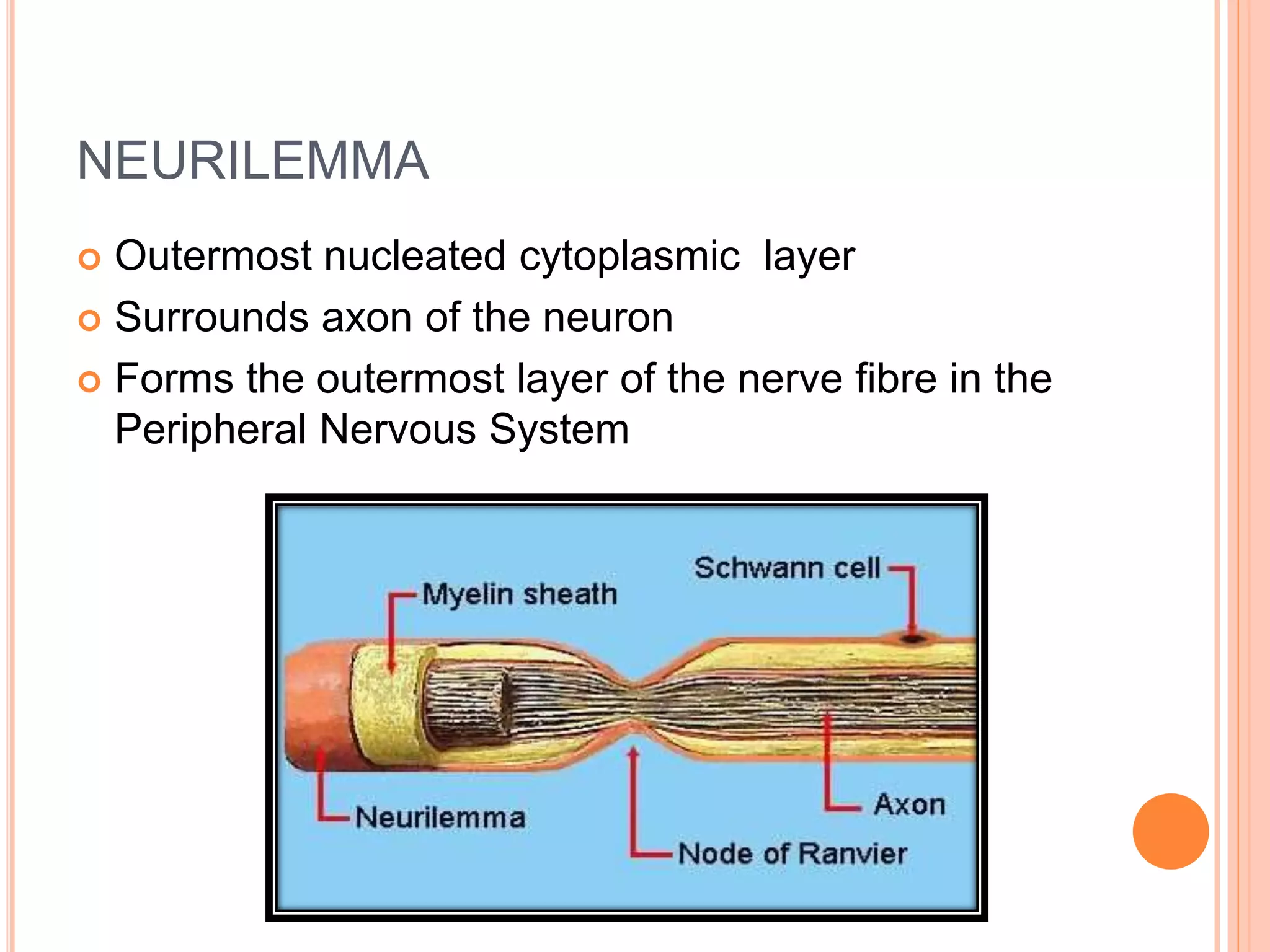
NEURILEMMA
 Outermost nucleated cytoplasmic layer
 Surrounds axon of the neuron
 Forms the outermost layer of the nerve fibre in the
Peripheral Nervous System
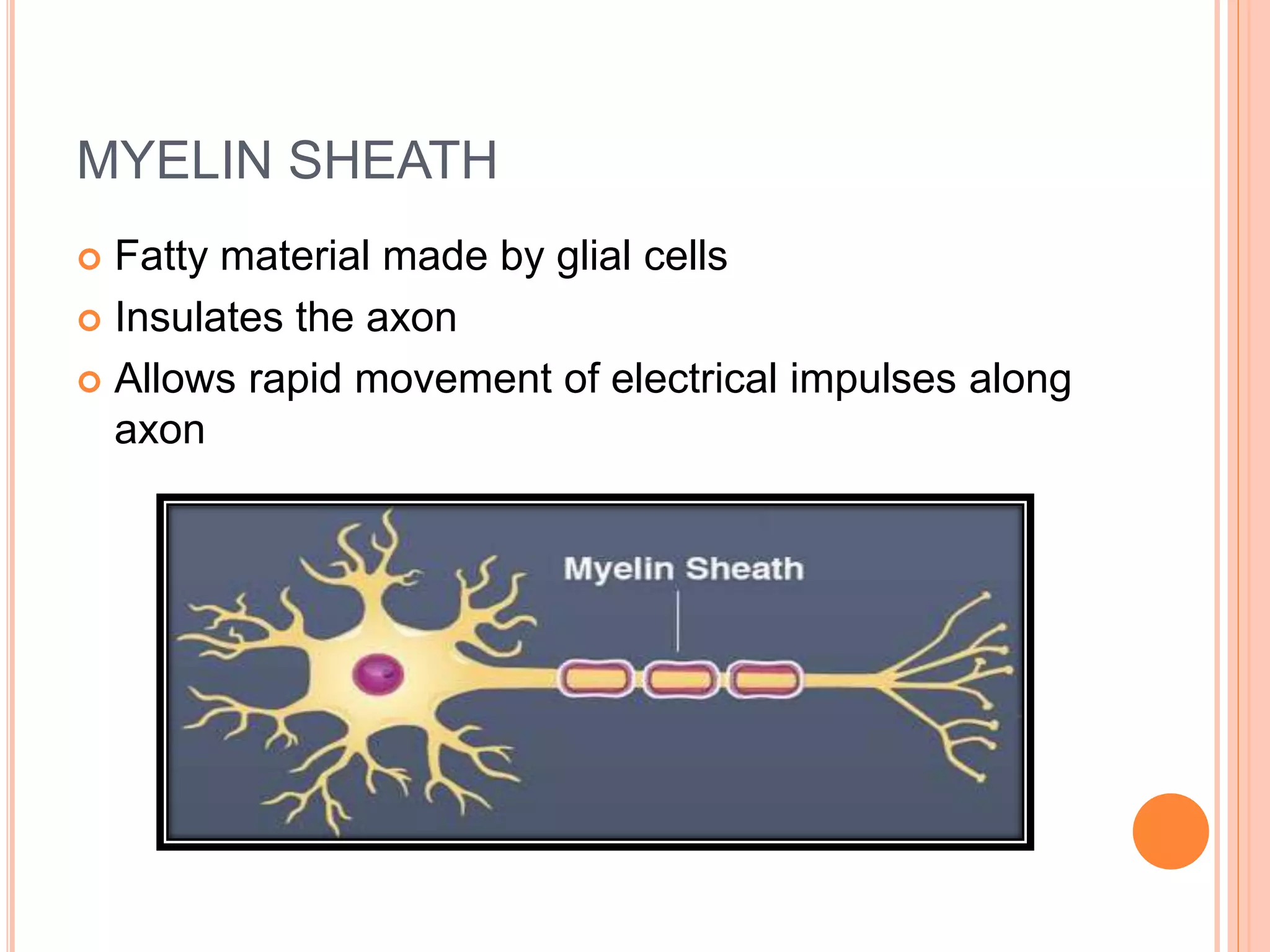
MYELIN SHEATH
 Fatty material made by glial cells
 Insulates the axon
 Allows rapid movement of electrical impulses along
axon
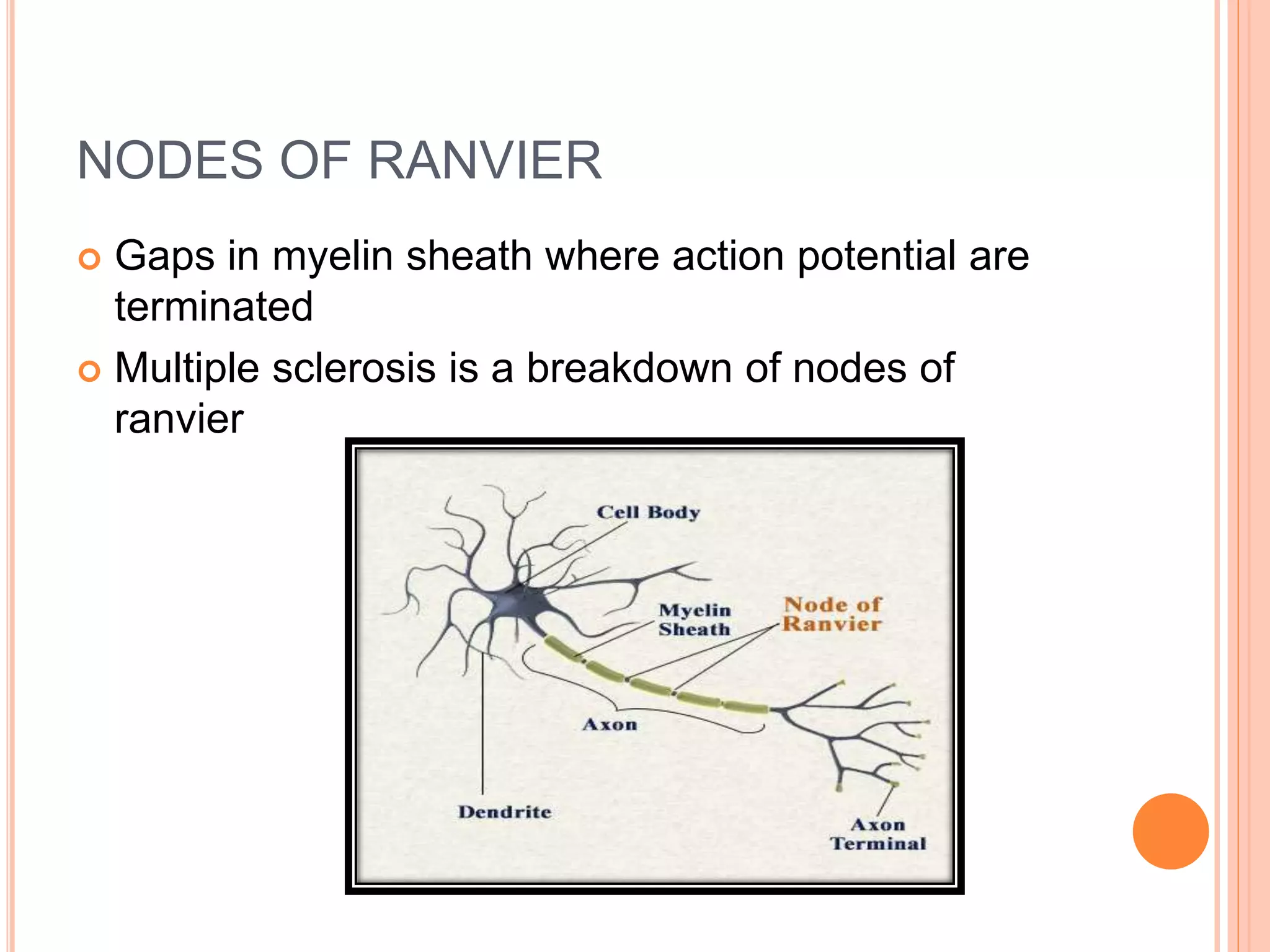
NODES OF RANVIER
 Gaps in myelin sheath where action potential are
terminated
 Multiple sclerosis is a breakdown of nodes of
ranvier
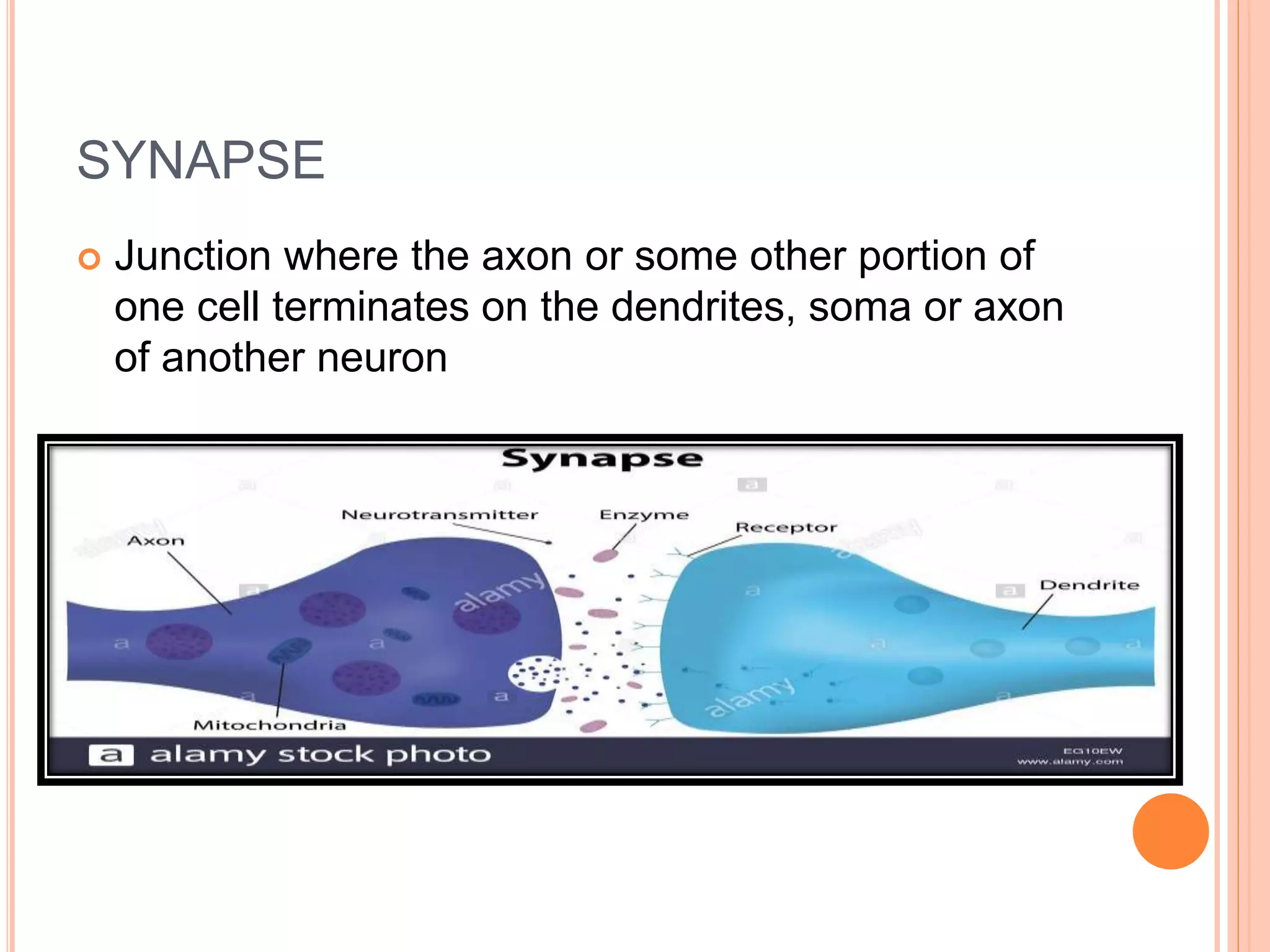
SYNAPSE
 Junction where the axon or some other portion of
one cell terminates on the dendrites, soma or axon
of another neuron
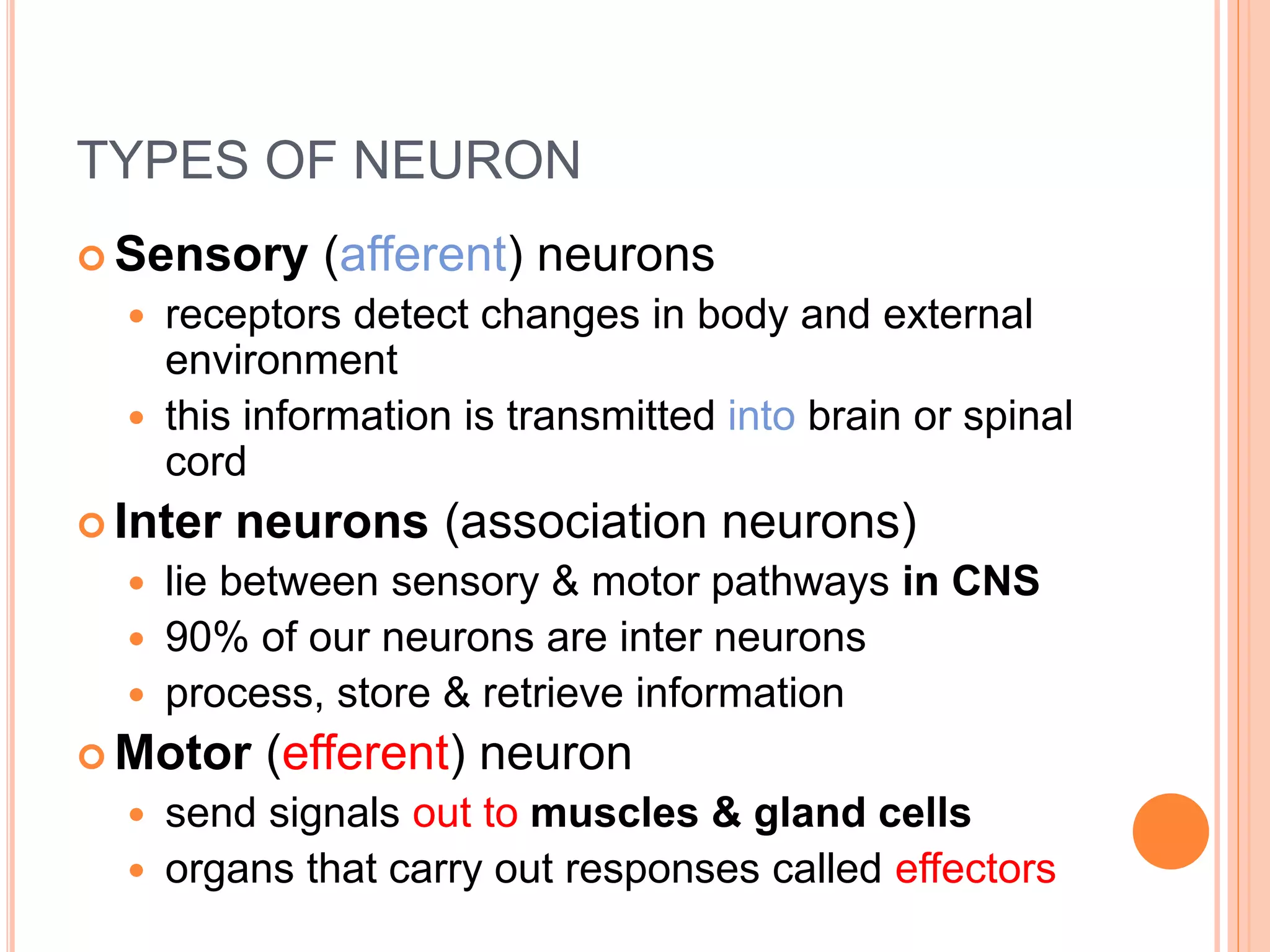
TYPES OF NEURON
 Sensory (afferent) neurons
 receptors detect changes in body and external
environment
 this information is transmitted into brain or spinal
cord
 Inter neurons (association neurons)
 lie between sensory & motor pathways in CNS
 90% of our neurons are inter neurons
 process, store & retrieve information
 Motor (efferent) neuron
 send signals out to muscles & gland cells
 organs that carry out responses called effectors
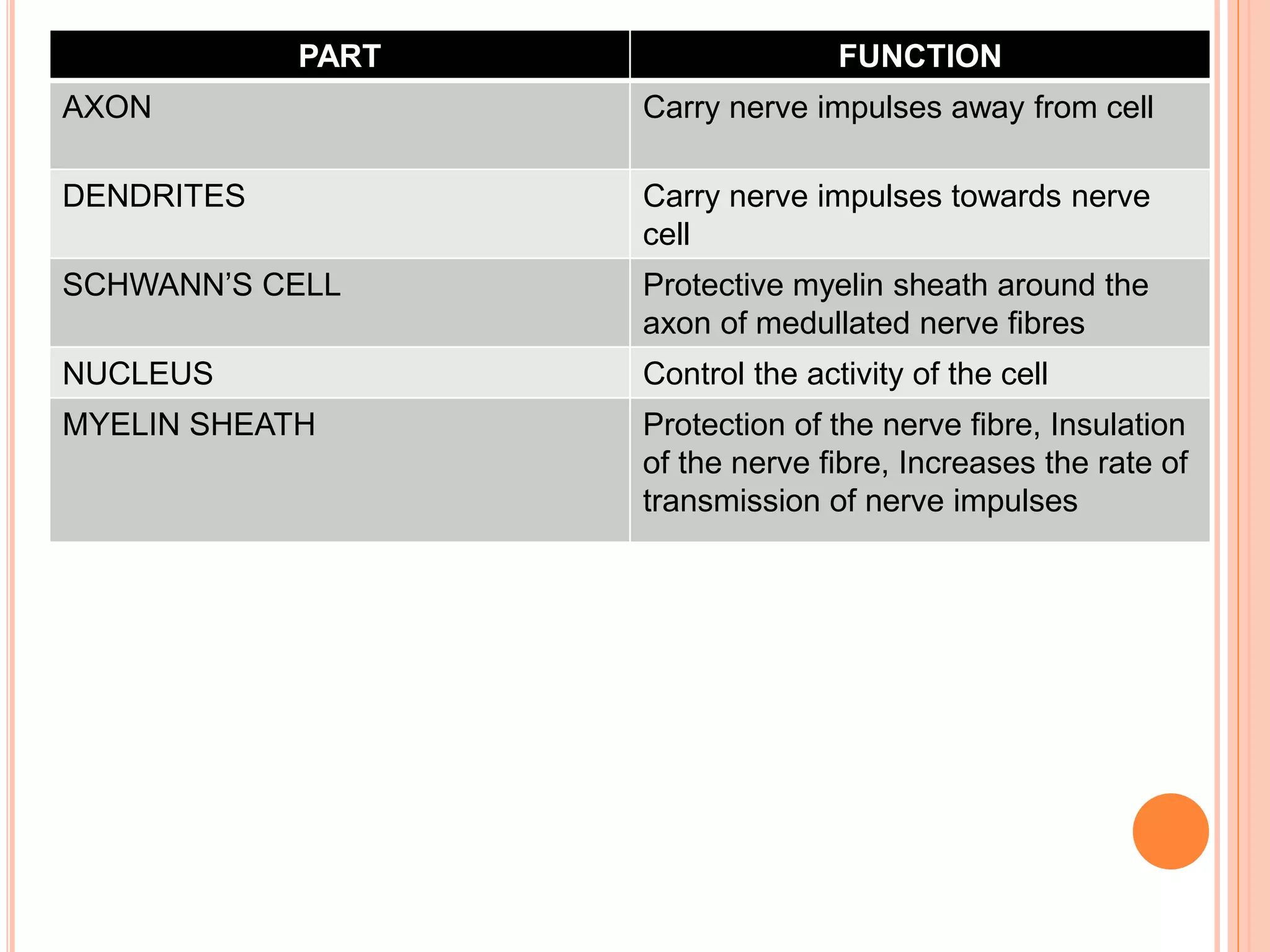
PART FUNCTION
AXON Carry nerve impulses away from cell
DENDRITES Carry nerve impulses towards nerve
cell
SCHWANN’S CELL Protective myelin sheath around the
axon of medullated nerve fibres
NUCLEUS Control the activity of the cell
MYELIN SHEATH Protection of the nerve fibre, Insulation
of the nerve fibre, Increases the rate of
transmission of nerve impulses
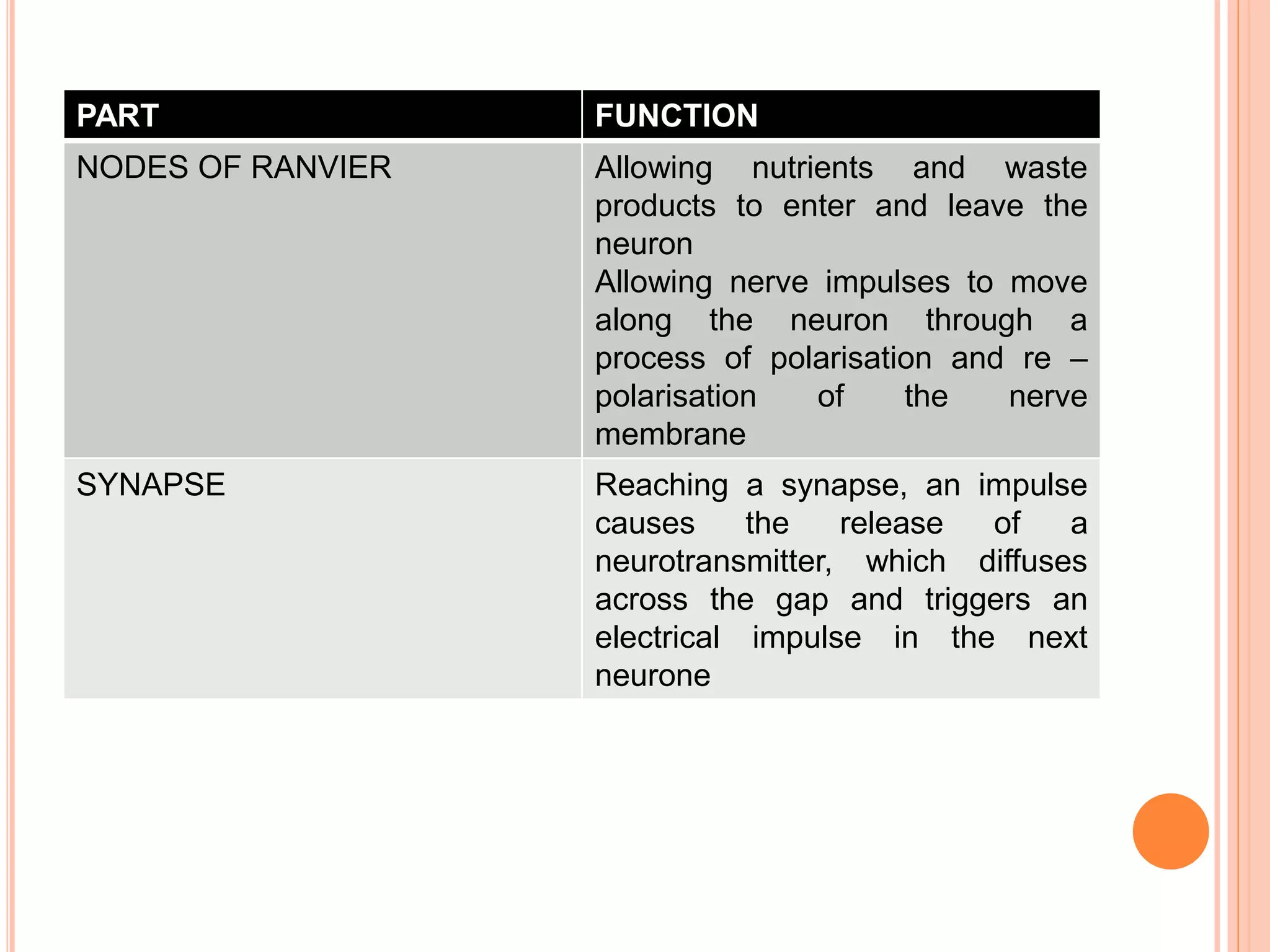
PART FUNCTION
NODES OF RANVIER Allowing nutrients and waste
products to enter and leave the
neuron
Allowing nerve impulses to move
along the neuron through a
process of polarisation and re –
polarisation of the nerve
membrane
SYNAPSE Reaching a synapse, an impulse
causes the release of a
neurotransmitter, which diffuses
across the gap and triggers an
electrical impulse in the next
neurone

Structure of neuron - simple slide

  • 1.
  • 2.
    NEURON  Defined asnerve cell  Building block of nervous system  Miniature self – contained information processor  Receives input – processes information – generates output  Communicate with other neurons through chemical signals
  • 3.
  • 4.
    CELL BODY  Partof neuron containing nucleus but not incorporating axon and dendrites
  • 5.
    AXONS  aka Nervefibre  Long, slender projection of a nerve cell  Conducts electrical impulses away from neuron’s cell body  Function : Transmit information to different neurons, muscles and glands
  • 6.
    DENDRITES  Branched projectionsof a neuron  Conduct the electro chemical stimulation received from other neural cell to the cell body of the neuron from which the dendrites project.
  • 7.
    NEURILEMMA  Outermost nucleatedcytoplasmic layer  Surrounds axon of the neuron  Forms the outermost layer of the nerve fibre in the Peripheral Nervous System
  • 8.
    MYELIN SHEATH  Fattymaterial made by glial cells  Insulates the axon  Allows rapid movement of electrical impulses along axon
  • 9.
    NODES OF RANVIER Gaps in myelin sheath where action potential are terminated  Multiple sclerosis is a breakdown of nodes of ranvier
  • 10.
    SYNAPSE  Junction wherethe axon or some other portion of one cell terminates on the dendrites, soma or axon of another neuron
  • 11.
    TYPES OF NEURON Sensory (afferent) neurons  receptors detect changes in body and external environment  this information is transmitted into brain or spinal cord  Inter neurons (association neurons)  lie between sensory & motor pathways in CNS  90% of our neurons are inter neurons  process, store & retrieve information  Motor (efferent) neuron  send signals out to muscles & gland cells  organs that carry out responses called effectors
  • 12.
    PART FUNCTION AXON Carrynerve impulses away from cell DENDRITES Carry nerve impulses towards nerve cell SCHWANN’S CELL Protective myelin sheath around the axon of medullated nerve fibres NUCLEUS Control the activity of the cell MYELIN SHEATH Protection of the nerve fibre, Insulation of the nerve fibre, Increases the rate of transmission of nerve impulses
  • 13.
    PART FUNCTION NODES OFRANVIER Allowing nutrients and waste products to enter and leave the neuron Allowing nerve impulses to move along the neuron through a process of polarisation and re – polarisation of the nerve membrane SYNAPSE Reaching a synapse, an impulse causes the release of a neurotransmitter, which diffuses across the gap and triggers an electrical impulse in the next neurone