A prepositional 
phrase is a group of 
words containing a 
preposition, a noun 
or pronoun object of 
the preposition, and 
any modifiers of the 
object.
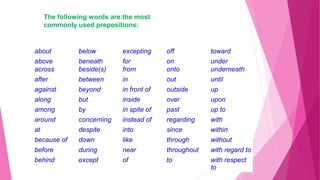
about below excepting off toward 
above beneath for on under 
across beside(s) from onto underneath 
after between in out until 
against beyond in front of outside up 
along but inside over upon 
among by in spite of past up to 
around concerning instead of regarding with 
at despite into since within 
because of down like through without 
before during near throughout with regard to 
behind except of to with respect 
to 
The following words are the most 
commonly used prepositions:
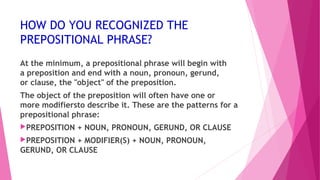
HOW DO YOU RECOGNIZED THE 
PREPOSITIONAL PHRASE? 
At the minimum, a prepositional phrase will begin with 
a preposition and end with a noun, pronoun, gerund, 
or clause, the "object" of the preposition. 
The object of the preposition will often have one or 
more modifiersto describe it. These are the patterns for a 
prepositional phrase: 
PREPOSITION + NOUN, PRONOUN, GERUND, OR CLAUSE 
PREPOSITION + MODIFIER(S) + NOUN, PRONOUN, 
GERUND, OR CLAUSE
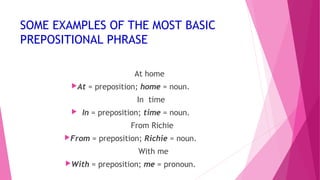
SOME EXAMPLES OF THE MOST BASIC 
PREPOSITIONAL PHRASE 
At home 
At = preposition; home = noun. 
In time 
 In = preposition; time = noun. 
From Richie 
From = preposition; Richie = noun. 
With me 
With = preposition; me = pronoun.
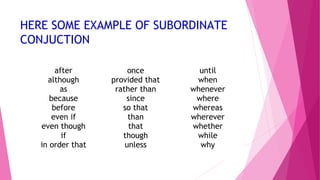
HERE SOME EXAMPLE OF SUBORDINATE 
CONJUCTION 
after 
although 
as 
because 
before 
even if 
even though 
if 
in order that 
once 
provided that 
rather than 
since 
so that 
than 
that 
though 
unless 
until 
when 
whenever 
where 
whereas 
wherever 
whether 
while 
why
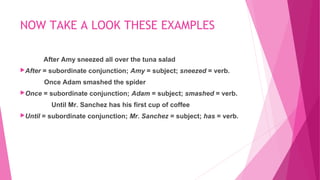
NOW TAKE A LOOK THESE EXAMPLES 
After Amy sneezed all over the tuna salad 
After = subordinate conjunction; Amy = subject; sneezed = verb. 
Once Adam smashed the spider 
Once = subordinate conjunction; Adam = subject; smashed = verb. 
Until Mr. Sanchez has his first cup of coffee 
Until = subordinate conjunction; Mr. Sanchez = subject; has = verb.
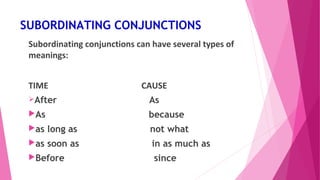
SUBORDINATING CONJUNCTIONS 
Subordinating conjunctions can have several types of 
meanings: 
TIME CAUSE 
After As 
As because 
as long as not what 
as soon as in as much as 
Before since
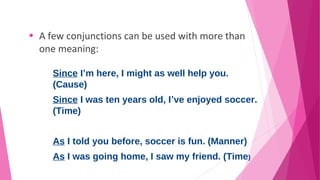
• A few conjunctions can be used with more than 
one meaning: 
Since I’m here, I might as well help you. 
(Cause) 
Since I was ten years old, I’ve enjoyed soccer. 
(Time) 
As I told you before, soccer is fun. (Manner) 
As I was going home, I saw my friend. (Time)
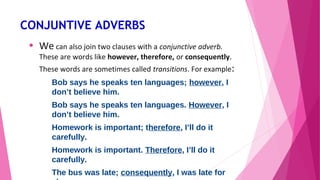
CONJUNTIVE ADVERBS 
• We can also join two clauses with a conjunctive adverb. 
These are words like however, therefore, or consequently. 
These words are sometimes called transitions. For example: 
Bob says he speaks ten languages; however, I 
don’t believe him. 
Bob says he speaks ten languages. However, I 
don’t believe him. 
Homework is important; therefore, I’ll do it 
carefully. 
Homework is important. Therefore, I’ll do it 
carefully. 
The bus was late; consequently, I was late for 
class.
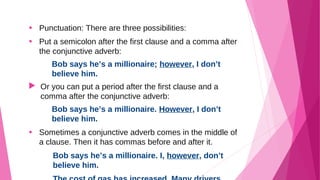
• Punctuation: There are three possibilities: 
• Put a semicolon after the first clause and a comma after 
the conjunctive adverb: 
Bob says he’s a millionaire; however, I don’t 
believe him. 
 Or you can put a period after the first clause and a 
comma after the conjunctive adverb: 
Bob says he’s a millionaire. However, I don’t 
believe him. 
• Sometimes a conjunctive adverb comes in the middle of 
a clause. Then it has commas before and after it. 
Bob says he’s a millionaire. I, however, don’t 
believe him. 
The cost of gas has increased. Many drivers,

structure of clauses.

  • 1.
    A prepositional phraseis a group of words containing a preposition, a noun or pronoun object of the preposition, and any modifiers of the object.
  • 2.
    about below exceptingoff toward above beneath for on under across beside(s) from onto underneath after between in out until against beyond in front of outside up along but inside over upon among by in spite of past up to around concerning instead of regarding with at despite into since within because of down like through without before during near throughout with regard to behind except of to with respect to The following words are the most commonly used prepositions:
  • 3.
    HOW DO YOURECOGNIZED THE PREPOSITIONAL PHRASE? At the minimum, a prepositional phrase will begin with a preposition and end with a noun, pronoun, gerund, or clause, the "object" of the preposition. The object of the preposition will often have one or more modifiersto describe it. These are the patterns for a prepositional phrase: PREPOSITION + NOUN, PRONOUN, GERUND, OR CLAUSE PREPOSITION + MODIFIER(S) + NOUN, PRONOUN, GERUND, OR CLAUSE
  • 4.
    SOME EXAMPLES OFTHE MOST BASIC PREPOSITIONAL PHRASE At home At = preposition; home = noun. In time  In = preposition; time = noun. From Richie From = preposition; Richie = noun. With me With = preposition; me = pronoun.
  • 6.
    HERE SOME EXAMPLEOF SUBORDINATE CONJUCTION after although as because before even if even though if in order that once provided that rather than since so that than that though unless until when whenever where whereas wherever whether while why
  • 7.
    NOW TAKE ALOOK THESE EXAMPLES After Amy sneezed all over the tuna salad After = subordinate conjunction; Amy = subject; sneezed = verb. Once Adam smashed the spider Once = subordinate conjunction; Adam = subject; smashed = verb. Until Mr. Sanchez has his first cup of coffee Until = subordinate conjunction; Mr. Sanchez = subject; has = verb.
  • 8.
    SUBORDINATING CONJUNCTIONS Subordinatingconjunctions can have several types of meanings: TIME CAUSE After As As because as long as not what as soon as in as much as Before since
  • 9.
    • A fewconjunctions can be used with more than one meaning: Since I’m here, I might as well help you. (Cause) Since I was ten years old, I’ve enjoyed soccer. (Time) As I told you before, soccer is fun. (Manner) As I was going home, I saw my friend. (Time)
  • 10.
    CONJUNTIVE ADVERBS •We can also join two clauses with a conjunctive adverb. These are words like however, therefore, or consequently. These words are sometimes called transitions. For example: Bob says he speaks ten languages; however, I don’t believe him. Bob says he speaks ten languages. However, I don’t believe him. Homework is important; therefore, I’ll do it carefully. Homework is important. Therefore, I’ll do it carefully. The bus was late; consequently, I was late for class.
  • 11.
    • Punctuation: Thereare three possibilities: • Put a semicolon after the first clause and a comma after the conjunctive adverb: Bob says he’s a millionaire; however, I don’t believe him.  Or you can put a period after the first clause and a comma after the conjunctive adverb: Bob says he’s a millionaire. However, I don’t believe him. • Sometimes a conjunctive adverb comes in the middle of a clause. Then it has commas before and after it. Bob says he’s a millionaire. I, however, don’t believe him. The cost of gas has increased. Many drivers,