Common Sentence Errors
Parallelism Errors 
Run-on Sentences 
Sentence Fragments 
Misplaced, Dangling Modifiers
Parallelism 
Parallelism means that words, phrases, and 
clauses used in pairs or groups must all have 
the same form. 
Verbs must match with verbs, nouns must 
match with nouns, etc.
I have been to Beijing and saw the Summer 
Palace. 
I have been to Beijing and have seen the 
Summer Palace. 
I went to Beijing and saw the Summer 
Palace. 
✗ 
✔ 
✔
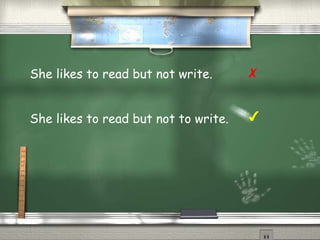
She likes to read but not write. 
She likes to read but not to write. 
✗ 
✔
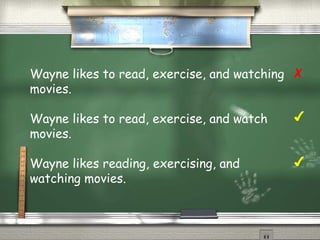
Wayne likes to read, exercise, and watching 
movies. 
Wayne likes to read, exercise, and watch 
movies. 
Wayne likes reading, exercising, and 
watching movies. 
✗ 
✔ 
✔
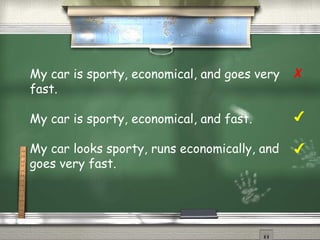
My car is sporty, economical, and goes very 
fast. 
My car is sporty, economical, and fast. 
My car looks sporty, runs economically, and 
goes very fast. 
✗ 
✔ 
✔
As we neared the airport, you could hear 
the jets. 
As we neared the airport, we could hear the 
jets. 
✗ 
✔
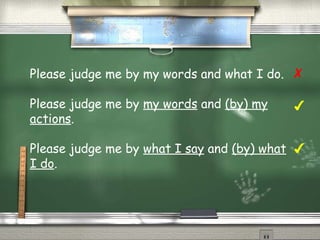
Please judge me by my words and what I do. 
Please judge me by my words and (by) my 
actions. 
Please judge me by what I say and (by) what 
I do. 
✗ 
✔ 
✔
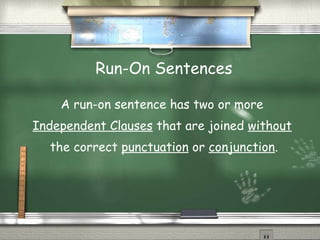
Run-On Sentences 
A run-on sentence has two or more 
Independent Clauses that are joined without 
the correct punctuation or conjunction.
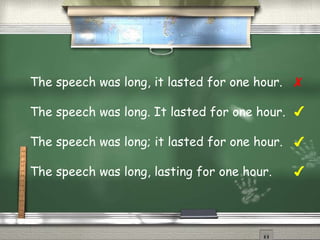
The speech was long, it lasted for one hour. 
The speech was long. It lasted for one hour. 
The speech was long; it lasted for one hour. 
The speech was long, lasting for one hour. 
✗ 
✔ 
✔ 
✔
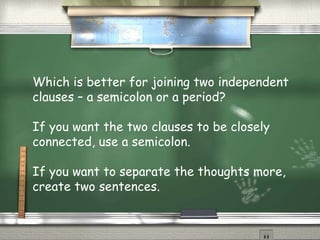
Which is better for joining two independent 
clauses – a semicolon or a period? 
If you want the two clauses to be closely 
connected, use a semicolon. 
If you want to separate the thoughts more, 
create two sentences.
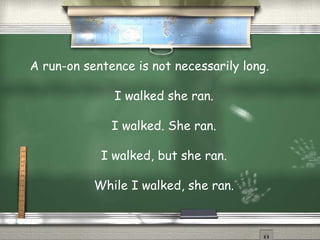
A run-on sentence is not necessarily long. 
I walked she ran. 
I walked. She ran. 
I walked, but she ran. 
While I walked, she ran.
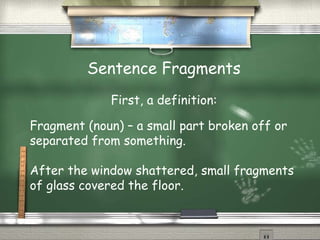
Sentence Fragments 
First, a definition: 
Fragment (noun) – a small part broken off or 
separated from something. 
After the window shattered, small fragments 
of glass covered the floor.
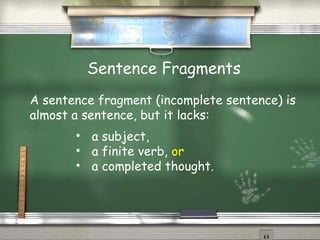
Sentence Fragments 
A sentence fragment (incomplete sentence) is 
almost a sentence, but it lacks: 
• a subject, 
• a finite verb, or 
• a completed thought.
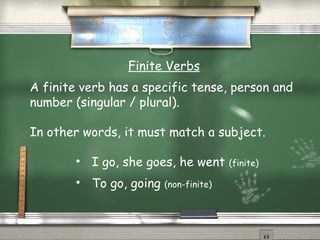
Finite Verbs 
A finite verb has a specific tense, person and 
number (singular / plural). 
In other words, it must match a subject. 
• I go, she goes, he went (finite) 
• To go, going (non-finite)
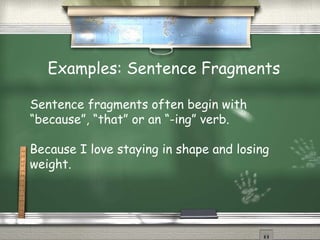
Examples: Sentence Fragments 
Sentence fragments often begin with 
“because”, “that” or an “-ing” verb. 
Because I love staying in shape and losing 
weight.
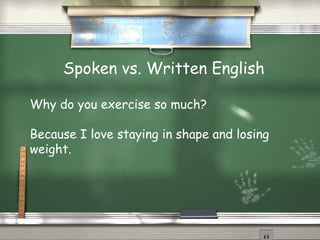
Spoken vs. Written English 
Why do you exercise so much? 
Because I love staying in shape and losing 
weight.
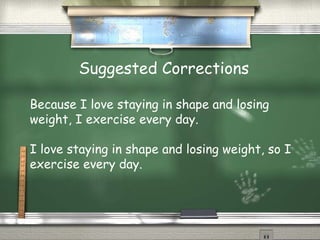
Suggested Corrections 
Because I love staying in shape and losing 
weight, I exercise every day. 
I love staying in shape and losing weight, so I 
exercise every day.
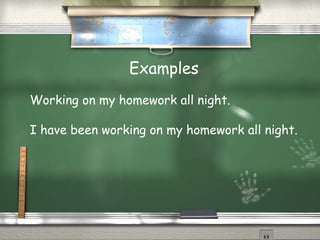
Examples 
Working on my homework all night. 
I have been working on my homework all night.
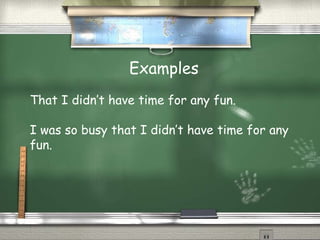
Examples 
That I didn’t have time for any fun. 
I was so busy that I didn’t have time for any 
fun.
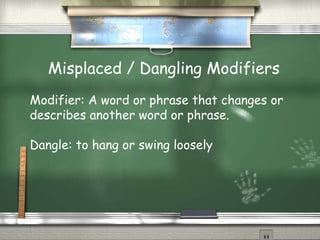
Misplaced / Dangling Modifiers 
Modifier: A word or phrase that changes or 
describes another word or phrase. 
Dangle: to hang or swing loosely
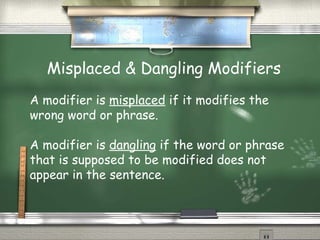
Misplaced & Dangling Modifiers 
A modifier is misplaced if it modifies the 
wrong word or phrase. 
A modifier is dangling if the word or phrase 
that is supposed to be modified does not 
appear in the sentence.
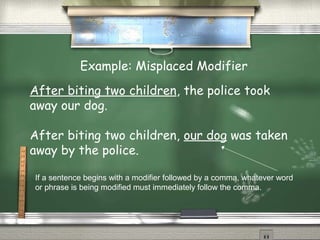
Example: Misplaced Modifier 
After biting two children, the police took 
away our dog. 
After biting two children, our dog was taken 
away by the police. 
If a sentence begins with a modifier followed by a comma, whatever word 
or phrase is being modified must immediately follow the comma.
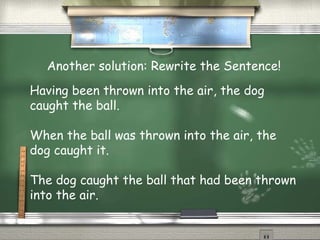
Another solution: Rewrite the Sentence! 
Having been thrown into the air, the dog 
caught the ball. 
When the ball was thrown into the air, the 
dog caught it. 
The dog caught the ball that had been thrown 
into the air.
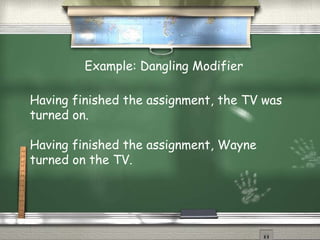
Example: Dangling Modifier 
Having finished the assignment, the TV was 
turned on. 
Having finished the assignment, Wayne 
turned on the TV.
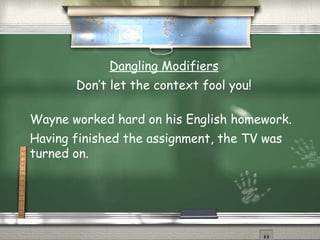
Dangling Modifiers 
Don’t let the context fool you! 
Wayne worked hard on his English homework. 
Having finished the assignment, the TV was 
turned on.
No 
Mangling, 
Dangling, 
or 
Tangling!

Common sentence errors

  • 1.
  • 2.
    Parallelism Errors Run-onSentences Sentence Fragments Misplaced, Dangling Modifiers
  • 3.
    Parallelism Parallelism meansthat words, phrases, and clauses used in pairs or groups must all have the same form. Verbs must match with verbs, nouns must match with nouns, etc.
  • 4.
    I have beento Beijing and saw the Summer Palace. I have been to Beijing and have seen the Summer Palace. I went to Beijing and saw the Summer Palace. ✗ ✔ ✔
  • 5.
    She likes toread but not write. She likes to read but not to write. ✗ ✔
  • 6.
    Wayne likes toread, exercise, and watching movies. Wayne likes to read, exercise, and watch movies. Wayne likes reading, exercising, and watching movies. ✗ ✔ ✔
  • 7.
    My car issporty, economical, and goes very fast. My car is sporty, economical, and fast. My car looks sporty, runs economically, and goes very fast. ✗ ✔ ✔
  • 8.
    As we nearedthe airport, you could hear the jets. As we neared the airport, we could hear the jets. ✗ ✔
  • 9.
    Please judge meby my words and what I do. Please judge me by my words and (by) my actions. Please judge me by what I say and (by) what I do. ✗ ✔ ✔
  • 10.
    Run-On Sentences Arun-on sentence has two or more Independent Clauses that are joined without the correct punctuation or conjunction.
  • 11.
    The speech waslong, it lasted for one hour. The speech was long. It lasted for one hour. The speech was long; it lasted for one hour. The speech was long, lasting for one hour. ✗ ✔ ✔ ✔
  • 12.
    Which is betterfor joining two independent clauses – a semicolon or a period? If you want the two clauses to be closely connected, use a semicolon. If you want to separate the thoughts more, create two sentences.
  • 13.
    A run-on sentenceis not necessarily long. I walked she ran. I walked. She ran. I walked, but she ran. While I walked, she ran.
  • 14.
    Sentence Fragments First,a definition: Fragment (noun) – a small part broken off or separated from something. After the window shattered, small fragments of glass covered the floor.
  • 15.
    Sentence Fragments Asentence fragment (incomplete sentence) is almost a sentence, but it lacks: • a subject, • a finite verb, or • a completed thought.
  • 16.
    Finite Verbs Afinite verb has a specific tense, person and number (singular / plural). In other words, it must match a subject. • I go, she goes, he went (finite) • To go, going (non-finite)
  • 17.
    Examples: Sentence Fragments Sentence fragments often begin with “because”, “that” or an “-ing” verb. Because I love staying in shape and losing weight.
  • 18.
    Spoken vs. WrittenEnglish Why do you exercise so much? Because I love staying in shape and losing weight.
  • 19.
    Suggested Corrections BecauseI love staying in shape and losing weight, I exercise every day. I love staying in shape and losing weight, so I exercise every day.
  • 20.
    Examples Working onmy homework all night. I have been working on my homework all night.
  • 21.
    Examples That Ididn’t have time for any fun. I was so busy that I didn’t have time for any fun.
  • 22.
    Misplaced / DanglingModifiers Modifier: A word or phrase that changes or describes another word or phrase. Dangle: to hang or swing loosely
  • 23.
    Misplaced & DanglingModifiers A modifier is misplaced if it modifies the wrong word or phrase. A modifier is dangling if the word or phrase that is supposed to be modified does not appear in the sentence.
  • 24.
    Example: Misplaced Modifier After biting two children, the police took away our dog. After biting two children, our dog was taken away by the police. If a sentence begins with a modifier followed by a comma, whatever word or phrase is being modified must immediately follow the comma.
  • 25.
    Another solution: Rewritethe Sentence! Having been thrown into the air, the dog caught the ball. When the ball was thrown into the air, the dog caught it. The dog caught the ball that had been thrown into the air.
  • 26.
    Example: Dangling Modifier Having finished the assignment, the TV was turned on. Having finished the assignment, Wayne turned on the TV.
  • 27.
    Dangling Modifiers Don’tlet the context fool you! Wayne worked hard on his English homework. Having finished the assignment, the TV was turned on.
  • 28.