
Composition and structure of
       ATMOSPHERE
Intro of the      ATMOSPHERE


Composition of the atmosphere


Vertical temperature structure
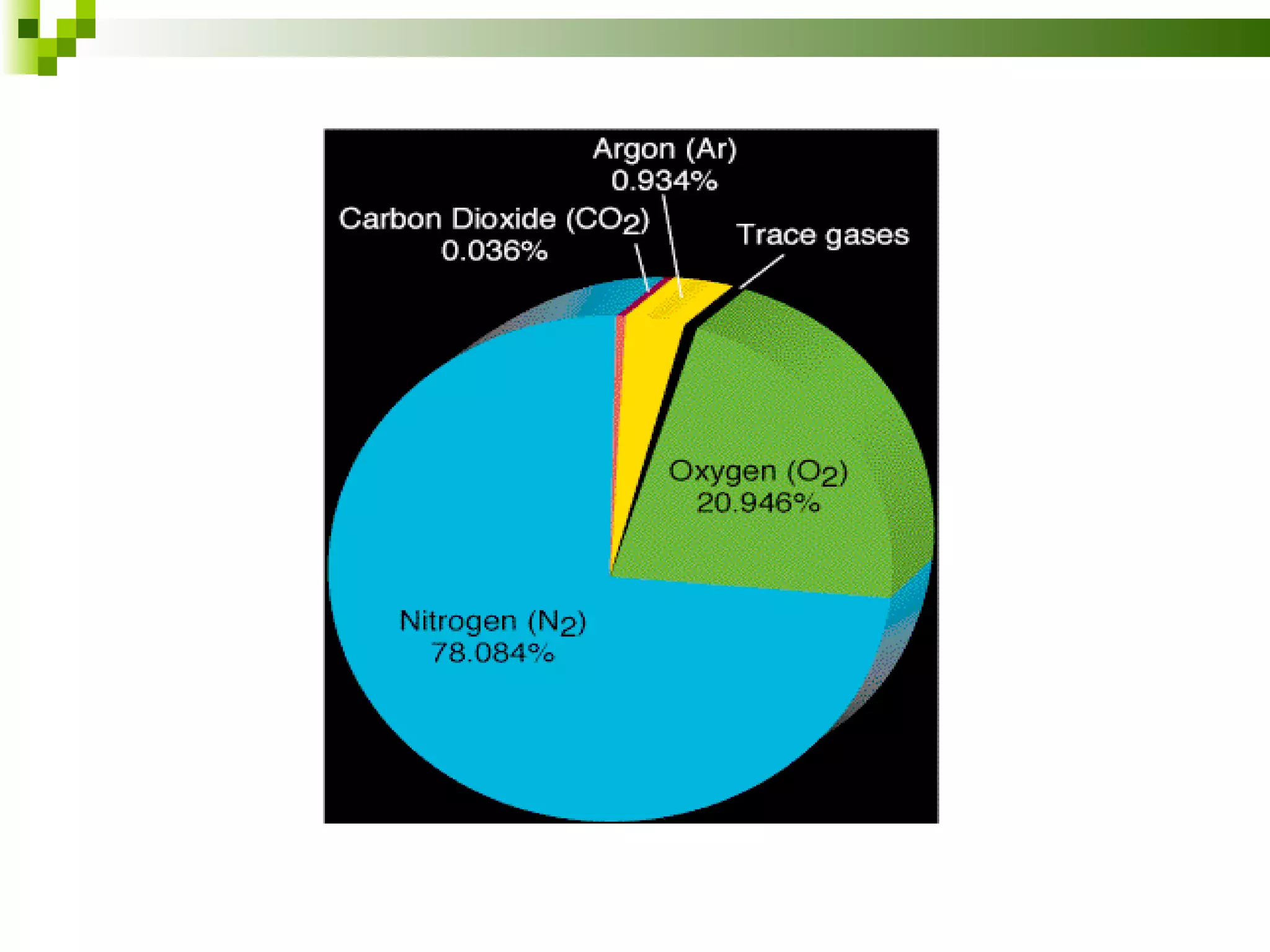
Composition of Air

Air is a mechanical mixture of gases -
not a chemical compound
  Constituent            % by Volume
 Nitrogen (N2)              78.08
 Oxygen (O2)                20.95

 Argon (Ar)                 0.93
 Carbon dioxide (CO2)       0.0325

Comprise 99.98% of total.
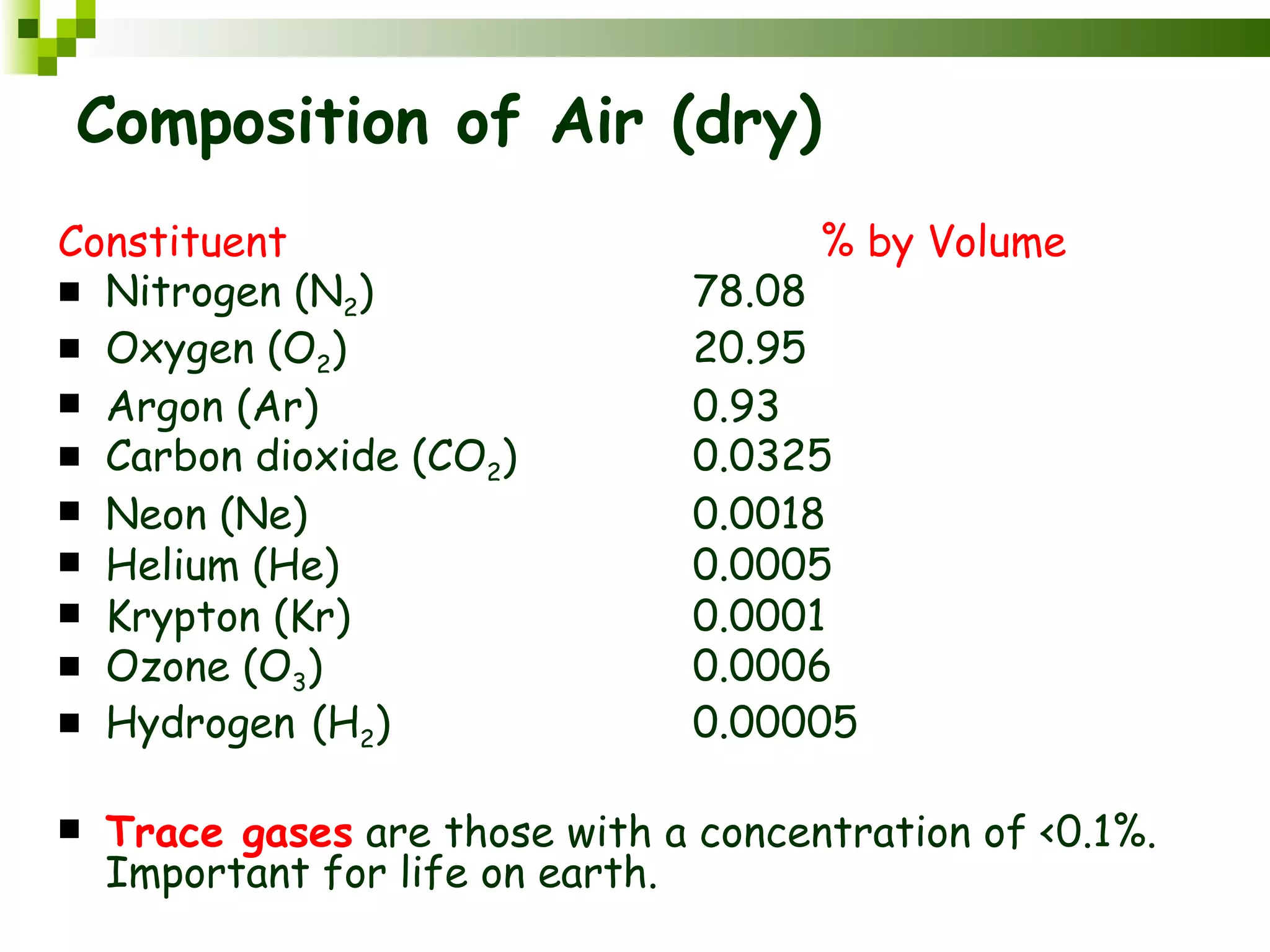
Composition of Air (dry)
Constituent                            % by Volume
 Nitrogen (N2)                  78.08
 Oxygen (O2)                    20.95
 Argon (Ar)                     0.93
 Carbon dioxide (CO2)           0.0325
 Neon (Ne)                      0.0018
 Helium (He)                    0.0005
 Krypton (Kr)                   0.0001
 Ozone (O3)                     0.0006
 Hydrogen (H2)                  0.00005

   Trace gases are those with a concentration of <0.1%.
    Important for life on earth.
COMPOSITION OF THE
ATMOSPHERE
 GASES
 WATER VAPOUR
 DUST PARTICLES
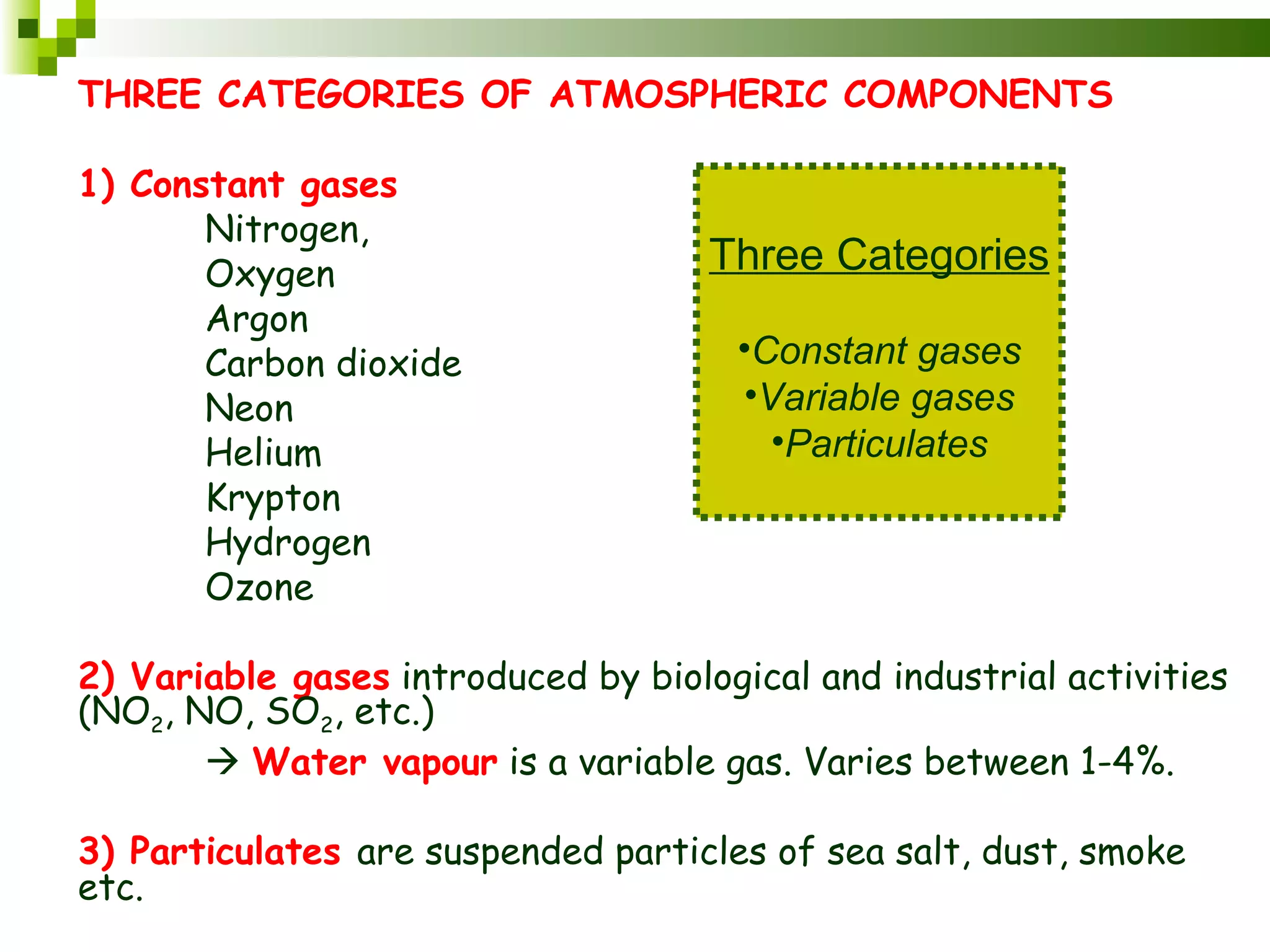
THREE CATEGORIES OF ATMOSPHERIC COMPONENTS

1) Constant gases
       Nitrogen,
       Oxygen                        Three Categories
       Argon
       Carbon dioxide                 •Constant gases
       Neon                           •Variable gases
       Helium                           •Particulates
       Krypton
       Hydrogen
       Ozone

2) Variable gases introduced by biological and industrial activities
(NO2, NO, SO2, etc.)
        Water vapour is a variable gas. Varies between 1-4%.

3) Particulates are suspended particles of sea salt, dust, smoke
etc.
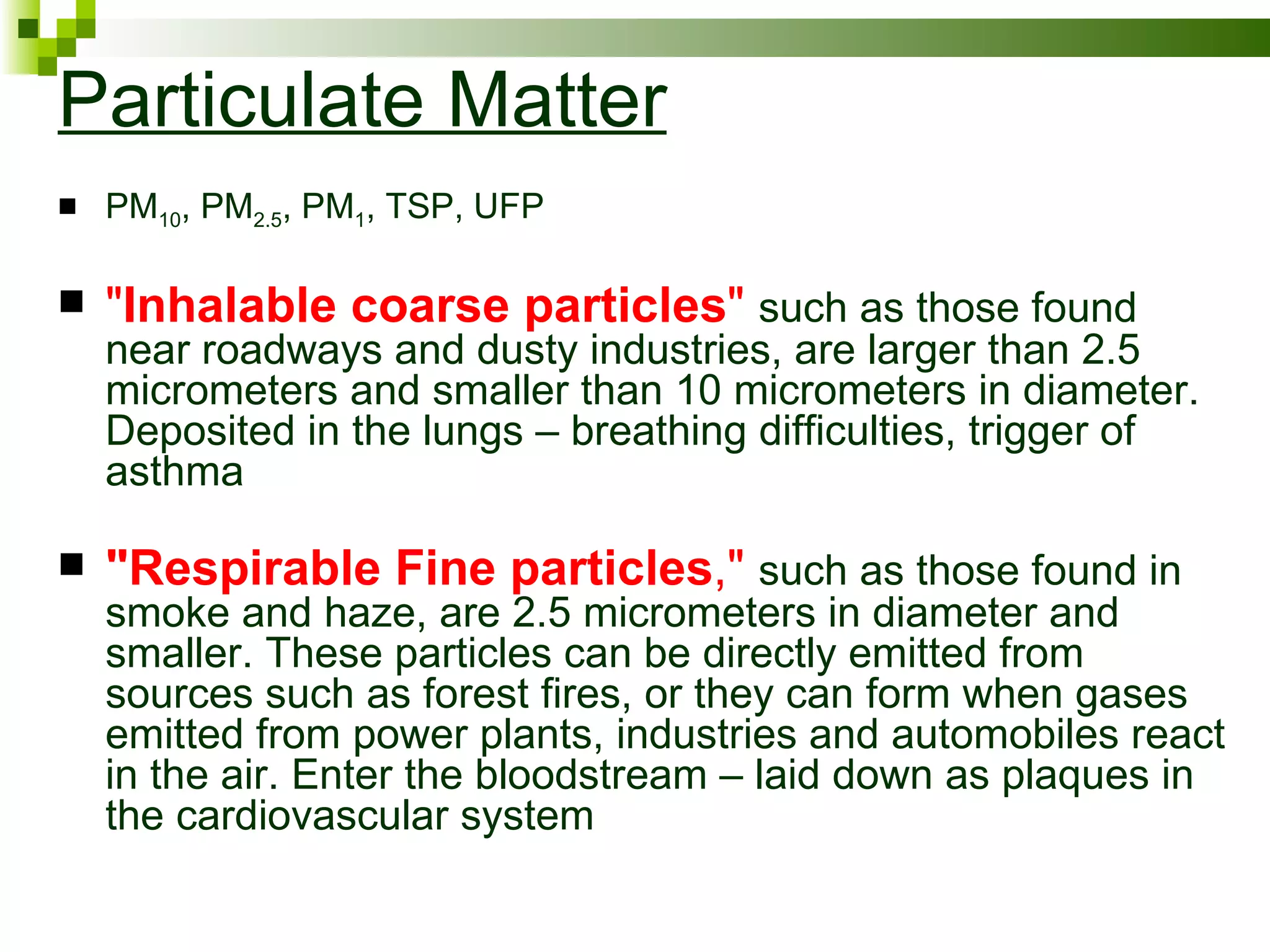
Particulate Matter
   PM10, PM2.5, PM1, TSP, UFP

   "Inhalable coarse particles" such as those found
    near roadways and dusty industries, are larger than 2.5
    micrometers and smaller than 10 micrometers in diameter.
    Deposited in the lungs – breathing difficulties, trigger of
    asthma

   "Respirable Fine particles," such as those found in
    smoke and haze, are 2.5 micrometers in diameter and
    smaller. These particles can be directly emitted from
    sources such as forest fires, or they can form when gases
    emitted from power plants, industries and automobiles react
    in the air. Enter the bloodstream – laid down as plaques in
    the cardiovascular system
We’ve now covered atmospheric
composition… now a look at the
structure of the atmosphere…
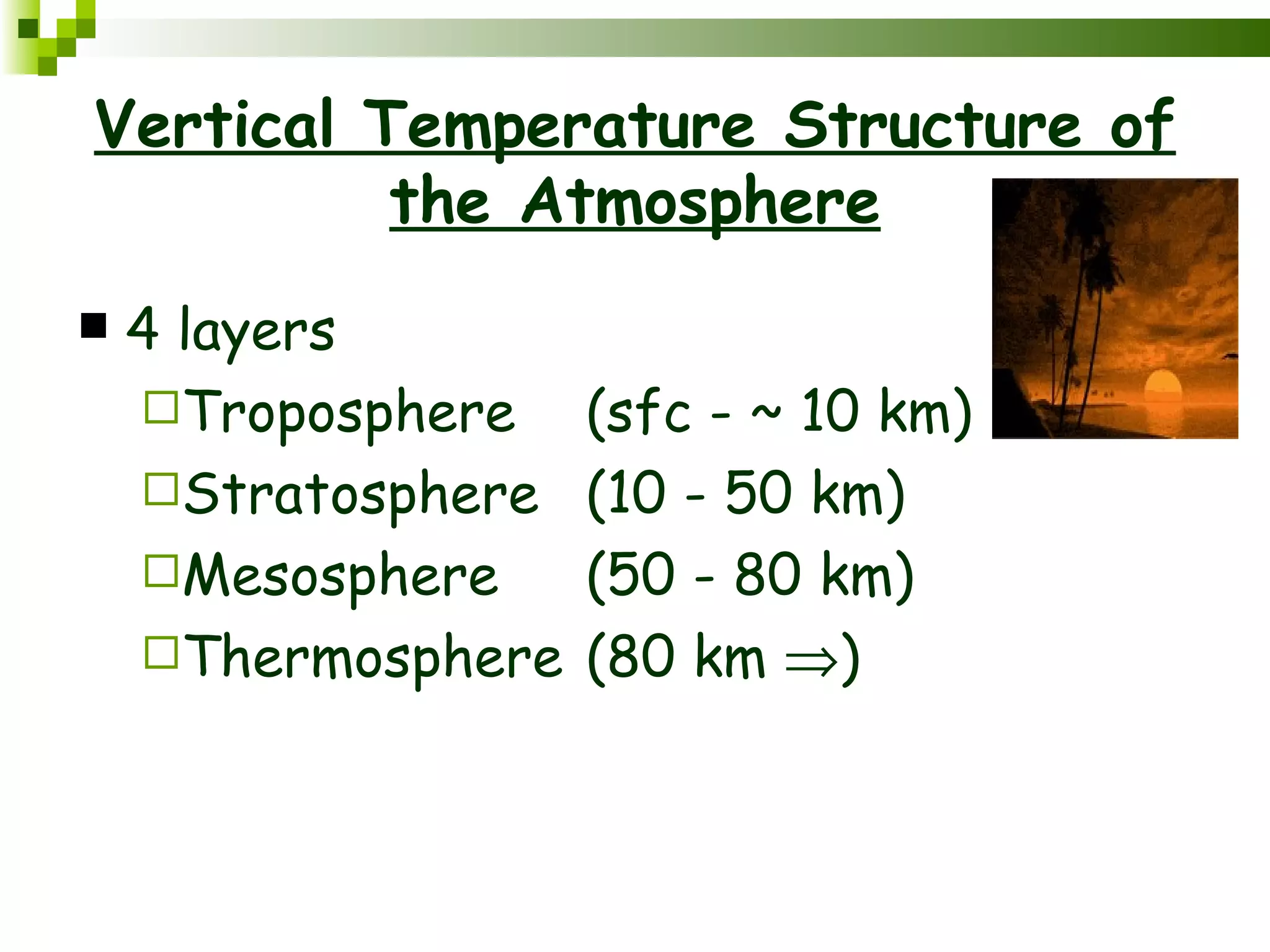
Vertical Temperature Structure of
          the Atmosphere
   4 layers
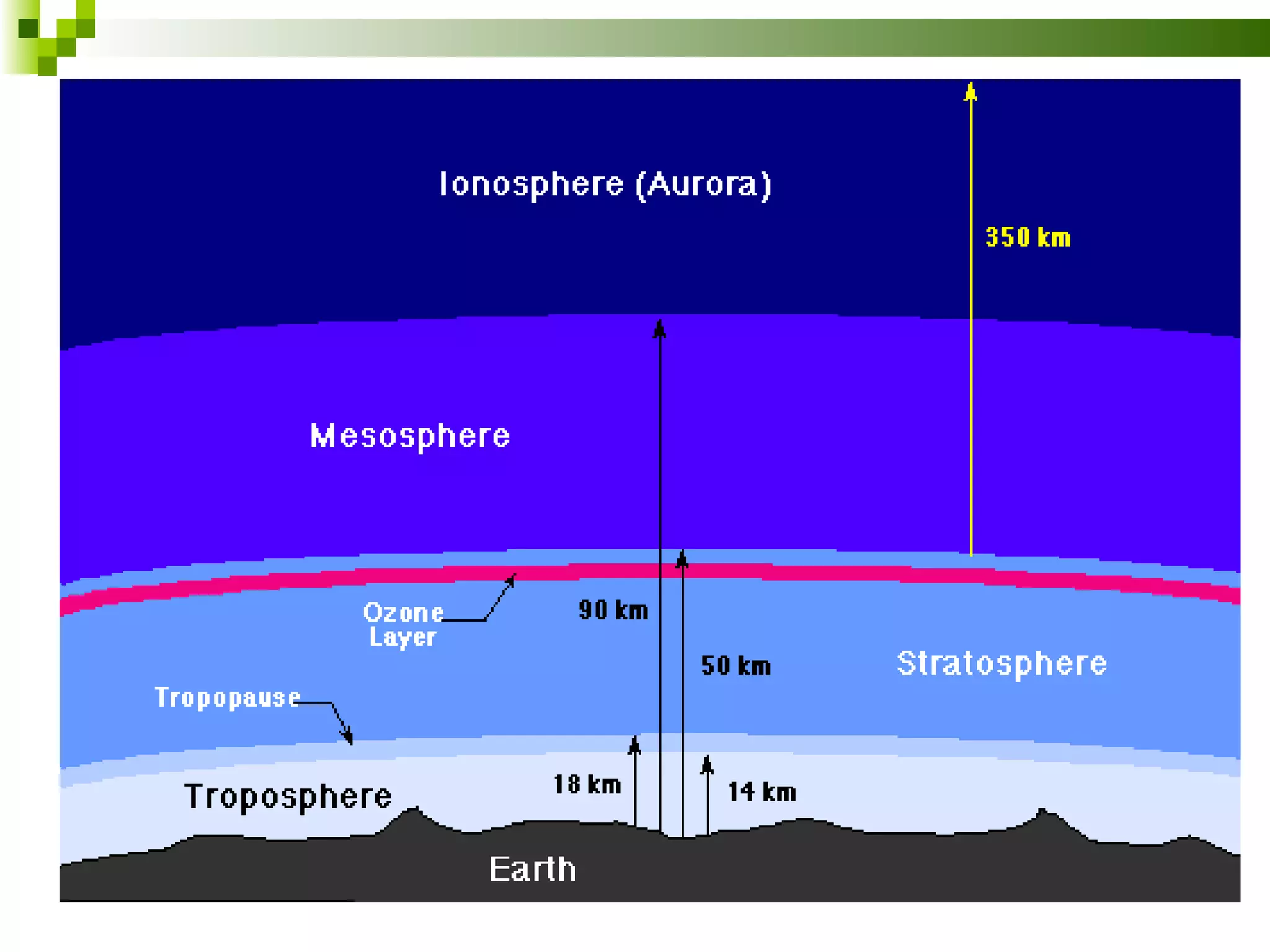
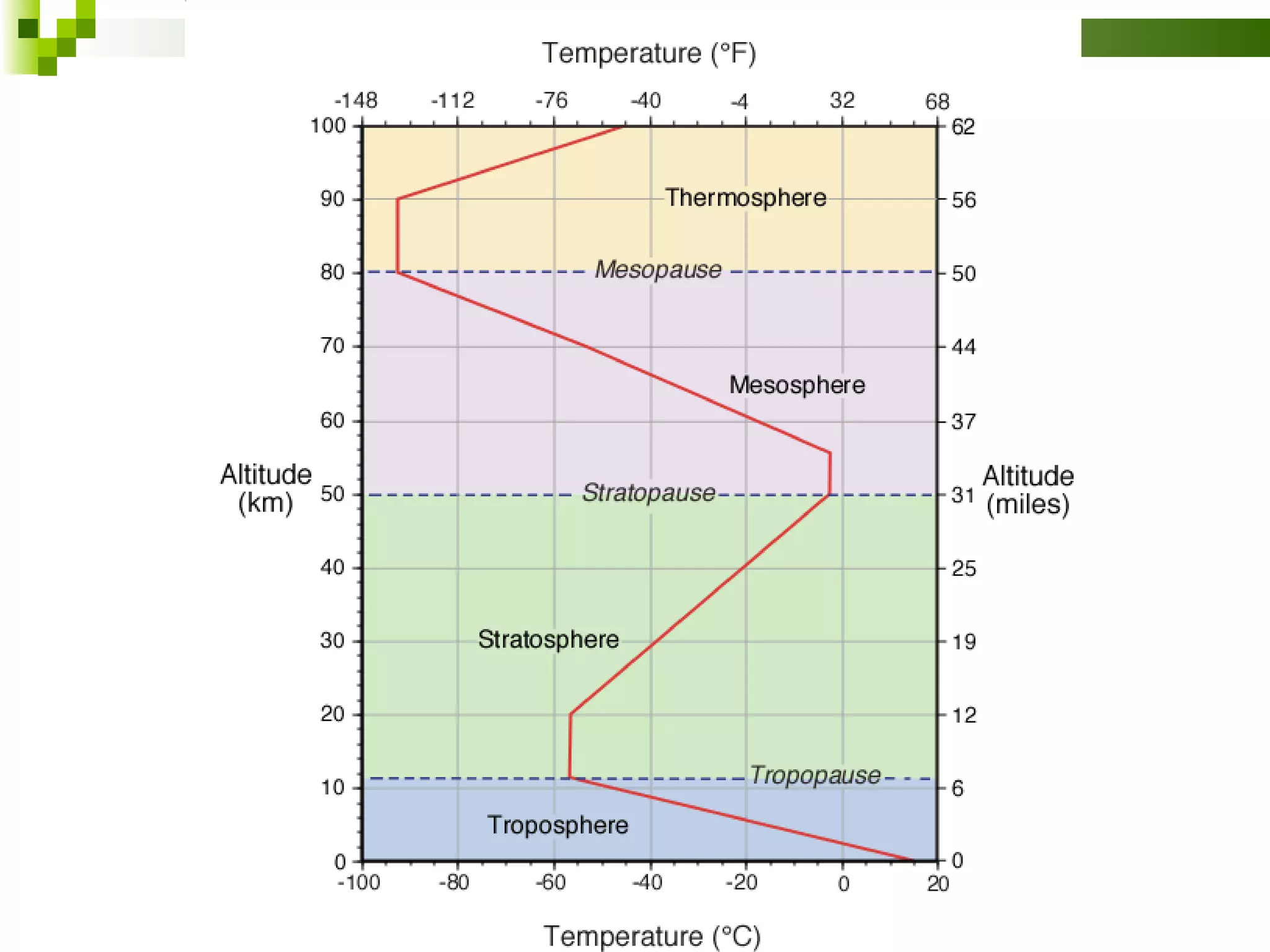
    Troposphere    (sfc - ~ 10 km)
    Stratosphere   (10 - 50 km)
    Mesosphere     (50 - 80 km)
    Thermosphere   (80 km ⇒)
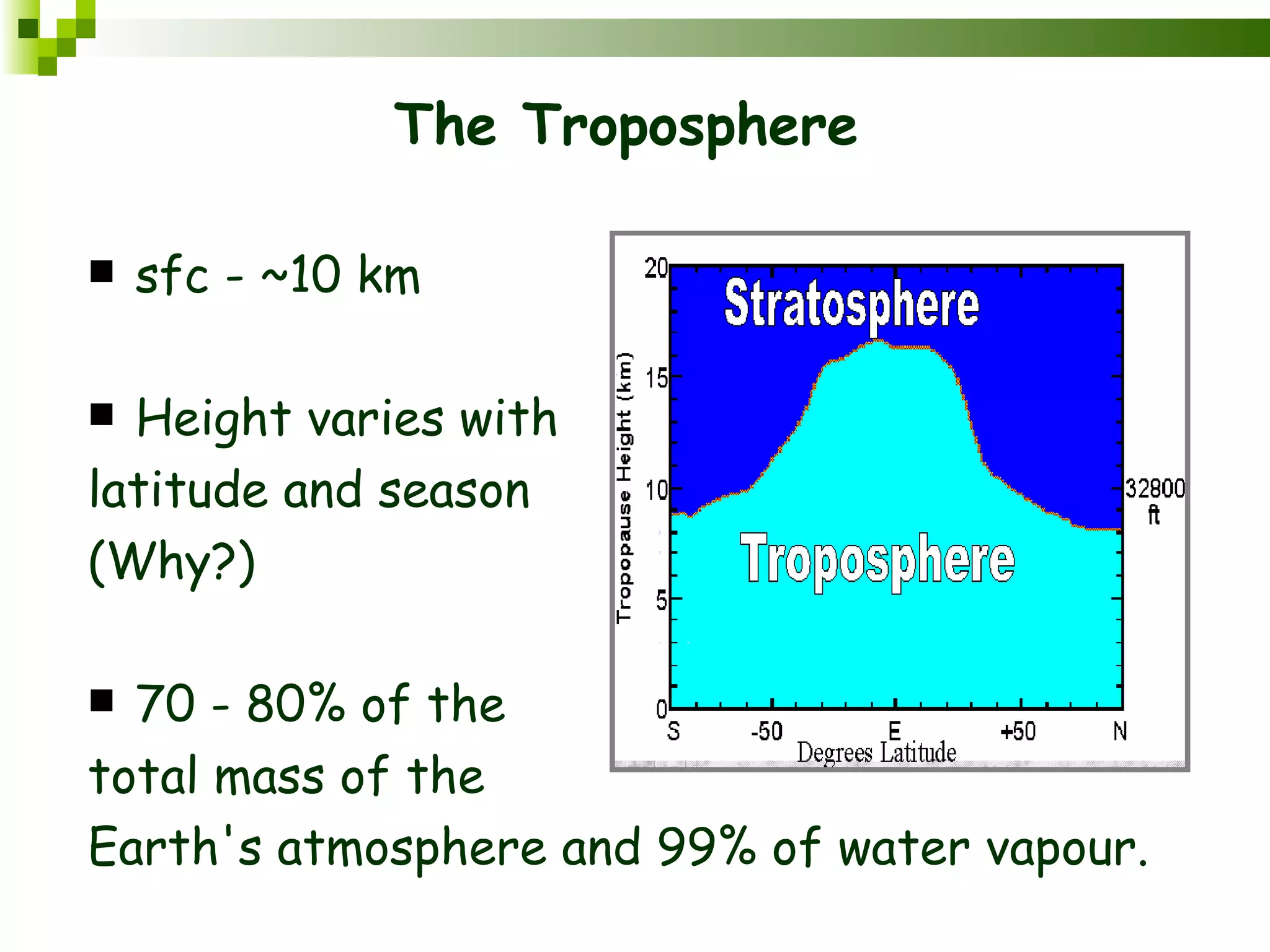
The Troposphere

   sfc - ~10 km

 Height varies with
latitude and season
(Why?)

 70 - 80% of the
total mass of the
Earth's atmosphere and 99% of water vapour.
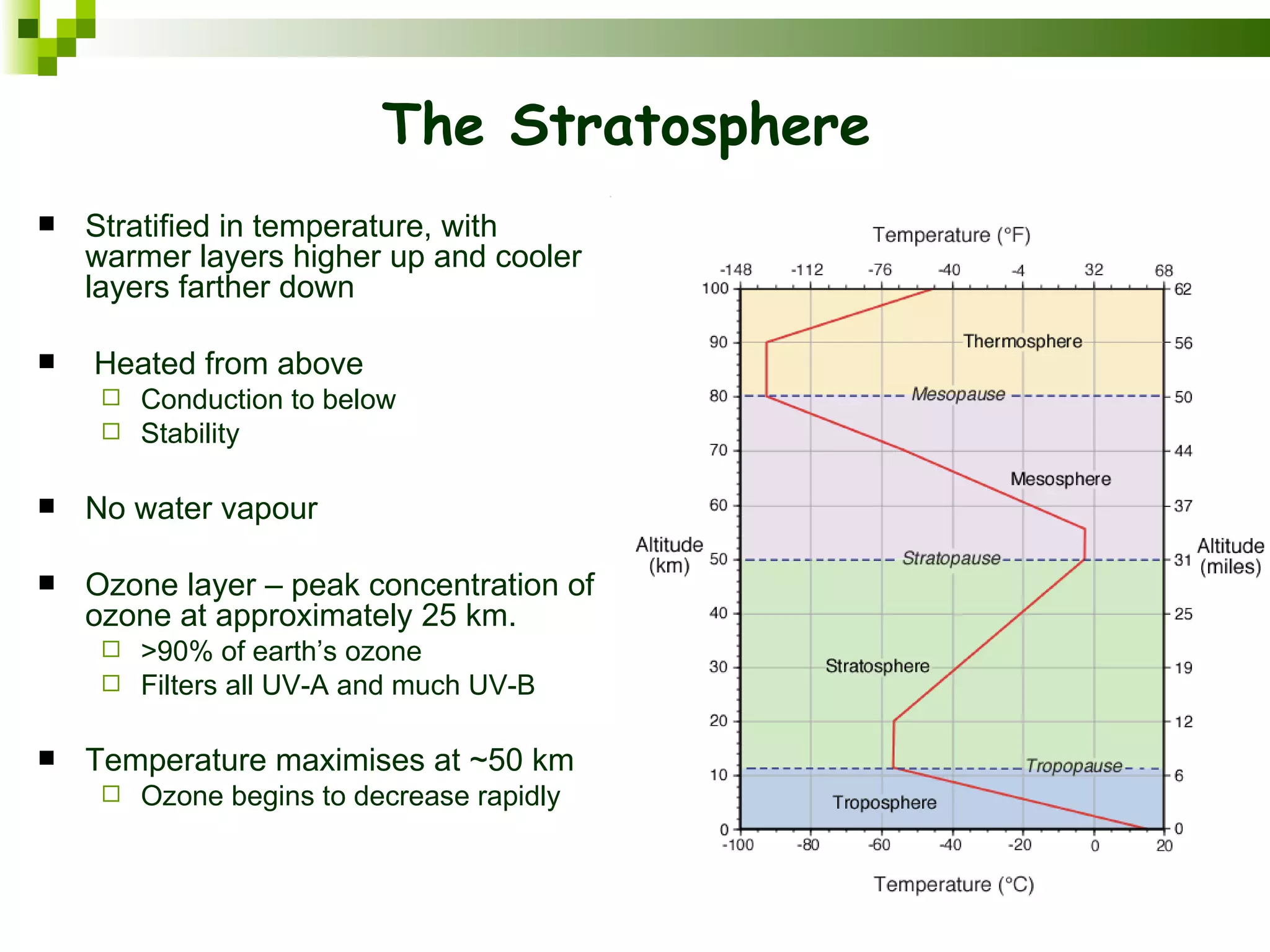
The Stratosphere
   Stratified in temperature, with
    warmer layers higher up and cooler
    layers farther down

   Heated from above
      Conduction to below
      Stability


   No water vapour

   Ozone layer – peak concentration of
    ozone at approximately 25 km.
      >90% of earth’s ozone
      Filters all UV-A and much UV-B


   Temperature maximises at ~50 km
        Ozone begins to decrease rapidly
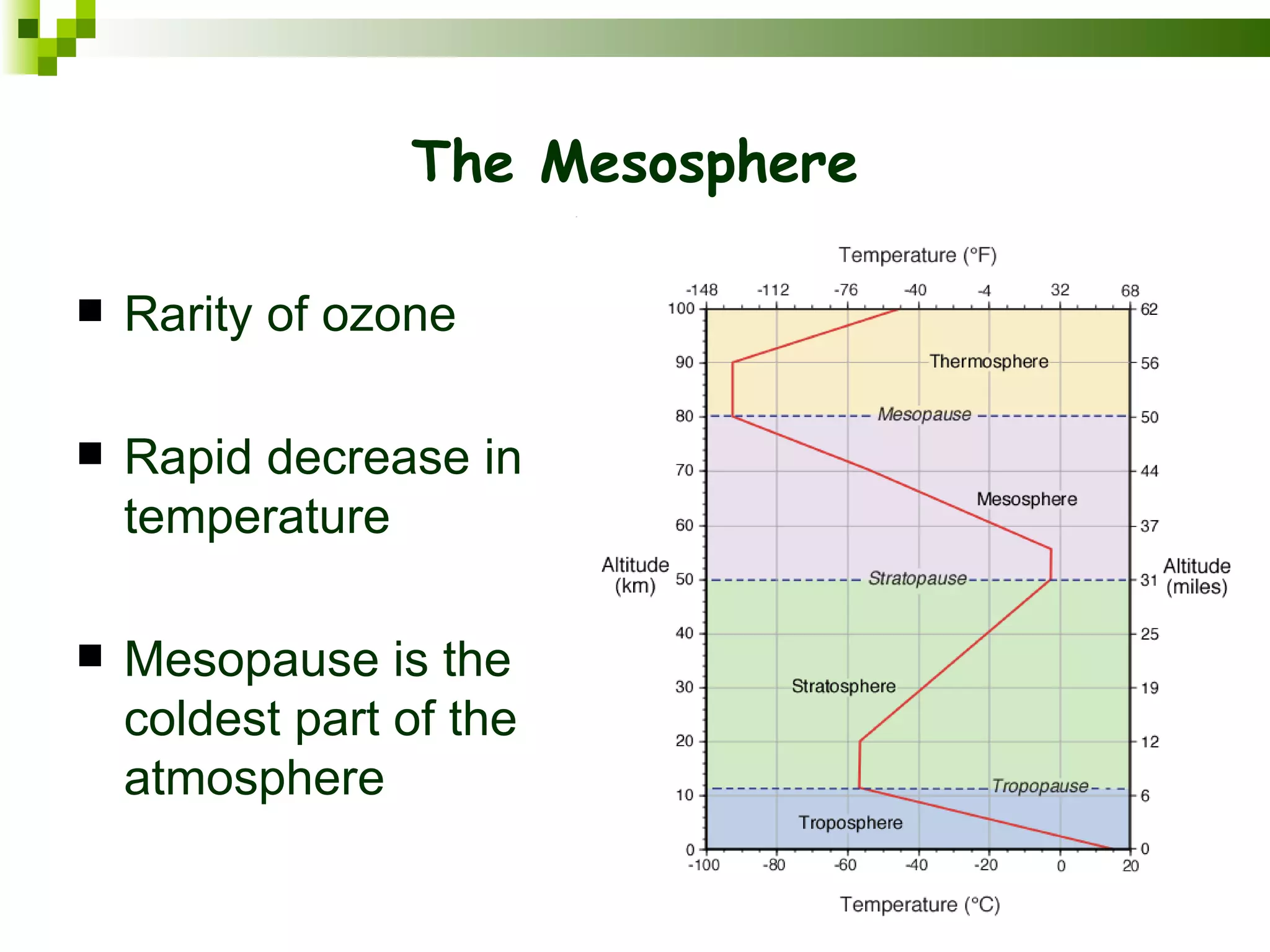
The Mesosphere

   Rarity of ozone

   Rapid decrease in
    temperature

   Mesopause is the
    coldest part of the
    atmosphere
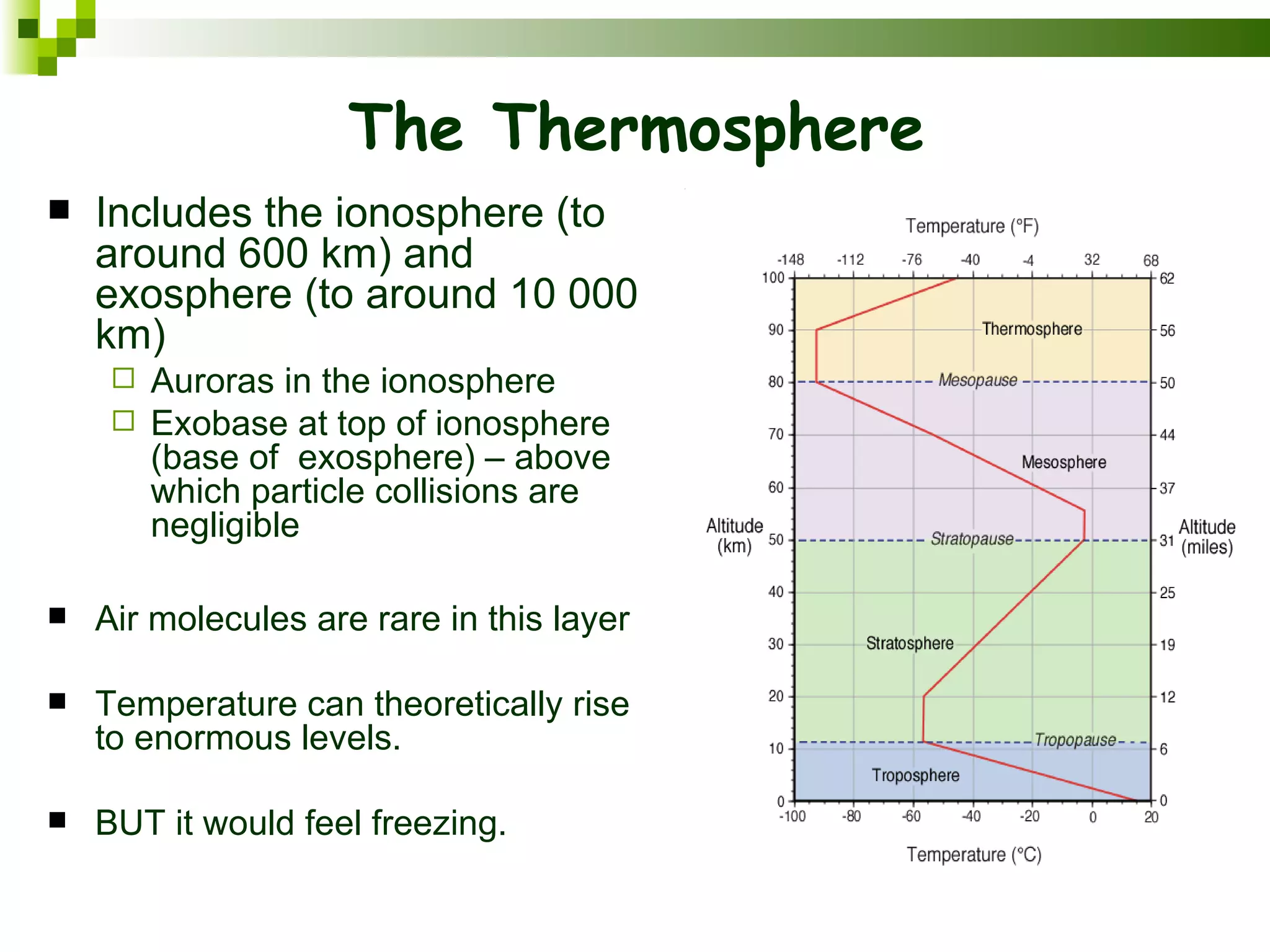
The Thermosphere
   Includes the ionosphere (to
    around 600 km) and
    exosphere (to around 10 000
    km)
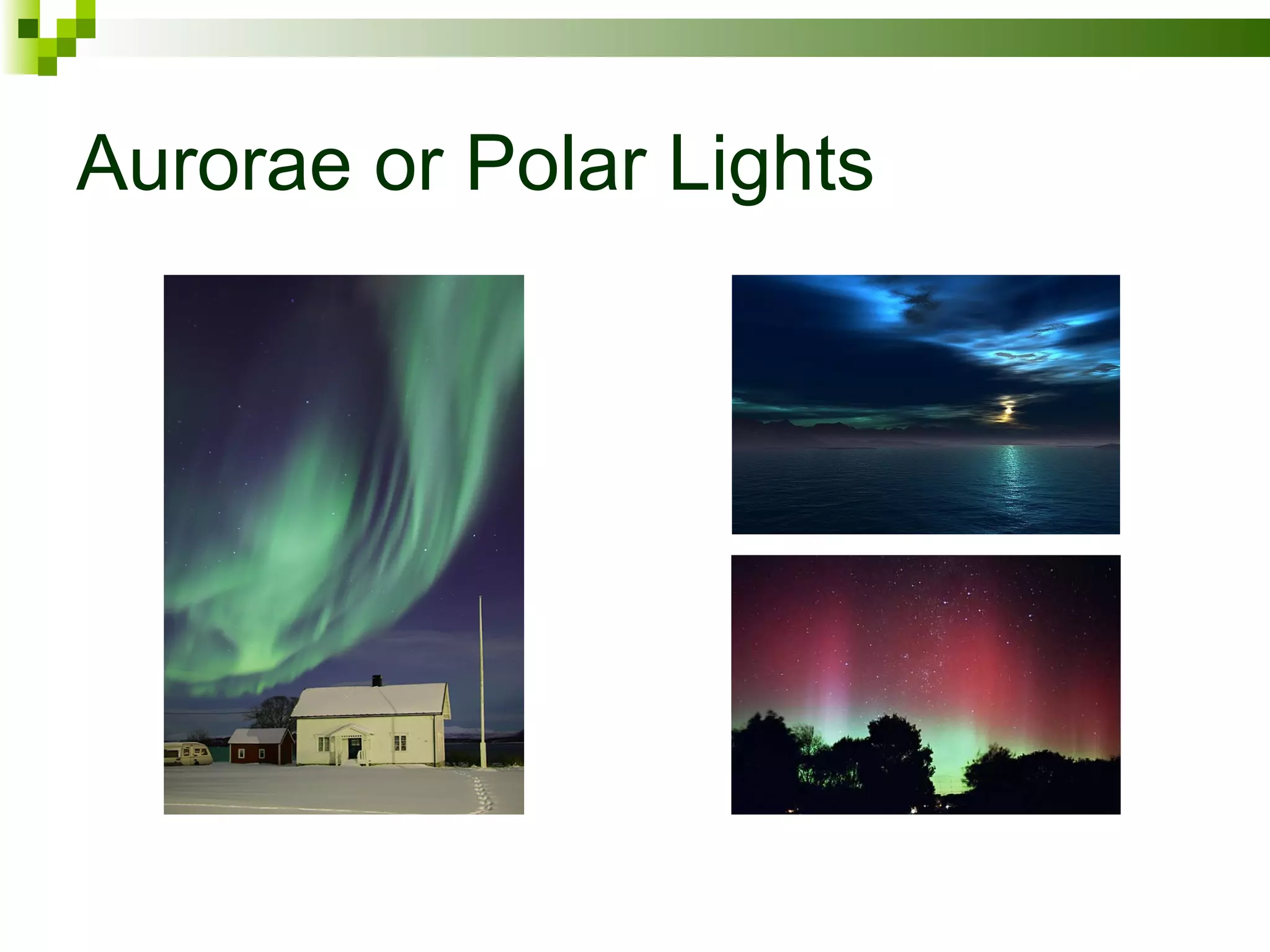
      Auroras in the ionosphere
      Exobase at top of ionosphere
       (base of exosphere) – above
       which particle collisions are
       negligible

   Air molecules are rare in this layer

   Temperature can theoretically rise
    to enormous levels.

   BUT it would feel freezing.
Aurorae or Polar Lights
THANK YOU

Structure of atmosphere by Muhammad Fahad Ansari 12IEEM14

  • 1.
  • 2.
    Intro of the ATMOSPHERE Composition of the atmosphere Vertical temperature structure
  • 3.
    Composition of Air Airis a mechanical mixture of gases - not a chemical compound Constituent % by Volume  Nitrogen (N2) 78.08  Oxygen (O2) 20.95  Argon (Ar) 0.93  Carbon dioxide (CO2) 0.0325 Comprise 99.98% of total.
  • 5.
    Composition of Air(dry) Constituent % by Volume  Nitrogen (N2) 78.08  Oxygen (O2) 20.95  Argon (Ar) 0.93  Carbon dioxide (CO2) 0.0325  Neon (Ne) 0.0018  Helium (He) 0.0005  Krypton (Kr) 0.0001  Ozone (O3) 0.0006  Hydrogen (H2) 0.00005  Trace gases are those with a concentration of <0.1%. Important for life on earth.
  • 6.
    COMPOSITION OF THE ATMOSPHERE GASES WATER VAPOUR DUST PARTICLES
  • 7.
    THREE CATEGORIES OFATMOSPHERIC COMPONENTS 1) Constant gases Nitrogen, Oxygen Three Categories Argon Carbon dioxide •Constant gases Neon •Variable gases Helium •Particulates Krypton Hydrogen Ozone 2) Variable gases introduced by biological and industrial activities (NO2, NO, SO2, etc.)  Water vapour is a variable gas. Varies between 1-4%. 3) Particulates are suspended particles of sea salt, dust, smoke etc.
  • 8.
    Particulate Matter  PM10, PM2.5, PM1, TSP, UFP  "Inhalable coarse particles" such as those found near roadways and dusty industries, are larger than 2.5 micrometers and smaller than 10 micrometers in diameter. Deposited in the lungs – breathing difficulties, trigger of asthma  "Respirable Fine particles," such as those found in smoke and haze, are 2.5 micrometers in diameter and smaller. These particles can be directly emitted from sources such as forest fires, or they can form when gases emitted from power plants, industries and automobiles react in the air. Enter the bloodstream – laid down as plaques in the cardiovascular system
  • 9.
    We’ve now coveredatmospheric composition… now a look at the structure of the atmosphere…
  • 10.
    Vertical Temperature Structureof the Atmosphere  4 layers Troposphere (sfc - ~ 10 km) Stratosphere (10 - 50 km) Mesosphere (50 - 80 km) Thermosphere (80 km ⇒)
  • 13.
    The Troposphere  sfc - ~10 km  Height varies with latitude and season (Why?)  70 - 80% of the total mass of the Earth's atmosphere and 99% of water vapour.
  • 14.
    The Stratosphere  Stratified in temperature, with warmer layers higher up and cooler layers farther down  Heated from above  Conduction to below  Stability  No water vapour  Ozone layer – peak concentration of ozone at approximately 25 km.  >90% of earth’s ozone  Filters all UV-A and much UV-B  Temperature maximises at ~50 km  Ozone begins to decrease rapidly
  • 15.
    The Mesosphere  Rarity of ozone  Rapid decrease in temperature  Mesopause is the coldest part of the atmosphere
  • 16.
    The Thermosphere  Includes the ionosphere (to around 600 km) and exosphere (to around 10 000 km)  Auroras in the ionosphere  Exobase at top of ionosphere (base of exosphere) – above which particle collisions are negligible  Air molecules are rare in this layer  Temperature can theoretically rise to enormous levels.  BUT it would feel freezing.
  • 17.
  • 18.