Downloaded 45 times
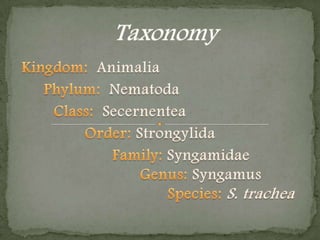
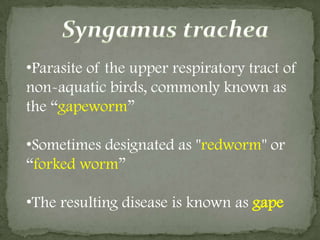
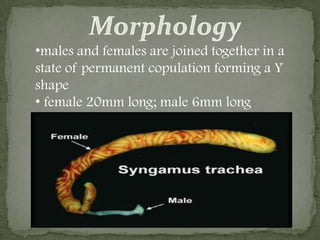
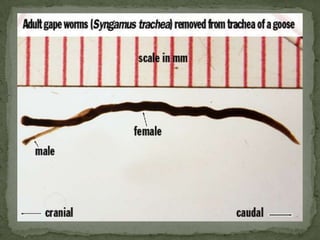
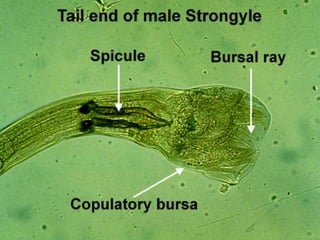
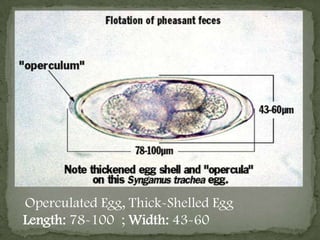
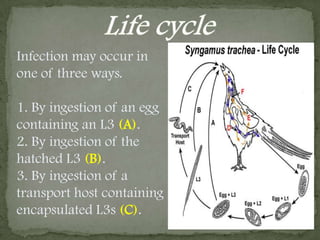
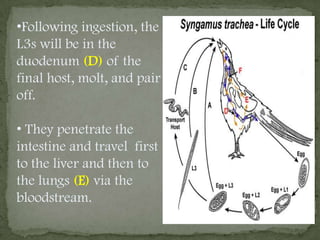
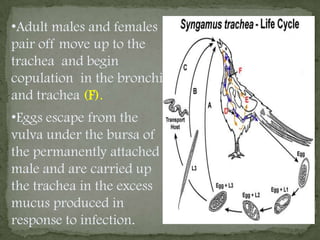
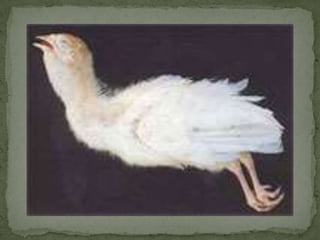


Syngamus trachea, commonly known as the gapeworm, is a parasitic nematode that infects the upper respiratory tract of birds. It has a complex life cycle involving an intermediate host such as an earthworm or snail where it encysts. Adult male and female worms are permanently joined in a Y-shape in the trachea of birds. They lay eggs that pass in the feces and hatch inside or outside the host. Clinical signs in infected birds include weakness, emaciation, and breathing difficulties as the worms cause tracheitis and pneumonia. Diagnosis is made by finding the characteristic eggs in feces or adult worms in the trachea during necropsy. Treatment involves deworming medications and controlling


