Stroke Assessment
Prepared by:
Luke Winkelman
NRP, EMS-I
Contributing credit: Bill Milan NREMT-P,
CCEMT-P
Objectives
• Discuss Cerebrovascular Accidents
• Discuss risk factors for CVA’S
• Discuss S/S of CVA’S
• Discuss common types of CVA’S
• Discuss Treatment of CVA’S
Objectives
• Discuss Cincinnati Prehospital Stroke
Scale
• Discuss Los Angeles Prehospital Stroke
Scale
Cerebrovascular Accident
(CVA or Stroke)
• Is a sudden interruption of blood flow to
the brain that results in neurological
deficit
• Similar to a heart attack Time is BRAIN!
Stats
3rd
Leading cause of death in the U.S.
More than 140,000
people die each
year from stroke in
the United States.
http://www.strokecenter.org/patients/about-stroke/stroke-statistics/
Stats
• Strokes can and do occur at
ANY age. Nearly one fourth of
strokes occur in people under
the age of 65.
• Stroke is the leading cause of
serious, long-term disability in
the United States.
• Each year, approximately
795,000 people suffer a stroke. 
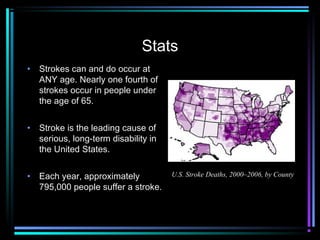
U.S. Stroke Deaths, 2000–2006, by County
CVA or Stroke is a
TRUE MEDICAL EMERGENCY
Risk Factors for CVA’S
• Hypertenstion
• Diabetes Mellitus
• Arterosclerosis
• African descent
• Irregular heartbeat
• Hyperlipidemia
• Polycythemia
• Cardiac Disease
• Age >55
• Smoking
Signs and Symptoms of CVA’S
• Weakness
• Altered LOC
• Dizziness or Vertigo
• Visual Disturbances
• Facial Numbness
• Severe Headache
• Convulsions/Seizure
• Incontinence
• Nausea/vomiting
• Dysarthria (Slurred
speech
• Aphasia (Loss of
speech)
• Hemiparesis or
Hemiplegia on opposite
side of affected area of
the brain*
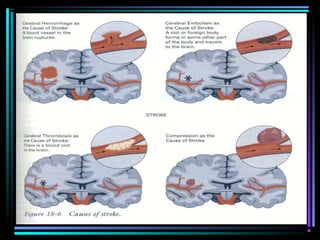
Most common causes of CVA’S
• Cerebral Thrombosis
• Cerebral Embolus
• Cerebral Hemorrhage
Transient Ischemic Attack (TIA)
• Referred to as little or mini Strokes
• Symptoms usually last 1-2 hours then
resolve (sometimes as long as 24h)
• Precursor to a CVA within 2 yrs of onset
of TIA
• A “Sign of things to come”
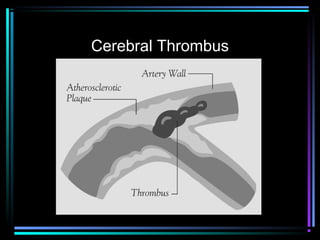
Cerebral Thrombus
Cerebral Thrombosis
• Clot forms at blockage site
• Most common type of CVA
• Commonly occurs at night with pt.
Awakening with Altered LOC, or loss of
speech, sensory, or motor function
Cerebral Thrombosis Con’t
• Usually associtated with long HX of
vessel disease (Atherosclerosis/
Arterosclerosis)
• S/S are usually slow to develop
Cerebral Embolus
• Clot/foreign particle travels to blockage
• Embolus generally originates in neck or
heart and travels till it reaches the brain.
• Most common types of Embolus are:
Clotted blood, Air bubbles, tumor
fragments, or fat particles.
Cerebral Embolus Con’t
• Symptoms usually occur when pt. Is
awake and active.
• S/S usually more rapid to develop and
have identifiable causes( I.E. A-Fib,
Valvular Heart disease)
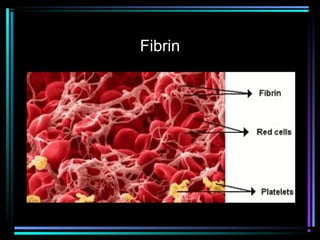
Fibrin
• Rapid Assessment
and Transport is
very important
• There is a 3 hour
window from onset
of symptoms to
Fibrinolytic therapy
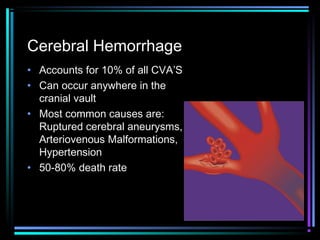
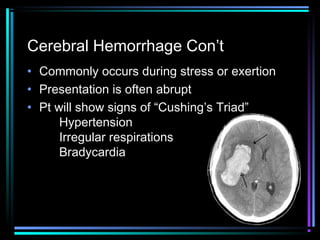
Cerebral Hemorrhage
• Accounts for 10% of all CVA’S
• Can occur anywhere in the
cranial vault
• Most common causes are:
Ruptured cerebral aneurysms,
Arteriovenous Malformations,
Hypertension
• 50-80% death rate
Cerebral Hemorrhage Con’t
• Commonly occurs during stress or exertion
• Presentation is often abrupt
• Pt will show signs of “Cushing’s Triad”
Hypertension
Irregular respirations
Bradycardia
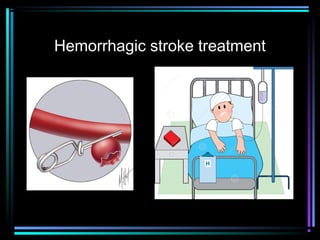
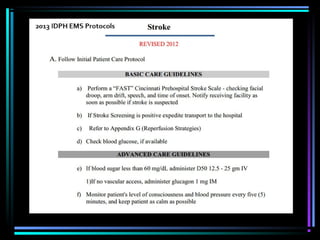
Hemorrhagic stroke treatment
Assessment of CVA Patient
• Universal Precautions
• Scene Safety
• Initial Impression of patient
• ABC’S
Assessment of CVA Patient Con’t
• Oxygen therapy if <94% and ventilatory
support if needed adjunct.
• Prehospital Screening (Cincinnati
Prehospital Screening Scale, Los
Angeles Prehospital Screening Scale)
• Obtain IV of NS or LR or Saline Lock,
as few attempts as possible.
Assessment of CVA patient Con’t
• Check blood sugar and treat if indicated
• Cardiac monitor including 12 lead ECG
• Elevate head 15 degrees to facilitate
venous drainage if not contraindicated.
• Rapid transport
• Notify ER as soon as possible of
incoming CVA patient
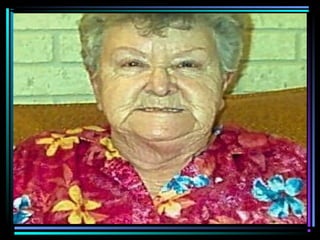
Cincinnati Prehospital Stroke
Screening
• Check for facial drooping have patient
smile or show teeth.
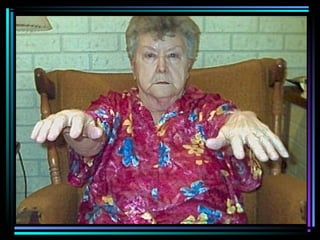
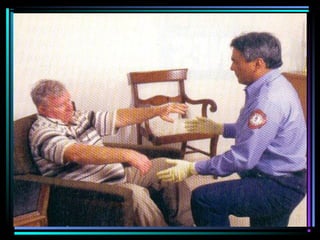
Check for arm drift by having
patient close eyes and hold arms
out for 10 seconds
Have the Patient say a phrase to see if
there is any abnormal speech pattern.
Such as:
“You can’t teach an old dog new tricks”
Cincinnati Prehospital Stroke
Screening
• Patients with 1 of these 3 findings -as aas a
new eventnew event - have a 72% probability of
an ischemic stroke.
• If all 3 findings are present the
probability of an acute stroke is more
than 85%
Another Prehospital Stroke Screening tool is the
Los Angeles Prehospital Stroke Screening that is a
check list of yes or no
Los Angeles Prehospital Stroke
Screening
• Age Greater than 45
• Hx of seizures or epilepsy
• Symptoms duration less than 24 hours
• Pt. Not wheelchair or bed ridden
• Blood glucose between 60-400
• Facial droop, grip alterations, or loss of
arm strength
Los Angeles Prehospital Stroke
Screening
• 97% of the patients with a positive
LAPSS will have a stroke
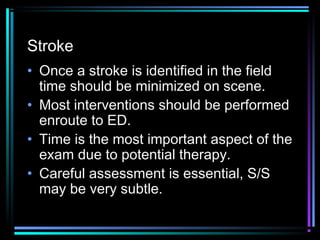
Stroke
• Once a stroke is identified in the field
time should be minimized on scene.
• Most interventions should be performed
enroute to ED.
• Time is the most important aspect of the
exam due to potential therapy.
• Careful assessment is essential, S/S
may be very subtle.
Summary
Early detection and transport of CVA/TIA will
have a dramatic effect of the mortality and
morbidity of patients. Using the Cincinnati
Stroke Scale or Los Angeles Stroke Scale an
EMS provider can quickly and accurately
access the neurological status of a patient
presenting with CVA/TIA Signs and
symptoms and should transport rapidly to
decrease time to treatment.
Questions?

Stroke Assessment

  • 1.
    Stroke Assessment Prepared by: LukeWinkelman NRP, EMS-I Contributing credit: Bill Milan NREMT-P, CCEMT-P
  • 2.
    Objectives • Discuss CerebrovascularAccidents • Discuss risk factors for CVA’S • Discuss S/S of CVA’S • Discuss common types of CVA’S • Discuss Treatment of CVA’S
  • 3.
    Objectives • Discuss CincinnatiPrehospital Stroke Scale • Discuss Los Angeles Prehospital Stroke Scale
  • 4.
    Cerebrovascular Accident (CVA orStroke) • Is a sudden interruption of blood flow to the brain that results in neurological deficit • Similar to a heart attack Time is BRAIN!
  • 5.
    Stats 3rd Leading cause ofdeath in the U.S. More than 140,000 people die each year from stroke in the United States. http://www.strokecenter.org/patients/about-stroke/stroke-statistics/
  • 6.
    Stats • Strokes canand do occur at ANY age. Nearly one fourth of strokes occur in people under the age of 65. • Stroke is the leading cause of serious, long-term disability in the United States. • Each year, approximately 795,000 people suffer a stroke.  U.S. Stroke Deaths, 2000–2006, by County
  • 7.
    CVA or Strokeis a TRUE MEDICAL EMERGENCY
  • 8.
    Risk Factors forCVA’S • Hypertenstion • Diabetes Mellitus • Arterosclerosis • African descent • Irregular heartbeat • Hyperlipidemia • Polycythemia • Cardiac Disease • Age >55 • Smoking
  • 9.
    Signs and Symptomsof CVA’S • Weakness • Altered LOC • Dizziness or Vertigo • Visual Disturbances • Facial Numbness • Severe Headache • Convulsions/Seizure • Incontinence • Nausea/vomiting • Dysarthria (Slurred speech • Aphasia (Loss of speech) • Hemiparesis or Hemiplegia on opposite side of affected area of the brain*
  • 10.
    Most common causesof CVA’S • Cerebral Thrombosis • Cerebral Embolus • Cerebral Hemorrhage
  • 11.
    Transient Ischemic Attack(TIA) • Referred to as little or mini Strokes • Symptoms usually last 1-2 hours then resolve (sometimes as long as 24h) • Precursor to a CVA within 2 yrs of onset of TIA • A “Sign of things to come”
  • 12.
  • 13.
    Cerebral Thrombosis • Clotforms at blockage site • Most common type of CVA • Commonly occurs at night with pt. Awakening with Altered LOC, or loss of speech, sensory, or motor function
  • 14.
    Cerebral Thrombosis Con’t •Usually associtated with long HX of vessel disease (Atherosclerosis/ Arterosclerosis) • S/S are usually slow to develop
  • 15.
    Cerebral Embolus • Clot/foreignparticle travels to blockage • Embolus generally originates in neck or heart and travels till it reaches the brain. • Most common types of Embolus are: Clotted blood, Air bubbles, tumor fragments, or fat particles.
  • 16.
    Cerebral Embolus Con’t •Symptoms usually occur when pt. Is awake and active. • S/S usually more rapid to develop and have identifiable causes( I.E. A-Fib, Valvular Heart disease)
  • 17.
  • 18.
    • Rapid Assessment andTransport is very important • There is a 3 hour window from onset of symptoms to Fibrinolytic therapy
  • 19.
    Cerebral Hemorrhage • Accountsfor 10% of all CVA’S • Can occur anywhere in the cranial vault • Most common causes are: Ruptured cerebral aneurysms, Arteriovenous Malformations, Hypertension • 50-80% death rate
  • 20.
    Cerebral Hemorrhage Con’t •Commonly occurs during stress or exertion • Presentation is often abrupt • Pt will show signs of “Cushing’s Triad” Hypertension Irregular respirations Bradycardia
  • 21.
  • 23.
    Assessment of CVAPatient • Universal Precautions • Scene Safety • Initial Impression of patient • ABC’S
  • 24.
    Assessment of CVAPatient Con’t • Oxygen therapy if <94% and ventilatory support if needed adjunct. • Prehospital Screening (Cincinnati Prehospital Screening Scale, Los Angeles Prehospital Screening Scale) • Obtain IV of NS or LR or Saline Lock, as few attempts as possible.
  • 25.
    Assessment of CVApatient Con’t • Check blood sugar and treat if indicated • Cardiac monitor including 12 lead ECG • Elevate head 15 degrees to facilitate venous drainage if not contraindicated. • Rapid transport • Notify ER as soon as possible of incoming CVA patient
  • 26.
    Cincinnati Prehospital Stroke Screening •Check for facial drooping have patient smile or show teeth.
  • 28.
    Check for armdrift by having patient close eyes and hold arms out for 10 seconds
  • 31.
    Have the Patientsay a phrase to see if there is any abnormal speech pattern. Such as: “You can’t teach an old dog new tricks”
  • 32.
    Cincinnati Prehospital Stroke Screening •Patients with 1 of these 3 findings -as aas a new eventnew event - have a 72% probability of an ischemic stroke. • If all 3 findings are present the probability of an acute stroke is more than 85%
  • 33.
    Another Prehospital StrokeScreening tool is the Los Angeles Prehospital Stroke Screening that is a check list of yes or no
  • 34.
    Los Angeles PrehospitalStroke Screening • Age Greater than 45 • Hx of seizures or epilepsy • Symptoms duration less than 24 hours • Pt. Not wheelchair or bed ridden • Blood glucose between 60-400 • Facial droop, grip alterations, or loss of arm strength
  • 35.
    Los Angeles PrehospitalStroke Screening • 97% of the patients with a positive LAPSS will have a stroke
  • 37.
    Stroke • Once astroke is identified in the field time should be minimized on scene. • Most interventions should be performed enroute to ED. • Time is the most important aspect of the exam due to potential therapy. • Careful assessment is essential, S/S may be very subtle.
  • 38.
    Summary Early detection andtransport of CVA/TIA will have a dramatic effect of the mortality and morbidity of patients. Using the Cincinnati Stroke Scale or Los Angeles Stroke Scale an EMS provider can quickly and accurately access the neurological status of a patient presenting with CVA/TIA Signs and symptoms and should transport rapidly to decrease time to treatment.
  • 39.