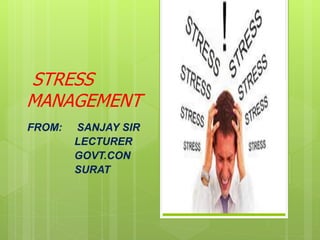
STRESS
MANAGEMENT
FROM: SANJAY SIR
LECTURER
GOVT.CON
SURAT
.
.
Stress in school Students
Too much stress can interfere with preparation,
concentration, and performance
Stress can lead to avoidance, poor performance,
or too high or low expectations for oneself
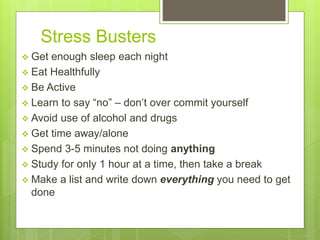
Stress Busters
 Get enough sleep each night
 Eat Healthfully
 Be Active
 Learn to say “no” – don’t over commit yourself
 Avoid use of alcohol and drugs
 Get time away/alone
 Spend 3-5 minutes not doing anything
 Study for only 1 hour at a time, then take a break

 Make a list and write down everything you need to get
done
Continue….
 Light exercise
 Healthy snacks
 Music
 Power naps
 Proper lighting
 Brain Breaks
Tips for Preparing
1. Prioritize
2. Talk to your professor
3. Look at previous exams
4. Get extra help
5. Set study rules with your friends
6. Utilize study groups
 What is the best time & place for Study?
 Early in Morning.
 After taking Break.
 After a short nap in afternoon.
 Study when you are interested.
 Do not study after taking heavy meal.
 Peaceful Environment.
 Proper Ventilation.
 Adequate Light.
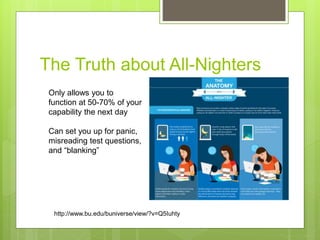
The Truth about All-Nighters
http://www.bu.edu/buniverse/view/?v=Q5Iuhty
Only allows you to
function at 50-70% of your
capability the next day
Can set you up for panic,
misreading test questions,
and “blanking”
Sleep Deprivation
Short Term Effects
 Poor concentration &
shortened attention
span
 Decreased ability to
retain information
 Weakened immune
system
Long Term Effects
 lack of interest in
taking food
 Reduced learning
ability
 Increase in anxiety
 Weight gain due to
over eating in stress
Tips for improving Concentration
 Sit at the Same place at the Same time for study,
so your mind is tuned to the environment.
 Put off all the distractions like Mobile, Tab, T.V.,
Computer.
 Tell your family members about your study time,
so they too do not disturb you.
 Postpone any calls from friends or neighbours
during study.
 Do the Difficult Subject first
 Start with the most Difficult Subject First.
 Avoid postponing the unpleasant task.
 Ask for help from your teachers, parents and
friends who are experts in the subject.
 At last revise the subject.
 Have a Positive Attitude
 Think, Feel & Safe your self as successful with
the mark you desire.
 Think and Feel good about yourself.
 It is never late to start.
 Stop comparing yourself with others.
 Affirm Positive Self Talk
 “ I can & I will.”
 “ Everything is Possible.”
 “I am the Champion.”
 “I am the Best.”
 “I trust & Believe in Myself.”
 “I Love & Accept Myself.”
 “Always Be Confident.”
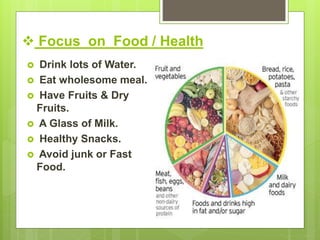
 Focus on Food / Health
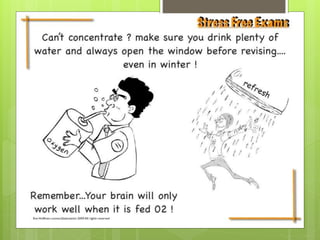
 Drink lots of Water.
 Eat wholesome meal.
 Have Fruits & Dry
Fruits.
 A Glass of Milk.
 Healthy Snacks.
 Avoid junk or Fast
Food.
STRESS & ITS MANAGEMENT

STRESS & ITS MANAGEMENT

  • 1.
  • 2.
  • 3.
  • 5.
    Stress in schoolStudents Too much stress can interfere with preparation, concentration, and performance Stress can lead to avoidance, poor performance, or too high or low expectations for oneself
  • 10.
    Stress Busters  Getenough sleep each night  Eat Healthfully  Be Active  Learn to say “no” – don’t over commit yourself  Avoid use of alcohol and drugs  Get time away/alone  Spend 3-5 minutes not doing anything  Study for only 1 hour at a time, then take a break  Make a list and write down everything you need to get done
  • 11.
    Continue….  Light exercise Healthy snacks  Music  Power naps  Proper lighting  Brain Breaks
  • 13.
    Tips for Preparing 1.Prioritize 2. Talk to your professor 3. Look at previous exams 4. Get extra help 5. Set study rules with your friends 6. Utilize study groups
  • 15.
     What isthe best time & place for Study?  Early in Morning.  After taking Break.  After a short nap in afternoon.  Study when you are interested.  Do not study after taking heavy meal.  Peaceful Environment.  Proper Ventilation.  Adequate Light.
  • 17.
    The Truth aboutAll-Nighters http://www.bu.edu/buniverse/view/?v=Q5Iuhty Only allows you to function at 50-70% of your capability the next day Can set you up for panic, misreading test questions, and “blanking”
  • 18.
    Sleep Deprivation Short TermEffects  Poor concentration & shortened attention span  Decreased ability to retain information  Weakened immune system Long Term Effects  lack of interest in taking food  Reduced learning ability  Increase in anxiety  Weight gain due to over eating in stress
  • 21.
    Tips for improvingConcentration  Sit at the Same place at the Same time for study, so your mind is tuned to the environment.  Put off all the distractions like Mobile, Tab, T.V., Computer.  Tell your family members about your study time, so they too do not disturb you.  Postpone any calls from friends or neighbours during study.
  • 23.
     Do theDifficult Subject first  Start with the most Difficult Subject First.  Avoid postponing the unpleasant task.  Ask for help from your teachers, parents and friends who are experts in the subject.  At last revise the subject.
  • 28.
     Have aPositive Attitude  Think, Feel & Safe your self as successful with the mark you desire.  Think and Feel good about yourself.  It is never late to start.  Stop comparing yourself with others.
  • 29.
     Affirm PositiveSelf Talk  “ I can & I will.”  “ Everything is Possible.”  “I am the Champion.”  “I am the Best.”  “I trust & Believe in Myself.”  “I Love & Accept Myself.”  “Always Be Confident.”
  • 33.
     Focus onFood / Health  Drink lots of Water.  Eat wholesome meal.  Have Fruits & Dry Fruits.  A Glass of Milk.  Healthy Snacks.  Avoid junk or Fast Food.