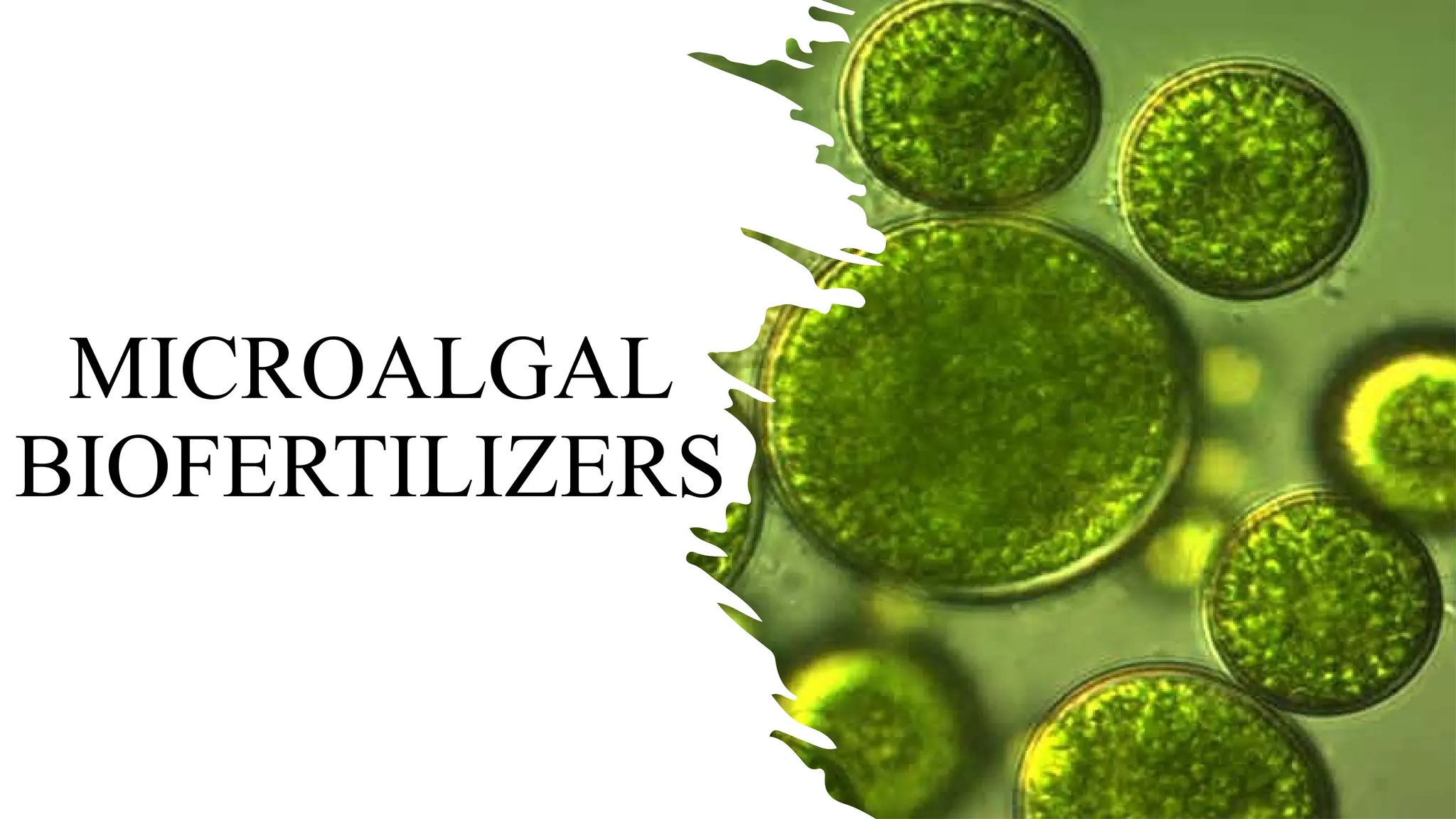
MICROALGAL
BIOFERTILIZERS
VIVEKANANDHA
ARTS AND SCIENCE COLLEGE FOR WOMEN
Veerachipalayam-637 303,Sankagiri,Salem Dt, Tamilnadu , India.
Affiliated to Periyar University Salem ; recognised under section 2(f)&12(b) of the
UGC act,1956
DEPARTMENT OF MICROBIOLOGY
SUBJECT: MICROALGAL TECHNOLOGY
TITLE : MICROALGAL BIOFERTILIZERS
SUBJECT INCHARGE :
Dr. DINESH KUMAR
Assistant professor
Department of Microbiology
VIAAS , Sankagiri .
SUBMITTED BY :
SWATHI .N
I M.sc Microbiology
Department of Microbiology
VIAAS , Sankagiri .
CONTENTS
• INTRODUCTION
• WHAT IS BIOFERTILIZER
• MICROORGANISMS USED
• MASS PRODUCTION & PROCESS
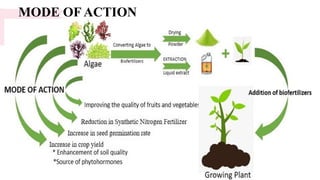
• MODE OF ACTION
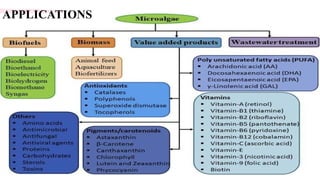
• APPLICATIONS
• ADVANTAGES
• DISADVANTAGES
INTRODUCTION
•Microalgae are microscopic, single-celled
photosynthetic organisms found in diverse aquatic
environments that perform photosynthesis to create
energy and produce oxygen, forming a crucial part of
the global ecosystem.
•Microalgae including cyanobacteria are very efficient
in sequestration and Assimilation of inorganic nitrogen
and phosphorus for the production of their biomass.
•They provide plants with essential nutrients like
nitrogen and phosphorus, Also supplying growth
promoting phytohormones and Secondary
metabolites like Amino acids and vitamins and
environmental sustainability.
•Microalgae can enhance soil fertility by increasing
the soil’s organic carbon content and improving its
overall structure and microbial community function.
WHAT IS BIOFERTILIZER
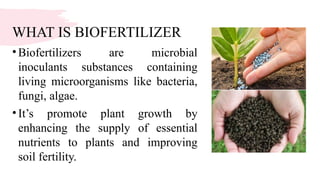
•Biofertilizers are microbial
inoculants substances containing
living microorganisms like bacteria,
fungi, algae.
•It’s promote plant growth by
enhancing the supply of essential
nutrients to plants and improving
soil fertility.
•Biofertilizers work through the symbiotic or free-
living activities of microorganisms in the soil like
Nutrient Fixation and Solubilization , Production of
Growth-Promoting Substances , Nutrient Mobilization,
Organic Matter Decomposition.
MICROORGANISMS USED
GREEN ALGAE:
Chlorella, Scenedesmus
CYANOBACTERIA ( BLUE GREEN ALGAE):
•Microalgae biofertilizers utilize beneficial microbes
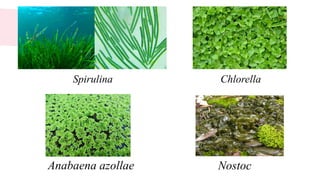
like Spirulina, Anabaena azollae,Nostoc, Aulosira.
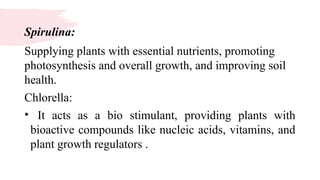
Spirulina:
Supplying plants with essential nutrients, promoting
photosynthesis and overall growth, and improving soil
health.
Chlorella:
• It acts as a bio stimulant, providing plants with
bioactive compounds like nucleic acids, vitamins, and
plant growth regulators .
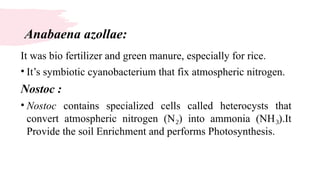
Anabaena azollae:
It was bio fertilizer and green manure, especially for rice.
• It’s symbiotic cyanobacterium that fix atmospheric nitrogen.
Nostoc :
• Nostoc contains specialized cells called heterocysts that
convert atmospheric nitrogen (N ) into ammonia (NH ).It
₂ ₃
Provide the soil Enrichment and performs Photosynthesis.
Spirulina Chlorella
Anabaena azollae Nostoc
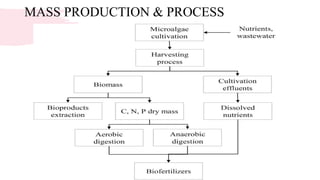
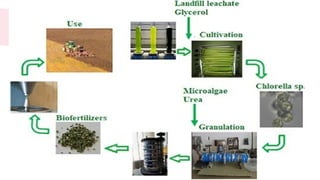
MASS PRODUCTION & PROCESS
MODE OF ACTION
APPLICATIONS
ADVANTAGES
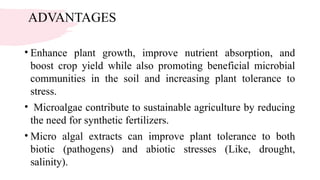
• Enhance plant growth, improve nutrient absorption, and
boost crop yield while also promoting beneficial microbial
communities in the soil and increasing plant tolerance to
stress.
• Microalgae contribute to sustainable agriculture by reducing
the need for synthetic fertilizers.
• Micro algal extracts can improve plant tolerance to both
biotic (pathogens) and abiotic stresses (Like, drought,
salinity).
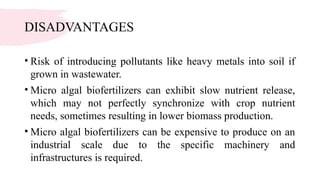
DISADVANTAGES
• Risk of introducing pollutants like heavy metals into soil if
grown in wastewater.
• Micro algal biofertilizers can exhibit slow nutrient release,
which may not perfectly synchronize with crop nutrient
needs, sometimes resulting in lower biomass production.
• Micro algal biofertilizers can be expensive to produce on an
industrial scale due to the specific machinery and
infrastructures is required.
REFERENCE
• https://share.google/20c9FxhrvHKl2Clll
• https://share.google/O7GwN73Ve7O3WpEq8
• https://share.google/DHwOmNkosXJZTIKth
• https://share.google/zLk61Lmpc3TFFsfcX
• https://share.google/xAabJgeNGEjkjfFr7
THANK
YOU

MICROALGAL BIOFERTILIZERS , Microalgal technology

  • 1.
  • 2.
    VIVEKANANDHA ARTS AND SCIENCECOLLEGE FOR WOMEN Veerachipalayam-637 303,Sankagiri,Salem Dt, Tamilnadu , India. Affiliated to Periyar University Salem ; recognised under section 2(f)&12(b) of the UGC act,1956 DEPARTMENT OF MICROBIOLOGY SUBJECT: MICROALGAL TECHNOLOGY TITLE : MICROALGAL BIOFERTILIZERS SUBJECT INCHARGE : Dr. DINESH KUMAR Assistant professor Department of Microbiology VIAAS , Sankagiri . SUBMITTED BY : SWATHI .N I M.sc Microbiology Department of Microbiology VIAAS , Sankagiri .
  • 3.
    CONTENTS • INTRODUCTION • WHATIS BIOFERTILIZER • MICROORGANISMS USED • MASS PRODUCTION & PROCESS • MODE OF ACTION • APPLICATIONS • ADVANTAGES • DISADVANTAGES
  • 4.
    INTRODUCTION •Microalgae are microscopic,single-celled photosynthetic organisms found in diverse aquatic environments that perform photosynthesis to create energy and produce oxygen, forming a crucial part of the global ecosystem. •Microalgae including cyanobacteria are very efficient in sequestration and Assimilation of inorganic nitrogen and phosphorus for the production of their biomass.
  • 5.
    •They provide plantswith essential nutrients like nitrogen and phosphorus, Also supplying growth promoting phytohormones and Secondary metabolites like Amino acids and vitamins and environmental sustainability. •Microalgae can enhance soil fertility by increasing the soil’s organic carbon content and improving its overall structure and microbial community function.
  • 6.
    WHAT IS BIOFERTILIZER •Biofertilizersare microbial inoculants substances containing living microorganisms like bacteria, fungi, algae. •It’s promote plant growth by enhancing the supply of essential nutrients to plants and improving soil fertility.
  • 7.
    •Biofertilizers work throughthe symbiotic or free- living activities of microorganisms in the soil like Nutrient Fixation and Solubilization , Production of Growth-Promoting Substances , Nutrient Mobilization, Organic Matter Decomposition.
  • 8.
    MICROORGANISMS USED GREEN ALGAE: Chlorella,Scenedesmus CYANOBACTERIA ( BLUE GREEN ALGAE): •Microalgae biofertilizers utilize beneficial microbes like Spirulina, Anabaena azollae,Nostoc, Aulosira.
  • 9.
    Spirulina: Supplying plants withessential nutrients, promoting photosynthesis and overall growth, and improving soil health. Chlorella: • It acts as a bio stimulant, providing plants with bioactive compounds like nucleic acids, vitamins, and plant growth regulators .
  • 10.
    Anabaena azollae: It wasbio fertilizer and green manure, especially for rice. • It’s symbiotic cyanobacterium that fix atmospheric nitrogen. Nostoc : • Nostoc contains specialized cells called heterocysts that convert atmospheric nitrogen (N ) into ammonia (NH ).It ₂ ₃ Provide the soil Enrichment and performs Photosynthesis.
  • 11.
  • 12.
  • 14.
  • 15.
  • 16.
    ADVANTAGES • Enhance plantgrowth, improve nutrient absorption, and boost crop yield while also promoting beneficial microbial communities in the soil and increasing plant tolerance to stress. • Microalgae contribute to sustainable agriculture by reducing the need for synthetic fertilizers. • Micro algal extracts can improve plant tolerance to both biotic (pathogens) and abiotic stresses (Like, drought, salinity).
  • 17.
    DISADVANTAGES • Risk ofintroducing pollutants like heavy metals into soil if grown in wastewater. • Micro algal biofertilizers can exhibit slow nutrient release, which may not perfectly synchronize with crop nutrient needs, sometimes resulting in lower biomass production. • Micro algal biofertilizers can be expensive to produce on an industrial scale due to the specific machinery and infrastructures is required.
  • 18.
    REFERENCE • https://share.google/20c9FxhrvHKl2Clll • https://share.google/O7GwN73Ve7O3WpEq8 •https://share.google/DHwOmNkosXJZTIKth • https://share.google/zLk61Lmpc3TFFsfcX • https://share.google/xAabJgeNGEjkjfFr7
  • 19.