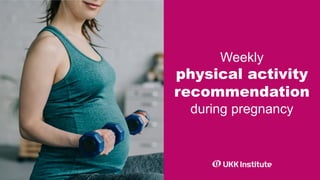
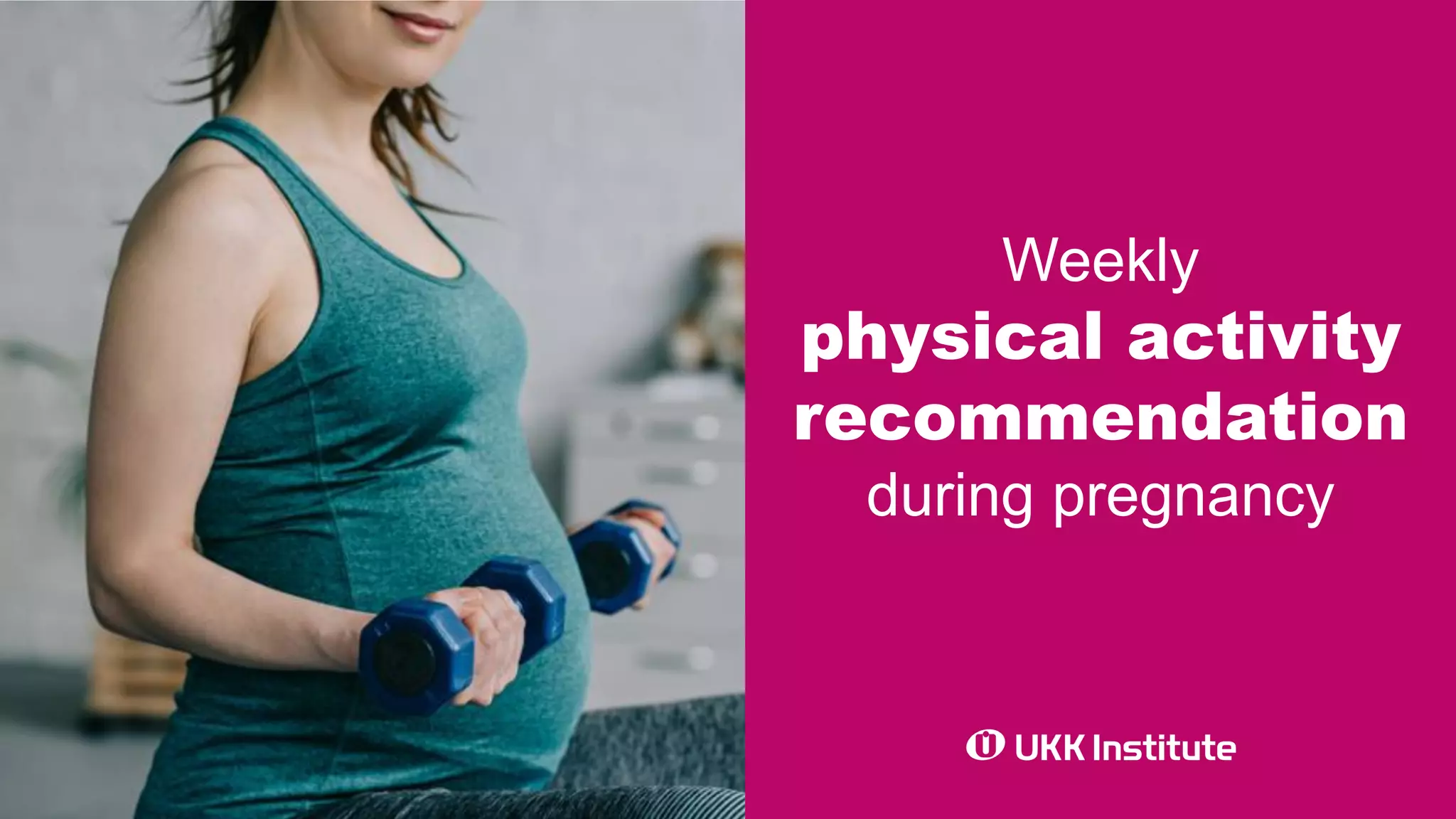
Weekly
physical activity
recommendation
during pregnancy
2
Regular physical activity
• improves physical fitness and helps to manage
pregnancy-induced physical strain
• speeds up the recovery after delivery
• affects positively to your mood
• helps to prevent excessive gestational weight gain and
decreases the risk of gestational diabetes.
Physical activity is not harmful to the baby.
3
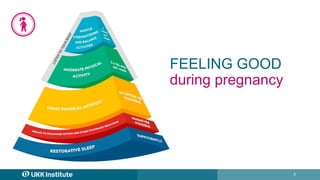
FEELING GOOD
during pregnancy
4
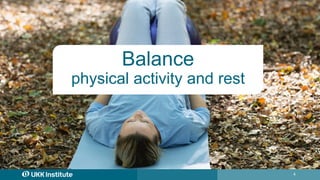
Balance
physical activity and rest
5
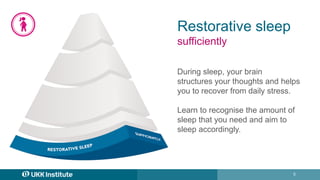
Restorative sleep
sufficiently
During sleep, your brain
structures your thoughts and helps
you to recover from daily stress.
Learn to recognise the amount of
sleep that you need and aim to
sleep accordingly.
6
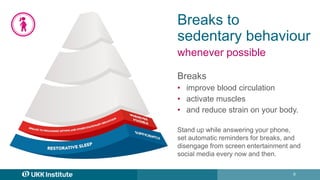
Breaks to
sedentary behaviour
whenever possible
Breaks
• improve blood circulation
• activate muscles
• and reduce strain on your body.
Stand up while answering your phone,
set automatic reminders for breaks, and
disengage from screen entertainment and
social media every now and then.
7
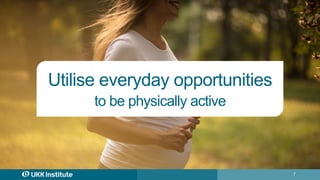
Utilise everyday opportunities
to be physically active
8
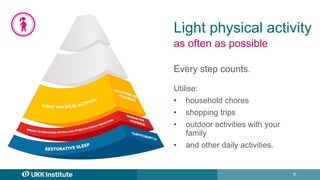
Light physical activity
as often as possible
Every step counts.
Utilise:
• household chores
• shopping trips
• outdoor activities with your
family
• and other daily activities.
9
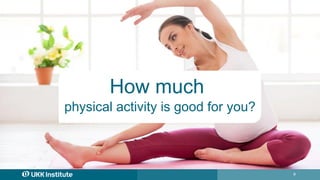
How much
physical activity is good for you?
10
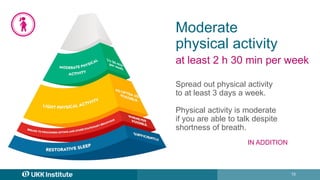
Moderate
physical activity
at least 2 h 30 min per week
Spread out physical activity
to at least 3 days a week.
Physical activity is moderate
if you are able to talk despite
shortness of breath.
IN ADDITION
11
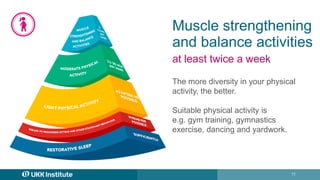
Muscle strengthening
and balance activities
at least twice a week
The more diversity in your physical
activity, the better.
Suitable physical activity is
e.g. gym training, gymnastics
exercise, dancing and yardwork.
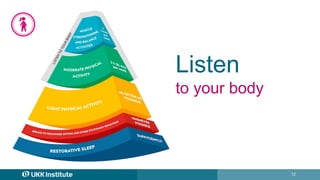
12
Listen
to your body
13
If you have not been
physically active before pregnancy
• Start with short and light sessions:
regularity and total amount of physical activity
are more important than duration and intensity.
• Increase the duration, intensity and number of
sessions gradually.
• Suitable physical activity is e.g. walking, Nordic
walking, swimming and water exercise
14
If you have been
physically active before pregnancy
• You can continue with light and moderate
physical activity as before.
• Listen to your body and ease the physical activity
accordingly.
• Consult your physician about continuing with physical
activity that markedly exceeds the amount and intensity
of the general recommendation.
15
REMEMBER
• to drink during physical activity
– it helps to regulate sweating
and body temperature
• to warm up and cool down.
16
AVOID
• prolonged supine position if it makes you feel unwell
• abdominal strengthening exercises if you suspect
separation of abdominal muscles (diastasis recti)
– ask your maternity clinic for further instructions
• activities that include physical contacts, risk of falling, or
rapid changes of directions (e.g. many ball games and
contact sports, ice hockey, downhill skiing and horseback
riding)
• physical activity in hot and humid conditions and
at high altitudes with reduced levels of oxygen
• scuba diving.
17
STOP
physical activity and contact maternity care
if you get any of the following symptoms
• severe shortness of breath at rest
• chest pain
• regular and painful contractions
• vaginal bleeding
• dizziness that does not resolve on rest
• severe headache
• calf swelling and pain.
18
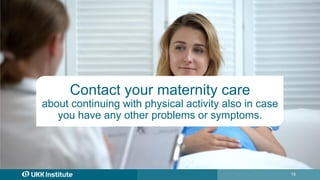
Contact your maternity care
about continuing with physical activity also in case
you have any other problems or symptoms.
19
Move your way.
EVERY DAY.
20
Sources
2018 Physical Activity Guidelines Advisory Committee. 2018 Physical Activity Guidelines Advisory Committee Scientific Report. Washington,
DC: U.S. Department of Health and Human Services, 2018.
Bø K, Artal R, Bakarat R ym. Exercise and pregnancy in recreational and elite athletes: 2016/2017 evidence summary from the IOC expert
group meeting, Lausanne. Part 5. Recommendations for health professionals and active women. Br J Sports Med 2018;52:1080-1085.
DiPietro L, Evenson KR, Bloodgood B ym. Benefits of physical activity during pregnancy and postpartum: An umbrella review. Med Sci
Sports Exerc 2019;51:1292-1302.
Duodecim Terveyskirjasto. Raskaus ja liikunta. Lääkärikirja Duodecim 28.9.2020, www.terveyskirjasto.fi
Donnelly GM, Rankin A, Mills H ym. Infographic. Guidance for medical, health and fitness professionals to support women in returning to
running postnatally. Br J Sports Med 2020;54:114-115.
Luoto R. Liikuntasuositukset raskauden aikana. Duodecim 2019;135(21):2079-2084.
Meah VL, Davies GA, Davenport MH. Why can’t I exercise during pregnancy? Time to revisit medical ´absolute´ and
´relative´contraindications: systematic review of evidence of harm and a call to action. Br J Sports Med 2020;54:1395-1404.
Mottola MF, Davenport MH, Ruchat S-M ym. 2019 Canadian guideline for physical activity throughout pregnancy. Br J Sports Med
2018;52:1339-1346.
Mottola MF, Nagpal TS, Bgeginski R ym. Is supine exercise associated with adverse maternal and fetal outcomes? A systematic review. Br J
Sports Med 2019;53:82-89.
The American College of Obstetricians and Gynecologists (ACOG). Physical activity and exercise during pregnancy and the postpartum
period. ACOG Committee Opinion No. 804. Obstetrics & Gynecology 2020;135:e178–188.
Thank you!
ukkinstituutti.fi/en

Physical activity recommendation during pregnancy

  • 1.
  • 2.
    2 Regular physical activity •improves physical fitness and helps to manage pregnancy-induced physical strain • speeds up the recovery after delivery • affects positively to your mood • helps to prevent excessive gestational weight gain and decreases the risk of gestational diabetes. Physical activity is not harmful to the baby.
  • 3.
  • 4.
  • 5.
    5 Restorative sleep sufficiently During sleep,your brain structures your thoughts and helps you to recover from daily stress. Learn to recognise the amount of sleep that you need and aim to sleep accordingly.
  • 6.
    6 Breaks to sedentary behaviour wheneverpossible Breaks • improve blood circulation • activate muscles • and reduce strain on your body. Stand up while answering your phone, set automatic reminders for breaks, and disengage from screen entertainment and social media every now and then.
  • 7.
  • 8.
    8 Light physical activity asoften as possible Every step counts. Utilise: • household chores • shopping trips • outdoor activities with your family • and other daily activities.
  • 9.
  • 10.
    10 Moderate physical activity at least2 h 30 min per week Spread out physical activity to at least 3 days a week. Physical activity is moderate if you are able to talk despite shortness of breath. IN ADDITION
  • 11.
    11 Muscle strengthening and balanceactivities at least twice a week The more diversity in your physical activity, the better. Suitable physical activity is e.g. gym training, gymnastics exercise, dancing and yardwork.
  • 12.
  • 13.
    13 If you havenot been physically active before pregnancy • Start with short and light sessions: regularity and total amount of physical activity are more important than duration and intensity. • Increase the duration, intensity and number of sessions gradually. • Suitable physical activity is e.g. walking, Nordic walking, swimming and water exercise
  • 14.
    14 If you havebeen physically active before pregnancy • You can continue with light and moderate physical activity as before. • Listen to your body and ease the physical activity accordingly. • Consult your physician about continuing with physical activity that markedly exceeds the amount and intensity of the general recommendation.
  • 15.
    15 REMEMBER • to drinkduring physical activity – it helps to regulate sweating and body temperature • to warm up and cool down.
  • 16.
    16 AVOID • prolonged supineposition if it makes you feel unwell • abdominal strengthening exercises if you suspect separation of abdominal muscles (diastasis recti) – ask your maternity clinic for further instructions • activities that include physical contacts, risk of falling, or rapid changes of directions (e.g. many ball games and contact sports, ice hockey, downhill skiing and horseback riding) • physical activity in hot and humid conditions and at high altitudes with reduced levels of oxygen • scuba diving.
  • 17.
    17 STOP physical activity andcontact maternity care if you get any of the following symptoms • severe shortness of breath at rest • chest pain • regular and painful contractions • vaginal bleeding • dizziness that does not resolve on rest • severe headache • calf swelling and pain.
  • 18.
    18 Contact your maternitycare about continuing with physical activity also in case you have any other problems or symptoms.
  • 19.
  • 20.
    20 Sources 2018 Physical ActivityGuidelines Advisory Committee. 2018 Physical Activity Guidelines Advisory Committee Scientific Report. Washington, DC: U.S. Department of Health and Human Services, 2018. Bø K, Artal R, Bakarat R ym. Exercise and pregnancy in recreational and elite athletes: 2016/2017 evidence summary from the IOC expert group meeting, Lausanne. Part 5. Recommendations for health professionals and active women. Br J Sports Med 2018;52:1080-1085. DiPietro L, Evenson KR, Bloodgood B ym. Benefits of physical activity during pregnancy and postpartum: An umbrella review. Med Sci Sports Exerc 2019;51:1292-1302. Duodecim Terveyskirjasto. Raskaus ja liikunta. Lääkärikirja Duodecim 28.9.2020, www.terveyskirjasto.fi Donnelly GM, Rankin A, Mills H ym. Infographic. Guidance for medical, health and fitness professionals to support women in returning to running postnatally. Br J Sports Med 2020;54:114-115. Luoto R. Liikuntasuositukset raskauden aikana. Duodecim 2019;135(21):2079-2084. Meah VL, Davies GA, Davenport MH. Why can’t I exercise during pregnancy? Time to revisit medical ´absolute´ and ´relative´contraindications: systematic review of evidence of harm and a call to action. Br J Sports Med 2020;54:1395-1404. Mottola MF, Davenport MH, Ruchat S-M ym. 2019 Canadian guideline for physical activity throughout pregnancy. Br J Sports Med 2018;52:1339-1346. Mottola MF, Nagpal TS, Bgeginski R ym. Is supine exercise associated with adverse maternal and fetal outcomes? A systematic review. Br J Sports Med 2019;53:82-89. The American College of Obstetricians and Gynecologists (ACOG). Physical activity and exercise during pregnancy and the postpartum period. ACOG Committee Opinion No. 804. Obstetrics & Gynecology 2020;135:e178–188.
  • 21.