STORYBOARD
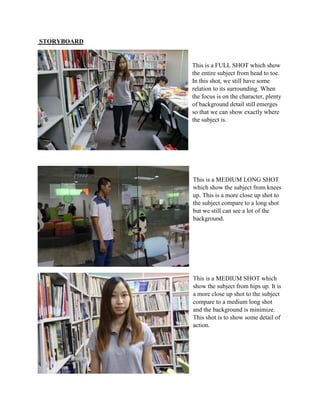
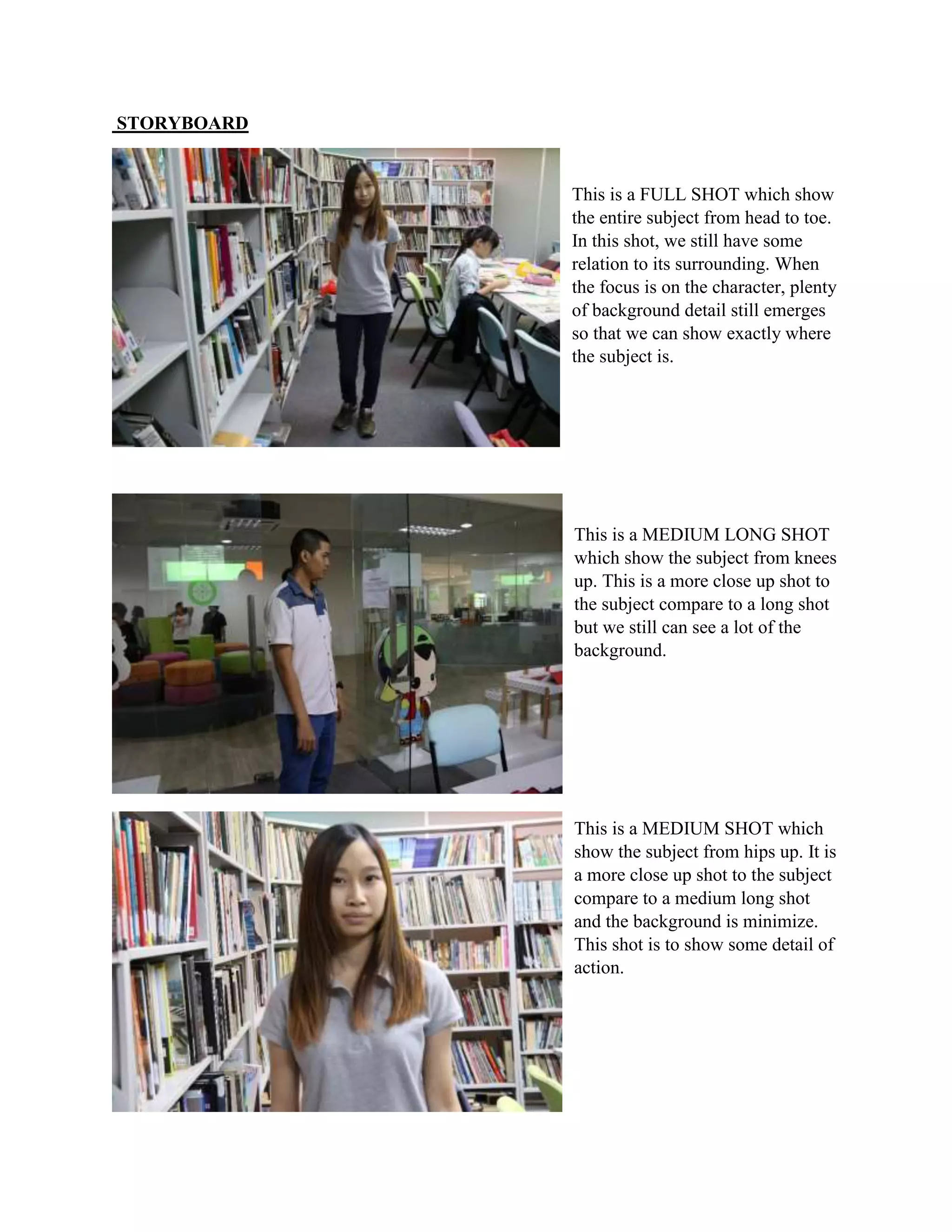
This is a FULL SHOT which show
the entire subject from head to toe.
In this shot, we still have some
relation to its surrounding. When
the focus is on the character, plenty
of background detail still emerges
so that we can show exactly where
the subject is.
This is a MEDIUM LONG SHOT
which show the subject from knees
up. This is a more close up shot to
the subject compare to a long shot
but we still can see a lot of the
background.
This is a MEDIUM SHOT which
show the subject from hips up. It is
a more close up shot to the subject
compare to a medium long shot
and the background is minimize.
This shot is to show some detail of
action.
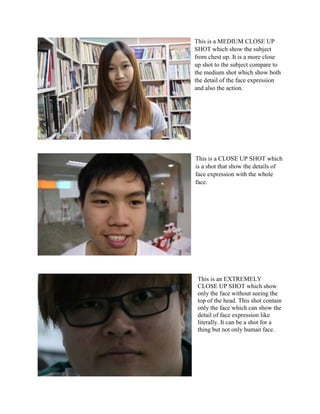
This is a MEDIUM CLOSE UP
SHOT which show the subject
from chest up. It is a more close
up shot to the subject compare to
the medium shot which show both
the detail of the face expression
and also the action.
This is an EXTREMELY
CLOSE UP SHOT which show
only the face without seeing the
top of the head. This shot contain
only the face which can show the
detail of face expression like
literally. It can be a shot for a
thing but not only human face.
This is a CLOSE UP SHOT which
is a shot that show the details of
face expression with the whole
face.
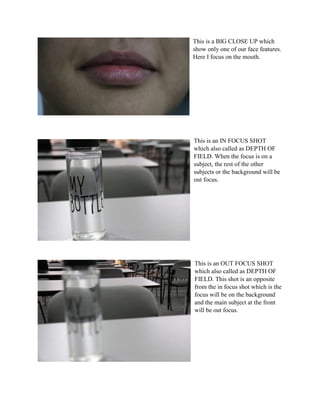
This is a BIG CLOSE UP which
show only one of our face features.
Here I focus on the mouth.
This is an IN FOCUS SHOT
which also called as DEPTH OF
FIELD. When the focus is on a
subject, the rest of the other
subjects or the background will be
out focus.
This is an OUT FOCUS SHOT
which also called as DEPTH OF
FIELD. This shot is an opposite
from the in focus shot which is the
focus will be on the background
and the main subject at the front
will be out focus.
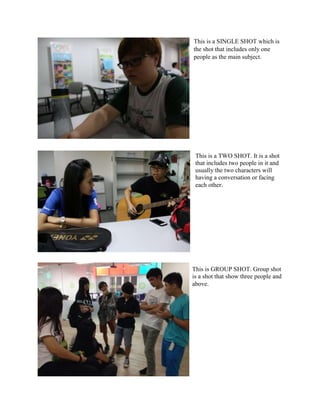
This is a SINGLE SHOT which is
the shot that includes only one
people as the main subject.
This is GROUP SHOT. Group shot
is a shot that show three people and
above.
This is a TWO SHOT. It is a shot
that includes two people in it and
usually the two characters will
having a conversation or facing
each other.
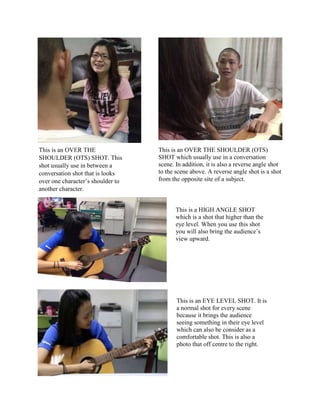
This is an OVER THE
SHOULDER (OTS) SHOT. This
shot usually use in between a
conversation shot that is looks
over one character’s shoulder to
another character.
This is a HIGH ANGLE SHOT
which is a shot that higher than the
eye level. When you use this shot
you will also bring the audience’s
view upward.
This is an EYE LEVEL SHOT. It is
a normal shot for every scene
because it brings the audience
seeing something in their eye level
which can also be consider as a
comfortable shot. This is also a
photo that off centre to the right.
This is an OVER THE SHOULDER (OTS)
SHOT which usually use in a conversation
scene. In addition, it is also a reverse angle shot
to the scene above. A reverse angle shot is a shot
from the opposite site of a subject.
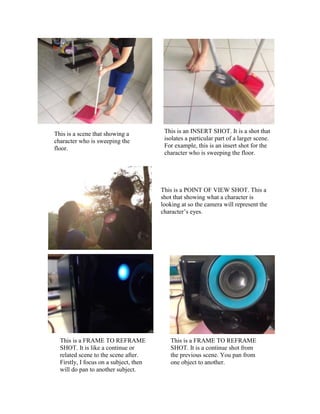
This is an INSERT SHOT. It is a shot that
isolates a particular part of a larger scene.
For example, this is an insert shot for the
character who is sweeping the floor.
This is a POINT OF VIEW SHOT. This a
shot that showing what a character is
looking at so the camera will represent the
character’s eyes.
This is a FRAME TO REFRAME
SHOT. It is like a continue or
related scene to the scene after.
Firstly, I focus on a subject, then
will do pan to another subject.
This is a FRAME TO REFRAME
SHOT. It is a continue shot from
the previous scene. You pan from
one object to another.
This is a scene that showing a
character who is sweeping the
floor.
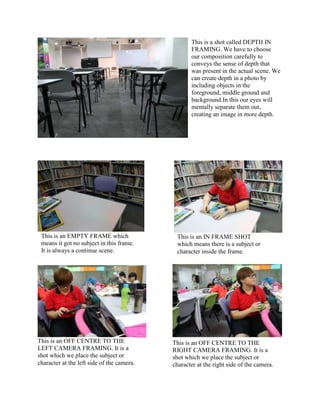
This is a shot called DEPTH IN
FRAMING. We have to choose
our composition carefully to
conveys the sense of depth that
was present in the actual scene. We
can create depth in a photo by
including objects in the
foreground, middle ground and
background.In this our eyes will
mentally separate them out,
creating an image in more depth.
This is an EMPTY FRAME which
means it got no subject in this frame.
It is always a continue scene.
This is an IN FRAME SHOT
which means there is a subject or
character inside the frame.
This is an OFF CENTRE TO THE
LEFT CAMERA FRAMING. It is a
shot which we place the subject or
character at the left side of the camera.
This is an OFF CENTRE TO THE
RIGHT CAMERA FRAMING. It is a
shot which we place the subject or
character at the right side of the camera.
Storyboard

Storyboard

  • 1.
    STORYBOARD This is aFULL SHOT which show the entire subject from head to toe. In this shot, we still have some relation to its surrounding. When the focus is on the character, plenty of background detail still emerges so that we can show exactly where the subject is. This is a MEDIUM LONG SHOT which show the subject from knees up. This is a more close up shot to the subject compare to a long shot but we still can see a lot of the background. This is a MEDIUM SHOT which show the subject from hips up. It is a more close up shot to the subject compare to a medium long shot and the background is minimize. This shot is to show some detail of action.
  • 2.
    This is aMEDIUM CLOSE UP SHOT which show the subject from chest up. It is a more close up shot to the subject compare to the medium shot which show both the detail of the face expression and also the action. This is an EXTREMELY CLOSE UP SHOT which show only the face without seeing the top of the head. This shot contain only the face which can show the detail of face expression like literally. It can be a shot for a thing but not only human face. This is a CLOSE UP SHOT which is a shot that show the details of face expression with the whole face.
  • 3.
    This is aBIG CLOSE UP which show only one of our face features. Here I focus on the mouth. This is an IN FOCUS SHOT which also called as DEPTH OF FIELD. When the focus is on a subject, the rest of the other subjects or the background will be out focus. This is an OUT FOCUS SHOT which also called as DEPTH OF FIELD. This shot is an opposite from the in focus shot which is the focus will be on the background and the main subject at the front will be out focus.
  • 4.
    This is aSINGLE SHOT which is the shot that includes only one people as the main subject. This is GROUP SHOT. Group shot is a shot that show three people and above. This is a TWO SHOT. It is a shot that includes two people in it and usually the two characters will having a conversation or facing each other.
  • 5.
    This is anOVER THE SHOULDER (OTS) SHOT. This shot usually use in between a conversation shot that is looks over one character’s shoulder to another character. This is a HIGH ANGLE SHOT which is a shot that higher than the eye level. When you use this shot you will also bring the audience’s view upward. This is an EYE LEVEL SHOT. It is a normal shot for every scene because it brings the audience seeing something in their eye level which can also be consider as a comfortable shot. This is also a photo that off centre to the right. This is an OVER THE SHOULDER (OTS) SHOT which usually use in a conversation scene. In addition, it is also a reverse angle shot to the scene above. A reverse angle shot is a shot from the opposite site of a subject.
  • 6.
    This is anINSERT SHOT. It is a shot that isolates a particular part of a larger scene. For example, this is an insert shot for the character who is sweeping the floor. This is a POINT OF VIEW SHOT. This a shot that showing what a character is looking at so the camera will represent the character’s eyes. This is a FRAME TO REFRAME SHOT. It is like a continue or related scene to the scene after. Firstly, I focus on a subject, then will do pan to another subject. This is a FRAME TO REFRAME SHOT. It is a continue shot from the previous scene. You pan from one object to another. This is a scene that showing a character who is sweeping the floor.
  • 7.
    This is ashot called DEPTH IN FRAMING. We have to choose our composition carefully to conveys the sense of depth that was present in the actual scene. We can create depth in a photo by including objects in the foreground, middle ground and background.In this our eyes will mentally separate them out, creating an image in more depth. This is an EMPTY FRAME which means it got no subject in this frame. It is always a continue scene. This is an IN FRAME SHOT which means there is a subject or character inside the frame. This is an OFF CENTRE TO THE LEFT CAMERA FRAMING. It is a shot which we place the subject or character at the left side of the camera. This is an OFF CENTRE TO THE RIGHT CAMERA FRAMING. It is a shot which we place the subject or character at the right side of the camera.