Analysis of Micro Elements
George Picton-Clark
Extreme close up
Extreme close ups are an effective way of showing certain points in a film, for
example an extreme close up of somebody’s face is an effective way of showing
emotion and expressions and showing how they feel to every detail.
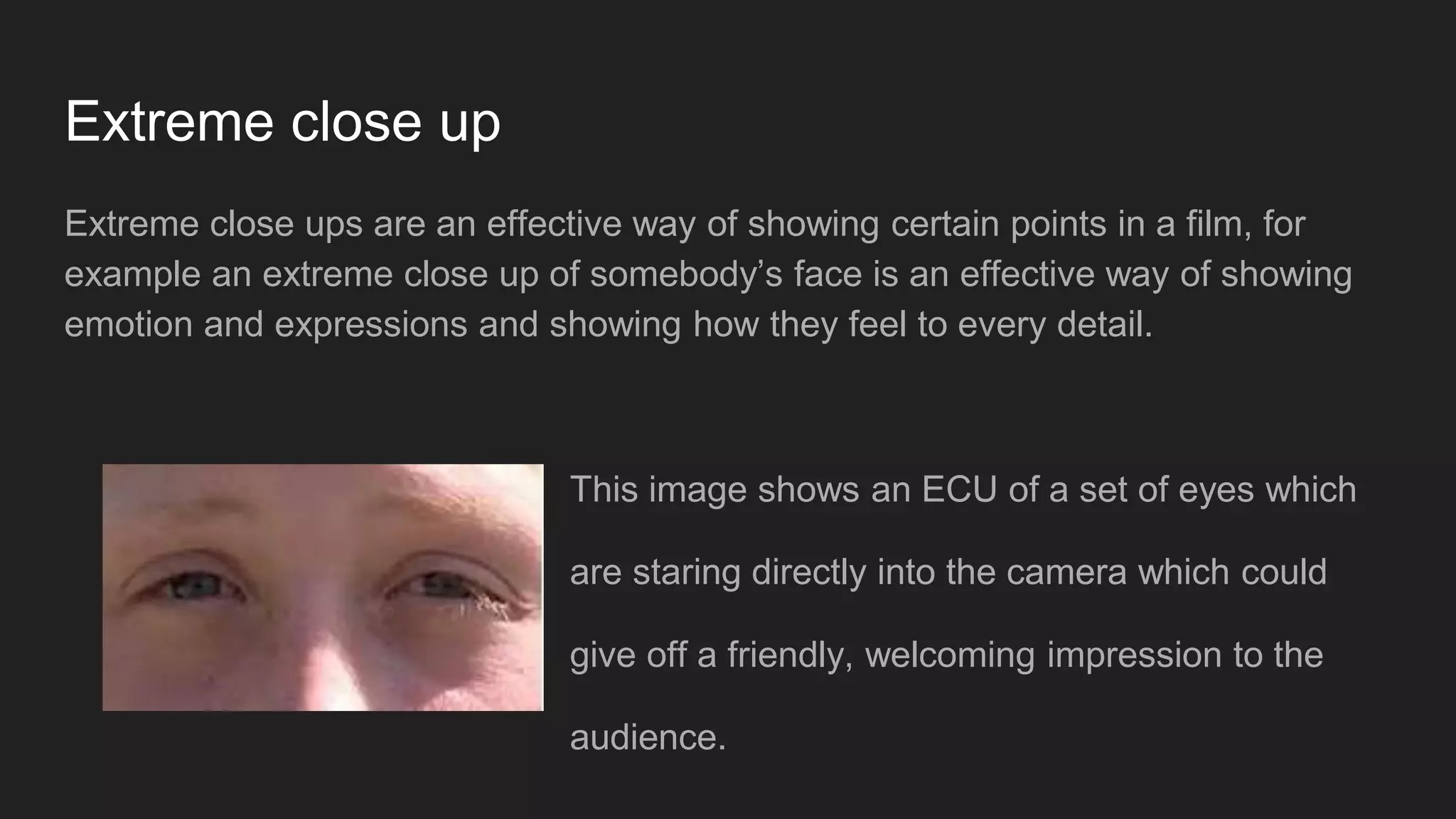
This image shows an ECU of a set of eyes which
are staring directly into the camera which could
give off a friendly, welcoming impression to the
audience.
Close up
A close up can be used to show the expressions of somebody’s face, it is
generally used to show emotion and shows. In close ups a certain subject takes
up most of the camera’s frame to show the main focus, they can also be used to
identify people as main characters.
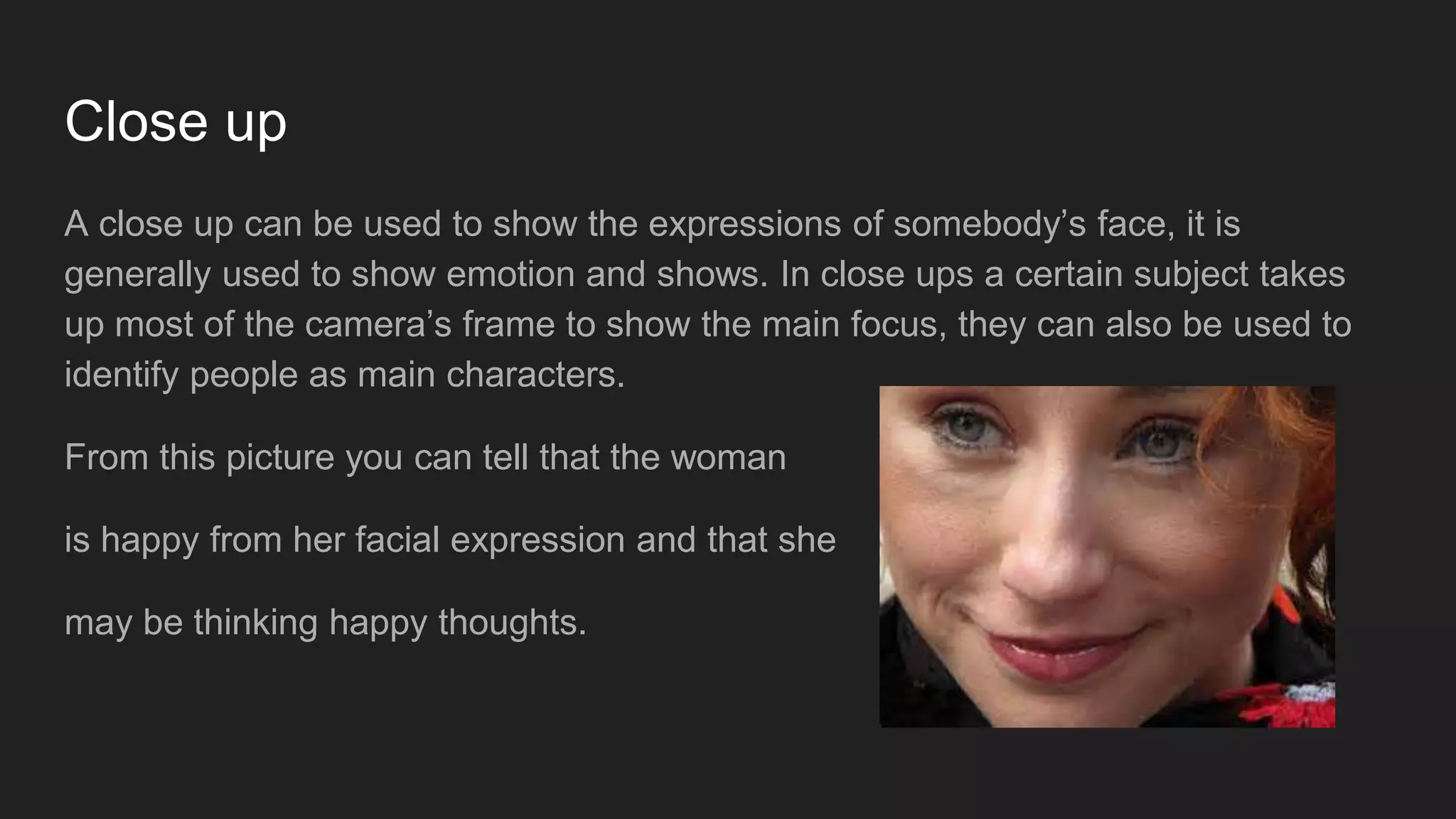
From this picture you can tell that the woman
is happy from her facial expression and that she
may be thinking happy thoughts.
Medium shot
A medium shot can be used to show a specific subject, for example it can show a
character from the head to the waistline. It can be used to establish the character
so the audience can get a certain idea of them and the way they are presented.
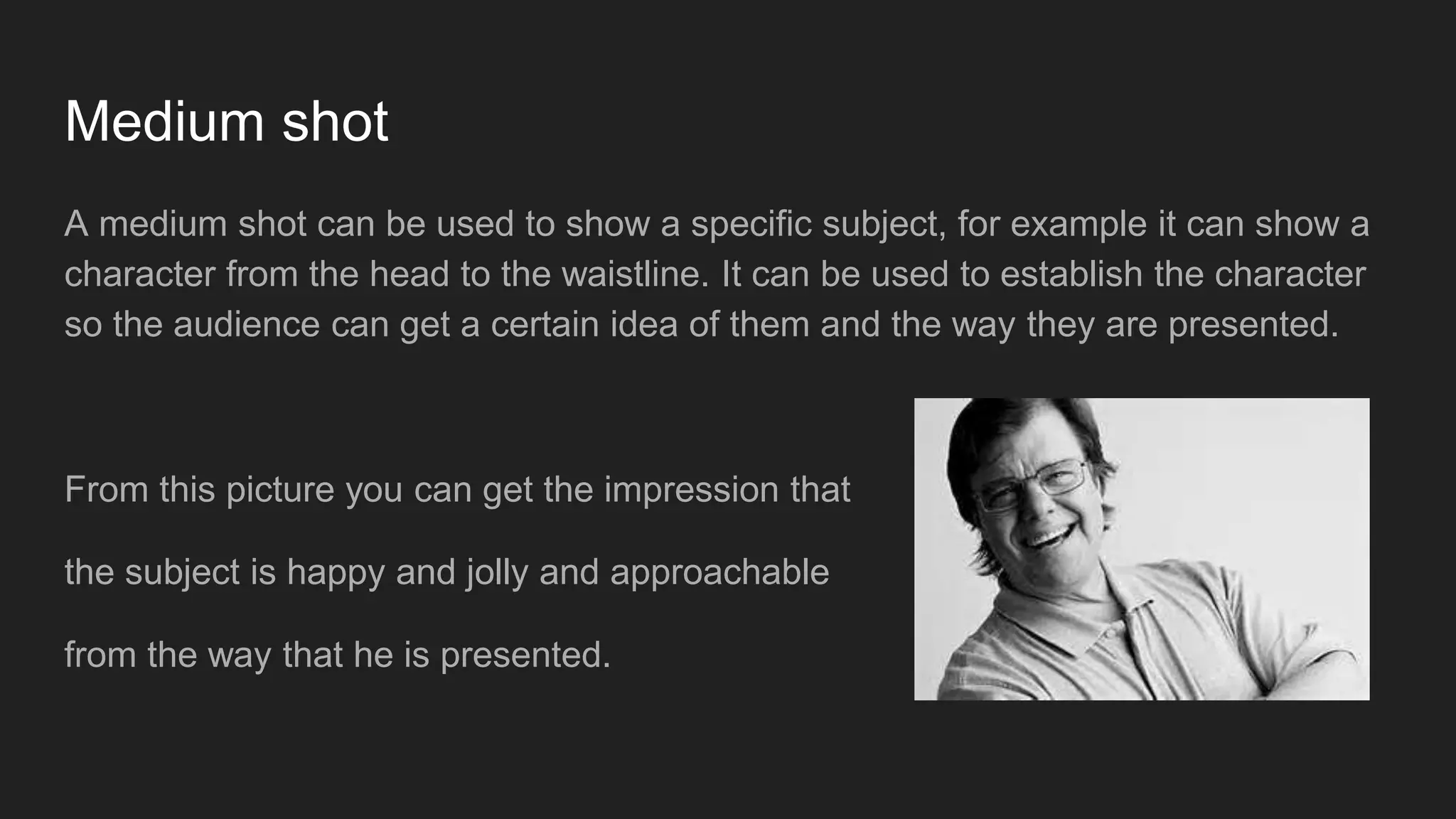
From this picture you can get the impression that
the subject is happy and jolly and approachable
from the way that he is presented.
Long shot
A long shot is an effective way of showing a focused subject, but also giving the
audience an idea of both the character and the surroundings they are in.
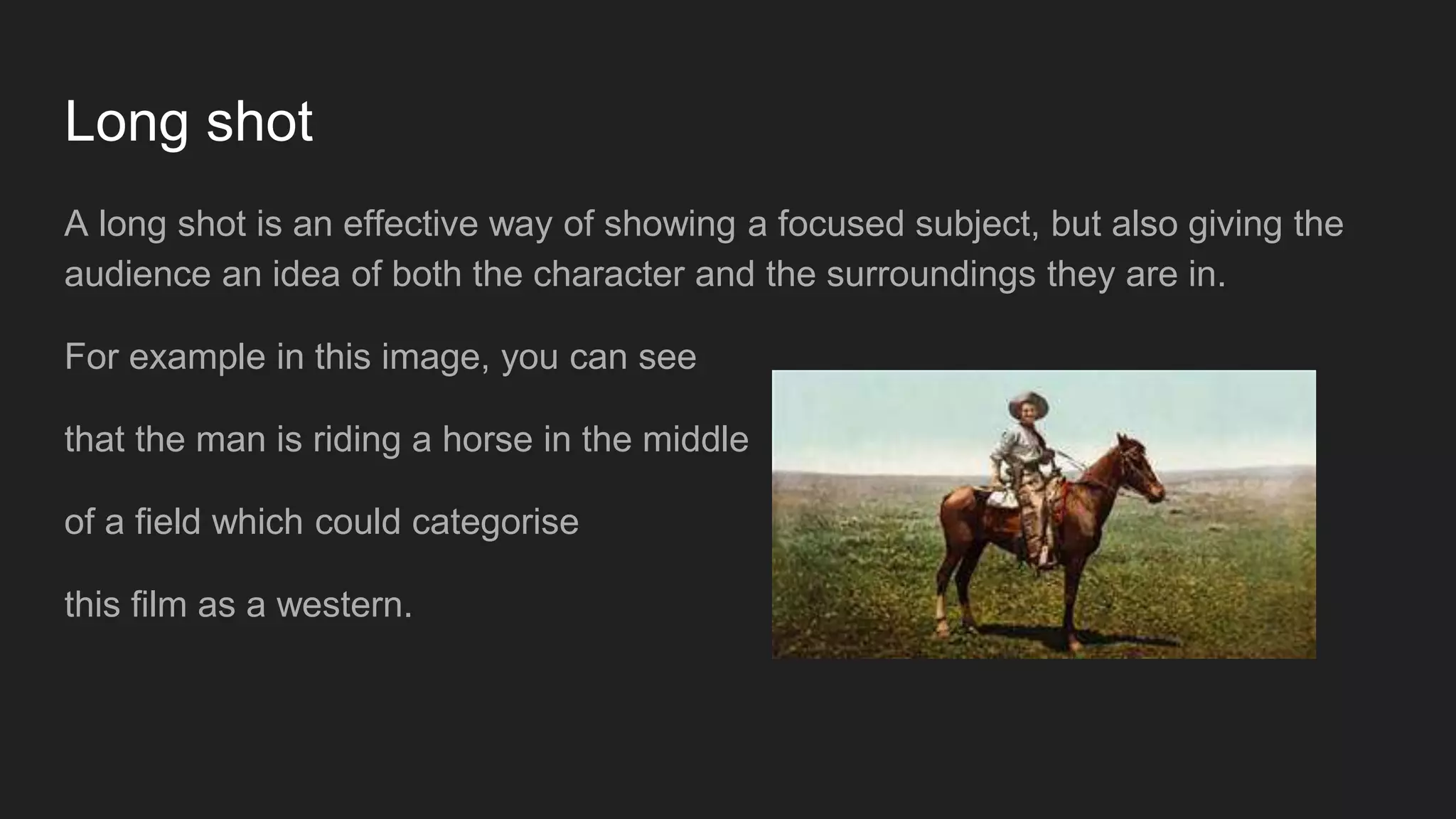
For example in this image, you can see
that the man is riding a horse in the middle
of a field which could categorise
this film as a western.
Extreme Long Shot
An extreme long shot is a camera angle that generally sets the scene for a film.
They are also commonly used in action films or war type films to show a fighting
scene or a battle from a distance. There is usually very small amounts of visibility
from an extreme long shot and they don’t generally focus on a single person.
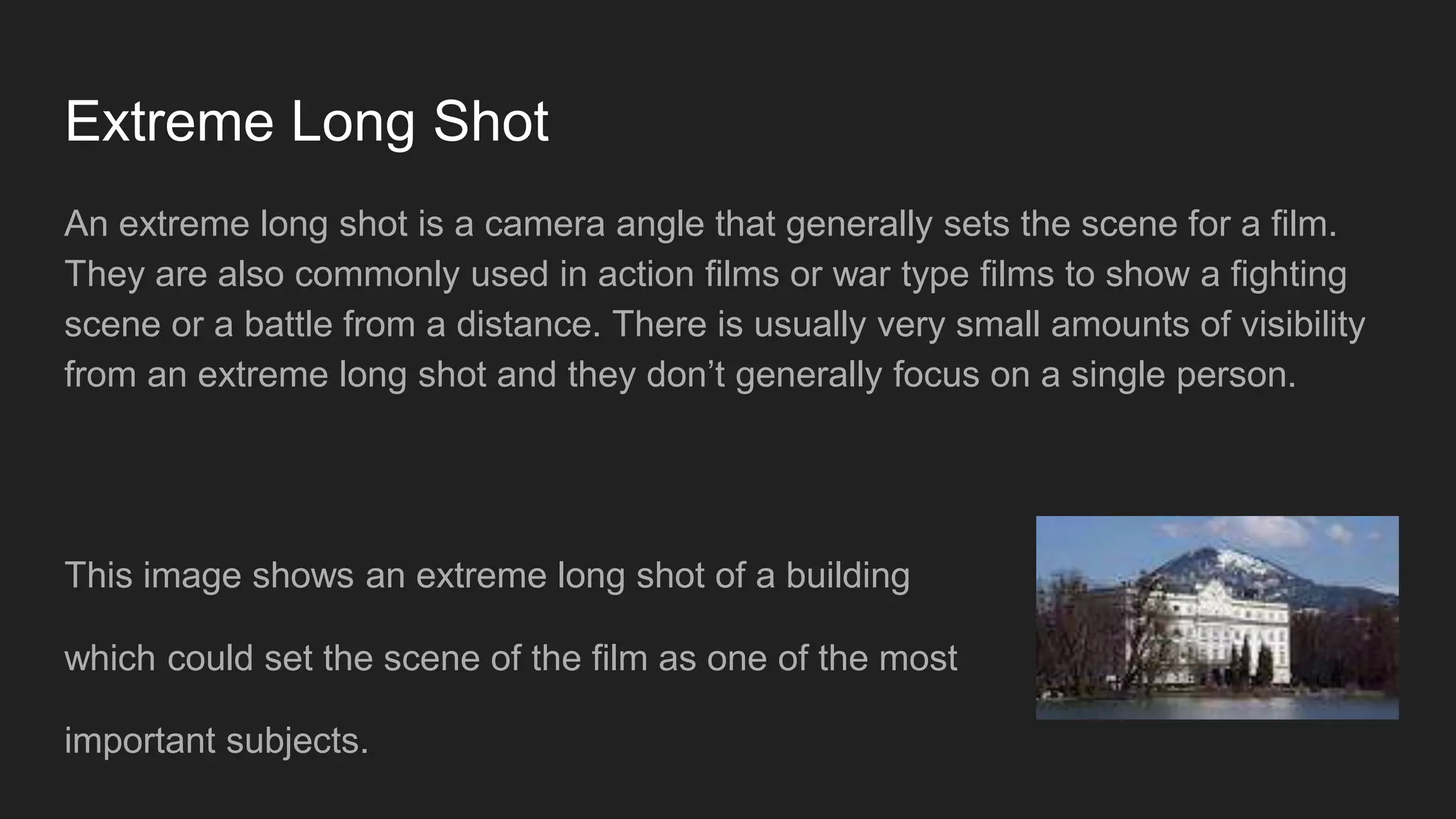
This image shows an extreme long shot of a building
which could set the scene of the film as one of the most
important subjects.
Tracking shot
Cameras are usually held by cameramen and put on a track to follow a subject, for
example they can be used to follow a scene of car driving or a person walking. It
is a good way of learning more about a subject by the way they walk or dress.
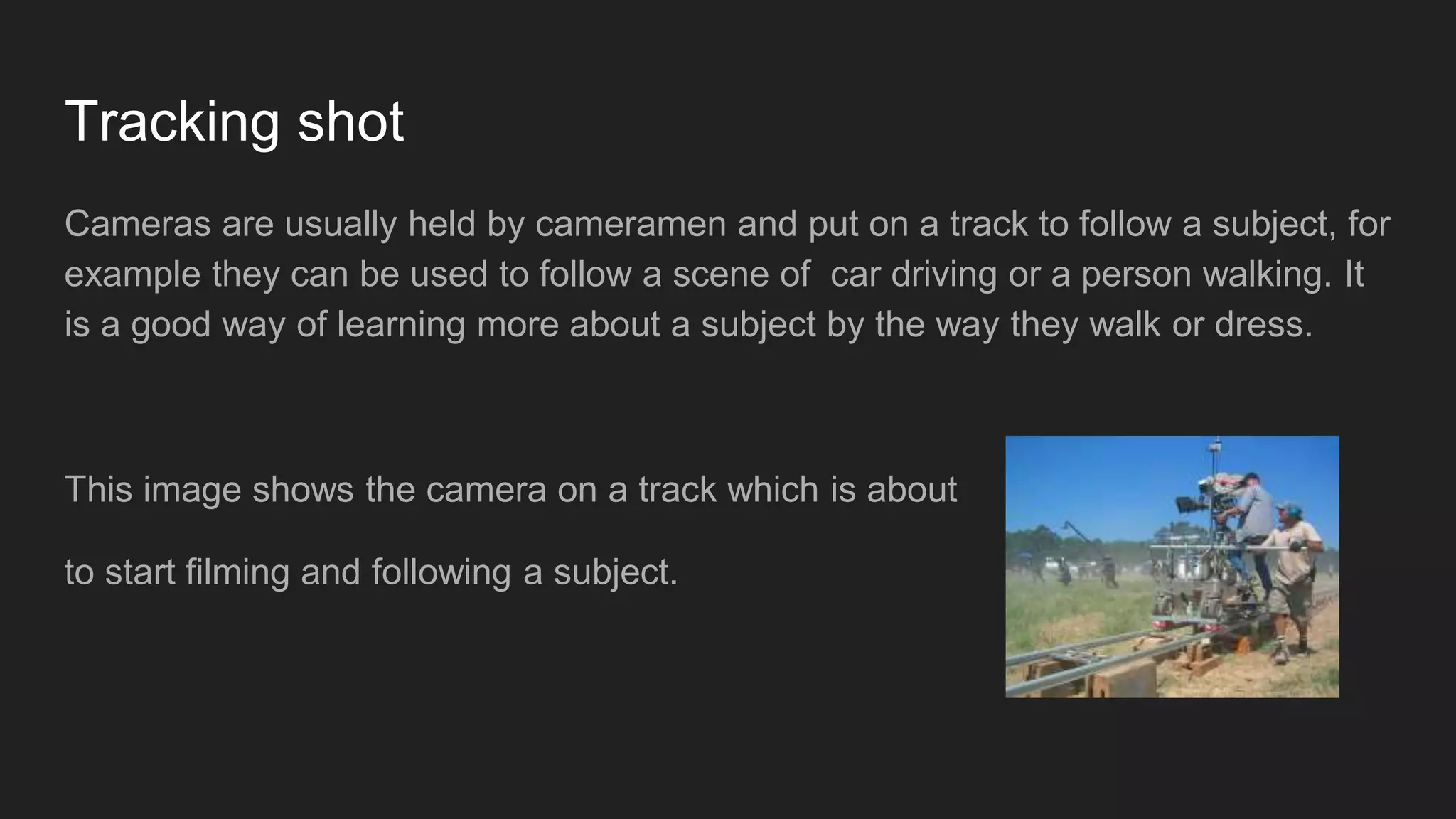
This image shows the camera on a track which is about
to start filming and following a subject.
Panning shot
Panning shots are camera movements that usually scan a scene and can be used
to set the scene or a location. The camera normally moves at a slow steady speed
horizontally.
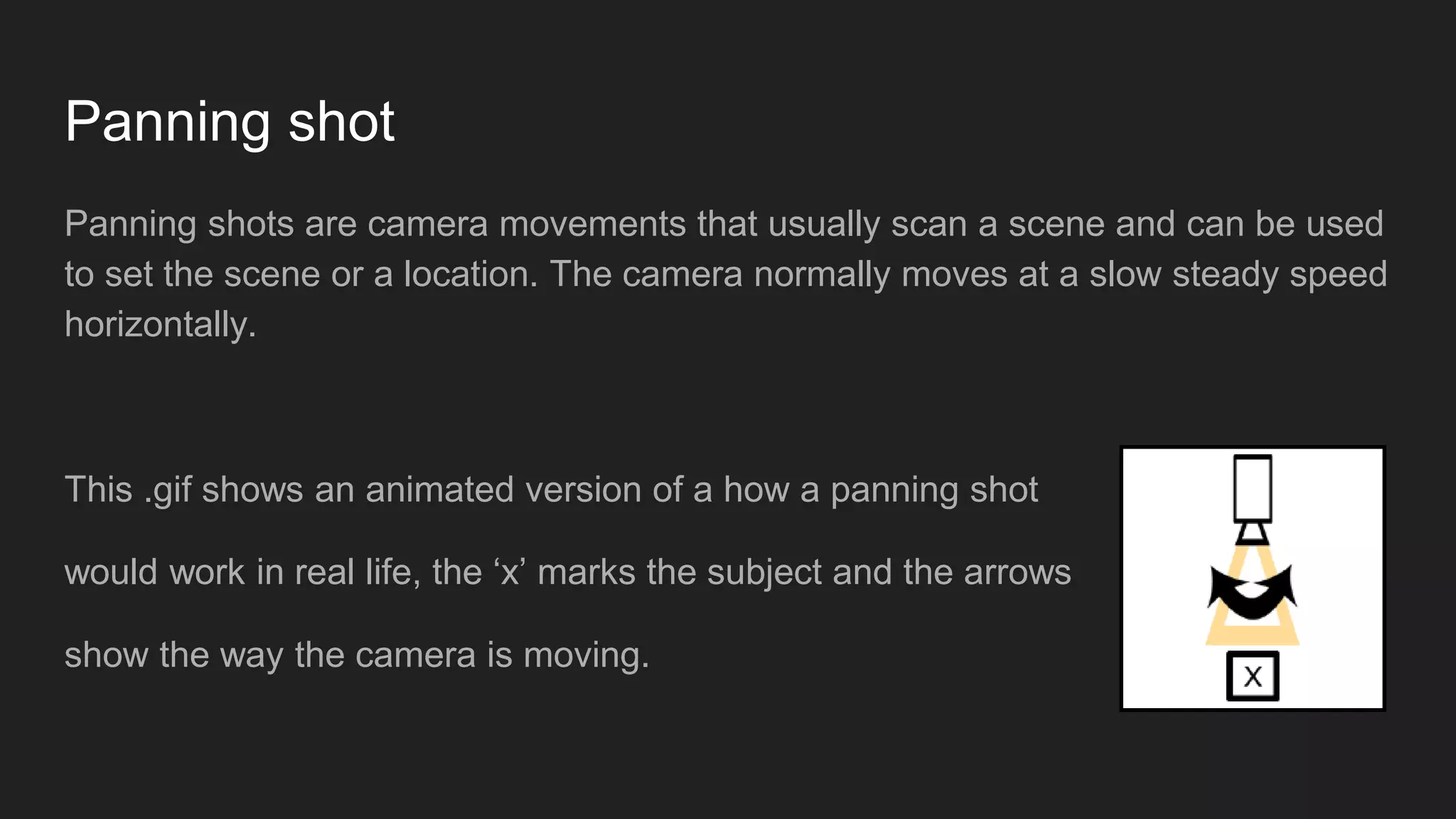
This .gif shows an animated version of a how a panning shot
would work in real life, the ‘x’ marks the subject and the arrows
show the way the camera is moving.
Tilt shot
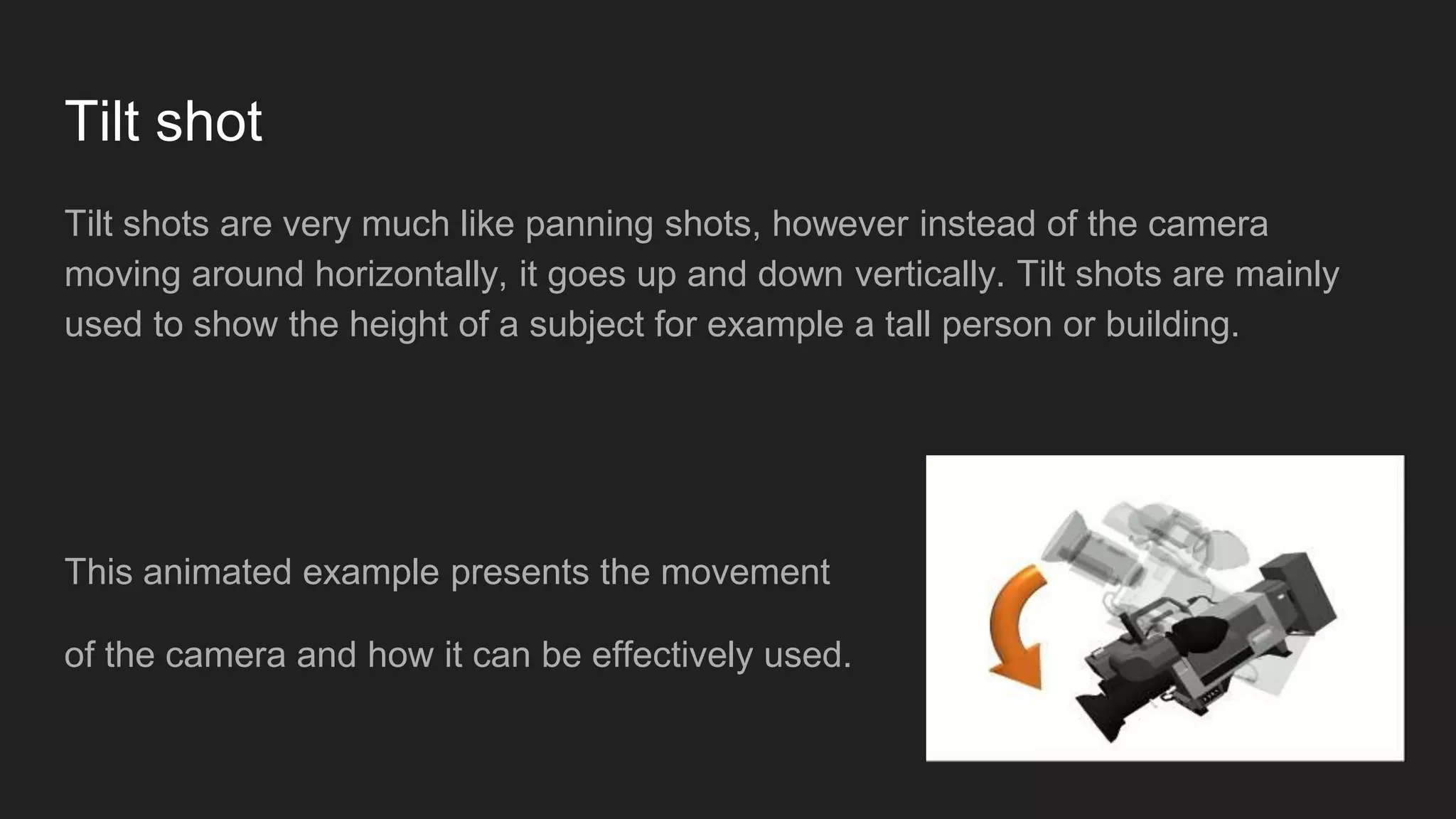
Tilt shots are very much like panning shots, however instead of the camera
moving around horizontally, it goes up and down vertically. Tilt shots are mainly
used to show the height of a subject for example a tall person or building.
This animated example presents the movement
of the camera and how it can be effectively used.
Zoom
A zoom camera shot is generally used to highlight the importance of a moment or
a subject zooming into a specific person or place to highlight that something may
be starting to happen. It can be used to show expression on somebody’s face.
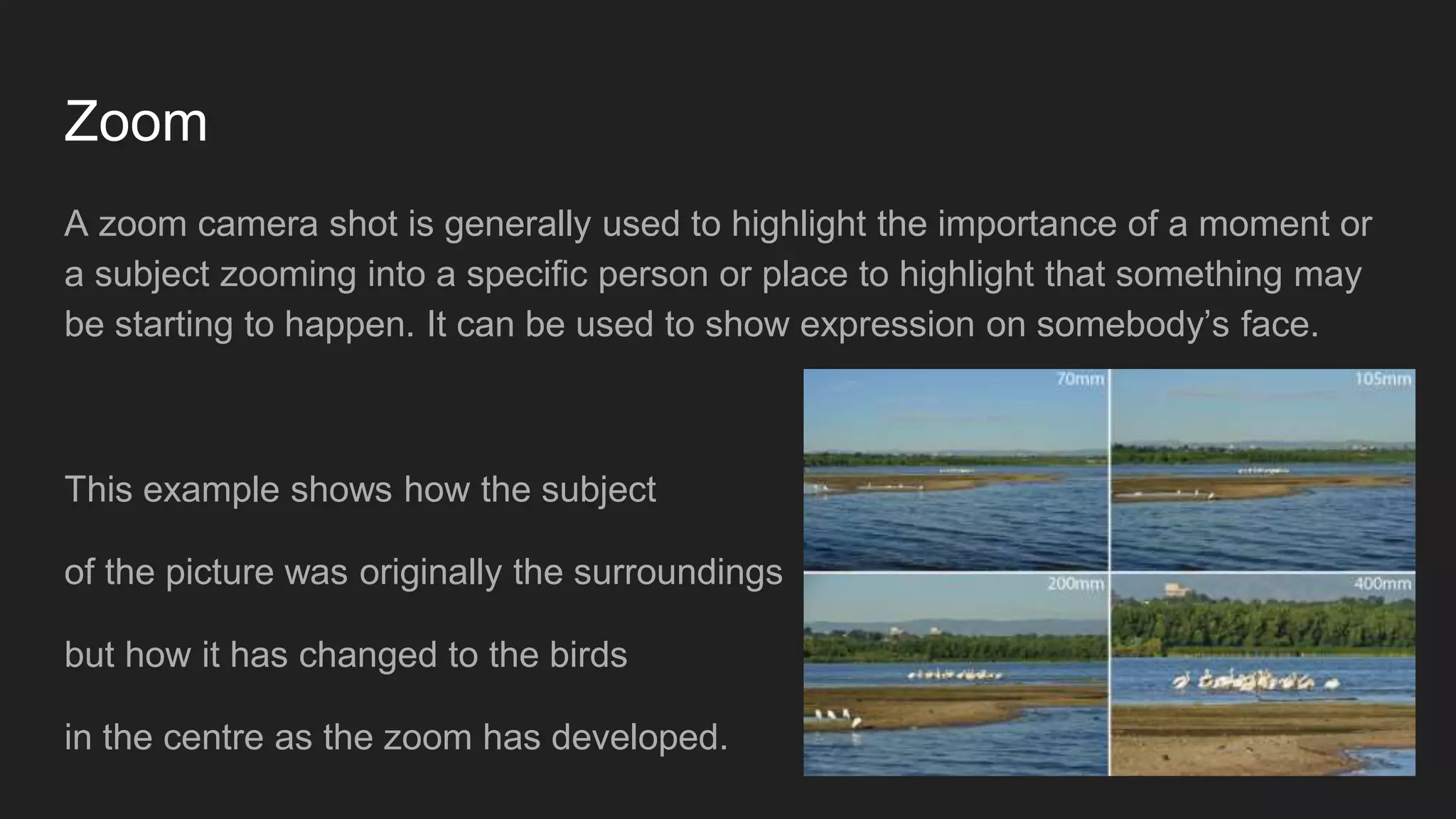
This example shows how the subject
of the picture was originally the surroundings
but how it has changed to the birds
in the centre as the zoom has developed.
Cut
A cut shot can refer to different camera angles, a Cut-In and Cut-Away. A Cut-In
shot focuses on a part of the specific subject in detail whilst not necessarily
showing the most important part of it. Whereas a Cut-Away shot is a shot that
focuses on something other than the subject.
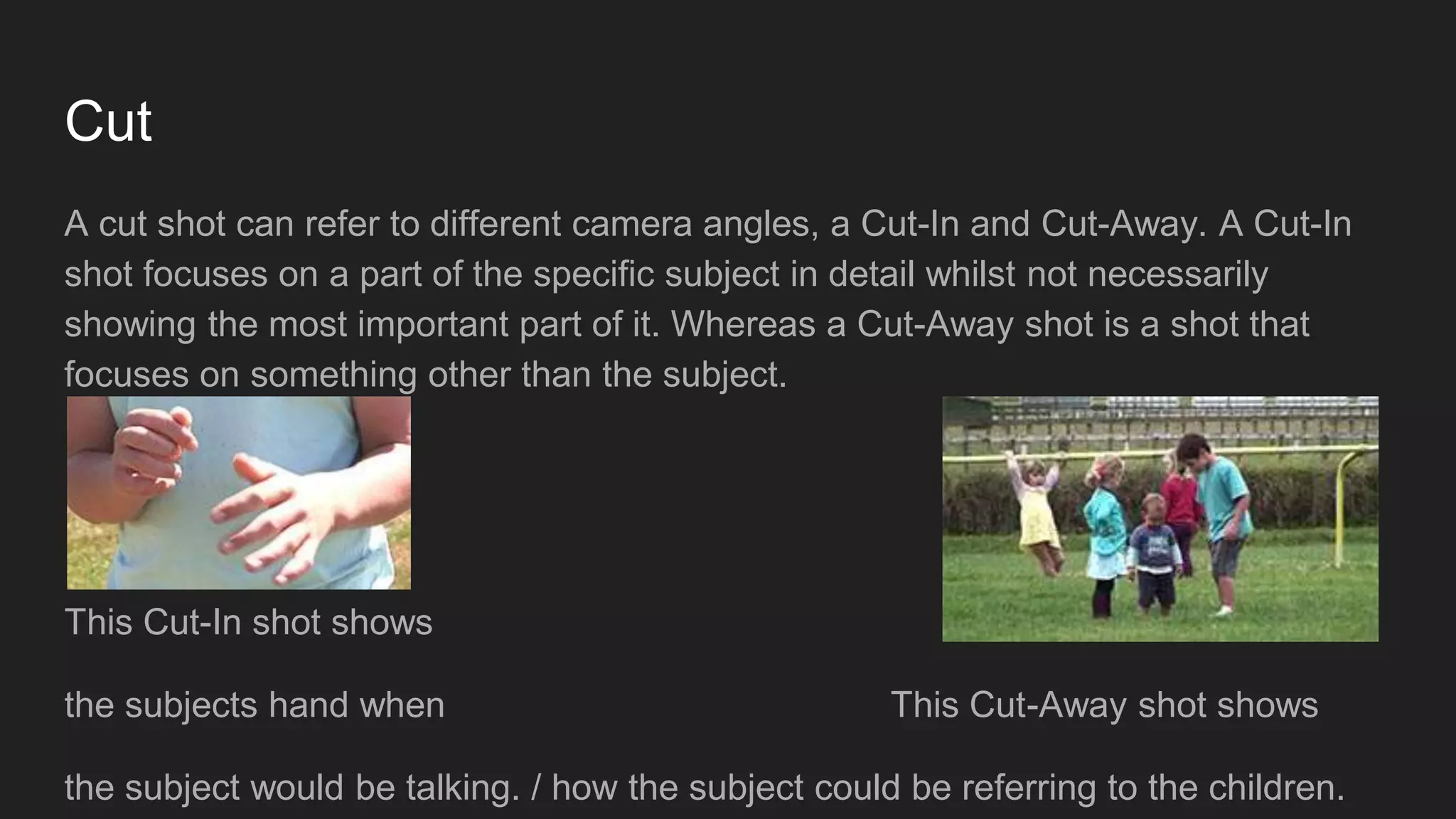
This Cut-In shot shows
the subjects hand when This Cut-Away shot shows
the subject would be talking. / how the subject could be referring to the children.
Mise-en-scene
The mise-en-scene of a film is one of the most important things in the film as it
incorporates props, make up, outfits and much more. These are used to create a
mood and setting, mise-en-scene is also important with the time period in which
the film is set. For example, if a film is set in the 1800s clothes and makeup will be
used to make this appropriate to the time period.
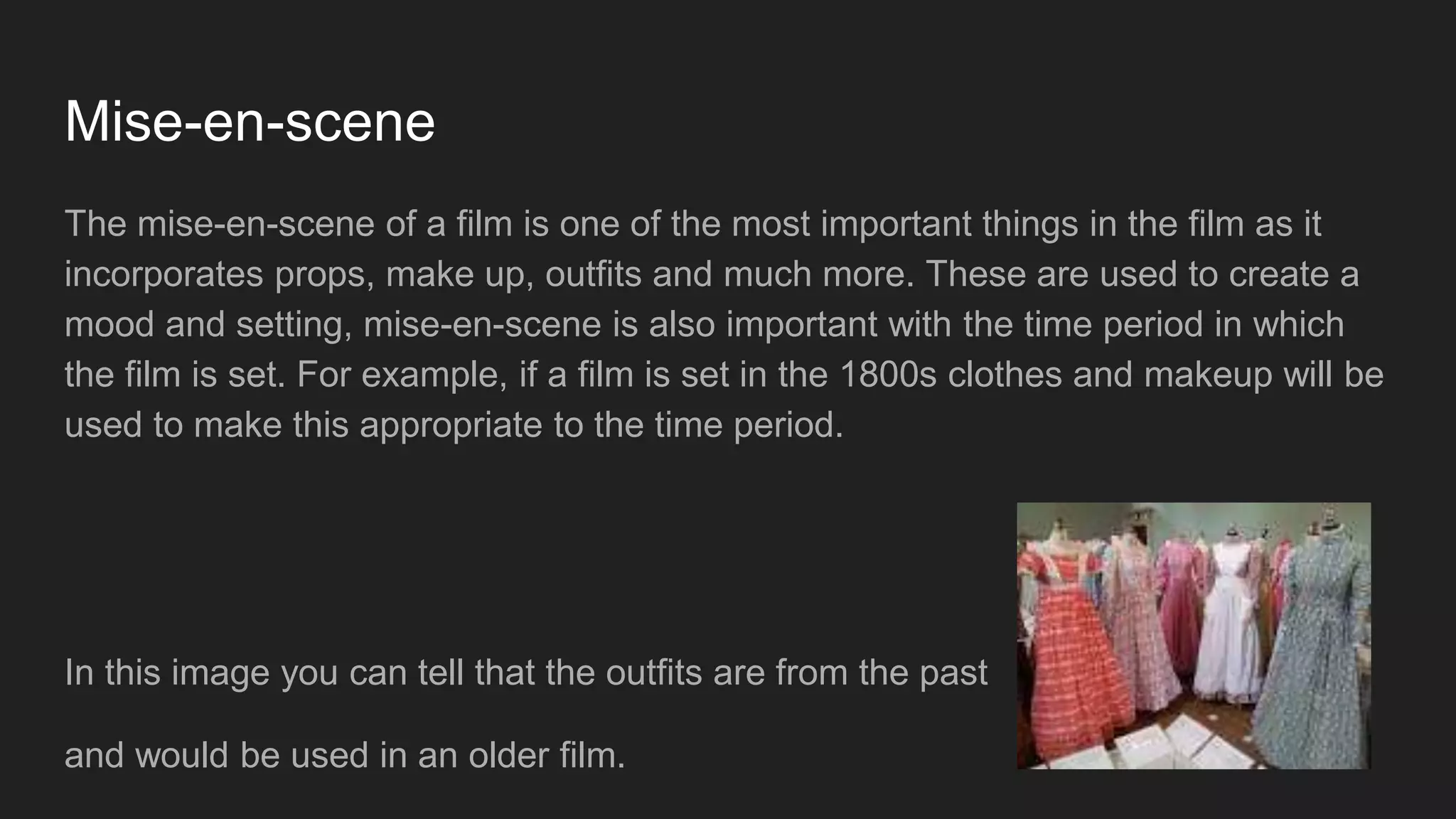
In this image you can tell that the outfits are from the past
and would be used in an older film.
Diegetic and Non-Diegetic sounds
A Diegetic sound is a sound that is obvious, natural and clear to the audience, for
example an actor’s voice would be a diegetic sound as it is clear to the audience
where it is coming from.
A Non-Diegetic sound is something that isn’t natural or not necessarily on the
screen shown to the actor, something like a sound effect or music depending on
the mood of the scene would be a non-diegetic sound.
Summary
These different Microelements are useful to apply to my own media assignment as
the different camera shots, angles and sounds can be applied to fit different
scenes and used on different subjects.
These microelements can create a lot of effect which grasp audiences and can
help define a specific film genre, for example in my horror film opening tracking
shots will be used to follow a specific subject as well as zoom shots. As well as
this, Mise-en-scene will be used to create special effects with makeup as well as
outfits which stand out.

Analysis of micro elements

  • 1.
    Analysis of MicroElements George Picton-Clark
  • 2.
    Extreme close up Extremeclose ups are an effective way of showing certain points in a film, for example an extreme close up of somebody’s face is an effective way of showing emotion and expressions and showing how they feel to every detail. This image shows an ECU of a set of eyes which are staring directly into the camera which could give off a friendly, welcoming impression to the audience.
  • 3.
    Close up A closeup can be used to show the expressions of somebody’s face, it is generally used to show emotion and shows. In close ups a certain subject takes up most of the camera’s frame to show the main focus, they can also be used to identify people as main characters. From this picture you can tell that the woman is happy from her facial expression and that she may be thinking happy thoughts.
  • 4.
    Medium shot A mediumshot can be used to show a specific subject, for example it can show a character from the head to the waistline. It can be used to establish the character so the audience can get a certain idea of them and the way they are presented. From this picture you can get the impression that the subject is happy and jolly and approachable from the way that he is presented.
  • 5.
    Long shot A longshot is an effective way of showing a focused subject, but also giving the audience an idea of both the character and the surroundings they are in. For example in this image, you can see that the man is riding a horse in the middle of a field which could categorise this film as a western.
  • 6.
    Extreme Long Shot Anextreme long shot is a camera angle that generally sets the scene for a film. They are also commonly used in action films or war type films to show a fighting scene or a battle from a distance. There is usually very small amounts of visibility from an extreme long shot and they don’t generally focus on a single person. This image shows an extreme long shot of a building which could set the scene of the film as one of the most important subjects.
  • 7.
    Tracking shot Cameras areusually held by cameramen and put on a track to follow a subject, for example they can be used to follow a scene of car driving or a person walking. It is a good way of learning more about a subject by the way they walk or dress. This image shows the camera on a track which is about to start filming and following a subject.
  • 8.
    Panning shot Panning shotsare camera movements that usually scan a scene and can be used to set the scene or a location. The camera normally moves at a slow steady speed horizontally. This .gif shows an animated version of a how a panning shot would work in real life, the ‘x’ marks the subject and the arrows show the way the camera is moving.
  • 9.
    Tilt shot Tilt shotsare very much like panning shots, however instead of the camera moving around horizontally, it goes up and down vertically. Tilt shots are mainly used to show the height of a subject for example a tall person or building. This animated example presents the movement of the camera and how it can be effectively used.
  • 10.
    Zoom A zoom camerashot is generally used to highlight the importance of a moment or a subject zooming into a specific person or place to highlight that something may be starting to happen. It can be used to show expression on somebody’s face. This example shows how the subject of the picture was originally the surroundings but how it has changed to the birds in the centre as the zoom has developed.
  • 11.
    Cut A cut shotcan refer to different camera angles, a Cut-In and Cut-Away. A Cut-In shot focuses on a part of the specific subject in detail whilst not necessarily showing the most important part of it. Whereas a Cut-Away shot is a shot that focuses on something other than the subject. This Cut-In shot shows the subjects hand when This Cut-Away shot shows the subject would be talking. / how the subject could be referring to the children.
  • 12.
    Mise-en-scene The mise-en-scene ofa film is one of the most important things in the film as it incorporates props, make up, outfits and much more. These are used to create a mood and setting, mise-en-scene is also important with the time period in which the film is set. For example, if a film is set in the 1800s clothes and makeup will be used to make this appropriate to the time period. In this image you can tell that the outfits are from the past and would be used in an older film.
  • 13.
    Diegetic and Non-Diegeticsounds A Diegetic sound is a sound that is obvious, natural and clear to the audience, for example an actor’s voice would be a diegetic sound as it is clear to the audience where it is coming from. A Non-Diegetic sound is something that isn’t natural or not necessarily on the screen shown to the actor, something like a sound effect or music depending on the mood of the scene would be a non-diegetic sound.
  • 14.
    Summary These different Microelementsare useful to apply to my own media assignment as the different camera shots, angles and sounds can be applied to fit different scenes and used on different subjects. These microelements can create a lot of effect which grasp audiences and can help define a specific film genre, for example in my horror film opening tracking shots will be used to follow a specific subject as well as zoom shots. As well as this, Mise-en-scene will be used to create special effects with makeup as well as outfits which stand out.