Romantic Comedy
By Kiera Tolhurst
Detailed Analysis
(Genre Research)
Cinematography in Romantic
Comedy
Cinematography
• Cinematography is the art of photography and
camerawork in film-making.
• This can include shot types, depth of field and
focus, filters and lenses.
Over the Shoulder Shot
• The over-the-shoulder shot is probably the most common
shot used in romantic comedies, as it is effective at
showing a conversation between two people, as well as
some facial expressions and some of their body language.
• The over-the-shoulder shot establishes a relationship
between two characters and the mood/atmosphere of the
current situation.
• This particular shot is taken from the film ‘Mean Girls’.
Two Shot
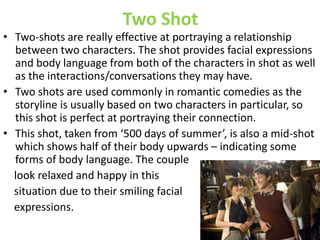
• Two-shots are really effective at portraying a relationship
between two characters. The shot provides facial expressions
and body language from both of the characters in shot as well
as the interactions/conversations they may have.
• Two shots are used commonly in romantic comedies as the
storyline is usually based on two characters in particular, so
this shot is perfect at portraying their connection.
• This shot, taken from ‘500 days of summer’, is also a mid-shot
which shows half of their body upwards – indicating some
forms of body language. The couple
look relaxed and happy in this
situation due to their smiling facial
expressions.
Close-up
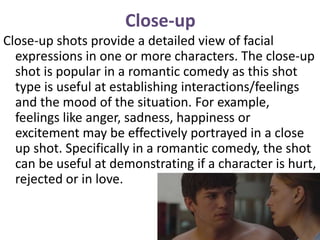
Close-up shots provide a detailed view of facial
expressions in one or more characters. The close-up
shot is popular in a romantic comedy as this shot
type is useful at establishing interactions/feelings
and the mood of the situation. For example,
feelings like anger, sadness, happiness or
excitement may be effectively portrayed in a close
up shot. Specifically in a romantic comedy, the shot
can be useful at demonstrating if a character is hurt,
rejected or in love.
Mid-Shot
• These shots are frequently used in romantic comedies to
show character’s body language. The shot shows half a
character’s body and focuses on the upper half of the body
– so facial expressions are also present.
• The shot helps to understand a connection between two
characters and their feelings towards each other. For
example, in this shot taken from ‘Friends with Benefits’
Jamie and her boyfriend, Dylan are both sat very casually
and relaxed, showing they have a comfortable relationship.
Long Shot
• In a long shot, the audience is allowed to see the full view of the
character’s body along with some of the scenery to give viewers
an idea on the location of the characters.
• This type of shot also distinguishes the attachment between the
characters, whether they are positioned closely together or
spaced out and distanced from each other. This shot taken from
‘500 days of summer’ shows the relationship between the two
characters with the setting of the workplace/offices in the
background.
Extreme Long Shot
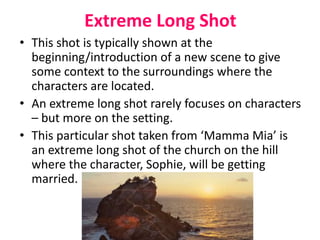
• This shot is typically shown at the
beginning/introduction of a new scene to give
some context to the surroundings where the
characters are located.
• An extreme long shot rarely focuses on characters
– but more on the setting.
• This particular shot taken from ‘Mamma Mia’ is
an extreme long shot of the church on the hill
where the character, Sophie, will be getting
married.

CINEMATOGRAPHY IN ROMANTIC COMEDY

  • 1.
    Romantic Comedy By KieraTolhurst Detailed Analysis (Genre Research)
  • 2.
  • 3.
    Cinematography • Cinematography isthe art of photography and camerawork in film-making. • This can include shot types, depth of field and focus, filters and lenses.
  • 4.
    Over the ShoulderShot • The over-the-shoulder shot is probably the most common shot used in romantic comedies, as it is effective at showing a conversation between two people, as well as some facial expressions and some of their body language. • The over-the-shoulder shot establishes a relationship between two characters and the mood/atmosphere of the current situation. • This particular shot is taken from the film ‘Mean Girls’.
  • 5.
    Two Shot • Two-shotsare really effective at portraying a relationship between two characters. The shot provides facial expressions and body language from both of the characters in shot as well as the interactions/conversations they may have. • Two shots are used commonly in romantic comedies as the storyline is usually based on two characters in particular, so this shot is perfect at portraying their connection. • This shot, taken from ‘500 days of summer’, is also a mid-shot which shows half of their body upwards – indicating some forms of body language. The couple look relaxed and happy in this situation due to their smiling facial expressions.
  • 6.
    Close-up Close-up shots providea detailed view of facial expressions in one or more characters. The close-up shot is popular in a romantic comedy as this shot type is useful at establishing interactions/feelings and the mood of the situation. For example, feelings like anger, sadness, happiness or excitement may be effectively portrayed in a close up shot. Specifically in a romantic comedy, the shot can be useful at demonstrating if a character is hurt, rejected or in love.
  • 7.
    Mid-Shot • These shotsare frequently used in romantic comedies to show character’s body language. The shot shows half a character’s body and focuses on the upper half of the body – so facial expressions are also present. • The shot helps to understand a connection between two characters and their feelings towards each other. For example, in this shot taken from ‘Friends with Benefits’ Jamie and her boyfriend, Dylan are both sat very casually and relaxed, showing they have a comfortable relationship.
  • 8.
    Long Shot • Ina long shot, the audience is allowed to see the full view of the character’s body along with some of the scenery to give viewers an idea on the location of the characters. • This type of shot also distinguishes the attachment between the characters, whether they are positioned closely together or spaced out and distanced from each other. This shot taken from ‘500 days of summer’ shows the relationship between the two characters with the setting of the workplace/offices in the background.
  • 9.
    Extreme Long Shot •This shot is typically shown at the beginning/introduction of a new scene to give some context to the surroundings where the characters are located. • An extreme long shot rarely focuses on characters – but more on the setting. • This particular shot taken from ‘Mamma Mia’ is an extreme long shot of the church on the hill where the character, Sophie, will be getting married.