Camera Angles
High Angle
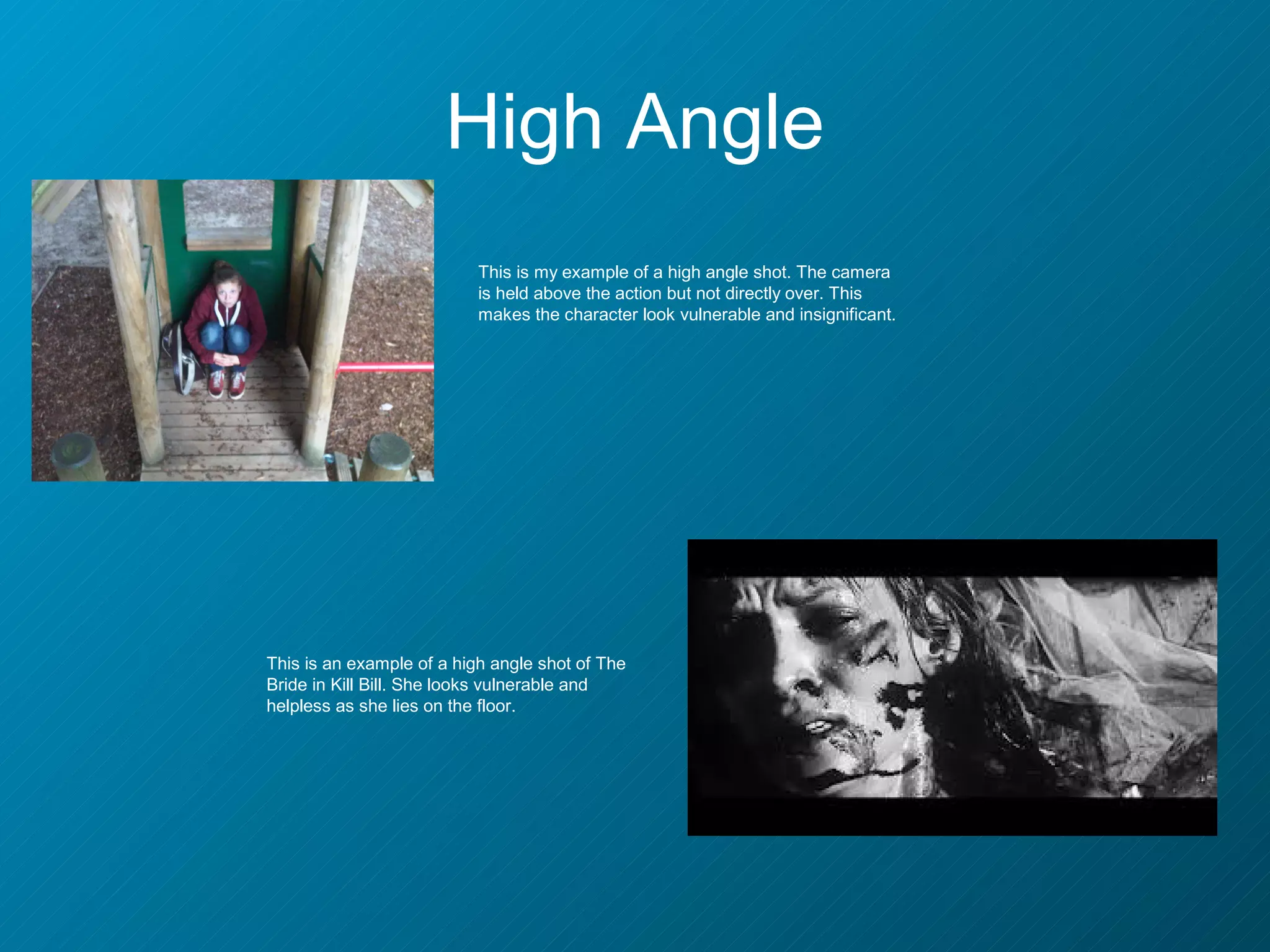
                           This is my example of a high angle shot. The camera
                           is held above the action but not directly over. This
                           makes the character look vulnerable and insignificant.


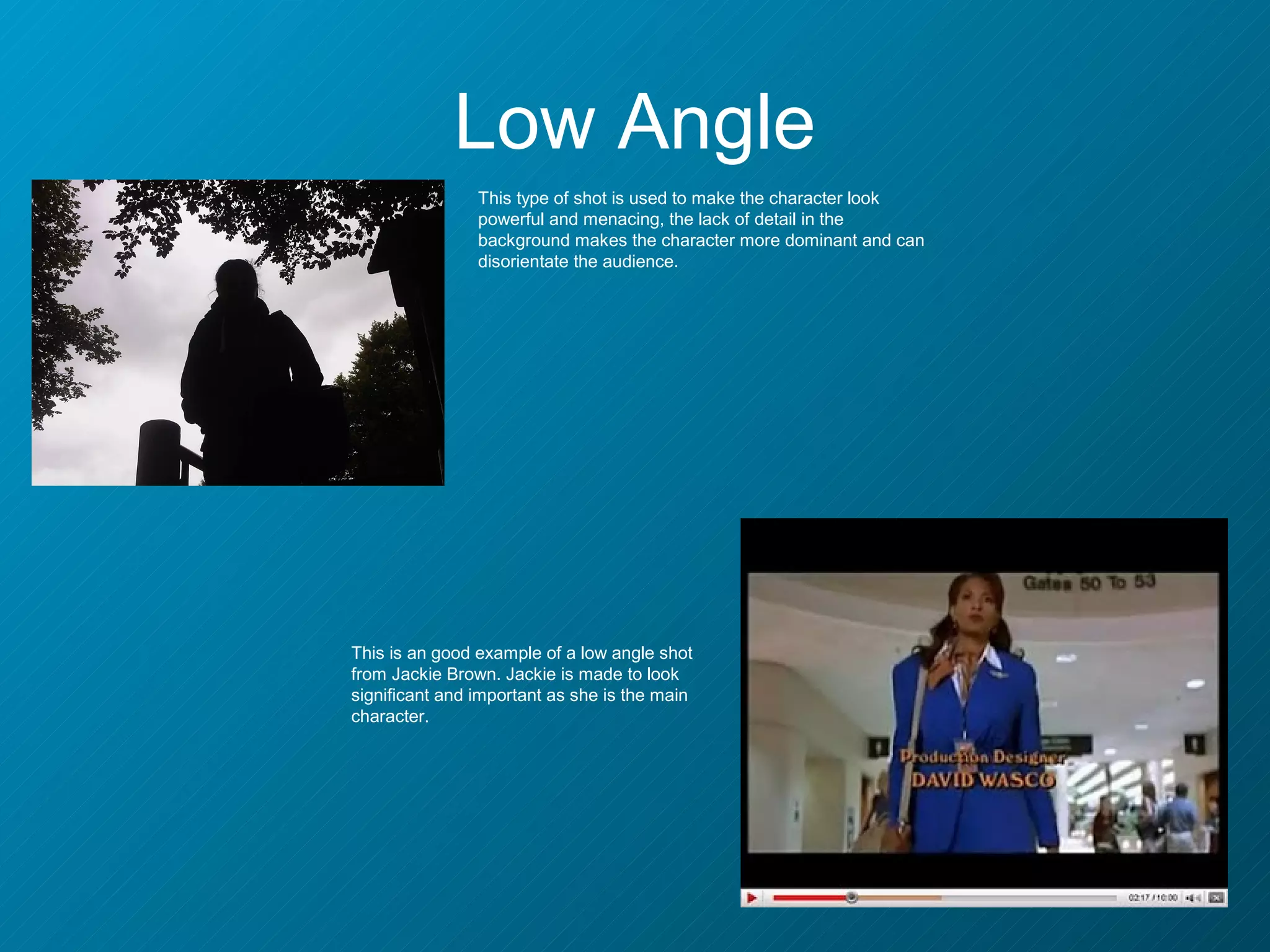
This is an example of a high angle shot of The
Bride in Kill Bill. She looks vulnerable and
helpless as she lies on the floor.
Low Angle
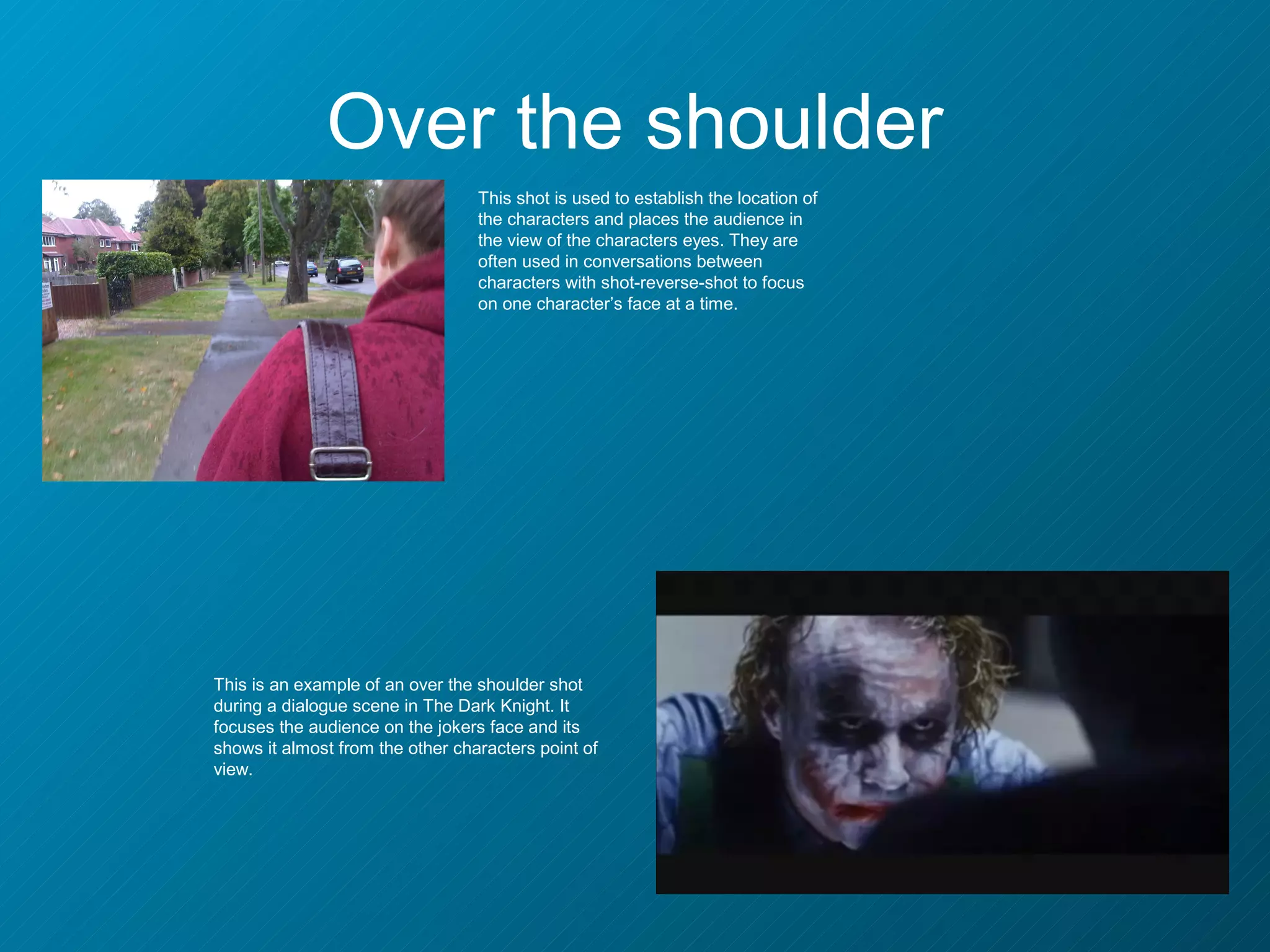
                This type of shot is used to make the character look
                powerful and menacing, the lack of detail in the
                background makes the character more dominant and can
                disorientate the audience.


This is an good example of a low angle shot
from Jackie Brown. Jackie is made to look
significant and important as she is the main
character.
Over the shoulder
                                  This shot is used to establish the location of
                                  the characters and places the audience in
                                  the view of the characters eyes. They are
                                  often used in conversations between
                                  characters with shot-reverse-shot to focus
                                  on one character’s face at a time.


This is an example of an over the shoulder shot
during a dialogue scene in The Dark Knight. It
focuses the audience on the jokers face and its
shows it almost from the other characters point of
view.
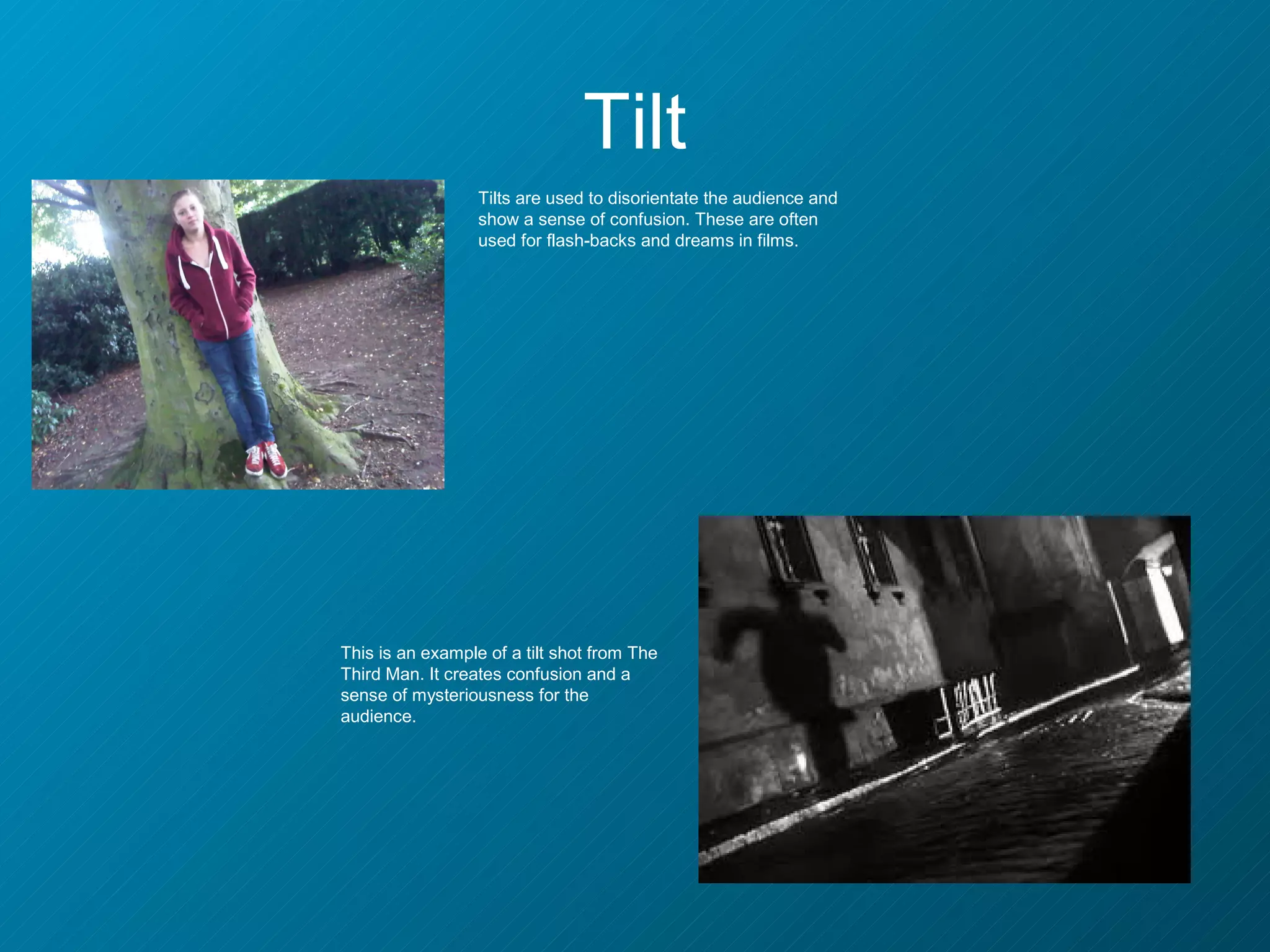
Tilt
                  Tilts are used to disorientate the audience and
                  show a sense of confusion. These are often
                  used for flash-backs and dreams in films.


This is an example of a tilt shot from The
Third Man. It creates confusion and a
sense of mysteriousness for the
audience.
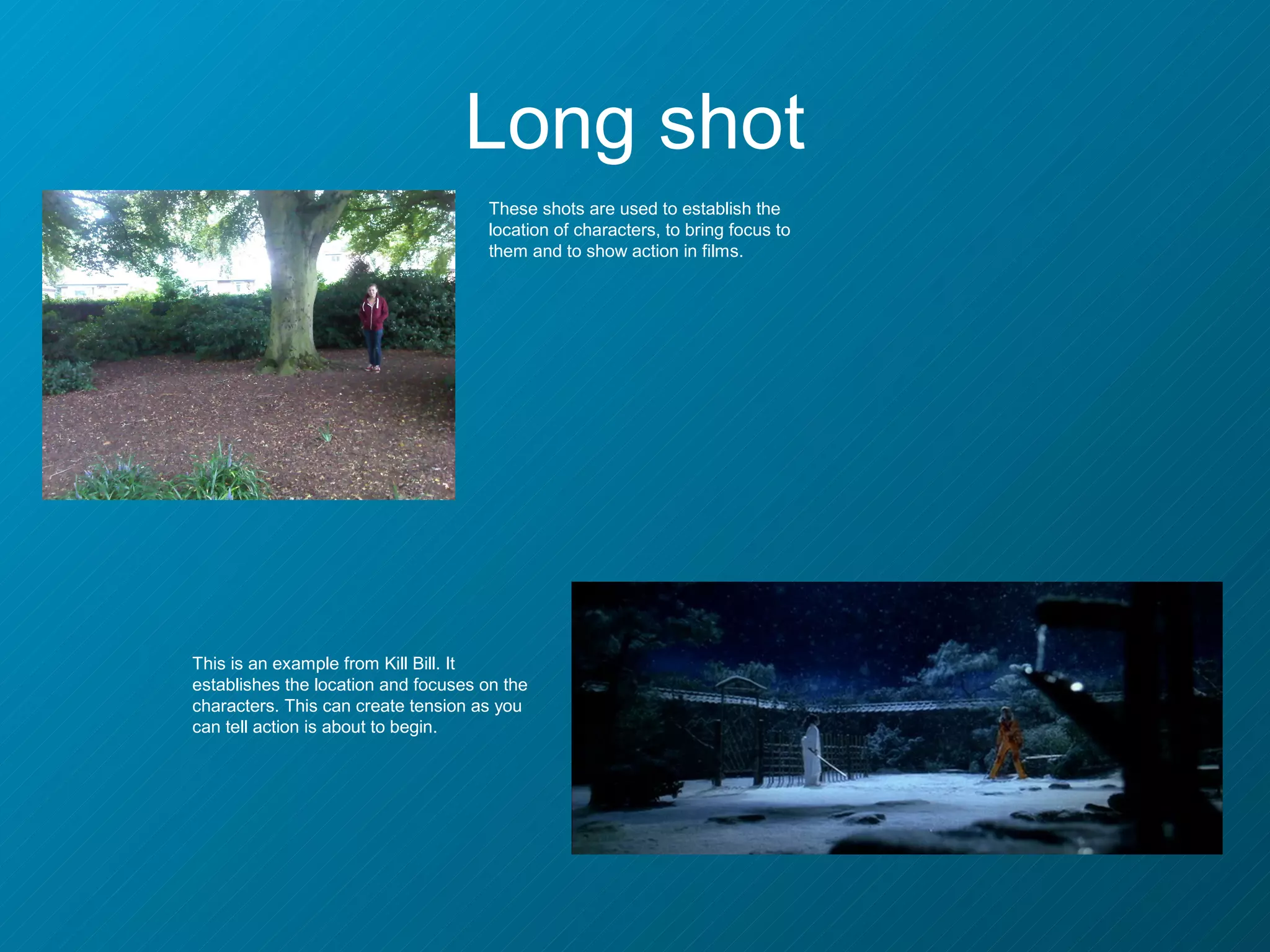
Long shot
                                      These shots are used to establish the
                                      location of characters, to bring focus to
                                      them and to show action in films.


This is an example from Kill Bill. It
establishes the location and focuses on the
characters. This can create tension as you
can tell action is about to begin.
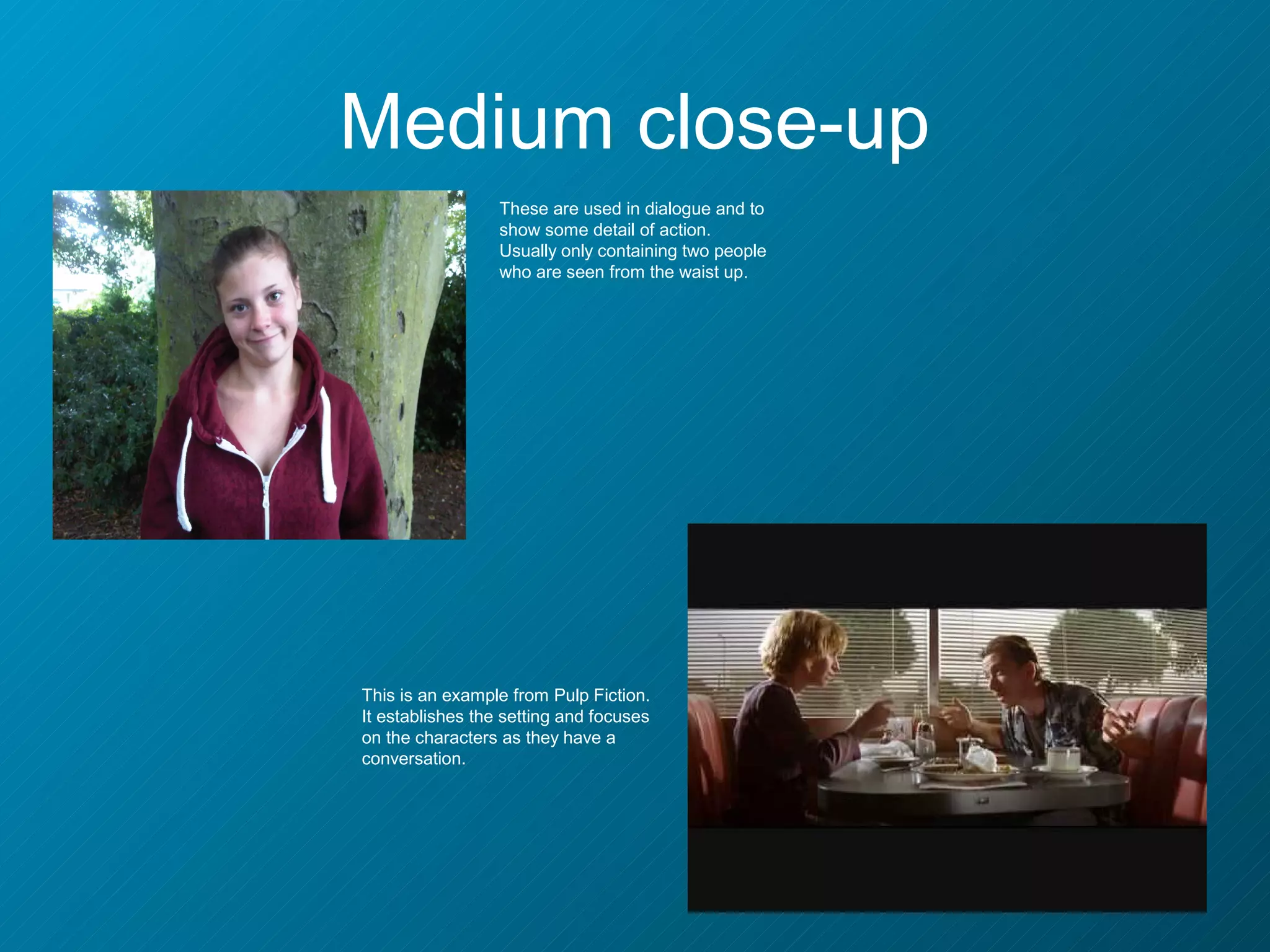
Medium close-up
                  These are used in dialogue and to
                  show some detail of action.
                  Usually only containing two people
                  who are seen from the waist up.


This is an example from Pulp Fiction.
It establishes the setting and focuses
on the characters as they have a
conversation.
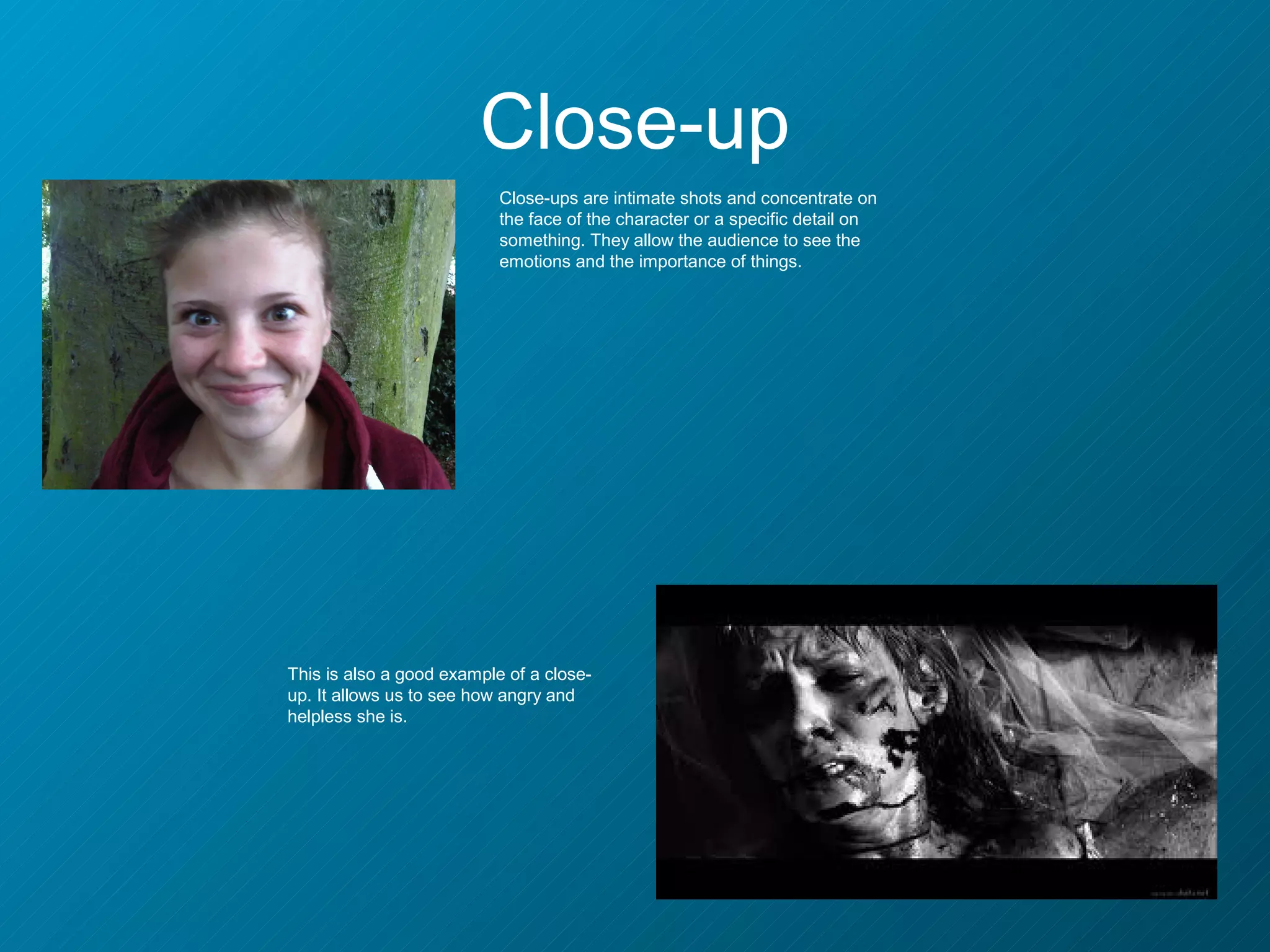
Close-up
                           Close-ups are intimate shots and concentrate on
                           the face of the character or a specific detail on
                           something. They allow the audience to see the
                           emotions and the importance of things.


This is also a good example of a close-
up. It allows us to see how angry and
helpless she is.
ECU
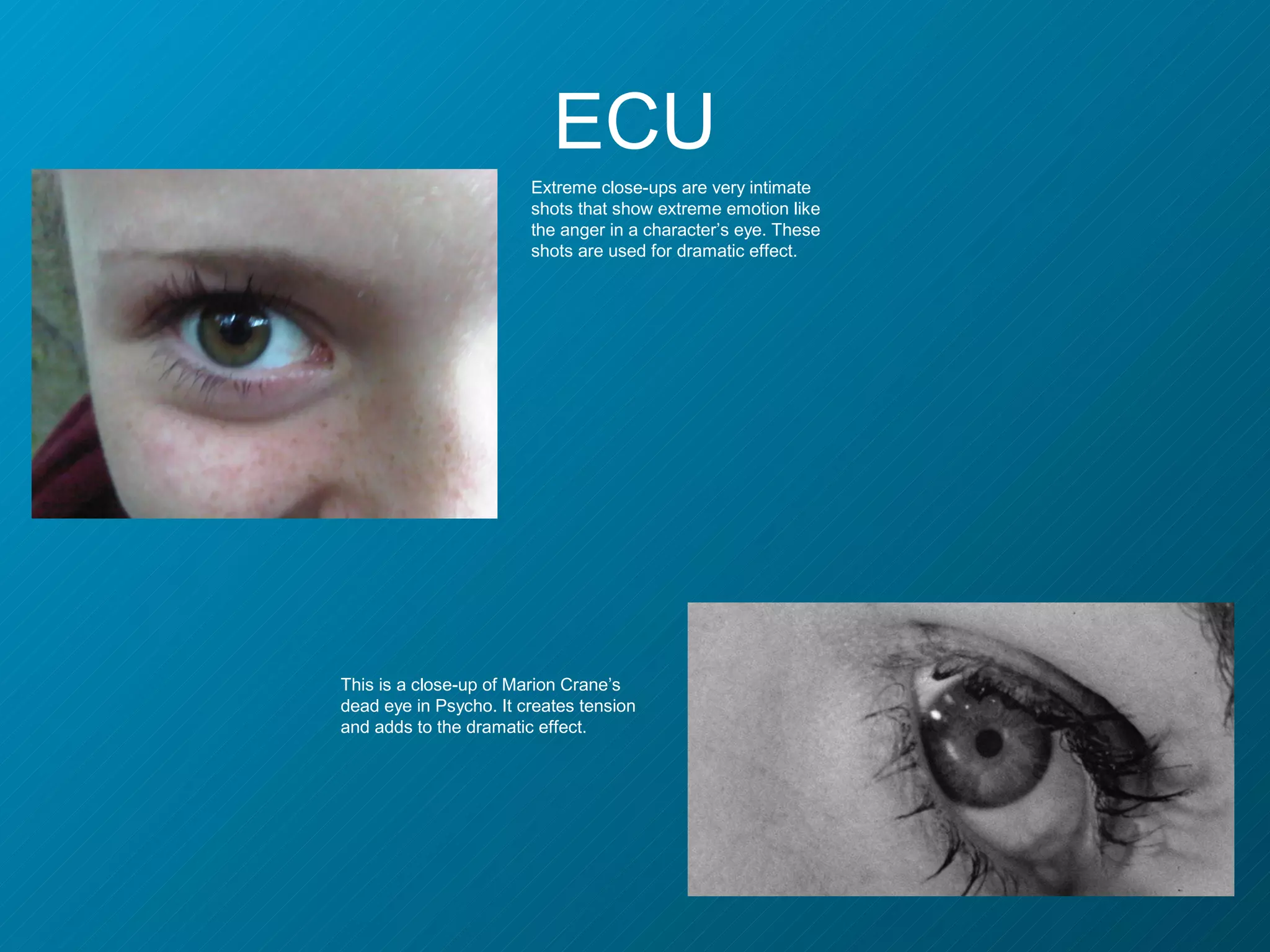
                        Extreme close-ups are very intimate
                        shots that show extreme emotion like
                        the anger in a character’s eye. These
                        shots are used for dramatic effect.


This is a close-up of Marion Crane’s
dead eye in Psycho. It creates tension
and adds to the dramatic effect.
Bird’s eye view
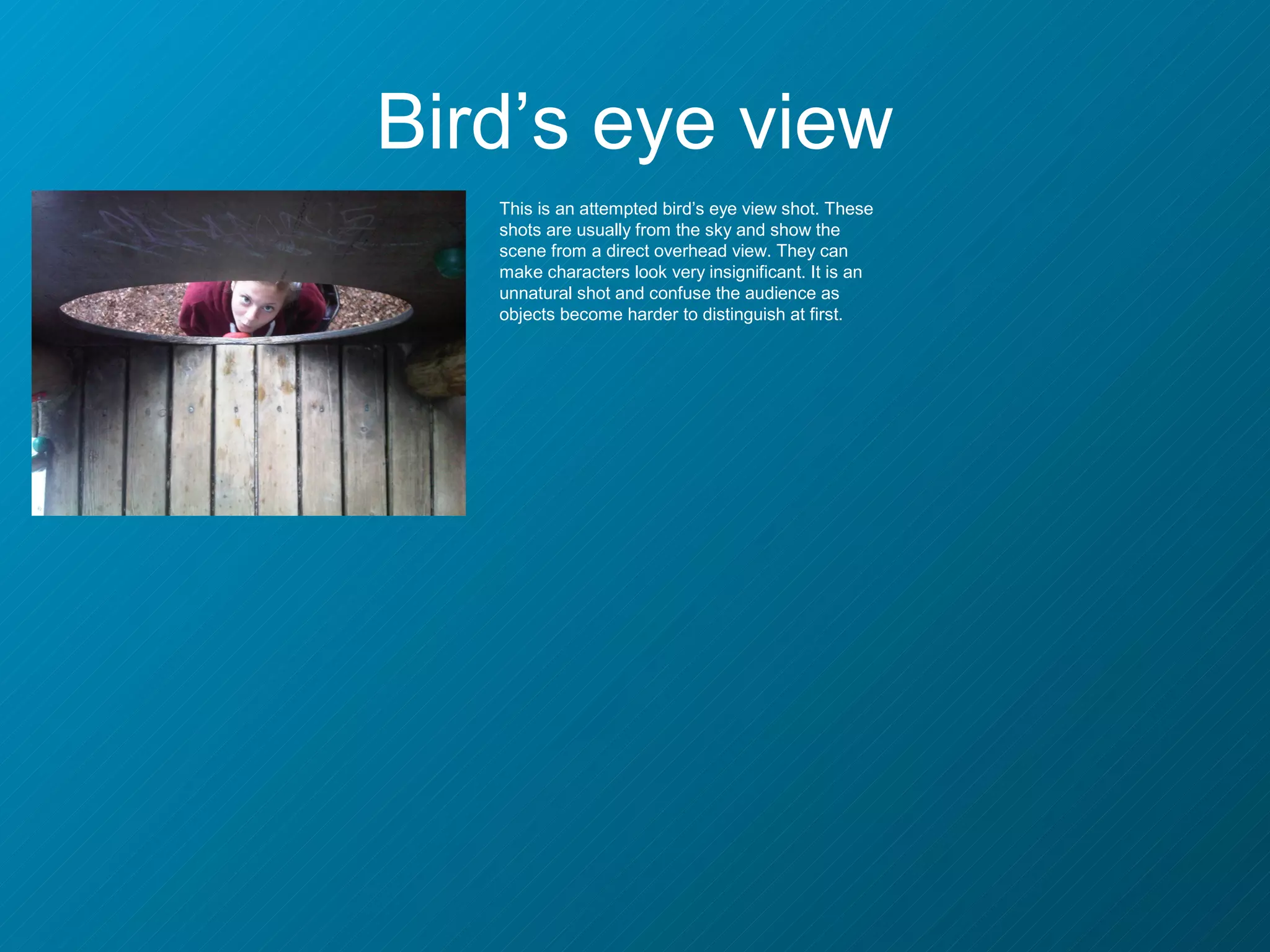
   This is an attempted bird’s eye view shot. These
   shots are usually from the sky and show the
   scene from a direct overhead view. They can
   make characters look very insignificant. It is an
   unnatural shot and confuse the audience as
   objects become harder to distinguish at first.
Worm’s eye view
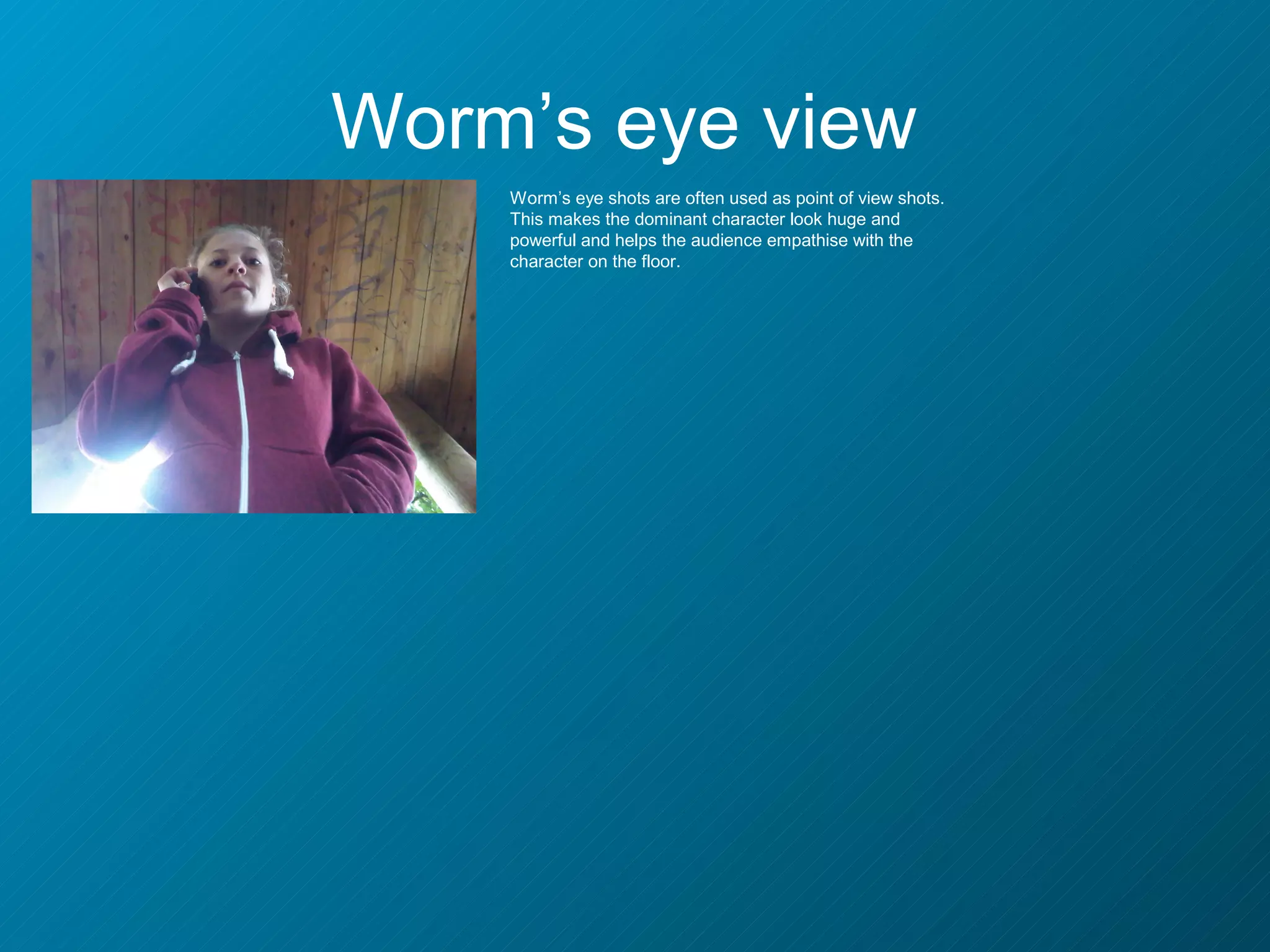
    Worm’s eye shots are often used as point of view shots.
    This makes the dominant character look huge and
    powerful and helps the audience empathise with the
    character on the floor.

Camera Angles

  • 1.
  • 2.
    High Angle This is my example of a high angle shot. The camera is held above the action but not directly over. This makes the character look vulnerable and insignificant. This is an example of a high angle shot of The Bride in Kill Bill. She looks vulnerable and helpless as she lies on the floor.
  • 3.
    Low Angle This type of shot is used to make the character look powerful and menacing, the lack of detail in the background makes the character more dominant and can disorientate the audience. This is an good example of a low angle shot from Jackie Brown. Jackie is made to look significant and important as she is the main character.
  • 4.
    Over the shoulder This shot is used to establish the location of the characters and places the audience in the view of the characters eyes. They are often used in conversations between characters with shot-reverse-shot to focus on one character’s face at a time. This is an example of an over the shoulder shot during a dialogue scene in The Dark Knight. It focuses the audience on the jokers face and its shows it almost from the other characters point of view.
  • 5.
    Tilt Tilts are used to disorientate the audience and show a sense of confusion. These are often used for flash-backs and dreams in films. This is an example of a tilt shot from The Third Man. It creates confusion and a sense of mysteriousness for the audience.
  • 6.
    Long shot These shots are used to establish the location of characters, to bring focus to them and to show action in films. This is an example from Kill Bill. It establishes the location and focuses on the characters. This can create tension as you can tell action is about to begin.
  • 7.
    Medium close-up These are used in dialogue and to show some detail of action. Usually only containing two people who are seen from the waist up. This is an example from Pulp Fiction. It establishes the setting and focuses on the characters as they have a conversation.
  • 8.
    Close-up Close-ups are intimate shots and concentrate on the face of the character or a specific detail on something. They allow the audience to see the emotions and the importance of things. This is also a good example of a close- up. It allows us to see how angry and helpless she is.
  • 9.
    ECU Extreme close-ups are very intimate shots that show extreme emotion like the anger in a character’s eye. These shots are used for dramatic effect. This is a close-up of Marion Crane’s dead eye in Psycho. It creates tension and adds to the dramatic effect.
  • 10.
    Bird’s eye view This is an attempted bird’s eye view shot. These shots are usually from the sky and show the scene from a direct overhead view. They can make characters look very insignificant. It is an unnatural shot and confuse the audience as objects become harder to distinguish at first.
  • 11.
    Worm’s eye view Worm’s eye shots are often used as point of view shots. This makes the dominant character look huge and powerful and helps the audience empathise with the character on the floor.