Water and Waste Water
Management Solutions
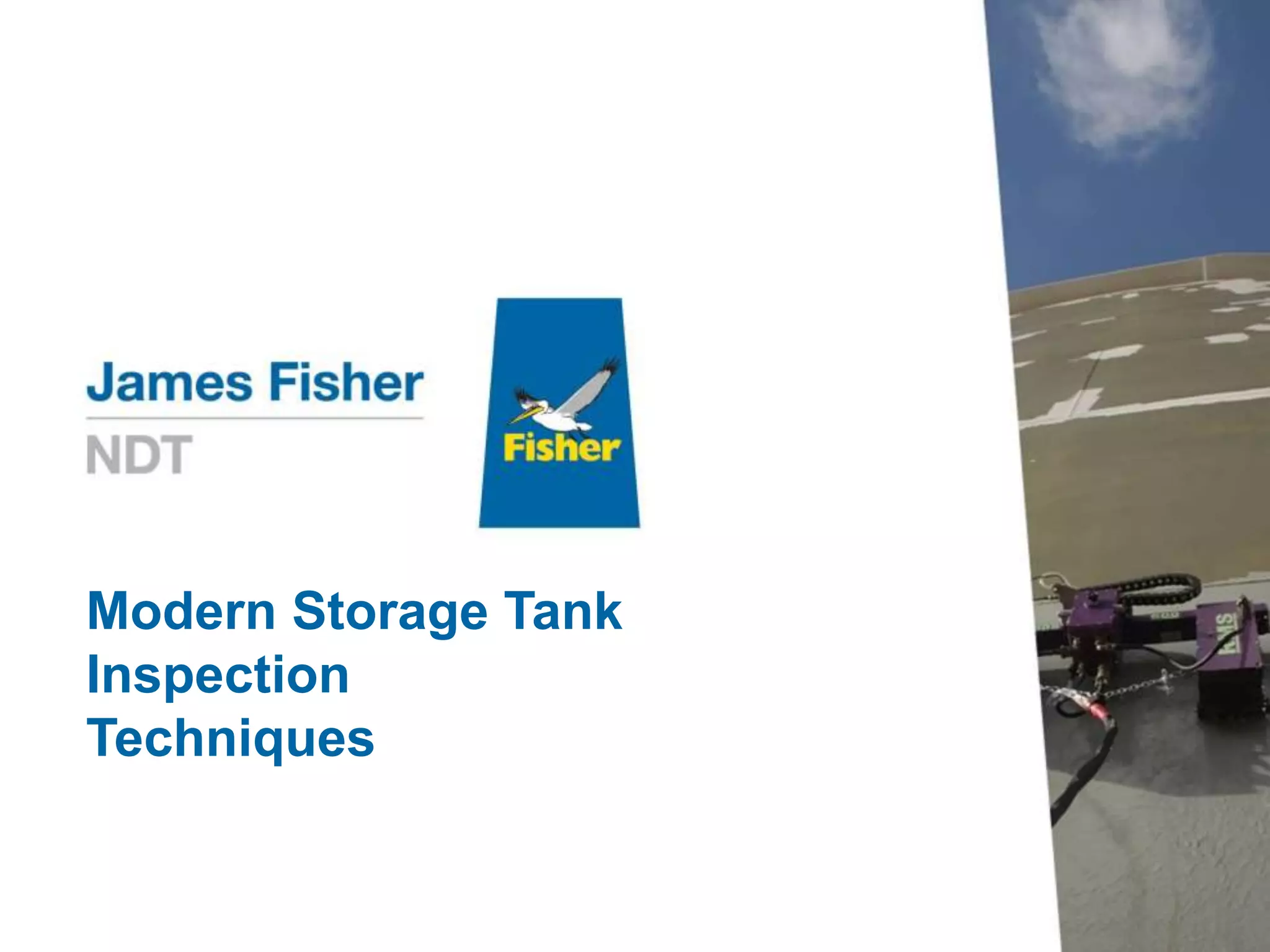
Modern Storage Tank
Inspection
Techniques
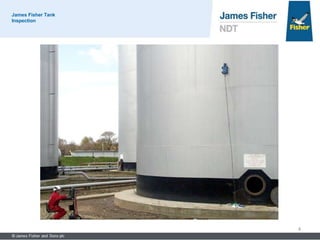
James Fisher Tank
Inspection
2
James Fisher Tank
Inspection
3
James Fisher Tank
Inspection
4
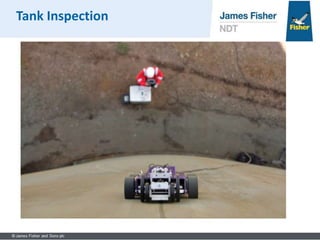
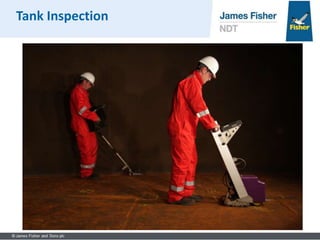
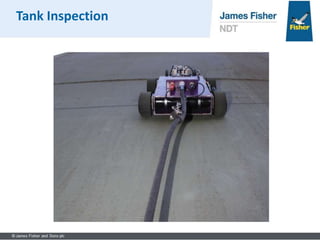
Tank Inspection
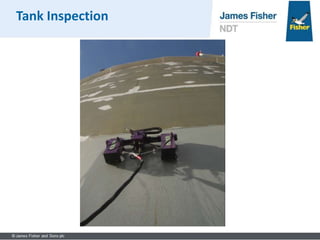
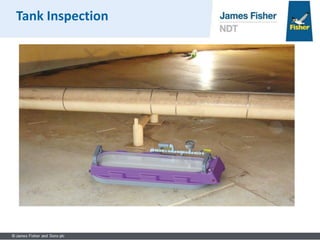
Tank Inspection
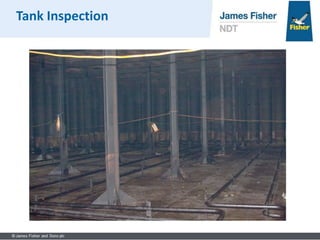
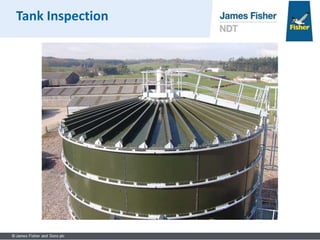
Tank Inspection
Tank Inspection
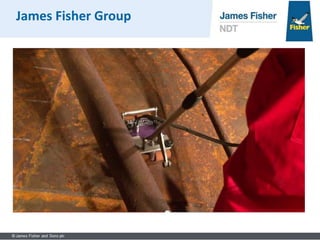
James Fisher Group
James Fisher Group
Tank Inspection
Tank Inspection
Tank Inspection
Tank Inspection
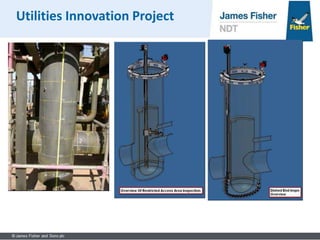
Utilities Innovation Project
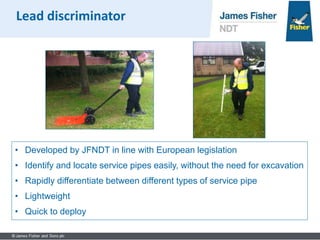
• Developed by JFNDT in line with European legislation
• Identify and locate service pipes easily, without the need for excavation
• Rapidly differentiate between different types of service pipe
• Lightweight
• Quick to deploy
Lead discriminator
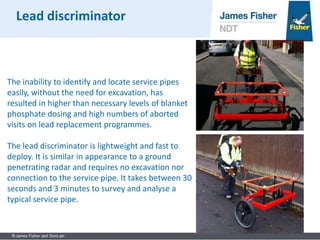
The inability to identify and locate service pipes
easily, without the need for excavation, has
resulted in higher than necessary levels of blanket
phosphate dosing and high numbers of aborted
visits on lead replacement programmes.
The lead discriminator is lightweight and fast to
deploy. It is similar in appearance to a ground
penetrating radar and requires no excavation nor
connection to the service pipe. It takes between 30
seconds and 3 minutes to survey and analyse a
typical service pipe.
Lead discriminator
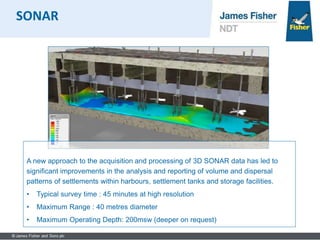
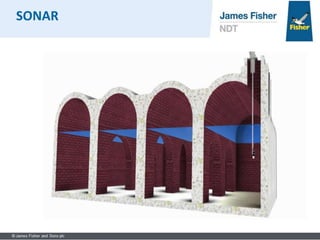
A new approach to the acquisition and processing of 3D SONAR data has led to
significant improvements in the analysis and reporting of volume and dispersal
patterns of settlements within harbours, settlement tanks and storage facilities.
• Typical survey time : 45 minutes at high resolution
• Maximum Range : 40 metres diameter
• Maximum Operating Depth: 200msw (deeper on request)
SONAR
SONAR
SONAR
SONAR
Techniques
• In-situ stress measurement in concrete by instrumented coring
• In-situ stress measurement in concrete by pressure compensation
slotting
• In-situ stress measurement in steel tendons and reinforcement
bars by controlled strain relief drilling
Testing and monitoring of
concrete structures
• Specific structural defects identified during inspection
• Investigate known problems associated with common
construction details (e.g. post-tensioning systems,
concrete half joints)
• Insufficient load carrying capacity from assessment
• Construction operations may affect structure
• Changes in building use
• Postpone expenditure on strengthening/ reconstruction
• Monitor features that are difficult to inspect
Why monitor?
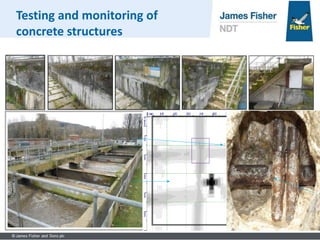
Testing and monitoring of
concrete structures
Can justify safe delay of repairs, or avoid expense
Monitoring can tell you valuable information about your asset
Data remotely presented to clients requirements
We are experienced in providing bespoke systems for clients
Concrete asset monitoring
summary
www.jfndt.co.uk
Thank You

Storage tank inspection presentation

  • 1.
    Water and WasteWater Management Solutions Modern Storage Tank Inspection Techniques
  • 2.
  • 3.
  • 4.
  • 5.
  • 6.
  • 7.
  • 8.
  • 9.
  • 10.
  • 11.
  • 12.
  • 13.
  • 14.
  • 15.
  • 16.
    • Developed byJFNDT in line with European legislation • Identify and locate service pipes easily, without the need for excavation • Rapidly differentiate between different types of service pipe • Lightweight • Quick to deploy Lead discriminator
  • 17.
    The inability toidentify and locate service pipes easily, without the need for excavation, has resulted in higher than necessary levels of blanket phosphate dosing and high numbers of aborted visits on lead replacement programmes. The lead discriminator is lightweight and fast to deploy. It is similar in appearance to a ground penetrating radar and requires no excavation nor connection to the service pipe. It takes between 30 seconds and 3 minutes to survey and analyse a typical service pipe. Lead discriminator
  • 18.
    A new approachto the acquisition and processing of 3D SONAR data has led to significant improvements in the analysis and reporting of volume and dispersal patterns of settlements within harbours, settlement tanks and storage facilities. • Typical survey time : 45 minutes at high resolution • Maximum Range : 40 metres diameter • Maximum Operating Depth: 200msw (deeper on request) SONAR
  • 19.
  • 20.
  • 21.
  • 22.
    Techniques • In-situ stressmeasurement in concrete by instrumented coring • In-situ stress measurement in concrete by pressure compensation slotting • In-situ stress measurement in steel tendons and reinforcement bars by controlled strain relief drilling Testing and monitoring of concrete structures
  • 23.
    • Specific structuraldefects identified during inspection • Investigate known problems associated with common construction details (e.g. post-tensioning systems, concrete half joints) • Insufficient load carrying capacity from assessment • Construction operations may affect structure • Changes in building use • Postpone expenditure on strengthening/ reconstruction • Monitor features that are difficult to inspect Why monitor?
  • 24.
    Testing and monitoringof concrete structures
  • 25.
    Can justify safedelay of repairs, or avoid expense Monitoring can tell you valuable information about your asset Data remotely presented to clients requirements We are experienced in providing bespoke systems for clients Concrete asset monitoring summary
  • 26.